5 life-threatening situations from which a person emerged victorious (6 photos)
Survival in extreme situations requires perseverance and an unwavering belief that there is no hopeless situation. We present five stories of heroes who managed to survive in the most difficult conditions. 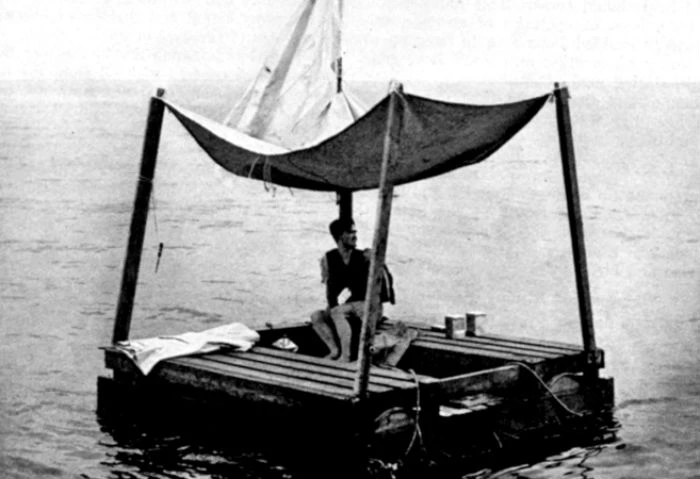
A Long Flight and 4 Days of Survival
The highest altitude from which a person has survived a fall is 10,160 meters. This record is listed in the Guinness Book of World Records and belongs to Vesna Vulović, the sole survivor of the plane crash on January 26, 1972. Not only did she recover, but she also wanted to return to work—she didn't develop a fear of flying because she had no memory of the crash.
On August 24, 1981, 20-year-old Larisa Savitskaya and her husband were flying back from their honeymoon on an An-24 from Komsomolsk-on-Amur to Blagoveshchensk. At an altitude of 5,220 meters, their plane collided with a Tu-16. Larisa Savitskaya was the only one of 38 people to survive. Larisa Savitskaya's survival can be considered a true miracle, as she fell from an altitude of over 5,000 meters. This monstrous altitude became her first record. And her second was the most ridiculous compensation. In the USSR, Larisa Savitskaya was paid only $1. 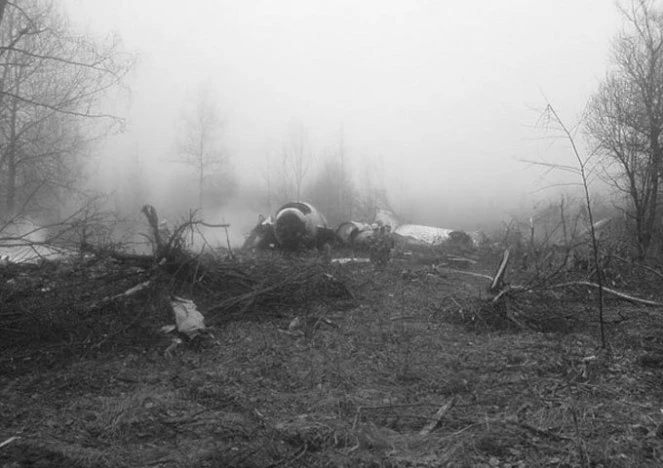
She free-falled for eight minutes on a three-by-four meter piece of plane debris. She managed to reach her seat and press herself into it. Later, she claimed that at that moment, she recalled a scene from the Italian film "Miracles Still Happen," in which the heroine survives in similar conditions. Rescue efforts were not particularly active. Graves had already been dug for all the victims of the plane crash.
Larisa Savitskaya was ultimately the last to be found. She had spent three days living among the wreckage of the plane and the bodies of the dead passengers. Despite numerous injuries—a concussion, spinal injuries, broken ribs, and a broken arm—Savitskaya not only survived but was able to construct a kind of shelter from the fuselage debris. When a search plane flew over the crash site, Larisa even waved to the rescuers, but they mistook her for a geologist from a nearby expedition.
Larisa Savitskaya is listed in the Guinness Book of World Records twice: as the person who survived a fall from a great height, and as the person who received the minimum amount of compensation for physical injuries in an air crash – $1 (in 1981 currency).
On a small raft
On November 23, 1942, a German submarine torpedoed the British ship Ben Lomond. Almost all of its crew perished. Seaman Lin Peng managed to survive. He was lucky – during a search on the surface, he discovered a life raft containing food supplies. Lin Peng, of course, knew that food and water would eventually run out, so from the first day of his Robinson Crusoe adventure, he began preparing equipment for collecting rainwater and catching fish. He stretched an awning over the raft and made fishing line from rope found on the raft; he made hooks from a nail and flashlight wires; and he made a knife from a tin can, which he used to fillet the fish he caught.
Interesting fact: Lin Peng couldn't swim, so he was always tied to the raft. He caught very few fish, but he took care to preserve them, drying them on ropes stretched above the deck of his "ship." For a hundred days, his diet consisted of nothing but fish and water. Occasionally, he found seaweed overboard, consuming which prevented Lin Peng from contracting scurvy. 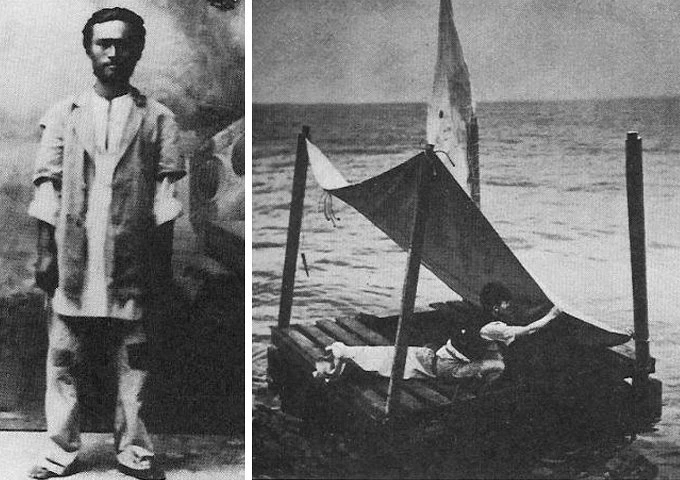
The bitter irony of Lin Peng's record-breaking voyage is that he could have been rescued several times. Once, he was refused passage on a cargo ship simply because he was Chinese. Then, the American Navy spotted him and even threw him a rescue buoy, but a storm prevented the Americans from completing the rescue mission. Lin Peng also saw several German submarines, but for obvious reasons, he did not seek their help.
Only in April 1943 did he notice the water's color had changed and birds began appearing in the sky. He realized he was in a coastal zone, which meant his chances of success had increased exponentially.
On April 5, he was found by Brazilian fishermen, who immediately took him to the hospital. Amazingly, Lin Peng was able to move independently after his journey. He lost only 9 kilograms during his forced Robinson Crusoe adventure. The Chinese man's recommendations were included in the survival manual for the British navy. Lin Peng's story was partly used in the making of the film "Life of Pi."
A Well-Read Cabin Boy
Robinsonade is a concept of solitary human survival over a long period of time in a natural environment. The record holder in this "discipline" was Jeremy Beebs, who lived on an island for 74 years. In 1911, the English schooner "Beautiful Bliss" sank during a hurricane in the South Pacific. Only 14-year-old cabin boy Jeremy Beebs managed to reach shore and find safety on a deserted island. The boy was aided by his erudition and love of reading—he knew Daniel Defoe's novel by heart. 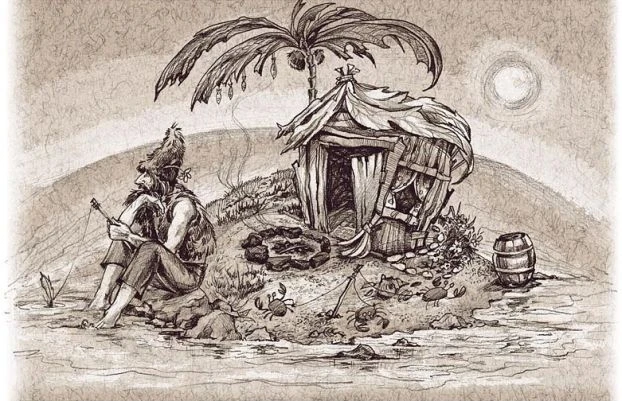
Following the example of the hero of his favorite book, Beebs began keeping a wooden calendar, built a hut, learned to hunt, ate fruit, and drank coconut milk. While Biebs lived on the island, the world experienced two world wars, the atomic bomb, and the personal computer were invented. He knew nothing of any of this. Biebs was discovered by chance. In 1985, the crew of a German ship unexpectedly discovered the 88-year-old record-holder among Robinson Crusoe islanders and brought him home.
Daddy's Girl
On December 24, 1971, a Lockheed L-188 Electra belonging to the Peruvian airline LANSA encountered a large thunderstorm, was struck by lightning, entered turbulence, and began to disintegrate in midair at an altitude of 3.2 kilometers. It crashed into the jungle, 500 kilometers from Lima. The only survivor was 17-year-old schoolgirl Juliana Margaret Koepcke. 
At the time of the crash, the girl was strapped into the seat. She suffered a broken collarbone, a cut to her right arm, and was blinded in one eye. Juliana's survival was aided by the fact that her father, a renowned zoologist, instilled in his daughter the skills of survival in extreme conditions from childhood. Immediately after the crash, having abandoned attempts to find her mother among the bodies, the girl searched the luggage for food, but found only a few candies—another result.
Then Juliana found a stream near the crash site and walked downstream. Only nine days later was she lucky enough to reach a boat on the riverbank. She used gasoline from a canister to treat the wound on her right shoulder, which was already infested with maggots. The boat's owners, who turned out to be local loggers, did not appear until the following day. Juliana was fed, her wounds were treated, and she was taken to a hospital in a nearby village.
Alone in the Snow
On October 13, 1972, a plane carrying players from the Uruguayan rugby team, the Old Christians of Montevideo, their relatives, and sponsors, crashed in the Andes. Twenty-seven people survived the crash. An avalanche later killed eight more, and three more died of their injuries. The Uruguayans realized they had no help 11 days after the crash, when they received a radio message that the search had been called off and they had been presumed dead. 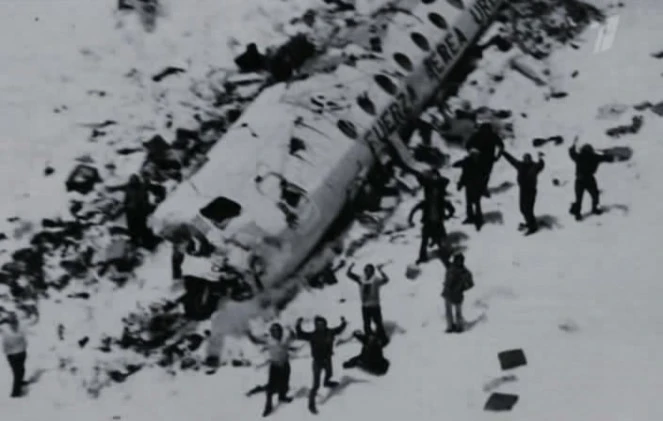
The passengers' dire situation was exacerbated by the fact that their supplies quickly ran out. The miraculous survivors of the crash made the difficult decision to eat the flesh of the dead. The victims were rescued only 72 days after the disaster, and only because the group sent three people to cross the Andes and report the incident.
Two completed the arduous trek. In 11 days, without equipment or warm clothing, they trekked 55 kilometers through the snow-covered Andes and reached a mountain stream, where they met a Chilean shepherd, who informed the authorities of the surviving passengers.