How One Failed Advertising Campaign Led to the Collapse of Hoover (6 photos)
Sometimes, one wrong move can completely destroy years of accumulated wealth. A prime example is the once-successful company Hoover, which lost millions due to a single, unsuccessful advertising campaign. 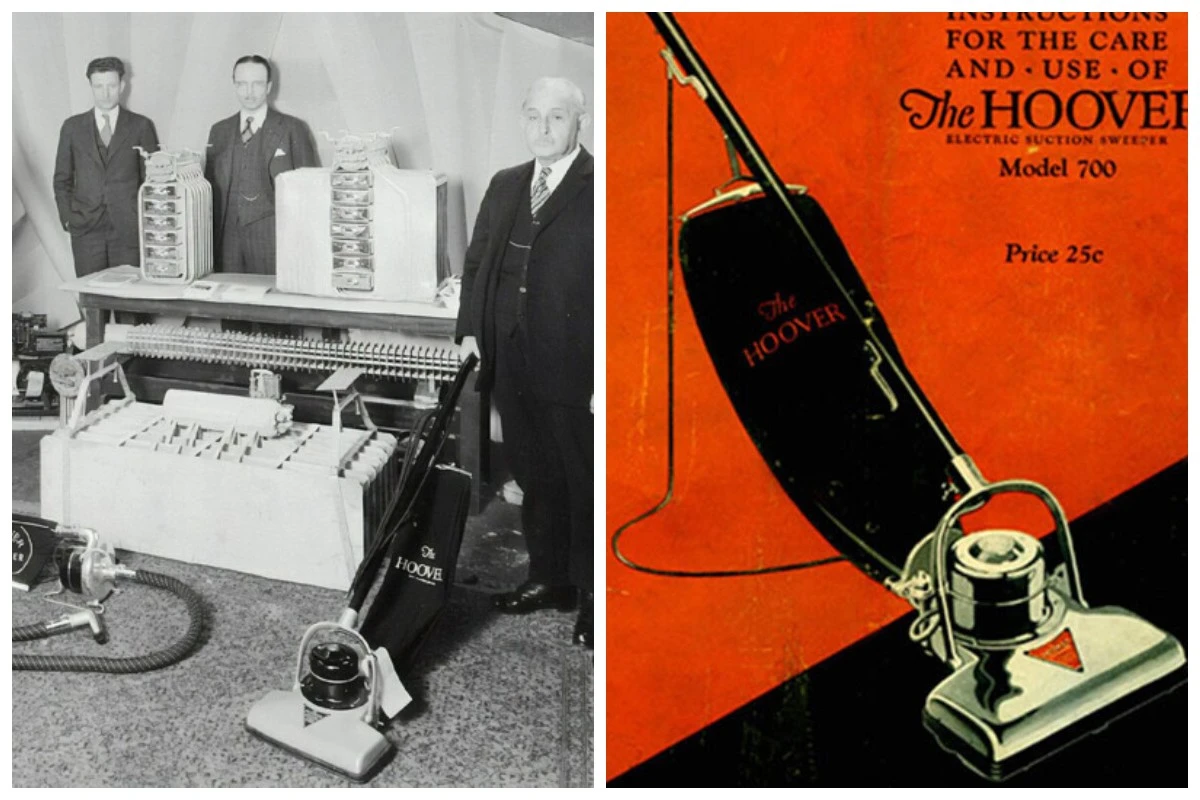
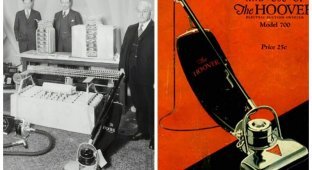
For a long time, Hoover held a leading position in the home appliance market. The popularity of its products was so high that in many countries, the company's name became synonymous with the word "vacuum cleaner." 
The company was founded in 1908 and sold vacuum cleaners worldwide. By 1923, sales reached $23 million. And when Hoover released the first vacuum cleaner with a removable bag and a dust ejector in 1926, its popularity grew even further. Its success grew year after year until the economic crisis of the 1990s. 
To somehow rectify the situation and increase sales, Hoover launched a rather odd promotion: every customer who spent £100 or more on a purchase was offered round-trip tickets to select European airports.
Flights were much more expensive than vacuum cleaners, so the company was forced to resort to certain tricks to avoid losses. Firstly, store visitors were tempted to purchase more expensive models. Secondly, obtaining those coveted tickets required a complex procedure: sending an application and a sales receipt to the company office, receiving a registration form in return, filling it out, and sending it back. After this, the customer was sent a voucher, on which they entered the flight date, departure, and destination, and then returned it to the Hoover office.
The company, however, reserved the right to reject the participant's choice. In such cases, they were sent a new voucher and the process was repeated. If the company rejected the route multiple times, the customer was forced to either accept the terms offered by the company or cancel the flight altogether. 
Not all customers had the patience for these disputes, so only 10% of them received the coveted tickets. Vacuum cleaner sales were consistently high, but then Hoover decided to go big. The company expanded its promotional offer to the United States, and this turned out to be the biggest mistake in its 80-year history.
The thing is, tickets to the US cost around £600 at the time, and to get one, according to the promotional terms, you only had to spend £100. As you can imagine, demand for Hoover vacuum cleaners increased tenfold. The most popular model was the "Turbopower Total System," priced at £120. The net profit from sales of these vacuum cleaners was only £30. 
You don't need any advanced economic knowledge to calculate the losses on each prize. And, mind you, over 300,000 people decided to take advantage of the promotion. This meant the company's potential losses would exceed £170 million.
Hoping to avoid bankruptcy, Hoover delayed the distribution of prizes to participants in every way possible. Some were rejected for allegedly filling out forms incorrectly, others were offered crazy itineraries that few would accept, and still others were sent vouchers just before Christmas, hoping that the festive spirit would prevent them from completing the two-week deadline.
But despite all its efforts, the company was forced to buy tickets for 220,000 customers at a cost of £72 million. This was enough to lead to catastrophic losses, as Hoover's revenue from vacuum cleaner and washing machine sales during the promotion was only £30 million. 
People flocked to the courts, accusing the company of violating the terms of the promotion. The ensuing scandal led to the British Royal Family stripping Hoover of its status as Her Majesty's Supplier.
It all ended with the dismissal of several executives at the English branch, bankruptcy, and the sale of the European division to the Italian appliance manufacturer Candy. Thus, one unsuccessful marketing move wiped out the 80-year history of a successful brand.