Living with Radiation, or Why We Are Exposed to Radiation Every Day (7 photos)
Radioactive substances surround us everywhere—they're in the air, water, food, building materials, and even the ground we walk on and the things we use every day. Moreover, the human body also has a small amount of background radiation! But how dangerous is the radioactive radiation that surrounds us in everyday life? 
The word "radiation" inevitably conjures up images of a nuclear mushroom cloud, the Chernobyl disaster, and mutants created by Hollywood directors. That's why we're terrified of radiation and try our best to avoid it. Despite this, we're still being irradiated every second, whether we want it or not. 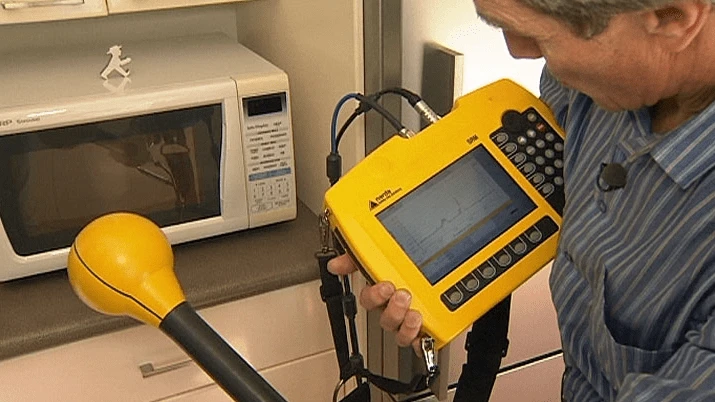
A reputable scientific source, the US Nuclear Regulatory Commission, reports that half of the radiation received by the human body annually is background radiation. However, you don't have to be a regular in an X-ray room or pick mushrooms near a nuclear power plant. Where does this radiation come from?
You don't even have to leave your home to start making amazing discoveries. The bananas in our refrigerators are one source of radiation. More precisely, it's not the fruit itself, but the isotope potassium-40, which bananas contain along with vitamins, fiber, and numerous micronutrients. There's even a special unit of measurement for radiation: BED (Banana Equivalent Dose). 
But even if you're not a banana fan, that doesn't protect you from radiation, as sources of radiation are found in potatoes, zucchini, sunflower seeds, pumpkin, and almost all types of nuts and legumes. They contain trace amounts of radium, potassium-40, iodine-131, and polonium-210.
Where do these elements in plant foods come from? It's simple – they enter the stems, leaves, fruits, berries, and seeds from the Earth's crust. Soil contamination with radionuclides varies, so food grown in different locations has different background levels. However, there is an average value for the content of each element in soil, and this figure can be daunting to those unfamiliar with the intricacies of nuclear physics.
On average, a plot of suitable soil 40 meters long, 10 meters wide, and 1 meter deep contains 1 kg of the radioactive isotope potassium-40, 2 kg of uranium, and 6 kg of thorium. Is this dangerous? It has been this way for as long as humans have lived on Earth, and this should reassure you.
Background radiation isn't limited to soil and food. Radon, a radioactive gas found in water and natural gas, accumulates in our kitchens and bathrooms. It is tasteless and odorless, and enters our bodies through the respiratory tract. 
It can only pose a danger if the room isn't equipped with ventilation, at least natural. Therefore, it's important to remember that the ventilation ducts in our apartments aren't just there to get rid of the smell of burnt potatoes.
Just in case, remember that the place with the highest radon levels is the bathroom. The gas concentration there is three times higher than in the kitchen and almost 40 times higher than in living rooms! Keep this in mind the next time you want to soak in a warm bubble bath for an extra half hour.
Besides water and natural gas, other sources of radiation in our apartments and houses include brick, concrete, wood, and ceramic tile. But granite, which contains radioactive uranium, which this mineral absorbs from magma during its formation, is particularly radioactive. 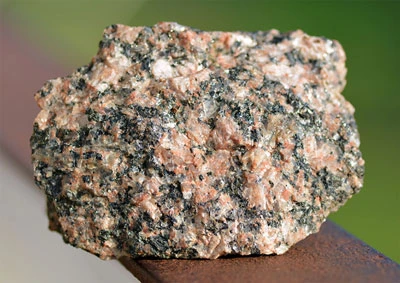
We are also exposed to radiation from the household appliances we use every day. Of course, you immediately thought of a microwave, but this appliance is the least dangerous in terms of radiation. The largest source of radiation in our apartment is a television, capable of emitting up to 10 µSv (microsieverts) per year.
You could try to hide from radiation sources on a desert island, among virgin forests, but to get there, you'd have to fly. The higher we ascend above the Earth's surface, the higher the level of cosmic radiation. This is because the atmosphere provides less protection from radiation at higher altitudes. A 2,400 km flight will give us the same 10 µSv we'd get from sitting in front of a TV screen for a whole year. 
Even if you're lucky enough to live in a place free of concrete, ceramics, granite, and televisions, you're still exposed to the sun, one of the main sources of natural radiation. We ourselves also contain a certain amount of carbon-14, a radioactive isotope that helps archaeologists accurately date remains.
If you're feeling uneasy in this radioactive world, you'll try to reduce your radiation exposure at least a little. How can you do that? You could give up bananas, throw away your television, and get rid of the bathroom tiles, but it won't make much of a difference. However, quitting smoking will significantly improve your radiation exposure. 
The additives that smokers are scared of are undoubtedly very dangerous, but the main source of radiation is not them, but tobacco itself. Tobacco absorbs radioactive radium, lead-210, and polonium-210 from the soil, just like nuts or potatoes, but these isotopes have a much more effective effect on the body when we inhale them through tobacco smoke.