From Corsets to Bikinis: How Sex Symbols Changed in Each Decade of the 20th Century — and Why They Were Considered Beautiful (24 photos)
Beauty has never been arbitrary. Throughout the 20th century, ideals were transformed by wars, technology, and social revolutions. A sex symbol is more than just an attractive face, but a living manifesto of an era, reflecting its fears and dreams. Behind every change in fashion lies a tectonic shift in culture and morality. We'll explore the journey from rigid corsets to plastic surgery and Photoshop to understand that our notions of "beauty" have always been dependent on the context of the times. 
1900s: "Gibson Girls" and Ancient Strongmen
At the beginning of the century, beauty was static and theatrical. A major cultural event was the illustrations of American artist Charles Gibson: he created an image that instantly became a standard. An hourglass figure, cinched in a tight corset, a high, voluminous hairstyle, and an icy, condescending gaze—this was the ideal woman of the turn of the century. 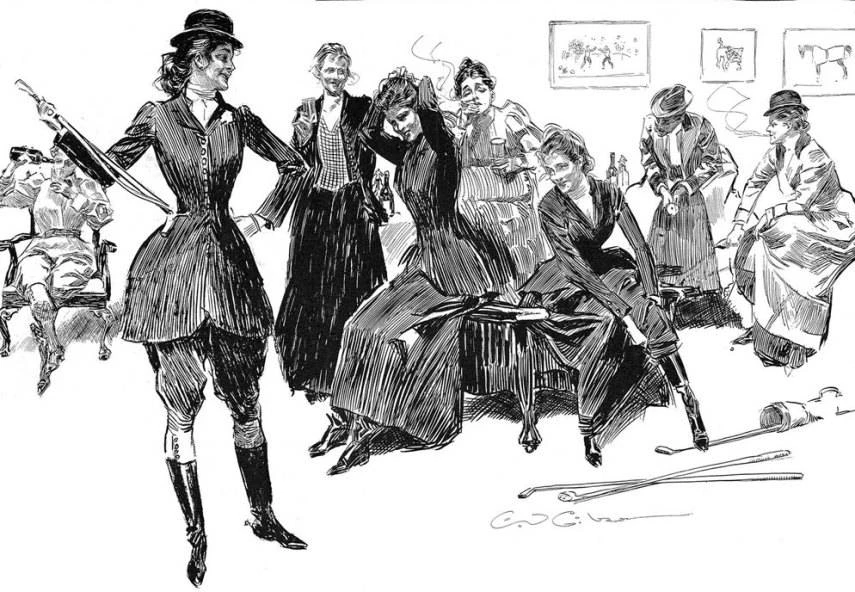
Charles Gibson's illustration: the painted ideal became a cultural phenomenon even before the era of cinema
Actress Camilla Clifford became the living embodiment of the "Gibson Girl"—her waist seemed unnaturally thin against her ample hips and breasts. Gibson himself admitted: she most accurately embodied what he depicted. Femininity in those days emphasized status and health. A beautiful woman was expected to look like a salon hostess, capable of receiving guests and bearing children. 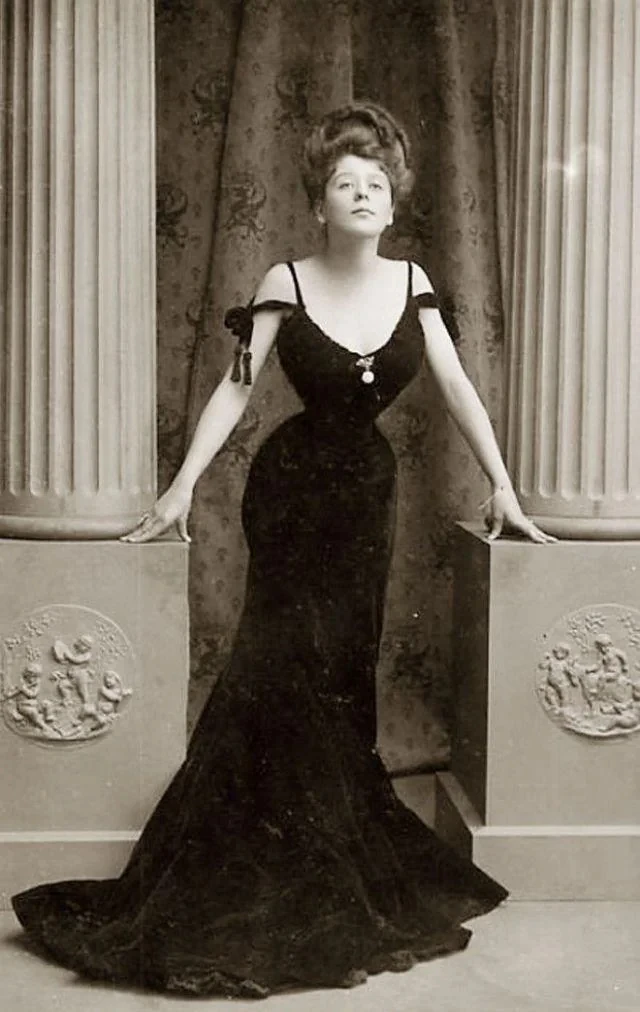
Camilla Clifford – an actress whom Charles Gibson himself recognized as the best embodiment of his cartoon ideal
The male ideal was embodied by Eugen Sandow, a German athlete known as Eugen Sandow. In an era before sports became a mass industry, his body-flaunting performances evoked a frenzy among women that historians compare to the Beatlemania of the 1960s. He posed for sculptors, his pictures sold in the thousands, and he consulted with the British Army on physical training. 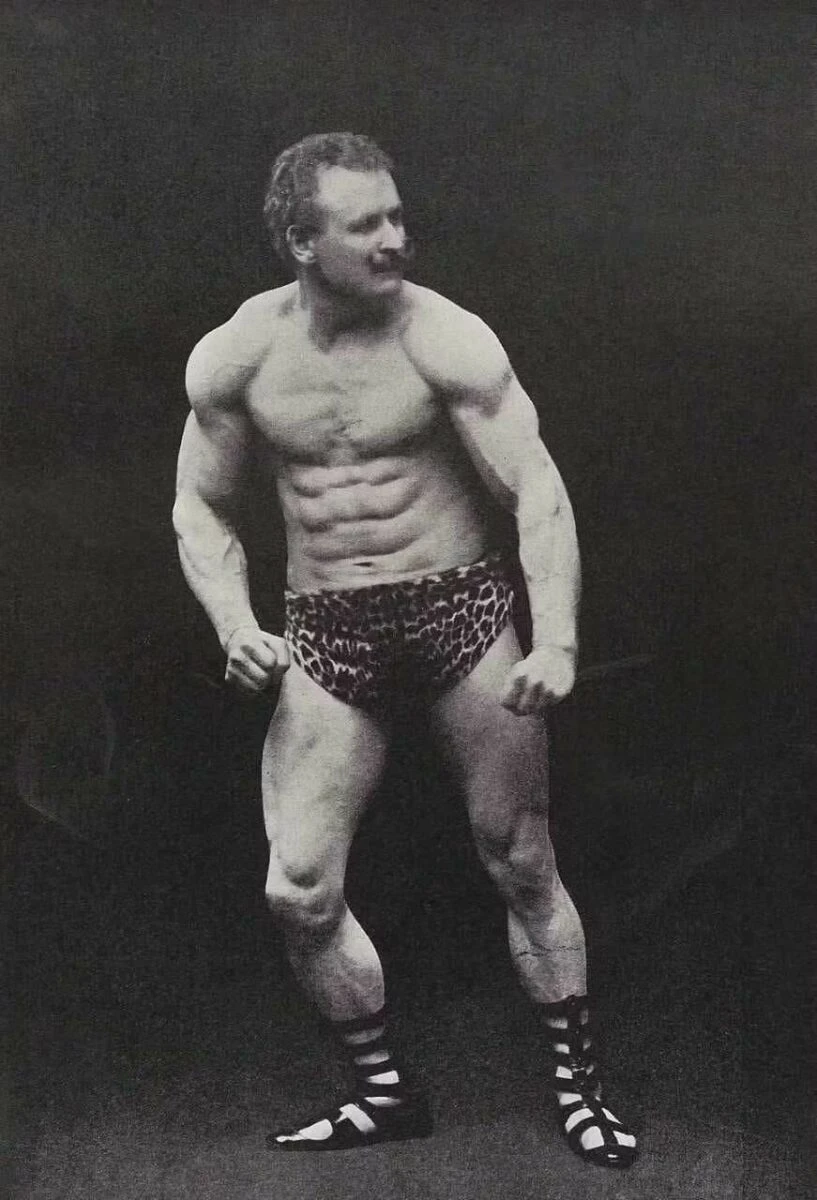
Eugene Sandow: His Performances Drawn Crowds Long Before the Age of Television and Glossy Magazines
Beauty back then wasn't defined by the screen—cinema was still in its infancy—but by theater, vaudeville, and collectible postcards. This was the ultimate level of eroticism for a society still constrained by Victorian norms: Clifford's pronounced curves and Sandow's bare muscles teetered on the edge. Attractiveness was associated with health and social status—a man was expected to look like an ancient hero, capable of defending his family and empire.
1910s: The Birth of the "Vamp" and Eastern Exoticism
World War I and the rapid development of cinema gave the world its first screen stars. The medium changed everything: close-ups, magnified tenfold, dictated fashion for facial expressions, gazes, and magnetism. Sexuality was no longer solely a question of figure. 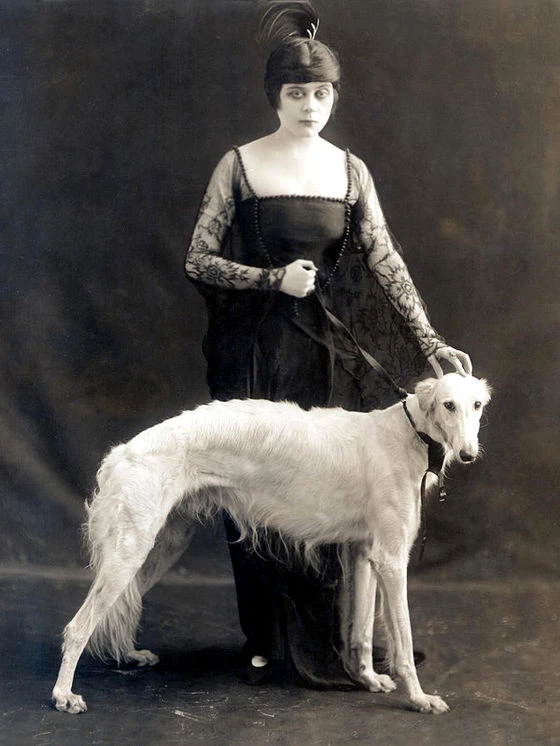
Theda Bara: Her image was constructed by Fox studios, right down to the legend of her birth "in the shadow of the Sphinx"
Theda Bara became Hollywood's first "vamp" after the release of "I'd Be a Fool" in 1915. The very word "vamp" (short for "vampire") entered the American lexicon thanks to this role. Her heavily lined, dark eyes and the femme fatale look—all of it was a demonstrative rebellion against the image of the quiet, domestic wife. A film critic of the era wrote that her character was "the most captivating and simultaneously repulsive female character in the history of cinema." Bara starred in 43 films over 12 years, but most of the footage was lost in a fire at the Fox warehouse in 1937. 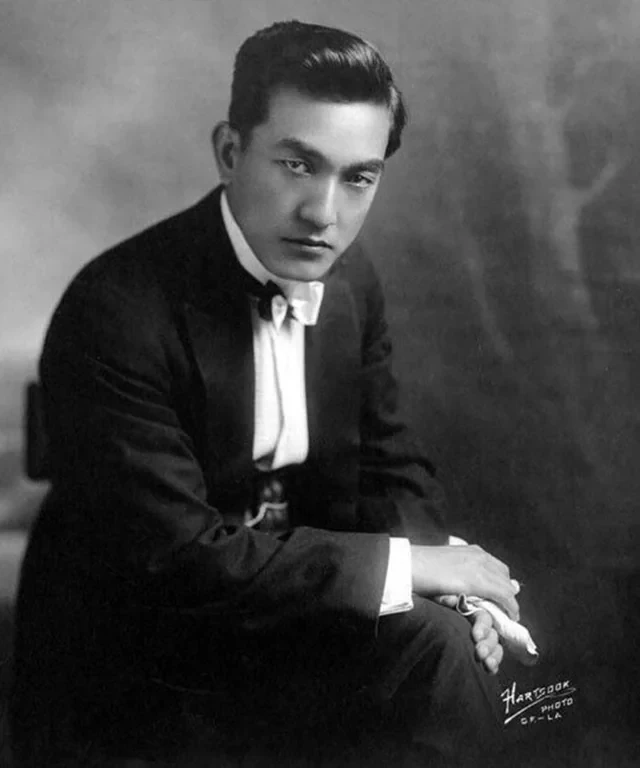
Sesshu Hayakawa: His popularity in the racist America of the 1910s was no less than that of Chaplin or Fairbanks
Among men, the Japanese Sesshu Hayakawa became a sensation. In an era of harsh racial prejudice, he became one of the highest-paid actors in Hollywood – $5,000 a week in 1915, and $2 million a year through his own film company, Haworth Pictures. His commanding, restrained beauty and image as a "dangerous seducer" offered Western audiences a forbidden, exotic appeal. Film historians note that women literally threw their fur coats at his feet to prevent him from stepping in puddles. 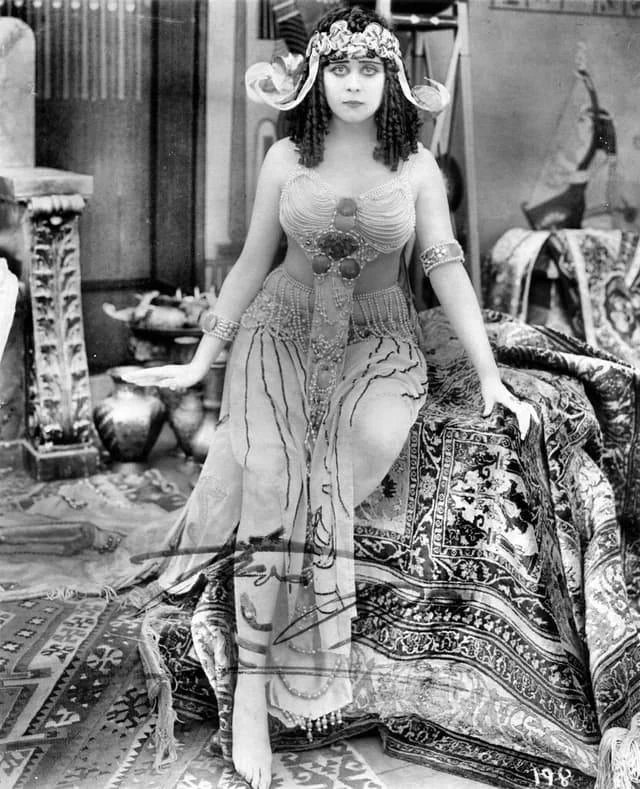
Theda Bara as Cleopatra (1917): The film was considered one of the most expensive of its time and was completely destroyed by fire.
Theda Bara's image exploited men's subconscious fear of women mastering "male" professions during the war. Hayakawa embodied a different fear—the sexual power of the "outsider." Both were mirrors of the anxieties of their era, packaged in an alluring package.
1920s: Jazz, Flappers, and the "Great Lover"
The "Roaring Twenties" erased old boundaries. Women won the right to vote in the United States in 1920, cut their hair, and shortened their skirts. The ideal "hourglass" was replaced by an androgynous silhouette: flat chests, narrow hips, and energetic movements. The ability to dance the Charleston until dawn and drive a car became fashionable. Beauty now demanded speed, not formality. 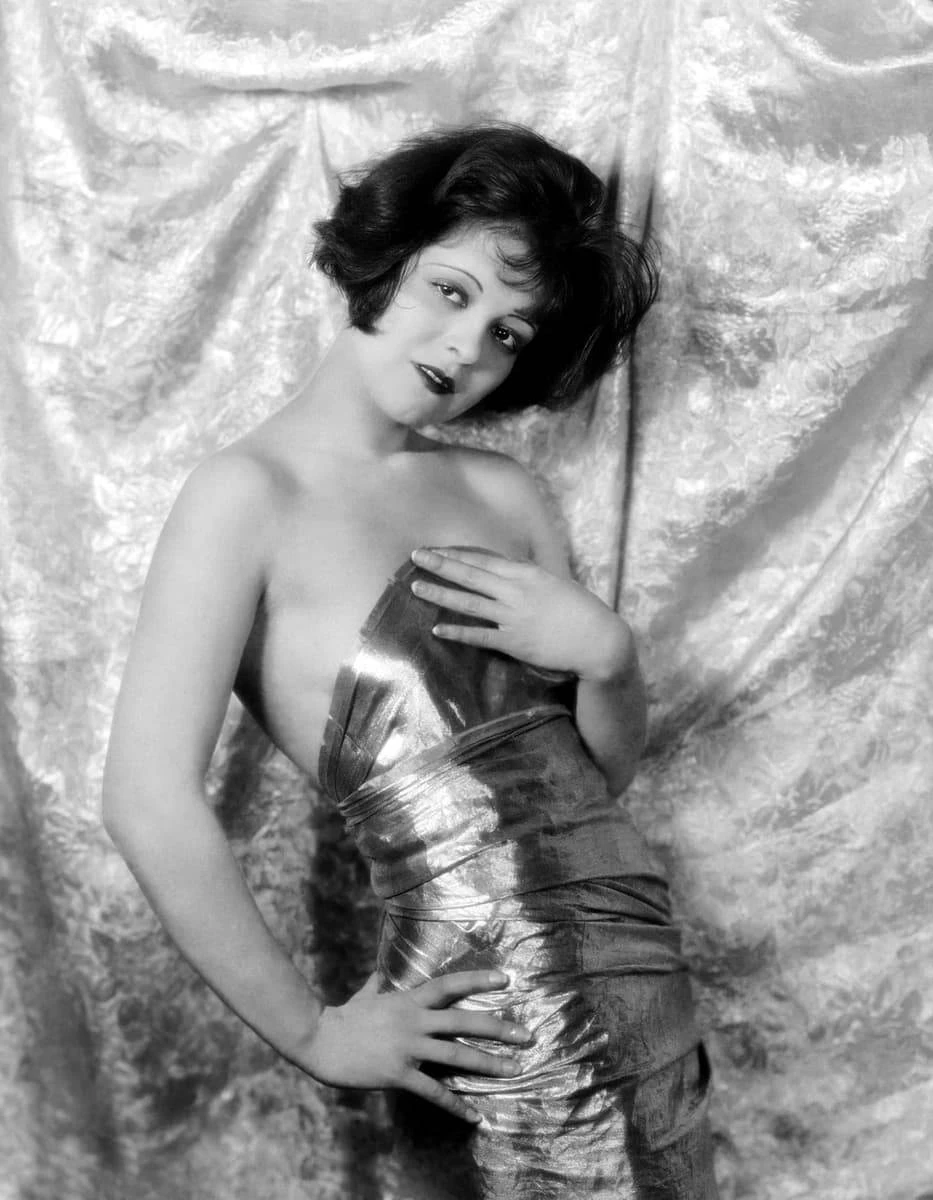
Clara Bow: She was called the "It Girl" – the bearer of that elusive appeal that defies description.
Clara Bow, the legendary "It Girl," became a symbol of this freedom. The word "it" signified a special, elusive appeal – something that cannot be explained, but is immediately apparent. Bold, dynamic, with a boyish bob haircut, Bow embodied the liberation of a new generation. She starred in 46 films over 10 years and was one of the highest-grossing stars of silent cinema. 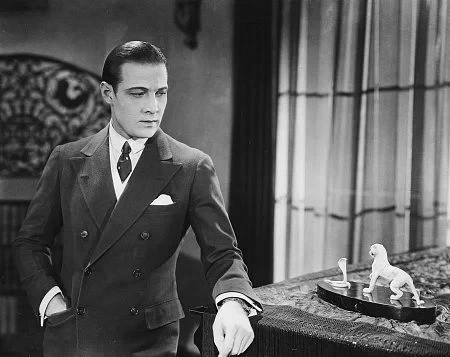
Rudolph Valentino: His death at 31 sparked mass hysteria unmatched by any other star before him
At the same time, the world was swept by "Valentinomania." Rudolph Valentino, an Italian who came to America penniless and worked as a dishwasher and taxi driver, became the world's first global male sex symbol. His film "The Sheik" (1921) sparked mass insanity: the image of a sensual and vulnerable man, simultaneously powerful and tender, was unparalleled in cinematic history.
When Valentino died in 1926 at the age of 31 from peritonitis following surgery, mass hysteria reached unimaginable proportions. Hundreds of thousands of people lined the streets of New York City for the funeral service. The crowd smashed windows to get inside. Several fans committed suicide holding his photographs. Every year on the anniversary of his death, a "lady in black" appears at his grave with a red rose—a tradition that continues to this day.
1930s: Platinum Blondes and the "King of Hollywood"
The Great Depression demanded dreams. Cinema became the primary means of escapism: the beauty of the 1930s was "glossy chic"—the emphasized luxury of clothing, impeccable studio lighting. The era's sex symbols were supposed to look like deities descended from Olympus, giving people in lines for free soup hope that another world existed somewhere. 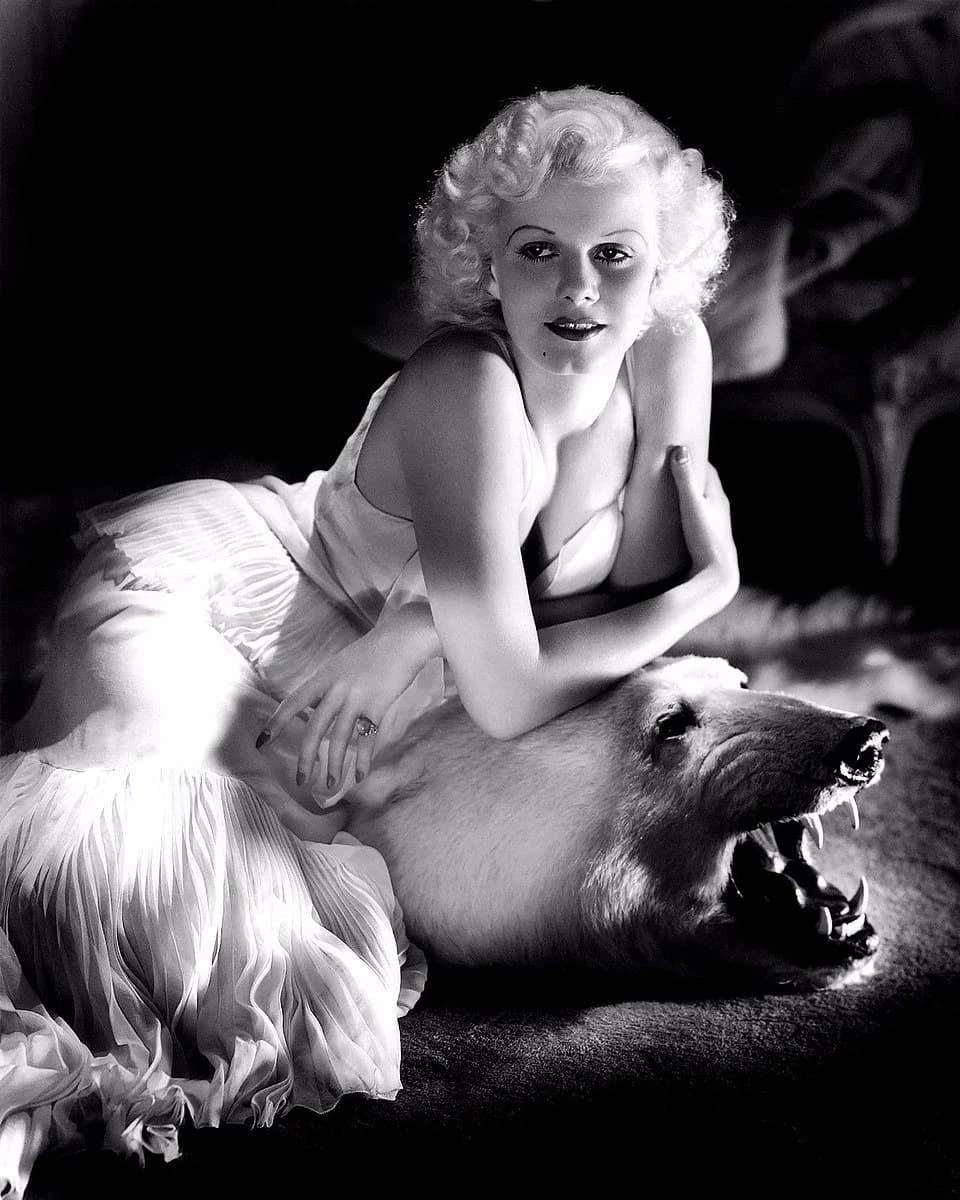
Jean Harlow: She died at 26, but set the template followed by Monroe, Mansfield, and Mae West
Jean Harlow, the "platinum bombshell," invented the image of the femme fatale as a standard in cinema. Hair dyes at the time used a dangerous mixture of hydrogen peroxide, ammonia, and bleach, which literally burned hair. Harlow died at 26 from kidney failure, presumably complications from scarlet fever she contracted as a child. But the image she created outlived her for decades: it was this template that later inspired Marilyn Monroe, Jayne Mansfield, and many others. 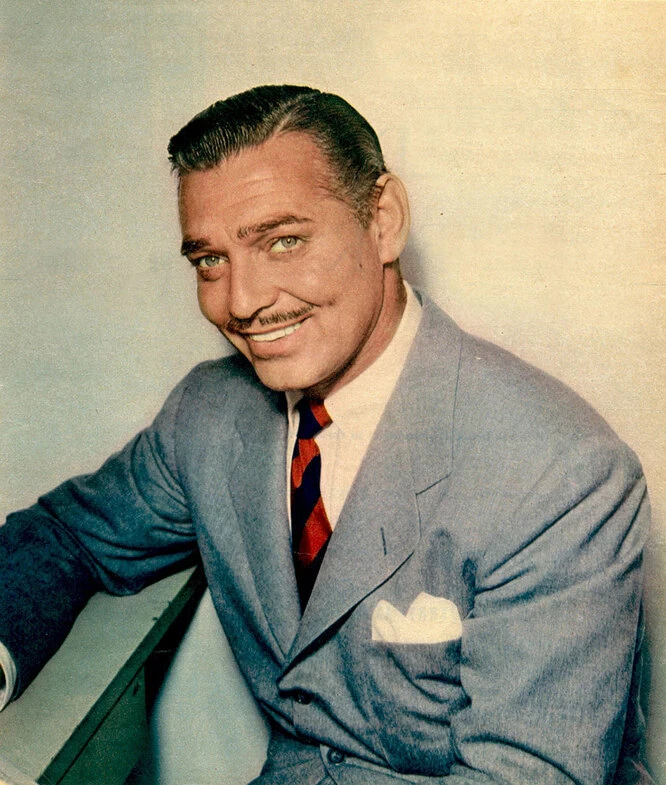
Clark Gable: The "King of Hollywood" sold the dream of a real man in an era when real men stood in bread lines.
Clark Gable, the "King of Hollywood," embodied the masculine ideal. His ironic smile, his famous mustache, the confidence in his every movement. A rugged masculinity without the aristocracy of Cary Grant, Gable looked like a man of the people who had achieved everything himself. Joan Crawford, his co-star in several films and briefly his lover, said he was the most genuine man she'd ever met. It was precisely this contrast—an earthly man next to a celestial goddess—that was the formula for attraction in the 1930s.
1940s: Pin-up, War, and Elegance Under Fire
War dictated its own rules. Sex symbols became "soldiers' muses"—portable dreams of home and a peaceful life. Rita Hayworth and her famous photo in a silk nightgown for Life magazine (August 1941) became an epochal event. Photographer Bob Landry took the shot by accident—the flash was too bright, creating a silhouette behind the actress. It was this "mistake" that made the photograph legendary. By the end of the war, more than 5 million copies of this photograph had been sold—the second-largest number of pin-ups of World War II, second only to Betty Grable's. 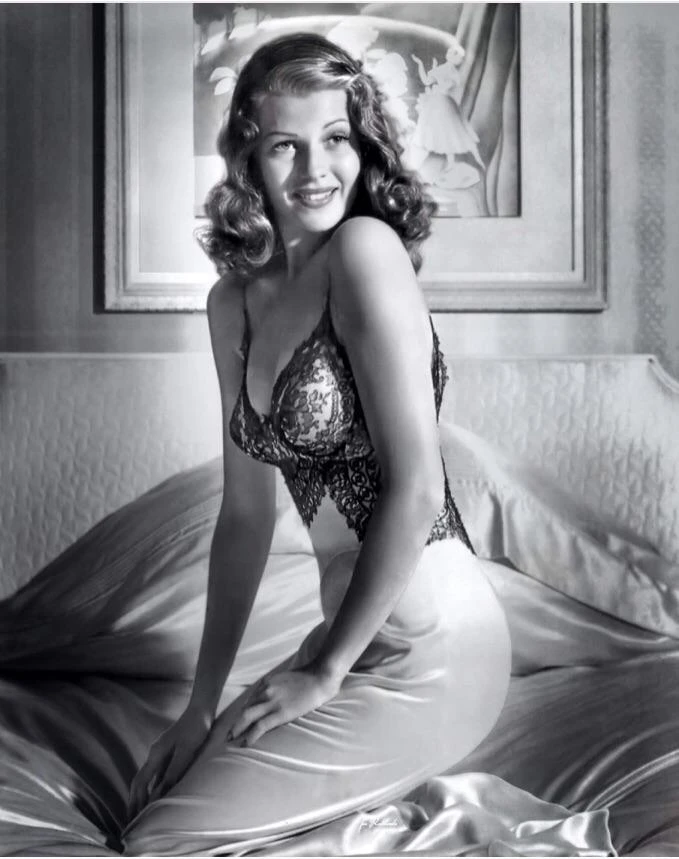
Rita Hayworth: a 1941 photograph for Life became one of the most widely circulated images of World War II.
Her sexuality proved so symbolically powerful that nuclear scientists in 1946 named the atomic bomb tested at Bikini Atoll "Gilda"—after her character in the film noir of the same name. Hayworth herself, according to eyewitnesses, was horrified to learn of this. 
Cary Grant: Elegance in a time of war was not a luxury, but a manifesto—a reminder of the civilization for which we were fighting
In contrast to Hayworth's image of earthy sensuality, Cary Grant embodied impeccable elegance. His sophistication, wit, and ability to wear a tuxedo as if born in it would later form the basis of the image of James Bond: Grant was the first choice for the role of Agent 007, but he declined, considering himself too mature for the franchise. Women's images of the 1940s became earthy and robust: vitality was valued in them, not fragility. The male ideal was divided between the stern hero in uniform and the infallible gentleman in a tuxedo.
1950s: Marilyn and the Rebels Without a Cause
Marilyn Monroe became synonymous with the word "sex"—and remains so to this day. Her image was a paradox: childlike naivety and adult provocation, a breathy manner of speaking and pronounced hips, complete vulnerability and total control of attention. This paradox struck a nerve with post-war society, which longed to return to domestic comfort—and simultaneously needed something devastatingly vibrant. 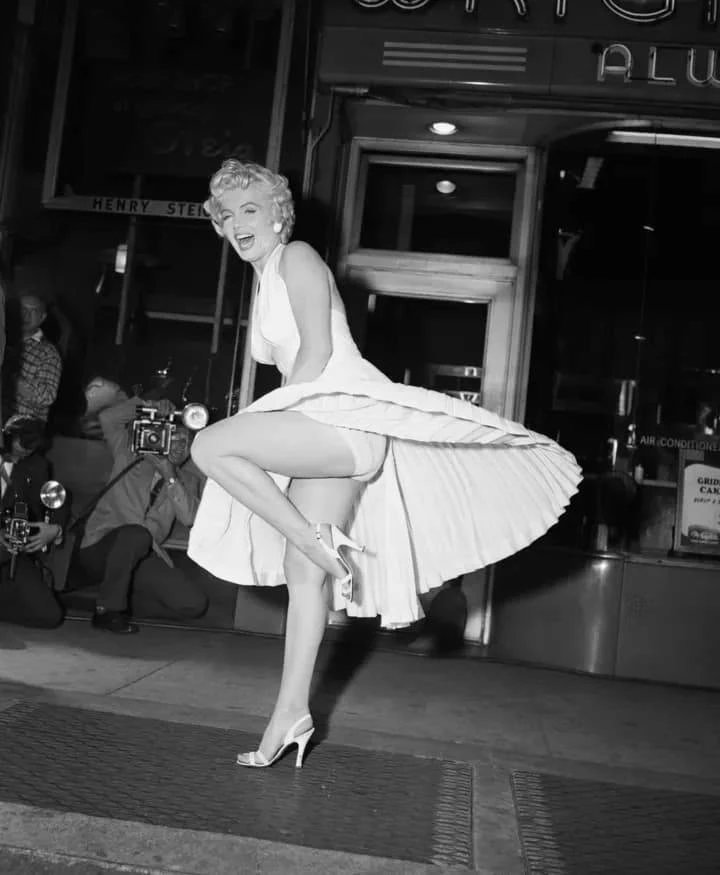
Marilyn Monroe: her image isn't just beauty, but a skillfully constructed cultural paradox that has endured for seven decades
The 1950s marked a return to accentuated gender differences. After the war, women once again donned full skirts, began to emphasize their curves, and strived for exaggerated femininity. Male rebellion, however, took a different form: Marlon Brando in a leather jacket in The Wild One (1953) and James Dean, who died in a car accident at 24 and remained forever youthful, demonstrated that vulnerability and rebellion can be incredibly attractive. They discovered a completely new type of male sexuality—not victorious, but broken. 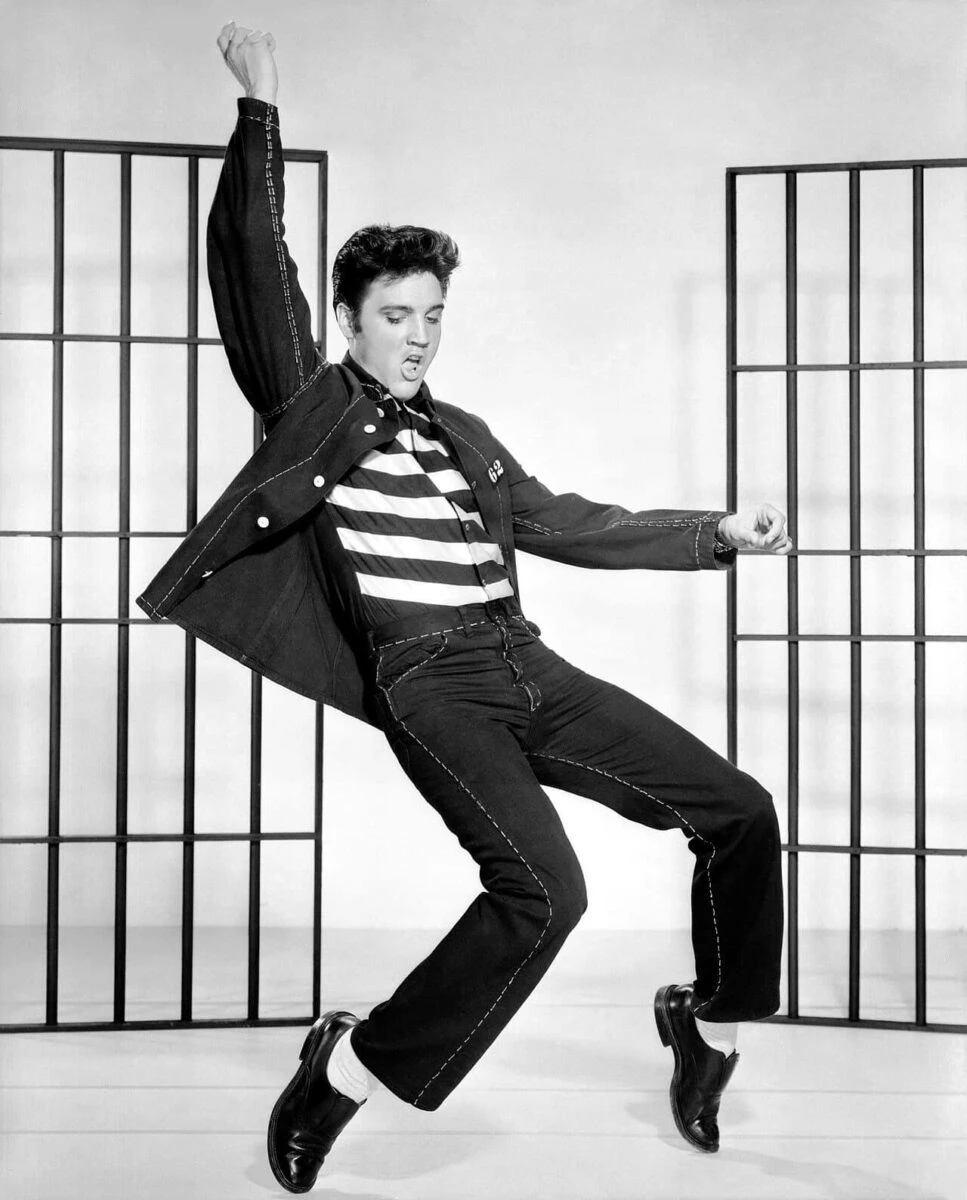
Elvis Presley: Television only showed him from the waist up—this ban made him the greatest provocation of the era
Elvis Presley completed the revolution. American television initially filmed his "indecent" hip movements only from the waist up—NBC cameramen were expressly forbidden from showing the lower half of his body during performances. It was this ban that made Elvis the greatest provocation of the decade: sexuality no longer whispered from the screen—it openly declared itself through rock 'n' roll.
1960s: Bikinis, Freedom, and Rock Gods
The sexual revolution came from Europe. Brigitte Bardot, the French "sex kitten," popularized the bikini, loose hairstyles, and an open sensuality without the glossy American finish. In 1960, Simone de Beauvoir dedicated an essay to her, calling her a symbol of female sexual autonomy: Bardot controlled her own desires, not being an object of someone else's. 
Brigitte Bardot: Simone de Beauvoir dedicated an essay to her, calling her a symbol of female sexual liberation.
Raquel Welch added athleticism and a tan to the mix. Her appearance in a fur bikini in One Million Years B.C. (1966) became one of the most widely reproduced posters of the decade. As Stephen King's The Shawshank Redemption would later show, Welch's poster became a symbol of the male dream of freedom—literally.
The advent of the birth control pill at the beginning of the decade and youth subcultures made beauty a matter of taste. The ideal became more youthful—even down to Twiggy's almost adolescent thinness. People stopped being afraid of looking "unkempt," finding a special aesthetic in freedom. 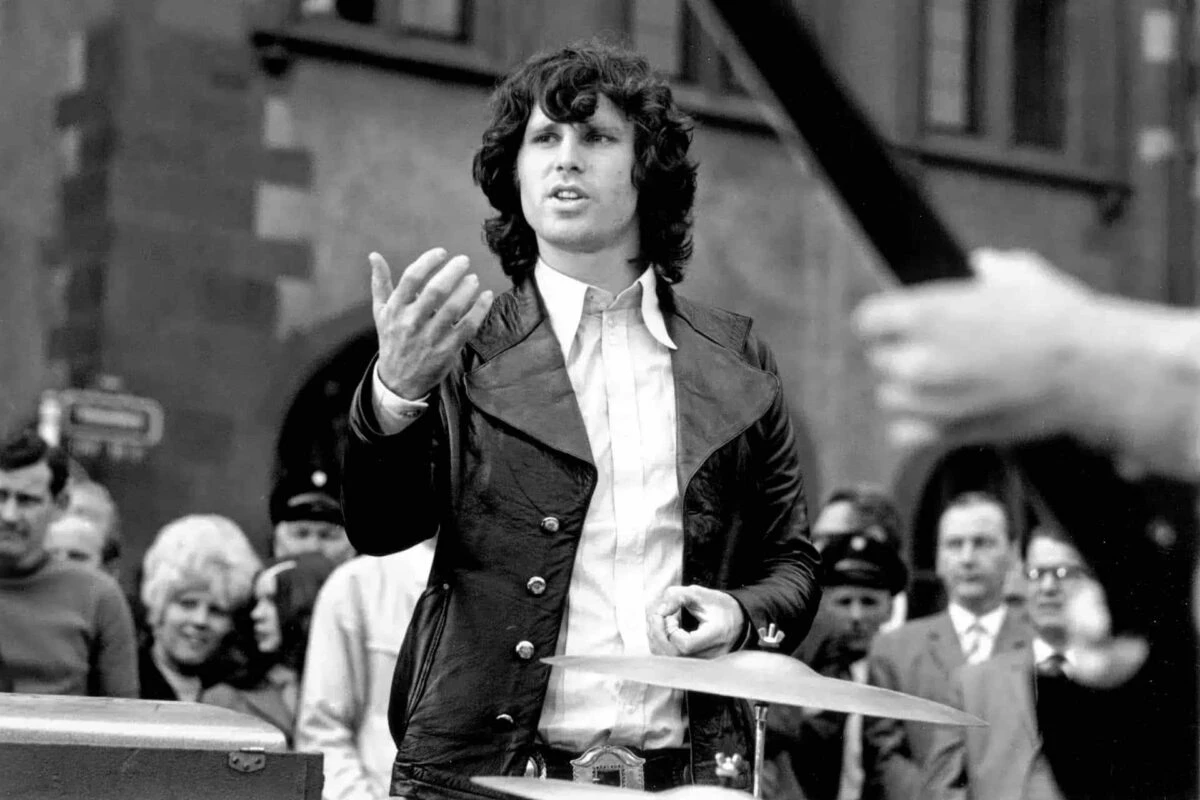
Jim Morrison: 1960s rock gods inherited the role of sex symbols from movie stars—and radically redefined it
For men, the 1960s saw the triumph of several types at once: the classic masculinity of Sean Connery as Bond, the icy, boyish beauty of Alain Delon, and the shamanic energy of Jim Morrison. Rock stars became the new gods, relegating movie stars to the background: girls swooned at their concerts just as they had at Valentino or Sandow's performances.
1970s: Naturalness, Disco, and the First Male Turn
The seventies brought a relaxed vibe. Beauty took to the streets and dance floors, no longer requiring elaborate hairstyles—it demanded a healthy glow and freedom of movement. Farrah Fawcett, with her dazzling smile and signature flowing hairdo, became the face of the decade. A poster of her in a red bathing suit, shot in 1976 by photographer Bruce McBroom at her home in Los Angeles, sold 12 million copies—an all-time record for a poster. It is housed in the Smithsonian Institution in Washington, D.C. 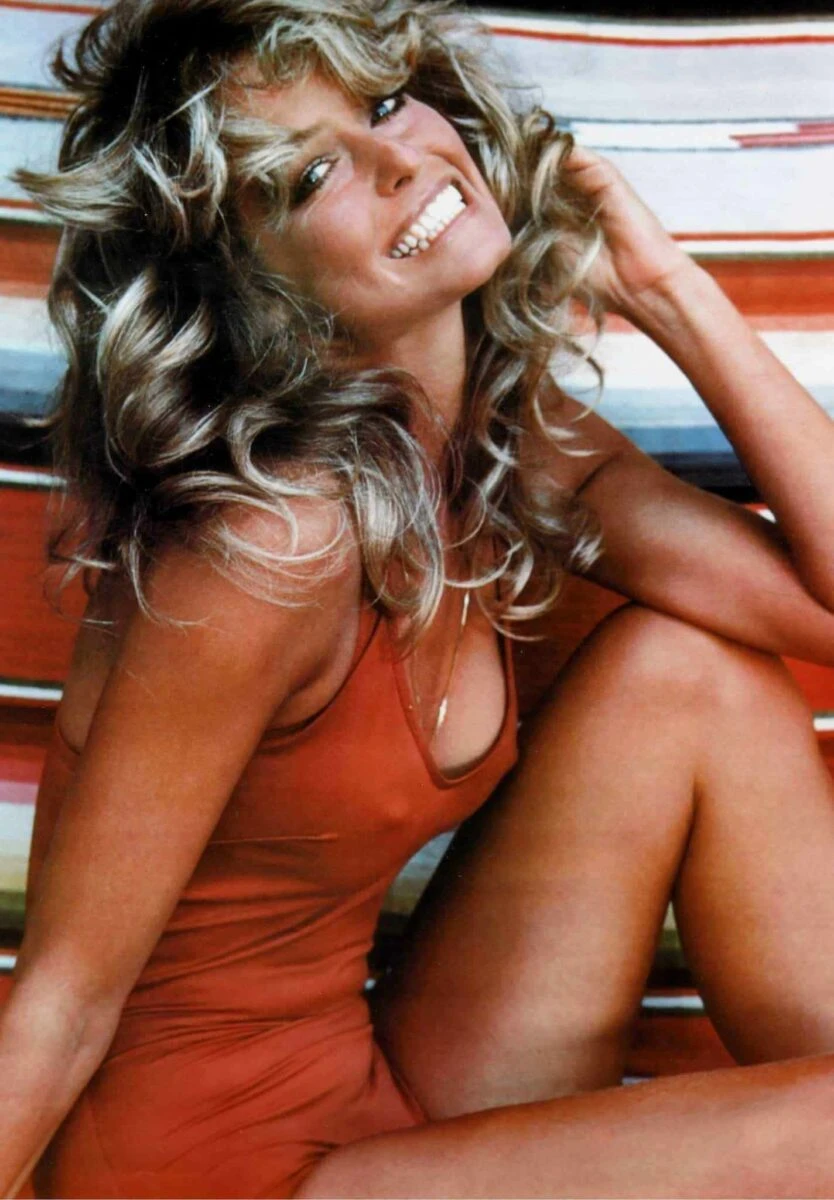
Farrah Fawcett: Red Bathing Suit Poster Sold 12 Million Copies – More Than Any Other Poster in History
The male ideal was split in two. On one side was the hypermasculine Burt Reynolds with his iconic mustache and hairy chest: his nude spread for Cosmopolitan in 1972 became the first male centerfold in a women's magazine. For the first time, the male body became an official object of aesthetic admiration – just as the female body had been before. On the other hand, John Travolta in his white suit from Saturday Night Fever (1977): the urban dancer, glowing under the disco lights, embodied a completely different masculinity – flexible, public, and joyful. 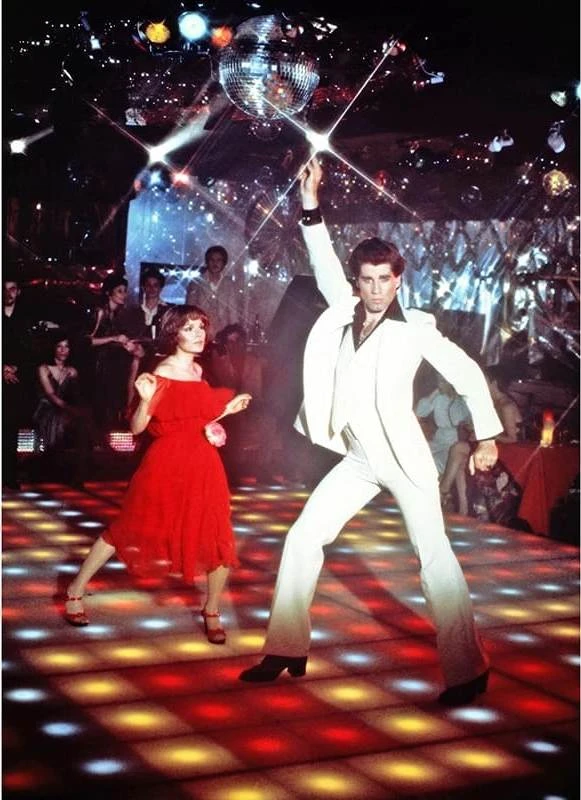
John Travolta: The white suit from Saturday Night Fever became an icon of the disco era – and a new standard of male attractiveness
1980s: The Cult of the Body, Aerobics, and the Power of Desire
The 1980s – the time of aerobics, yuppies, and "Reaganomics." The perfect body was the result of hard work in the gym, not a gift from nature. The sexuality of this era was aggressive, status-conscious, and deliberately expensive. Broad shoulders (in both women and men) symbolized a willingness to fight for a place in the tough corporate world. 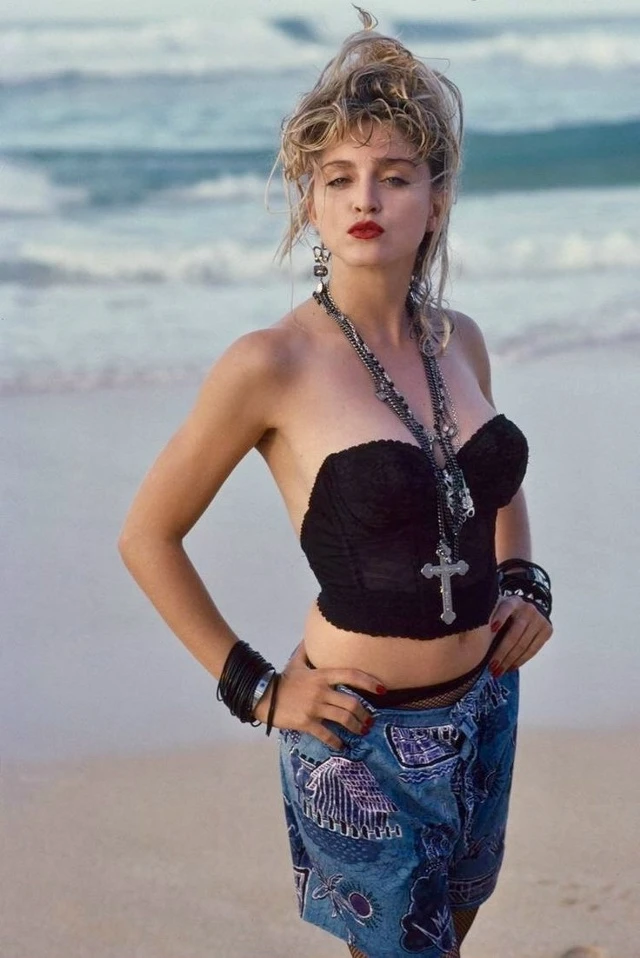
Madonna: The first sex symbol who controlled desire, not just was its object
Madonna upended the very concept of female sexuality. Previously, a sex symbol was an object of desire. Madonna controlled desire herself: corsets as outerwear, provocative music videos, Catholic symbolism in explicit contexts. She didn't ask people to look at her—she dictated how and what they looked at. 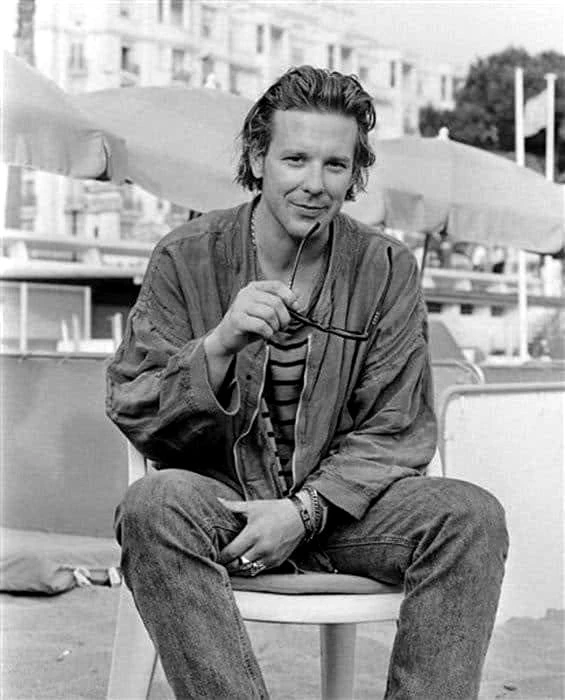
Mickey Rourke in "9 1/2 Weeks": Unshaven Danger as a New Formula of Male Appeal in the 1980s
The decade was characterized by several male types. Tom Cruise embodied youthful Hollywood glamour. Mel Gibson, in February 1985, became the first man to be named "Sexiest Man Alive" by People magazine—a title that, according to legend, arose because an interview with Gibson was so unsuccessful that the editors had to come up with something catchy for the cover. Mickey Rourke in "9 1/2 Weeks" (1986) offered a third option: unshaven danger, on the edge of what's permissible.
1990s: Supermodels, TV Series, and the First Photoshop
The 1990s marked the apotheosis of television—and the first decade when digital technology began to create images physically unattainable in reality. Sex symbols became global brands, their lives covered in tabloids 24/7. 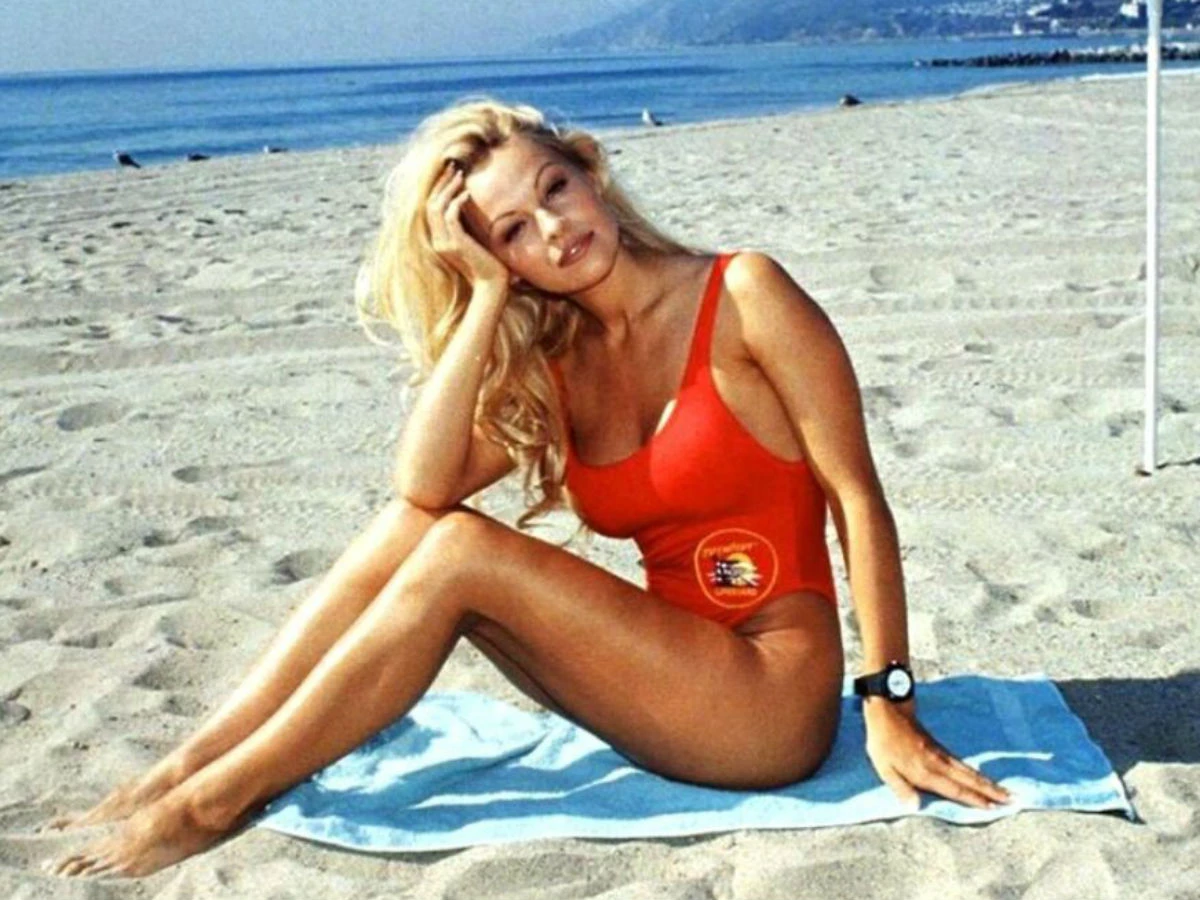
Pamela Anderson: Her image became a canon of the era—and simultaneously the first truly constructed beauty standard
Pamela Anderson from "Baywatch" set the standard for "doll-like" beauty—a platinum blonde with silicone breasts and a perpetual tan. This was the canon of the plastic surgery era: beauty as a construction kit that could be assembled piece by piece. At the same time, a completely different demand arose: Gillian Anderson, as Agent Scully in The X-Files, proved that intelligence, restraint, and red hair could be sexier than silicone. These two poles coexisted in the same decade—and that in itself was something new. 
Gillian Anderson as Agent Scully: in the 1990s, intelligence first began to compete with cleavage in the list of male criteria for attractiveness
The end of the century revealed a clash of extremes: the hyper-sexualized Baywatch and the dark "heroin chic" of the Calvin Klein runways, where painful thinness was presented as bohemian sophistication. Both images were equally unrealistic—one thanks to plastic surgery, the other to starvation. 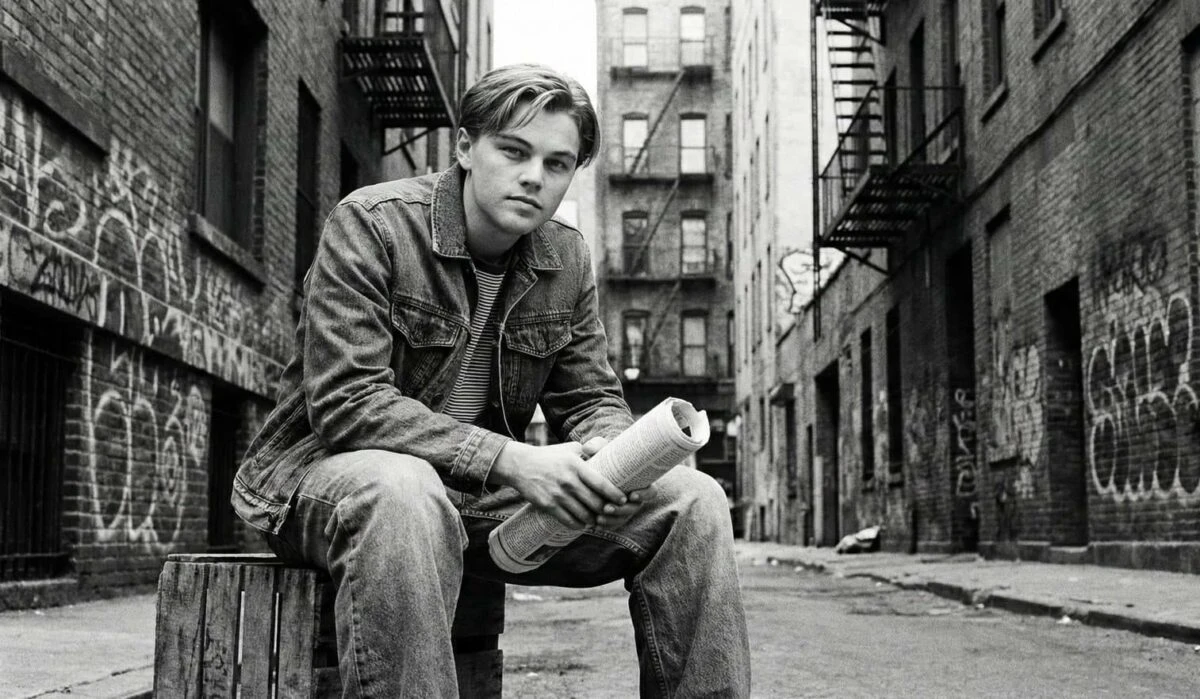
Leonardo DiCaprio after Titanic: boyish fragility as a new formula for male appeal—the complete opposite of Gibson or Gable
The male world was divided between two. Brad Pitt after Thelma & Louise (1991) and especially after Fight Club (1999) embodied a tanned brutality with a hint of existential angst. Leonardo DiCaprio after Titanic (1997) embodied a boyish fragility and vulnerability that drove a generation of teenage girls crazy. They divided the decade in half—and neither won.
Tracing this path, you realize: beauty is the living history of humanity. We have always considered "beautiful" what we lacked at a particular historical moment: stability, freedom, strength, or simply a vivid dream. A sex symbol is not someone who is beautiful in and of itself. He is the one who most accurately reflects the dreams of his time.
Which decade of the 20th century do you think created the most harmonious image of men and women—and why do modern beauty standards seem less enduring than the ideals of the past?