Bears turned into a tourist attraction. Bloody retribution came just a year later (15 photos)
Hair from a dead woman and shards of glass, which the animal had been feeding on for years in park dumps, were found in the stomach of one of the shot female bears. This isn't a scene from a horror movie, but the result of a real autopsy following "Grizzly Night" of 1967—a tragedy that was warned about four days before it happened. We examine how a tourist "bear show" resulted in two deaths and completely changed the approach to safety in national parks. 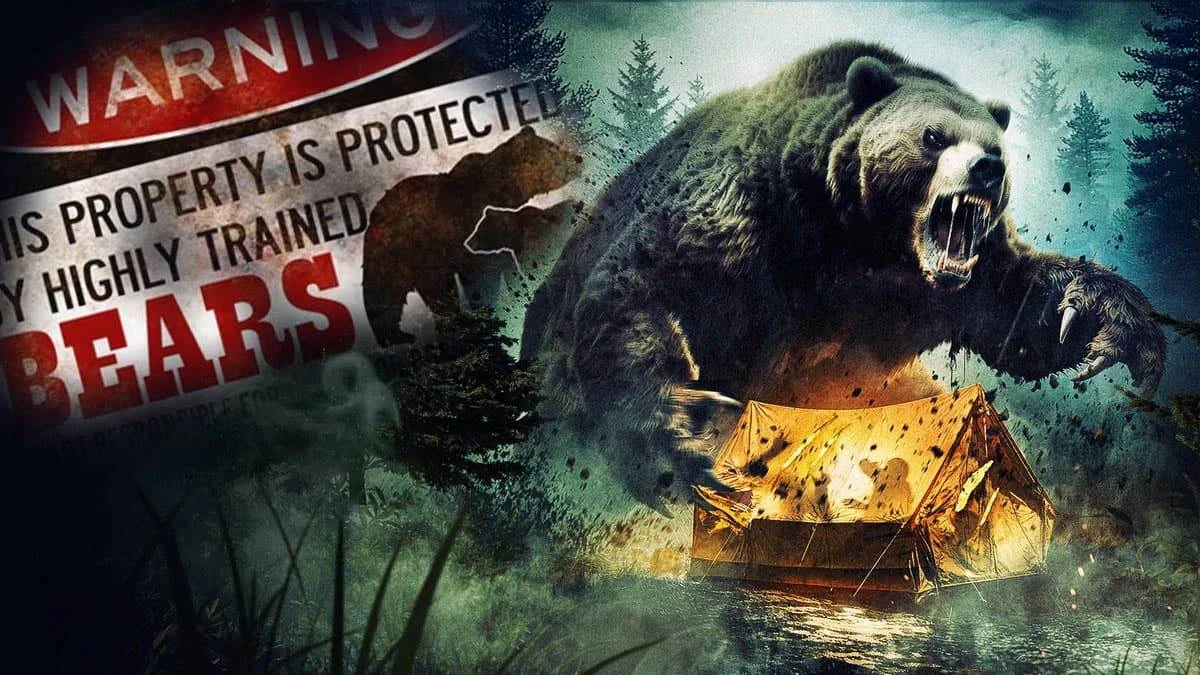
A Park That Was Considered Safe
Glacier National Park is located in Montana, right on the Canadian border. The rugged Rocky Mountains tower here. They are home to many predators. The most dangerous of these is the grizzly bear. An adult male grizzly bear weighs up to 360 kilograms. Standing on its hind legs, it reaches up to 3 meters. 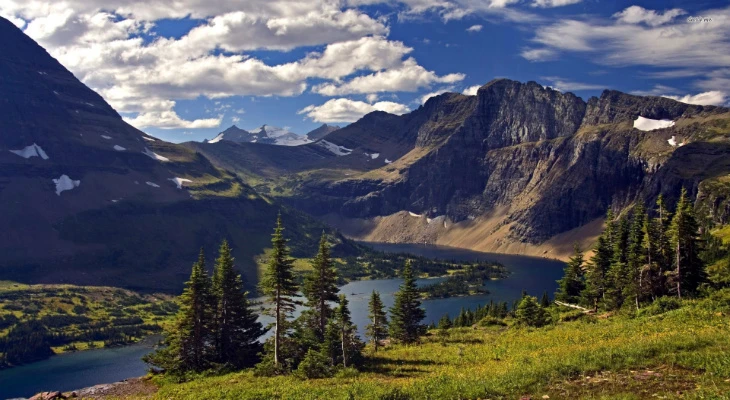
Glacier National Park in Montana
For many years, Glacier seemed an idyllic place. Humans and nature coexisted peacefully here: from 1910 to 1967, not a single tourist was killed by a bear in the park. This created a dangerous illusion: if grizzlies haven't been killed for decades, there's nothing to fear. 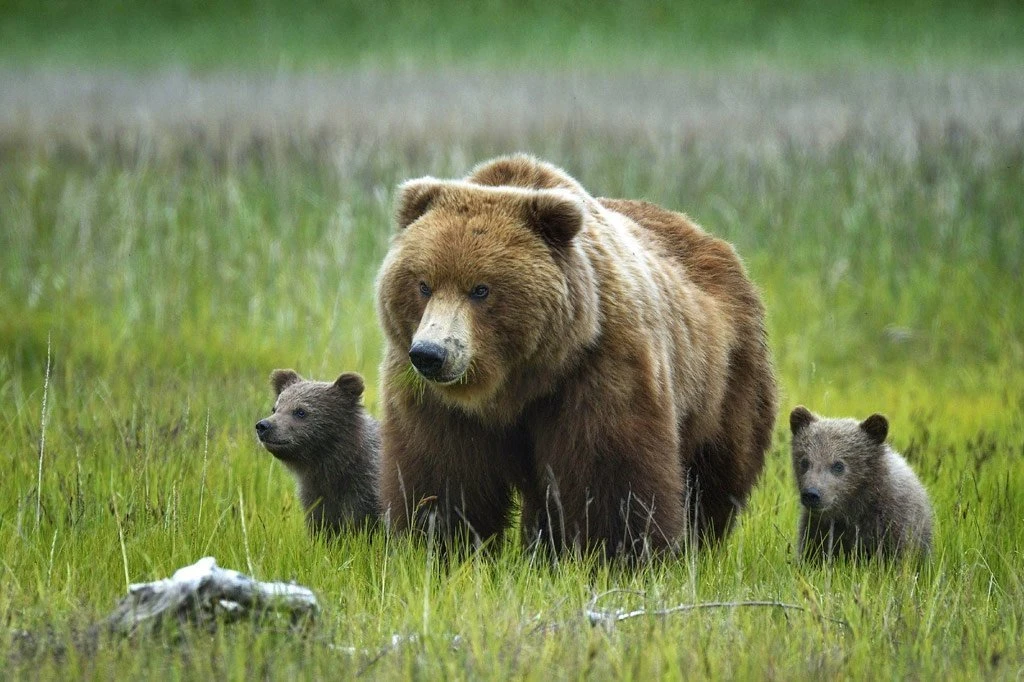
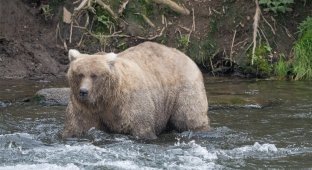
Mother grizzly bear with cubs
Park guests perceived grizzlies as mere background noise—no more dangerous than deer or squirrels. Rangers and biologists eventually came to think the same way. The threat of attack was assessed as close to zero. The idea that the animal could kill a person seemed simply outlandish to park guests. 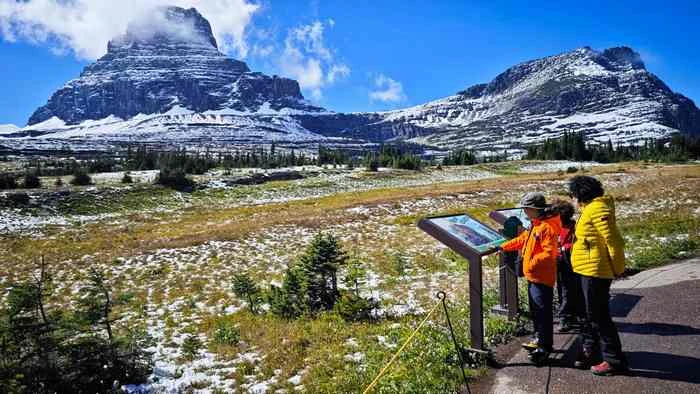
Tourists in Glacier National Park
Tourists walked the trails without any fear. Almost no one carried protective gear. Almost no one knew the basics of behavior in bear country. People thought the wilderness was created for their comfort and entertainment. A grizzly bear was a beautiful backdrop—you could photograph it at arm's length.
"The Bear Show"—How It All Began
Behind the scenes of this idyll, a dangerous scenario had been unfolding for years, but park administration chose to ignore it. At Granite Park Chalet, at an altitude of about 1,800 meters, a disastrous tradition developed. Caretakers Tom and Nancy Walton dumped food scraps into a ravine behind the building. The bears quickly learned the routine. Every evening, they would come to the chalet for a light supper. 
Granite Park Chalet – the site of the first tragedy in 1967
Soon, grizzly feeding became the chalet's main attraction. "Come see the grizzlies tonight!" was, according to eyewitnesses, the unofficial advertisement for the place. People stood on the balcony and tossed food to the animals, as if they were at a circus. The barrier between man and predator was visibly erased. Animals ceased to see humans as a threat. They became nothing more than a source of caloric food. 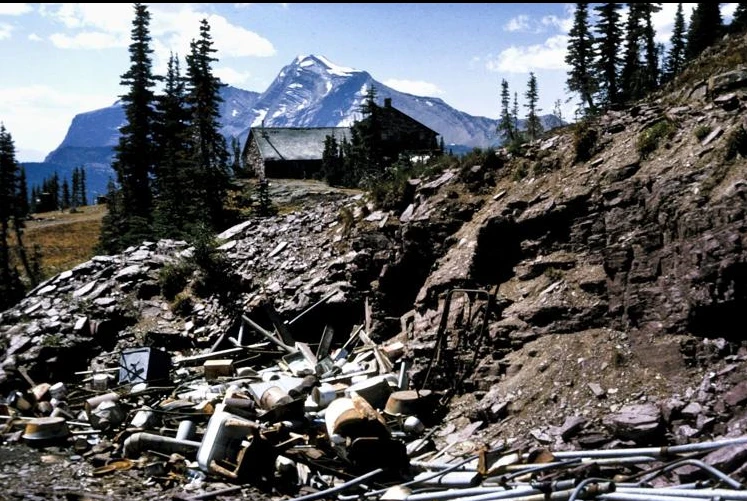
A ravine with garbage behind the Granite Park chalet
In 1966, the administration finally attempted to restore order. An incinerator was installed near the chalet. The apparatus proved too small for the influx of visitors: within ten years, their number had grown almost tenfold, to a million people a year. Instead of removing the excess waste, the caretakers dumped it back into the same ravine. The bears secured their right to the "feeding trough." Human carelessness continued to mount.
Four Days Before the Tragedy
On August 9, 1967, four days before the tragedy, 27-year-old biologist Dave Shea and ranger Bert Gildart climbed up to the chalet. They were stunned by the sight. Five grizzlies were feeding on garbage in full view of a crowd. Tourists were openly throwing food to the animals from the balcony. "It was a disaster waiting to happen," Shea later recalled. He filed an official report and submitted it to park management. 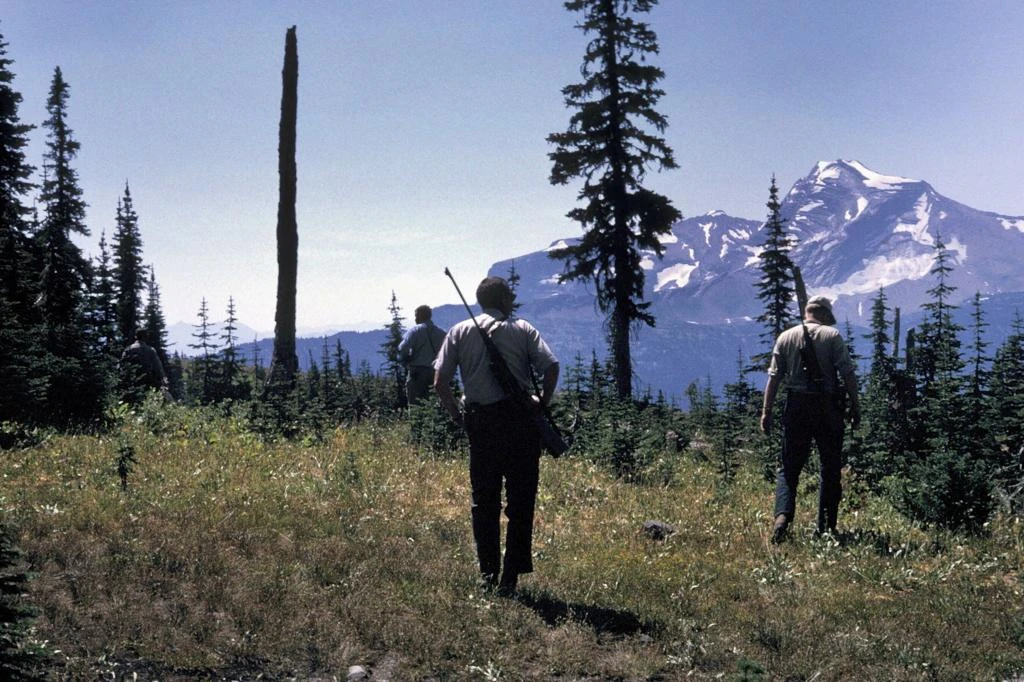
Ranger Bert Gildart, one of the authors of the report on bears at Granite Park Chalet
The report changed nothing. Nor did the outrage of other park employees. "In those days, they simply turned a blind eye to it," Shea himself later admitted. The administration didn't want to ruin the season with restrictions. The "bear show" brought fame and guests to the chalet. 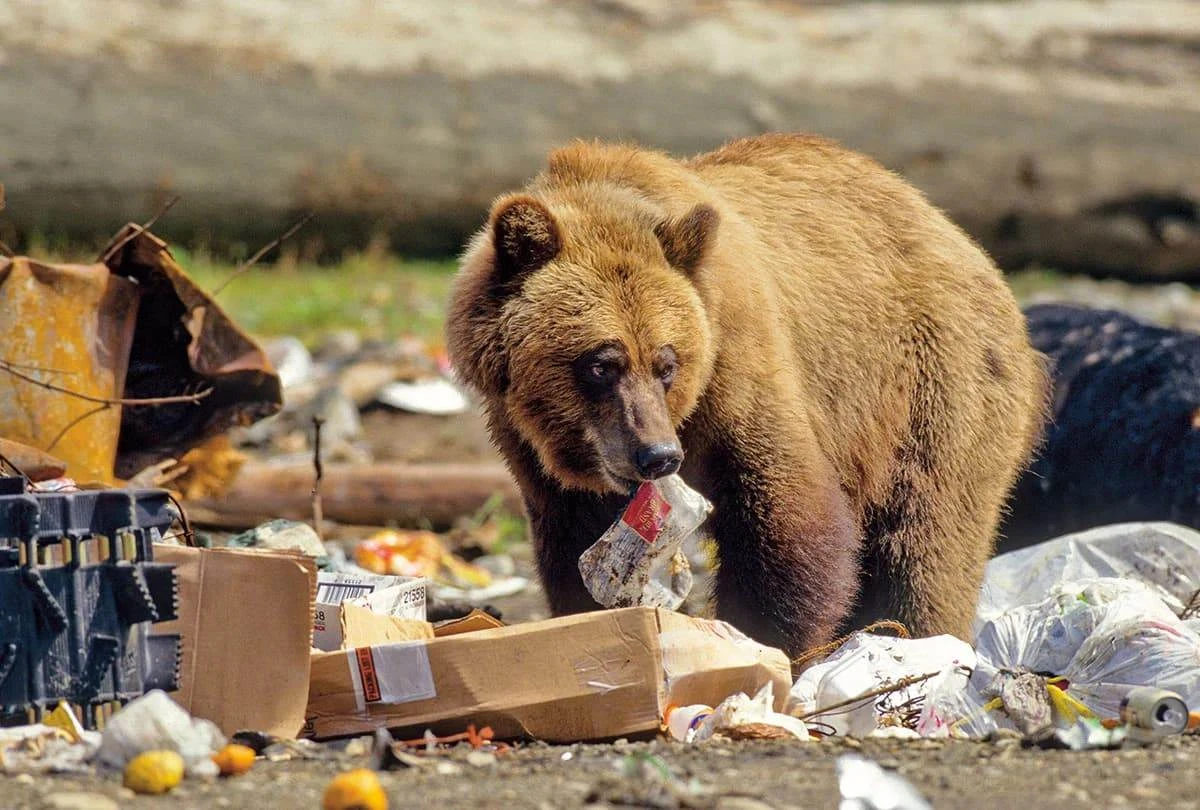
A grizzly bear at a garbage dump is a common sight in Glacier Park in the 1960s.
Sixteen kilometers away, at Truth Lake, things were no better. An emaciated female bear, weighing just over 200 pounds, had been wandering for months near the private campground of Kelly's Camp, searching for food. Back in June, neighbors at the campground described her as emaciated and unusually aggressive. A week before the tragedy, the same bear chased a group of Girl Scouts. Rangers knew about the bear. And again, they did nothing.
Night at Granite Park Chalet
On the evening of August 12, the sky over the park was overcast: a severe thunderstorm with lightning was approaching. Julie Helgeson and her friend Roy Ducat were working at the park's guesthouse. That day, they hiked the famous Highline Trail to Granite Park Chalet. They ate dinner and went to bed in sleeping bags at the campsite, a few hundred meters from the dump. 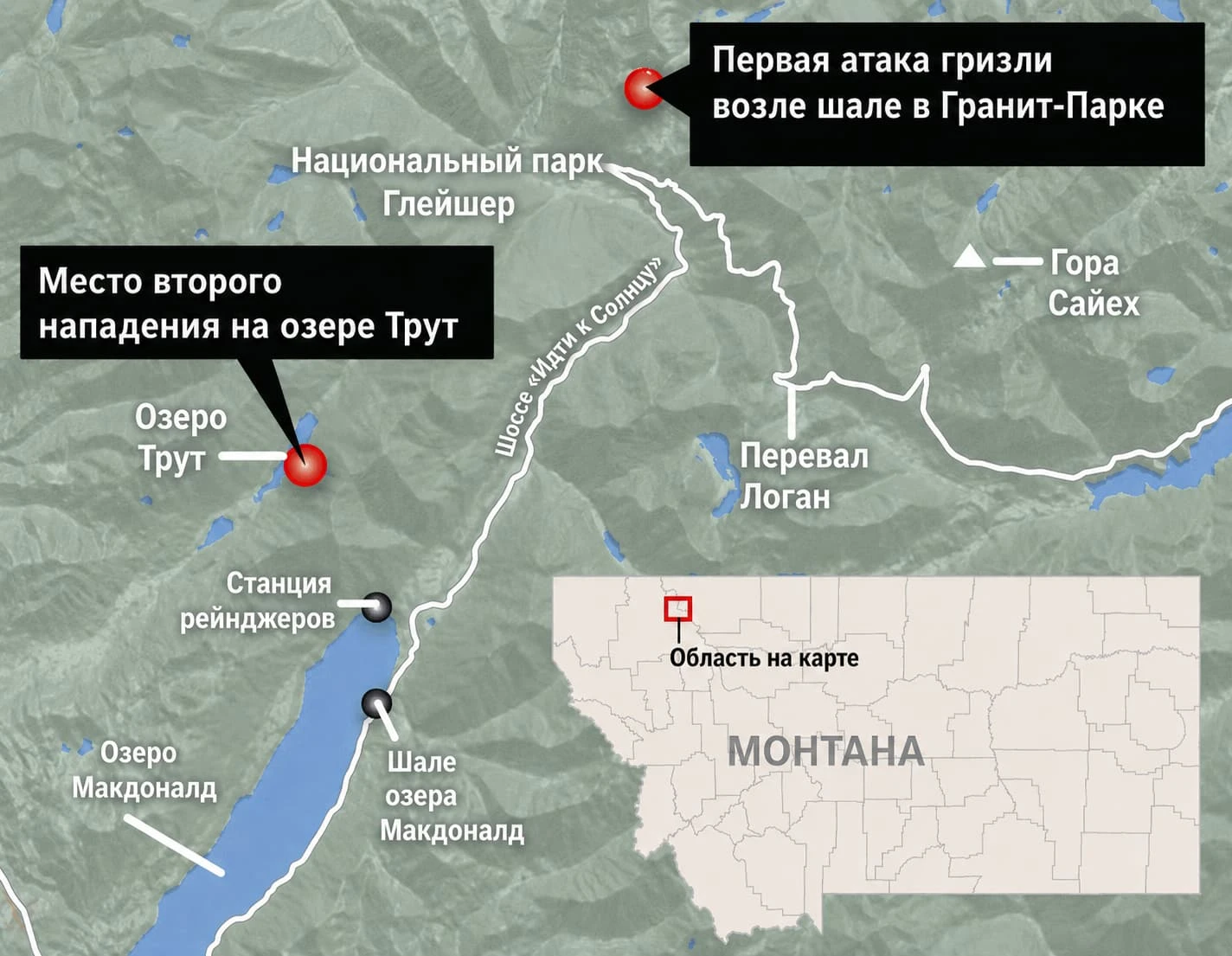
The locations of the two tragedies on the map of Glacier National Park
Around midnight, Dukat was awakened by Julie's whisper: there was a bear nearby, they should lie still. But the grizzly attacked them both anyway. When the bear momentarily distracted Julie, Dukat ran to a nearby group of hikers for help. The bear dragged Helgeson into the darkness. She was found alive 120 meters from the campsite. She couldn't be saved: she died of blood loss in the chalet at 4:12 a.m. Three doctors, who happened to be staying there overnight, were on duty nearby.
Night at Truth Lake
At almost the same time, a second tragedy was unfolding at Truth Lake. Michelle Koons went hiking with four work friends—Paul Dunn, brothers Ray and Ron Nosek, and Denise Hackl with her dog Squirt. Before dinner, the same emaciated bear approached the camp and stole some of the food. Just in case, the group moved their campsite closer to the shore and built a fire. 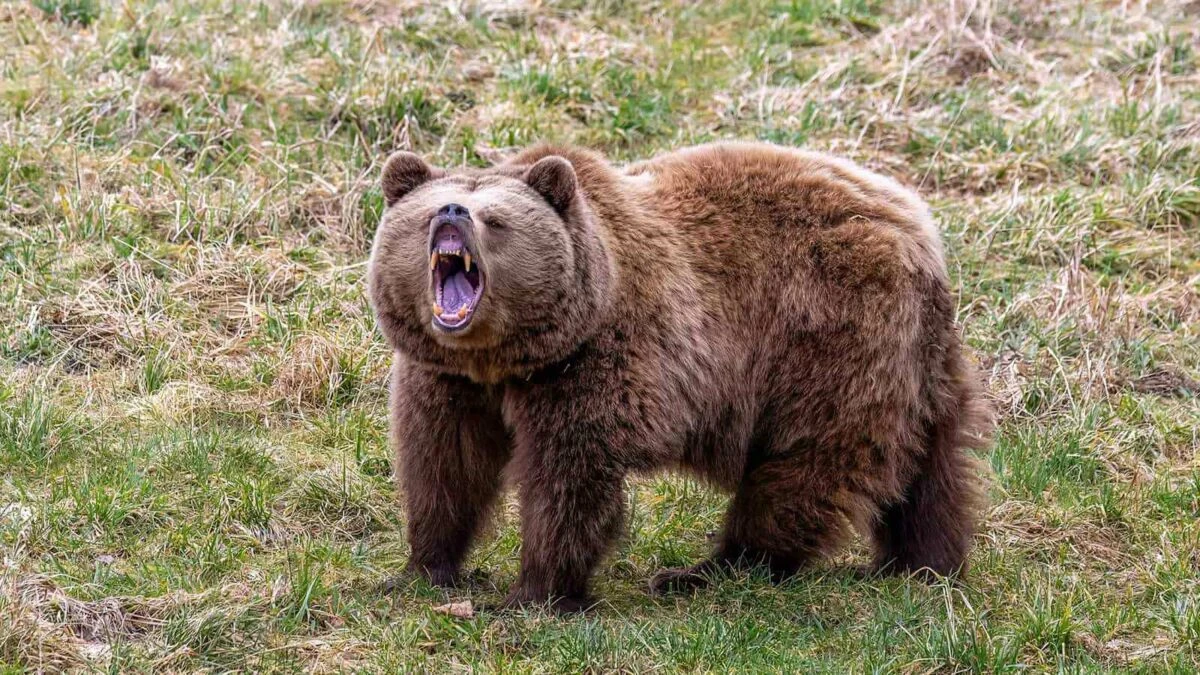
A grizzly bear similar to the one that attacked the hikers at Trut Lake
The fire burned out, and the group fell asleep. The bear returned. Four friends managed to climb into the trees. The zipper on Koons' sleeping bag jammed, preventing her from escaping. The survivors remained in the trees until six in the morning. Then they ran for help across the mountains, in the dark, in the pouring rain. Rangers didn't find Michelle's body until the next morning. They were too late to rescue her.
Payback
Park management ordered rangers to shoot any bears near both tragedy sites. Three animals were shot near the chalet in two days. First, two grizzlies that regularly fed at the dump. Then, a mother bear with two cubs: blood was found on her claws, and she was considered responsible for Helgeson's death. One cub was wounded during the shooting but managed to escape into the forest. 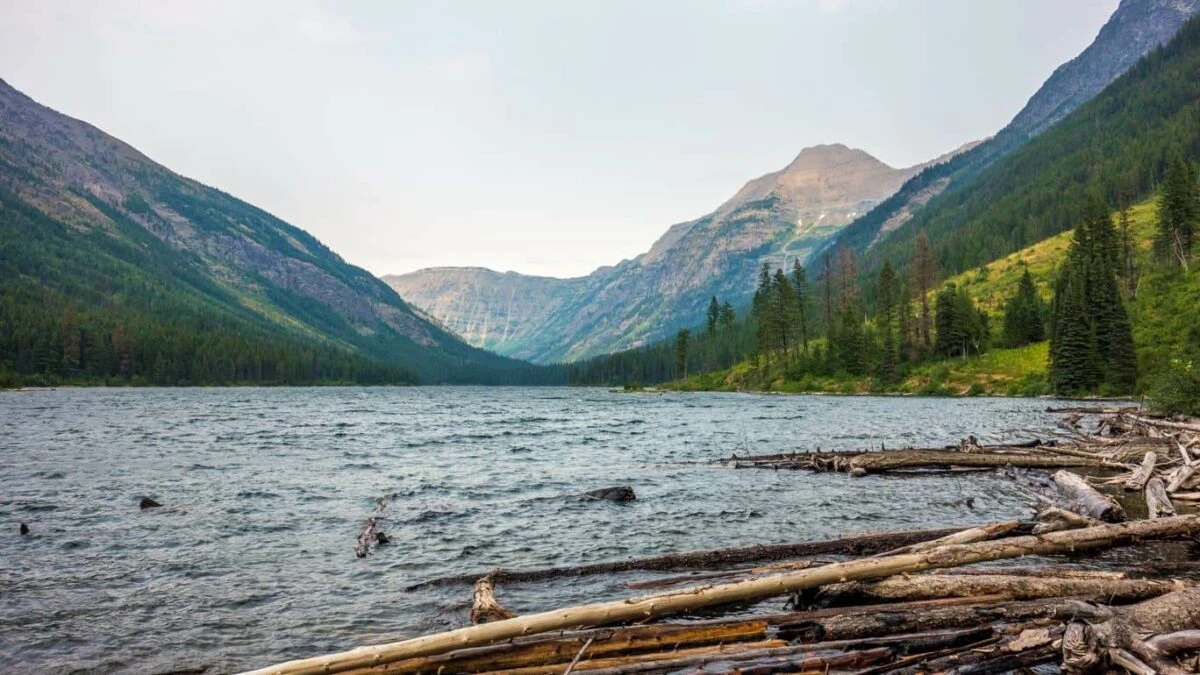
Trout Lake, the site of Michelle Koons's death
Rangers Leonard Landa and Bert Gildart tracked the female bear near Trut Lake in the mountains for two days. The animal attacked people several times before being shot. An autopsy confirmed that this bear was responsible for Koons's death. Light-colored hairs matching Koons's were found in its stomach. Glass shards were lodged in its gums and teeth—the bear had been feeding on them for years in landfills. 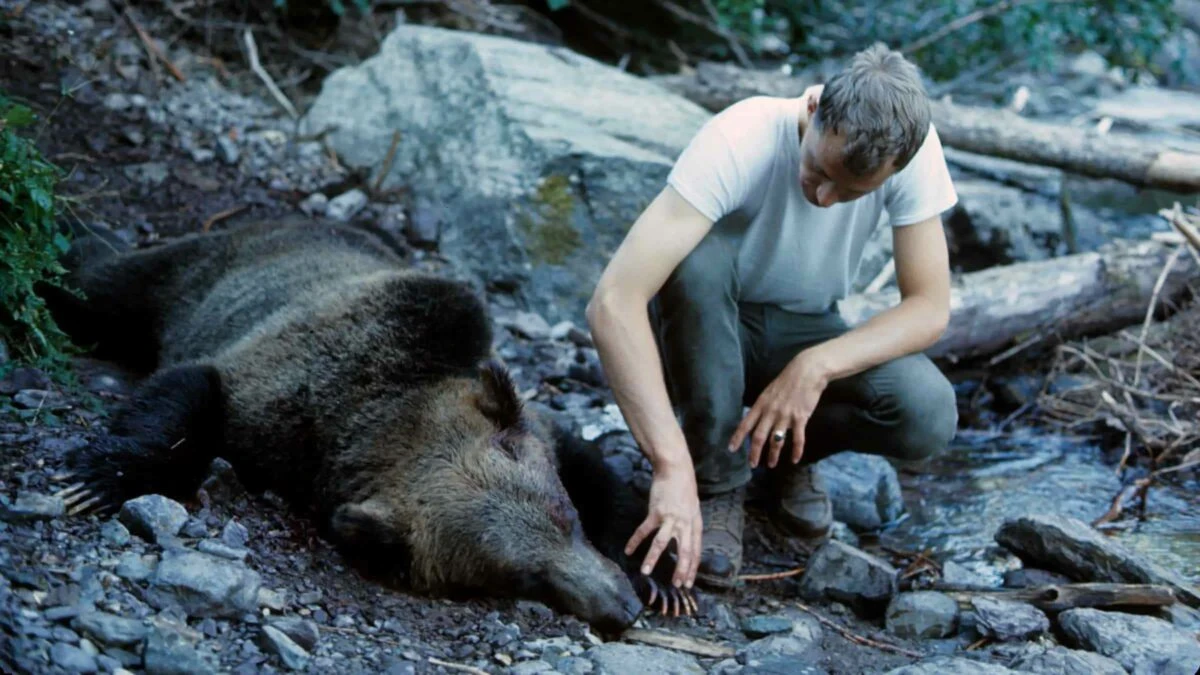
Ranger Leonard Landa with the body of a female bear shot near Truth Lake. 1967
A total of four grizzlies were shot in the park during those days: three near the chalet and one near Truth Lake. These animals weren't bloodthirsty monsters. They were victims of human negligence, which for years had deprived them of their natural caution. The ending of this story is a direct consequence of the very "show" that park administration tolerated for the sake of satisfied tourists.
What has changed
The tragedy of 1967 became a turning point for conservation in the United States. The following season, the park introduced a permit system for overnight camping deep within the preserve. Feeding wild animals was prohibited. Bear-proof trash bins appeared along the trails. Campers were required to hang food on ropes away from their tents. Sleeping and cooking areas in the campsites were separated for the first time. Many things that seem self-evident today were introduced only after that night. 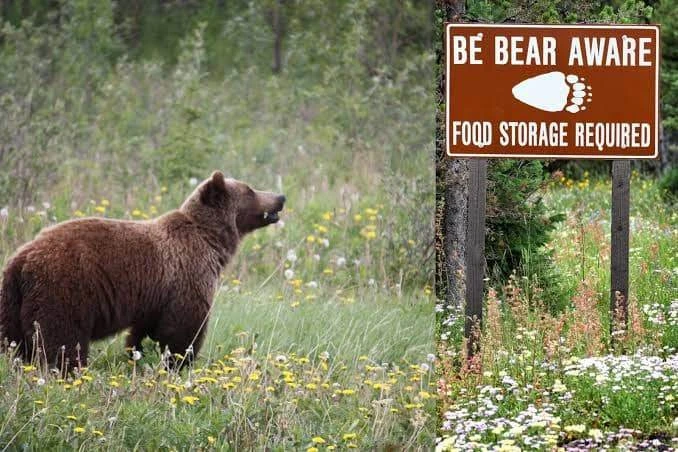
Warning sign in Glacier National Park: "Beware of bears. Observe food storage regulations."
The Legacy of Tragedy: Book, Films, and Living Witnesses
The story of Julie and Michelle was chronicled by journalist Jack Olsen, first in a series of articles for Sports Illustrated. Then, in 1969, in the book "Night of the Grizzly," which is still in print. In 2010, the events of that night formed the basis of a MontanaPBS documentary narrated by J.K. Simmons. Survivor Roy Ducat and his friend Paul Dunn, who also survived that night at Truth Lake, were interviewed in the film—exactly 43 years after the tragedy. In January 2026, the live-action thriller "Night of the Grizzly," directed by Burke Doren, was released. The film follows Olsen's book closely. 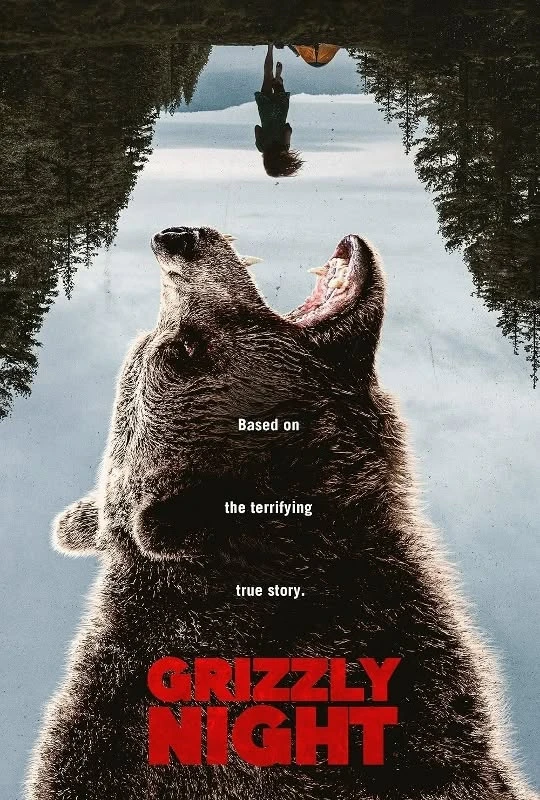
Movie poster "Night of the Grizzly." 2026
Decades later, the consequences of that night are evident in every safety regulation of national parks. Grizzlies remain predators, even after living alongside humans for years. More than one life has been cut short by the illusion of "our" bears. Naturalist Timothy Treadwell and his girlfriend were among the most famous grizzly victims in the United States. They considered themselves friends of the animals they had spent many years with. 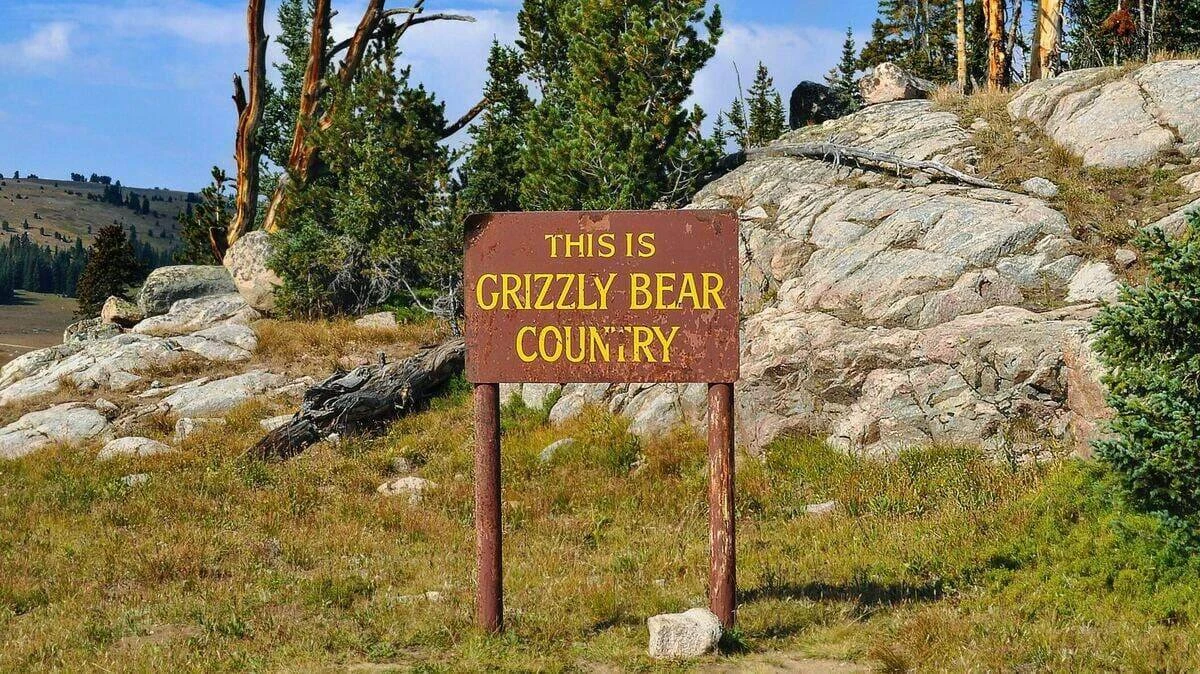
"This is grizzly country"—signs like these are now posted throughout Glacier National Park.
Nature is not a safe recreational area. It is a complex ecosystem that demands respect. Rob Chambers, co-producer of the documentary about that night, put it this way:
"The problem started with people feeding the bears and leaving trash. If we don't learn from this historic event, both people and bears will die."
Do you think nature is a home where people come as uninvited guests, or do they have the right to dictate their own comfort conditions even in the most remote forests?