Edelweiss Pirates - How German anti-fascist teenagers fought against Hitler's regime (7 photos)
The German informal organization "Edelweiss Pirates" united thousands of teenagers. They came from diverse backgrounds, but they were united by their hatred of the Nazi regime. They were a kind of Hitler Youth in reverse, using both propaganda and force to combat their enemies. 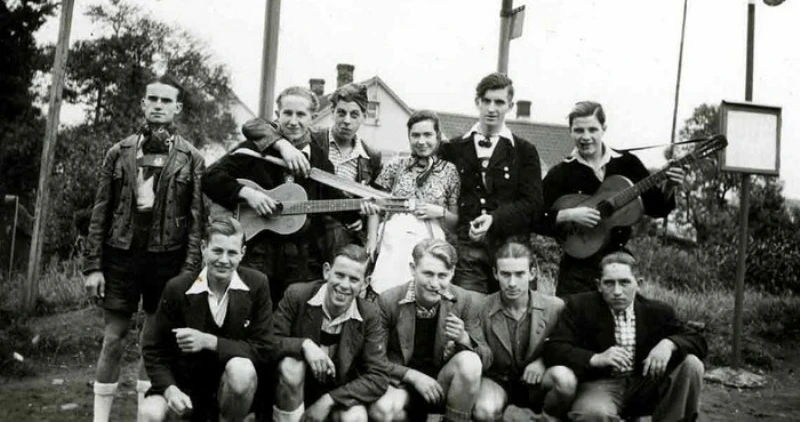
The first mass German youth organization was "Migratory Bird." This society appeared in Germany in the late 19th century, and its members were very similar to the American Scouts. Boys and girls went on hikes, sang songs around campfires, and learned to survive in the wilderness. It was the "Migratory Birds" who formed the basis for the infamous Hitler Youth organization, which united up to 80 percent of German youth aged 14 to 18. 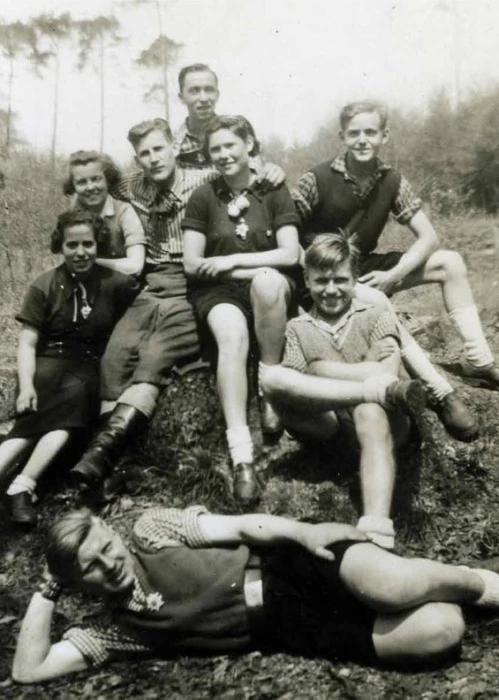
Youth with Edelweiss Badges
But not everyone wanted to march in formation and sing hymns in honor of Hitler. Those who refused to accept Nazi policies began calling themselves "Edelweiss Pirates." These were young people with the most progressive views. The "Pirates" favored American cowboy-style clothing, contemporary foreign music, and outdoor recreation. There were many of them, and they recognized each other by their badges depicting an edelweiss flower.
To avoid joining the Hitler Youth, the "Pirates" dropped out of school at age 14 and switched to homeschooling or self-education. This allowed them to avoid state oversight until they reached the draft age of 18. Until the start of World War II, this youth movement was not politicized. But then everything changed.
The "Pirate" Movement at the Beginning of the War
One member of the German anti-fascist movement described the "Edelweiss Pirates" as follows:
"They are everywhere. There are more of them than the Hitler Youth. They know each other well, they always stick together. There are so many of them that they beat up patrols. They never take 'no' for an answer." 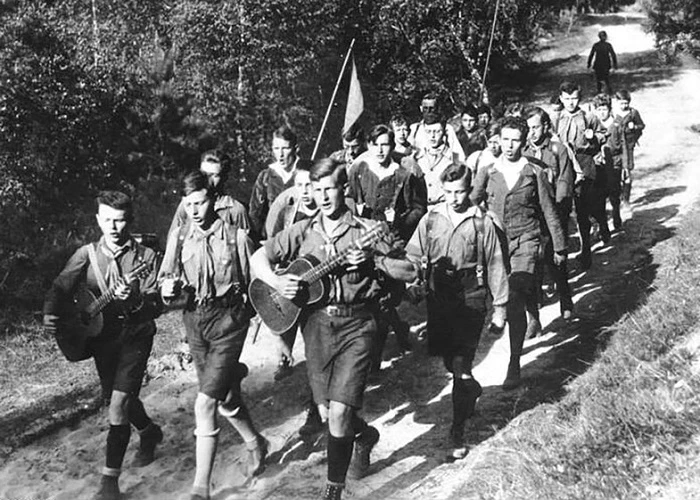
Even at the very beginning of the war, teenagers managed to stage serious protests. One night, they spray-painted the entire center of Cologne with slogans like: "Brown as shit, no more brown Cologne. Wake up!", "Nazi heads will roll after the war!", "The High Command is lying!"
Almost immediately, the authorities launched an organized campaign against the "pirates." They declared them parasites and saboteurs, and then began rounding them up. Hitler Youth patrols, formed by committed young men who played sports, were used to combat the young anti-fascists. On September 17, 1940, a law was introduced punishing even membership in the organization. Those convicted of "piracy" faced a month of administrative arrest. Young men and women caught during the protests were convicted under criminal law.
"Pirates" after 1944
After the Allied landings in Normandy and the subsequent turning point in the war, German youth began to be recruited en masse to build fortifications. The "Pirates" did not want to participate and began to go underground. Having become outlaws, these youth began to act more radically. 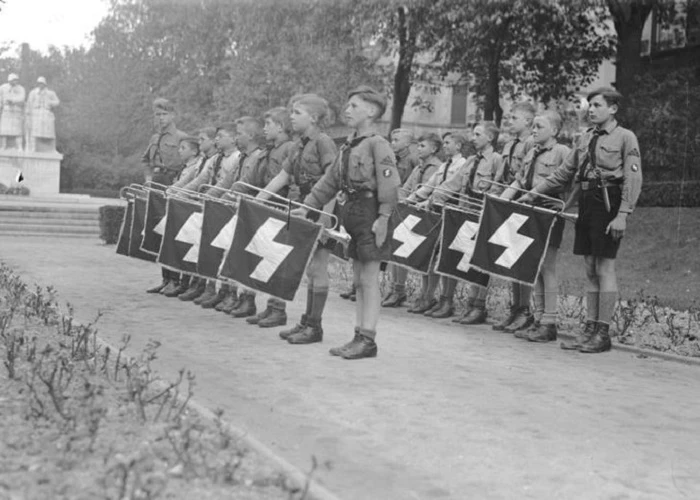
A Hitler Youth unit on parade. 1933
The "Edelweiss Pirates" helped Jews, escaped prisoners, and deserters hide. They attacked patrols and even carried out attacks on concentration camps. They also organized sabotage at factories, significantly undermining the Reich's military potential. It became clear to the Nazis that they would have to deal with the "pirates" seriously.
A separate concentration camp was created near the town of Moringer for young people suspected of ties to the organization. By the end of 1944, 1,386 people had been imprisoned there. Members of the organization who fell into Nazi hands were tortured and often subjected to public executions. But even these reprisals could not sway the resolve of the young men and women of the organization.
Hans-Bomb Actions
The most daring and effective was the group of Hans Steinbrück, nicknamed "Hans-Bomb." This young man and a group of like-minded individuals went completely underground. The group settled in the ruins of Ehrenfeld, the Cologne district most damaged by the bombing. "Hans-Bomb" militants bravely attacked patrols and even small Nazi detachments, confiscating their weapons. 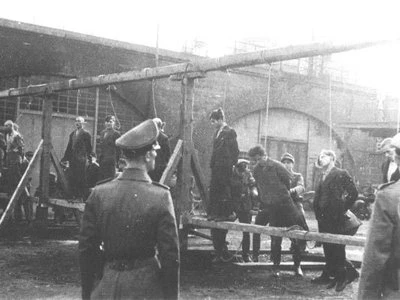
Execution of members of the Cologne cell of the "Edelweiss Pirates"
According to information available to the Gestapo, Steinbrück's group consisted of approximately 130 people. These men had no official status and therefore did not receive ration cards. They had to obtain food in battle or by looting warehouses. The most successful operation of these "pirates" was a raid on a butter warehouse. The group's haul included 2.5 tons of this valuable commodity.
By April 1945, "Hans the Bomb" and his comrades had carried out 15 attacks and assassination attempts. One of their most successful operations was the bombing of the Cologne Gestapo headquarters, which killed several officers and destroyed documents valuable to the Nazis.
Despite their prowess, the "Pirates" also suffered heavy losses. In the autumn of 1944, mass raids were carried out, personally led by the head of the Reich State Security, Ernst Kaltenbrunner. Twenty-five workers who had assisted the organization were executed. A short time later, 14 "pirates" fell into the hands of the Gestapo and were hanged. 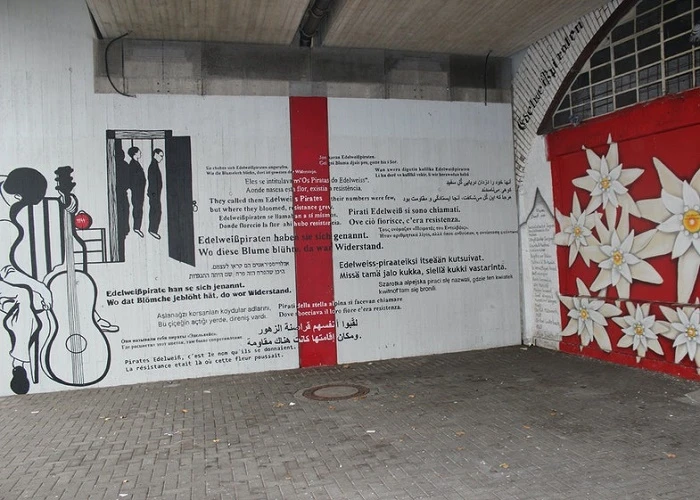
Makeshift memorial at the site of the "pirates'" execution
Despite the numerous contributions of the "Edelweiss Pirates" and their self-sacrifice, the organization remained largely silent after the war. These men received official status as fighters against Nazism only 60 years later.
In 2004, a film about the heroic deeds of the anti-fascists from Cologne, "The Edelweiss Pirates," was released by German director Nicky Stein. The film starred Ivan Stebunov, Sascha Legler, and Simon Thérö. Filming took place in Germany, including historical locations in Cologne, adding to the film's authenticity. 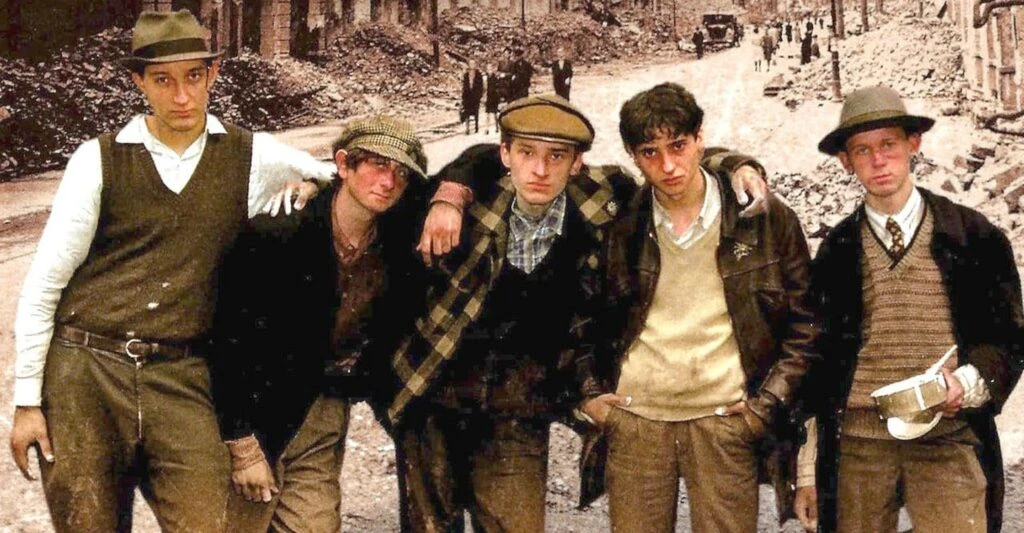
Still from the 2004 film "The Edelweiss Pirates"
The film masterfully captures the atmosphere of the time, showing the courage and self-sacrifice of young people willing to risk everything for freedom and justice. The film not only commemorates the Edelweiss Pirates, but also serves as an important reminder that even in the darkest times, there are those willing to fight for truth and human dignity.