Kill everyone - God will know his own: How the Pope declared war on Christians (12 photos)
Crusades were usually waged against Muslims for the Holy Sepulchre. But in 1209, Pope Innocent III declared a holy war against his own co-religionists. The Cathars of southern France became the enemy. Rome considered their teaching on the purity of faith a mortal threat. Twenty years of massacres and burnings destroyed an entire culture. The wealthy Languedoc became part of the French crown. The Inquisition was born. We tell the whole story—from the massacre at Béziers to the last bonfire at the walls of Montségur. 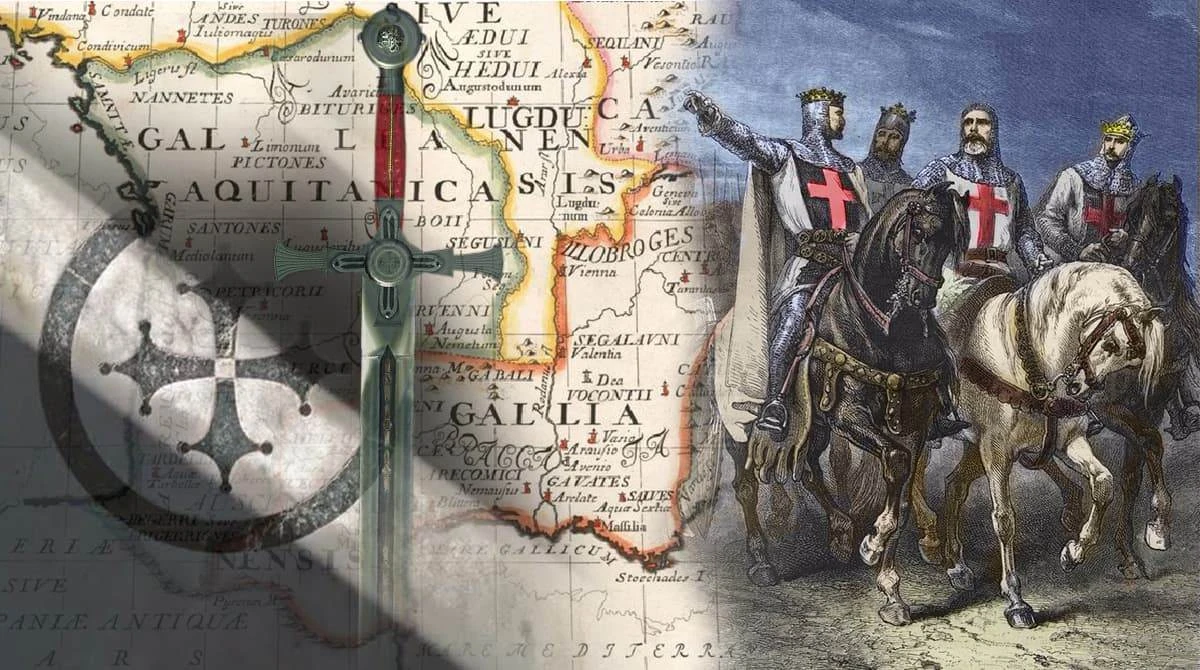
Imagine an ordinary town in southern France. People go to church, raise children, and trade at the market. One day, an army of 10,000 men approaches the gates—crosses on their shields, crosses on their banners. These are not Saracens from overseas: the Pope himself sent this army, and it has come to kill Christians. The unfortunate townspeople's only fault is that they did not believe in Christ as Rome prescribed.
Who were the Cathars and what did they believe?
The name Cathar comes from the Greek word katharos, meaning "pure." Another name for the movement was the Albigensians, associated with the city of Albi, one of the centers of heresy. The Cathars professed radical dualism and believed in two gods: a good spirit who created, and an evil demiurge who created matter. The Cathars considered the earth to be a creation of evil, and the human body a prison for the pure soul.
Hence the strict asceticism of the "perfects" (perfecti)—the spiritual elite of the movement. They abstained from meat, wine, and marriage, and lived the life of itinerant preachers. Ordinary believers, the credentes, lived ordinary lives. They underwent the rite of spiritual baptism—the consolamentum—only before death. 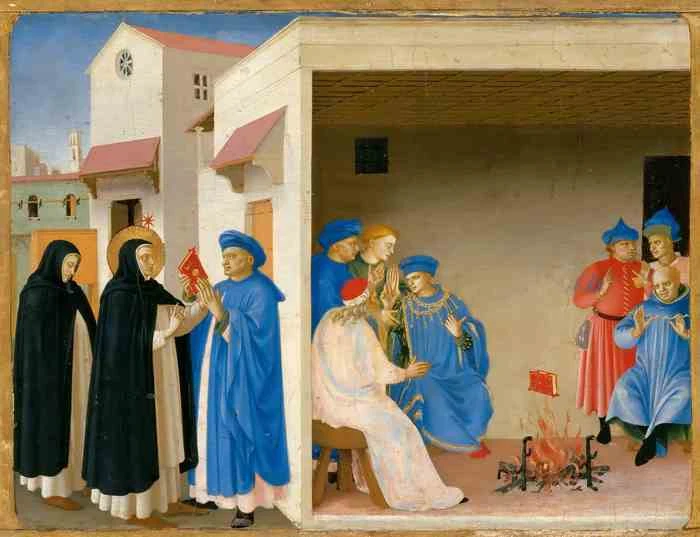
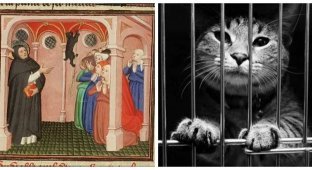
The Disputation of St. Dominic with the Cathars. The Church tried to convince the Cathars with sermons long before it took up arms.
The Cathars did not revere the cross as a sacred relic—for them, it was an instrument of torture, not a symbol of salvation. The so-called "Occitan cross," sold today as a souvenir in Languedoc, is in fact the heraldic symbol of the Counts of Toulouse. A direct connection between this symbol and the Cathar rites themselves has not been historically confirmed.
Why the Cathars Became a Threat to the Church
The Cathars rejected the church hierarchy and did not recognize the sacraments or the institution of the priesthood. They did not pay the tithe—the obligatory tax to the church that sustained the Catholic clergy.
The prelates of Rome often lived in luxury, and by comparison, the poor, honest Cathar preachers appeared as truly righteous. Their simplicity attracted the peasants and some of the nobility—the counts and viscounts of Languedoc. 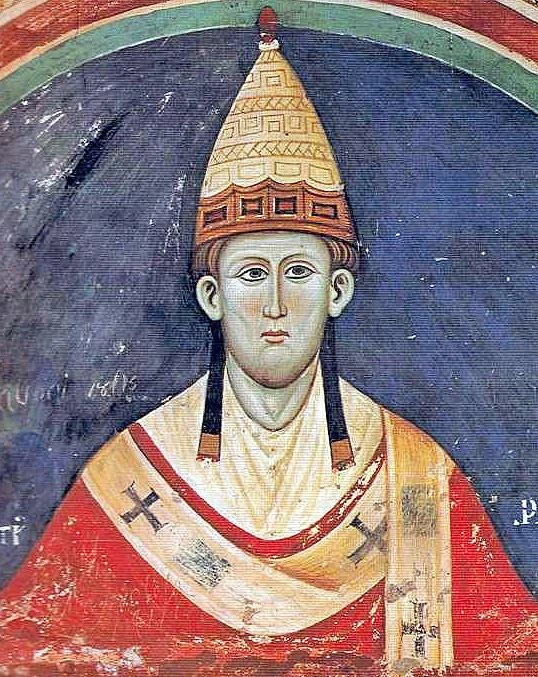
Pope Innocent III. 13th-century fresco in the Sacro Speco monastery in Subiaco, Italy
For the Vatican, this was more than just a theological problem. Heresy undermined the Church's financial flows and the very idea of its spiritual monopoly. Innocent III considered the Cathars a threat no less serious than Islam overseas.
The Pope initially tried to persuade the southerners with sermons, but his missions failed one after another—the local nobility openly sympathized with the heretics.
The Murder of the Legate and the Beginning of the Campaign
Raymond VI, Count of Toulouse, ruled the wealthiest region of Languedoc and openly patronized the Cathars. He refused to hand over "heretics" to the Church, valuing the loyalty of his own subjects.
In January 1208, the papal legate, Pierre de Castelnau, met with the count and demanded decisive action against heresy. The conversation ended in a quarrel. On January 15, the legate left Toulouse, and the next morning he was stabbed to death on the road near the banks of the Rhone. The involvement of Count Raymond's men was never proven, but suspicion fell on him. 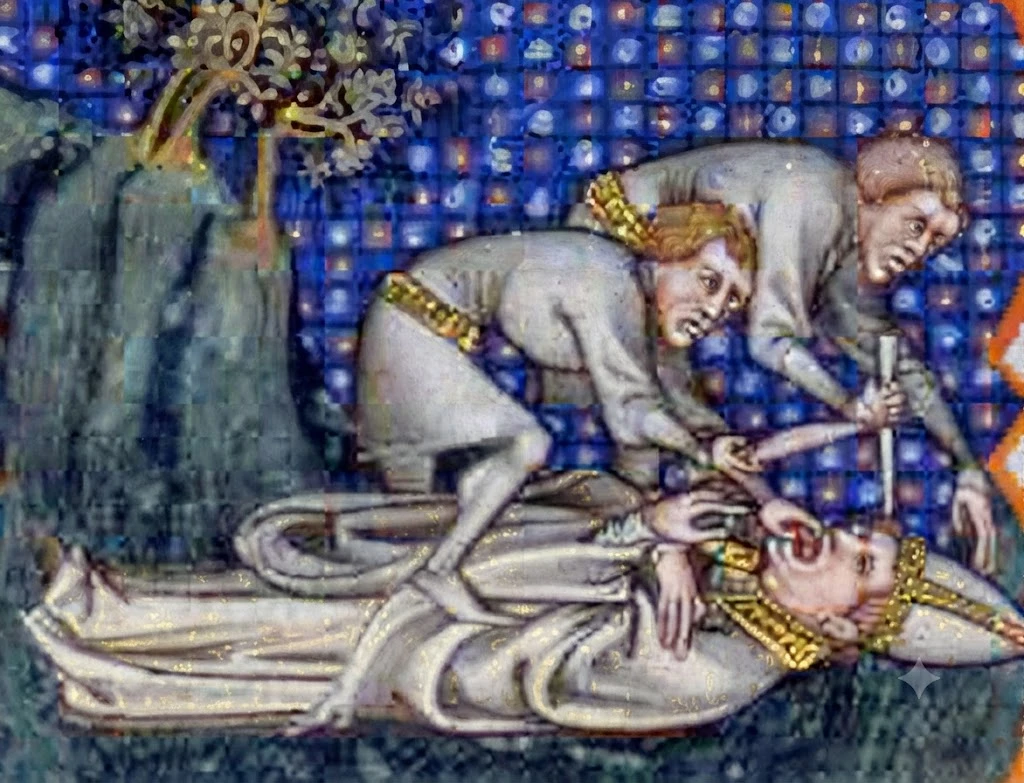
The Assassination of the Papal Legate Pierre de Castelnau. 13th-century miniature
Innocent III used the legate's death as a formal pretext and declared a crusade. He promised the barons of the North not only absolution but also the lands of the southerners.
The cross on the crusader's shoulder ceased to be a religious symbol – it became a pass to foreign lands. The ideological war merged with the redistribution of property: the northern nobility received the chance to grow rich at the expense of the prosperous South.
Massacre at Béziers
The crusader army—approximately ten thousand men—left Lyon in early July 1209. Three weeks into the campaign, they reached the walls of Béziers, one of the major fortified towns in Languedoc.
The besiegers demanded the surrender of approximately 220 Cathars, whose names appeared on the local bishop's list. The townspeople refused—many of them were Catholics, and they had no intention of betraying their neighbors. Ultimately, on July 22, 1209, the city fell after a brief assault. 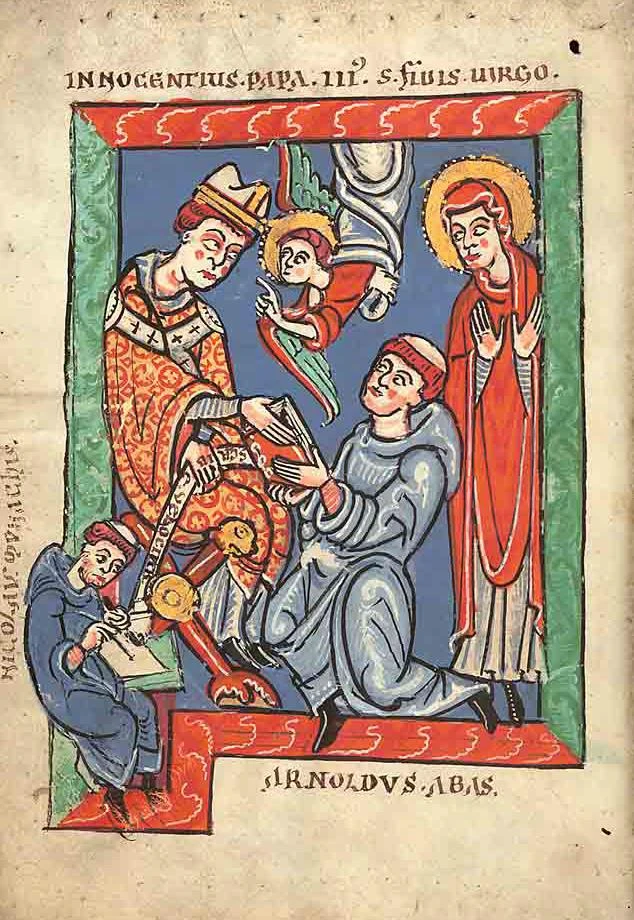
Pope Innocent III and Arno-Amalric. 13th-century miniature
This episode owes its legendary phrase to the monk Caesarius of Heisterbach, who recorded the story more than ten years after the events. According to his version, Arno-Amalric's legate was asked how to distinguish a heretic from a faithful Catholic. He replied, "Kill them all—God will recognize his own." Not a single chronicler of the campaign recorded this phrase. Historians consider it a later exaggeration, although it accurately conveys the spirit of the order. 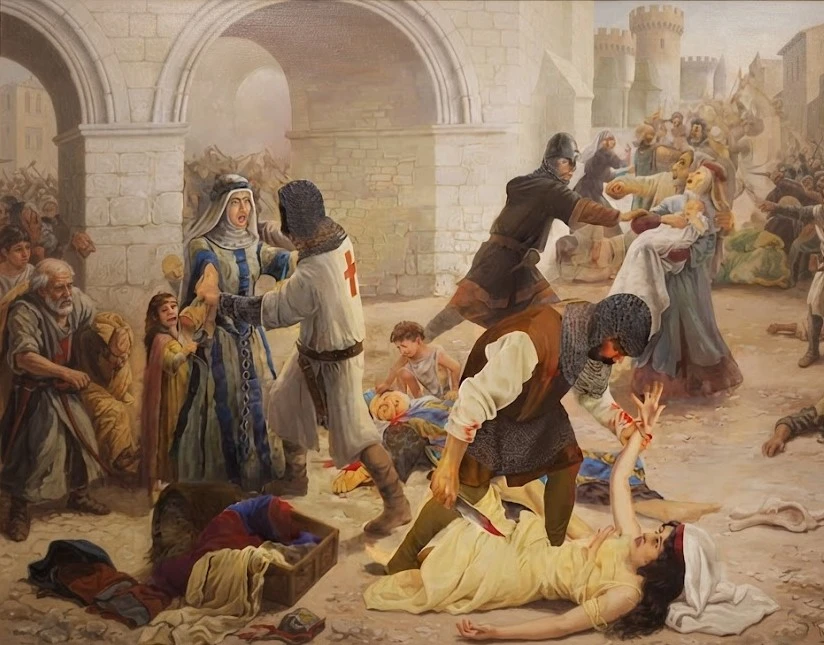
Massacre at Béziers. Artist: Hervé Olivier, 1991
Arnaud-Amalric himself reported the deaths of around twenty thousand people in a letter to the Pope—without discriminating between status, gender, or age. Modern historians cite more conservative figures: between seven and twenty thousand dead. The entire population of Béziers was unlikely to exceed fifteen to twenty thousand. The city was burned to the ground and was not rebuilt for almost three hundred years.
Simon de Montfort and Twenty Years of War
The military leader of the campaign was Baron Simon de Montfort, an experienced warrior and participant in the Fourth Crusade. He was promised the lands of the confiscated heretics, and he set about the task methodically: city after city, siege after siege.
After Béziers, Carcassonne fell, then Minerve, Thermes, and dozens of other Languedoc fortresses. In some cities, the defenders faced not swords, but pyres: hundreds of "perfect" Cathars were burned, while those who renounced were released. Simon de Montfort received the title of Count of Toulouse from the Pope—a trophy at the expense of the lands of the southern nobility. 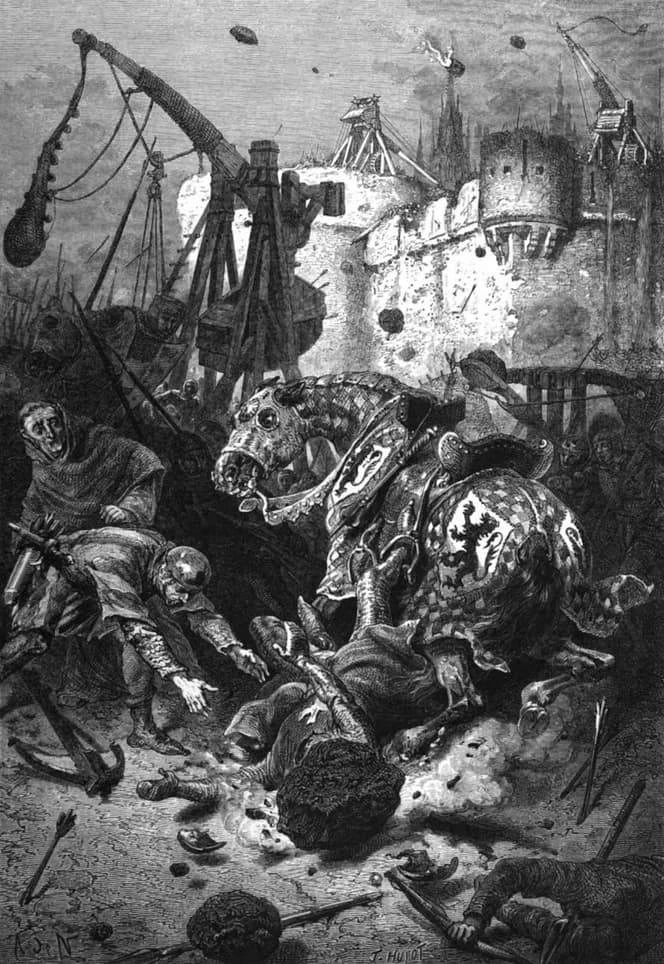
The death of Simon de Montfort at the walls of Toulouse. Engraving by Alphonse de Neuville, 19th century
Two decades of war exhausted both the South and its conquerors. On June 25, 1218, during the nine-month siege of Toulouse, Simon de Montfort died before the eyes of both armies. A stone from a catapult struck the count in the head. According to legend, the women of the city were operating the machine.
The people of Toulouse greeted the news of his death with the ringing of bells, but the war did not end. Raymond VI's son and grandson fought for their lands for another ten years. In 1229, Raymond VII signed the Treaty of Paris, and Languedoc finally ceded to the French crown.
The Fall of Montségur
The last stronghold of the Cathars was the fortress of Montségur in the Pyrenees – an impregnable citadel perched on a sheer cliff. About two hundred "perfected" took refuge here, defended by a garrison of fifty soldiers and fifteen knights.
The siege began in May 1243. It took the attacking army of several thousand men almost ten months. A flanking route proved decisive. A detachment of crusaders climbed the supposedly impregnable side of the cliff at night and set up a siege engine. 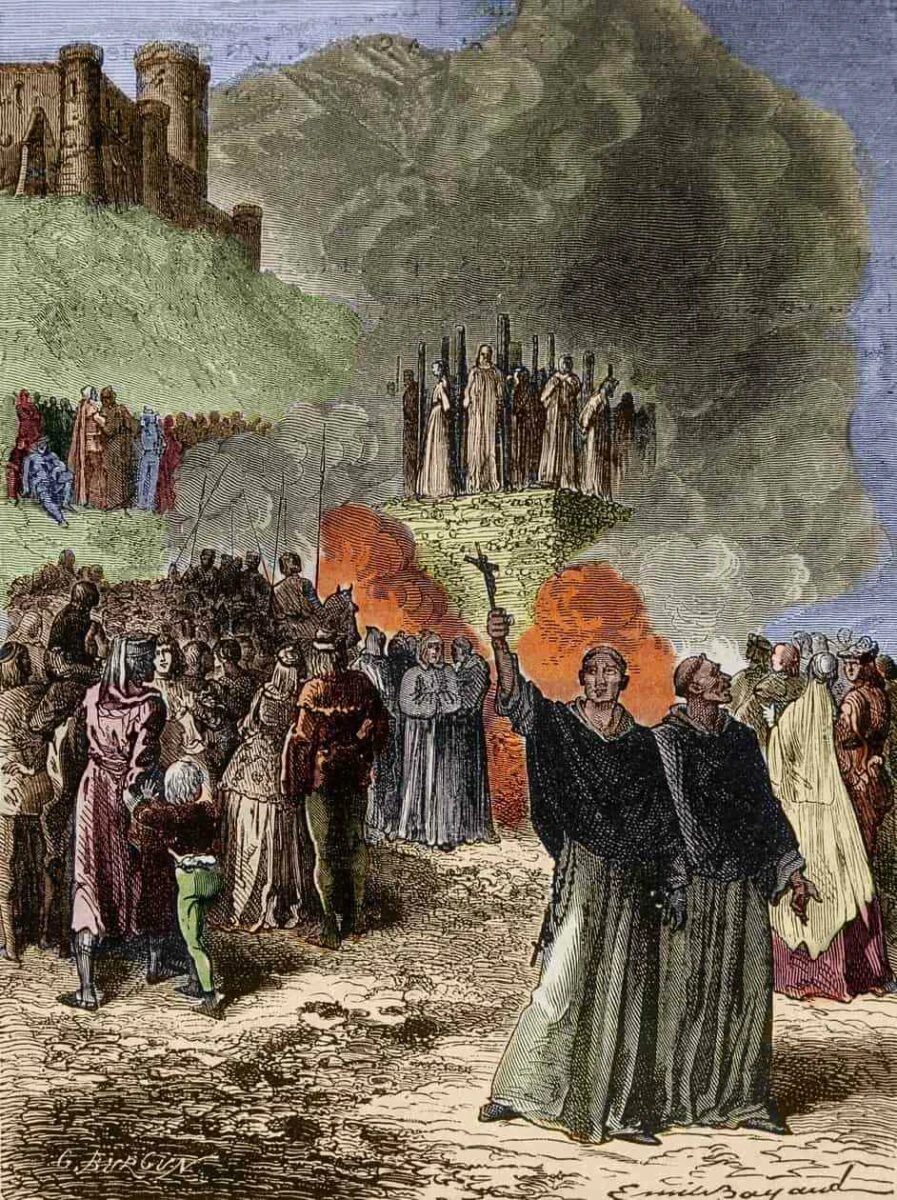
Execution of the defenders of Montségur Castle. A 19th-century colored engraving by artist Émile Bayard
On March 1, 1244, the garrison began capitulation negotiations. The terms for the soldiers were lenient—their lives were spared. The Cathars were offered only one option: renunciation, and not a single one of the "perfect" accepted. On March 16, 1244, a pyre was lit at the foot of the mountain. About two hundred Cathars were burned, 205 according to the Inquisition's lists. The place of execution is still called Prat dels Cremats—the Field of the Burnt.
The Legend of the Cathar Treasure
The fall of Montségur is surrounded by legends that have outlived Cathar history itself for many centuries. According to one version, one or two nights before the capitulation, four Cathars secretly descended the sheer cliffs. They carried some kind of "treasure" out of the fortress.
What exactly the fugitives rescued is unknown. Inquisition records compiled decades later mention only the treasury of the Cathar Church hidden in the woods. This included money and, likely, sacred texts. The romantic tradition of the 19th and 20th centuries transformed this modest mention into myth. Thus was born the legend of the Holy Grail, supposedly kept at Montségur. 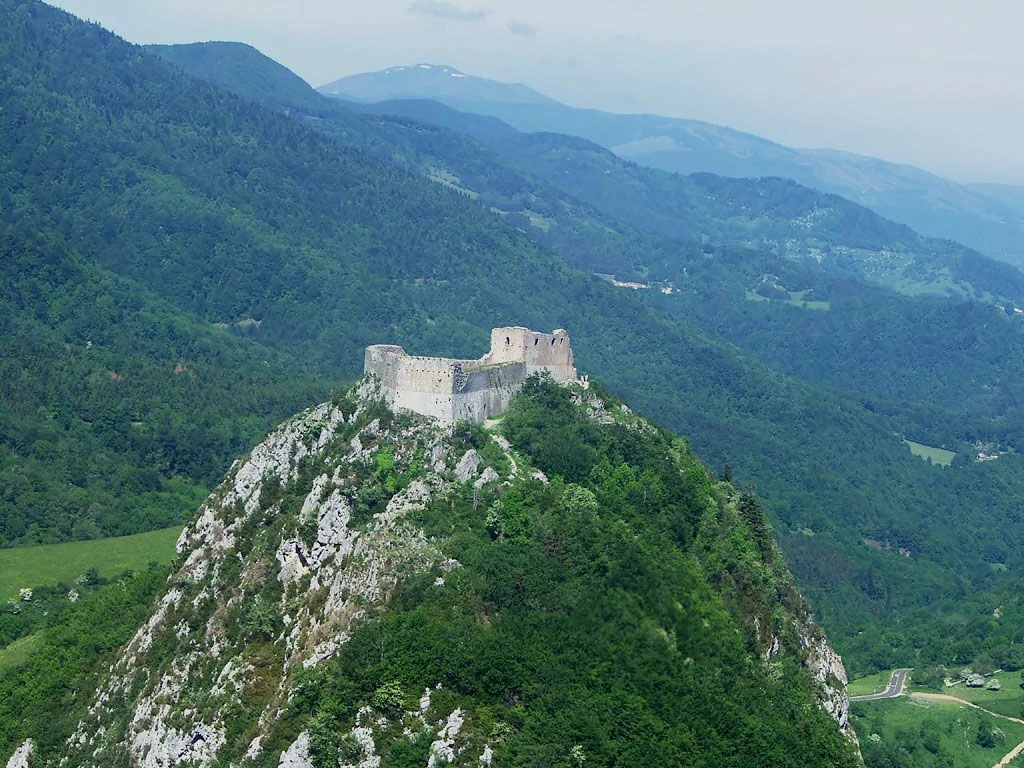
The ruins of Montségur Castle today
This myth was perpetuated by the German esoteric writer Otto Rahn and the Nazi Ahnenerbe. They searched for mystical relics in the Pyrenees in the 1930s. Historians are skeptical of the Grail theory, as there is no direct documentary evidence to support the legend.
The Inquisition and the End of the Independent South
The fall of Montségur did not completely destroy the Cathar movement—individual communities remained in hiding in Languedoc and Lombardy until the early 14th century. The last known Cathar preacher, Guillaume Bélibaste, was burned at the stake in 1321.
The main instrument for the eradication of heresy became the Papal Inquisition, established by Gregory IX in 1233. Investigation of cases was transferred to the Dominican Order, and for the first time in the history of the Church, a permanent apparatus for the investigation and trial of dissenters was established. 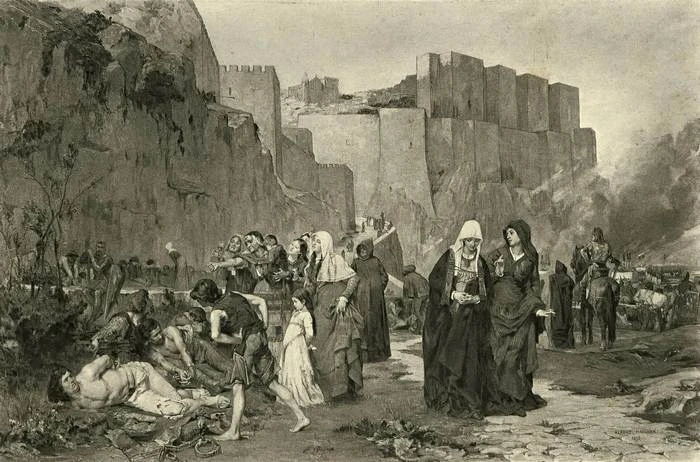
Humiliation of captured Cathars. Engraving after a painting by Albert Maignan, 1875
The political results of the war were no less significant for Rome than the religious ones. By the Treaty of Paris of 1229 and later, after the death of the last Counts of Toulouse in 1271, the wealthy Languedoc became part of the Kingdom of France.
Occitania's unique culture gradually dissolved under the rule of the northern crown—it had its own language and the courtly poetry of the troubadours. The region once rivaled Catalonia in wealth, but now it has become an ordinary province of Paris.
A Modern View: Genocide or Land Redistribution?
The Albigensian Crusade claimed between several hundred thousand and a million lives. Historians estimate the casualties on both sides during the 20-year war. Raphael Lemkin coined the word "genocide" in the 20th century. He called this war one of the most convincing cases of genocide in religious history.
Not all historians agree with this assessment: the Cathars were a religious, not an ethnic, group. Some researchers consider the term inapplicable in the strict sense. But the scale of the extermination of the civilian population of entire cities remains undeniable—both Cathars and Catholics perished. 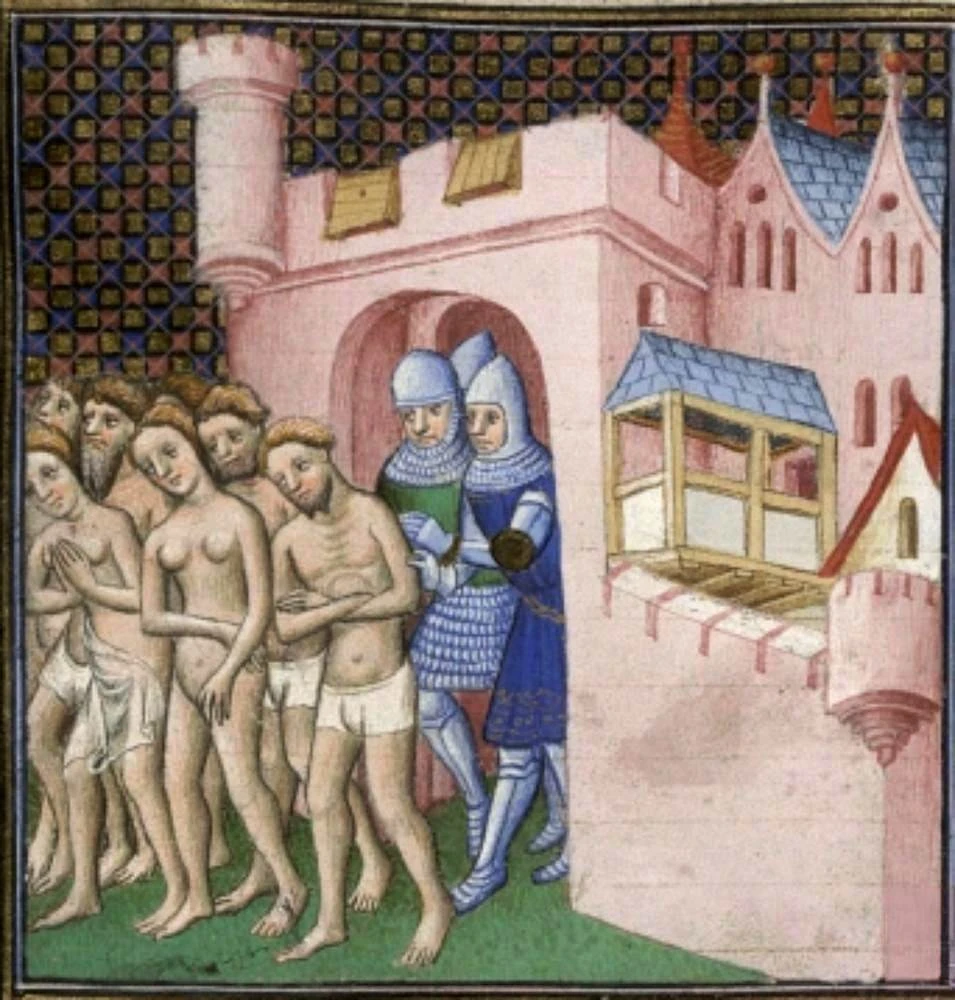
The expulsion of the inhabitants of Carcassonne, professing the Cathar heresy, in 1209. Miniature from 1415
Historian Mark Gregory Pegg wrote differently: the Albigensian Crusade linked divine salvation with mass murder. The massacre became an act of faith. This explains why the history of the Cathars remains controversial today. It shows how religious rhetoric conceals a war for land and power.
Result: How the War of Faith Ended
Catharism as an organized church disappeared by the beginning of the 14th century. But the ideas of personal purity and the renunciation of luxury survived the fires of Béziers and Montségur. They are addressed by historians, writers, and tourists climbing the mountain trail to the ruined fortress in the Pyrenees. 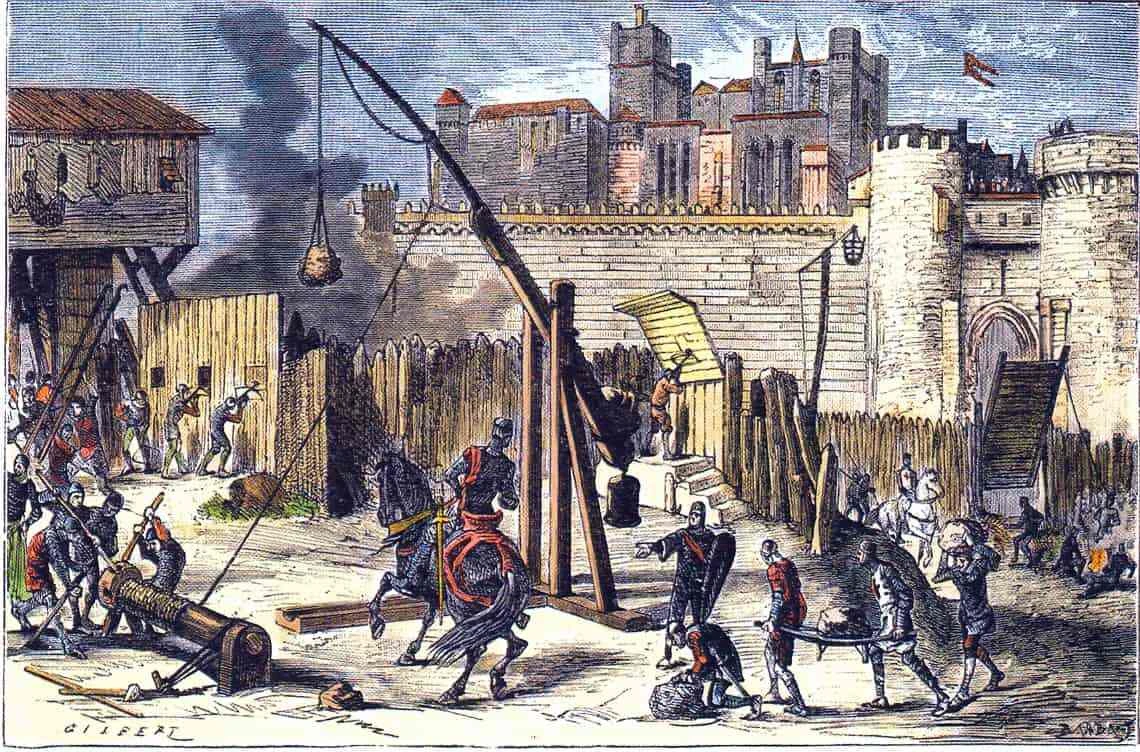
French postcard from 1909, issued for the 700th anniversary of the capture of Béziers by the Crusaders
Was this conflict inevitable? Or was the South of France simply too rich and too independent for the Church and Crown to ignore?
How the Inquisition uncovered all the intimate secrets of the medieval French village of Montaillou
Sold into slavery and killed in the Alps: how the Children's Crusade ended
5 prominent figures who fell victim to the Inquisition.