10 abandoned places (10 photos)
For a variety of reasons—wars, famines, economic crises, climate change—once-populous, vibrant places become deserted and abandoned. Like shadows of a bygone past, they serve as a reminder of the inexorable passage of time and the transience of the present. 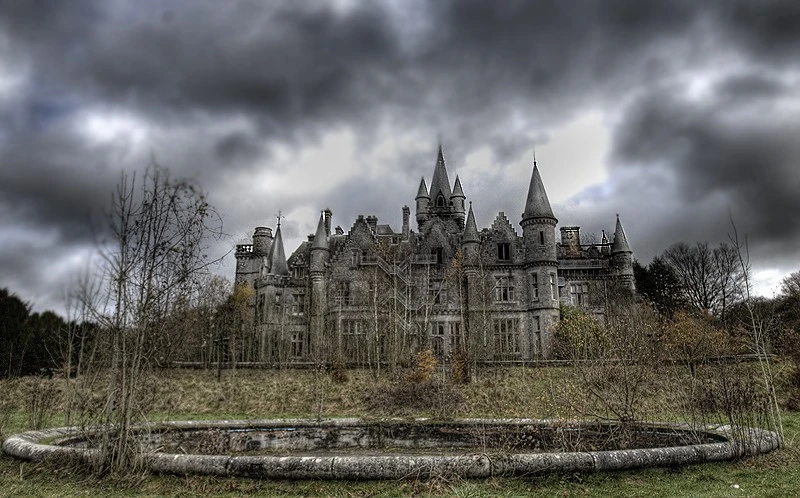
Fengdu Ghost Town
Founded over two thousand years ago, this Chinese ghost town lies on the banks of the Yangtze River. Locals consider it a demonic abode and believe it to be a gateway to the underworld. The first to settle here were two Taoist hermits, Yin and Wang. When pronounced together, these names mean "King of Darkness" in Chinese. During the Tang Dynasty (7th-10th centuries CE), Fengdu began to be used by Taoists as a burial site. 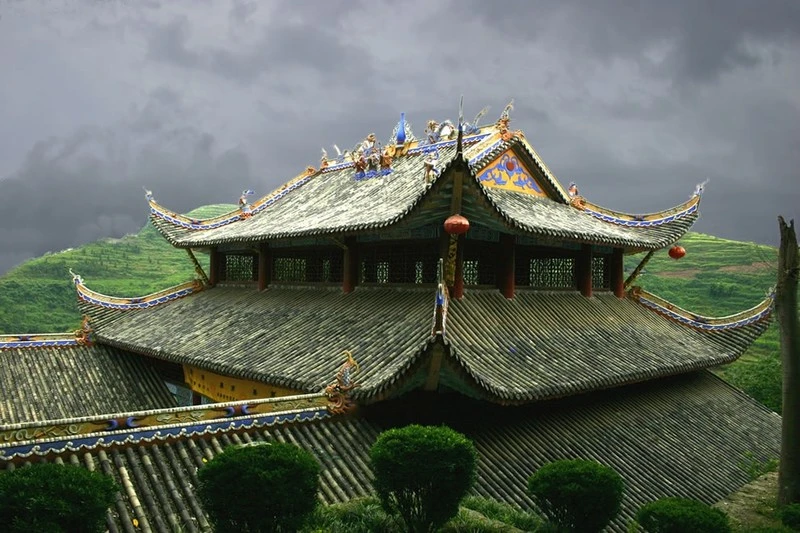
Locals believe Fengdu is the gateway to the underworld.
The construction of the Three Gorges Dam flooded the city, leaving only the hillside buildings above ground. However, access by river became easier, increasing the flow of tourists. The temple complex features numerous colorful figures of demons and other evil spirits. Particularly notable is the enormous "Ghost King" statue, listed in the Guinness Book of World Records as the largest stone monument carved from a single piece of rock.
Kayakoy
The town of Kayakoy is located near the Taurus Mountains in southwestern Turkey. A hundred years ago, about 20,000 Greeks lived here, but due to the Greco-Turkish political standoff, the place was abandoned. 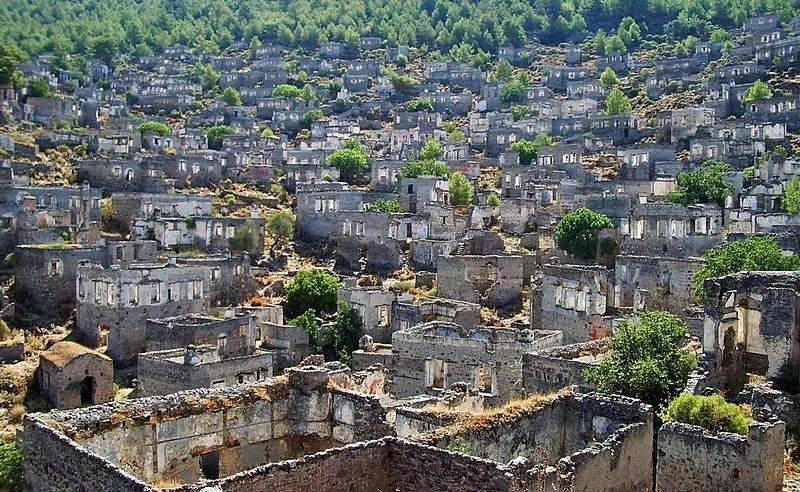
The Turkish town of Kayakoy is being battered by rain and ravaged by winds
The town was founded in the 18th century, but today its buildings are in ruins: roofless houses are flooded by rainwater and battered by all the winds. The local Greek residents, who had previously lived peacefully alongside their Muslim neighbors, were forced to move to their historical homeland to escape persecution.
About 350 residential buildings and two Orthodox churches remain. Today, Kayakoy is an open-air museum, a popular tourist destination.
Sathorn Unique Skyscraper
In the early 1990s, Thailand experienced rapid economic growth, accompanied by a construction boom, with dozens of stories high rising literally everywhere in Bangkok. However, the infamous Asian crisis of 1997 put an end to this period of abundance. One of the victims of the financial collapse was the Sathorn Unique skyscraper, just months away from completion. 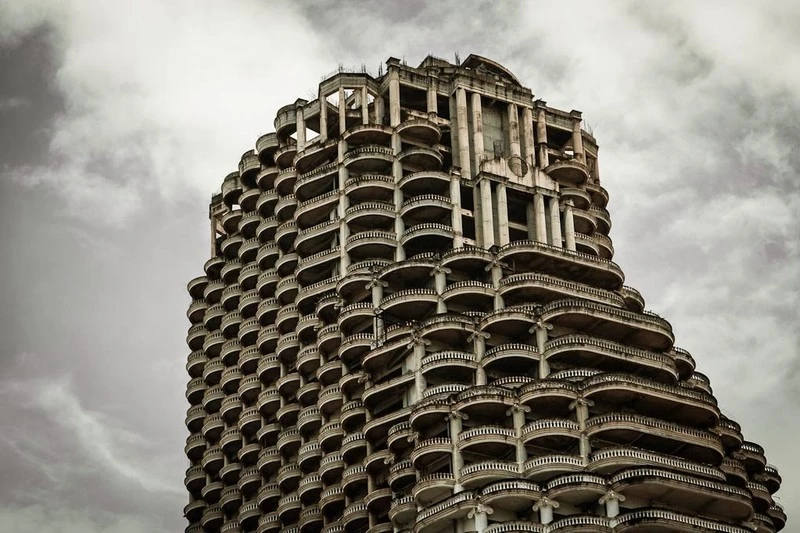
Entering the 49-story Sathorn Unique is dangerous.
This grandiose 49-story residential complex stands alone along the banks of the Chao Phraya River. Entering it is dangerous; many of the floors are dilapidated and threaten to collapse with any careless movement. So, the abandoned building can only be admired from the outside. Over the years, the economic situation in Thailand has improved, and new skyscrapers have risen, but the fate of Sathorn Unique remains unclear. And locals have already nicknamed the abandoned colossus a ghost house.
Covasna Inclined Plane
The Romanian town of Covasna was an important center of forestry and the woodworking industry. In 1890, a railway network connected the town with other towns in the country. 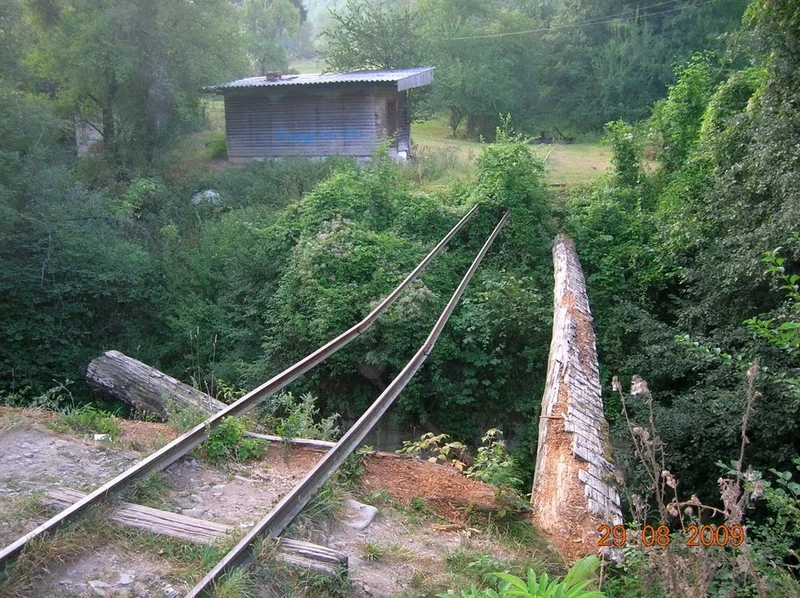
Covasna's unique system was destroyed by a storm
The railway network featured a unique system of tracks, which allowed trains loaded with logs to move down an inclined plane using gravity, while simultaneously forcing empty cars up. This brilliantly designed system was the first in the world to be implemented here, and even today, it exists in only a few locations.
Unfortunately, in 1995, a severe storm struck the region, destroying hundreds of hectares of forest and causing irreparable damage to businesses. Local authorities discussed plans with investors to rehabilitate the inclined railway as a tourist attraction, but the economic crisis that erupted in 2008 prevented these plans from being implemented.
North Brother Island
This island, located near LaGuardia Airport, was never popular with New Yorkers and is now completely abandoned. From the 1880s to the 1930s, Riverside Hospital operated here, treating patients with smallpox, typhus, and leprosy. The infamous Typhoid Mary died here. Later, until its closure in 1963, the building served as a rehabilitation center for adolescent drug addicts. 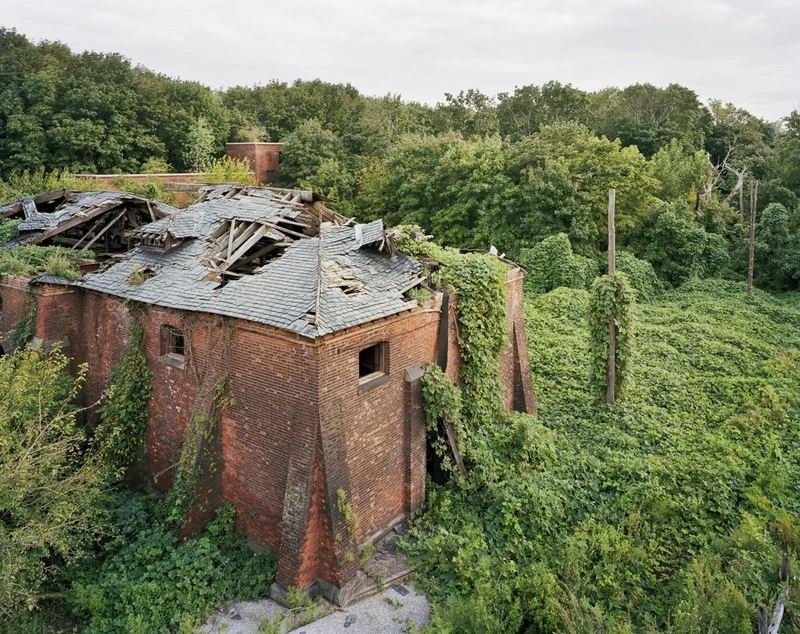
Morgue Boiler House, North Brother Island, New York
Today, the island is a nature preserve. The hospital building, with its broken windows and leaky roof, still stands. In 2008, Christopher Payne organized an exhibition of photographs illustrating the island's current state.
Teufelsberg
This is the name of a radio station in what was then West Berlin. Its purpose was to intercept radio signals coming from the Soviet side. The hill on top of which this Cold War artifact stands was built in 1963 on the site of a Nazi military school, which, after several unsuccessful attempts to demolish it, was eventually buried under the rubble of buildings destroyed during the bombing of the German capital. The new hill became known as Devil's Mountain. 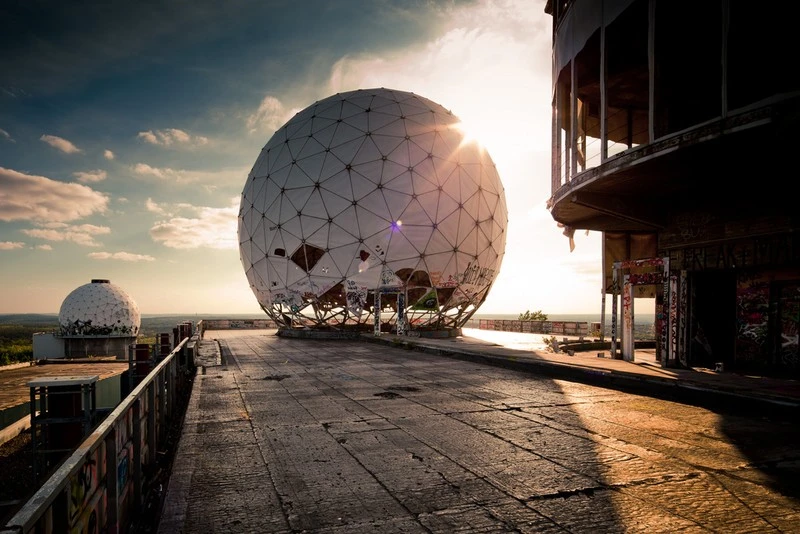
Teufelsberg ("Devil's Mountain") in Berlin
After the fall of the Berlin Wall, the radio station was no longer needed, and the structure fell into disrepair. The building has had several owners, and street artists have daubed its walls with graffiti. Its future is uncertain. Plans are underway to build a luxury restaurant, a hotel, and even a spy museum, but none of these projects have materialized to date. For now, local tour guides bring tourists here, curious to see this relic of the past.
Plymouth
Montserrat Island was discovered by Columbus during one of his voyages to the American continent. Due to volcanic activity, this small island is gradually expanding due to rocks ejected from the earth's interior during eruptions. However, due to volcanic activity, the population was forced to abandon the southern part. 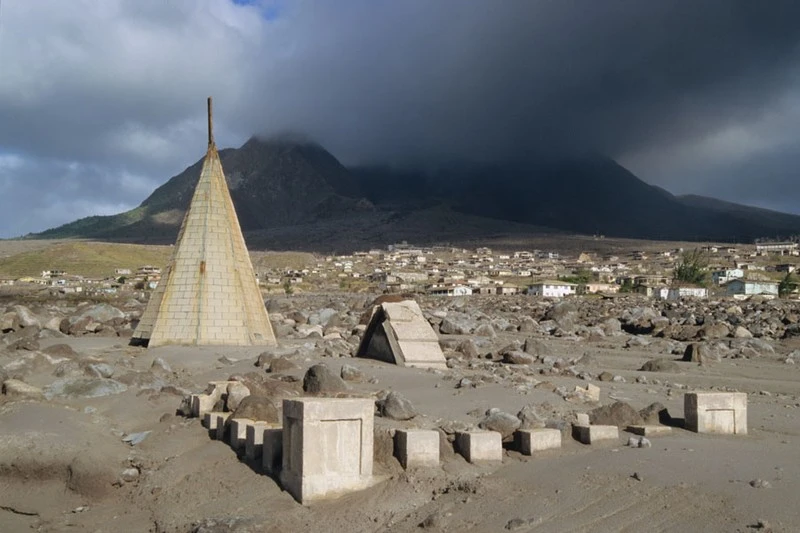
Plymouth, like Pompeii, is buried under a layer of ash.
In 1995 and 1997, the previously considered dormant Soufriere Hills volcano erupted with such force that the nearby city of Plymouth was covered in a five-foot layer of lava and ash. As in the Roman city of Pompeii, the city streets, along with buildings and vehicles, were literally encased in pyroclastic flows. Most residents were evacuated promptly and were unharmed, but the same cannot be said for the almost completely destroyed tourist infrastructure, which remains unrecoverable.
Abandoned Miranda Castle
Once a beautiful neo-Gothic castle, it is now little more than a picturesque ruin. It was built by the noble Liedekerke-Beaufort family in the second half of the 19th century and served as their family seat until World War II, when the region was occupied by German troops.
Miranda Castle may soon be demolished.
After the war, until 1980, it housed a summer camp for orphans, run by the Belgian railway company, which leased the castle. Maintaining such a large complex of buildings is costly, and by 1991, the castle was completely abandoned. A fire that occurred several years later added to the devastation, after which the owners removed everything of value that remained.
Today, no one lives there, although there have been several proposals to use the castle as a hotel. The owners of the Liedekerke-Beauforts have filed an official demolition petition, so soon, perhaps, not a single ruin will remain.
Holy Land Park, USA
In 1958, John Greco established a biblical-themed park in Waterbury, Connecticut. It soon became very famous, attracting over 40,000 visitors annually. It featured miniature replicas of Bethlehem, Jerusalem, Herod's Palace, and the Nativity Scene. A 50-foot stainless steel cross could be seen from every corner, and Bible verses could be read on stones scattered throughout the grounds. 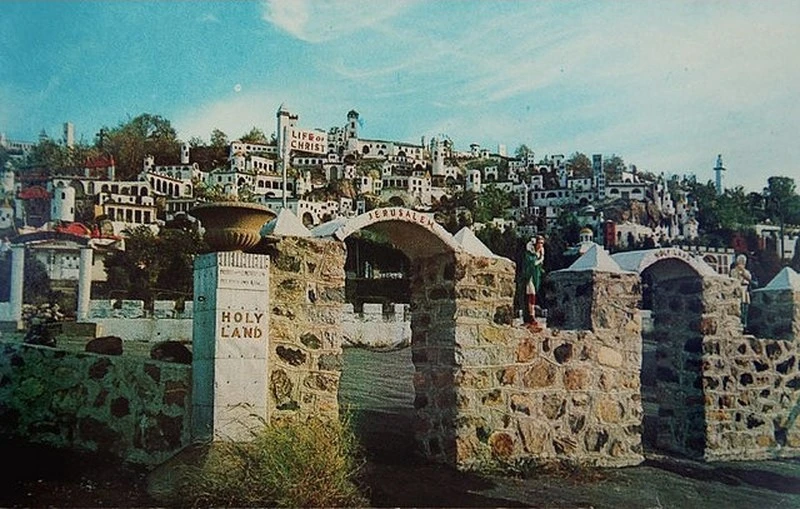
Holy Land Park in Connecticut
In 1984, the owner of Holy Land temporarily closed the park to the public to allow for renovations, but he died two years later. The park never reopened.
Railway station in Abkhazia
Once a popular vacation spot for the Soviet elite, including Stalin himself, Abkhazia, located on the Black Sea coast, no longer experiences a significant influx of tourists. Traces of economic hardship are everywhere, though the Sukhumi railway station still impresses with its opulent decoration. 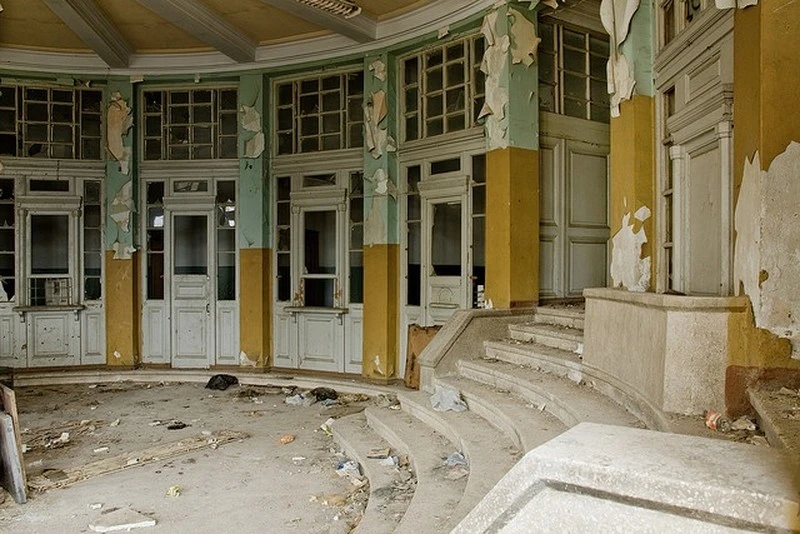
Sukhumi Railway Station
Mahogany shelving, graceful marble columns, intricate artistic moldings on the walls and ceilings—everything is in a state of disrepair and decay, but with a little imagination, one can conjure up the former splendor of the now abandoned building.