From a penal colony to the top of the world: the story of Iron Mike (14 photos)
On June 30, 1966, Mike Tyson was born – a man feared by the entire world. He grew up in Brownsville, one of New York City's most dangerous neighborhoods. Poverty, an absent father, and dozens of arrests by the age of 13. At 20, he became the youngest heavyweight champion of the world – a record that still stands. We tell how a street hooligan became Iron Mike and why it wouldn't have been possible without an old trainer. 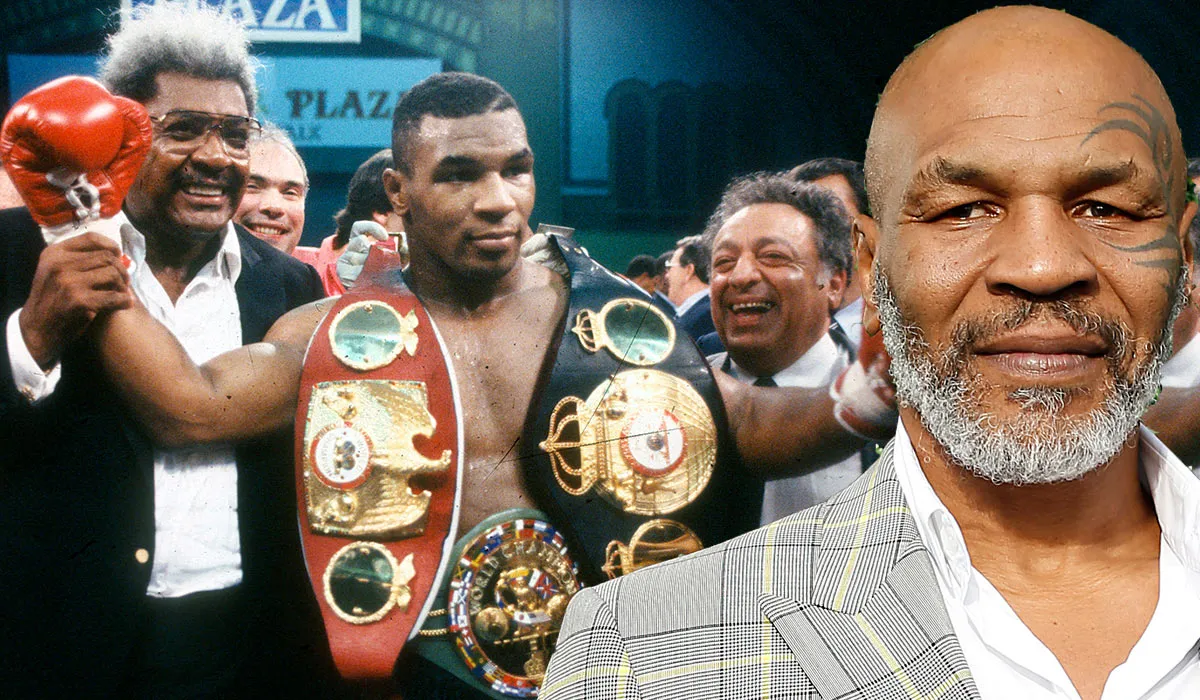
Brownsville: A Neighborhood Where the Fittest Survive
Brownsville isn't just a poor Brooklyn neighborhood. In the 1970s and 1980s, it was considered one of the most crime-ridden neighborhoods in New York City. Shootings were rampant at night, drug dealing was rampant, and houses lacked heat and running water. It was here, on June 30, 1966, that Michael Gerard Tyson was born. He was the youngest child in a family without a father, adequate housing, or money. 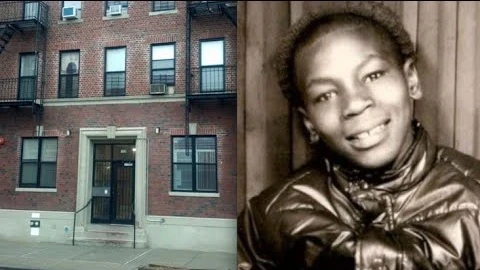
Mike Tyson as a child. Brownsville, early 1970s.
His father left before Mike was born. His mother, Lorna, worked as a housekeeper at a women's detention center and spent little time with the children. In his early childhood, Tyson remained a quiet and vulnerable boy with a stutter. He was constantly bullied by his peers, neighbors, and even his older brother. His only escape was the pigeons he raised on the roof. One day, a local bully ripped the head off one of the birds right in front of Mike. The boy flew into a rage and brutally beat the bully. From that day on, he was determined to defend himself. From the age of ten, Tyson belonged to a street gang that committed theft and robbery. By the age of 13, he had been arrested by the police more than 30 times. 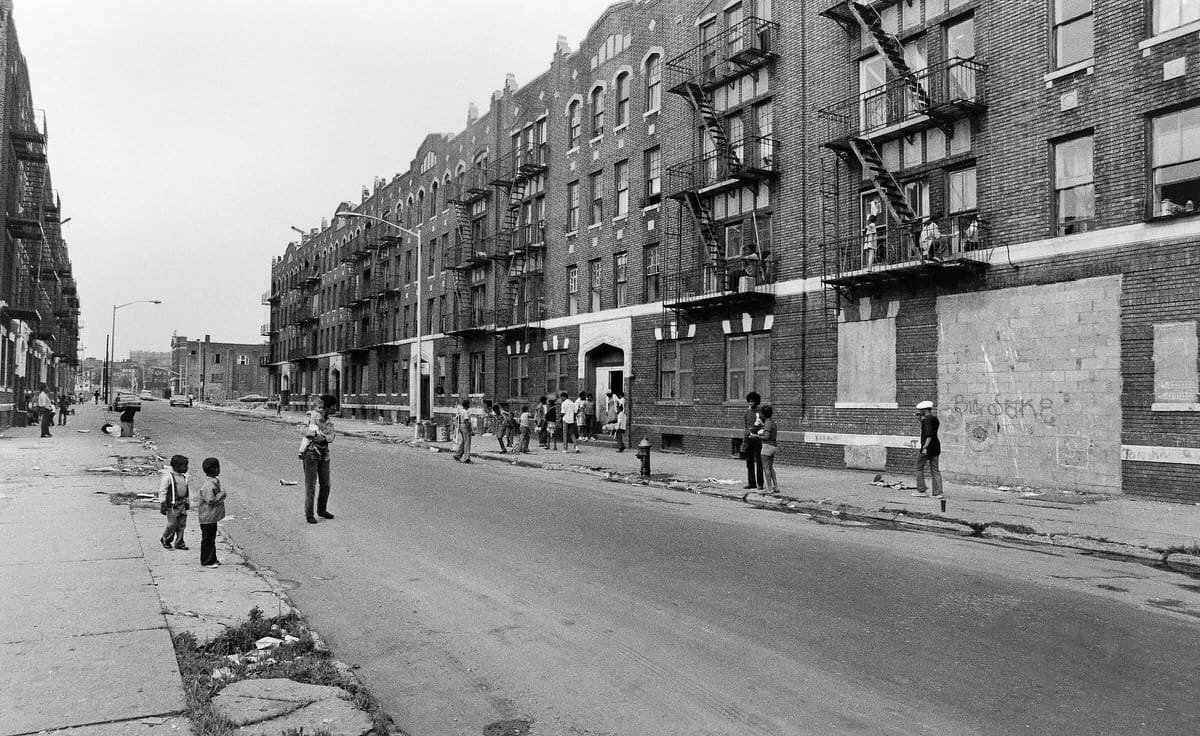
Brownsville in the 1970s: These are the streets that shaped the future champion's character
In 1979, when Mike turned 13, the court sent him to Trembles Correctional School in upstate New York. There, physical education teacher Bobby Stewart, a former boxer, agreed to train the teenager, provided he performed well in his studies. Tyson successfully completed the assignment. Ultimately, it was Stewart who introduced him to the man who would change his life forever.
Cus D'Amato: A White Father with a Baseball Bat
Constantine "Cus" D'Amato was more than just a trainer. This ring philosopher trained champions Floyd Patterson and Jose Torres. In the 1960s, he sold his New York gym for one dollar to escape the Mafia's control of boxing. D'Amato moved to the small town of Catskill, settled there with Ukrainian woman Kamila Ewald, and continued training young fighters. When 13-year-old Tyson was brought to the gym, Cus watched his first sparring session and declared:
"If you listen to me, I'll make you the youngest heavyweight champion of the world." 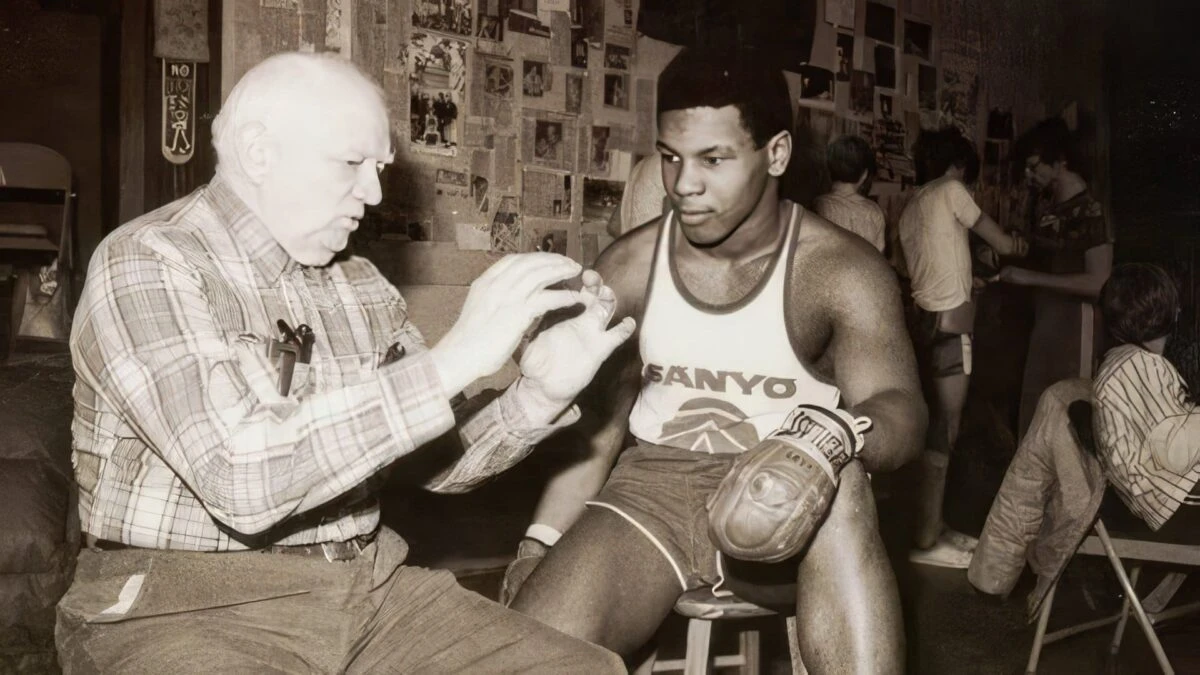
Cus D'Amato and the young Tyson. The trainer became a father to him
After the death of Tyson's mother in 1982, Cus secured legal guardianship and took Mike into his home. The boy called Camila "white mama." Cus remained the primary authority, and not just as a trainer. D'Amato didn't just teach boxing; he worked with Mike's psyche. He spent long evenings talking with Mike about fear and showing him how to turn it into a weapon. The trainer even took the teenager to a hypnotist and constantly instilled in him one thought: you will become a champion, there is no other way.
"Fear is like fire. If you know how to control it, it will warm you and your home. If you don't, it will burn everything around you." (Cus D'Amato) 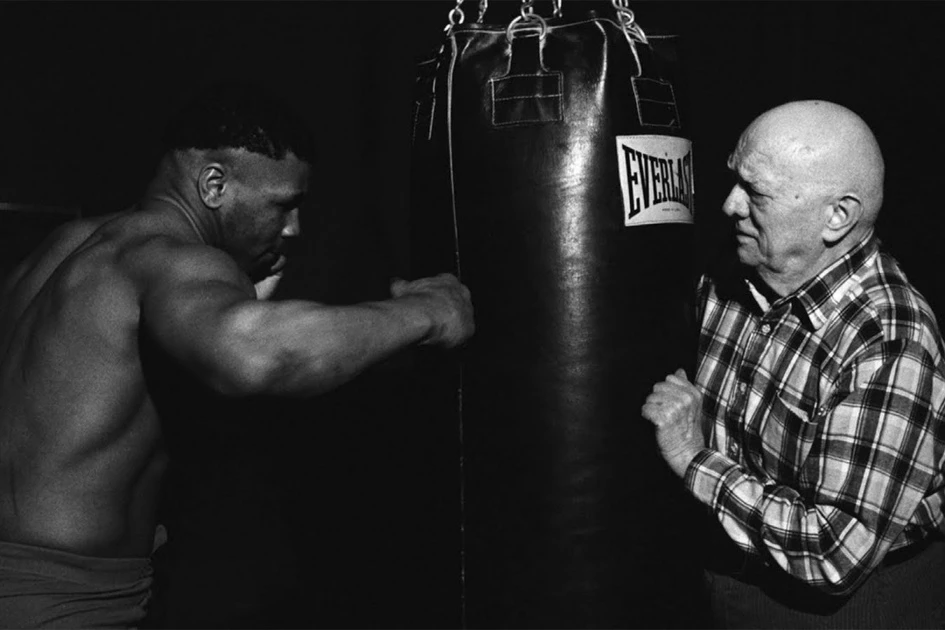
Tyson training in the Catskills. Years of working on his peek-a-boo style have paid off.
The boxing style Cus developed for Tyson was called "peek-a-boo." A fighter stands in a frontal stance, keeps his hands to his face, constantly swings and ducks, and then attacks with explosive bursts from behind his guard. This style requires phenomenal speed. Tyson had it.
Knockout Machine
On March 6, 1985, 18-year-old Mike Tyson made his professional debut and knocked out Hector Mercedes in the first round. Thus began his meteoric rise. Over the next 20 months, he fought 27 times and was undefeated. Tyson knocked out 25 opponents early, many of them in the first round, leaving no time for the crowd to even look around. 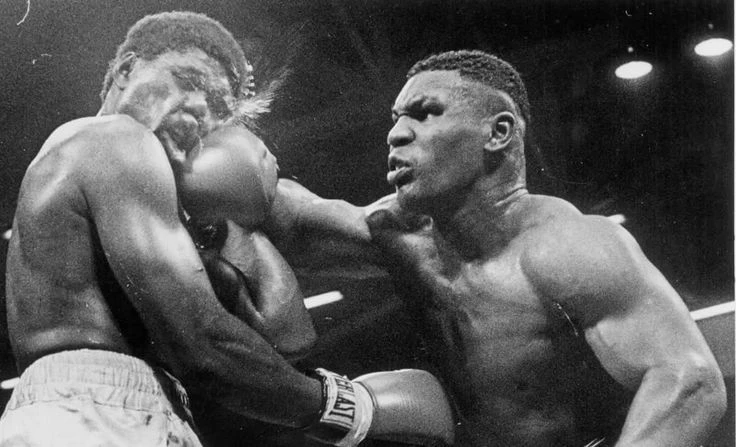
First pro fights – opponents fell one after another
What made his punch so devastating? It wasn't just pure strength. Tyson remained short for a heavyweight—he stood 178 centimeters (5'10"). However, this very fact gave him a huge advantage: he explosively closed in on his opponents, attacking from below to the body and head, and his ducking and ducking made him an almost elusive target. Opponents simply didn't understand where the punch was coming from, and many didn't even have time to react. 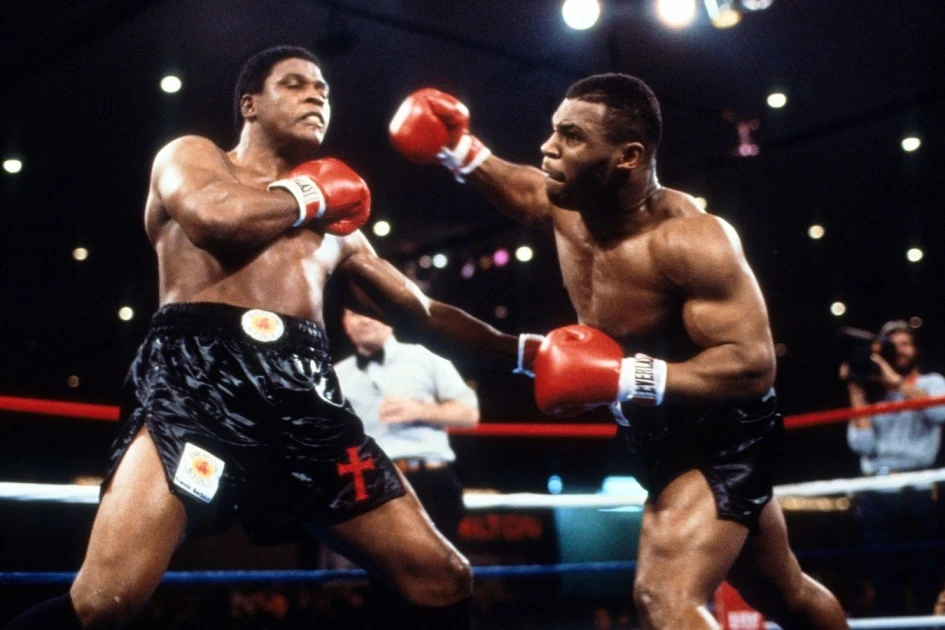
November 22, 1986. Berbick was down three times. Tyson became the WBC champion at 20 years and 144 days old
On November 22, 1986, Tyson knocked out Trevor Berbick to win the WBC (World Boxing Council) title. He was 20 years and 144 days old, making him the youngest world heavyweight champion in history. In 1987, he added the WBA (World Boxing Association) and IBF (International Boxing Federation) belts, unifying all three major titles. And in August 1988, in a fight against undefeated two-division champion Michael Spinks, Tyson knocked him out cold in just 91 seconds. The crowd was stunned. The boxer feared by the world had reached his absolute pinnacle.
Cus's Death and Cracks in the Armor
On November 4, 1985, Cus D'Amato died of pneumonia at the age of 77. Mike Tyson learned of the news three days before his 11th professional fight. The trainer had only witnessed the very beginning of his student's career, but he died exactly a year short of winning the championship belt. Cus remained Mike's main anchor, and his death left a huge void. 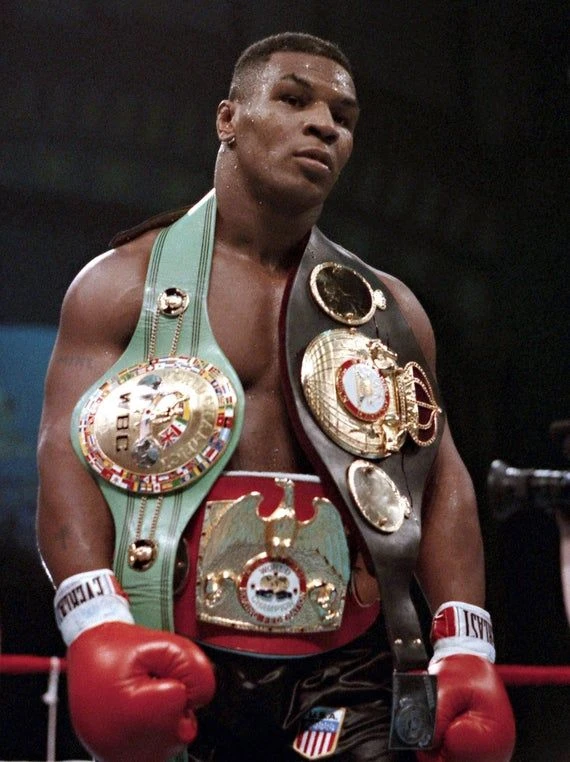
The undisputed world champion. But Cus, who had been waiting for this moment, was no longer there.
After D'Amato's death, completely different people immediately surrounded Tyson. Promoter Don King, one of the most controversial figures in boxing history, took control of Mike's career. Big money, a luxurious lifestyle, and a constant entourage of flatterers began. In 1988, Tyson fired his trainer, Kevin Rooney, the last remaining member of Cus's inner circle. The iron discipline that D'Amato had spent years instilling in his student began to rapidly disintegrate. 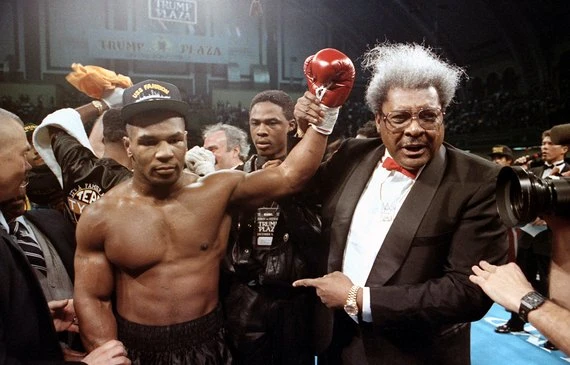
Don King and Tyson. The promoter replaced the trainer—but not the father
At the same time, Tyson's first marriage to actress Robin Givens, public scandals, and rumors of domestic violence occurred. Tyson lived in constant tension, completely losing his inner strength. Cus knew how to keep him in check, but without D'Amato, there was no one there to break his decline.
Fall and Breakdown
On February 11, 1990, in Tokyo, Tyson entered the ring against James "Buster" Douglas. The fight was considered a mere warm-up for the big fights—that's what everyone thought. The odds for Douglas to win were a whopping 42 to 1. But in the tenth round, the underdog knocked out the champion. Tyson lay on the canvas, searching for his mouthguard, completely unaware of what had happened. It was the first defeat of his professional career. 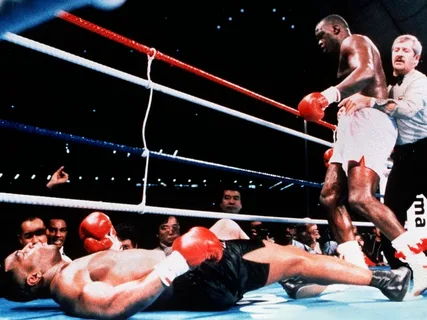
Tokyo, February 11, 1990. The first defeat of his career. The whole world was speechless.
What happened in the ring? Without Cus and Rooney, Tyson stopped training with the same intensity. Douglas proved much better prepared, both physically and tactically. By the fifth round, Mike's right eye began to close from a punch, and his attacks completely lost their accuracy. The result was a predictable knockout. 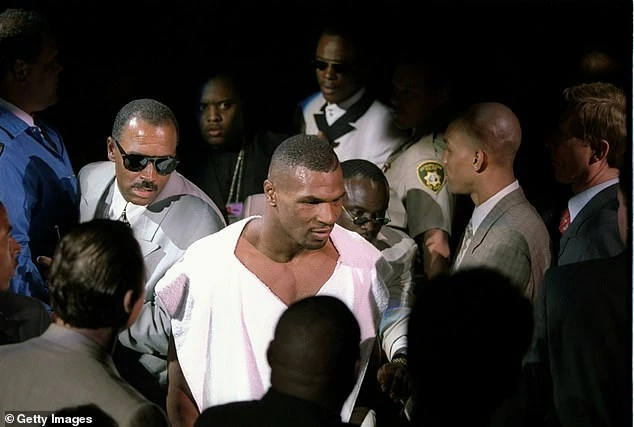
1995. Tyson is released from prison and returns to the ring – but the old Iron Mike is no longer there.
The rest is well known. In 1992, a court sentenced Tyson to six years in prison on rape charges. He was released six years later. He returned to the ring, won several fights, and faced Evander Holyfield again. 
The controversial rematch with Holyfield is one of the darkest moments in boxing history.
On June 28, 1997, in the third round of the rematch, Tyson, in a fit of rage, bit off a chunk of his opponent's ear. The referee immediately stopped the fight, disqualified Mike, and fined him $3 million. This outrageous moment symbolized the final breakdown: the man whom Cus D'Amato's system had once kept in perfect shape no longer existed.
In 2005, Tyson finally retired. Result: 50 wins (44 by knockout) and 6 losses.
Who he really was
Mike Tyson is much more than just a boxer. He is the product of an environment that left no chance for a normal life. Brownsville produced street fighters, not champions. One man made him a true champion: Cus D'Amato. The trainer recognized the destructive energy in the teenage criminal and channeled it with iron discipline, unique technique, and profound psychological work. While Cus was alive, this system worked flawlessly. After his death, Tyson found himself face to face with enormous money, worldwide fame, and an environment that was completely unable to contain him. 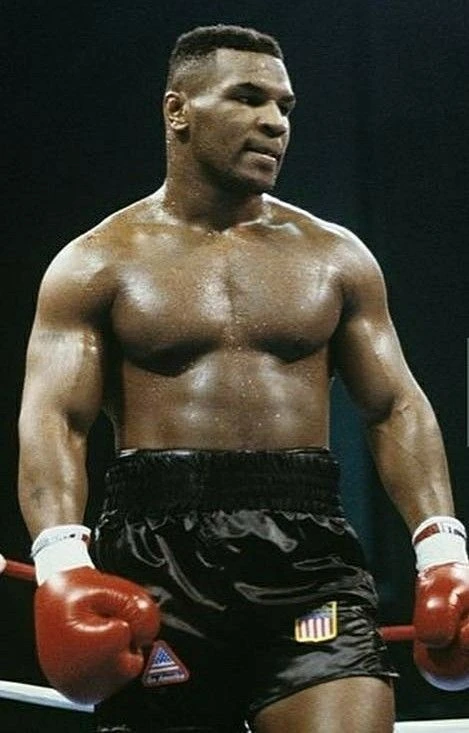
Tyson in his prime. The look of a man created for one purpose
Tyson himself once aptly described his trainer:
"Cus got into every boxer's head and hammered the idea that he would definitely become champion. If you doubted him for even a second, the trainer would fly into a rage. If Cus had lived, no one would have beaten me." 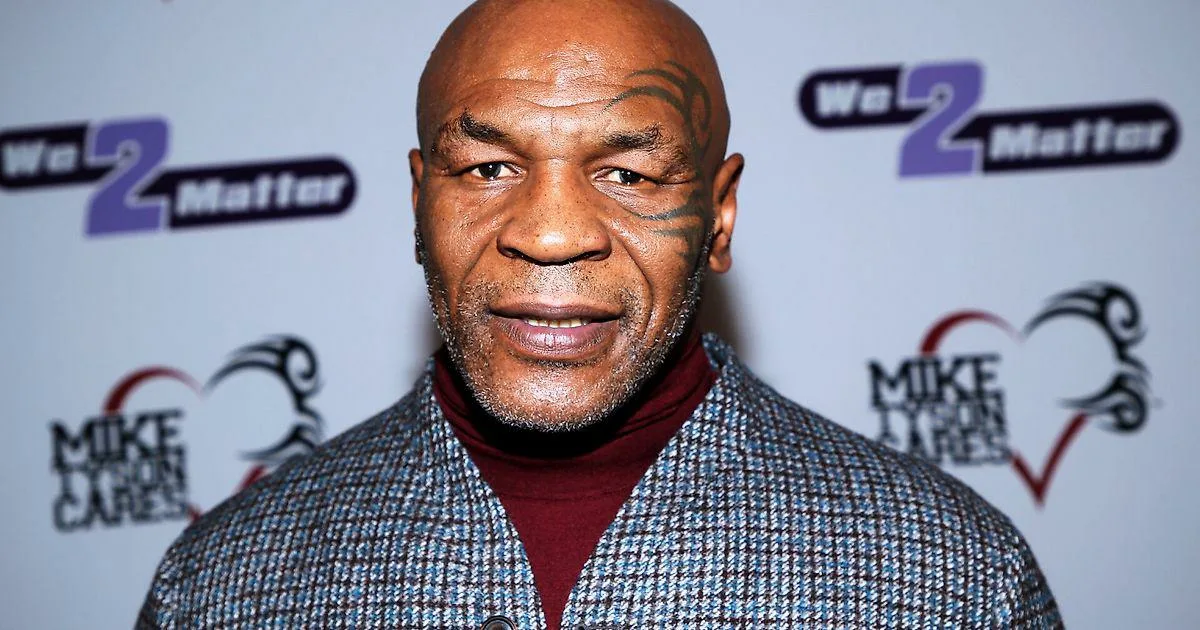
Mike Tyson turns 60 on June 30, 2026. The 1986 record still stands.
This is the true story of Iron Mike. It's not just a typical success story, but a profound story of transformation. A boy from Brownsville, seemingly given no chance by fate, met a man with a clear system. For a brief but incredibly brilliant time, this system worked flawlessly. The 1986 record has stood for 40 years and is unlikely to be broken anytime soon.
What do you think: could Tyson have remained undefeated if Cus D'Amato had lived to see the end of his career?
Muhammad Ali, one of the greatest boxers in the history of the sport, has died in the US.
How Muhammad Ali visited the USSR and what conclusions he drew.
How a boxer without a right hand became a professional and works as a coach.
Moments in sports history that changed the world.
How illness affected Nikolai Valuev and what he was like as a child.