Lost City: Where did 60-meter-tall crystal towers in the ocean come from? (10 photos)
One of the greatest rewards of a scientific career is the feeling of being a pioneer. Being the first to discover a new chemical reaction, or to describe a new mineral or species never before seen in a particular area—it is a unique sensation, a pure and unadulterated joy. Yet even I, having experienced that feeling myself, cannot imagine the rush of endorphins felt by the discoverers of the "Lost City." 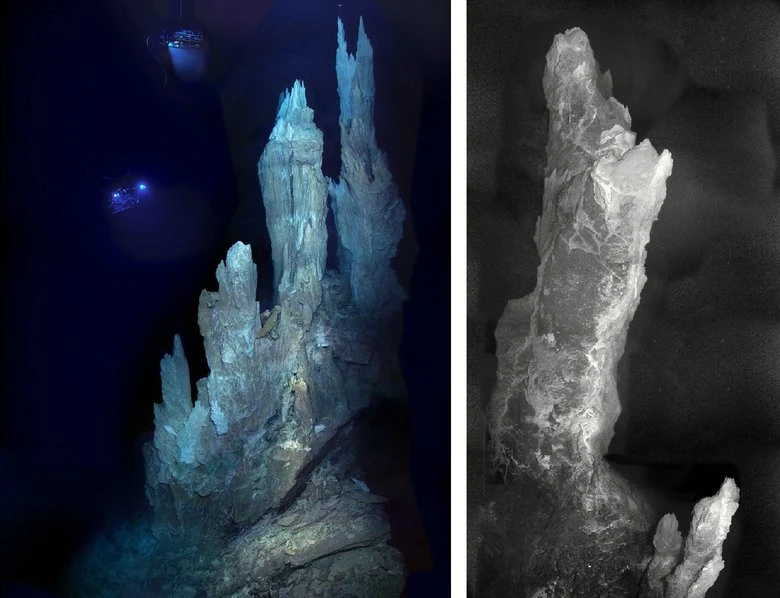
Massive crystals rising directly from the ocean floor...
In 2000, a team of oceanographers aboard a submersible was exploring the Atlantis Massif—an underwater mountain—in the North Atlantic. The sterile white beam of a powerful floodlight cut through the darkness, revealing—kilometer after kilometer—underwater rock formations that would typically interest only specialists. But then, the research team saw something extraordinary. Pressing against the viewports, they gazed at towering crystalline spires and columns, reminiscent of legends about the sunken city of Atlantis. The scientists realized they were not merely the first people on Earth to witness such beauty; no one had even imagined that such places existed. 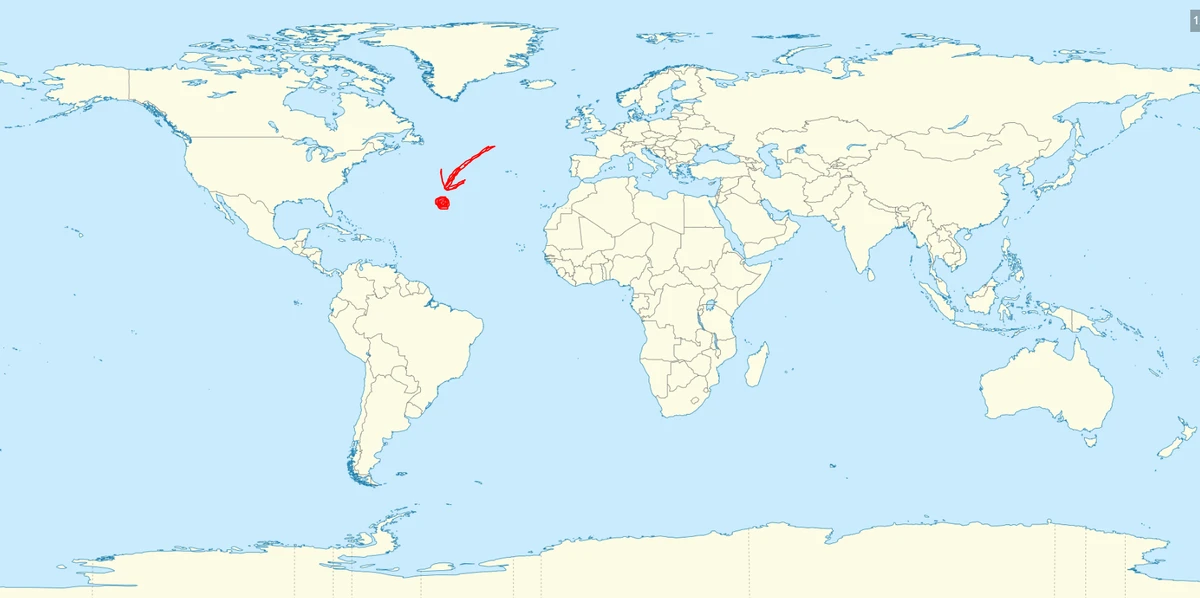
Approximate location of the Lost City on the world map. 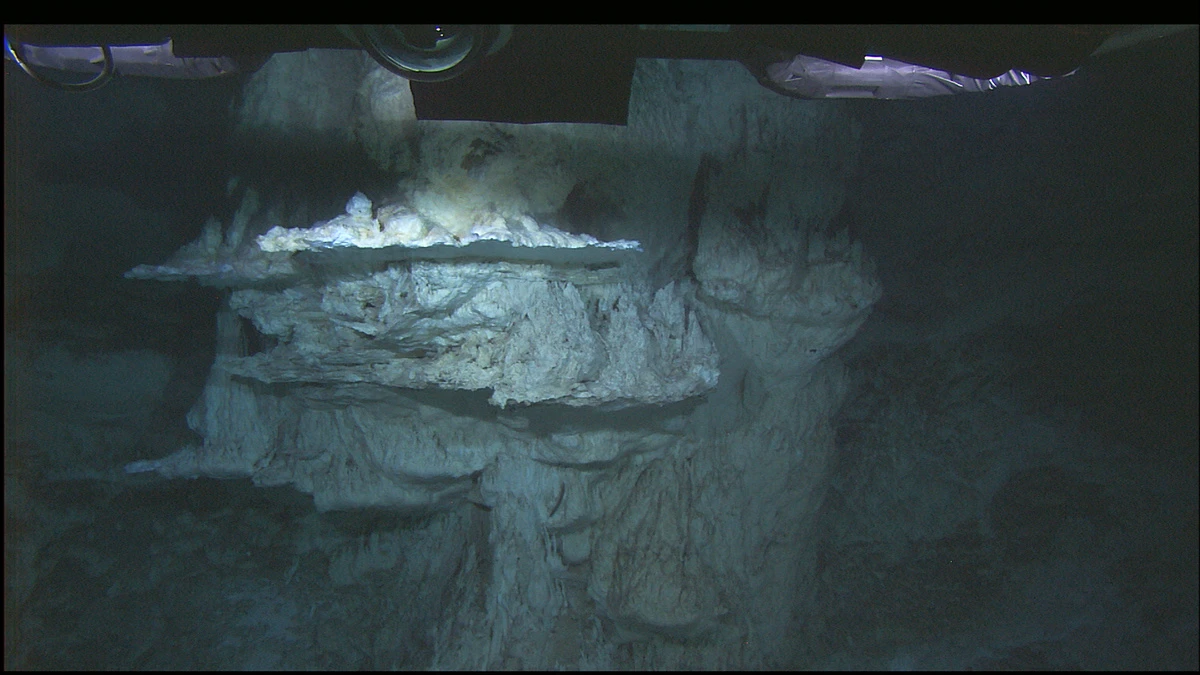
Walls and columns of snow-white stone are everywhere. 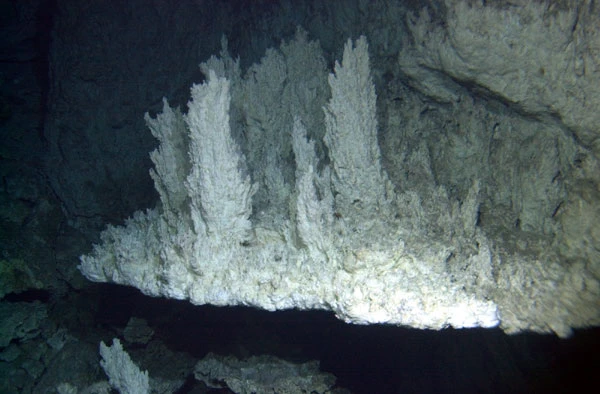
The main thing is not to step on anything sharp.
The Lost City is an underwater hydrothermal field that somewhat resembles "black smokers." However, the principle behind their formation is the same only at first glance. Yes, both of these natural wonders consist of large pillars spewing heated water from their summits, but the resemblance ends there. Black smokers form where the Earth's crust has thinned enough for seawater to reach the magma; the water boils and surges upward in a violent, superheated stream, carrying metal oxides and sulfur with it. 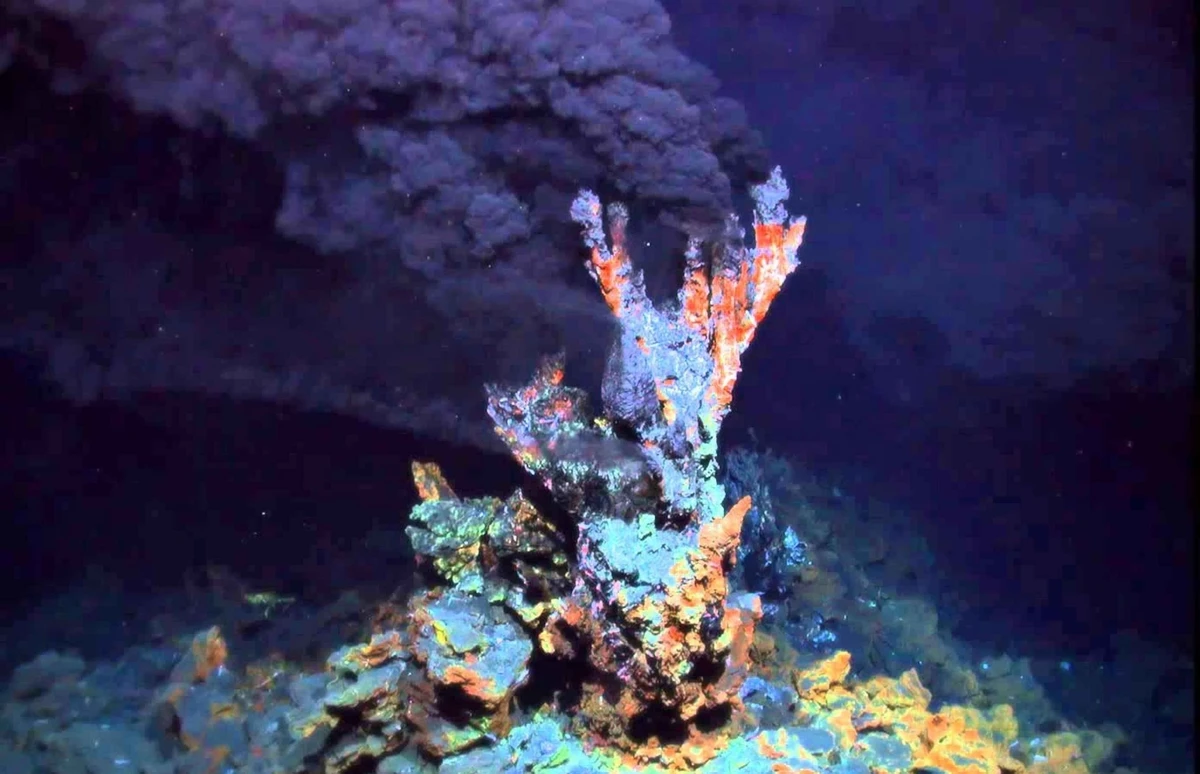
A black smoker. 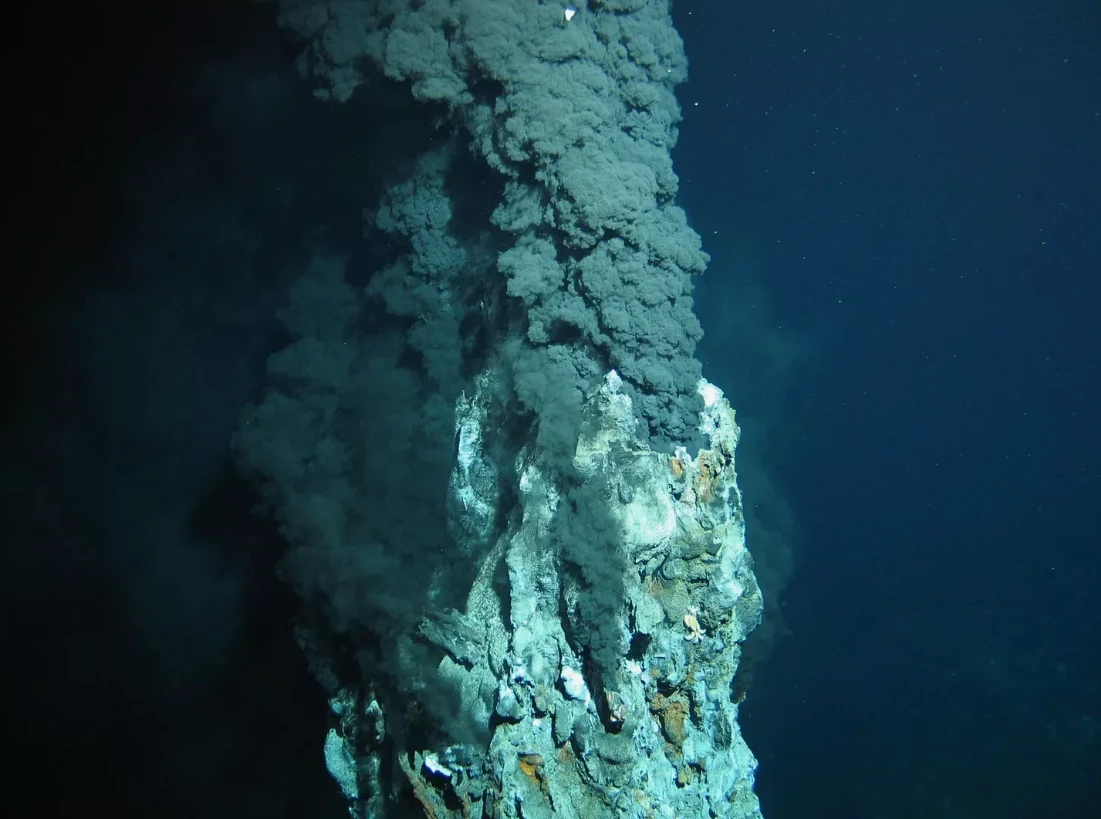
And this is a black smoker, too.
The Lost City was formed by a unique geochemical process known as serpentinization. Here, seawater seeps into mantle rocks—specifically peridotites, which are ultramafic rocks rich in the mineral olivine. A chemical reaction takes place: Olivine + water → serpentine + magnetite + heat. Serpentinization is an exothermic reaction, meaning it generates heat on its own, without the need for magma. Hydrogen and methane are released in the process, and the water becomes alkaline. This reaction can continue for billions of years without any volcanic activity—as long as water and peridotites are present. The Lost City has existed for at least 30,000 years, and possibly much longer. Here, the water is heated to 40–70°C solely through chemical reactions (unlike the 200–300°C temperatures found at hydrothermal vents) before rising upward. As it does, minerals precipitate out, forming massive crystalline structures—towers reaching up to 60 meters in height. 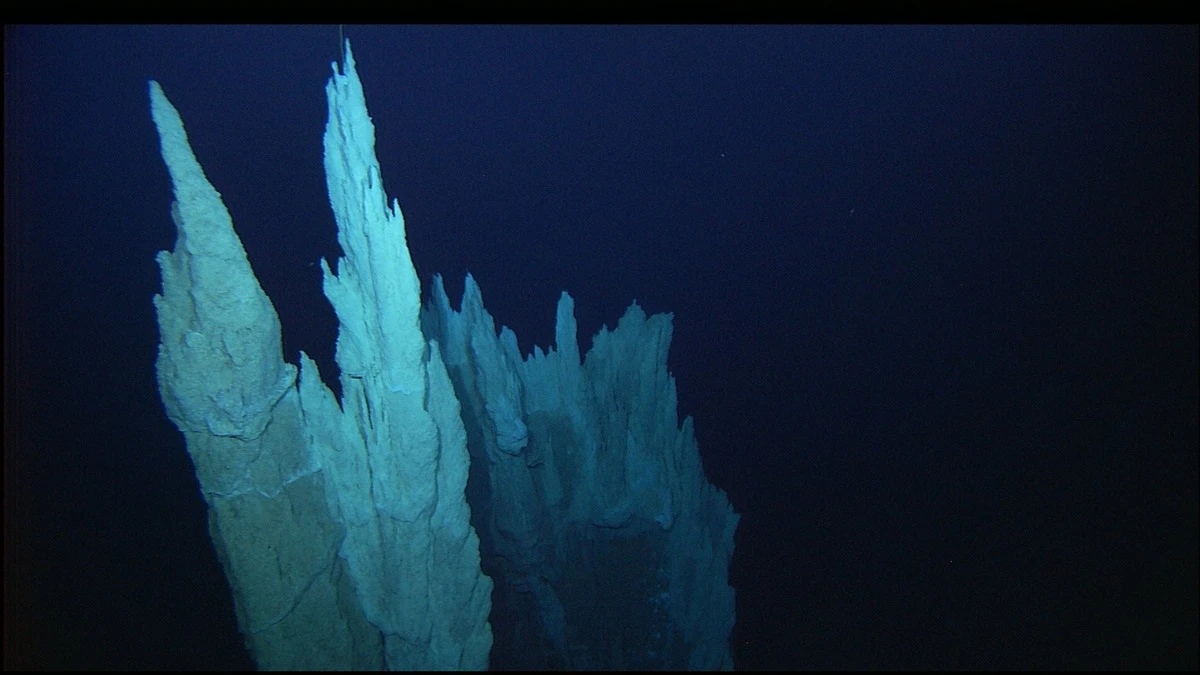
Dubaisk has sunk. 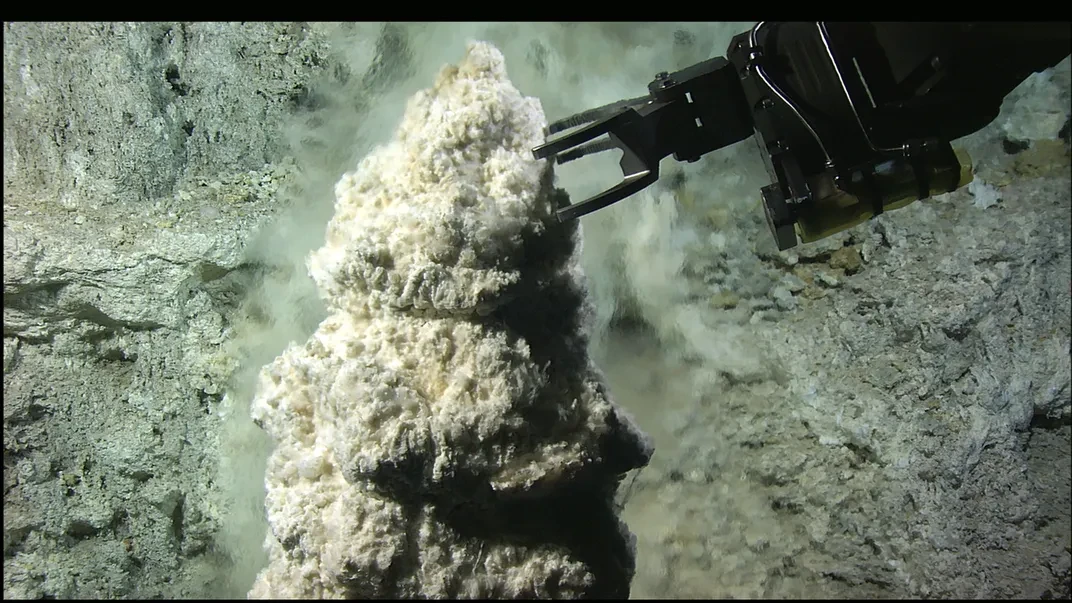
A robotic submersible collects a piece of the city as a souvenir. He doesn't know yet that evil scientists are going to take the sample away to their lab...
Because the hot waters of the Lost City are far less nutrient-rich than those of black smokers, the diversity of multicellular life is severely limited. You won't find complex ecosystems here teeming with worms, mollusks, and crabs that host symbiotic bacteria; even common sea urchins are a rare sight. However, in their absence, unicellular life has flourished. There is such an abundance of bacteria that in some places they form mats several centimeters thick! And since serpentinization is a widespread (albeit complex) geochemical process, scientists have no doubt that many geothermal vents similar to the Lost City exist on the ocean floor. The trouble is, finding them is an incredibly difficult task. 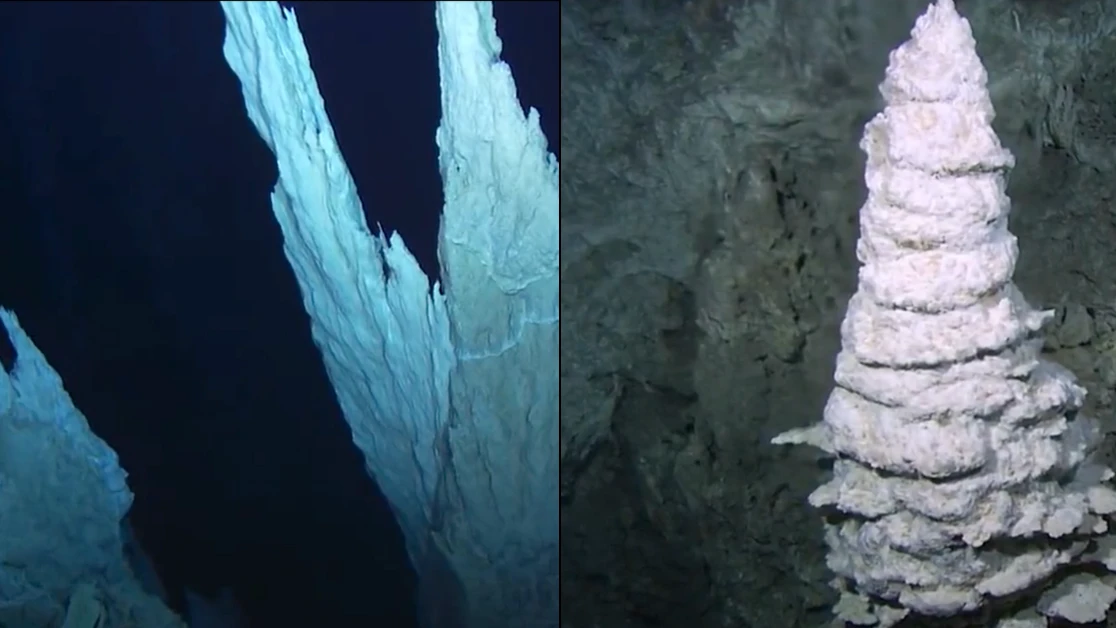
Would you like to see the Lost City with your own eyes?
Furthermore, structures similar to the "Lost City" might exist even beyond Earth. Europa (a moon of Jupiter) and Enceladus (a moon of Saturn) are icy moons harboring vast subsurface oceans; their seabeds could potentially host their own underwater cities—cities that might be teeming with life. After all, according to some theories, geothermal vents of this very type were the sites where life first emerged on Earth. 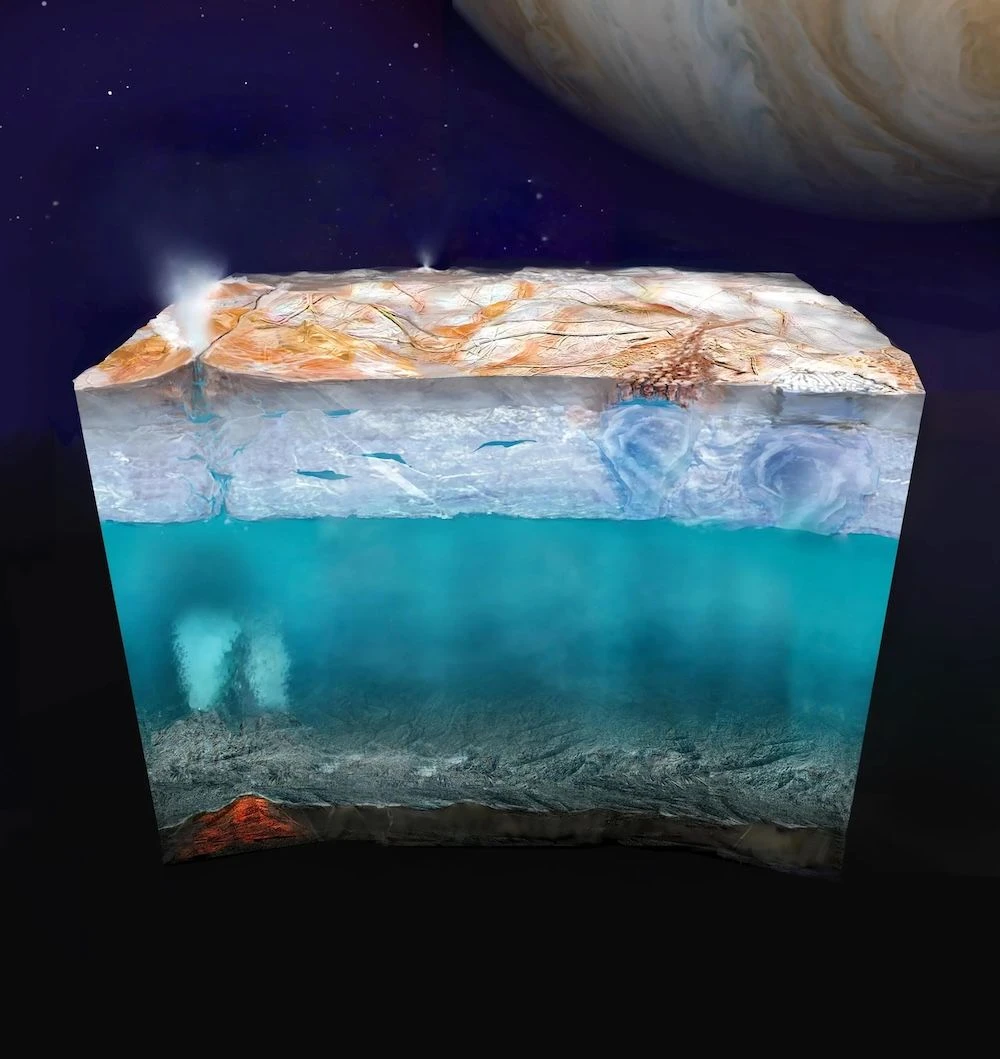
This is roughly what a cross-section of Europa looks like. Due to its thin crust, the seafloor is likely dotted with hydrothermal vents.