8 facts that sound made up but are actually the absolute truth (9 photos)
History loves to spring surprises, and nature delights in creating creatures that any science fiction writer would envy. This collection features eight stories so incredible they are hard to believe. Yet, science and historical records confirm: they actually happened. 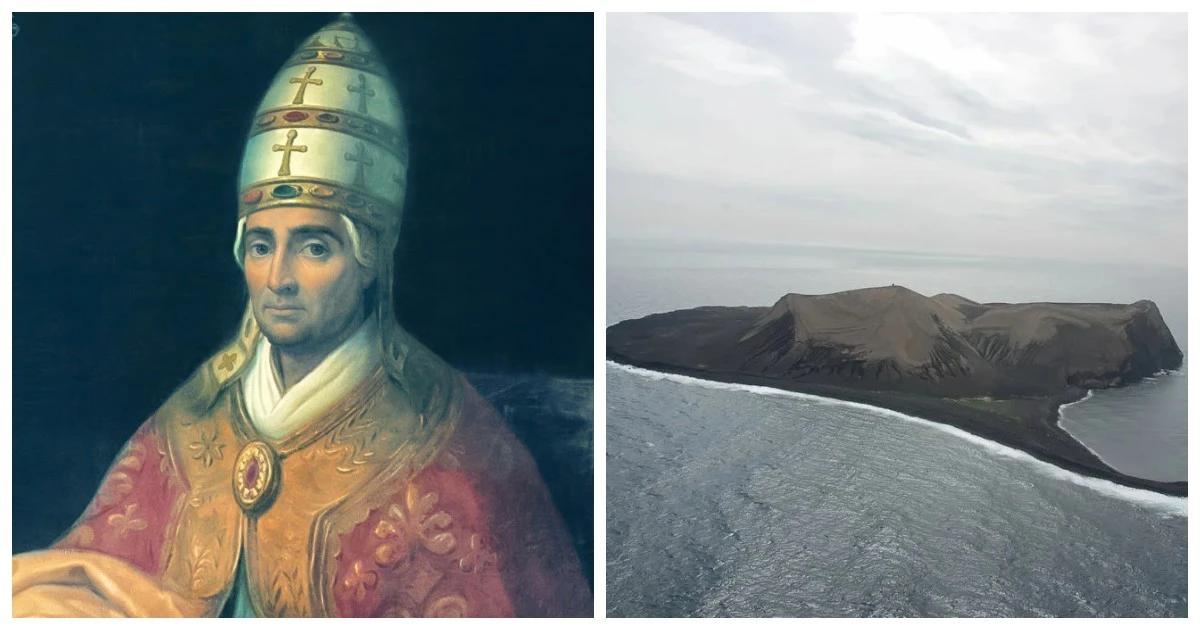
For instance, did you know that one Pope was elected... by mistake? Or that there is a spider the size of a sparrow? And what about an island closed to the public so scientists can observe the emergence of life from scratch? Here are eight amazing facts that sound like fiction but are the absolute truth.
1. A Bold Reply 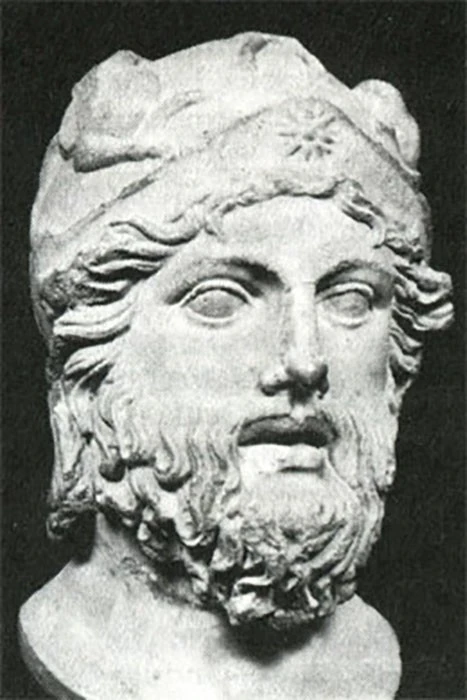
Dionysius I, the ruler of Syracuse, wrote poetry that wasn't always well-received. After the poet Philoxenus criticized his work, Dionysius sent him to the quarries, though he later relented and had him imprisoned for just a day instead. He then released him, read him another poem, and asked for his opinion. Philoxenus replied: "Take me back to the quarries."
This story is a classic example of tyranny that brooks no criticism, and of the courage of a poet willing to suffer physical hardship rather than lie about his art. It is said that although Dionysius had a quick temper, he appreciated wit and ultimately forgave Philoxenus.
2. A record-breaking spider 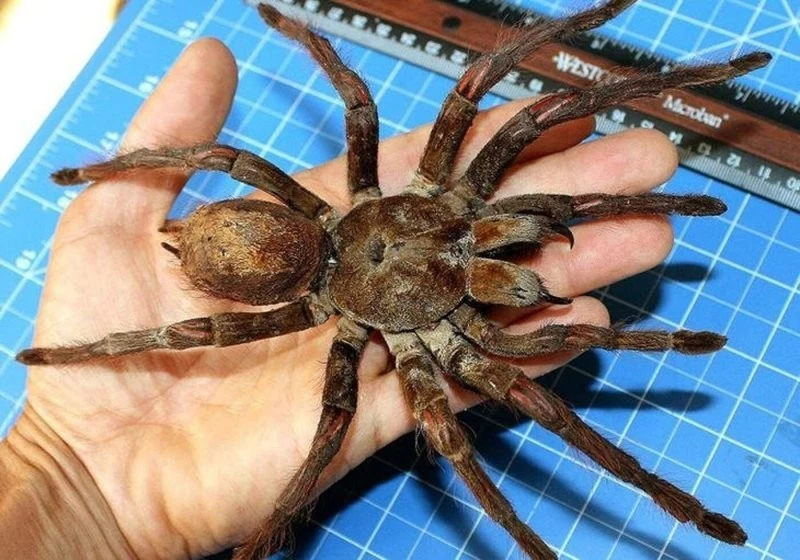
The Goliath birdeater is the heaviest spider in the world (weighing up to 175 grams) and the largest in terms of body length (up to 13 centimeters).
3. A grand gesture 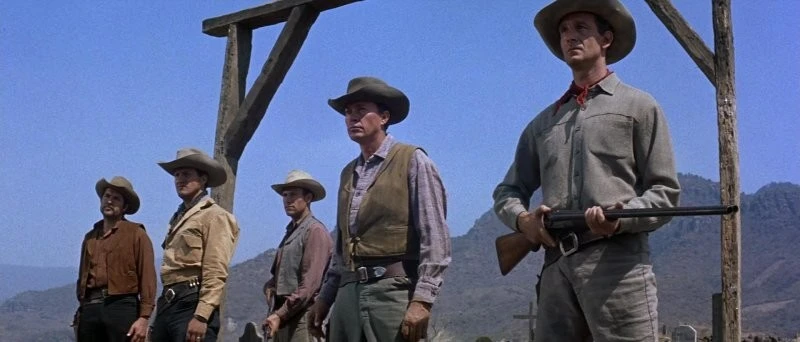
After watching *The Magnificent Seven* (1960), Akira Kurosawa was so impressed by the American remake of his film *Seven Samurai* that he sent director John Sturges a ceremonial Japanese sword as a gift.
This incident is one of the most famous examples of a director reacting warmly to an adaptation of their work—something that rarely happens in film history.
4. A change in altitude 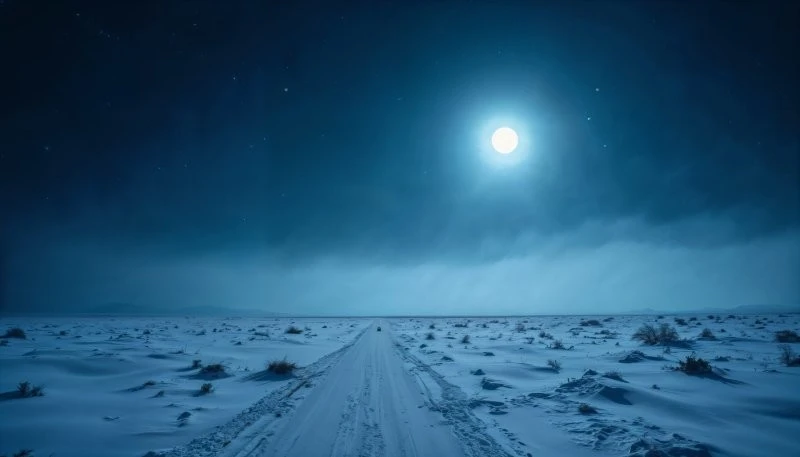
The height of the full moon above the horizon depends directly on the time of year. In summer, it is low; in winter, it is high. This is one of the clearest proofs that the changing of the seasons is linked to the tilt of Earth's axis of rotation.
5. A Natural Laboratory 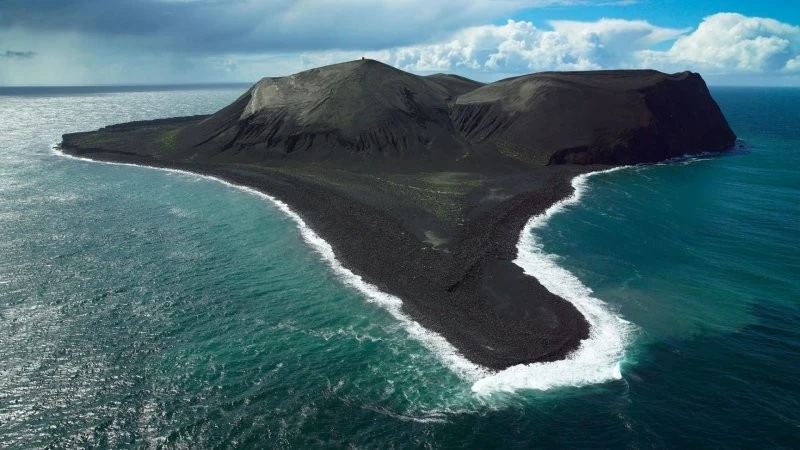
Surtsey, an Icelandic island formed by a volcanic eruption in 1963, is largely closed to visitors so that scientists can study how ecosystems develop naturally.
The volcanic island emerged off the southern coast of Iceland following an eruption that began on November 14, 1963, and lasted until June 5, 1967. It is named after Surtr, a fire giant from Norse mythology.
As early as 1965, while the eruption was still ongoing, Surtsey was declared a nature reserve. Access to the island is strictly restricted; only a few scientists conducting research there are permitted to land. The general public can view the island only from an airplane or a ship.
This measure was taken specifically to isolate the island from external influence and allow scientists to observe how life colonizes a completely new, sterile territory. It serves as an open-air laboratory for studying primary succession—the process of an ecosystem forming from scratch.
6. An Amazing Adaptation 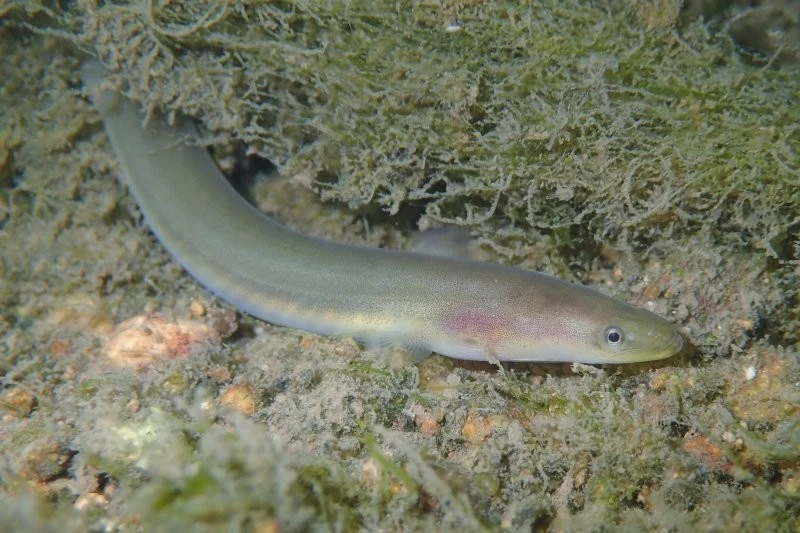
When a predatory fish swallows a juvenile Japanese eel whole, the eel can escape by crawling backward through the predator's digestive tract, pushing its tail out through the gills, and then pulling itself free—tail-first.
This phenomenon was described in a scientific paper published in 2020. Unlike most prey, which attempt to escape head-first (moving up the esophagus), the eel employs a completely different strategy. It curls its tail, pushes it through a gill slit, and then—using its tail to grip the gills—literally pulls itself backward out of the stomach, through the esophagus, and into the open. The entire process takes just a few seconds.
This behavior is a unique adaptation that allows the young eel to survive in situations where other fish would be doomed. The ability to wriggle and move backward against esophageal peristalsis is an amazing example of how natural selection can produce unconventional solutions.
7. A New Species 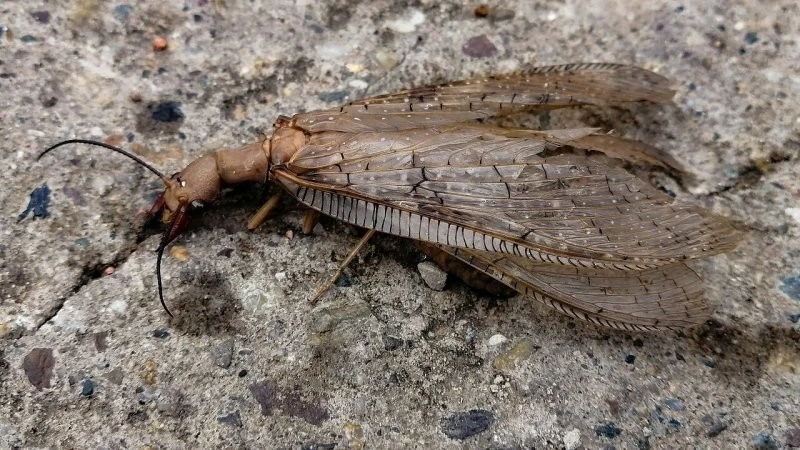
Dobsonflies belong to a family of insects considered relatively young in evolutionary terms. They originated in East Asia, from where they subsequently spread to warmer regions such as China, Southeast Asia, and even North and South America.
These insects are true giants among their kin. The wingspan of some tropical species—such as the giant Chinese dobsonfly (*Acanthacorydalis fruhstorferi*)—reaches 21.6 centimeters, making them the largest aquatic insects in the world and among the largest flying insects overall. For comparison, these creatures are comparable in size to a sparrow.
Fortunately for those intimidated by such dimensions, adult dobsonflies spend most of their short lives (only about a week) in shelters near the water and rarely fly. Their wings serve primarily to find a mate during the breeding season. Furthermore, the males' most distinctive feature—huge, pincer-like mandibles (upper jaws)—is not used for attacking prey. Instead, they serve as weapons in clashes with rivals or as an impressive courtship display to attract a female.
8. Accidental Pope 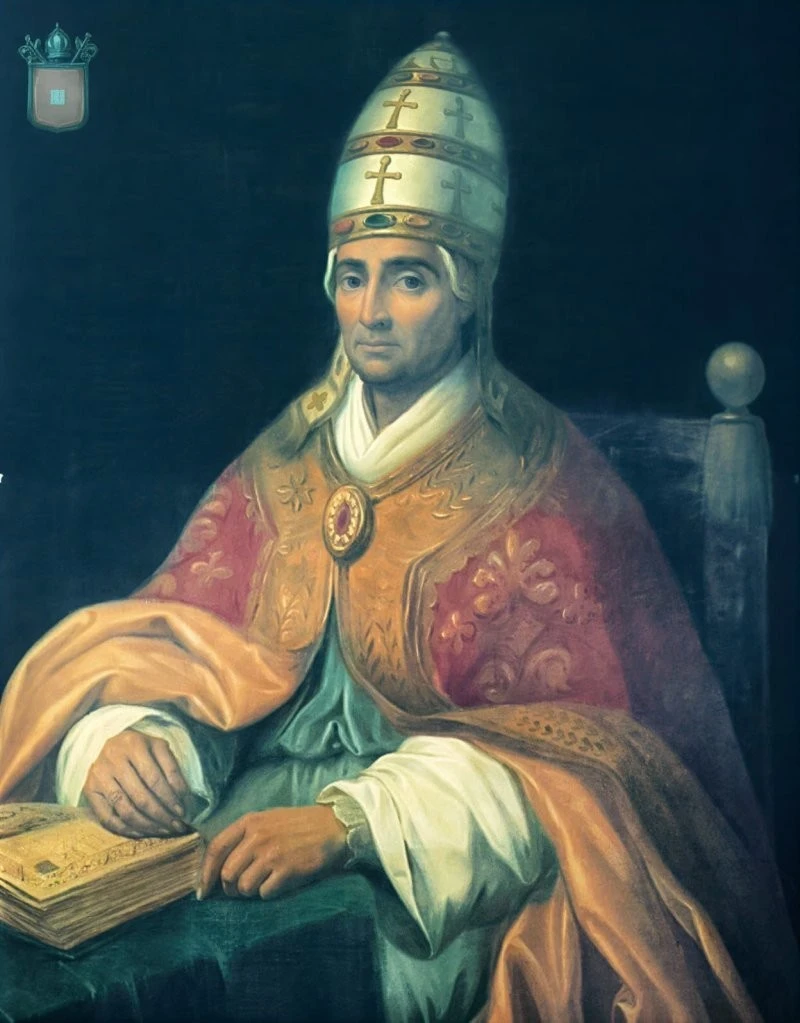
In 1334, the cardinals elected Jacques Fournier as Pope by mistake. He secured the necessary two-thirds majority in the very first round, even though the other cardinals had voted for him merely to test the waters. The irony was that upon hearing of his election, Fournier himself exclaimed, "You have elected an ass!"
How did this happen? It came down to a tactical maneuver the cardinals employed during the election. First, they needed to gauge how votes would be distributed among the leading candidates. To do this, they cast "throwaway" votes for someone with no real chance of winning, simply to see how the land lay. However, on this occasion, the votes aligned in an unexpected way.
When the votes from the first round were tallied, it turned out that more than two-thirds of the conclave had voted for the unassuming, inconspicuous Cardinal Fournier. Their tactic had backfired: no one had actually intended to elect him, yet the exploratory votes had combined to reach the required threshold. There was no other choice—Fournier became Pope under the name Benedict XII. And, contrary to the mockery, he proved to be one of the most honest and reform-minded popes of his era.