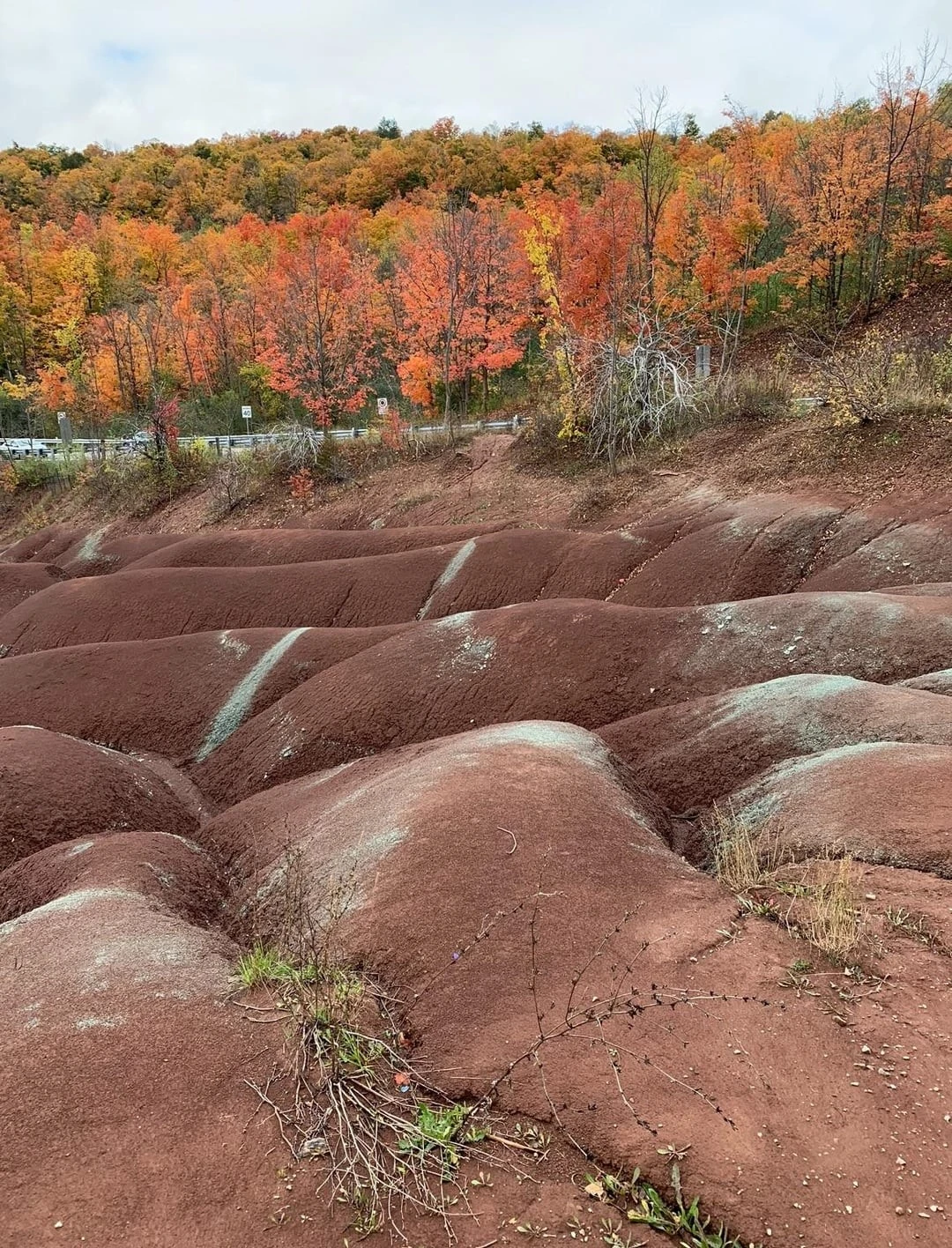
Canada's "Bloody Hills": how human error created a Martian landscape—and nearly destroyed it (12 photos + 1 video)
In the heart of the Canadian province of Ontario, amidst the familiar green landscape, lies something truly otherworldly. 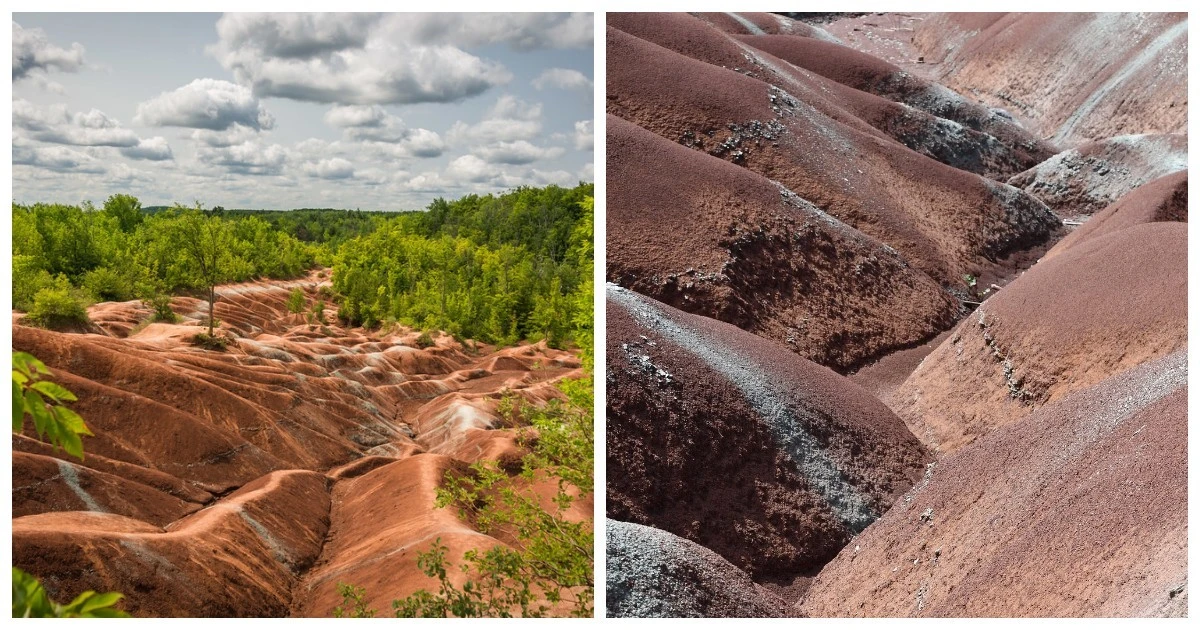
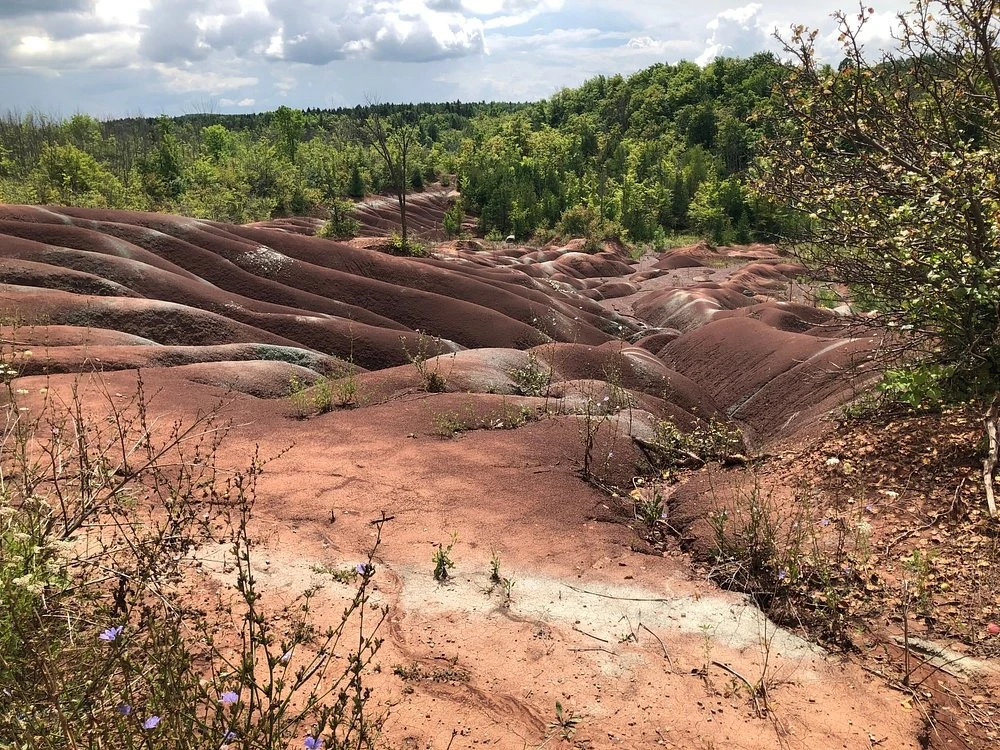
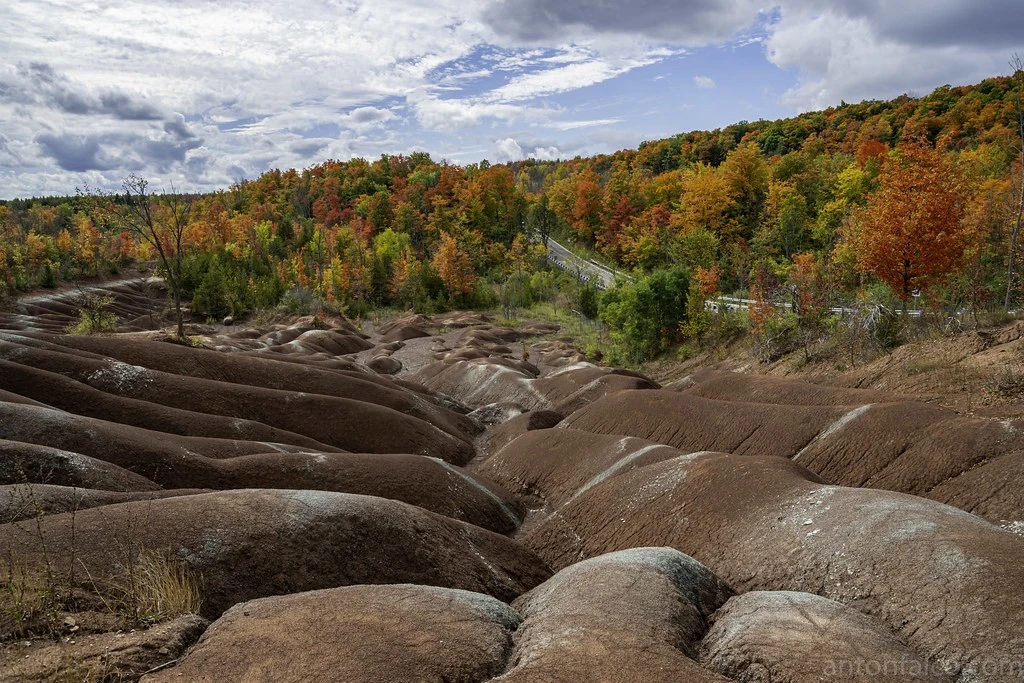
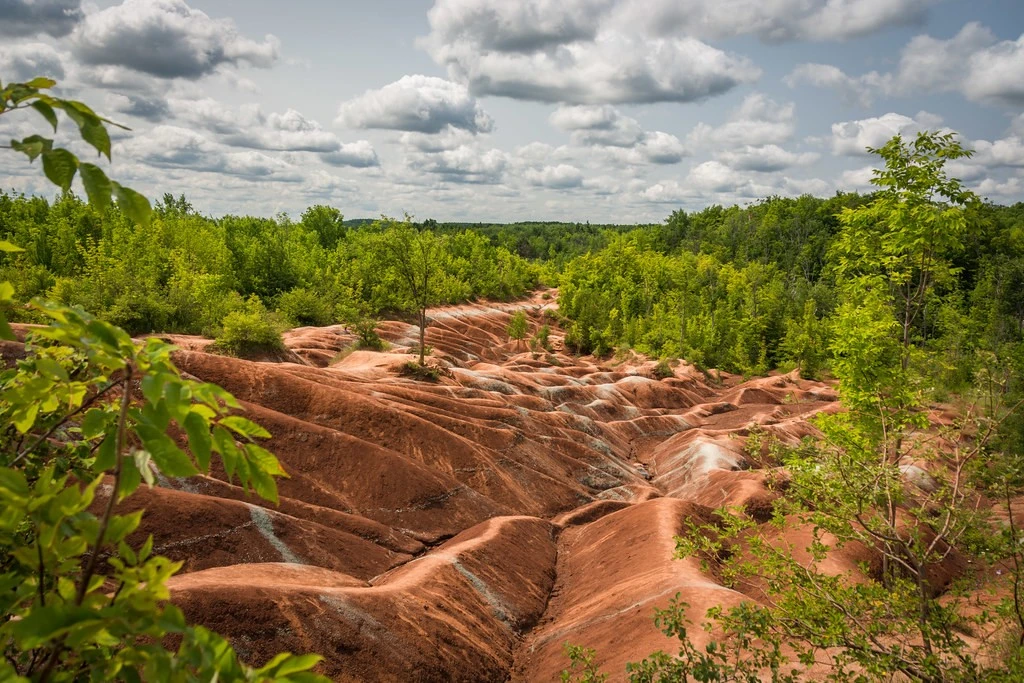
Imagine a Martian landscape suddenly emerging from ancient forests: crimson hills carved by deep ravines, streaked with veins of soft green. This is the Cheltenham Badlands—a place where the earth itself seems to burn with the fires of ages past. 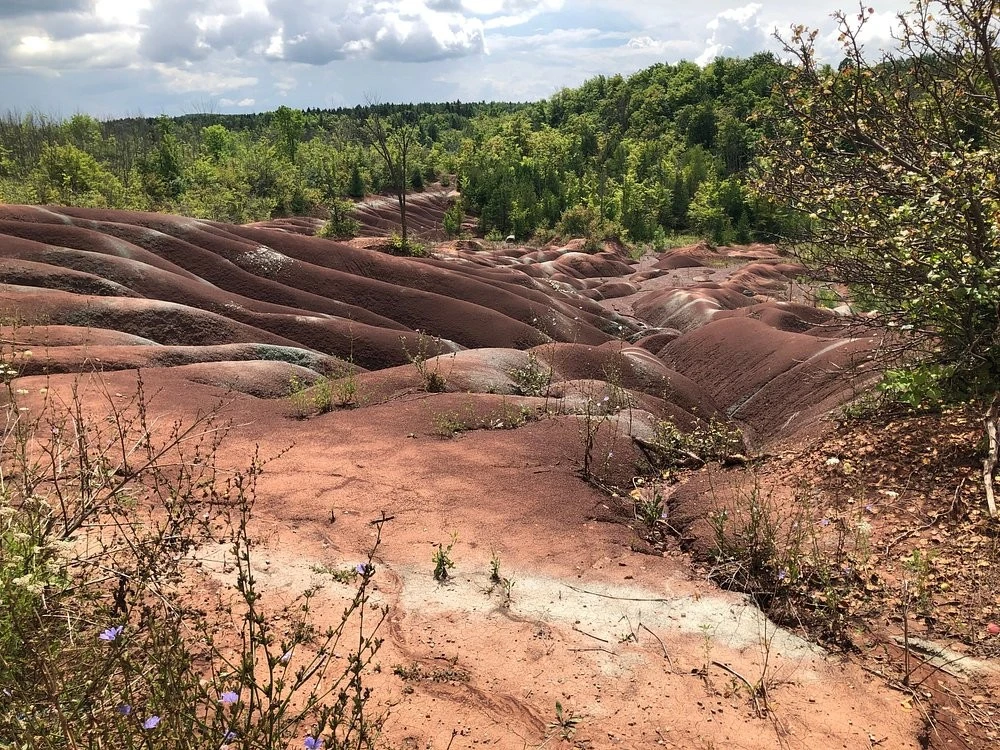
Four hundred and fifty million years ago, a warm sea lapped at this spot; over centuries, red silt carried by the waters of a massive delta accumulated on its bed. For millions of years, these layers were compressed into solid rock, eventually buried beneath new strata of limestone and sandstone. Yet, human activity proved more powerful than time. 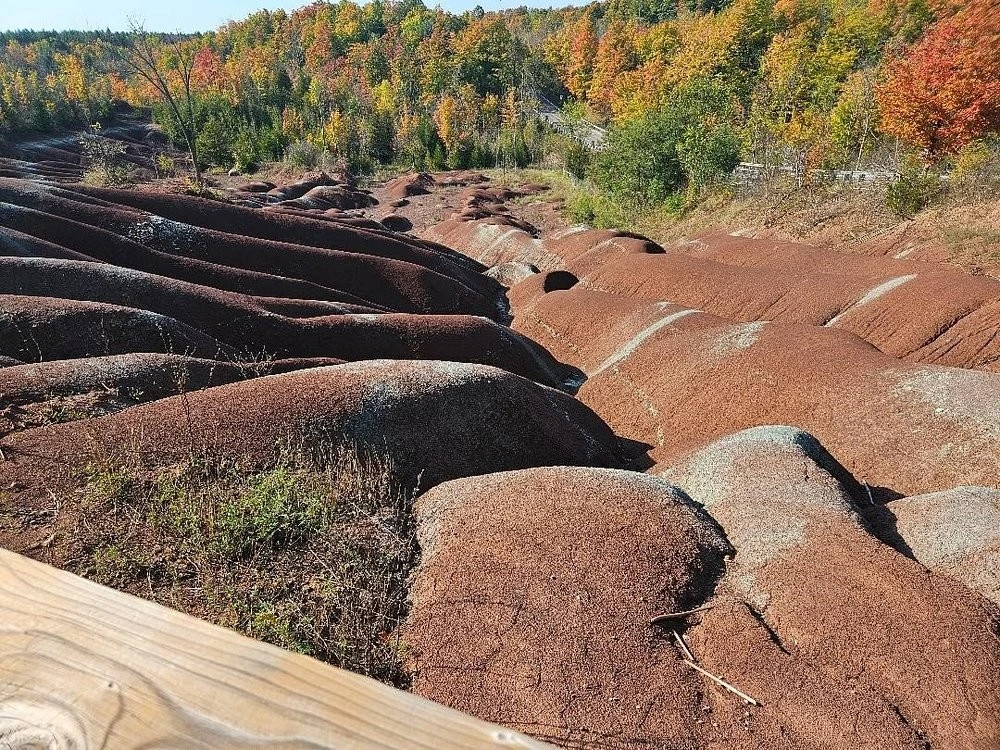
In the early 20th century, farmers cleared the forests and turned the land into pasture for their livestock. Predatory plowing and uncontrolled grazing destroyed the thin layer of fertile soil, exposing ancient, blood-red shale. Nature, as if exacting revenge for this abuse, began ruthlessly eroding the rock with water and wind, carving out—over the course of decades—the fantastical lunar landscape visible today. 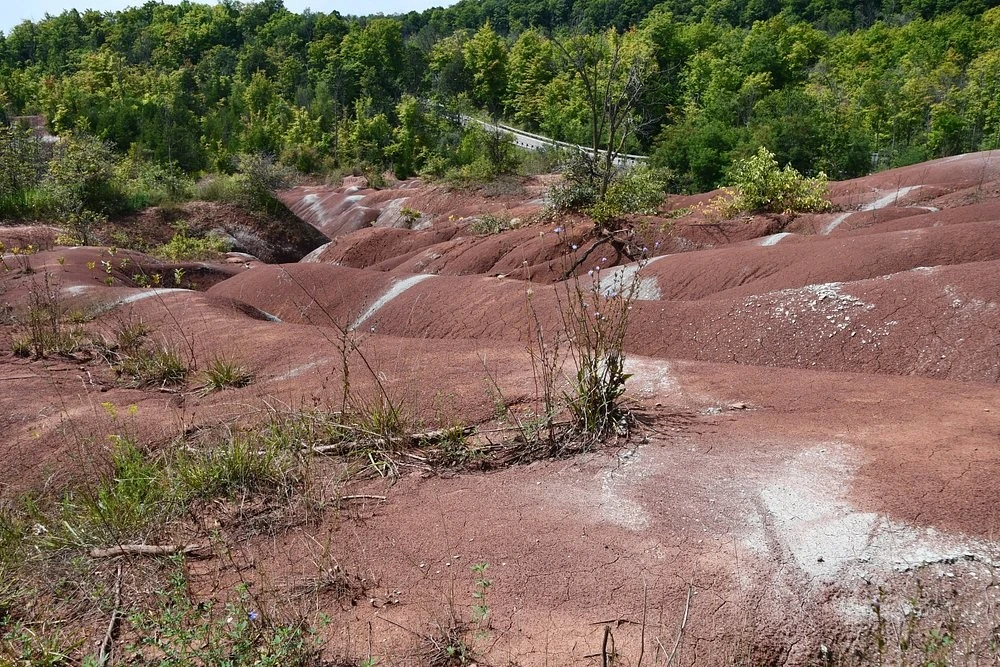
For years, the badlands were a popular, wild destination. Thousands of tourists walked across the fragile clay hills, destroying them with every step. Literally every footfall left an indelible mark on this 400-million-year-old geological record. In 2015, when erosion reached a critical level, authorities made a decision: the badlands were closed. The area remained sealed off for six years to give the land a chance to recover. 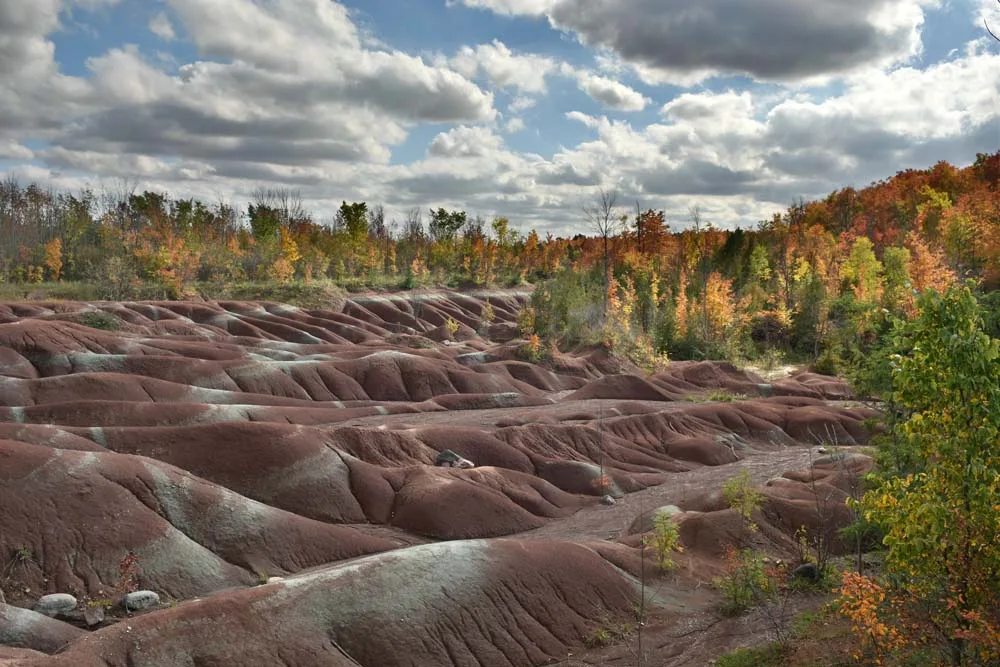
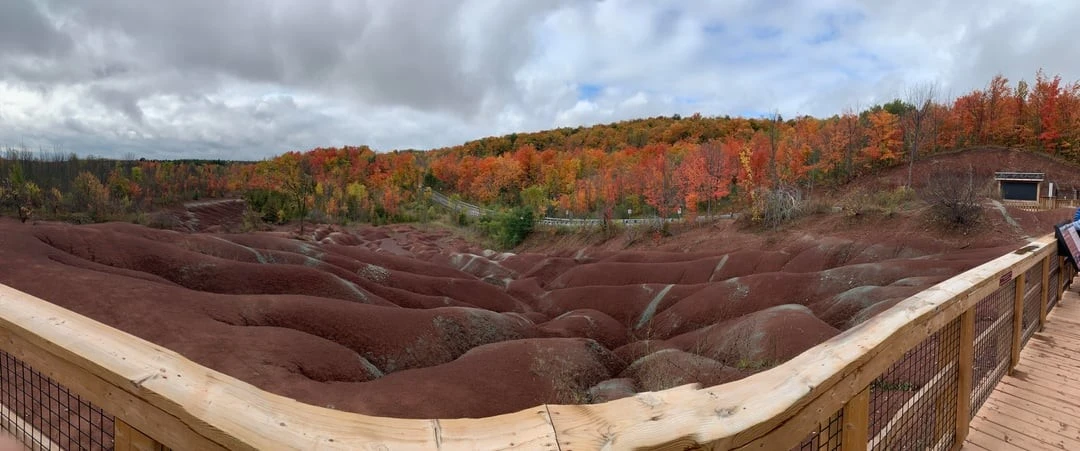
After a period of closure for restoration, the badlands reopened to the public in 2018. However, access is now regulated: a parking lot, an observation deck, and restrooms were built at the entrance. The visiting season runs from May to November. 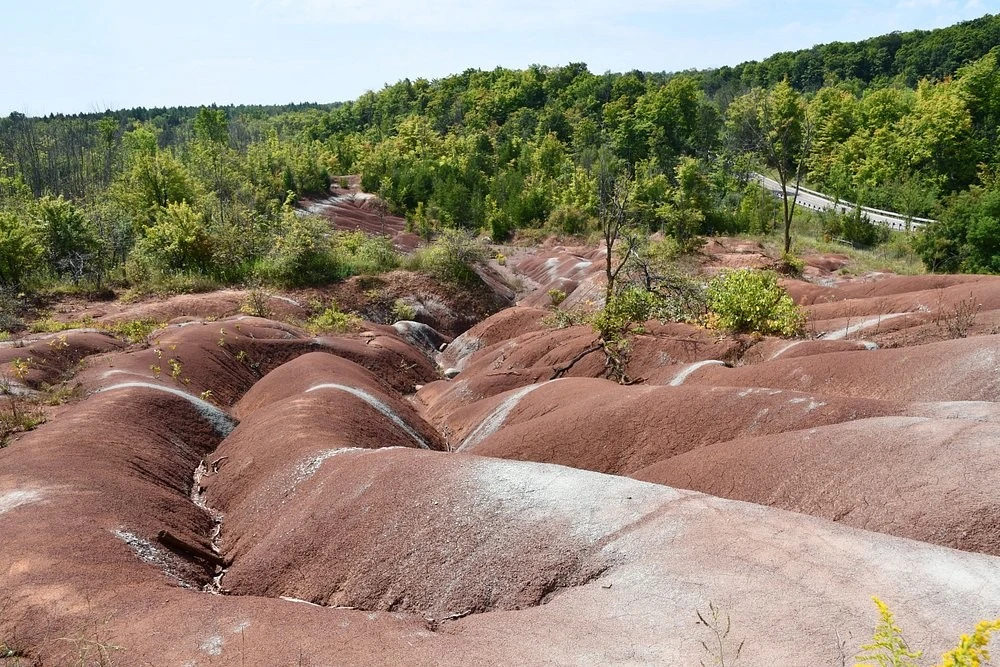
Visits now require an admission fee and must be booked in advance. 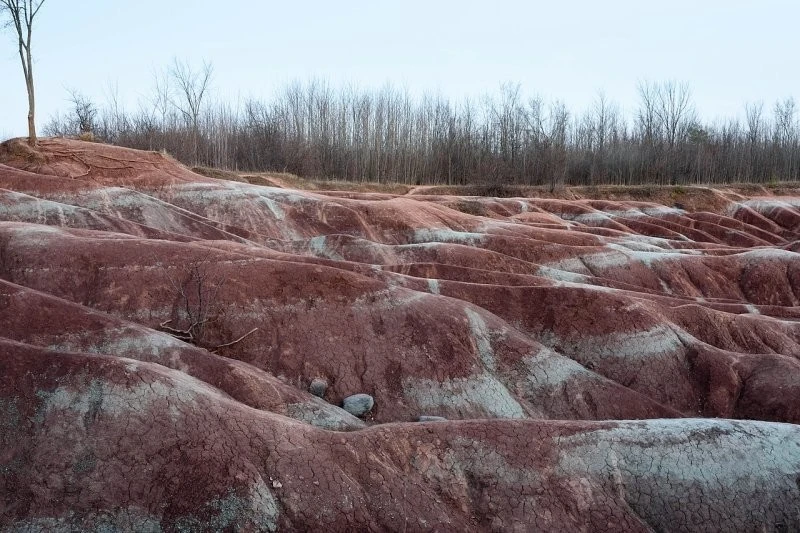
The main rule now in effect here is a ban on stepping onto the clay surface to prevent further erosion. You may only view the red hills from the designated wooden walkway.