The deepest mine on Earth (5 photos)
One of the most hostile places on Earth regularly visited by humans lies more than four kilometers underground, where temperatures exceed +60°C, pressure is immense, and air must be pumped down from the surface. This is Mponeng—the deepest active mine in the world. 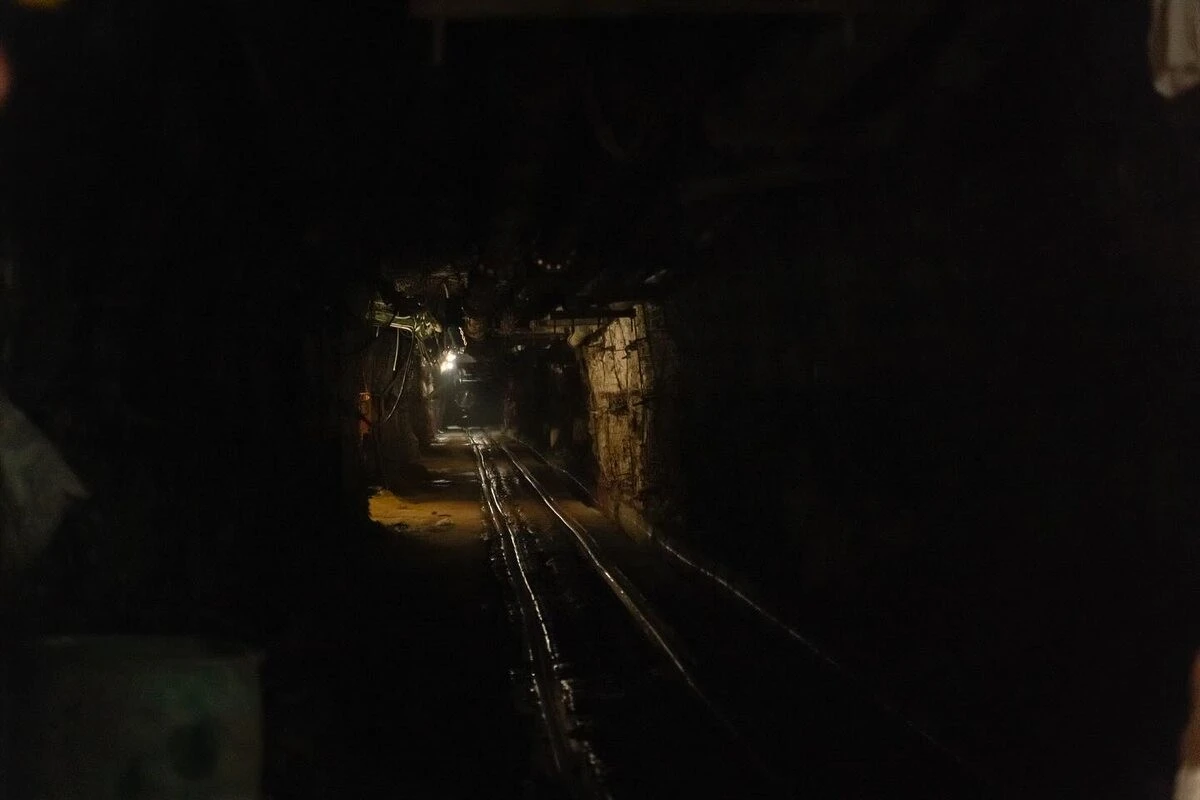
Hell on Earth
The Mponeng mine is located in South Africa, 75 kilometers southwest of Johannesburg, in the Witwatersrand region—the planet's largest gold-bearing basin. The name "Mponeng" means "look at me" in the Sotho language, and the mine certainly commands attention.
The mine reaches a depth of approximately 4.3 kilometers from the surface to its lowest workings. For comparison, Mount Narodnaya—the highest peak in the Ural Mountains—stands at "only" 1,895 meters above sea level.
The mine is owned by the South African mining company Sibanye-Stillwater, which specializes in extracting gold and platinum-group metals in South Africa and the United States. Mponeng supplies about 7–9 tons of gold to the global market annually, and every single gram of that vast total is extracted at the cost of incredible effort and immense risk to life. 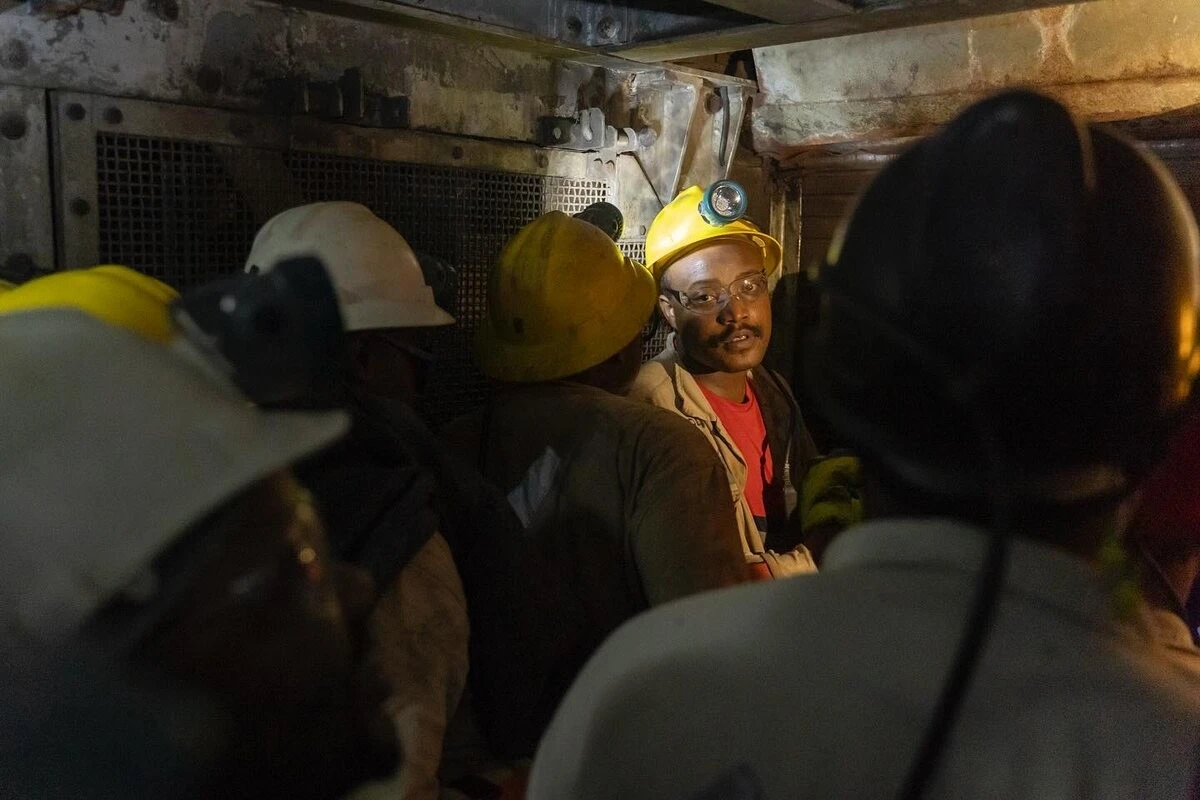
Working conditions
At depths exceeding four kilometers, conditions differ radically from those on the surface:
Due to the geothermal gradient (the rise in temperature as one descends into the Earth's crust), the rock temperature at the bottom of the mine reaches +60–70°C. To enable miners to work, water cooled to near-freezing temperatures is pumped into the depths of the mine through insulated pipes; it absorbs excess heat from the air via radiators. The heated water returns to the surface, passes through chillers (industrial refrigeration units), and is recirculated into the mine. Combined with powerful fans, this lowers the air temperature in the working zones at the mine's bottom to +28–30°C. Yet even this constitutes extreme conditions for grueling physical labor.
Rock pressure at such depths is immense. The rock literally "presses in" from all sides, creating a risk of cave-ins. The mine walls and ceilings constantly crack and "breathe," accompanied by distinct sounds that could easily frighten an unprepared person. Steel mesh, rock bolts, and concrete structures are used to reinforce them, but the threat of collapse remains ever-present.
There is no natural air at depths exceeding four kilometers; it must be pumped down from the surface through a system of ventilation shafts.
Miners use elevators to reach their work sites, but this is no quick ride like in an office building; it is a slow descent into the bowels of the planet. From the final elevator, the journey to the extraction site requires taking a chairlift and walking through low, narrow tunnels. The descent from the surface to the bottom of the mine takes an average of an hour and a half. 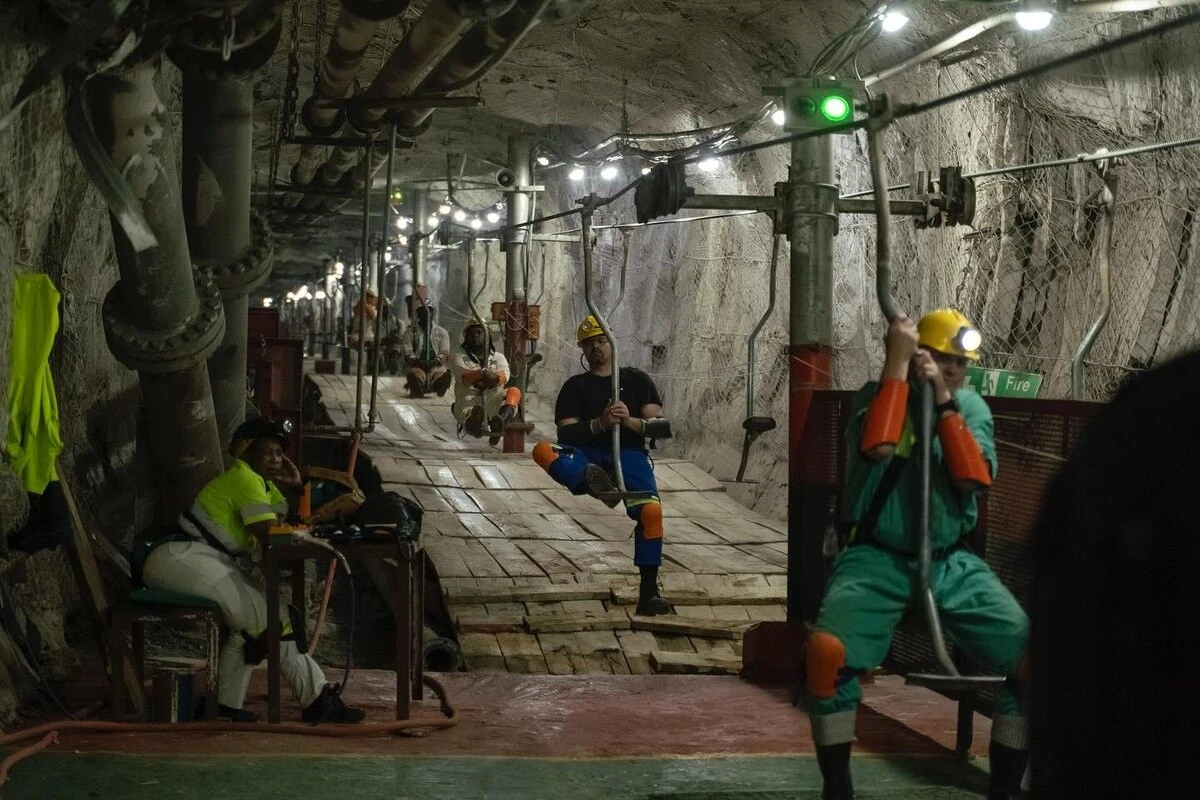
How work is done there
The workday at Mponeng begins long before a miner reaches the working face. The descent, safety briefings, and the trek to the work site take hours. Then, the actual work begins: drilling, blasting, and hauling the rock.
The gold at Mponeng lies in thin veins—only a few centimeters thick—sandwiched between layers of hard rock. Extracting it involves cutting tunnels, blasting the rock, crushing it, transporting it to the surface, and processing it there. A single ton of gold-bearing ore yields only a few grams of gold.
Operations run around the clock in three shifts. About 4,000 people are in the mine at any given time. Working conditions are among the toughest in the world. Despite all safety precautions, accidents occur regularly at Mponeng. 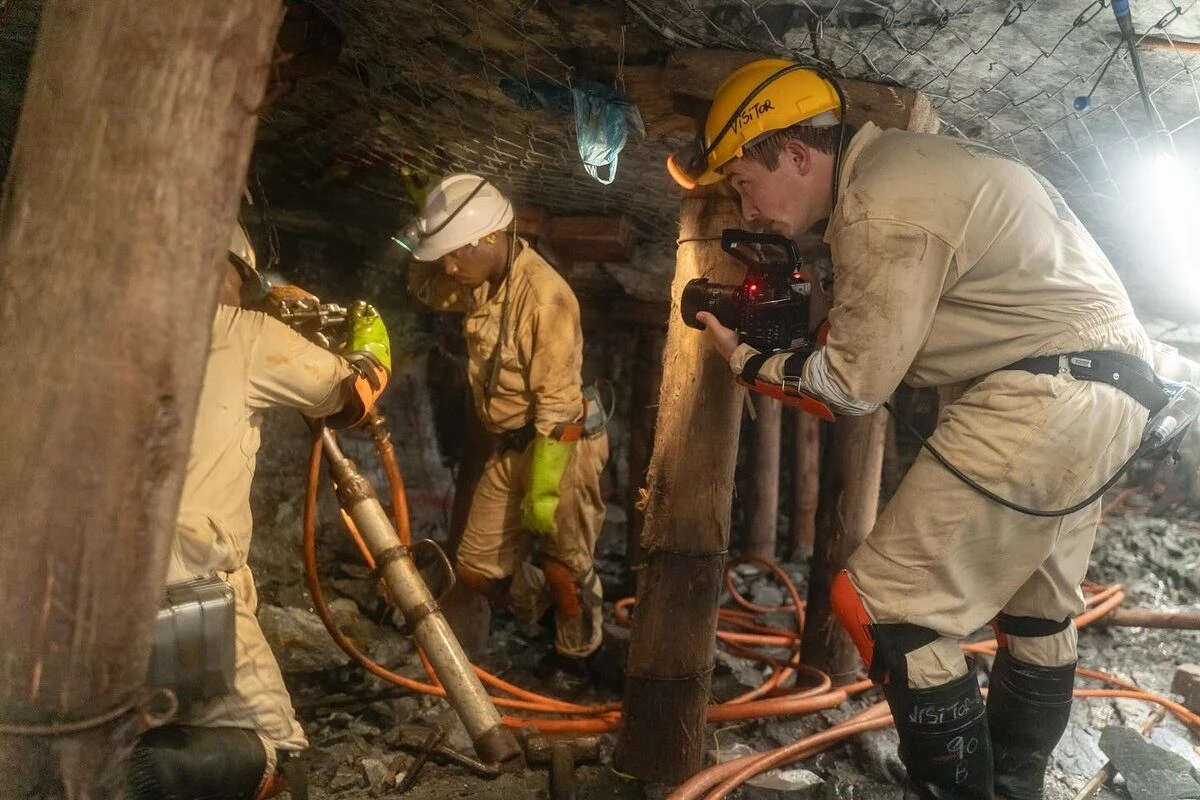
TauTona: the former record-holder
Until recently, TauTona—also located in South Africa, just a few kilometers from Mponeng—was considered the deepest mine. It reached a depth of 3.9 kilometers.
TauTona had been in operation since 1962 and held the depth record for a long time. Conditions there were similarly extreme. The mine was closed in 2018 due to the depletion of reserves and economic unviability.
Is it possible to dig even deeper?
Technically, humanity could dig even deeper, but there are a number of limitations:
With every kilometer of depth, the temperature rises by approximately 25–30°C (the global average). At a depth of 5–6 kilometers, it exceeds +100°C, while at 10 kilometers, it reaches +200°C or higher. A cooling system would consume a colossal amount of energy, rendering any extraction operation unprofitable.
Rock pressure increases in proportion to depth. At depths exceeding five kilometers, rock formations begin to behave like a plastic mass; consequently, no structural reinforcement can withstand such shifting loads.
The deeper the mine, the costlier the extraction. More energy is required for cooling, ventilation, and hoisting rock to the surface; more time is spent transporting personnel up and down; and risks—along with insurance costs—are higher. All of this erodes profits. Today, gold mining at Mponeng is already operating at the limit of profitability; going any deeper would simply be unviable. 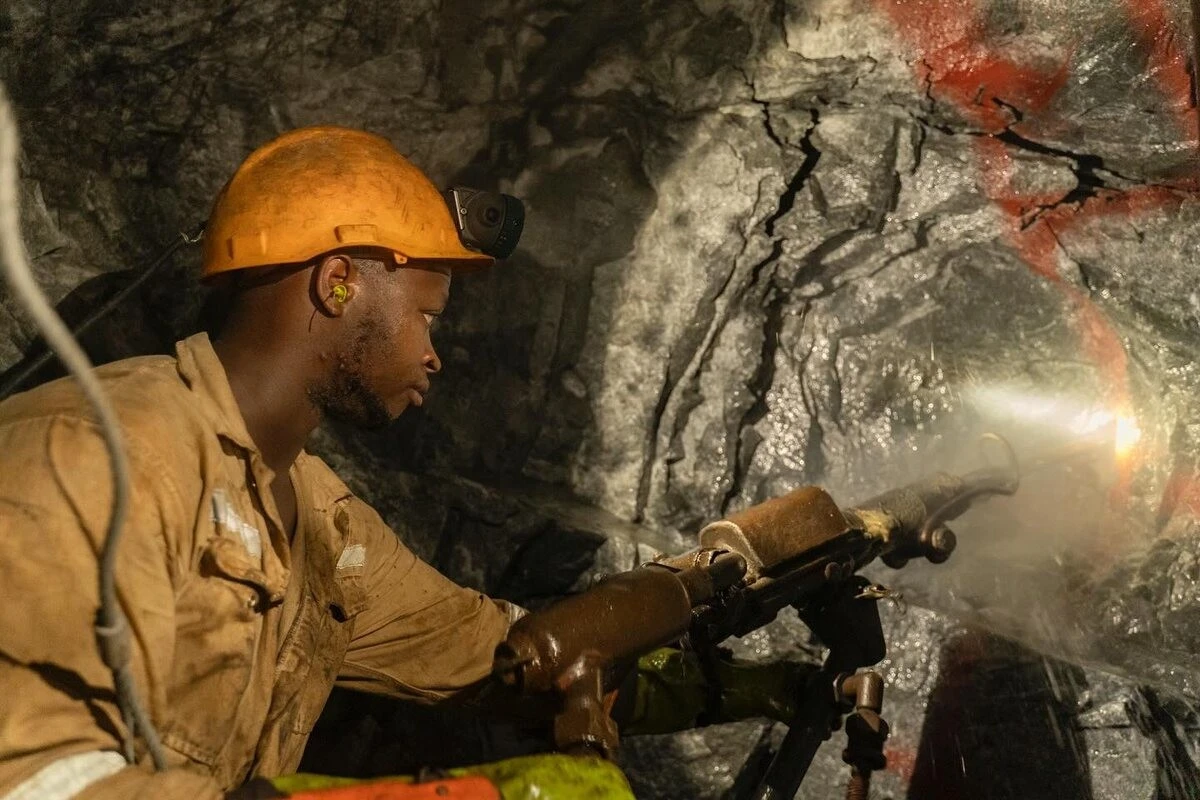
Scientific Interest
Deep mines serve not only as sites for resource extraction but also as laboratories for studying the Earth. Mponeng houses a research station dedicated to neutrino studies and the search for dark matter. The kilometers-thick layer of rock effectively blocks cosmic muons and suppresses the natural background radiation that would otherwise overwhelm hypersensitive sensors on the surface.
Furthermore, these mines provide insights into how rock behaves under pressure, how water circulates at great depths, and what types of microorganisms can survive in such extreme conditions. For instance, in 2002, a completely isolated strain of the extremophile bacterium *Candidatus Desulforudis audaxviator* was discovered at Mponeng; it thrives at great depths by feeding on radioactive ores.
Mponeng is more than just a mine. It represents the limits of human capability—the boundary between what we can control and what would destroy us. It is also a monument to our greed, our insatiability, and the devaluation of human life. Every day, thousands of people earn their living through blood and sweat, bringing to the surface the metal that will be used to make fashionable jewelry and electronics.
Read also:
The main secret of Earth's largest waterfall.
Black smokers: life at deep-sea hydrothermal vents.
7 prehistoric marine animals that have survived to the present day.