In 1996, Air France painted one Concorde blue. A Pepsi commercial: the plane flew around Europe for two weeks, all decked out in the signature blue. Beautiful. There was just one catch: this Concorde was only allowed to accelerate at full speed for twenty minutes at a time. 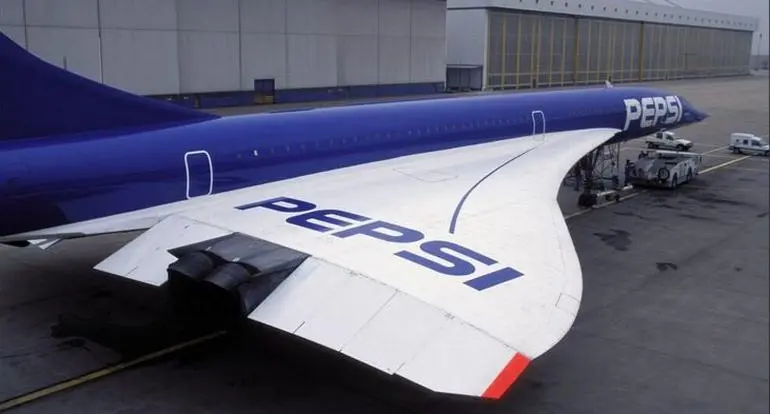
The Concorde flew at more than twice the speed of sound, and air friction caused its nose and leading edges to heat up to 127 degrees Celsius—hotter than boiling water. To prevent aircraft from overheating, they always painted them with a special white paint that reflects heat. Pepsi blue paint, on the other hand, absorbed heat. Incidentally, the wings of this aircraft were left white just in case, but even that didn't completely eliminate the problem. Hence the restriction: Mach 2 flight should not exceed twenty minutes, otherwise it will overheat.
And the obvious question: if color is so important, why are almost all passenger planes white? It seems like a habit, or even something boring. In fact, there's a whole tangle of reasons behind the white color, and the one usually mentioned first is a myth.
Let's start with the birds, because it's not true.
The theory is that planes are white so that birds can see them better and crash into them less often. It sounds logical; white is more noticeable against the sky. However, there's almost no evidence to support this.
There was a serious study on this topic, comparing collision statistics for airlines with different aircraft colors. Three of the seven aircraft types, the light-colored ones, actually had slightly fewer bird strikes. The other four showed no difference. And the authors themselves wrote: the conclusion is not definitive; further investigation is needed.
And in another experiment, birds were shown different colors of light, including white, and they reacted absolutely nothing; they didn't care.
So, "white so birds can see" is a pretty story, even many pilots believe it. The real reasons sound more boring, but they're more interesting.
Heat. Not in the sky, but on the concrete.
White reflects almost all incident light, while dark absorbs it and heats up, as you can see on a black T-shirt in July. But there's a twist here that's often overlooked.
It's commonly thought that white protects the plane from the heat in flight. But in flight, it's -50°C outside, so what heat is there? All the heat is lost on the ground.
An airplane sits for hours on a hot apron in the sun. A dark airplane would heat up so much that it would be stuffy inside, the air conditioners would howl, trying to cool it down, and burn fuel even before takeoff. Plus, there's the fuel in the wings: it also heats up in the sun, and overheated fuel is a whole other hassle. White simply reflects the sun and alleviates half of this headache.
And the blue Concorde is exactly that; the heat there came from friction, not the sun, but the point is the same: color determines whether you overheat or not.
Paint weighs more than it seems
Paint is not a weightless film.
According to various estimates, a full paint job on a large airliner adds between 250 and 550 kilograms. Think of it as three or four extra passengers and suitcases, which the plane carries with it every flight, over the course of years. And every extra kilogram is extra kerosene on every flight.
White wins twice here. It's applied in fewer layers: to achieve a rich blue or red, several passes are required. And there's less bright paint on board, meaning it's lighter. That's why low-cost airlines are so fond of a nearly bare white fuselage with just a logo—it's pure savings.
American Airlines is a real joke. They wanted a new livery with a subtle metallic sheen, and to achieve that shine, they had to add a special pearlescent layer to the paint. The layer was so heavy that when it was later removed from 787s, the airline saved about 300,000 gallons of kerosene per year on that type alone. That's over a million liters. From just one coat of paint, which simply shone beautifully.
Bare metal is dead, and plastic killed it.
American Airlines, for example, has the best illustration of this whole topic.
For over forty years, they flew bare, polished aluminum, without any paint at all, and were among the last to do so. It looked gorgeous, in my opinion. 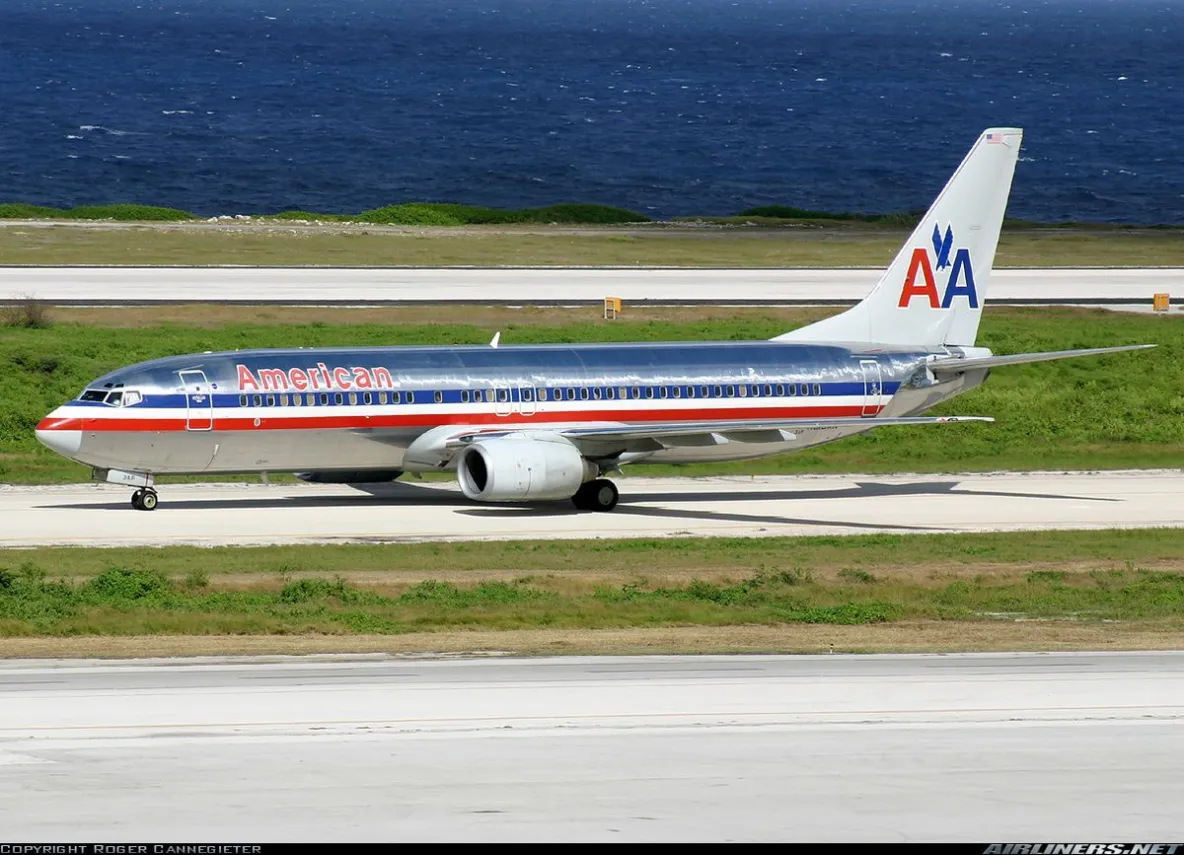
But there was a catch: bare metal needs to be constantly polished, otherwise it becomes dull and stained. Polishing requires a separate team, specialized equipment, and up to three times a year, the aircraft needs to be taken for a polishing session instead of flights. Painted white doesn't require this kind of treatment; you just sand it down, apply a top coat during scheduled maintenance, and it's good to go.
But the final blow was the bare metal composite. Modern airliners like the Boeing 787 and Airbus A350 are made not of aluminum, but of carbon fiber. You can't polish it to a shine; there's simply nothing to polish. And painting is essential, because ultraviolet light at altitude corrodes the epoxy resin that holds the plastic together. The bare composite will crumble in the sun.
So when American Airlines took over the 787, they had no choice. The legendary bare aluminum had to be buried and the fleet repainted. By 2017, it was finished. The era of shiny silver airplanes was over, and boring carbon fiber is essentially to blame.
Every blemish shows on white.
White is also about safety. The plane is inspected and inspected before every flight, and on a white fuselage, every defect is readily apparent: a hydraulic leak, an oil leak, a dent, a crack, a bird mark, the beginnings of corrosion. All of these are darker than the background and immediately noticeable. On a dark fuselage, you'd have to search for half of them with a flashlight, and some might even be missed.
Another bonus is that white hardly fades. Bright colors fade and peel under ultraviolet light, leaving the fuselage looking worn and requiring frequent repainting. Repainting costs tens, even hundreds, of thousands of dollars, plus the plane sits in a hangar instead of flying. A white fuselage, on the other hand, holds its appearance for years.
But that's not the main point. An airplane is a product.
And now for the thing that outweighs almost everything else.
An aircraft rarely belongs to an airline forever. More often, it's an asset that's constantly resold and leased from hand to hand. And each time an aircraft changes hands, it's repainted to match the new brand.
Now look. Repainting a white aircraft is easy: a blank canvas, slap your logos on it, and off you go. But ripping off someone else's bright paint job, especially a dark one covering the entire fuselage, is time-consuming and expensive. A white aircraft is more expensive on the used market and sells faster. Leasing companies, which own more than half of the world's fleet, are well aware of this, and they order new aircraft white by default.
And one more thing: you can't just repaint an aircraft any color you want. Changing the paint job is an official design change and requires approval. Paint affects metal corrosion, how the aircraft responds to lightning strikes (especially composite ones), weight, aerodynamics, even control surface balance. Every color whim is discussed with engineers. It's not like wrapping a car in a garage.
So what's the bottom line?
You look at the white aircraft, it's as boring as can be, and you think: well, it's white, they haven't come up with anything more interesting. But dig deeper, and it's all there: supersonic sound, kerosene, ultraviolet radiation that eats away at plastic, leasing, and engineers who won't let you repaint the aircraft without approval. No single reason is crucial, but together they leave other colors no chance.
The most inconspicuous part of the aircraft, yet it's incredibly well thought out. 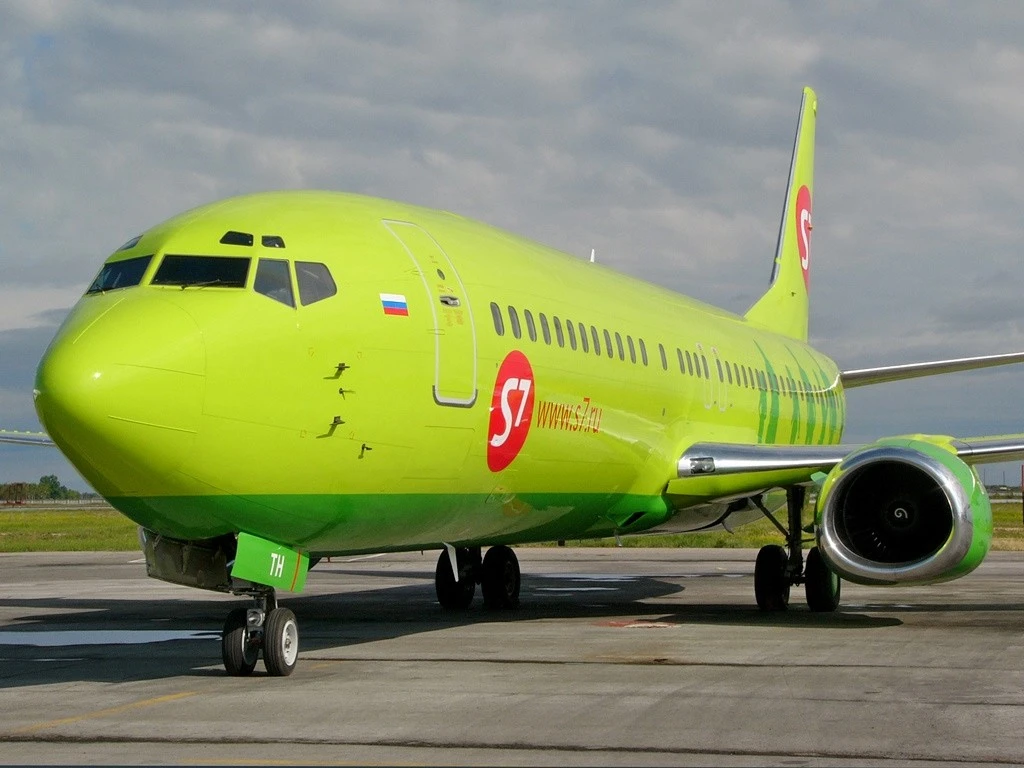
Add your comment
You might be interested in:















How to start a 102-liter engine

Protective film Removing it with a power screwdriver

When a child plays hide-and-seek at a professional level

Man sets up bedroom camera and discovers the reason for his

Super dads who swoop in to save the day

Precision carpentry

Looks like it's time to buy WinRAR

How to hang wallpaper neatly

How metal buckets are made in Pakistan
