They asked him why he did it. His answer: "Because I was a fool" (14 photos)
On June 25, 1876, fisherman Alfred Johnson set out from Nova Scotia and headed east. Behind him was the coast, ahead lay 3,000 miles of open Atlantic Ocean. Beneath his feet lay a 6-meter dory named "Centennial": a flat-bottomed fishing boat painted red, white, and blue. No radio, no chronometer, no life jacket. The local fishermen watched him go and shook their heads: crazy.
150 years later, the name of this Danish emigrant stands at the top of a long list of people who have set out on the ocean alone. He wasn't a soldier, he wasn't a scientist, he wasn't seeking glory. He simply made a bet with his friends at the card table—and he couldn't back down. 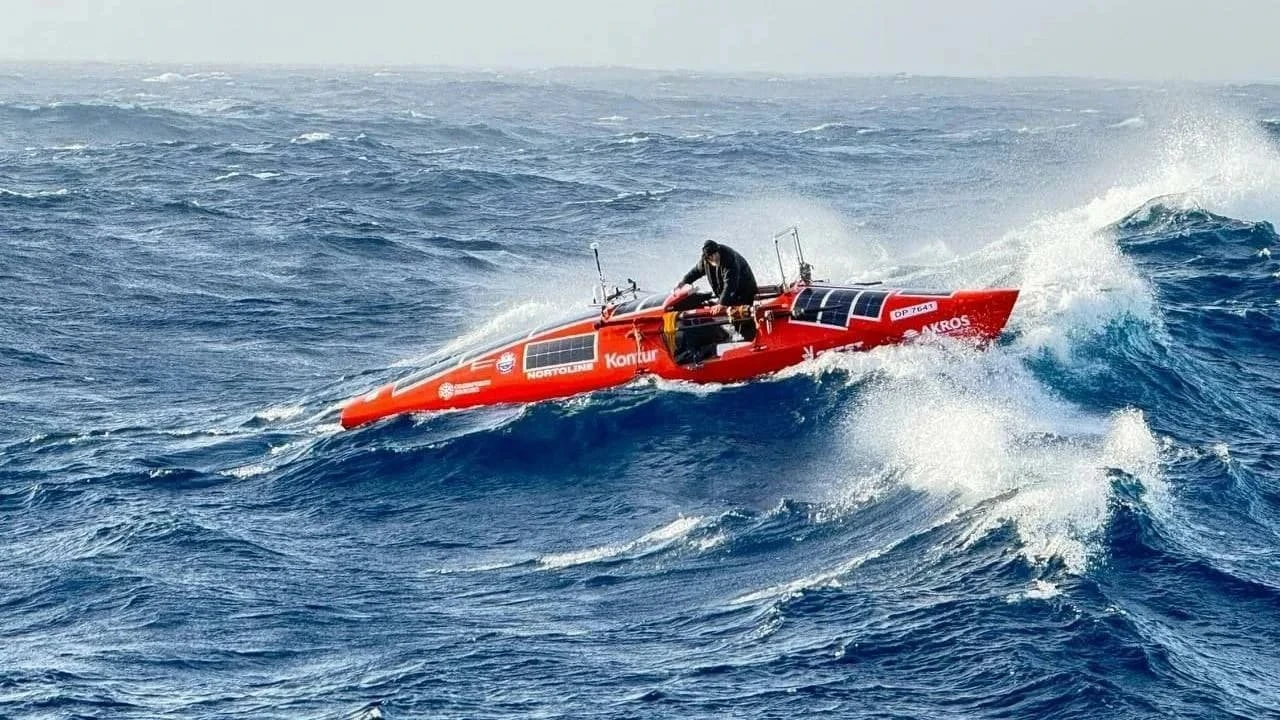
A dispute over cards in 1874
Alfred Johnson was born in Denmark on December 4, 1846. As a teenager, he ran away to sea, worked on merchant ships, and eventually settled in Gloucester, Massachusetts, one of the main fishing ports on the American Atlantic coast. There, he fished halibut for seven years without attracting much attention. 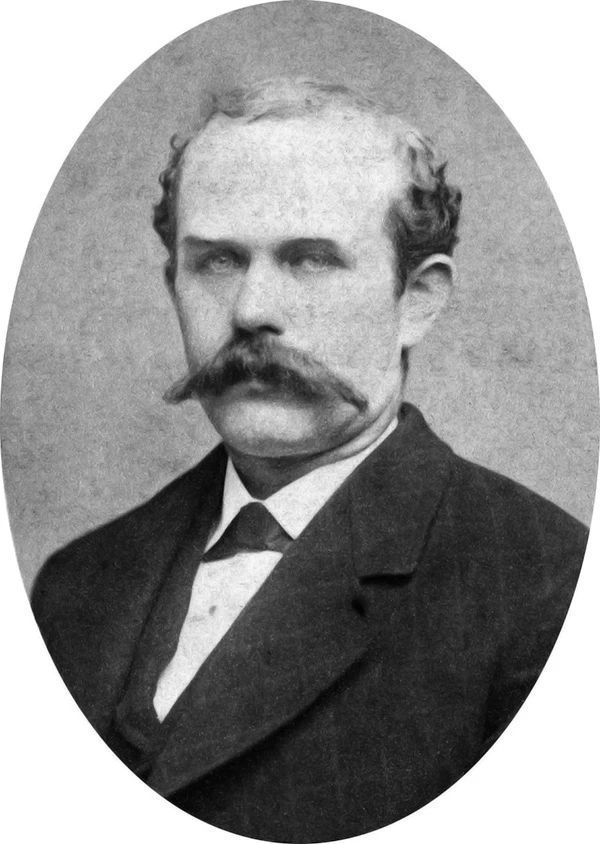
Alfred Johnson, a Danish immigrant from Massachusetts
In 1874, everything changed—completely by accident. Johnson and some friends were playing cards and began arguing: was it even possible to cross the Atlantic alone in a small open boat? Most considered it a fool's errand. Johnson declared that not only was it possible, but he would do it himself. His friends laughed. He had been saving, preparing, and thinking for two years. 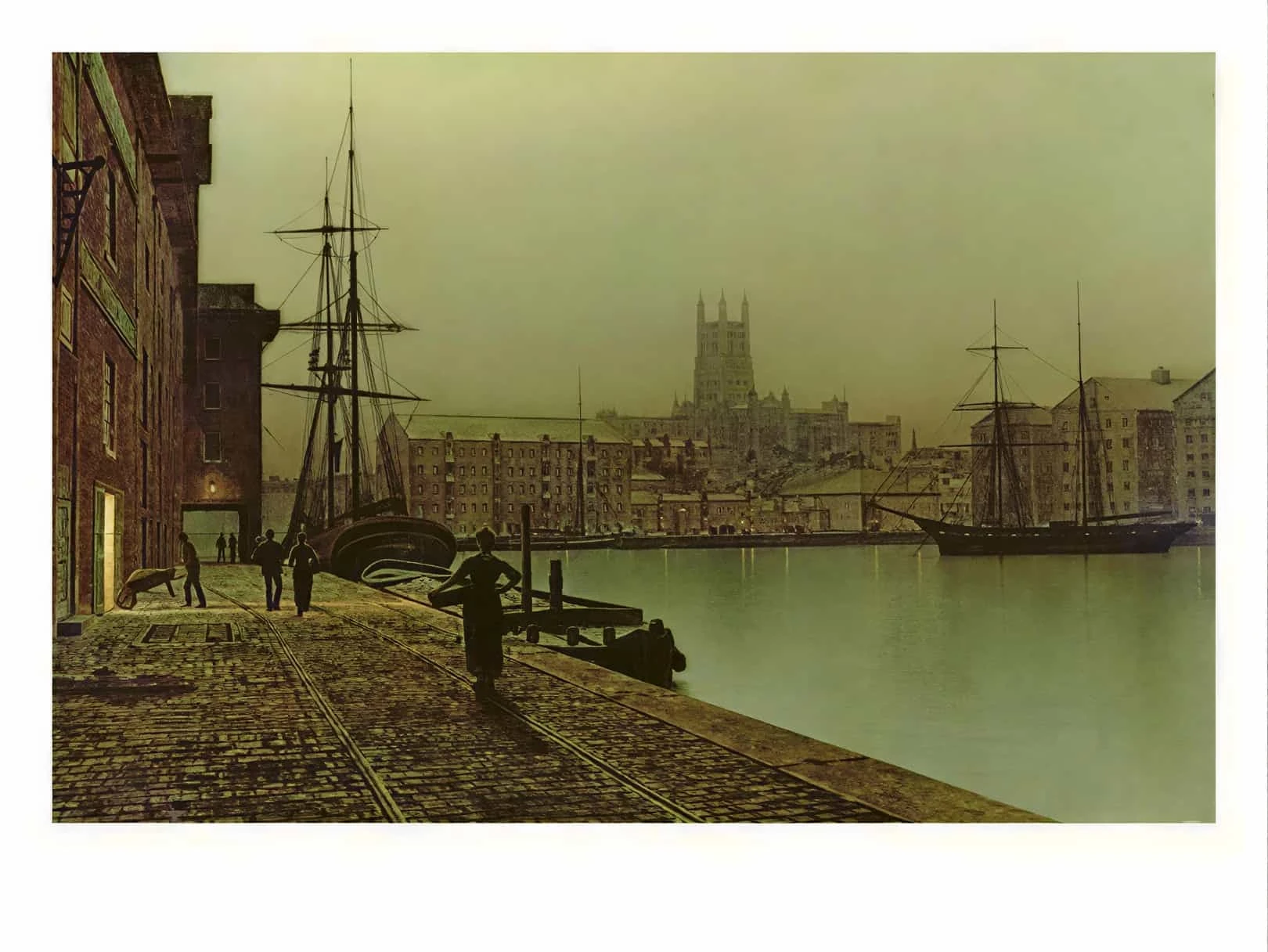
Port Gloucester in the 1870s. The Centennial departed from here on June 15, 1876.
The occasion for the voyage was symbolic: 1876 was the centennial of American independence. Johnson decided to celebrate the country's anniversary in his own way. The boat was custom-built by the Higgins & Gifford shipyard: 20 feet long (6 meters across the deck), 5.5 feet wide, oak, reinforced planking. Three watertight compartments kept the boat afloat even if it capsized. Johnson installed a centerboard to prevent the boat from drifting sideways and took on board sails, a compass, a quadrant, a nautical chart, a first aid kit, and an anchor bag. Provisions included canned goods, condensed milk, fruit, biscuits, tea, and coffee. Water—60 gallons, plus an awning to collect rainwater. The total cost of equipment was about $200.
On June 15, 1876, at 4:15 PM, he left Gloucester to the applause of the crowd. Several yachts and boats escorted him to the lighthouse at Eastern Point. From there, Johnson sailed alone. In Nova Scotia, he made a brief stop to adjust his ballast. On June 25, he set out for the open ocean.
66 days at sea
Johnson developed a simple tactic: sail at night, sleep during the day. He kept close to shipping lanes so other ships could spot him. At night, he hung a lantern to avoid being crushed in the dark. On average, he covered about 70 miles (110 km) per day—a good pace for such a small vessel. 
Engraving from the Illustrated Sporting and Dramatic News, 1876. Johnson at the helm of the Centennial on the open ocean.
Oncoming ships mistook him for a shipwrecked man. Several crews attempted to "rescue" the fisherman, but he refused each time. One steamer finally threw him a gift: two bottles of rum. Somewhere midway through the voyage, a storm hit, capsizing the boat. Johnson clung to the bottom for 20 minutes until he managed to right the Centennial. He later described this episode without any heroism: he simply stated the fact. 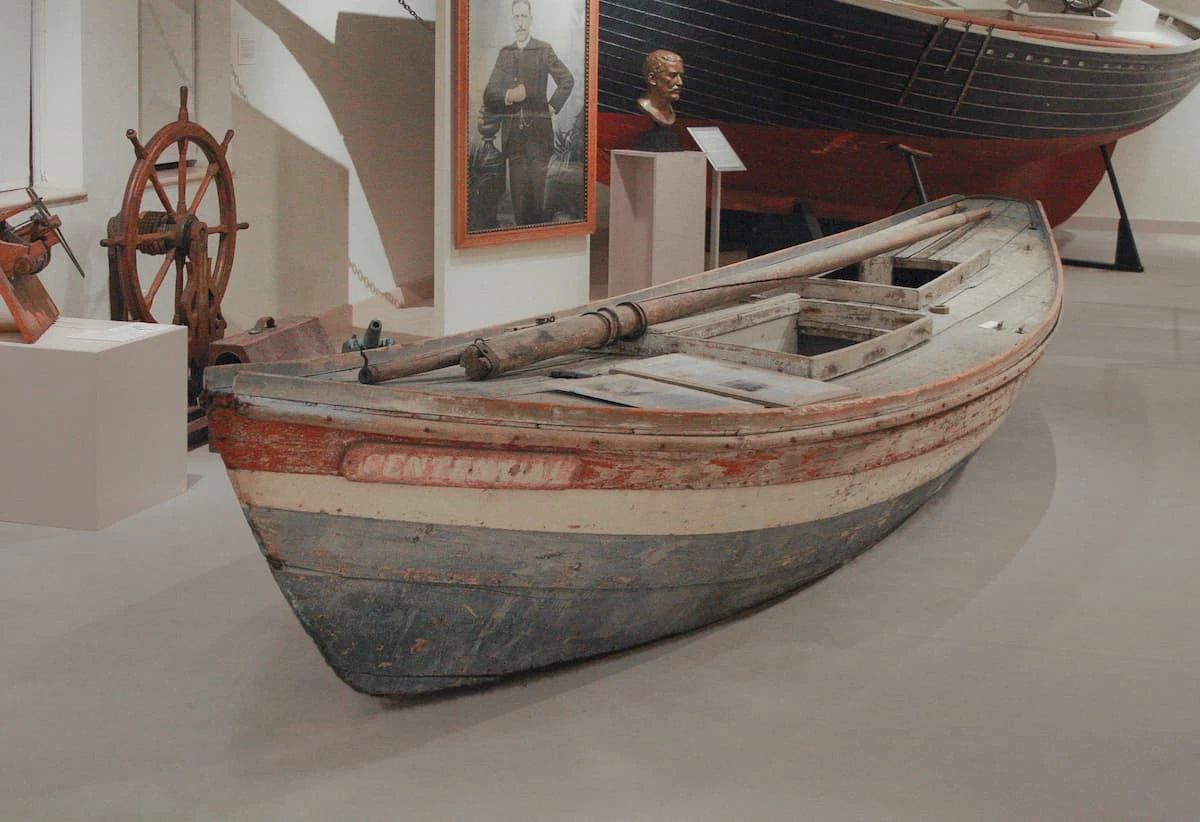
The Centennial is now preserved in the Cape Ann Museum in Gloucester, the same city from which Johnson set sail.
On August 12, 1876, on the 66th day, the Centennial entered Abercastle, a small port in Wales. After two days of rest, Johnson continued on and finished in Liverpool on August 21st. He was greeted with enthusiasm. The boat was put on public display; it remained on display for several months. Johnson himself became famous—briefly.
When asked why he did it, he answered in one sentence: "I made that trip because I was a damned fool, just as they said I was." Returning to Gloucester, he quietly resumed fishing. He lived until 1927.
The Tradition He Started
Johnson didn't know he was starting a tradition. He simply proved it was possible. Others then took the idea and carried it further. 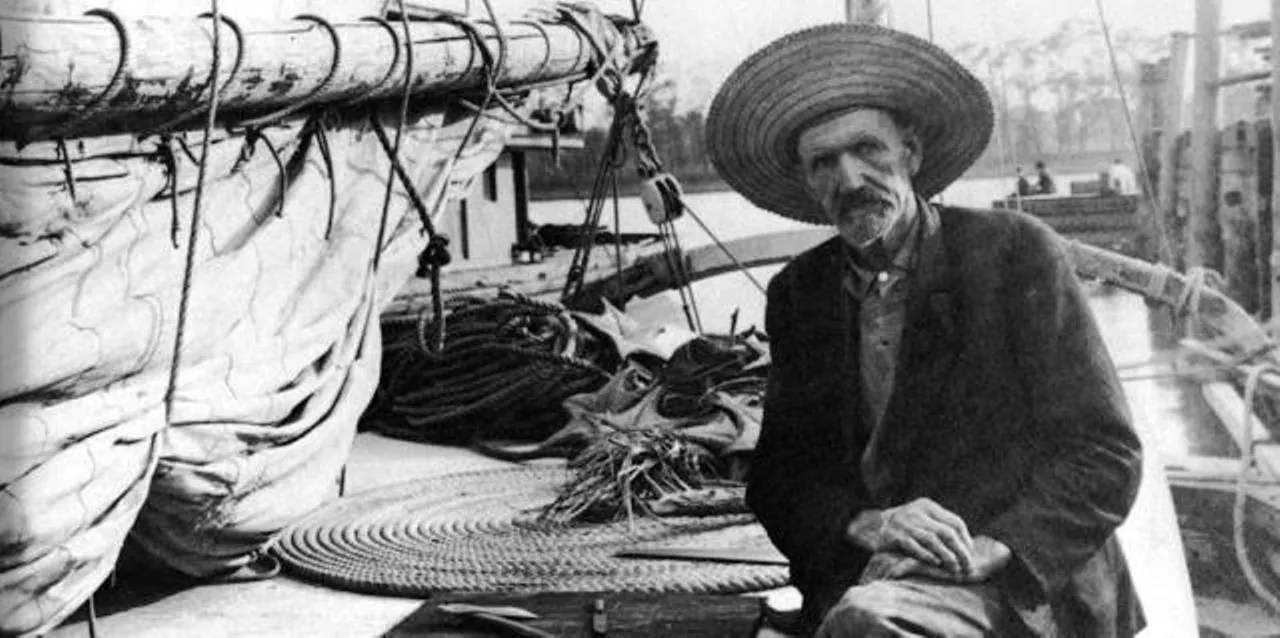
Joshua Slocum on the Spray, circa 1907. He was the first person in history to circumnavigate the globe alone.
Joshua Slocum, a Canadian sailor who lost his job and boat during the steam age, set out from Boston in 1895 on the reconstructed sloop Spray and sailed more than 46,000 miles in three years, two months, and two days. On June 27, 1898, he returned to Newport, Rhode Island, becoming the first person to circumnavigate the globe alone. A book about the voyage, Sailing Alone Around the World (1899), became a bestseller. In 1909, Slocum set out on a new voyage and went missing; he was officially presumed dead in 1924. 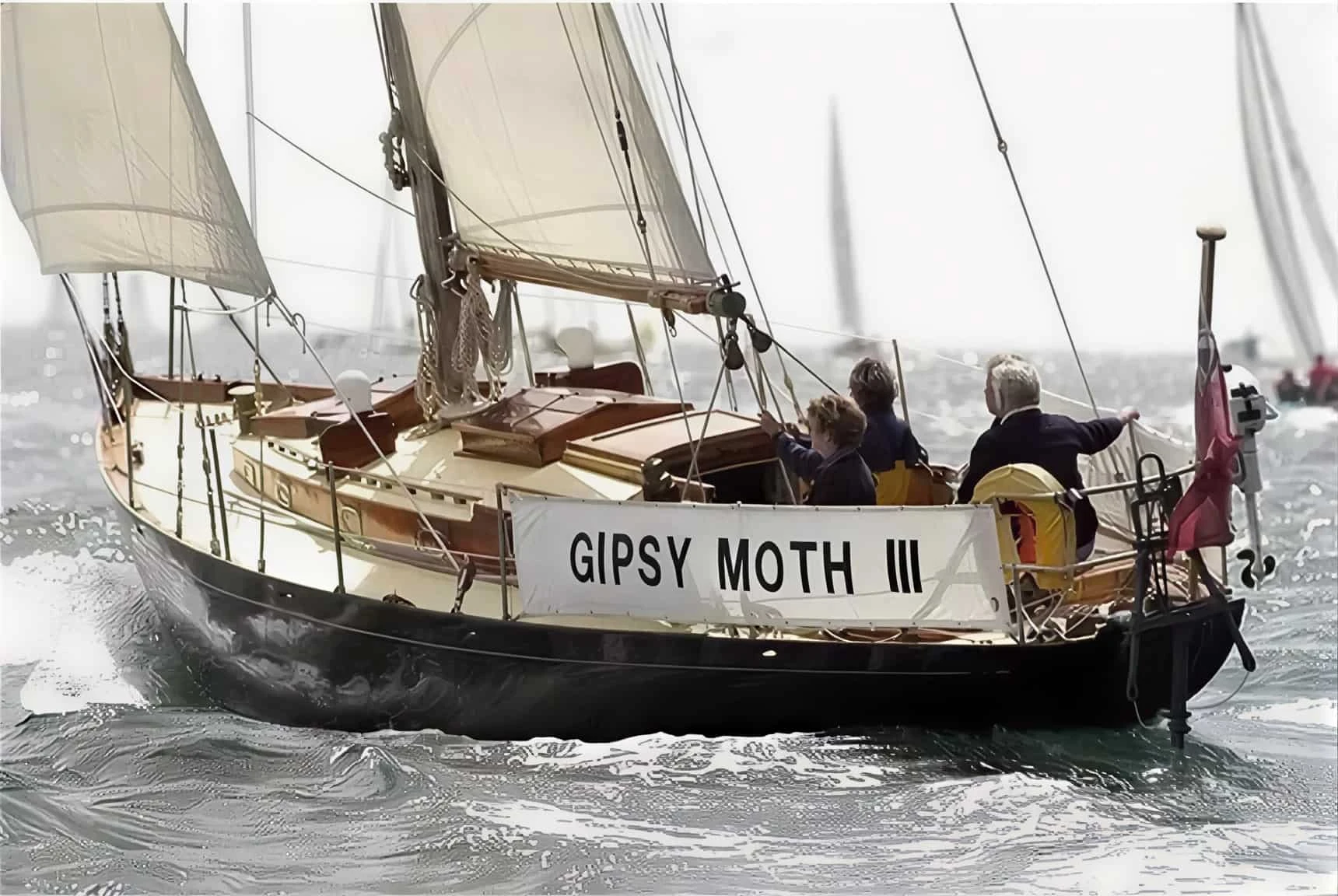
"Gipsy Moth III" — Francis Chichester won the first solo transatlantic race in 1960 on this yacht.
Francis Chichester was a British aviator. In 1958, he was diagnosed with lung cancer; doctors gave him only six months to live. But his wife insisted on refusing surgery and put him on a strict diet, and the disease subsided.
In 1960, Chichester took part in the first solo transatlantic race, the OSTAR, and won. Aboard the yacht "Gipsy Moth III," he completed the route from Plymouth to New York in 40 days and 12 hours.
In 1966–1967, he circumnavigated the globe single-handedly, making only one stop in Sydney. The entire voyage took 226 sailing days. For this feat, Queen Elizabeth II knighted him—with the very sword Elizabeth I once awarded to Francis Drake.
Those Who Chose the Sea Over Victory
Bernard Moitessier was a French sailor born in Indochina and accustomed to the sea from childhood. In 1968, he set out from Plymouth on the steel ketch Joshua (named after Slocum) for the first-ever solo nonstop round-the-world race—the Sunday Times Golden Globe Race. Seven months without land, without a radio, only a compass and a sextant. 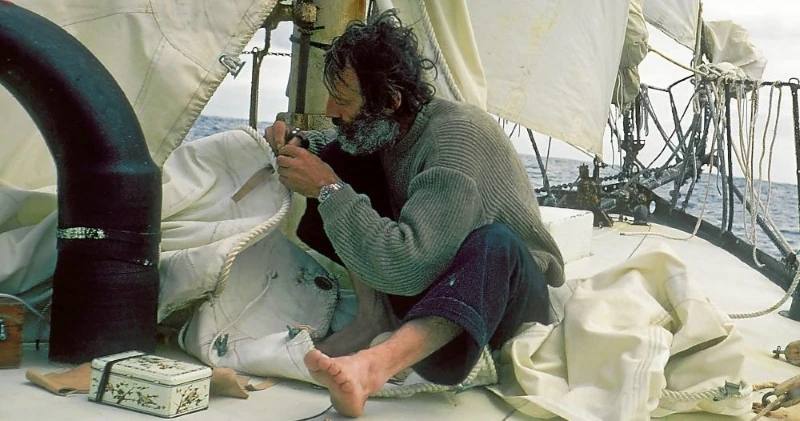
Bernard Moitessier on the Joshua during the Golden Globe Race. He could have won, but he chose Tahiti.
By March 1969, Moitessier had rounded three great capes and reduced the gap to 19 days—he was faster than everyone else. With thousands of miles remaining, he approached a tanker near Cape Town and launched a tin can with a catapult containing a note: "Continuing my course for the Pacific islands—because I am happy at sea and, perhaps, to save my soul." He turned east. Another three months passed and we stopped in Tahiti. In 10 months, we covered 37,455 nautical miles without a single stop: a record for the longest continuous solo voyage. 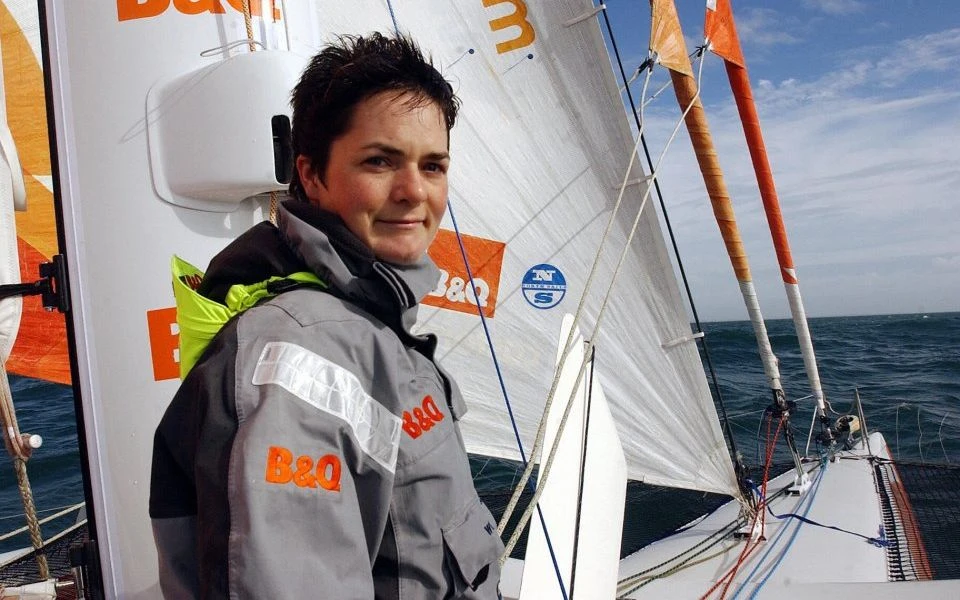
Ellen MacArthur on the trimaran "B&Q/Castorama." In June 2004, she sailed across the Atlantic in 7 days, 3 hours, and 50 minutes.
In June 2004, British sailor Ellen MacArthur sailed the 23-meter trimaran "B&Q/Castorama" from New York to Lizard Point in Cornwall in 7 days, 3 hours, and 50 minutes—a world record for transatlantic passage by a woman, also breaking the previous crew record. In 2005, MacArthur broke the world record for solo circumnavigation, sailing 27,354 nautical miles in 71 days, 14 hours, and 18 minutes.
Why are they doing it?
All these people have different backgrounds, different temperaments, and different eras. Johnson is a Danish immigrant, a fisherman with calloused hands. Slocum is a seasoned merchant captain thrown overboard by progress. Chichester is an aviator and entrepreneur, a cancer survivor. Moitessier is a philosopher of the sea who fled civilization. MacArthur is a professional race car driver who sets records. 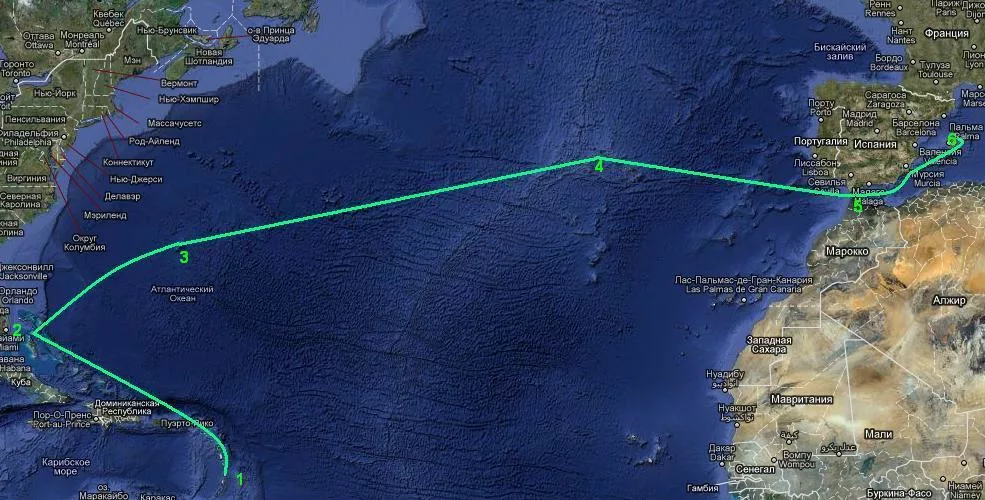
The North Atlantic – 3,000 miles of water that Alfred Johnson first sailed solo
What they have in common is a readiness for the possibility that no one will help. Not adventurism for the sake of adventurism: most prepared long and meticulously. Chichester openly said that he worked twice as effectively alone – no one interfered or distracted him. Slocum learned to balance the Spray so that he could go thousands of miles without touching the helm. Moitessier found a peace at sea that he couldn't find on land. 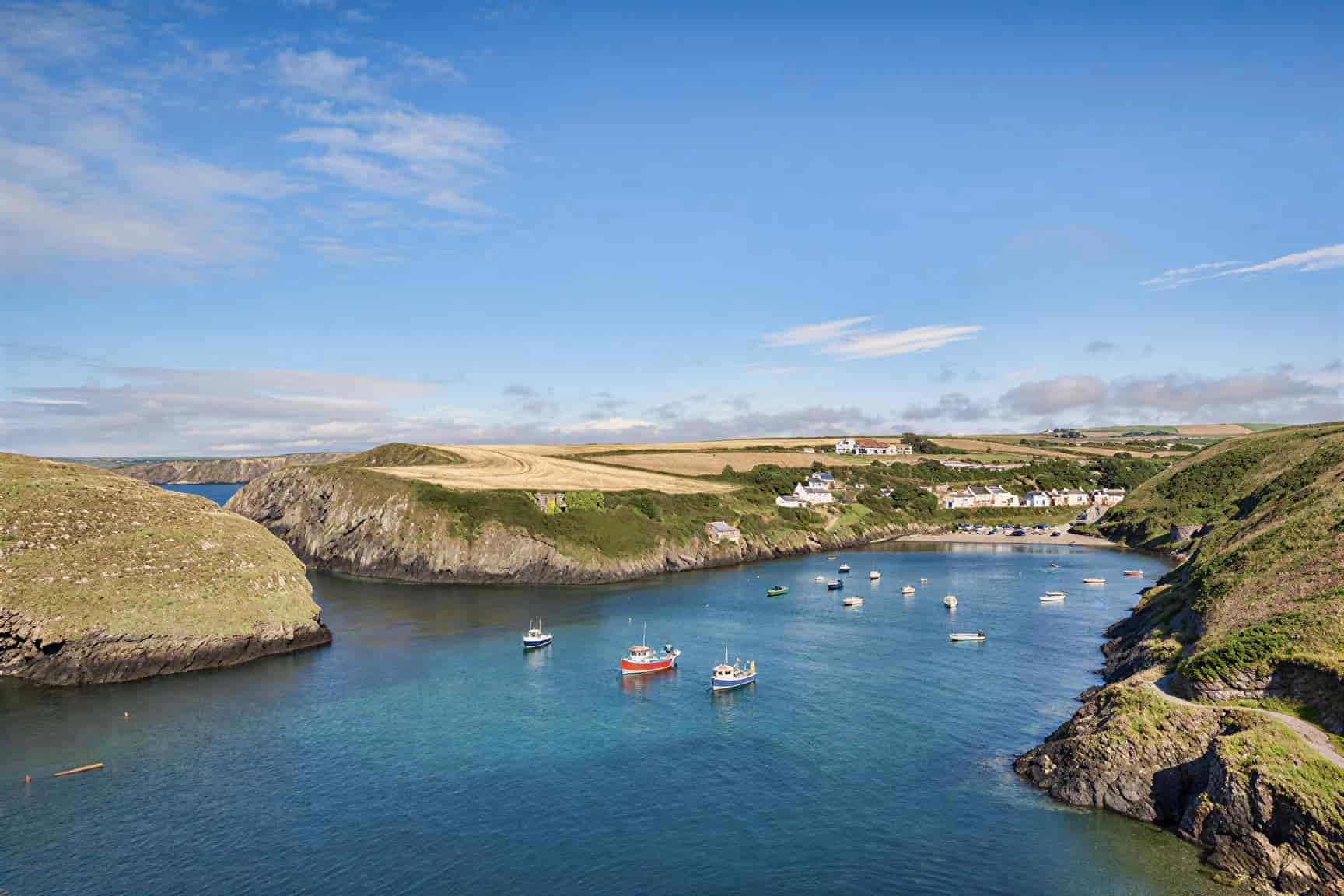
Abercastle in Wales is the small port where the Centennial docked on August 12, 1876. A memorial plaque hangs there today.
Johnson didn't say anything of the sort. He simply demonstrated that it was possible to sail 3,000 miles of open ocean in a 6-meter wooden boat. And then he returned home and started fishing again.
What remains of 1876
The Centennial boat has survived. It is kept at the Cape Ann Museum in Gloucester, the very city from which it set sail. It is 150 years old. A memorial plaque bearing Johnson's name is installed outside the Gloucester House restaurant in Gloucester. His grandson, Charles Dickman, personally unveiled a similar plaque in Abercastle in October 2003. 
Cape Ann Museum in Gloucester. The Centennial, a witness to the first solo transatlantic voyage, is kept here.
The tradition Johnson began at the card table in 1874 has never been broken. Today, single-handed transatlantic racing is a well-established sporting industry. Participants reach the finish line in 7-10 days. The boats are equipped with GPS, satellite phones, and autopilots. Supercomputers calculate the weather. 
A memorial plaque to Johnson outside the Gloucester House restaurant. The inscription calls him the first person to cross the Atlantic solo from west to east.
But somewhere at the heart of it all is a fisherman who made a bet with his friends, saved up for two years, painted his boat red, white, and blue—and set out to sea. No GPS. No satellite. No insurance. With a compass, 60 gallons of water, and a firm determination to prove he wasn't a fool. Or that he was a fool—but a fool who reached shore. 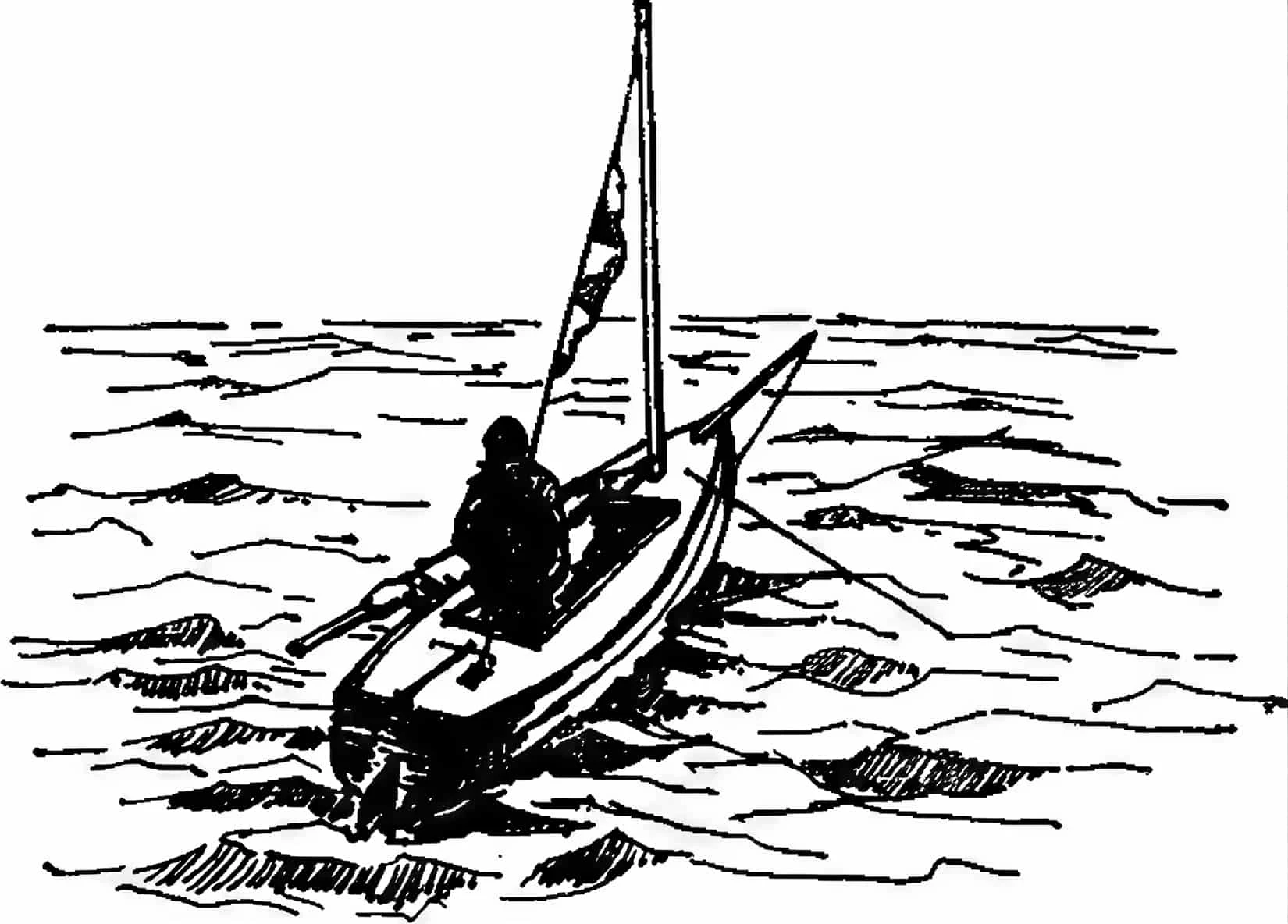
The North Atlantic in the 19th century was unforgiving. Johnson knew this better than anyone.
Exactly 150 years ago, on June 25, 1876, he left the coast of Nova Scotia behind. Ahead was only the sea.
Would you dare to do something like that—to venture into the unknown without a safety net, just to prove it was possible?
"I made that voyage because I was a damn fool—just like they said." — Alfred "Centennial" Johnson
How the Baileys Survived 117 Days in the Pacific Ocean on a Tiny Raft
When Reality Is Much Scarier Than the Movie: The Story of an American Woman Who Survived Being Adrift on the Ocean
The Story of Manfred Bajorat, a Sailor Who Became a Mummy on a Ghost Ship
Lost Expeditions: What Happened to the Explorers of Columbus and Miklouho-Maclay's Time
How I Survived a Storm While Crossing the Atlantic on a Boat