Widows could be burned, sold, or handed over to a brother-in-law: how different cultures treated women after their husbands died (13 photos)
June 23 is International Widows' Day, established by the UN in 2010. It's not a holiday or a reason to offer flowers—it's a reminder that there are more than 258 million widows worldwide. Millions of them live in poverty, deprived of property and rights precisely because cultural traditions are not designed to their advantage. We explore how the death of a husband changed a woman's fate depending on the era and location on the map: from a funeral pyre in India to a lifelong black dress in Europe. 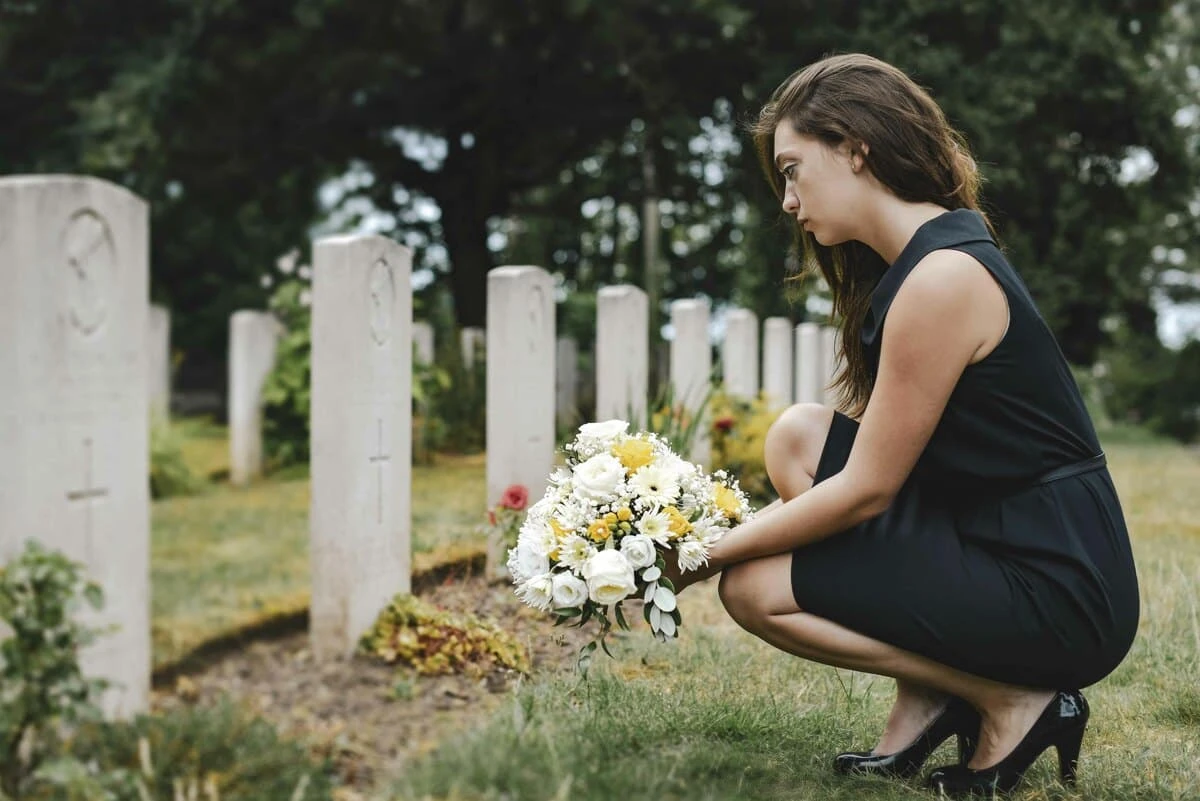
The death of a husband has changed a woman's life dramatically—and this has been true throughout history. But how exactly it changed depended on where in the world and in what century the widow was born. Some ended up in flames. Others in perpetual blackness. Still others were passed down along with their property. Personal grief became a social status, and the rules of this status were established by society—in its own interests, not those of the woman.
India: To Burn or Become Invisible
The ritual of sati—the self-immolation of a widow on her husband's funeral pyre—astounded foreigners who came to India. The tradition developed gradually: it is not mentioned in the oldest Hindu texts, but it became widespread around the 5th century CE, toward the end of the Gupta Empire. Some researchers attribute its rise to Islamic rule, while others dispute this view. 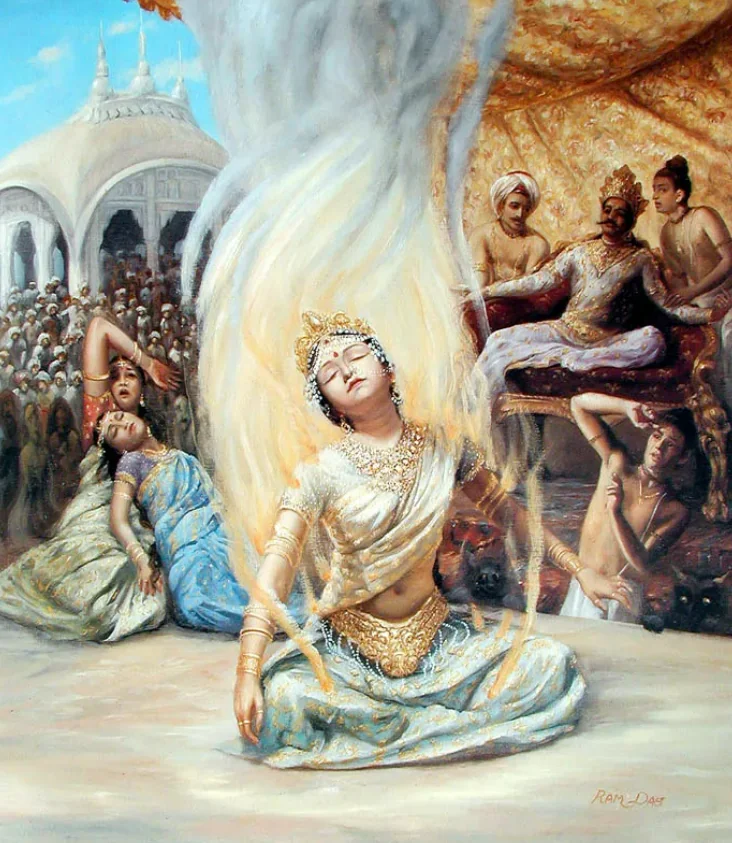
The goddess Sati, the wife of the god Shiva, immolates herself in the yogic flame.
Officially, sati was considered a voluntary act of a faithful wife. In practice, eyewitnesses recorded something different. Even during the Mughal Empire, the ruler Akbar introduced the requirement to obtain permission from his officials to perform the ritual, with explicit instructions to stall for time. The logic was simple: the desire to die arises impulsively, and emotions subside over time. During the reign of Shah Jahan, widows with children were forbidden to perform sati under any circumstances. 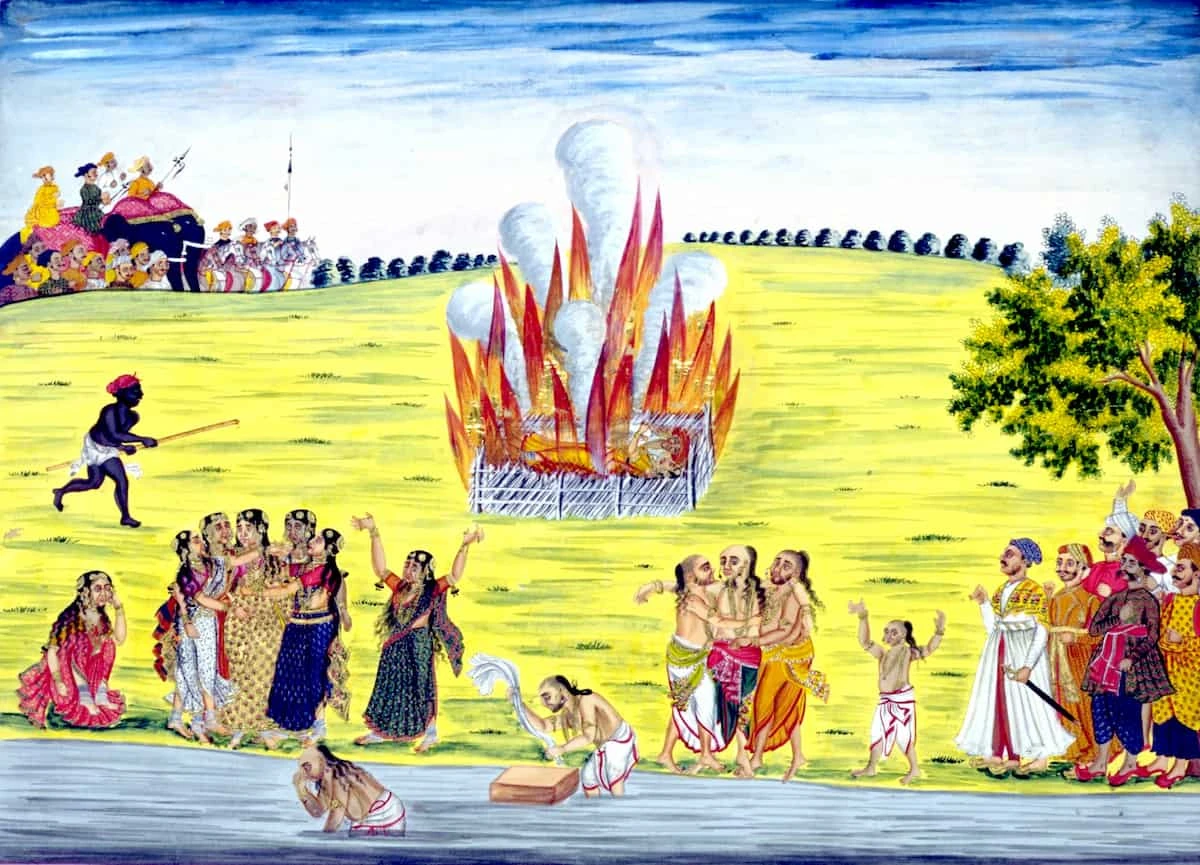
European artists of the 19th century recorded the sati ritual, often with obvious horror and not always accurately.
Life wasn't easy for widows who didn't go to the stake either. They had their heads shaved, were forbidden to wear jewelry, and were forbidden to participate in festivities. It was believed that the gods punished the woman for her sins with her husband's death, making her guilty. A widow's white robe in India became as much a symbol of rejection as black was in Europe. 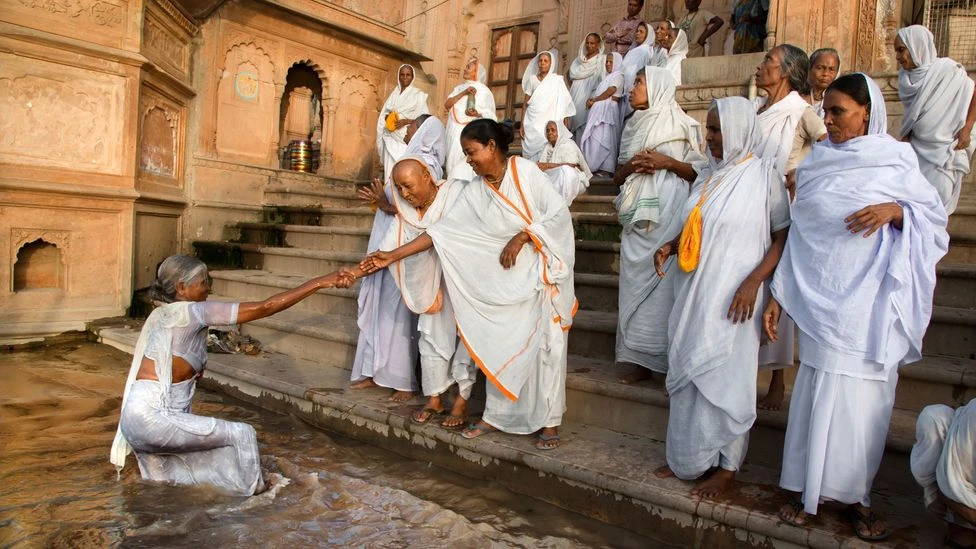
Vrindavan is a holy city in Uttar Pradesh. Thousands of widows live here in ashrams, often driven out by their own families.
Where can a woman go when her husband's family no longer wants to feed her? Many were brought to Vrindavan, a holy city in Uttar Pradesh, on the banks of the Yamuna River. It's a city where the righteous choose to die: according to Vaishnavas, death here liberates from the cycle of reincarnation. Thousands of widows from all over India found themselves here against their will. The ashrams offered them food and shelter in exchange for singing sacred hymns in the temples. Vrindavan was nicknamed "the city of widows," a name it bears to this day.
China: A Nose is More Valuable Than a Marriage
Chinese tradition did not require a widow to die. It required her not to live—in the fullest sense of the word. From the Song Dynasty (10th–13th centuries), Neo-Confucian morality increasingly insisted on widow chastity. Remarriage was not formally prohibited, but a widow who chose it was branded a traitor to her husband's memory. 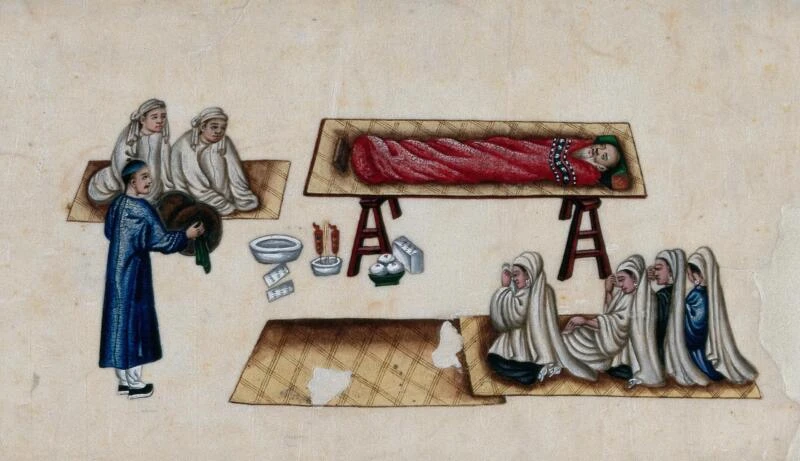
The ideal of the "chaste widow" was actively promoted in Chinese society beginning in the Song Dynasty.
Those who endured years of abstinence were rewarded by the state. "Chaste widows" were given gifts of grain and expensive pieces of cloth. Arches were erected in their honor. Their names were recorded in official chronicles. The longer a widow held out, the higher her moral status—and the less chance she had of a normal life. 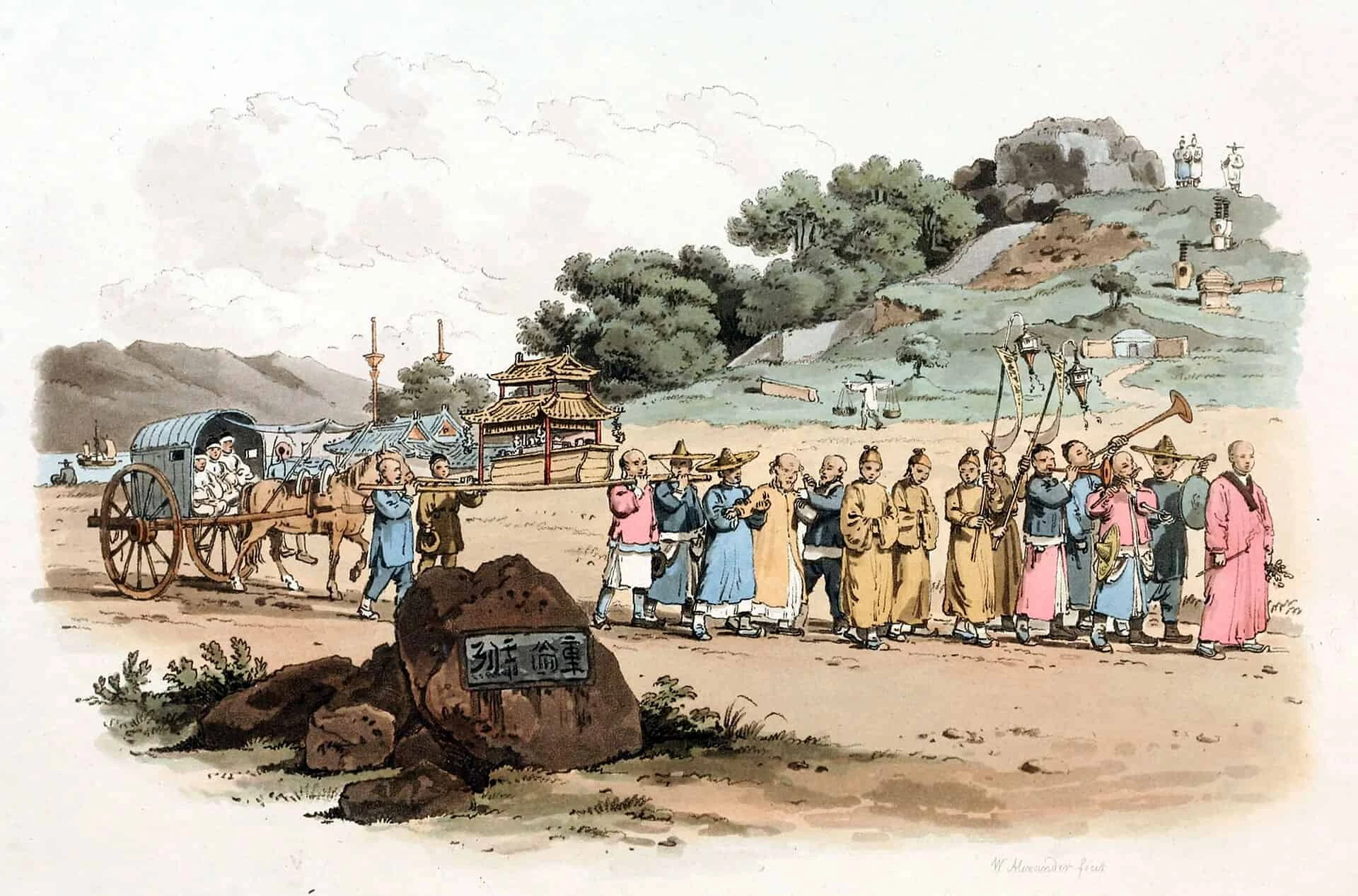
Funeral procession in China, 1793. Mourning for her husband emphasized the widow's duty to maintain chastity.
The most famous example is the story of a widow whom the ruler of the Wei kingdom awarded the title "Spotless" in the 4th century BC. The official insisted that she remarry. She refused—and cut off her nose to make herself unattractive and put an end to the harassment. The state appreciated this: the woman received official recognition and was included in the chronicles.
The poet Bai Juyi (772–846) wrote bluntly about this injustice:
"When a husband dies, a woman should spend the rest of her life with her children. But if a wife dies, a man, although he feels grief, can quickly remarry."
The poems survive. So does the practice.
Africa: A widow inherits her property
The Luo people of Kenya, the Yoruba and Igbo in Nigeria, and the Shona in Zimbabwe practiced levirate marriage: after her husband's death, a widow was placed under the guardianship of his brother or closest relative. The official rationale was to protect children and preserve family property within the clan. The unofficial rationale was that a woman had no independent legal status and could not inherit land or a house. 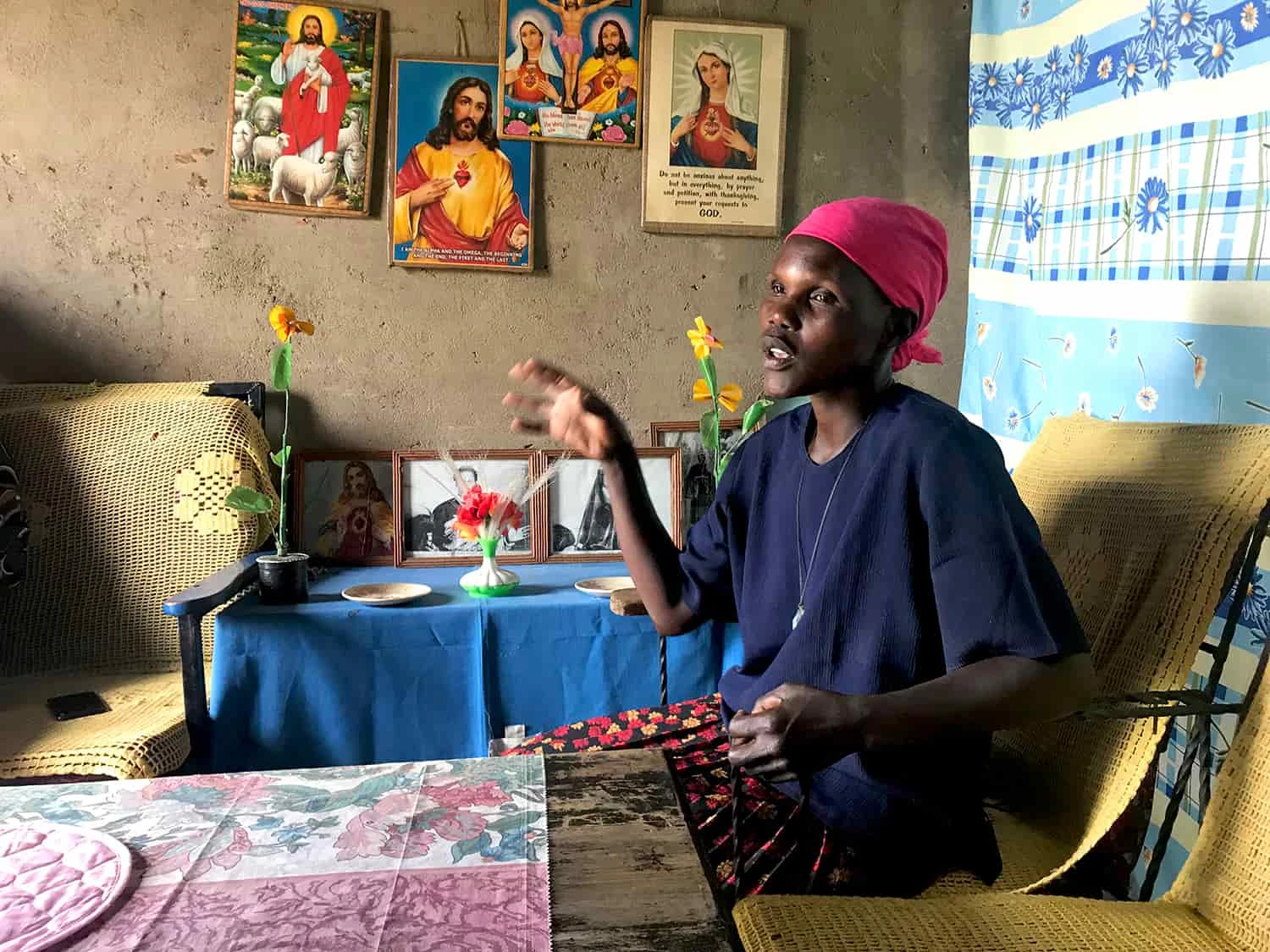
Kenyan widow Louise Ahieng Juma. In some East African communities, widows are considered ritually unclean and must undergo purification before being re-introduced into the family.
Before being re-introduced into the family of her brother-in-law, widows in many communities had to undergo a purification ritual. Among the Luo people of Nyanza Province, this ritual is called "tero chi liel" and involves sexual intercourse with a "purifier"—a person hired specifically for the purpose. The purpose of the ritual is to remove from the woman the impurity of her husband's death. The logic is accusatory: if the husband died, then the wife could have been involved. Such practices have been documented in Kenya, Tanzania, Zambia, Zimbabwe, Malawi, Mozambique, Ghana, and Nigeria. 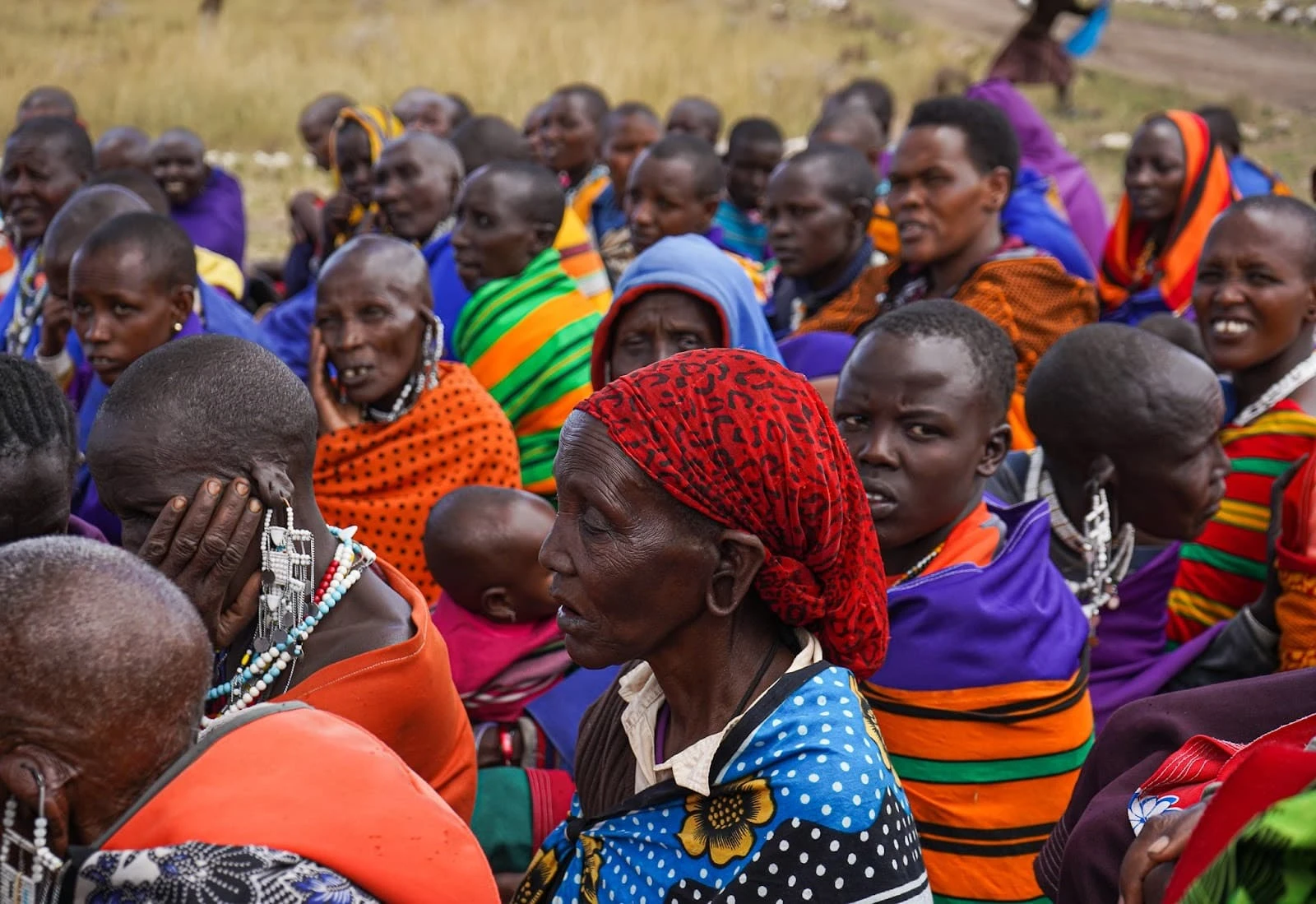
Widows from the Arusha region of Tanzania. After the death of a husband, relatives often take all property, leaving women penniless.
Similarly, in sub-Saharan Africa, the practice of "property seizure" is widespread: after the husband's death, relatives seize all property: livestock, furniture, dishes, and sometimes even the house. The widow is left with nothing. This is why the UN in 2010 identified widowhood as a separate economic problem: the loss of property reduces a woman to poverty, regardless of her husband's assets.
Europe: Black to Death
Victorian England transformed mourning into a system with instructions. The first year and one day was strict mourning: coarse bombazine with crepe trim, a heavy black veil, no jewelry. Almost no leaving the house. Then six months of relaxation—and another six months of semi-mourning, when gray and lilac were allowed. Women's magazines published detailed instructions: what to wear in which month of widowhood, when to remove the veil. 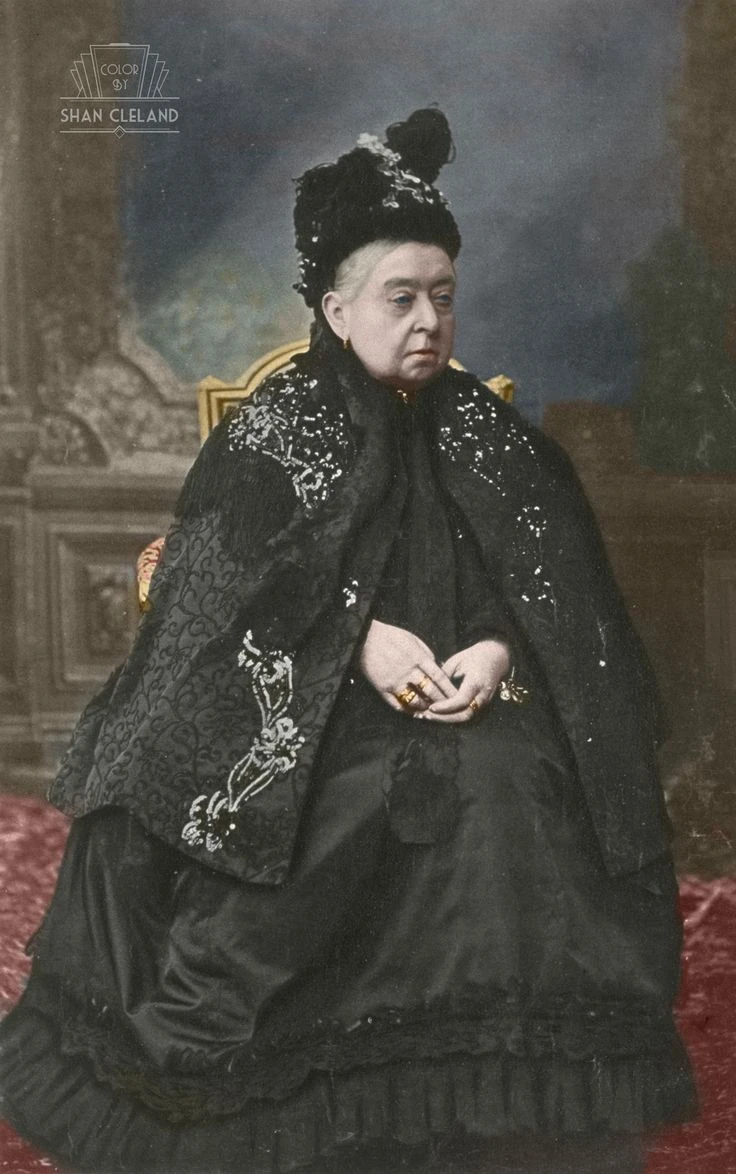
Queen Victoria in mourning. After Prince Albert's death in 1861, she wore black for 40 years straight.
Queen Victoria set a standard no one dared challenge. Prince Albert died in 1861, and she wore black for 40 years, until her death in 1901. The first three years were full mourning. The prince's room was kept untouched, and servants prepared his things every day, as if he might enter. People nicknamed her "the Widow of Windsor." All of England followed the monarch's example. 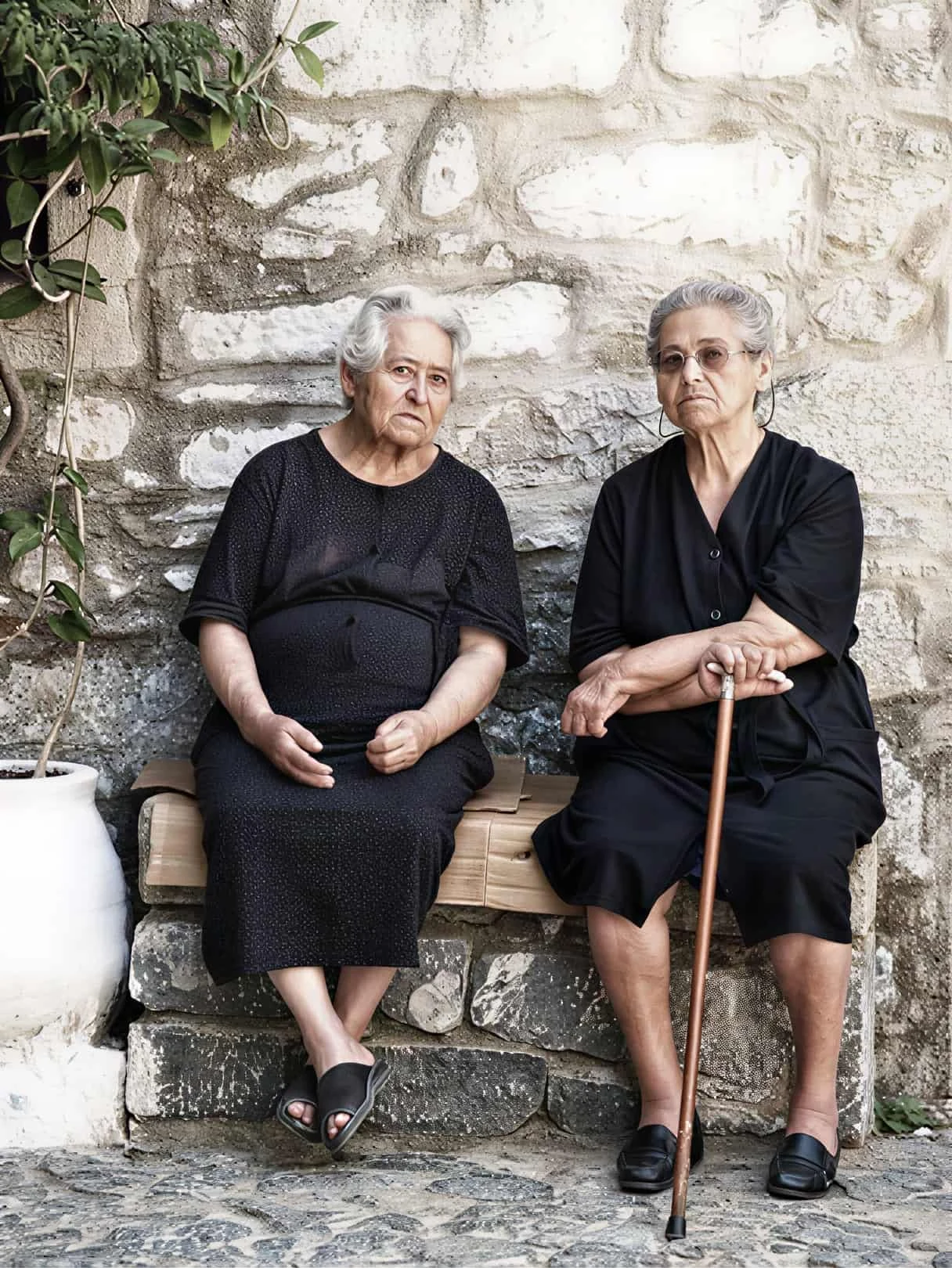
In southern Europe—Greece, Portugal, and southern Italy—widows traditionally wore black permanently. In some places, this tradition still persists.
In Greece, Portugal, southern Italy, and Spain, the tradition was even stricter: widows wore black permanently. It wasn't just a color—it was a mark of social status. A woman in black signaled to others that she belonged to her husband's memory, not to his life. In some places in southern Europe, this tradition still lives on.
Islam and Judaism: Grief with a Schedule
Muslim law requires a widow to observe iddat, a special mourning period. It lasts four months and ten days. This is exactly 130 days: the period is set by a verse in the Quran (Surah Al-Baqarah, 2:234). During this time, a woman should not leave the house unless necessary, wear jewelry, use cosmetics, or use perfume. Remarriage is prohibited. 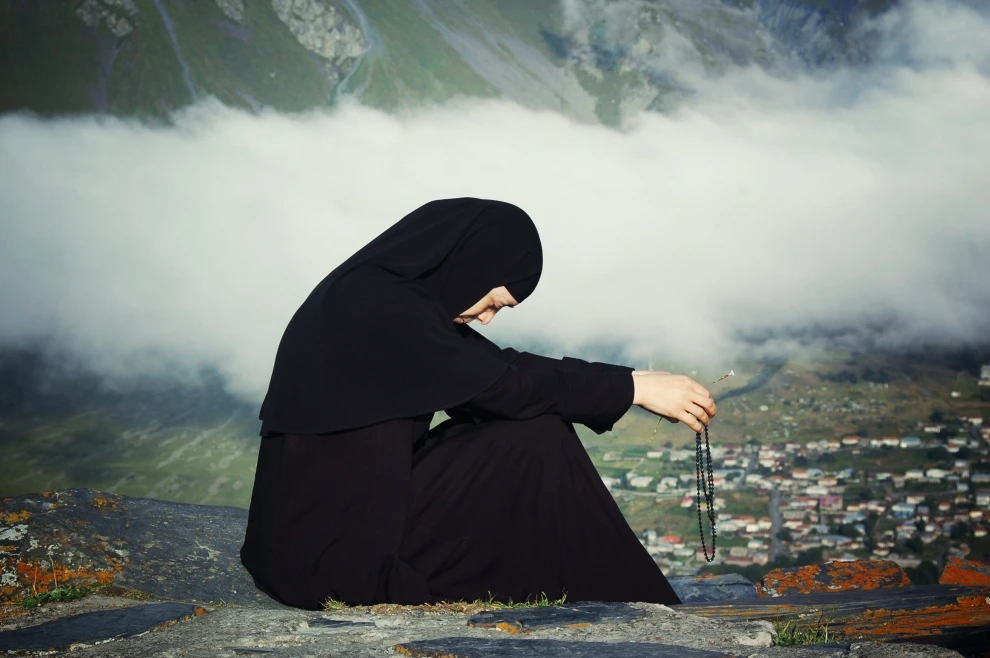
In Islam, a widow's mourning period lasts exactly 4 months and 10 days—the period is established by the Quran and has both spiritual and practical justifications.
The theological justification is twofold. First, it is a tribute to the memory of her husband. Second, it has a practical purpose: to ensure that the woman is not pregnant by the deceased. By the fourth month of pregnancy, the fetus begins to move, hence the additional 10 days. After the iddat period has expired, the widow is free to remarry, and this is considered her right. 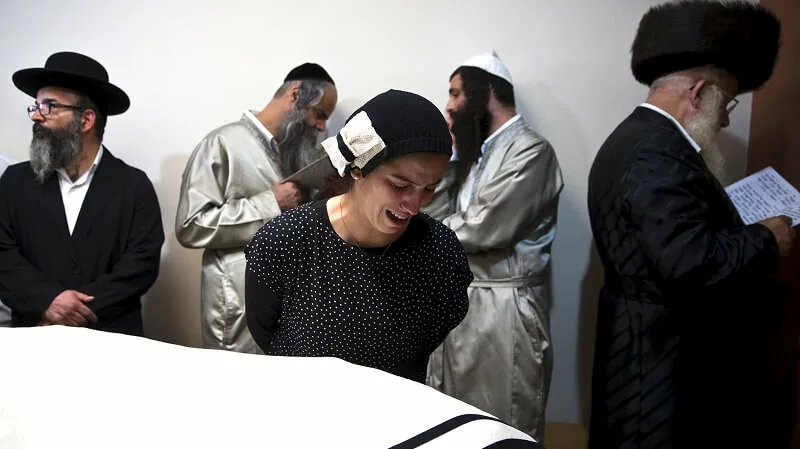
Jewish mourning is strictly structured: 7 days of shiva, 30 days of sheloshim, and a year of observance for loved ones. Each stage entails its own restrictions and freedoms.
Jewish tradition is structured differently: it divides grief into stages. The first seven days are shiva, the strictest mourning: mourners remain indoors, mirrors are covered, and they sit on low stools. Then comes 30 days of sheloshim, with progressively more restrictive measures. For parents, mourning lasts a year. Grief becomes a regulated process with clear transitions. The structure itself seems to say: first you are destroyed, then you slowly return. This is not a rigid rule of behavior—it is an acknowledgement that loss takes time.
Today: 258 million and counting
International Widows' Day was not included on the UN calendar by chance. On December 21, 2010, the General Assembly unanimously adopted a resolution establishing June 23 as International Widows' Day. According to the UN, there are more than 258 million widows worldwide. One in 10 women lives in extreme poverty. 
The causes of poverty are rarely related to personal grief. They are linked to traditions—the very ones described above. Disinheritance. Bans on work. Mandatory transfer to a husband's relative. Purification rituals. The lifelong social status of "widow" with no right to anything else. Many of these practices are formally prohibited by law. De facto, they continue to operate—in Kenya and Nigeria, India and Zimbabwe, in rural Portugal and Greek villages.
Do you think any of the traditions described are still partly alive in modern societies—including our own? Share your thoughts in the comments.