The advent of gadgets in our lives has changed a lot, including the strain on our bodies. After all, sitting in front of a monitor or scrolling through Instagram while riding public transportation places a heavy burden on our necks—constantly holding our heads at a steep angle.
Because of this, most modern people develop what's known as "computer neck syndrome." Read the article below to learn about the dangers it poses and how to combat it. 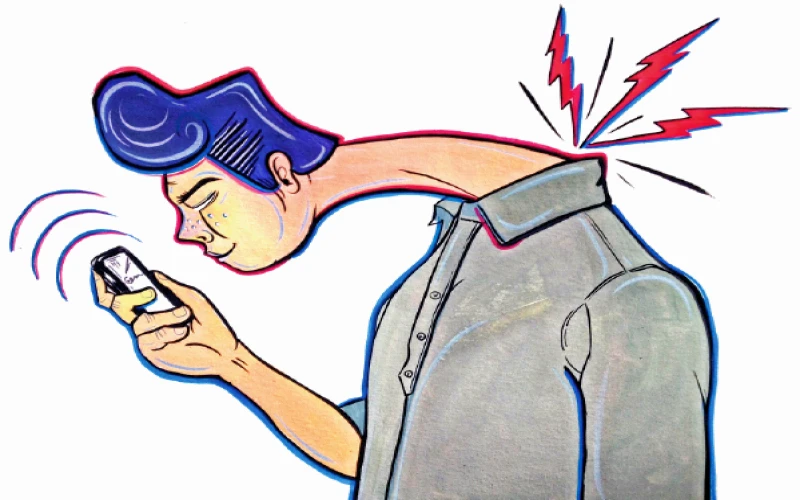
When working at a computer or checking the news on a phone, many people sit with their bodies leaning forward and their heads jutting out. This position is often called the "smartphone position." Why? Just take a few rides on public transportation and you'll understand. It looks something like this: 
Due to prolonged stress on the cervical spine, a person experiences weakening of the muscles of the mid-back, neck, shoulders, and chest, and tightness of the upper back muscles. All of these physiological disturbances are symptoms of so-called "text neck syndrome." It negatively impacts a person's posture, often leading to slouching and curvature of the spine, as well as loose skin on the neck and, consequently, the appearance of a double chin. 
This is because our body quickly adapts to the position it spends most of its time in. Therefore, if a person spends several hours a day looking at a smartphone screen with their head craned forward, an imbalance in the neck and shoulder muscles will occur. This phenomenon is medically known as "forward head posture."
The average adult head weighs approximately 5 kg, but in a reclined position, the strain on the neck can increase by 3, 5, or even more times! Just imagine: when you tilt your head to upload another photo to Instagram, an invisible 8-year-old child weighing 27 kg sits on your neck! Let's look at an example: 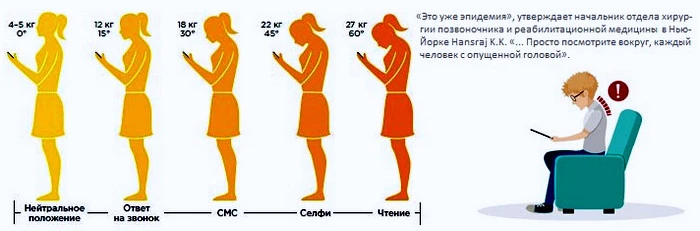
Quite often, modern people hold their heads exactly as shown in the last picture, which is extremely dangerous to their health.
Experts have found that such people develop hypermobility of the mid-cervical spine, and experience more migraines, headaches, and back and neck pain.
Symptoms 
To determine if you have the syndrome described above, pay attention to the following symptoms:
vision problems;
pain in the back of the head;
increased headaches;
neck pain and muscle stiffness;
back and shoulder pain;
discomfort when straightening your back;
We are sure that most of you will experience these symptoms. This is not surprising, since, according to Dr. Kenneth Hansraj, this problem has long since reached epidemic proportions.
How to sit properly at a computer 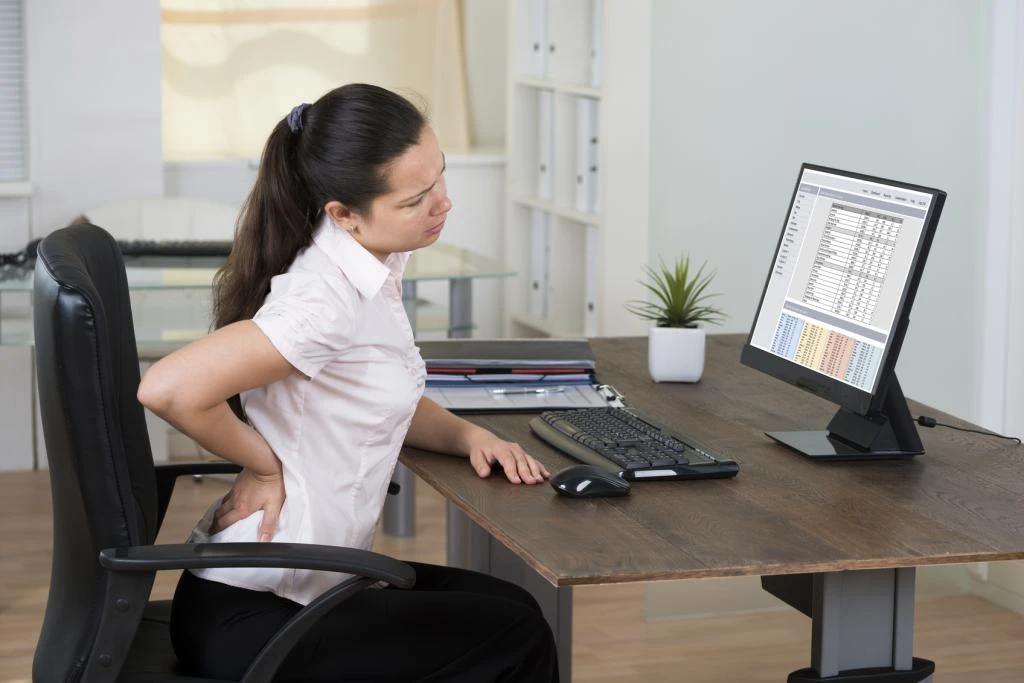
To avoid all these unpleasant consequences, first and foremost, you need to properly organize your workspace. To do this:
Install the monitor directly in front of you, but not too low;
To avoid leaning toward the screen, use the zoom function to enlarge text or images;
Sit so that your back is at an angle of 100–135° relative to your legs. This will significantly reduce the strain on your spine;
Position the keyboard so that your neck and shoulders are completely relaxed while typing;
Knees should be in a straight line with your hips;
Avoid sitting with your legs crossed, one leg tucked under you, etc. Your feet should be flat on the floor next to each other.
Yes, we know that adhering to all these rules is quite difficult and not always possible. Therefore, to avoid developing this syndrome, you can additionally resort to preventative measures.
Prevention 
Prevention of "text neck" syndrome involves daily exercise and periodically abstaining from using various gadgets, such as on weekends. If you don't have time for regular physical activity and walks, simply spend a couple of minutes a day doing these simple exercises:
Tilting your head to the side, avoiding circular head rotations;
Turning your head to the side, 5-10 times;
Bend toward your shoulder (without raising your shoulder!). Try to touch it with your cheek while placing your hand on your ear. Hold this position for 30 seconds and switch sides. Repeat several times;
Place your clasped hands behind your head and, while gently resisting with your head, press down on the back of your head to stretch the neck muscles;
Basic exercises for warming up the arms and shoulder girdle, such as "scissors" and "arm swings," are also helpful. Additionally, for prevention, you can do eye exercises and neck and back strengthening exercises 2-3 times a week. 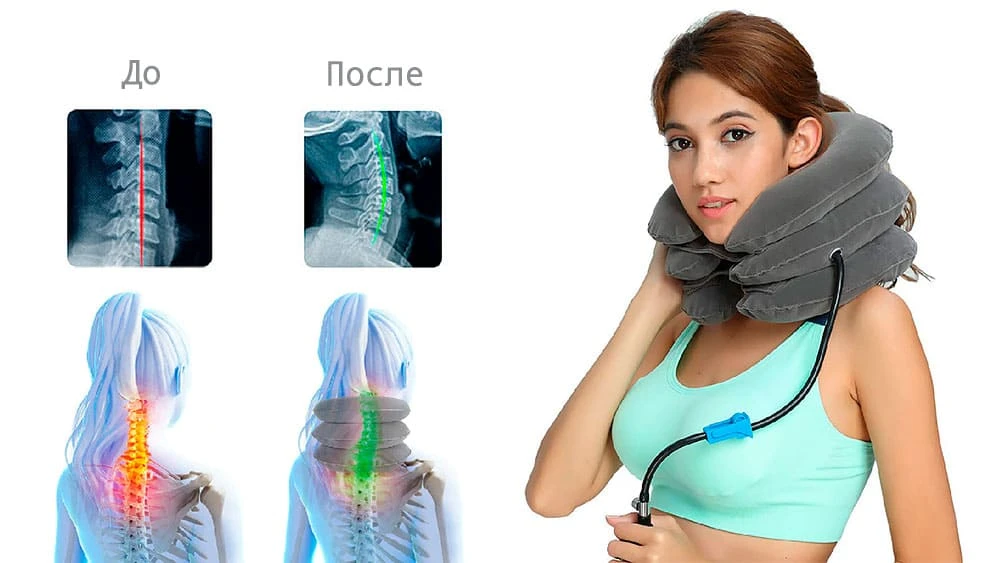 Regular massage of the back and neck area will help relieve muscle tension and improve blood flow. A special inflatable neck traction collar can also help, but it should be used wisely, starting with five minutes of wearing it twice a day.
Remember, neck traction is simply a bad habit. Get used to doing it correctly; it's easy and will save you from many problems in the future.
Add your comment
You might be interested in:



















How to start a 102-liter engine

Protective film Removing it with a power screwdriver

When a child plays hide-and-seek at a professional level

Man sets up bedroom camera and discovers the reason for his

Super dads who swoop in to save the day

Precision carpentry

Looks like it's time to buy WinRAR

How to hang wallpaper neatly

How metal buckets are made in Pakistan
