Buffalo Bill: who was the man who reinvented himself—hero, fraud, or the first media brand? (17 photos)
Anyone who has ever experienced the romance of the American frontier has heard of his exploits. His name instantly conjures up images of galloping horses and bison. Indians in war paint and smoking Colt rifles spring to mind. But who really was the legendary Buffalo Bill? A daring hero of the Wild West or simply a brilliant hoaxer? William Frederick Cody was born in 1846 and died in 1917. During his lifetime, he became the first person in history to turn his own biography into a global commercial brand. 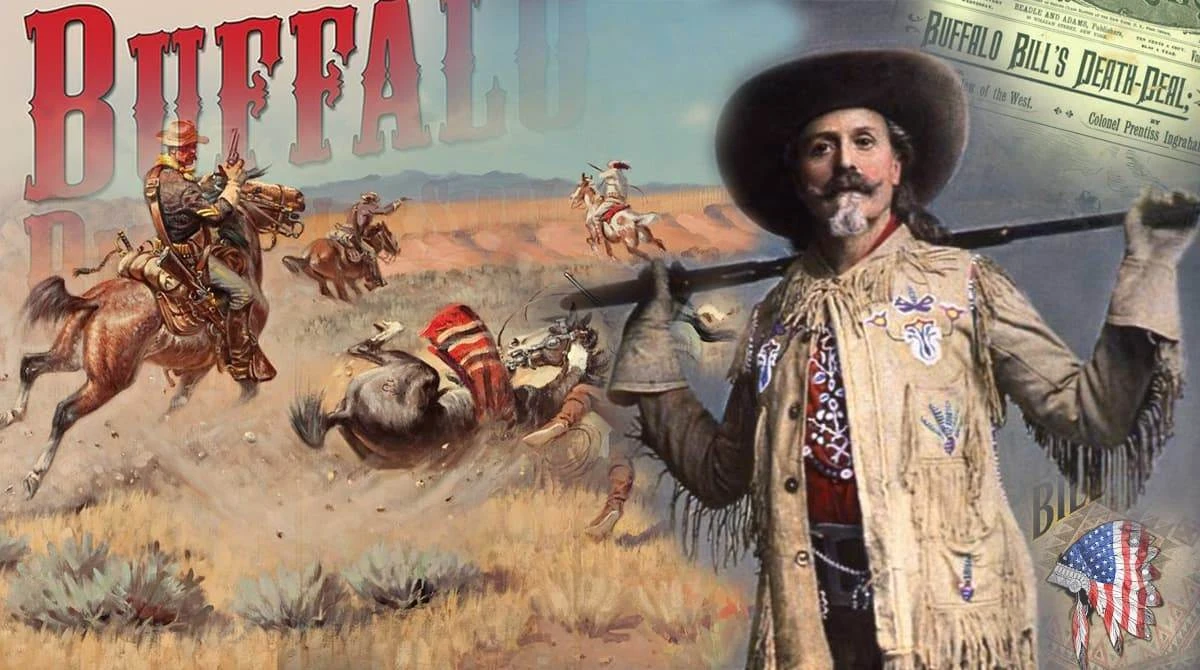
The Real William Cody: Blood, Sweat, and Prairie Dust
Before becoming a dazzling legend, William Frederick Cody lived the harsh life of a Wild West pioneer. He was born on February 26, 1846, on a farm near Le Claire, Iowa. When he was 11 years old, his father, Isaac Cody, died from complications from a wound sustained in a skirmish with pro-slavery supporters. Thus, William became the sole caregiver for his mother and sisters.
Cody took any job he could find. He worked as a messenger for the freight company Russell, Majors & Waddell, delivering freight and letters between Leavenworth and Atchison, Kansas. Later, he escorted wagon trains across the prairies. During the Civil War, he served honorably as a private in the 7th Kansas Cavalry, seeing action in Tennessee and Missouri. 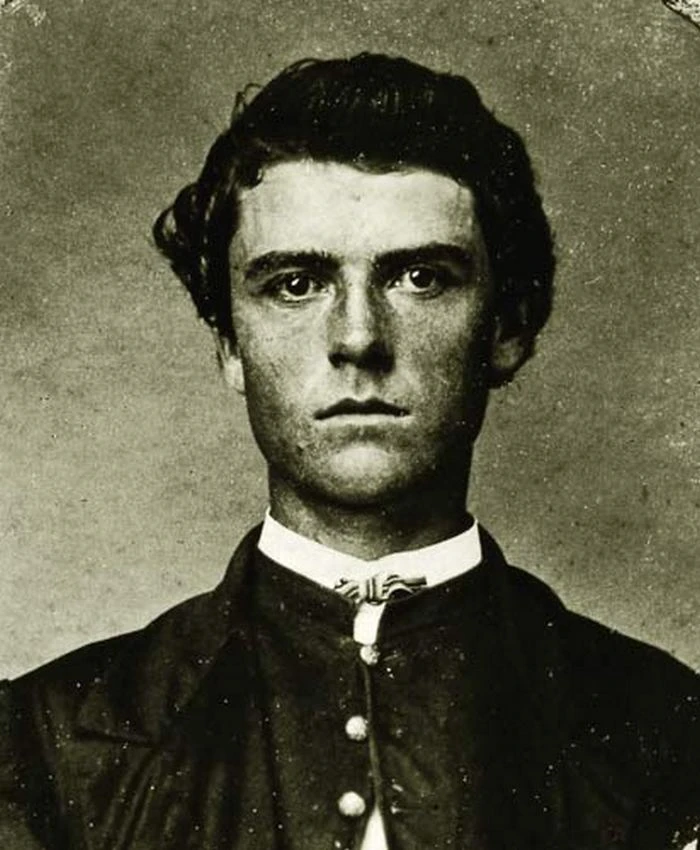
William Cody at age 19
Cody earned his famous nickname "Buffalo Bill" not on the stage, but on the vast prairies. In the late 1860s, he spent nearly a year and a half supplying bison to workers on the Kansas Pacific Railroad. Biographers estimate that he killed over four thousand animals during this time. According to one version, his nickname came after a fierce bison-shooting competition with another famous hunter, William Comstock. Cody won. Another version claims he simply astounded army officers by single-handedly shooting 11 bison in a single outing. 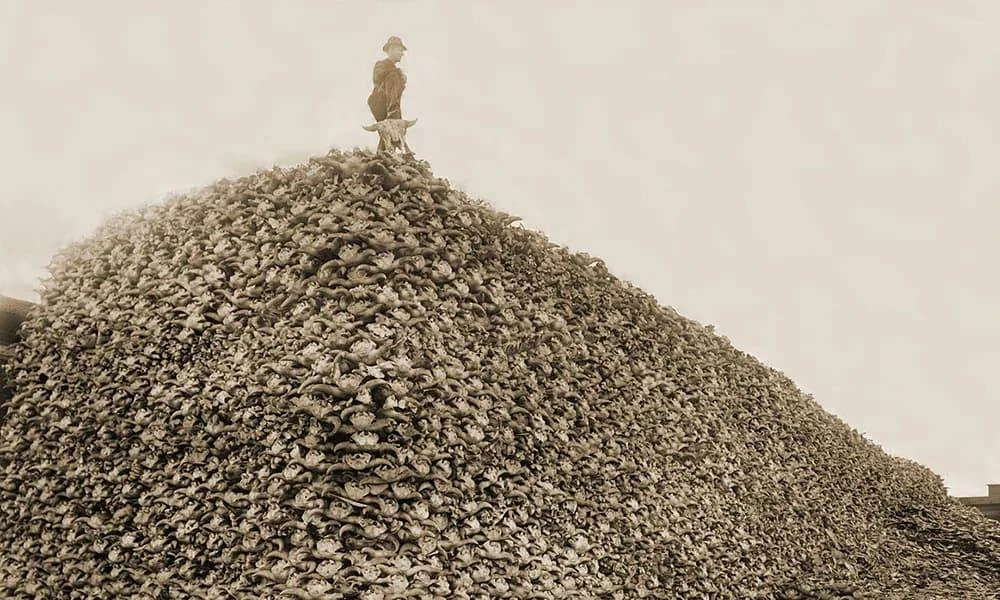
American Bison Skulls. 1892
His hunting nickname made Cody famous throughout the Wild West. But his real reputation wasn't earned by shooting bison, but by serving in the army. It was there that his best qualities as a tracker and scout were revealed.
A US Army Scout and the Medal That Was Taken From Him
William Cody was an excellent Army Scout. He participated in 14 dangerous expeditions against Indians and served as a guide for cavalry regiments. A letter from General Edward Carr, under whom Cody served, speaks eloquently of his combat achievements. The general described him as a humble, tireless tracker and the finest hunter on the frontier, ready to scout even at night. 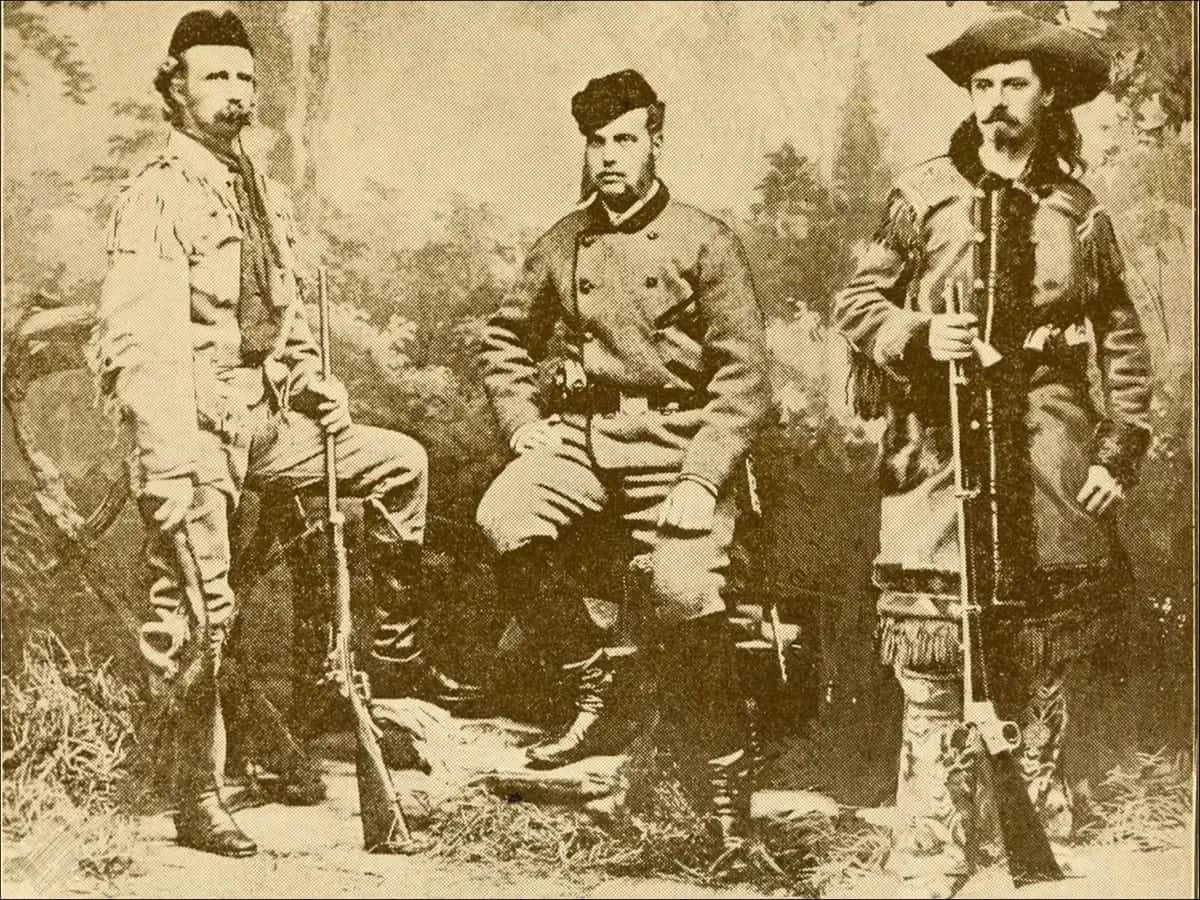
General George Custer, Grand Duke Alexei Alexandrovich, and Buffalo Bill, 1872
In May 1872, Cody received the Medal of Honor—the highest U.S. military decoration—for bravery in a skirmish with the Sioux. But in 1917, Congress revoked the award: Cody, as a civilian Scout, did not meet the new regulations for career military personnel. His name was then stricken from the honor roll, along with the names of 910 others. Justice was only served in 1989, when the Commission for the Correction of War Records reinstated the medal for Cody and four other civilian scouts. 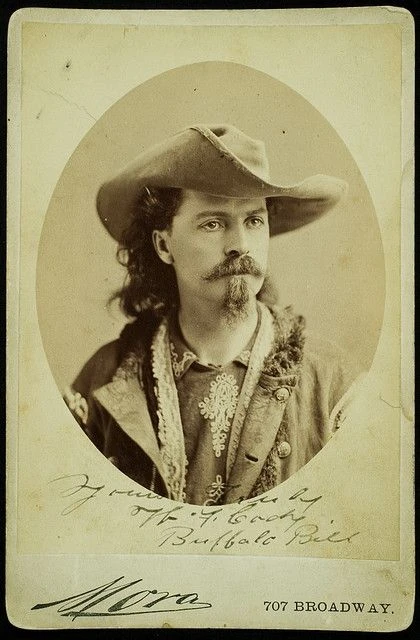
Buffalo Bill. Studio photo. 1870s
In July 1876, three weeks after Custer's defeat at the Little Big Horn, Cody killed a young Cheyenne named Hayoway (Yellow Hair) in a skirmish at Warbonnet Creek in Nebraska. He fired his carbine and scalped the man. According to his account, Cody shouted, "The first scalp for Custer!" Eyewitnesses to the skirmish do not confirm this remark. But it was this remark that went down in history and instantly made Cody famous throughout the country.
The Birth of a Legend: How Reality Gave Way to Showmanship
Cody's uniqueness lay in the fact that he didn't wait for posterity to create legends about him. He became the architect of his own myth during his lifetime. In 1879, his first autobiography, "The Life of the Honorable William F. Cody, Known as Buffalo Bill," was published. Researchers believe it was written with the assistance of his literary assistant, Prentiss Ingram, the author of dozens of pulp novels about Buffalo Bill's adventures. In this book, and in his later memoirs, fact was intertwined with fiction in the spirit of pulp fiction. Cody inserted himself into the key events of the era, exaggerated his own exploits, and sometimes borrowed from others. 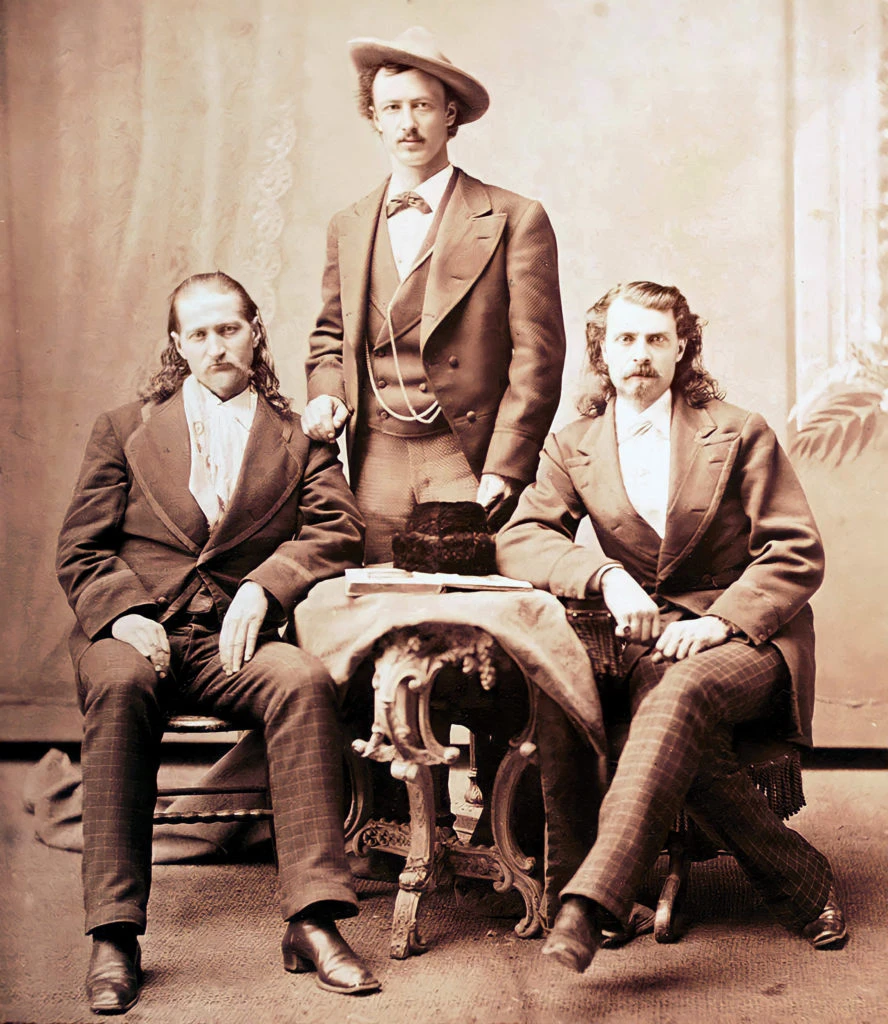
Three frontier legends in one photo (left to right): gunslinger Wild Bill Hickok, Texas scout Jack Omohundro, and Buffalo Bill Cody
One of the most controversial pages of Cody's autobiography is the story of his service on the Pony Express. At 14, he allegedly made a record-breaking run. But the actual service records have been lost, and the only source is Cody himself. Historian John Gray believes the teenager was too young. Other researchers consider the story plausible, albeit embellished. There are no documents, and the debate continues.
A duel to the death, seamlessly transitioning into a show
The most striking example of Cody's myth-making is the story of Yellow Hair. He almost instantly transformed a real murder into a theatrical performance. Cody claimed to have killed an influential chieftain who allegedly participated in the defeat of Custer's soldiers at the Little Big Horn. In fact, Yellow Hair was not a chieftain at all. And he had nothing to do with Custer's death. He was a simple warrior from a detachment that intercepted couriers. 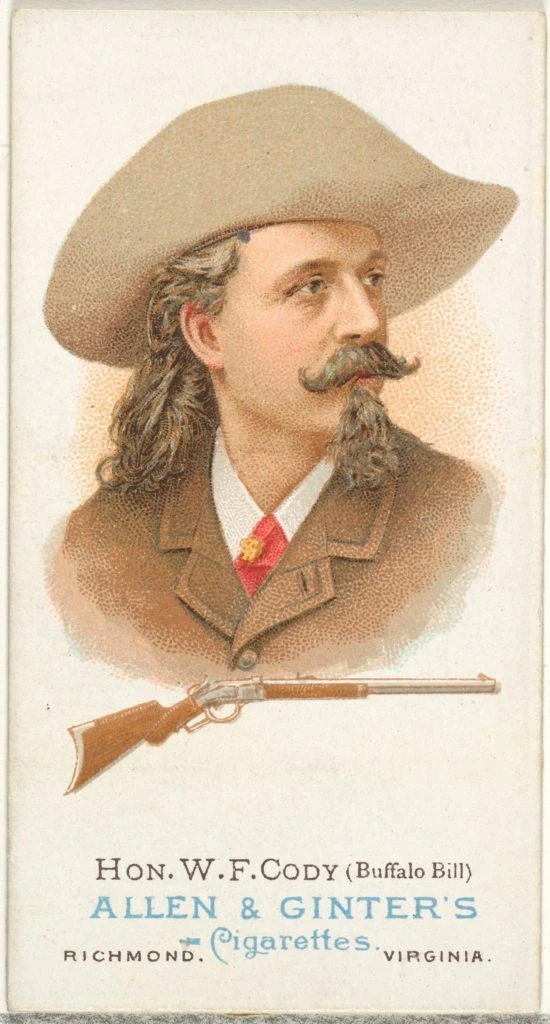
Buffalo Bill's portrait on a tobacco company advertising card
The most striking thing about this story is the outfit Cody wore to the fight. On that hot July day, he donned a stage costume of black corduroy with silver embroidery and fringe. He had recently worn it on stage. It was as if Cody knew in advance that the fight would be part of the performance. He took his opponent's fresh scalp and battle gear home with him. By October of that year, Cody was displaying the trophies to audiences on the stage of a Chicago theater. At first, as props in a melodrama. And then – as the climactic number "The Scarlet Right Hand, or Custer's First Scalp" in his own show.
Over time, Cody even began to feel embarrassed by this bloody episode. This happened when the Indians became regular members of his troupe, not just adversaries in his performances. Yellow Hair's scalp and headdress disappeared from the display case where they had once been on display. He never showed them to the public again. However, Cody wasn't the only person of his time who deliberately surrounded himself with an aura of legend. Calamity Jane, a female cowgirl, also knew how to turn rumors about herself into capital.
The Business of the "Wild West" Empire
In 1872, Cody first appeared on the Chicago stage in the play "Scouts of the Prairie," which was based on his adventures. Then he played himself in a simple melodrama, and it was a true revelation for him. The audience roared with delight, watching a living frontier legend literally steps away. Thus, Cody understood the key: Americans, trapped in the stifling megacities of the Industrial Revolution, yearned for the fading romance of the prairies. Moreover, they were willing to pay to become part of this myth, even if only for a couple of hours. 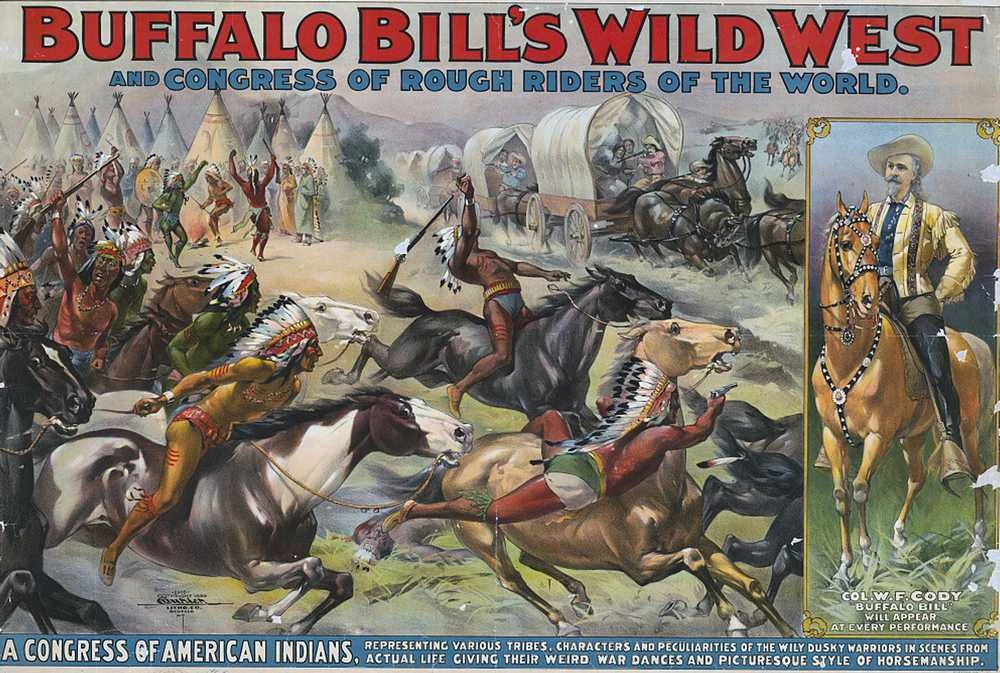
Buffalo Bill Show Poster
In 1883, together with producer Nate Salisbury, Cody created his crown jewel, the Wild West Show. This was more than just a circus performance, as Cody categorically rejected the word "circus." On the contrary, he called his project a "living historical reenactment." In a gigantic open-air arena, performers staged stagecoach robberies, buffalo hunts, and attacks on settler camps. The program invariably culminated with "The Death of General Custer"—the show's most popular number. 
The show's most popular number was "The Death of General Custer." 1905
The show featured real Native Americans and professional cowboys. Among them was Annie Oakley, the world's finest female gunslinger, and from 1885, even the legendary Sioux chief Sitting Bull joined the troupe. The show's sheer scale astounded contemporaries. Props, hundreds of animals, and the enormous troupe were transported on three railroad cars. During some seasons, the troupe swelled to 1,200 people. They also brought their own power plant to light the arena in the evenings, as well as cooks, pastry chefs, blacksmiths, and mechanics. Essentially, it was the entire nomadic infrastructure of a small town.
Sold-out shows on both sides of the Atlantic
In the summer of 1886, the show performed on Staten Island in New York City, and in the winter of that year, it moved to Madison Square Garden. Historians estimate that the show was seen by approximately 4 million spectators during those months. A year later, the troupe toured London to celebrate Queen Victoria's Golden Jubilee. More than 2 million people attended the Earls Court performances alone. The Queen herself, who had rarely appeared in public since her husband's death, attended the show in person. The true apotheosis of the show came with its performances at the 1893 Chicago World's Fair. During its run, the show attracted approximately 6 million spectators. In an era before film and television, this was an unprecedented figure. 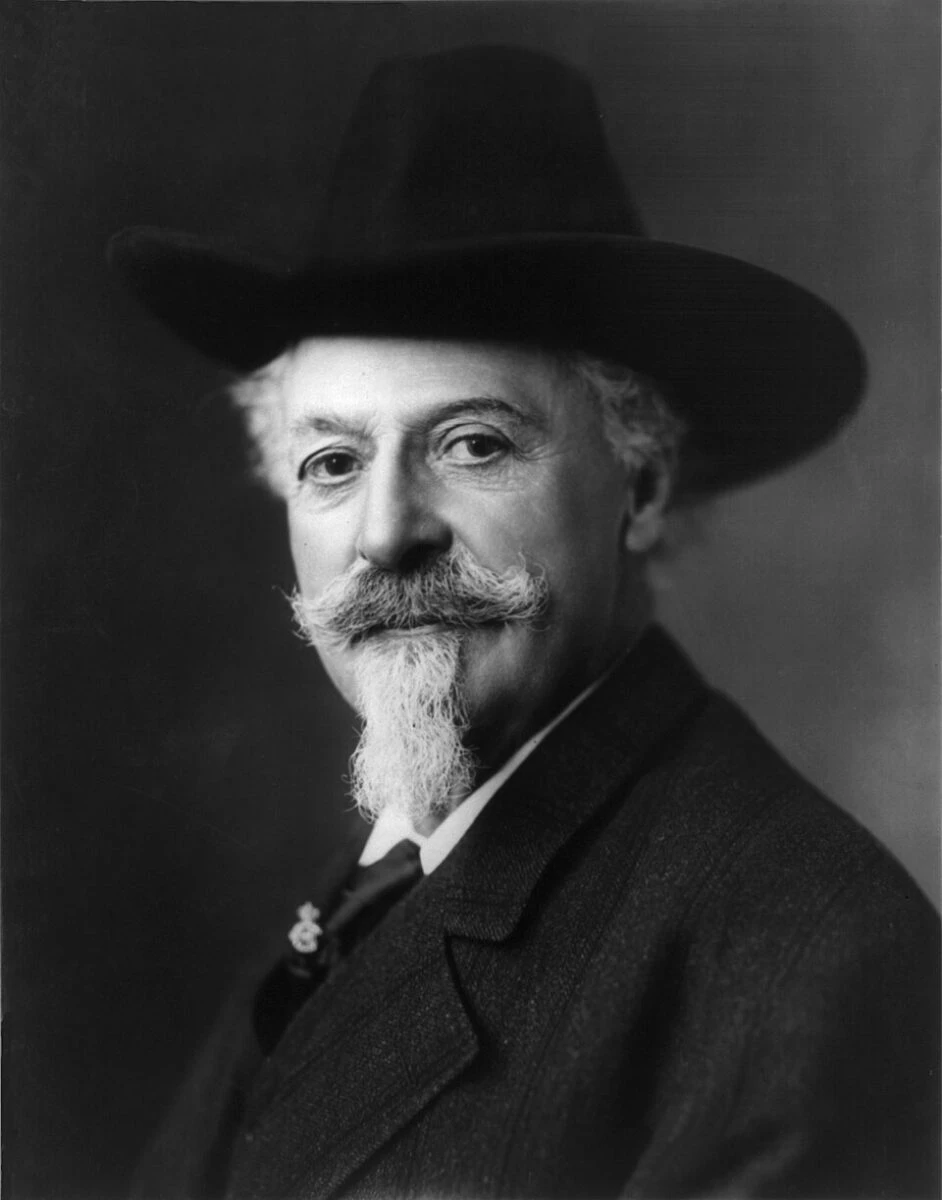
William Cody Photo from the US Library of Congress
Tourism in Europe brought Cody fame unprecedented for an American at the time. In addition to Queen Victoria, he performed for the monarchs of Denmark, Greece, Belgium, and Saxony. The future King Edward VII of Great Britain personally rode in the famous Deadwood stagecoach during a staged Indian attack. The Prince of Wales presented Cody with a pin bearing his coat of arms—three feathers—and the motto "I serve." By the late 1880s, William Frederick Cody had become arguably the most recognizable American on the planet, a vibrant and highly profitable New World brand.
The Buffalo Bill Paradox: Enemy or Protector of the Indians?
Cody's relationship with Native Americans is full of surprising contradictions. In his youth, he fought seriously with Native American tribes and participated in punitive expeditions against the Sioux and Cheyenne. But through his own show, he became perhaps the largest and most generous employer of Native American performers in all of America. Moreover, Cody hired them into the troupe on equal terms with white performers. This was almost unthinkable in the late 19th century. 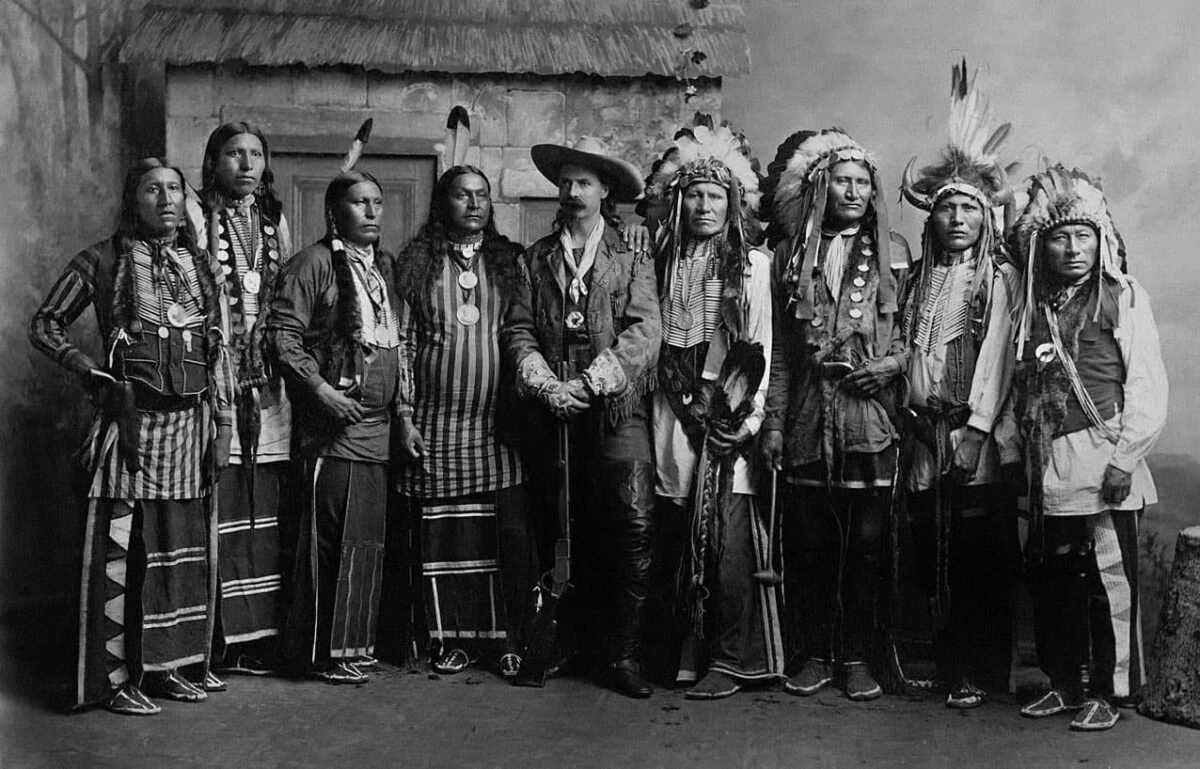
Buffalo Bill with Pawnee and Sioux Indians. 1880s
He paid the performers a decent salary and allowed them to travel with their families. The troupe members lived in traditional tipis right on the showgrounds. Most importantly, they openly performed ritual dances and spoke their native languages. At the same time, the federal government officially banned Native American religious rites and language practices on reservations. It was in Cody's shows that iconic resistance leaders such as Sitting Bull and, later, Geronimo, found a kind of refuge. 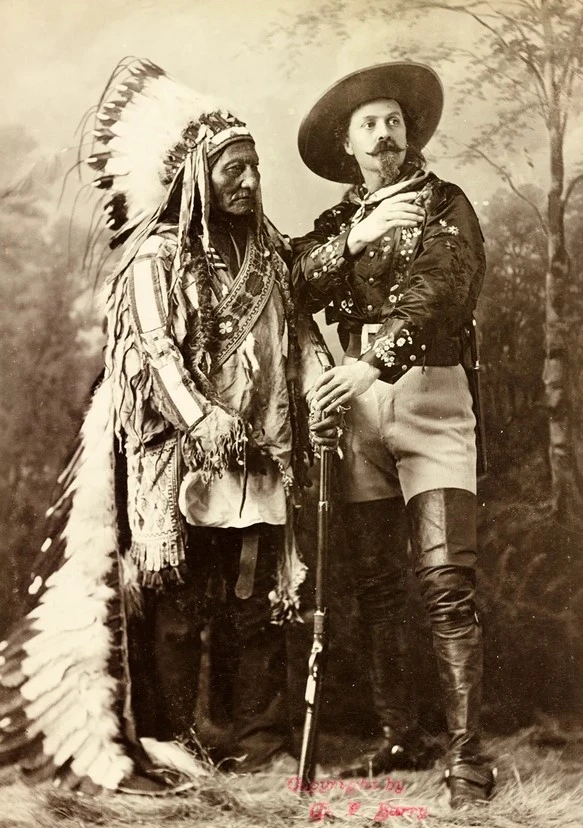
Buffalo Bill and Chief Sitting Bull. 1885
Historian Louis Warren, author of a seminal study of Cody's life, notes that participation in his projects often saved Native Americans from hunger and poverty on the reservations. The stage gave them an international platform rare at the time. There, they could demonstrate their dignity and assert their identity. They even found sympathy and support abroad, where their culture was systematically suppressed at home.
A Voice Against Broken Treaties
Buffalo Bill himself often spoke out in the press, harshly criticizing the federal government's actions toward Native peoples. He spoke bluntly:
"Every Indian uprising I have known was the direct result of broken promises and broken treaties on the part of the government." 
Buffalo Bill (center) and Indians from his "Wild West Show"
This position seems especially surprising given his own militant past. After all, Cody the Scout fought against the very tribes whose rights he later defended with his words. But it is precisely this duality that makes Cody so difficult to assess. A warrior who became a protector. A buffalo hunter who became an early advocate for their preservation. This contradiction continues to intrigue historians today. 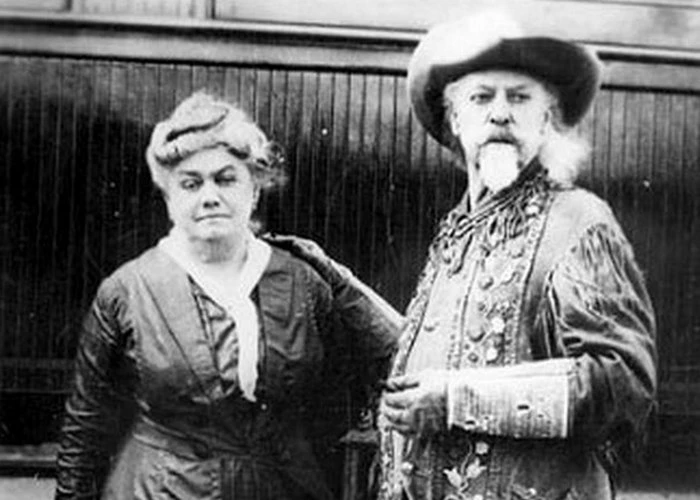
William Cody with his wife Louise
The Legacy of a Great Showman
So who was he—a hero, a con man, or a marketing genius? Historians still debate the matter. Cody himself was sometimes genuinely surprised by the wild tales that pulp novelists concocted about him. "They told of things we never did and could never hope to do," he admitted. And yet, he happily exploited these myths. He understood perfectly well that the public buys not dry facts, but a beautiful story. 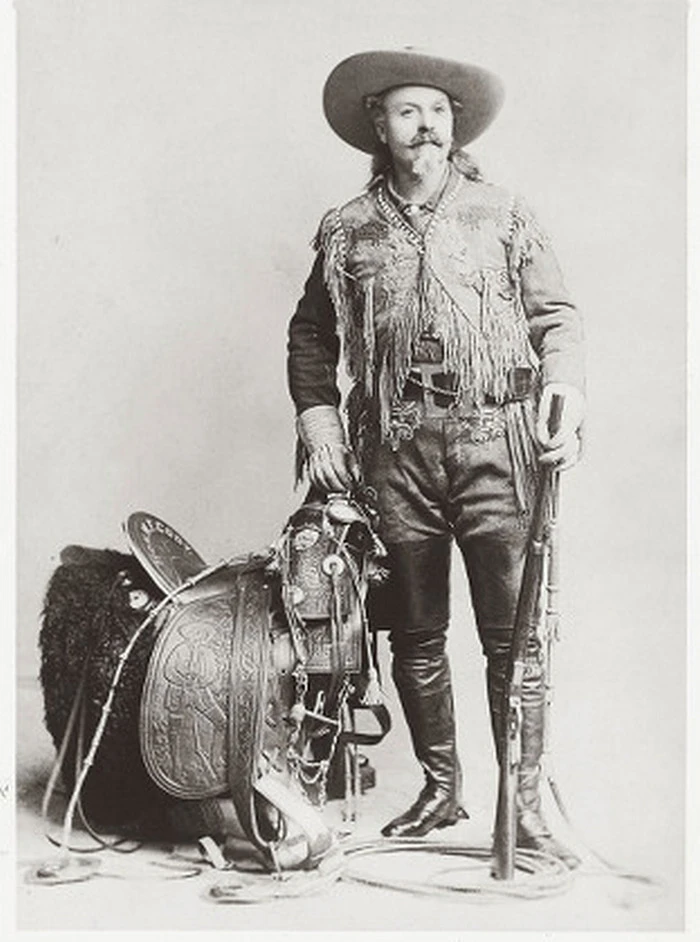
Cody didn't simply invent himself—he filled the mental vacuum of an entire nation. American society at the end of the 19th century was in dire need of a unifying myth. The nation needed the image of a noble and strong-willed cowboy conquering the wilds. It was Buffalo Bill who created the visual and behavioral tropes of the Wild West. These later formed the basis of the Western genre and still live on in world cinema—from early silent films to modern Hollywood blockbusters. Historian Louis Warren summarizes it this way: to the question of whether Cody was a frontiersman or a showman, there is only one correct answer. Clearly, both.
The End of an Immortal Brand
William Cody passed away on January 10, 1917, in Denver at the age of 70. Due to unsuccessful investments in gold mining, the once-richest man in America died bankrupt. For many years, the show was run on debt, which also undermined Cody's fortune. Just a few days before his death, Congress stripped him of the Medal of Honor—for the purely bureaucratic reason of the award's changed status. 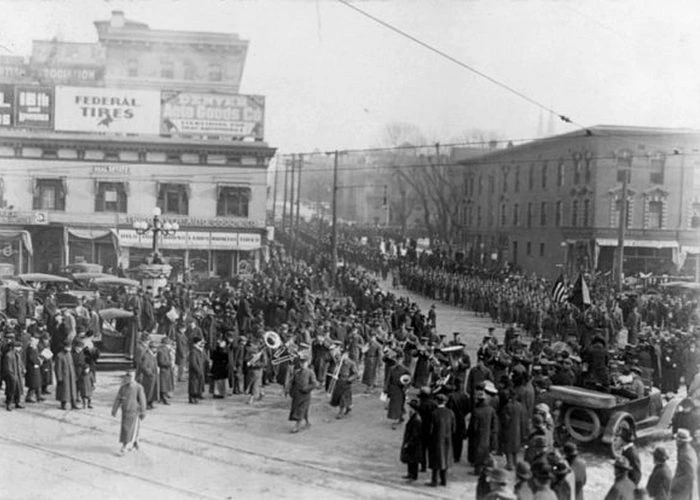
Buffalo Bill's funeral in Denver. January 1917
But historical justice prevailed in 1989, when the military decoration was reinstated posthumously. Buffalo Bill proved to the world that a well-crafted image can outlive the fragile human condition for many decades. The man died. But the brand he personally crafted over half a century remained virtually immortal. 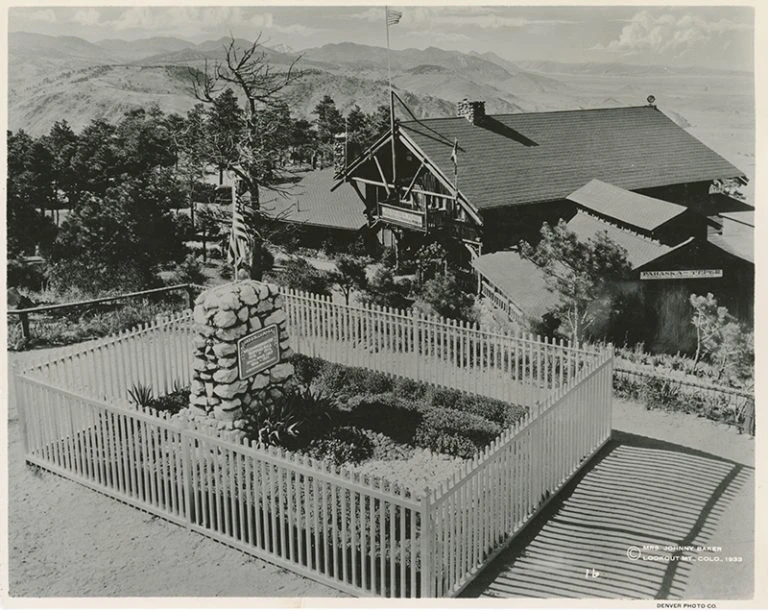
William Cody's grave on Lookout Mountain, Colorado
The line between the real William Cody and the radiant myth of Buffalo Bill blurred even during his lifetime. People admire his enterprise and courage. But a logical question arises: is it permissible to rewrite the real, often tragic, history of an entire era for the sake of a beautiful legend and successful business? Share your thoughts in the comments.