The ghostly "dog" of the Amazon turned out to be not so rare - it's just too good at hiding (3 photos + 1 video)
In the Amazon, there's a beast that biologists have been searching for for decades, almost like a cryptid—something between the Yeti, the Loch Ness Monster, and a very wary dog. 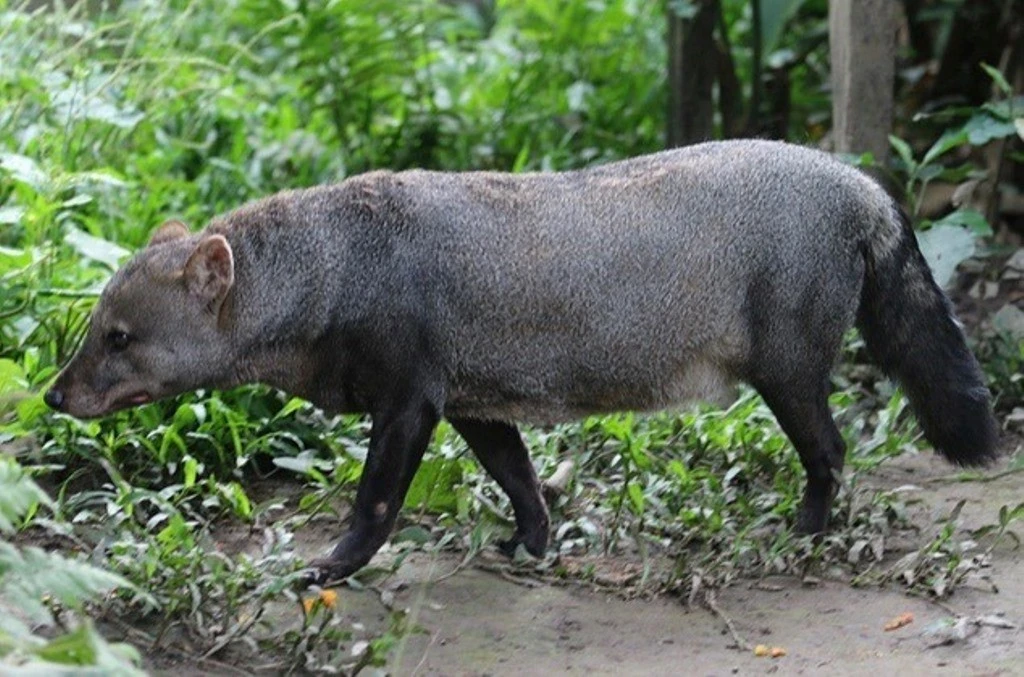
They call it the "ghost dog" of the forest. Technically, it's the red fox (Atelocynus microtis), one of South America's most enigmatic predators. For a hundred years, scientists have seen it so rarely that they know alarmingly little about it: what it eats, how it lives, how far it roams, or even how numerous it is. But now researchers have new clues, thanks to the largest dataset to date, collected using camera traps in the Amazon rainforests of Bolivia and Peru. The researchers combined more than 500 confirmed sightings of the animal and analyzed 594 independent camera trap recordings accumulated over two decades of observations.
The red fox looks like evolution tried to combine a wolf, a fox, an otter, and a bit of a civet, but at the last minute decided to make everything as bizarre as possible. It has dark fur, an elongated body, short, rounded ears, and a facial expression that regularly leads online users to mistake it for a thylacine, a fossa, or even an "AI-generated dog." But behind its strange appearance lies one of the least studied canines on the planet. For years, biologists couldn't even understand the basics: how common it is and how often it's found in the forest.
The red fox is a medium-sized predator (97-130 cm long, 35 cm tall, and typically weighing around 9-10 kg), with short legs and a compact body. The muzzle is long and thin, with small ears (34-52 mm) located on the sides of the head. The red fox's back is often reddish-gray or black, while the underparts are light red. The belly is reddish-brown. The tail is bushy, dark (often black), and up to 35 cm long, helping the animal quickly change direction. Partially reduced webbing is located between the toes, indicating this predator's semi-aquatic lifestyle. Like all predators, the red fox has 42 teeth. The tips of the teeth protruding from the mouth are visible even when the mouth is tightly closed.
For a long time, the problem was almost comical: scientists were trying to study an animal that literally refused to exist within the scientific purview. Everything changed with the advent of camera traps. A new study has shown that the red fox is being recorded more often than previously thought, though it remains a rare find. Twenty-one out of 34 research projects successfully recorded the animal, and calculations suggest the population density may be around 15 individuals per 100 square kilometers—less than many medium-sized predators like ocelots, but still higher than large cats like jaguars. This gave rise to an intriguing thought: perhaps the red fox isn't so rare as it is incredibly secretive.
And then the study had a surprise in store. Unlike most wild canids, which prefer twilight or night, the "ghost dog" turned out to be primarily diurnal. That is, the animal wanders through the forest when it seems easiest to encounter—yet people almost never see it. This is likely due to its lifestyle: the red fox prefers dense, impassable forest areas and clearly avoids areas where people regularly frequent.
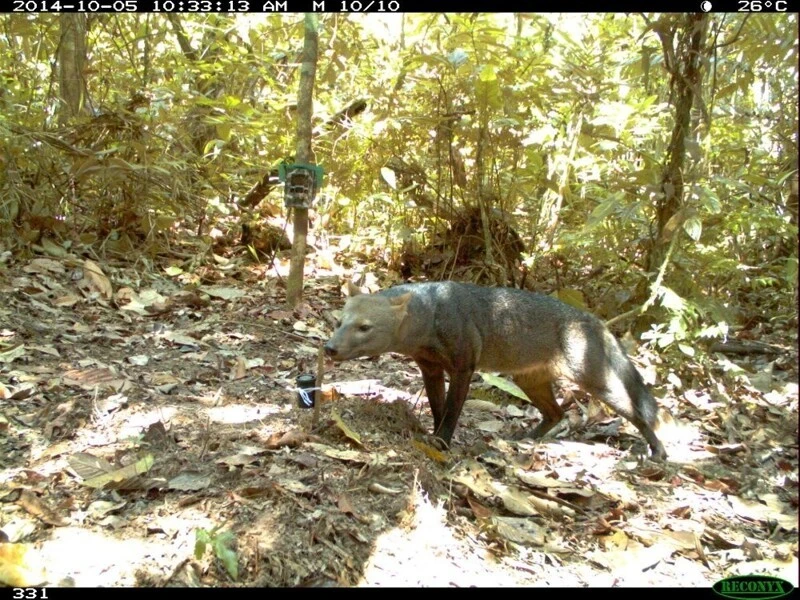
It also turns out that this animal is a true specialist in the humid Amazon. It often stays near streams, swampy areas, and floodplain forests, is a good swimmer, and can use rivers as a kind of "forest highway." The red fox's diet is surprisingly varied: it hunts small vertebrates, insects, and fish, scavenges carrion, and regularly eats fruit. Scientists have even observed individual specimens stealing fruit left by primates and returning to the food supply. For a canine, this seems somewhat unexpected—as if a wolf suddenly decided to switch to a seasonal fruit diet.
But the more scientists learn about the red fox, the more alarming the picture becomes. Analysis has shown the animal's strong dependence on large tracts of undisturbed forest. Where forests are cut by roads, clear-cuts, and fires, the likelihood of encountering the animal drops sharply. The problem is particularly serious because approximately 40% of the species' range already overlaps with the Amazon's "deforestation arc"—an area of intense logging. If the forest continues to disappear, the "ghost dog" may begin to disappear before people even realize how many of them there were to begin with.
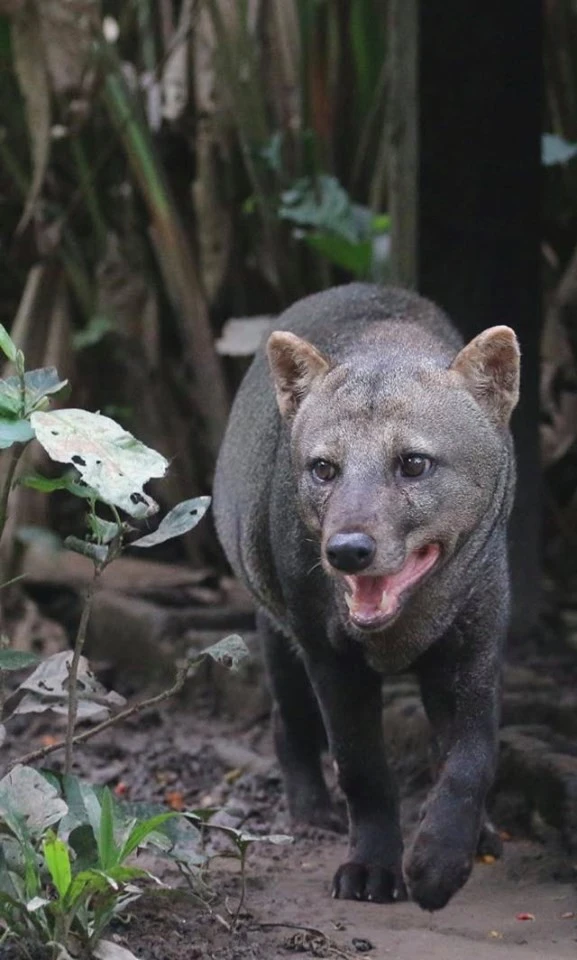
There's an almost philosophical paradox of modern biology here. We live in the age of satellites, AI, and genomics, yet a predator the size of a small dog can still hide from science for decades in the planet's largest forest. And perhaps the biggest news here isn't even that scientists have finally better understood the red fox. It's that the Amazon remains a place where a very real animal can seem like a legend—simply because it's learned to live without us all too well.