Rock pigeons: They have captured almost every city on the planet (8 photos)
Look at any city square—Tokyo, Buenos Aires, Nairobi. It's the same everywhere: gray-blue birds with a purple tint on their necks, shuffling their feet across the asphalt, pecking at anything. The rock pigeon (Columba livia) is the most common urban bird on Earth. And it's entirely our fault—literally. 
— That old lady dropped a grain again. Come on, guys!
Today, pigeons have inhabited every continent except Antarctica, yet they have remained virtually unchanged. While humans have bred over two hundred domesticated breeds of a wide variety of shapes, colors, and sizes, the basic urban pigeon is virtually indistinguishable from the wild pigeon. It's slightly larger and less fearful of people, but this is a consequence of its urban lifestyle, not a genetically determined trait. 
Some pigeon breeds have a particularly eccentric appearance. These include, for example, the curly-coated pigeons, which are essentially flightless. 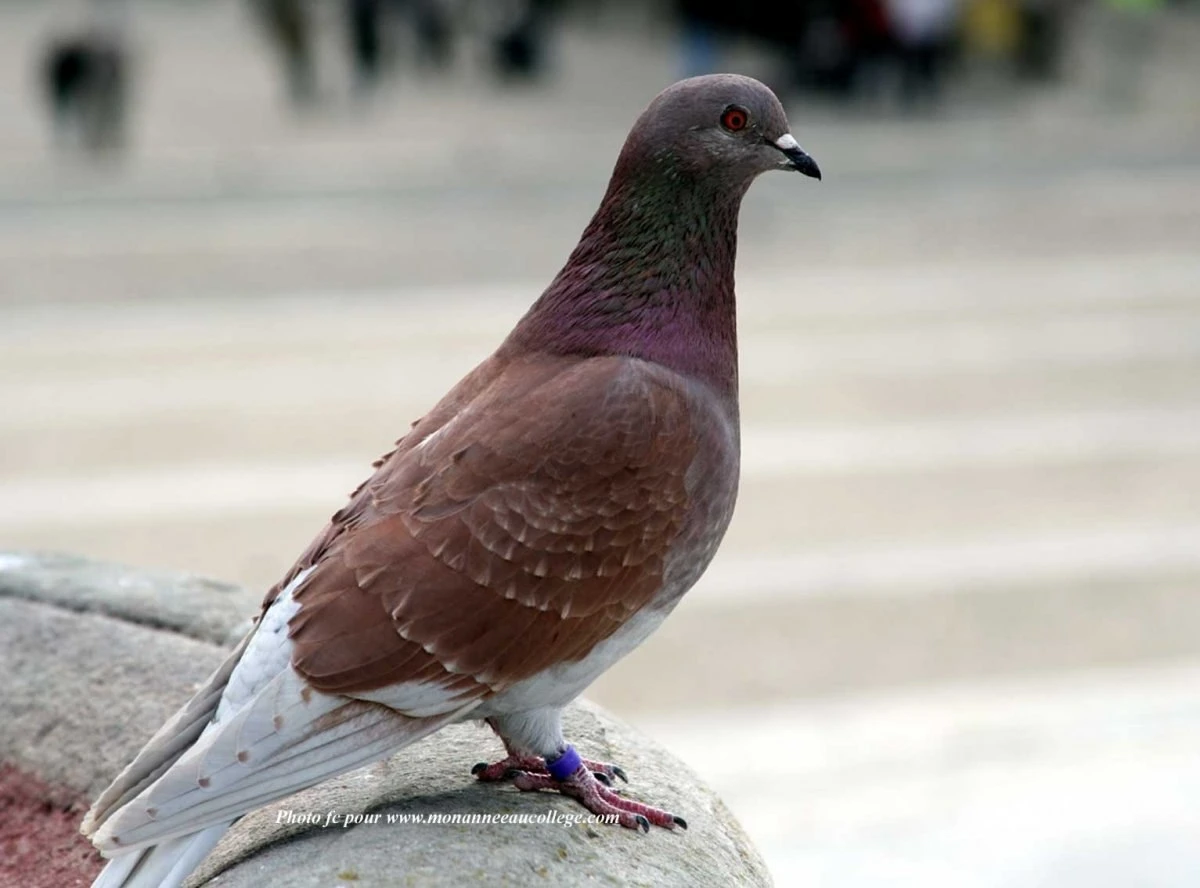
White and brown pigeons are not found in the wild. These colors are caused by remnants of color genes inherited by urban populations from domesticated pigeons.
And this is precisely their main advantage. Unlike most animals, which are forced to go against their natural physiology when moving to cities (like squirrels, which we wrote about a few days ago), pigeons have proven preadapted to urban conditions. Their rock-climbing skills also work well in concrete jungles, and their adaptations to a wide variety of foods allow them to forage from garbage dumps without much difficulty. 
Wild pigeon. Not much different from urban pigeons, except perhaps slimmer.
However, humans themselves played a significant role in the spread of pigeons, deliberately inviting them to work as couriers in exchange for food and shelter. And before the invention of the telegraph, they did this remarkably well. After all, while pigeons aren't the fastest birds—their top speed is 60 kilometers per hour—they possess incredible navigation skills. A pigeon can get to its nest from literally anywhere, even if the starting point is unfamiliar. 
Born last year, but knows the city better than you.
Pigeons have several navigation systems, of which photographic memory is far from the most important. Sure, it's cool that a pigeon can remember thousands of square kilometers of space, but what's even cooler is that it can find its way home from any part of its native hemisphere, navigating solely by the sun and stars. Moreover, it can detect the sun even through thunderclouds, because the bird's eyes detect polarized light, which clouds cannot block. 
I'll find you, even if you live thousands of kilometers away!
On their journey, their ability to navigate by the Earth's magnetic field greatly helps them. Special cells in the pigeon's eyes, called cryptochromes, contain molecules that react to changes in the magnetic field. This is why birds can literally see its vibrations and navigate along magnetic lines. But that's not all—it was recently discovered that these winged navigators can even navigate by sources of low-frequency noise, such as sea coasts, turbulent rivers, highways, and transformer boxes! As a result, their navigation systems are so sophisticated that even a blind pigeon can confidently stay aloft and navigate their surroundings! 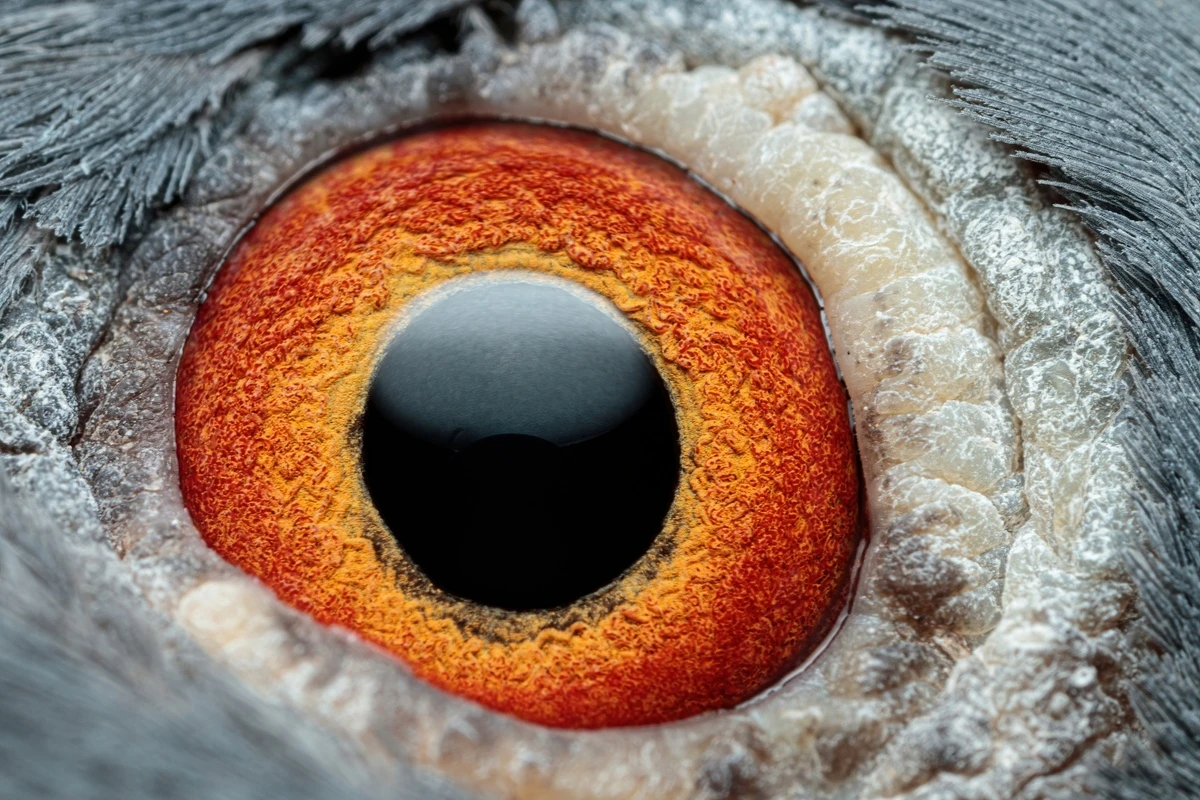
It's time to look a pigeon in the eye.
That's why, when building new cities and villages, people always took the planet's most reliable winged postmen with them. And they gradually settled into their new surroundings, first becoming indispensable assistants, then habitual cohabitants, and finally evolving to the final stage of symbiosis with humans—becoming the brazen rulers of garbage dumps! 
— Work as a postman? Honey, you've got something mixed up. Pour out the flour and stay out of our sight, understand?