How Kissing Wasn't Allowed in Hollywood for 34 Years for More Than Three Seconds: The History of the Hays Code (14 photos)
Sex wasn't just a thing in the USSR, it was also a thing in old Hollywood—and that's not a metaphor. From 1934 to 1968, studios operated under a strict code: forbidden words, separate beds for spouses, and kisses no longer than three seconds. A producer would pay a fine for saying "damn," and Betty Boop was dressed in a long dress—and she died as a character. 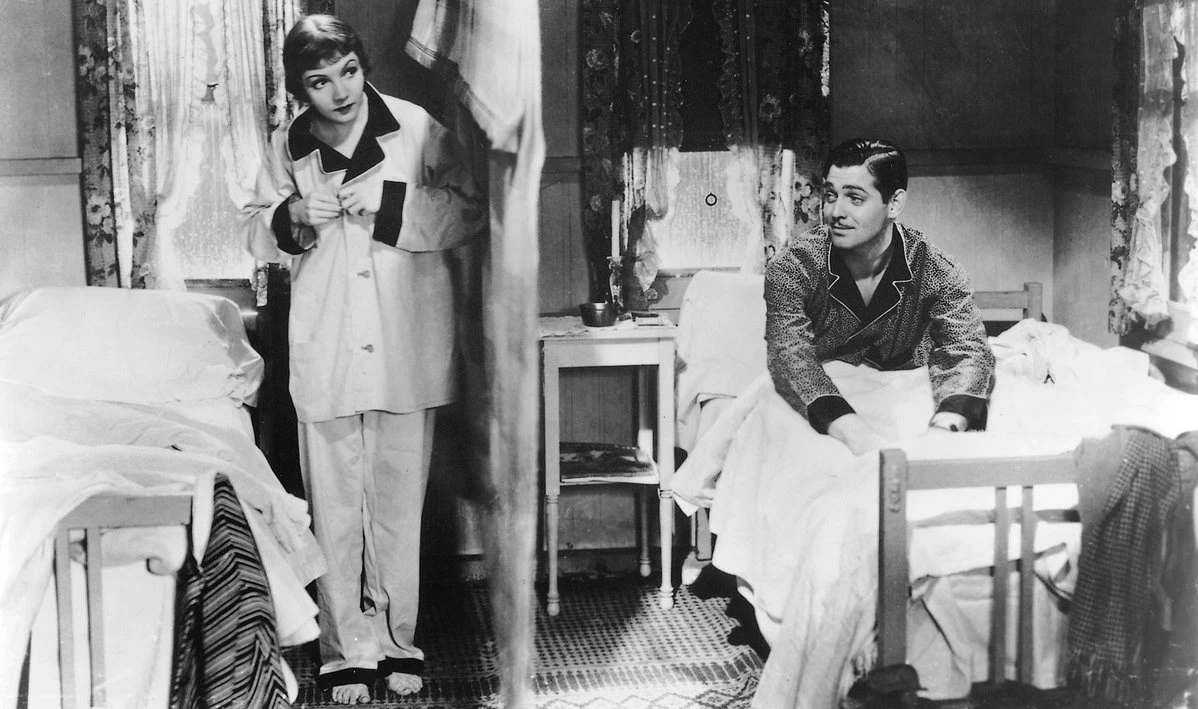
Where did the Code come from?
The Motion Picture Production Code was officially adopted in 1930. It wasn't developed by government officials. The initiative came from Catholic publisher Martin Quigley and Jesuit priest Daniel Lord. They pitched the project to studio bosses. In February 1930, they met with the authors and agreed to the terms. The document was named after its curator: Will Hays. The Presbyterian elder had headed the Motion Picture Producers and Distributors Association (MPPDA) since 1922. He earned $100,000 a year for his work—a colossal sum by the standards of the era. 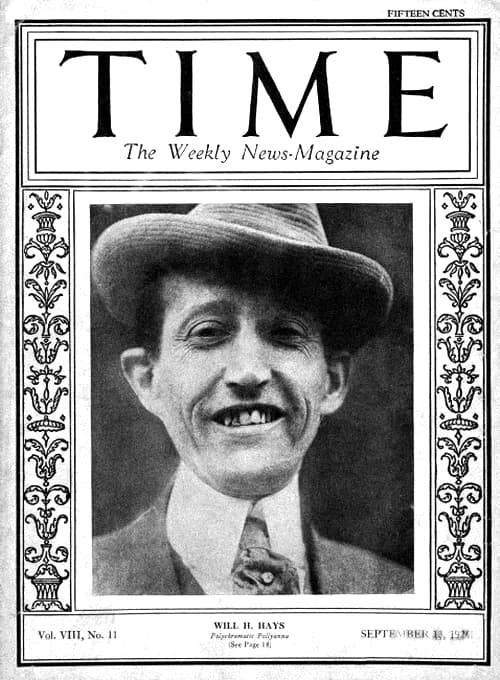
Will Hays on the cover of Time magazine. 1926
The desire to restore order to the film industry did not arise out of nowhere. In the 1920s, Hollywood was rocked by high-profile scandals. The mysterious murder of director William Desmond Taylor remained unsolved. The case of Roscoe "Fatty" Arbuckle—he was accused of rape and manslaughter—went to trial three times. Studios feared government intervention and opted for self-regulation: better to censor themselves than to face federal law. 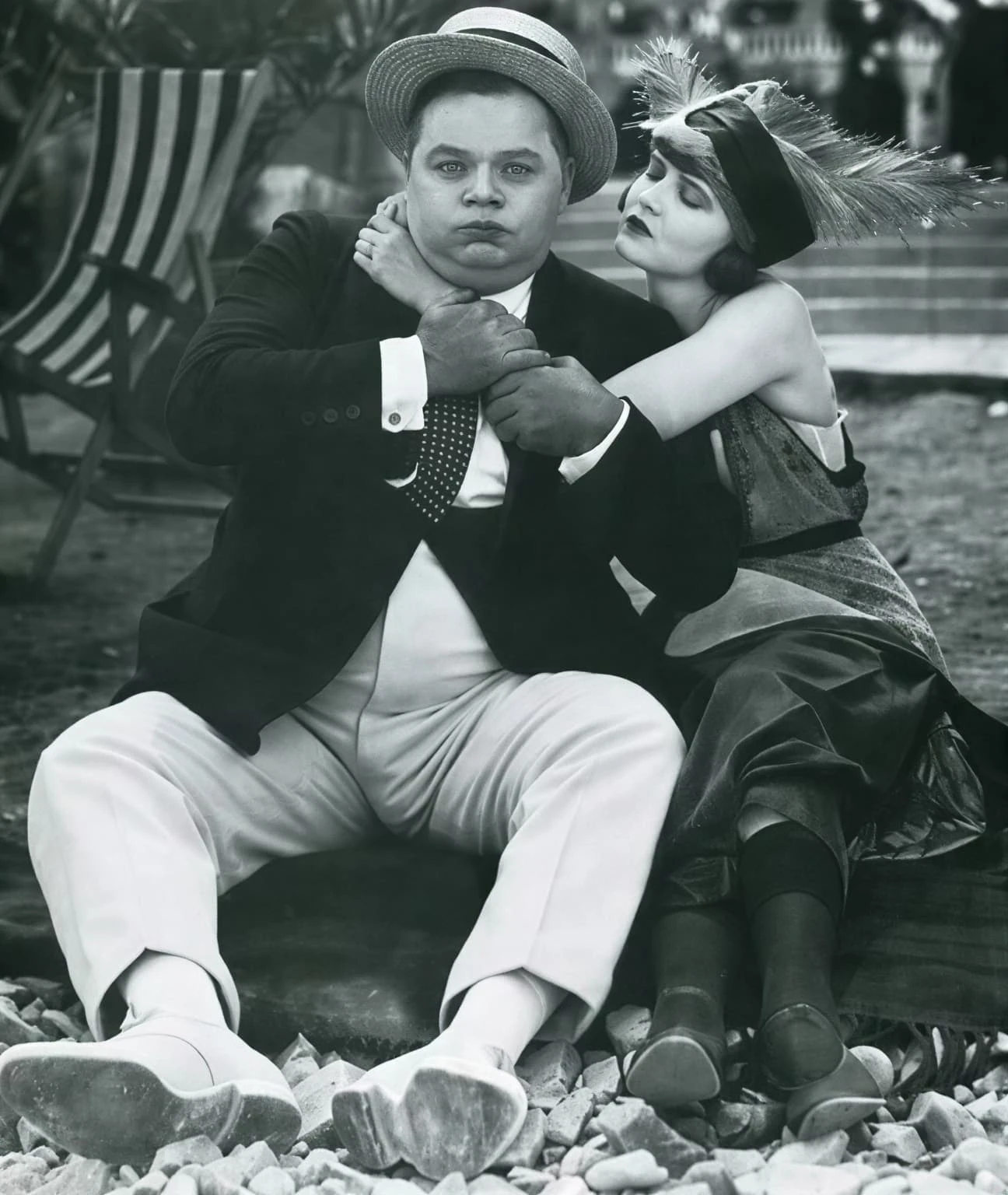
Roscoe "Fatty" Arbuckle in a still from the film. The scandal surrounding the comedian became one of the reasons for the introduction of the Code.
For the first four years, the Code was largely ineffective. The association had no real enforcement mechanism. The press openly ridiculed it. In 1931, The Hollywood Reporter quoted an anonymous screenwriter: the Hays Code was "no longer even a joke, just a memory." That changed in June 1934. The amendment established the Production Code Administration (PCA), headed by the staunch Catholic Joseph Breen. From July 1, 1934, no film could be released without the PCA seal.
Fines and Boycotts: How Enforcement Worked
Studios that released a film without PCA approval faced a $25,000 fine—and that wasn't the worst of it. Most theaters were members of the association. They simply refused to show "uncertified" films. Without distribution, a film would become a loss. 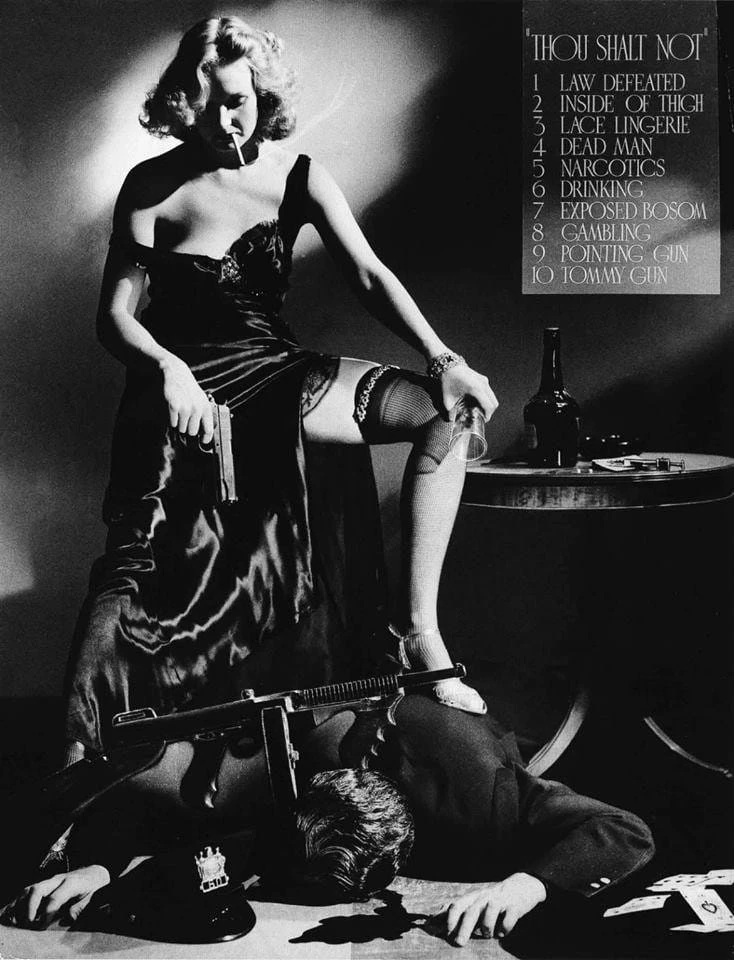
In 1934, Columbia Pictures photographer A. L. Shafer combined all 10 of the Code's prohibitions in a single photograph—as a gesture of protest.
Additional pressure was exerted by the Legion of Piety, a Catholic organization founded in 1934. It compiled film ratings and called for boycotts. Studios were already struggling to make ends meet during the Great Depression. The threat of a boycott was deadly serious. The first film to receive a PCA certificate was John Ford's The World Moves On (1934). 
Jane Russell in "The Outlaw" (1943). Howard Hughes spent several years suing the PCA over the character's cleavage.
The story of the western "The Outlaw" (1943) is instructive. Howard Hughes directed it for a new actress, Jane Russell, and ignored the Code from the very beginning. The PCA demanded that scenes featuring the character's cleavage be cut. Hughes reluctantly removed about 40 seconds. He received a certificate, but distributors still refused to take the film. Then he himself orchestrated a scandal: plastering San Francisco with provocative posters and releasing the film in one theater without the association's approval. It was February 1943. After two weeks of sold-out theaters, the film was withdrawn. "Outlaw" wasn't widely released until 1946. Hughes filed an antitrust lawsuit against the MPPDA—the first legal challenge to the Code in its history.
Prohibited List: From Drugs to "Devils"
The Code's prohibitions are astonishingly detailed today. Drugs, contraband, interracial relations, and homosexuality were completely banned. The document called it "sexual perversion." Childbirth on camera and children's genitals were also prohibited. Surgical operations and gory scenes, ridiculing the clergy, and portraying crime as attractive were prohibited. 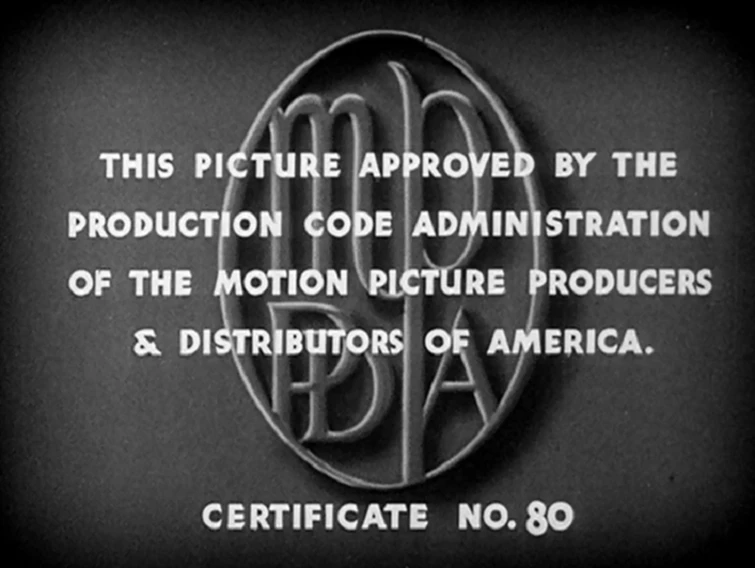
PCA certificate on the poster: without this seal, the film would not have been released in theaters.
Censorship penetrated into the details. Casablanca nearly lost its main plot. The PCA demanded a revision of Rick and Ilsa's love story: Ilsa was married to someone else. In the original script, Rick simply shot the Nazi Strasser. This had to be reshot: the Nazi was supposed to reach for the gun first. Only then did the murder appear to be self-defense. The filmmakers managed to save the film by carefully editing every line of dialogue. 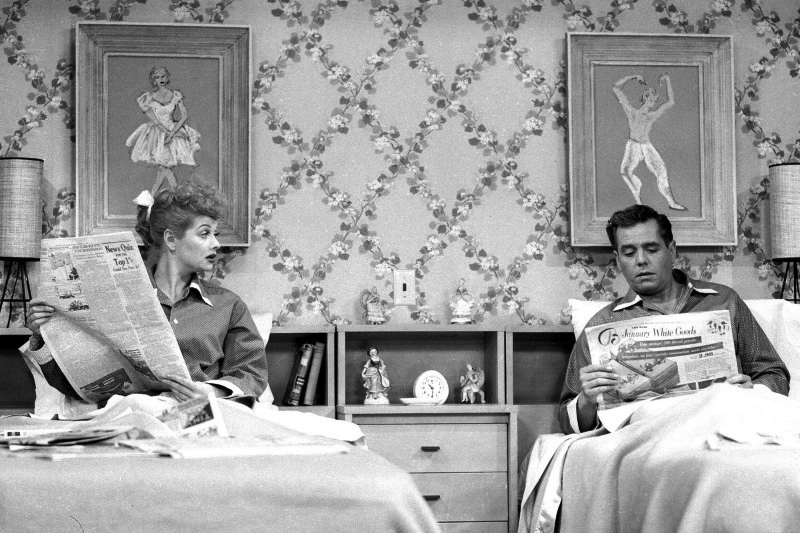
Married couples on screen were required to sleep in separate beds—a direct requirement of the Code.
The code even banned individual words: "God," "Lord," "Jesus," "Christ" (except in pious usage), "hell," "S.O.B.", and "damn." At the end of Gone with the Wind, Rhett Butler famously utters, "Frankly, my dear, I don't give a damn." Producer David Selznick spent months trying to retain this word—writing letters, organizing screenings, and appealing to the MPPDA board. In November 1939, an amendment permitted "damn" and "hell" in historical contexts. Selznick still paid a $5,000 fine—about $100,000 today.
Tarzan, Betty Boop, and Other Victims of Censorship
The legendary Tarzan also found himself in the PCA's crosshairs. In Tarzan and His Mate (1934), the main problem was the scenes with Jane. Actress Maureen O'Sullivan filmed a swimsuit sequence, and her bare breasts were captured on camera. MGM cut the scenes from the negative. In subsequent films, Jane's famous bikini was replaced with a more revealing outfit. Tarzan and Jane lost their freedom—not because of hairiness, but because of a lack of fabric. 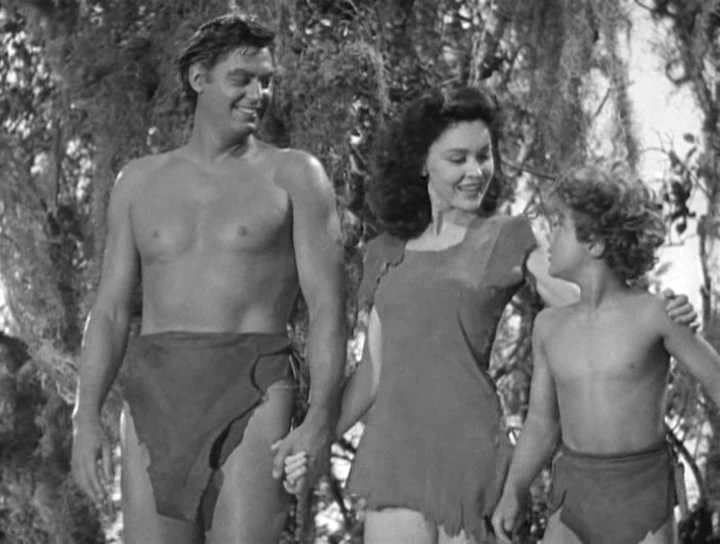
Because of the Code, Jane could no longer wear a bikini in the Tarzan films.
Animation also did not escape censorship. The Code stripped the flirtatious Betty Boop of all recognizability. The short dress became long. The cleavage disappeared. Seductive hip swaying was forbidden. Even her curls eventually thinned out. Playful winking title cards were also banned. The "bad girl" was replaced by a boring housewife. In 1939, Fleischer Studios canceled the series: audiences had lost all interest in the "proper" Betty. 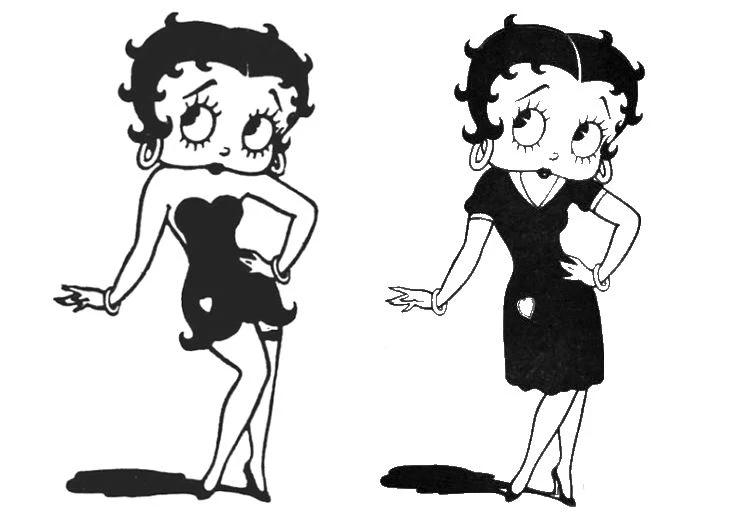
Betty Boop after 1934: long skirt, no curls or swaying. Audiences quickly lost interest.
The code rewrote not just scenes, but entire plots. In Rebecca (1940), Hitchcock had to change a key detail from Daphne du Maurier's novel. In the book, the husband deliberately kills his first wife. The code forbade showing a murderer unpunished. In the film, Rebecca's death was an accident. In 1941, MGM filmed a new version of Dr. Jekyll and Mr. Hyde. The character of Ivy—originally a prostitute—was transformed into a barmaid. Allusions to violence and sadism were excised. The sexual undertones of Jekyll's duality were virtually eliminated. Critics panned the remake: without it, the story lost its meaning. MGM simultaneously bought copies of the 1931 original and ordered them destroyed—so that audiences could not compare.
Shadows and Kisses "on the Installment Plan"
The strict restrictions did not break the directors—they became virtuosos of metaphor. If sin was forbidden from being shown directly, it was depicted through innuendo. In Gone with the Wind, Melanie's birth scene is shot through enormous shadows on the wall. The effect is majestic and eerie—a direct shot would hardly have achieved the same effect. 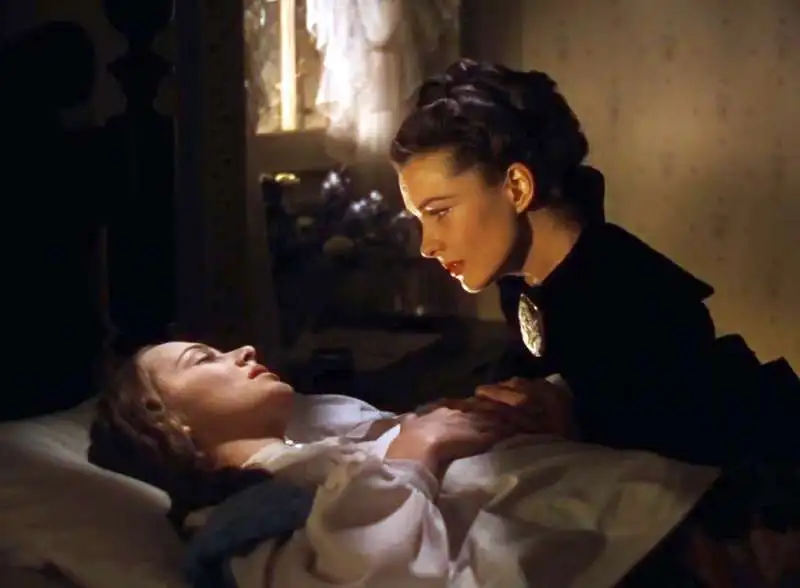
Melanie's birth in Gone with the Wind (1939): The code prohibited showing the birth—the director only shot shadows on the wall.
The code prohibited "excessive and passionate kissing." No one used a precise timer, but the three-second rule became ingrained in studio practice. Hitchcock masterfully circumvented it in Notorious (1946). He ordered Cary Grant and Ingrid Bergman to kiss, pause, and exchange a few words—over and over again. This continued for two and a half minutes, as the characters moved from the balcony into the apartment. 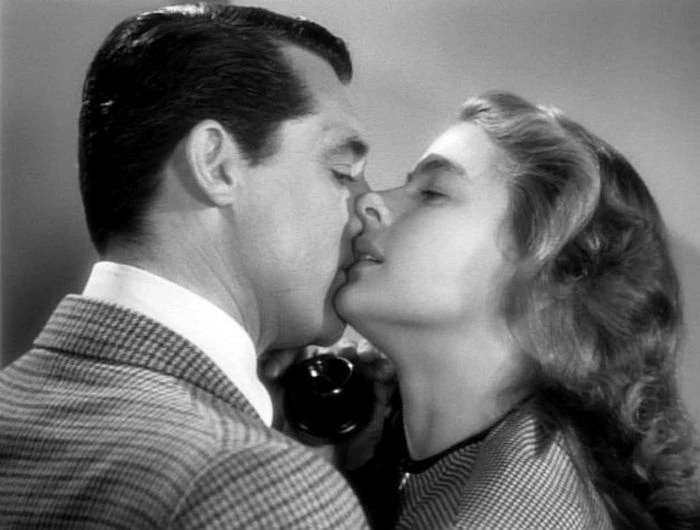
Cary Grant and Ingrid Bergman in "Notorious." Hitchcock broke the kiss into a series of touches—a total of 2.5 minutes.
The dialogue wasn't scripted. Hitchcock simply asked the actors to speak like lovers. Each touch was formally within the norm. The overall effect violated the spirit of the Code. The result was one of the most erotic scenes in classic Hollywood. 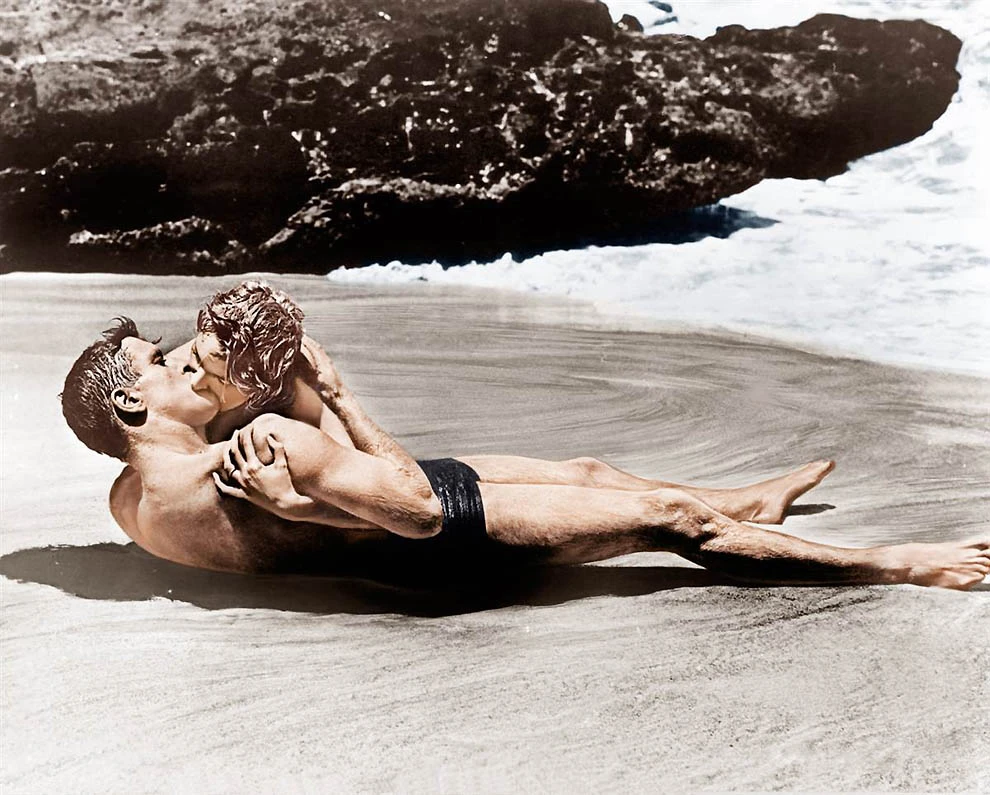
"From Here to Eternity" (1953): A kiss at the surf's edge is another way to get around the censors.
Director Fred Zinnemann was no less daring in From Here to Eternity (1953). The script called for the lovers to kiss standing up. But Burt Lancaster suggested they lie down in the surf. That's how they shot it: the sergeant and the married Karen Holmes lie at the water's edge, the waves crashing over them. She says, "I didn't know this could happen." Technically, there was nothing illegal: both are in bathing suits, the kiss is brief. But the PCA censors cut four seconds. The still was banned from advertising. In James Jones's novel, the lovers went out to sea naked. The prostitute became a "club hostess." The film still won eight Oscars, and the beach scene went down in cinematic history.
The End of the Puritan Empire
The collapse of the Code was prepared gradually. After the war, European cinema flooded American theaters. Italian neorealism and the French New Wave showed life without embellishment—with blood, sweat, and passion. American films lacked authenticity. Demand for Hollywood products waned. 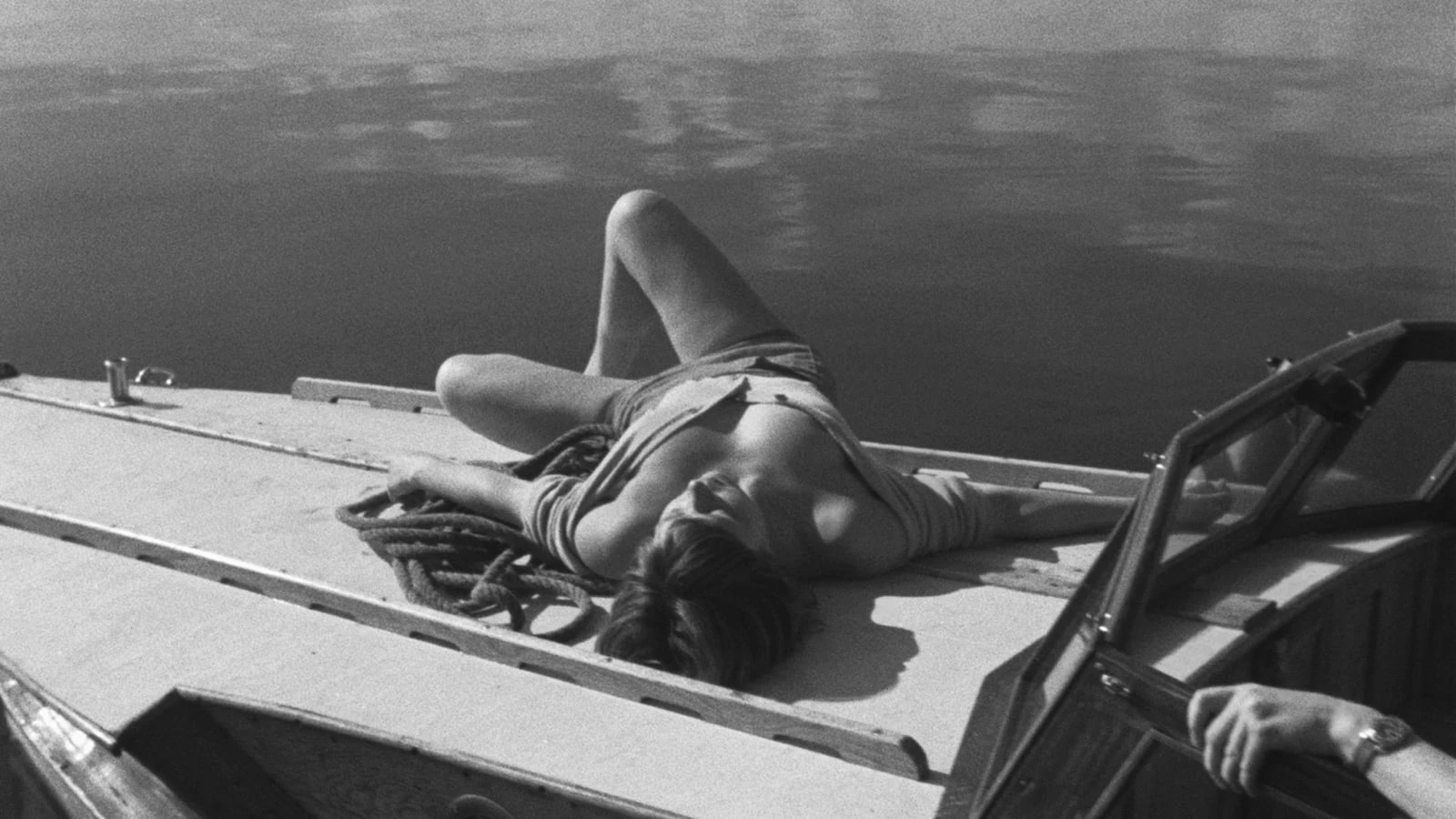
Ingmar Bergman's "Summer with Monika" (1953): European cinema was freer and more truthful than American cinema.
In 1952, the Supreme Court recognized film as an art form protected by the First Amendment. This undermined the legal basis of the Code. Television was stealing audiences. Studios understood that the only way to win back audiences was with something not shown on television. By the mid-1960s, the Code had become a paper tiger. In 1968, it was replaced by the MPAA rating system: four categories—G, M, R, and X. 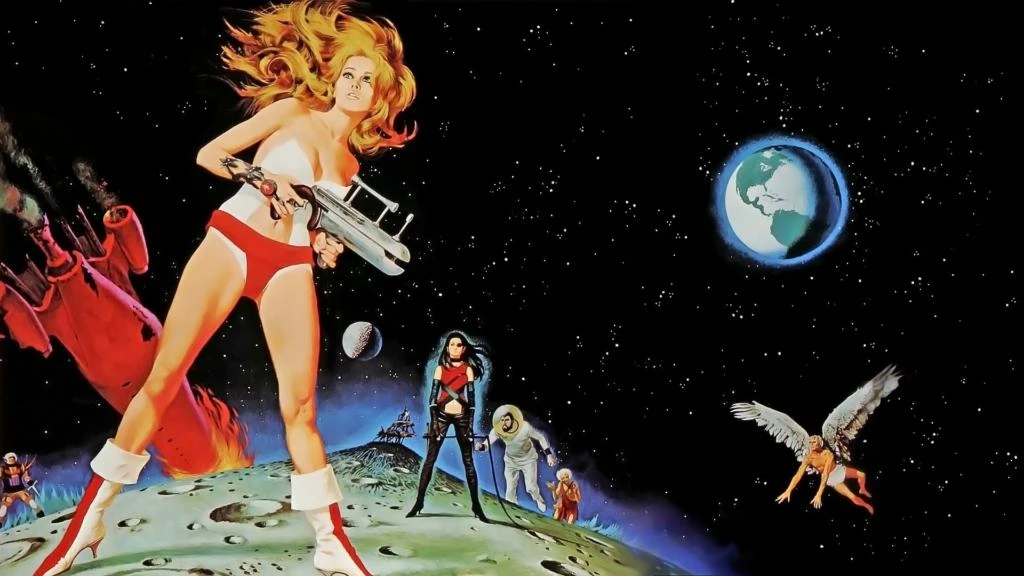
"Barbarella" (1968) was one of the first films to be released without the Code. A new era dawned instantly.
Surprisingly, many soon developed a nostalgia for censorship. It became clear that, along with the Code, cinema had lost its charming understatement. Shadows, fleeting glances, and measured dialogue were a thing of the past. The restrictions forced us to think more inventively—and often the results were better than if everything could have been shown directly.
Do you think the disappearance of moral boundaries has benefited cinema, or does Hollywood sometimes lack that same restraint and ability to tell stories of passion without excessive naturalism? Let us know in the comments.