The Venus Project: How inventor and futurist Jacque Fresco planned to save the world (10 photos)
The economic crisis has been felt by almost everyone, and it's clear that we still have many more to experience before it's over. Is it possible to avoid similar global catastrophes, or at least reduce their negative impact on people? We'll discuss the solution proposed by the eminent Italian futurologist, architect, and inventor Jacques Fresco. 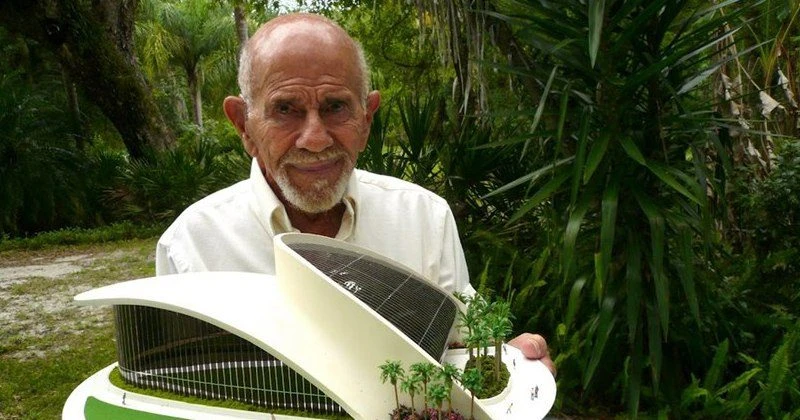
Jacques Fresco was born in 1916 in Brooklyn, New York. As a young man, he witnessed firsthand the suffering of Americans during the Great Depression of the 1930s. Even as a young man, Jacques couldn't understand why factories and plants were operating and stores were well-stocked, yet people couldn't buy anything, not even food, let alone clothing. 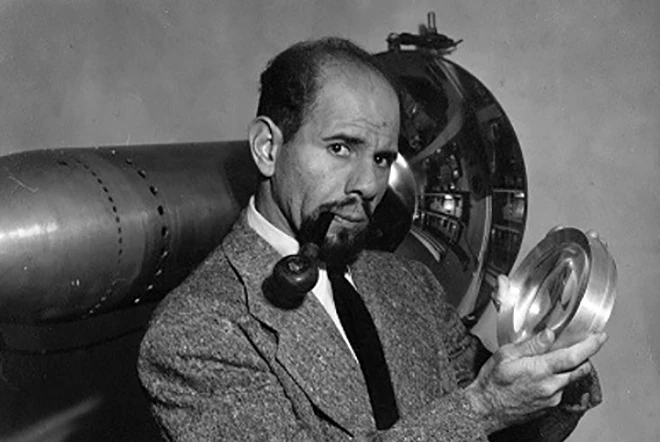
The answer was simple: during the crisis, people didn't have the money to take advantage of the benefits that surrounded them. This paradoxical situation forced young Fresco to ponder how it arose and how it could be avoided.
"Throughout my life, the primary motivation that has driven me to do what I do has been the contemplation of endless wars, crises, needless human suffering, poverty, corruption, and the government's complete indifference to people's problems." "My greatest motivations have always been, and remain, the incompetence of governments and the almost complete lack of proposals from the scientific community."
This is what Jacques Fresco later said, answering journalists' questions about why he decided to create an effective model for the society of the future. 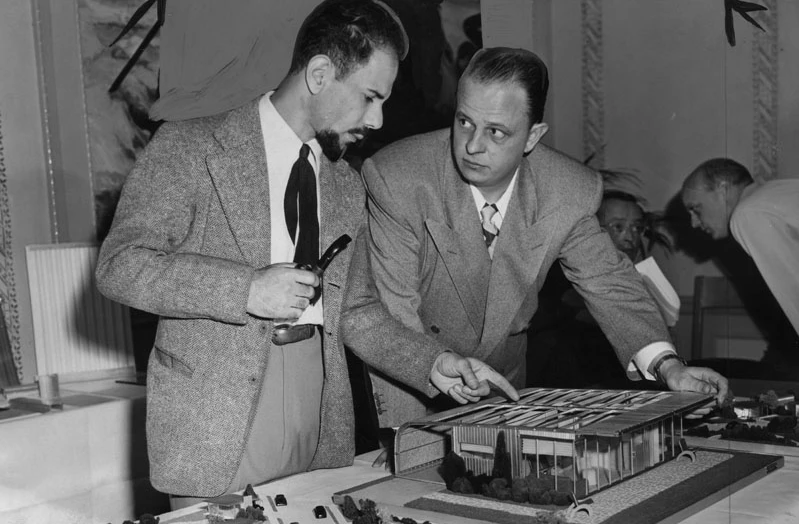
But before taking on his life's work, Fresco distinguished himself in many areas of human endeavor. Initially, Jacques's inquisitive mind was captivated by aviation, and he immersed himself in aircraft design. Then he discovered modern architecture and design. Later, he became interested in psychology, specifically in behavioral characteristics and the influence of attitudes on people's consciousness.
His accumulated experience demanded application, and Fresco founded the Sociocybernetics Corporation, the first milestone on the path to his ambitious Venus Project, which we want to tell you about.
In the 1970s, Fresco met Roxanne Meadows, an American design engineer who became his right-hand woman on the main project. After extensive collaboration, the partners presented the world with a program for an alternative future, one where inequality, poverty, and military conflict no longer threaten humanity.
The Fundamental Principles of the Venus Project
Jacques Fresco argued that the modern world has sufficient resources to solve any problem facing humanity. If used wisely, they could build housing, schools, and hospitals anywhere on the planet, improving people's lives. 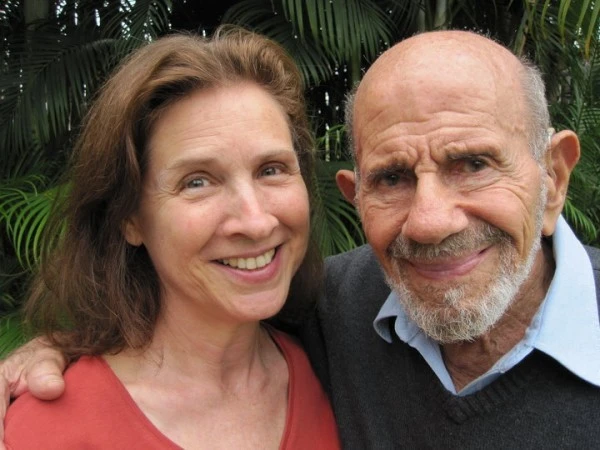
Jacque Fresco and Roxanne Meadows
At the same time, if we pooled all the money in circulation today, it wouldn't be enough to build hospitals, residential buildings, schools, and universities. But we have plenty of buildings for medical and educational institutions, as well as the specialists who can work in them. It turns out that our abilities and dreams are limited by money.
By eliminating the inefficient monetary system and political power structure, we can build a completely new society. It will be possible to use the best scientific and technological advances and available human resources to improve the lives of Earthlings while restoring the environment damaged by centuries of human activity.
This was the main idea behind the Venus Project, developed by Jacque Fresco. The fundamental principle of such a future society is a resource-based economy, which implies a fair distribution of wealth among people in the absence of a monetary system. 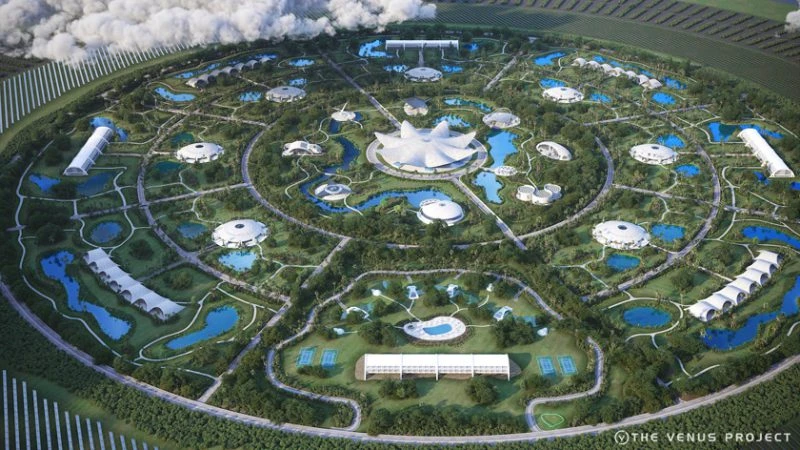
The new society will be freed from the main ills that have plagued humanity for millennia—social inequality, poverty, war, and crime. If every person on the planet has basic amenities—comfortable housing, high-quality food, and water—and can also take advantage of technological advances, then the struggle for resource control will be pointless.
But even in this case, there must be institutions responsible for the equitable distribution of goods and resources. This is where the source of evil and the temptation to abuse power lies. Jacques Fresco proposed solving this problem with cybernetic systems that could perform calculations without human intervention and eliminate imbalances and injustice.
"Eventually, we will have a computerized government, and that means the end of corruption, because machines have no ambition."
The use of computers would allow us to move away from the outdated model of political decision-making, which inevitably entails the desire for power and superiority. Addressing the concerns of many scientists who predict a global takeover by machines, Fresco argued that this was impossible in his model of society, since computer systems only perform tasks assigned by humans. 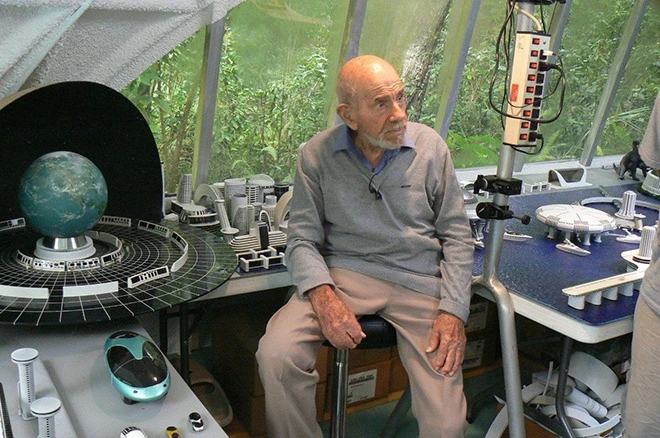
The Venus Project Cities
Fresco planned to place cybernetic centers in the ecologically clean and maximally comfortable cities of the Venus Project, which would manage industry, transportation, healthcare, and education, as well as the distribution of goods and services.
Fresco believed that a complete withdrawal from politics was the most important condition for building the society of the future. Since politicians are rarely experts in alternative energy sources or ecology, they are of no use. On the contrary, they hinder the development of civilization by defending the interests of the rich, who are perfectly satisfied with the current state of affairs. 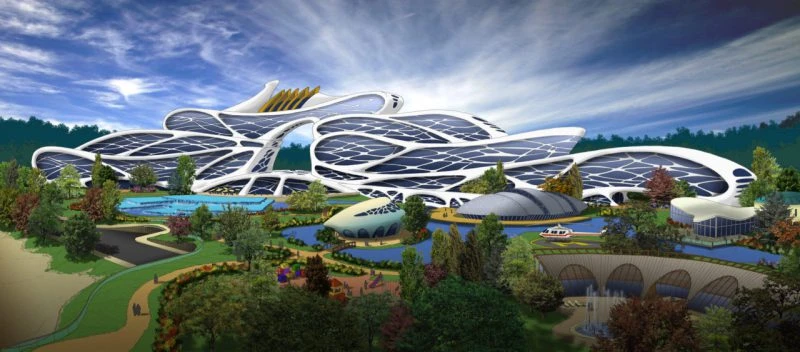
The futurologist argued that the goal of a good government should not be to represent the interests of certain narrow circles, but to distribute resources efficiently and fairly and to find new sources. Such a system should be based on unbiased scientific calculations, thereby eliminating imbalances.
All cities in the world will be connected into a single network, allowing for rational resource management and environmental conservation. Initially, the systems' operation will be monitored by specialists, but later, once the system is fine-tuned and operating at full capacity, their monitoring will no longer be necessary.
The Venus Project also included an architectural component, overseen by Roxanne Meadows. The cities of the future were to be circular in shape, and this wasn't a whim on the part of the project's creators. Fresco argued that such cities were easiest to build—one segment is created, and then others are added to it, like slices of cake. 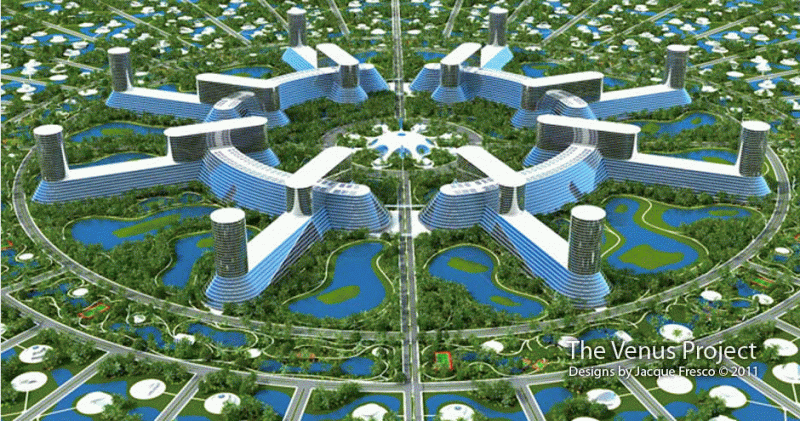
The cities would be powered by wind turbines and solar panels located on the roofs. Waste processing plants were planned to be located beneath the cities, so the city would not pollute the environment through the recycling of resources.
But what would people do in such a city, where everything is streamlined and automated? Jacques Fresco believed that under these favorable conditions, everyone could pursue their passions and advance civilization. People could invent new equipment, engage in science and art, and improve themselves spiritually and physically.
Every city should have sports fields, swimming pools, golf courses, and science and creativity centers where everyone could obtain the materials and tools they need for scientific work, invention, and artistic expression. 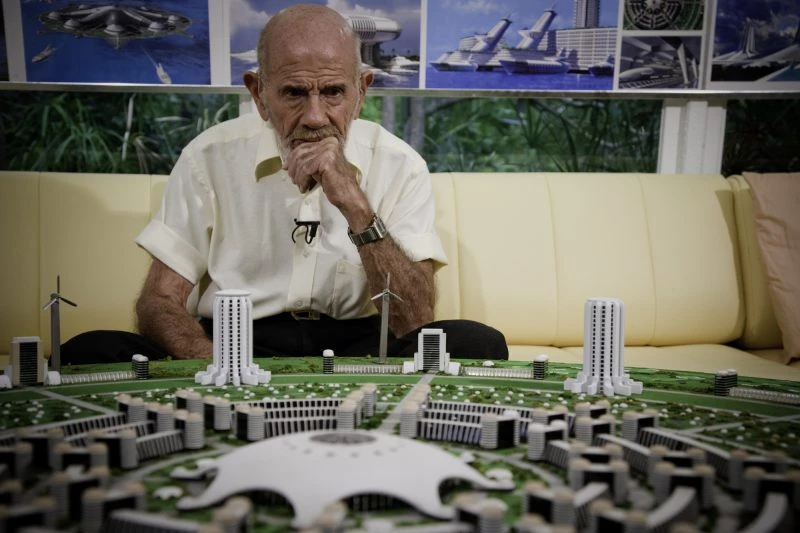
For most of us, the Venus Project, while incredibly enticing, is impractical. Fresco's ideas are often perceived as science fiction, divorced from modern realities. The creator of the future world project himself denied that his Venus Project was utopian. Fresco believed that the implementation of his plans would demonstrate whether intelligent life truly exists on our planet or whether we're simply convincing ourselves of it.
He argued that creating a new social order would require considerable effort, both voluntary and completely selfless. The futurist also clarified that humanity's future doesn't depend solely on projects like Venus—he merely pointed to the direction in which to move.
Is anything being done in the modern world to realize Jacques Fresco's bold project? Although the scientist himself died in 2017, his legacy lives on. The first steps toward implementing the project have already been taken—an 8.5-hectare research center has been built in Florida. 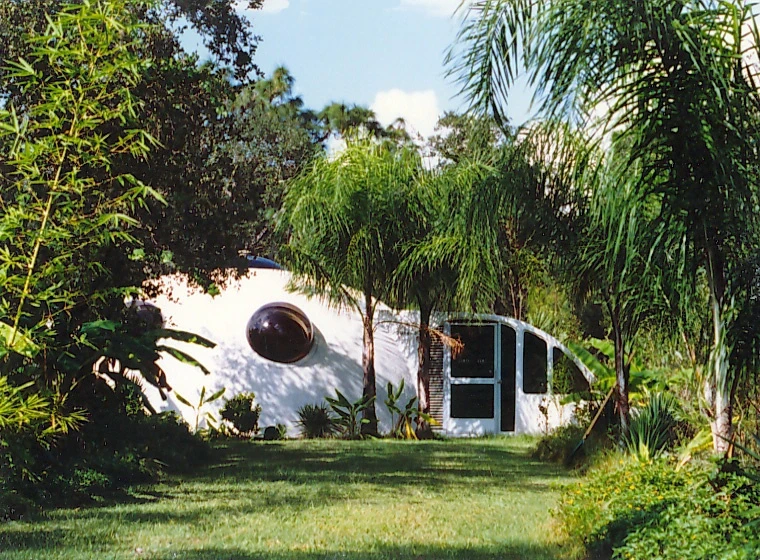
At the same time, informational work is underway: forums are held, lectures are given, and documentaries are being produced. The next stage will be the construction of an experimental city, which will clearly demonstrate to humanity that the Venus Project is not science fiction, but a truly functioning and completely viable system of the future.
Many interesting future city projects are being created around the world every year, but so far only Jacques Fresco has been able to propose a global solution capable of changing the entire world.