5 Reasons Why Working in an Office Is Evil And it's not about boredom and routine (6 photos)
You've probably noticed that by the middle of the workday, you feel tired, unmotivated, apathetic, and lazy at the office. And it's not even a busy schedule, a "jerk boss," or annoying coworkers that are to blame. It turns out, the cause of your poor health is your environment.
Huffpost journalists have compiled several scientific proofs that offices are evil, and we want to share them with you. 
Poor lighting
Not every office boasts natural light. In most of them, blinds are tightly closed on all windows, and employees are forced to work under fluorescent lamps at best, or using simple incandescent bulbs at worst. 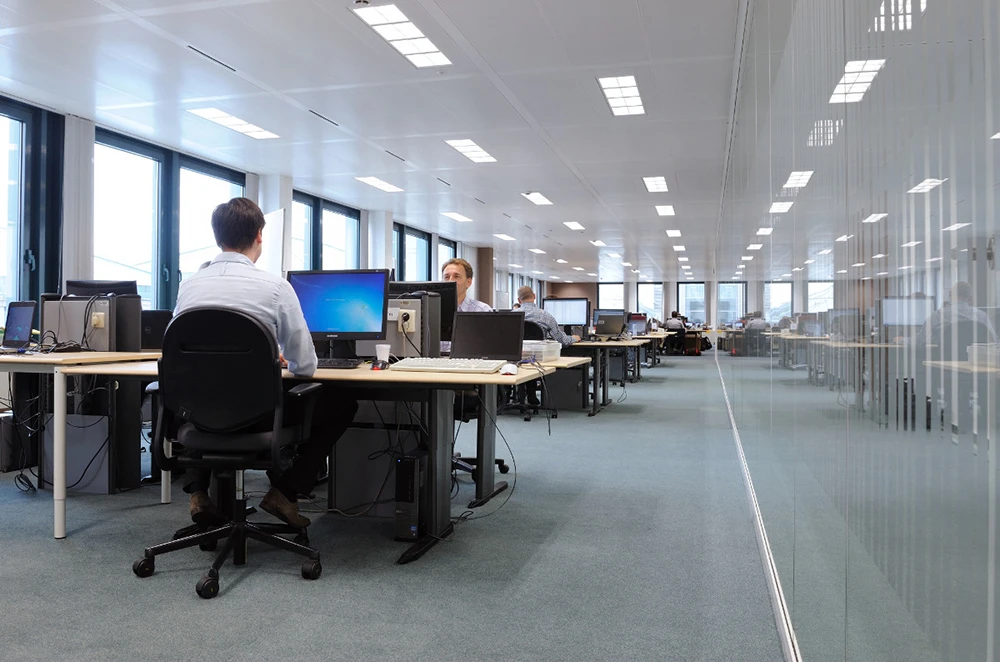
Future Workplace conducted a survey and found that most employees consider natural light one of the main advantages of offices. Without it, workers experience eye pain and severe fatigue throughout the day. This has been confirmed by scientific research.
Furthermore, according to experts, in offices with good natural light and panoramic views, employee productivity is 2% higher.
Lack of Fresh Air
The US Environmental Protection Agency surveyed Americans and found that they spend approximately 90% of their time indoors. A lack of oxygen causes a temporary decline in cognitive abilities, memory impairment, loss of concentration, and overall deterioration in health. 
Studies have shown that workers in offices equipped with better ventilation perform 26% better on cognitive tests. This is even after adjusting for education level and job category. The impact of fresh air on human productivity is undeniable.
Temperature Issues
For a person to feel comfortable and perform well at work, they need a comfortable temperature. The brain can't generate brilliant ideas when its only thought is, "Oh my god, it's so hot!" But it's also unlikely you'll be able to concentrate in the bitter cold... So what's the optimal temperature? 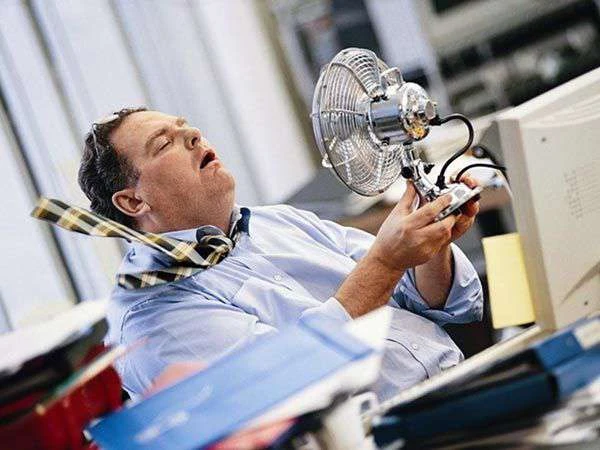
According to scientists from the University of Helsinki, the best performance is observed at a temperature of 22 degrees Celsius. Similar research by Cornell University researchers indicates a temperature of 25 degrees Celsius. It was in this environment that the experiment participants completed the tasks the fastest and made the fewest errors.
But in the fight for the air conditioner remote and the long-awaited coolness, remember that this "miracle machine" can be dangerous. Read our other article to learn about air conditioning-related illnesses and how to avoid them.
Absence of Plants
Cacti were previously thought to have a unique ability: they can absorb "harmful radiation" from computer monitors. While this has proven to be a myth, scientists claim that cacti, like other houseplants, can actually help with work. 
Greenery within a person's line of sight helps them focus better and "recharge" their attention. When plants are absent from a room, employees, on the contrary, become distracted and generally exhibit decreased productivity. This has been confirmed by several studies by scientists from different countries.
Unpleasant Coworkers
In 2016, Harvard Business School researchers studied the behavior of two thousand employees at an American company and discovered that bad moods can spread from one person to another, literally through the air. If someone sat next to an angry, upset, or gloomy colleague, after a while they themselves began to experience these "symptoms." 
But there's good news. Positivity can also be contagious. The study found that employees who sat near highly productive people also began to perform better. When surrounded by pleasant colleagues, their performance improved by approximately 15%.