Tongue in the Chest, Stomach Crusher: How a Pangolin Eats Without Teeth (3 photos)
Today's story is about how nature solves the impossible. The pangolin has no teeth, but it does have a tongue almost as long as its body, hidden inside its chest. 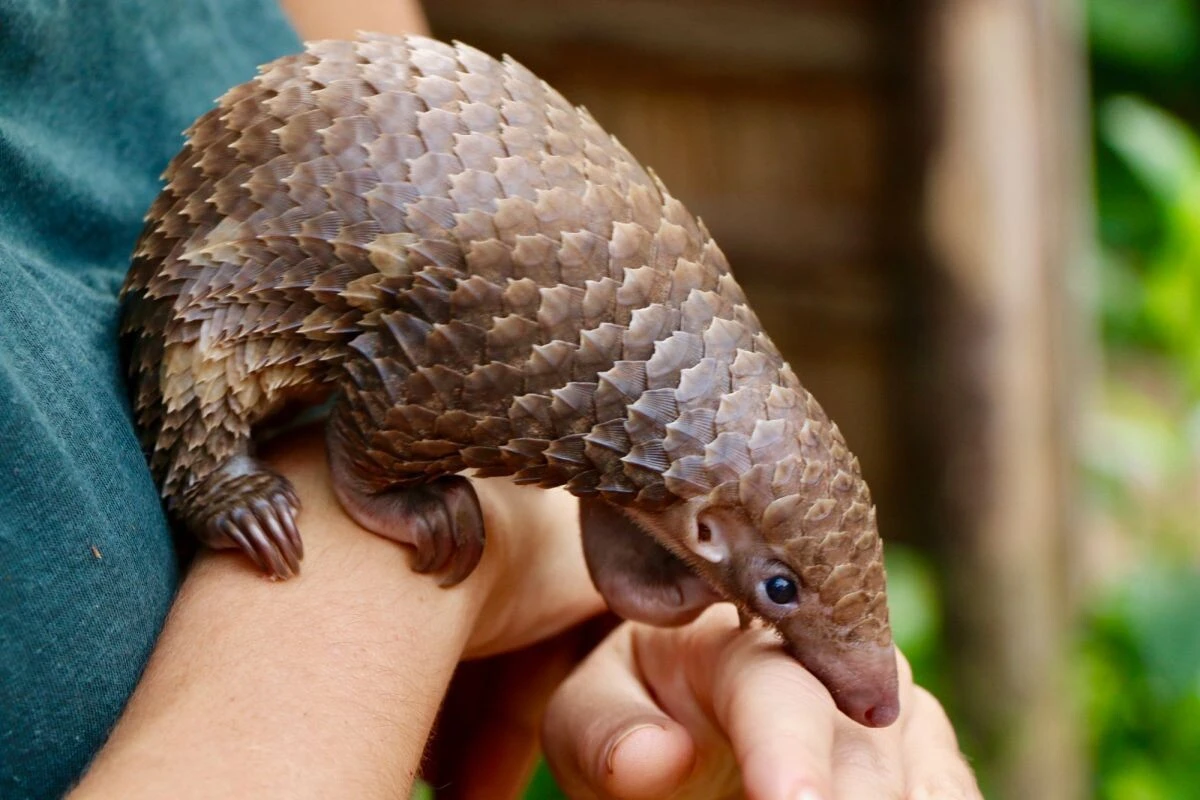
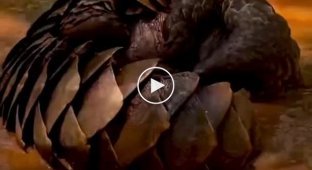
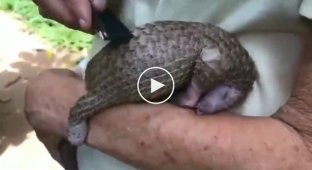
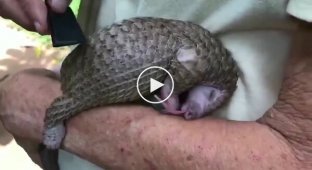
If a pangolin were the size of a human, its tongue would reach five feet. Up to its waist. But the important thing isn't the length. Imagine your tongue not ending in your mouth, but extending inside, through your entire rib cage, and coiling above your diaphragm like a fire hose. That's how the most armored anteater on the planet is built. The pangolin looks like it was assembled from parts from various animals. The body is covered in keratin scales, giving the animal the appearance of a pine cone. Its paws are powerful, with curved claws, and its tail is long and prehensile. But it has no teeth at all. Not a single one. You wonder: how does it eat? That's where its tongue comes in!
In larger species, such as the giant pangolins of Africa, the tongue extends 40 centimeters beyond the mouth. But its full length, including the inside, can exceed 70 centimeters, with a body length of about 60. It's thin, pinkish-gray, and covered in incredibly sticky saliva. Ants and termites stick to it instantly.
Okay, so it works the same way as a frog and all other anteaters. Not only that, but, as almost always, the anatomy is interesting! I love it. The pangolin's tongue isn't attached to the hyoid bone, like in most mammals. Its base is located in the... pelvic region. Yes, the pelvis. A muscular cord runs along the sternum, forming a loop that wraps around the internal organs and extends far back. 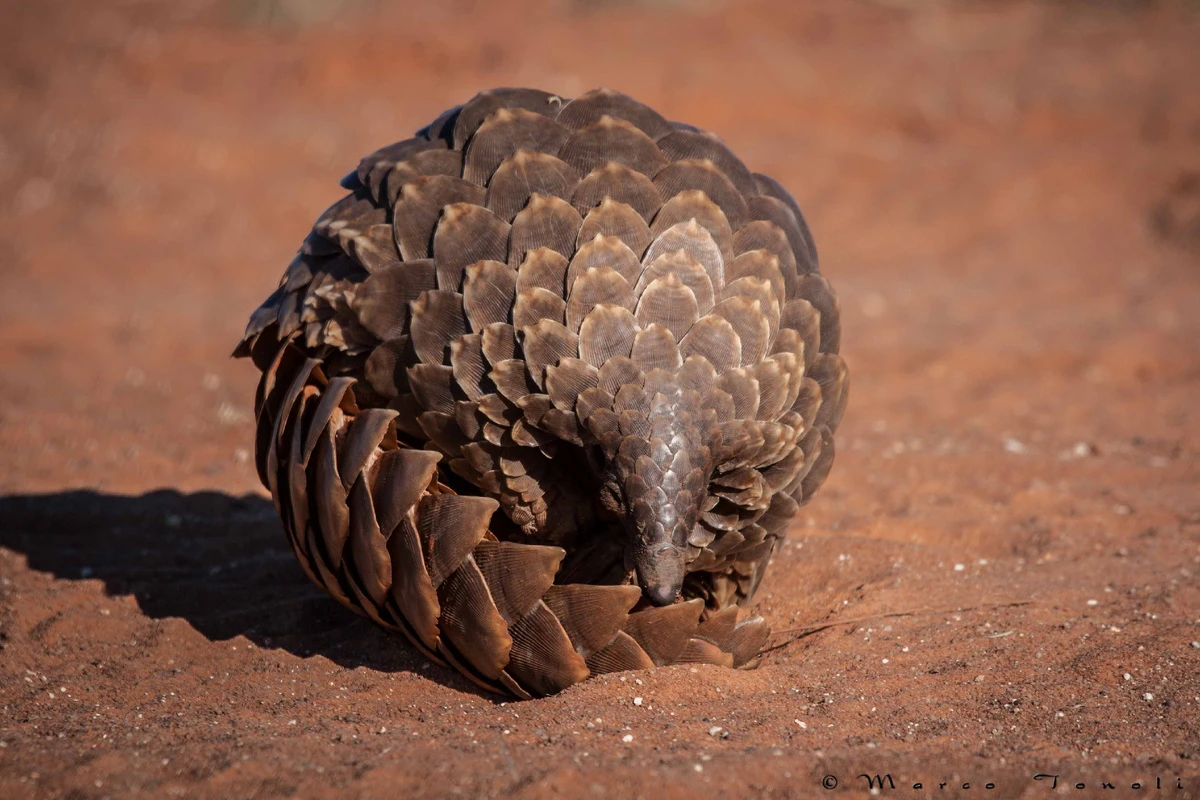
Why does this happen? Because a conventional attachment wouldn't allow for such a long and fast ejection. The pangolin shoots its tongue up to 30 times a minute, plunging it into termite mounds, collecting prey, and retracting it. In a single nightly foray, it can consume up to 200 grams of insects. That's up to 20,000 individual termites.
I tried to estimate: it makes about two thousand "throws" per night. The muscles of the tongue act like a piston, and the salivary glands, located right in the chest area, produce glue nonstop to capture food.
But here's what struck me most: the pangolin doesn't have stomach acids in the traditional sense. The food is ground mechanically: the stomach contains keratinized growths and small stones that the animal swallows deliberately. Essentially, its stomach works like a bird's crop. In this case, the anatomy serves one important purpose: to quickly and efficiently collect and digest tiny insects. 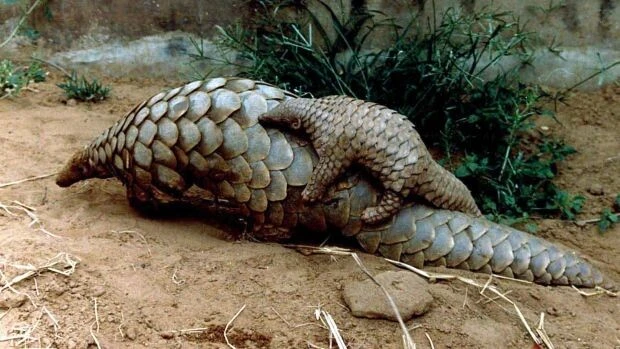
By the way, did you know that pangolins can close their ears and nostrils with special muscles? This is a defense against the bites of enraged soldier termites attempting to attack the intruder. So the entire organism is very well thought out. Seeing a pangolin in the wild is almost impossible. They are nocturnal, secretive, and rare. Even in Africa and Southeast Asia, where they still live, indigenous people can live their entire lives without ever encountering a live pangolin.
And yet, within this scaly sphere lies a unique anatomy. Nature has solved the problem of "how to feed on termites" so brilliantly that engineers are still studying pangolins to develop flexible robotic arms.