It would seem that the platypus (Ornithorhynchus anatinus)—an animal that already has a bill like a duck, a tail like a beaver, lays eggs like a reptile, and the males are armed with poisonous spurs on their hind legs—couldn't possibly have more surprises in store. But our hero surprised us again. 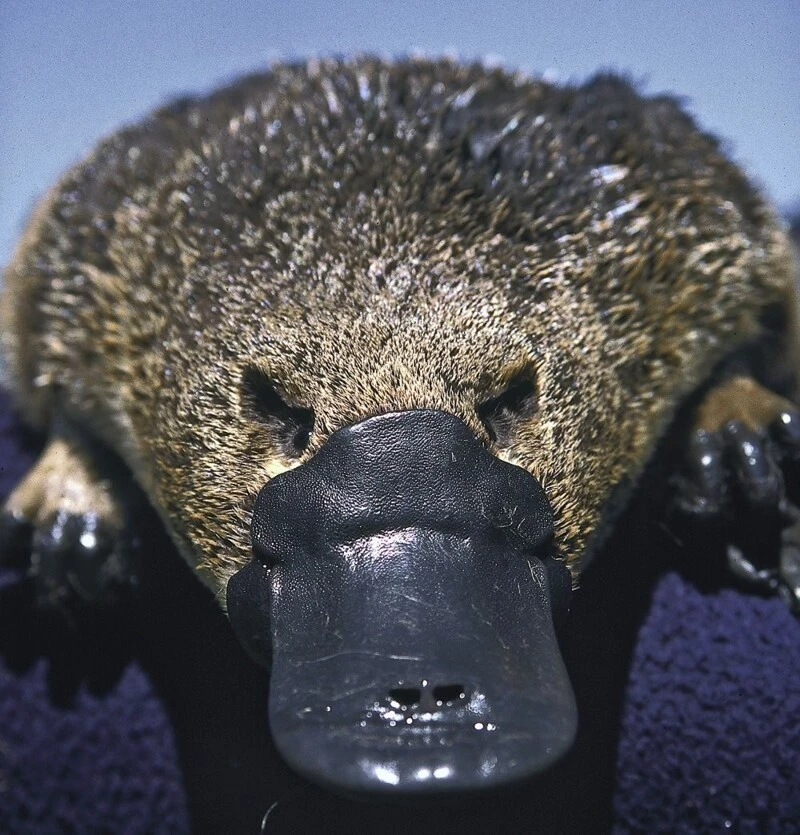
A new study published in the journal Biology Letters has shown that the list of its strange features is still incomplete. Scientists have discovered that hollow melanosomes—microscopic structures previously thought to be characteristic only of birds—are found in the platypus's fur. This is the first confirmed observation of such structures in mammals, and it opens up new questions about how coloration is formed and how the protective properties of fur function in animals.
The color of fur, skin, and feathers is determined by the pigment melanin. It is found in microscopic cellular structures called melanosomes. Their shape and structure influence not only the shade of the fur but also the physical properties of the animal's integument. In most mammals, melanosomes are dense and "solid." Elongated structures are typically associated with dark shades—black or brown—while rounded structures are more common with lighter or reddish tones. Birds are more complex: they have hollow melanosomes—structures with a thin shell and an empty interior. Such elements can reflect and scatter light, creating complex visual effects, including iridescent colors and the metallic sheen of feathers. Until recently, it was believed that mammals did not have such structures at all.
The discovery occurred during a comparative study of the microstructure of fur color in different animals. Scientists were creating a large database of mammalian melanosomes by studying hair samples under an electron microscope. When they examined platypus fur, they discovered that some of the melanosomes had an unusual structure—cavities were found within them. Initially, it was assumed that this could be an error or defect in sample preparation, so the observation was re-examined on several samples. However, the results were confirmed: hollow structures are indeed present and are part of the normal structure of platypus hair.
Interestingly, most melanosomes in the platypus are spherical, which is typically associated with reddish-orange hues. However, the platypus's fur appears dark brown. This means that the color of its fur is determined not only by the shape of the melanosomes, but also by their internal structure, density, and distribution within the hair. Thus, the structure of fur color appears more complex than previously thought. 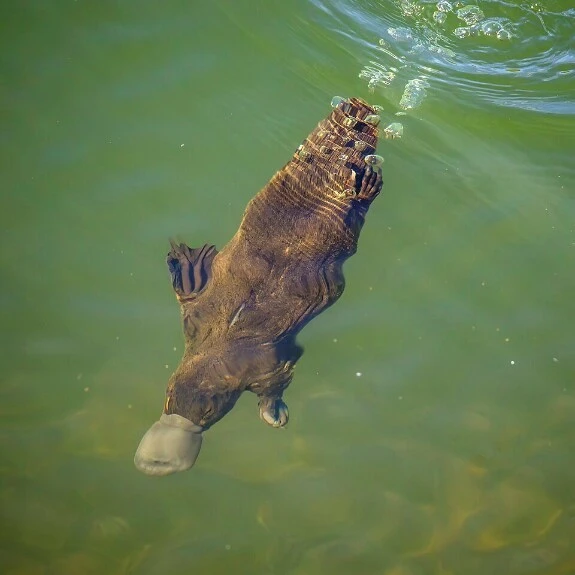
The very existence of hollow melanosomes in mammals challenges previous understanding of the differences between birds and mammals. Previously, it was thought that such structures were a distinctive feature of birds, while mammalian evolution took a different path. The new discovery shows that the boundaries between these mechanisms may be less clear-cut than previously thought. This is important not only for the study of modern animals but also for paleontology. Scientists often use the shape of melanosomes to reconstruct the coloration of extinct species, including dinosaurs. Now it is becoming clear that such reconstructions may require a more cautious approach, as structures previously thought unique to birds can also be found in mammals.
Scientists are also considering the possibility that hollow melanosomes serve not only an optical but also a physical function. One hypothesis relates to thermal insulation. Platypuses are semi-aquatic and regularly dive into cold water. Their fur must effectively retain heat and protect the body from hypothermia. Hollow structures could theoretically reduce the thermal conductivity of the hair and create additional microcavities filled with air, improving thermal insulation. A similar principle is widely used in nature: air is a poor conductor of heat, so materials with hollow spaces often retain heat better than denser ones.
However, this hypothesis remains speculative. If hollow melanosomes do indeed help retain heat, they would be expected to be found in other aquatic mammals, such as beavers or otters. Similar structures have not yet been found in them. This means that the function of hollow melanosomes in the platypus remains unclear and requires further research.
From an evolutionary perspective, the platypus occupies a unique position among mammals. It belongs to the group of monotremes—an ancient lineage of egg-laying mammals that diverged from other mammals very early. This is why the platypus combines characteristics typical of different animal groups. It lays eggs like reptiles, nurses its young like mammals, and has a unique sensory system—electroreceptors in its beak that allow it to detect prey underwater. Now, another feature can be added to this list—the unusual structure of the pigment structures in its fur. 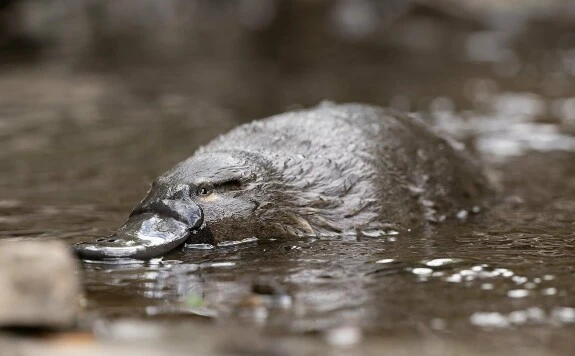
It remains unclear whether hollow melanosomes are an ancient feature retained in platypuses from the early stages of their evolution, or a relatively new adaptation that arose in response to environmental conditions. The answer to this question can only be obtained by studying the platypus's close relatives, primarily echidnas, as well as by more detailed studies of their fur structure and physical properties.
As often happens in science, this new discovery has raised several new questions. Why did hollow melanosomes appear in the platypus? How do they influence the properties of fur? Do they primarily serve an optical function or contribute to thermal insulation? Do similar structures exist in other rare or poorly studied mammals? Answering these questions will require further research, from microscopic analysis to experiments measuring the thermal conductivity of hair.
The platypus has long been a symbol of how unusual evolution can be. Every new detail of its structure demonstrates that even well-studied animals can conceal unexpected features. The discovery of hollow melanosomes is yet another example of how studying the smallest structures can change our understanding of how entire biological systems work and how life evolved on Earth.
Add your comment
You might be interested in:












Persistence in achieving a goal

A biker prevented a hit-and-run driver from escaping

Not everyone is having fun on the amusement ride

A book titled "A Guide to Rebuilding

Young women, Dancing and George Michael: nothing superfluous

An apology delivered with a running start

A steam locomotive for "big boys"

The cutest lunch delivery ever

Bollywood never ceases to amaze
