Why did almost all lighthouse keepers go crazy in the 19th century? (8 photos)
Paris, 1822. In the workshop of French physicist Augustin-Jean Fresnel, an invention was born that would change navigation forever: a lens with concentric rings capable of turning a dim flame into a beam visible from 30 kilometers away. 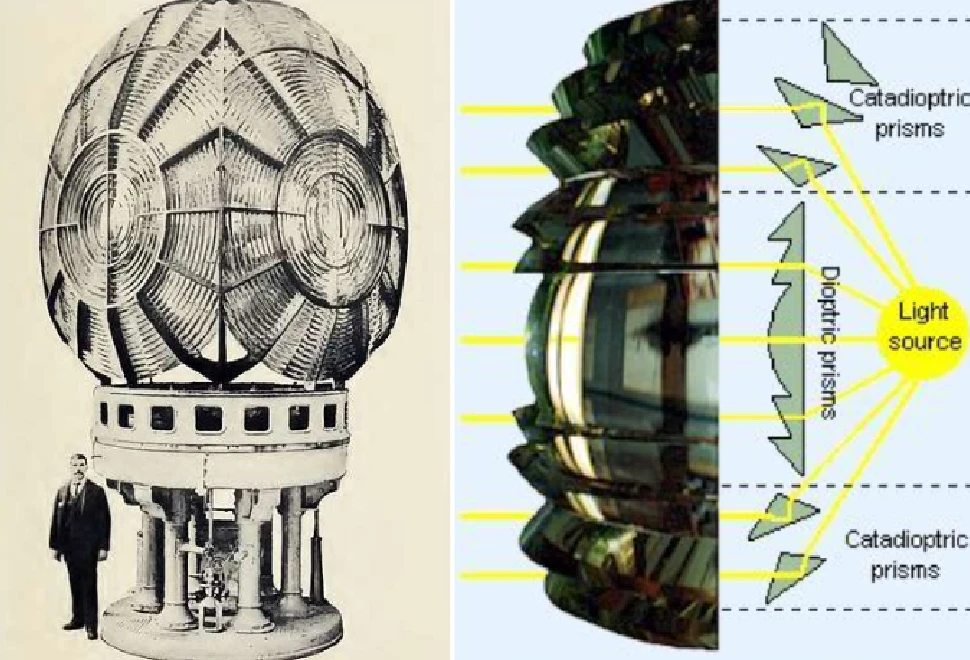
Before the Fresnel lens, lighthouses illuminated the sea with simple reflectors and candles. Ships could only see their light from a distance of several miles, which was often insufficient for safe passage over rocky shores or shallow waters.
The Fresnel lens worked by refracting light through a system of prisms. Each ring captured the scattered rays and directed them into a single parallel beam. The result exceeded all expectations—visibility increased tenfold.
By 1850, the new lenses were being installed in lighthouses around the world. The British Admiralty ordered 200 sets for its colonies. The American Coast Guard modernized every lighthouse from Maine to California. Mariners called this time the "light revolution."
Mechanics of perfection: accuracy down to the second
The Eddystone Lighthouse off the coast of Cornwall, 1845. The captain of the merchant ship Mary Celeste records the time between flashes—precisely 20 seconds. This is precisely the time indicated on navigational charts, and this is the precision ensured by the lighthouse mechanism. 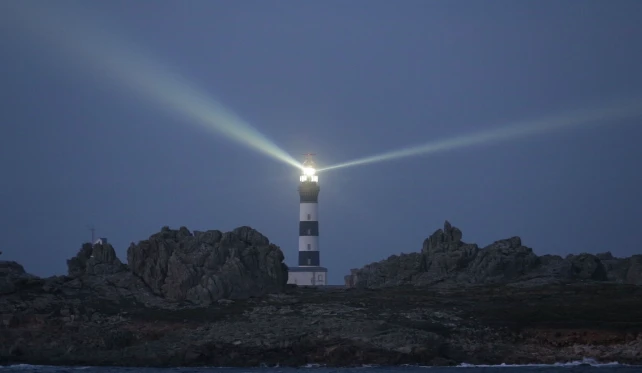
For navigation, simply increasing the brightness of the light wasn't enough. Each lighthouse had to have a unique characteristic—a flash rate that allowed sailors to determine their position. One lighthouse flashed every 10 seconds, another every 30, and a third flashed two short times at regular intervals.
The Fresnel lens weighed several tons, but it had to rotate smoothly and evenly. Conventional bearings would quickly wear out under such a load. Engineers found an elegant solution: placing the entire structure on a float.
A circular track filled with liquid was installed under the lens. The lens floated in this liquid like a ship in water, eliminating friction and ensuring perfectly smooth rotation. A clockwork mechanism with weights slowly rotated the structure, creating periodic flashes accurate to fractions of a second. 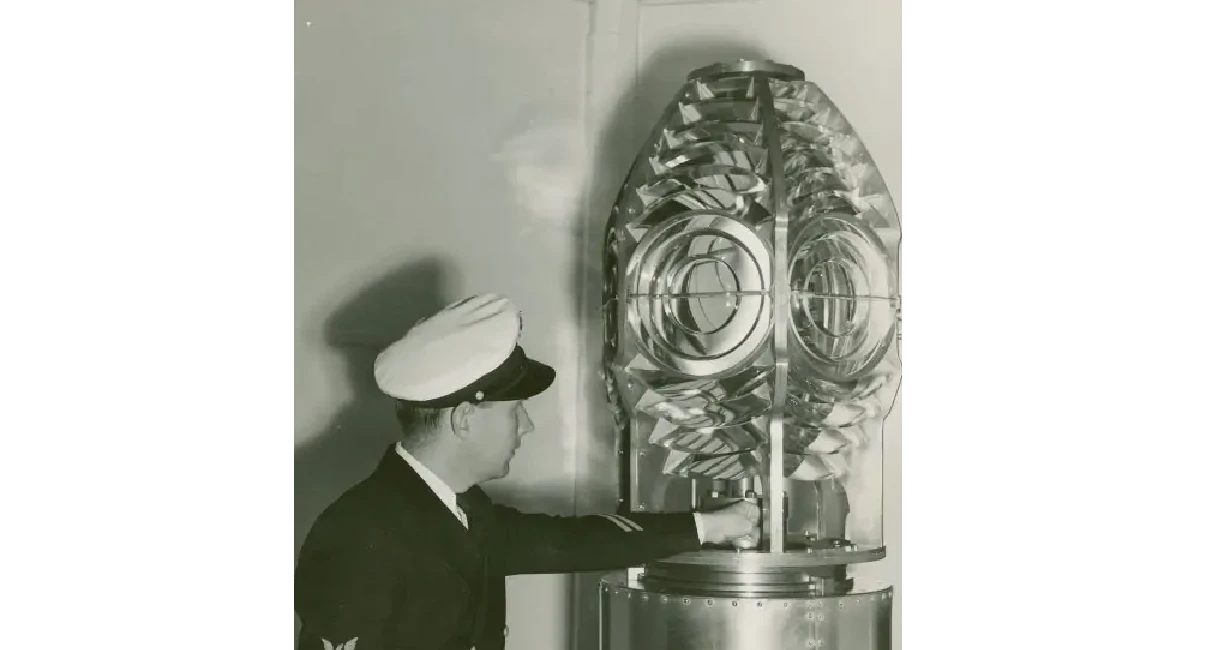
Life at the Edge of the World: The Everyday Life of the Keepers
Thomas Griffiths climbs the spiral staircase of Bishop Rock Lighthouse every evening at the same time. 147 steps to the lantern room, where a giant Fresnel lens awaits him. A storm rages outside—waves as tall as a five-story building crash against the cliff on which the lighthouse stands.
Thomas has been a keeper for eight years. His home is a room at the base of the lighthouse, his world limited to the stone tower and the endless sea. Once a month, a supply ship brings food and mail, weather permitting. Sometimes, storms rage for weeks, leaving Thomas completely alone.
Every day begins with a check of the mechanism. The clockwork drive must be wound, the cables checked for tension, and the lens rotates evenly. In the evening, the light must be lit and its operation monitored throughout the night. Any malfunction could cost the sailors their lives. 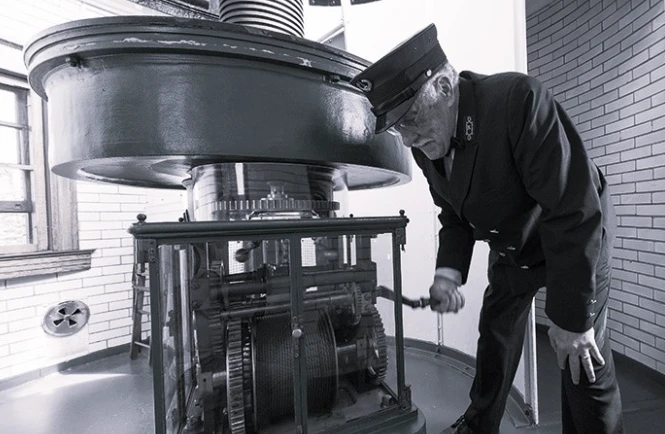
But the most difficult task is maintaining the float system. The fluid in the float system gradually becomes contaminated with dust, soot from the wicks, and small metal particles from the mechanism. Once a month, it must be drained, cleaned, and refilled.
The keepers handled this fluid with their bare hands, filtered it through a thin cloth, and inhaled its vapors in the confined space of the lantern room. Many noted a strange metallic taste in their mouths after this work, but attributed it to the sea air. 
The Madness of Edgar Allan Poe: Literature and Reality
Edgar Allan Poe's short story "The Lighthouse" remained unfinished—the writer died in 1849, having written only the first page. But even these few paragraphs convey the atmosphere of anxiety and growing madness that surrounded the lighthouse keepers.
Poe planned to write the story of a man gradually losing his mind in the isolation of a lighthouse. The writer was familiar with real-life cases—the story of a New England lighthouse keeper who was found dead in the lantern room in 1847, with a diary next to him containing incoherent notes about "voices in the light."
Similar incidents occurred regularly. In 1851, the keeper of the Fastnet Lighthouse off the coast of Ireland began claiming the lens was speaking to him. He was found dancing around the mechanism, muttering incomprehensible words. The keeper was taken to a hospital, where he lived for another ten years, but never regained consciousness.
Coast Guard archives contain records of "lighthouse madness"—the term used to describe the strange behavior of lighthouse keepers. The symptoms were similar: initially irritability and insomnia, then memory lapses, hallucinations, and uncontrollable hand tremors.
Doctors of the time attributed this to loneliness and stress. But the statistics were too telling—mental disorders were 20 times more common among lighthouse keepers than among sailors or fishermen, who also worked in isolation. 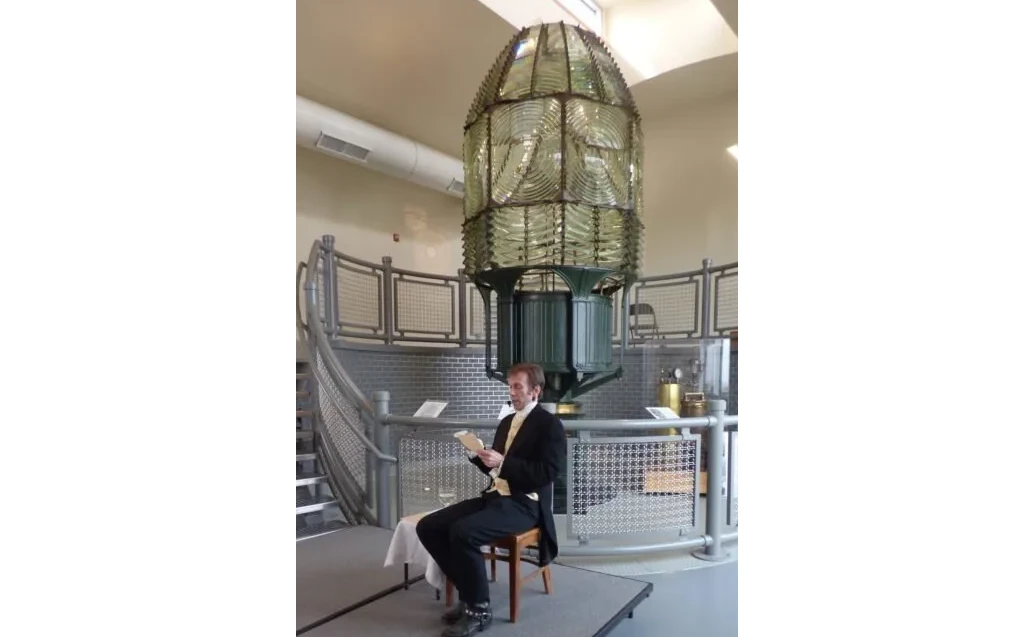
Hatters and Alchemists: Other Victims of Progress
London's Southwark district, 1840s. A sweet smell permeates the hatmakers' workshops, and the hatters themselves exhibit strange behavior—shaky hands, sudden mood swings, and incoherent speech. Locals call them "mad hatters."
The secret of their madness lies in the technology used to make felt. To make animal fur soft, they treated it with a solution of mercury nitrate. Hatters spent hours working with this substance, inhaling its vapors, and getting it on their skin. Gradually, mercury accumulated in their bodies, damaging their nervous systems.
Lewis Carroll, when creating the character of the Mad Hatter in Alice in Wonderland, drew on real-life observations. In Victorian England, the expression "mad as a hatter" was widely known and reflected the sad reality of occupational illness.
A similar fate befell alchemists and apothecaries, who used mercury to prepare medicines. Isaac Newton, a keen alchemist, showed signs of mercury poisoning in the last years of his life—memory lapses, paranoia, and depression. A 20th-century analysis of his hair revealed mercury levels 40 times higher than normal.
Uncovering the Truth: Toxic Lighthouse Technology
It wasn't until the 1950s that doctors established a link between the work of lighthouse keepers and their mental disorders. Dr. Alfred Stock of the Max Planck Institute for Chemistry was the first to study the effects of mercury vapor on the human body.
Mercury in lighthouse floats constantly evaporated, especially when heated by burning wicks. In the confined space of the lantern room, the vapor concentration reached dangerous levels. Keepers inhaled this poison for months and years. 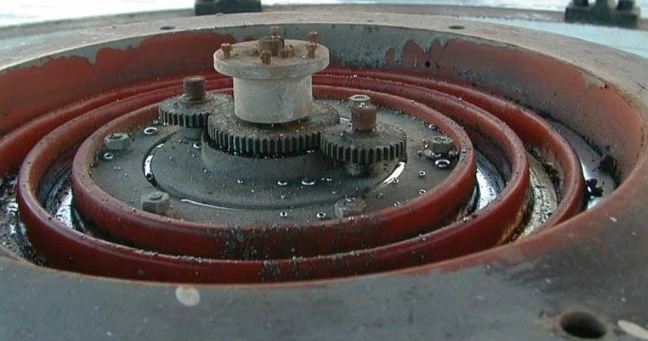
Chronic mercury poisoning gradually affects the central nervous system. Initially, increased fatigue and irritability appear—symptoms easily attributed to difficult working conditions. Memory lapses, hand tremors, and sleep disturbances then begin.
In later stages, hallucinations, paranoia, uncontrollable bouts of anger, or euphoria develop. Many keepers, considered "insane from loneliness," were actually victims of slow poisoning.
Thomas Griffiths, keeper of the Bishop Rock lighthouse, died in 1863 at the age of 45. His diary, found after his death, contains the entry: "My hands tremble so much I can hardly write. My head is spinning, and my ears are ringing. I must be working alone too long." He didn't realize that it wasn't loneliness, but progress, that was killing him.
The End of an Era: Automation and Oblivion
By the 1920s, most lighthouses had switched to electric lighting. Fresnel lenses remained, but mercury float systems began to be replaced by ball bearings and electric motors. The era of the "mad keepers" ended as suddenly as it had begun.
The last lighthouse with a mercury float system in the US was modernized in 1960. By that time, medicine had already understood the dangers of mercury, but few connected it with the tragedies of the previous century. 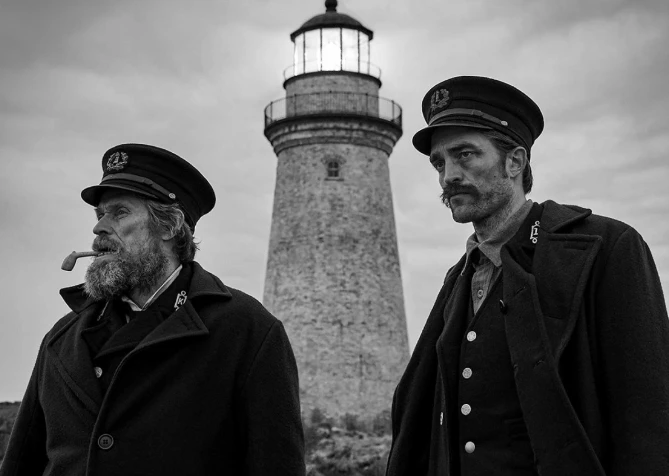
Today, most lighthouses are fully automated. LED lights are controlled by computers, and GPS has replaced light signals for navigation. The profession of lighthouse keeper has virtually disappeared.
Maritime museums still display Fresnel lenses—majestic crystal structures that once saved ships from wrecks. Visitors admire their beauty, unaware of the price paid by the people who maintained these mechanisms.