Revenge for Whale Hunting: How and Why Do Whales Sometimes Attack Ships? (9 photos)
Many people know of the novel Moby Dick, in which a ship's captain, obsessed with catching a giant albino sperm whale, leads his crew and ship to destruction. And in this work, one can easily read the theme of how obsession ruins the lives of the person themselves and those around them. But there's also a much more prosaic message: if you mess with a sperm whale, it will destroy your ship. 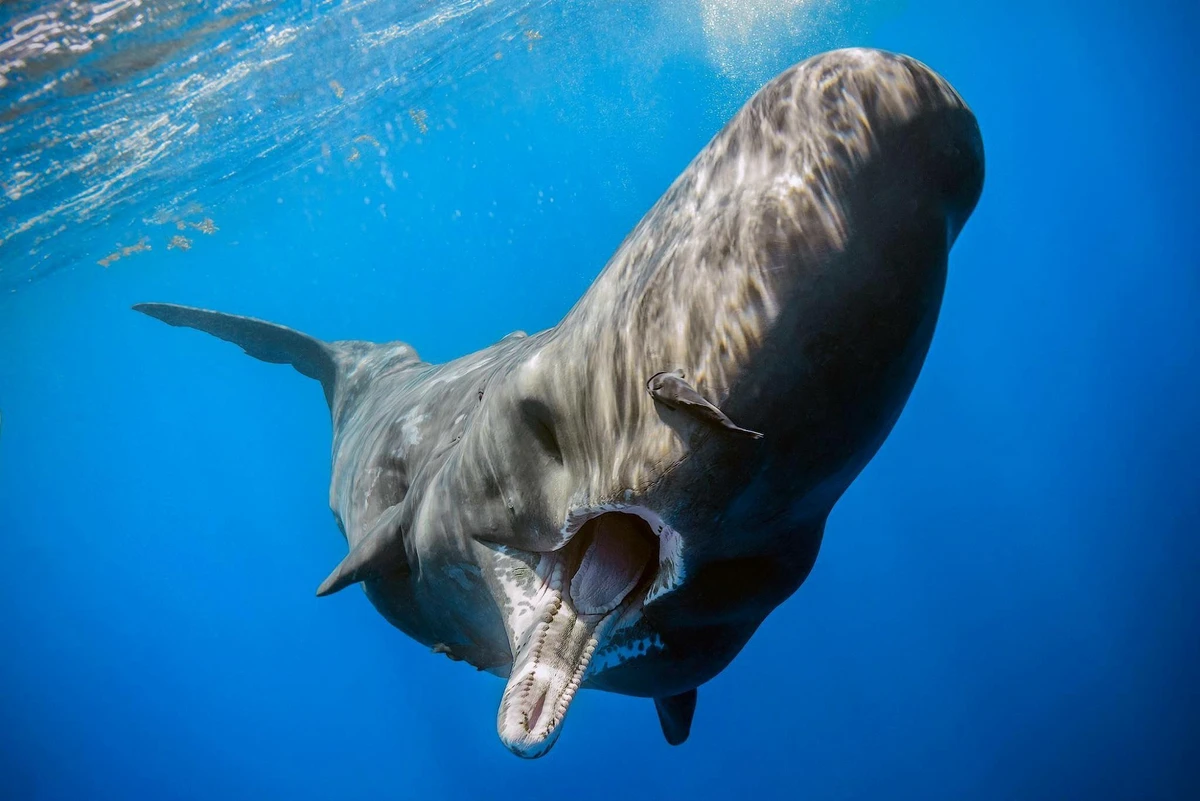
Imagine: you're diving into the ocean, and this is rushing towards you... 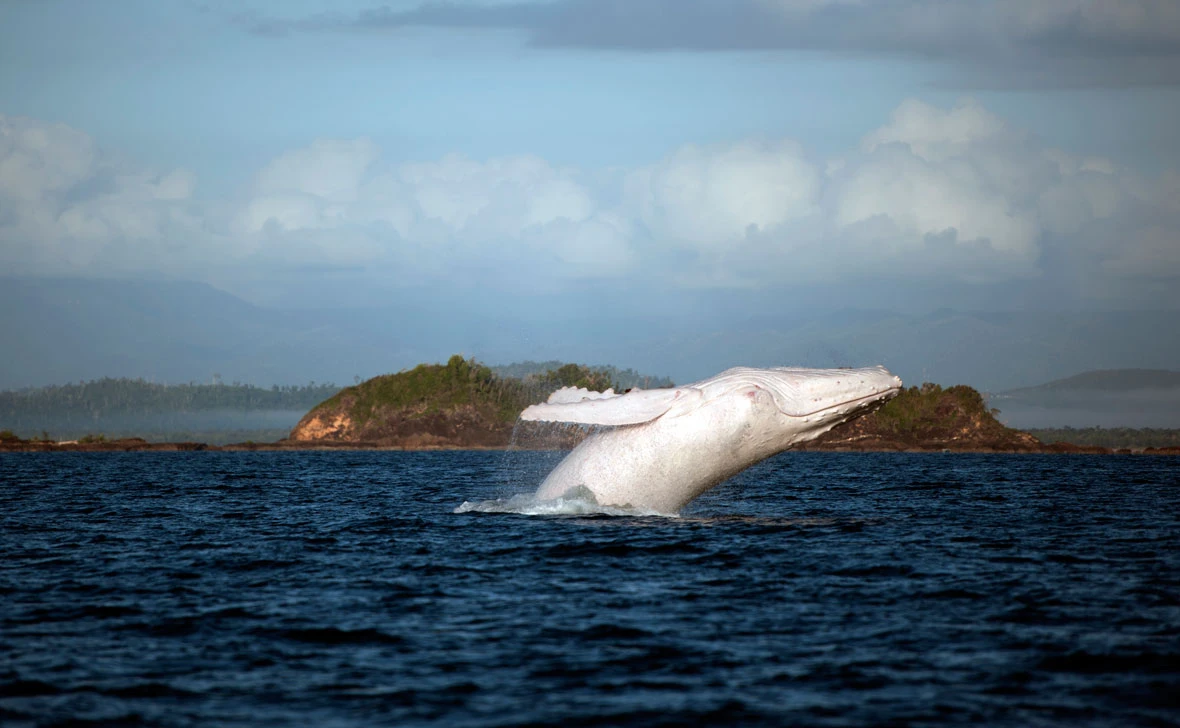
Researchers have indeed recorded albino sperm whales several times, but there are no photographs. However, there is an albino humpback whale.
In 1820, 30 years before the publication of Moby-Dick, chilling news spread around the world: the whaling ship Essex had been destroyed by a sperm whale. The enormous beast rammed the 27-meter-long ship, breached its hull, and dived into the deep, evading harpoon attacks. The ship quickly sank, and the surviving crew found themselves in boats 2,000 kilometers from the nearest known land. Of the entire crew, only eight survived to reach civilization. It was this story that inspired Herman Melville to write Moby-Dick. 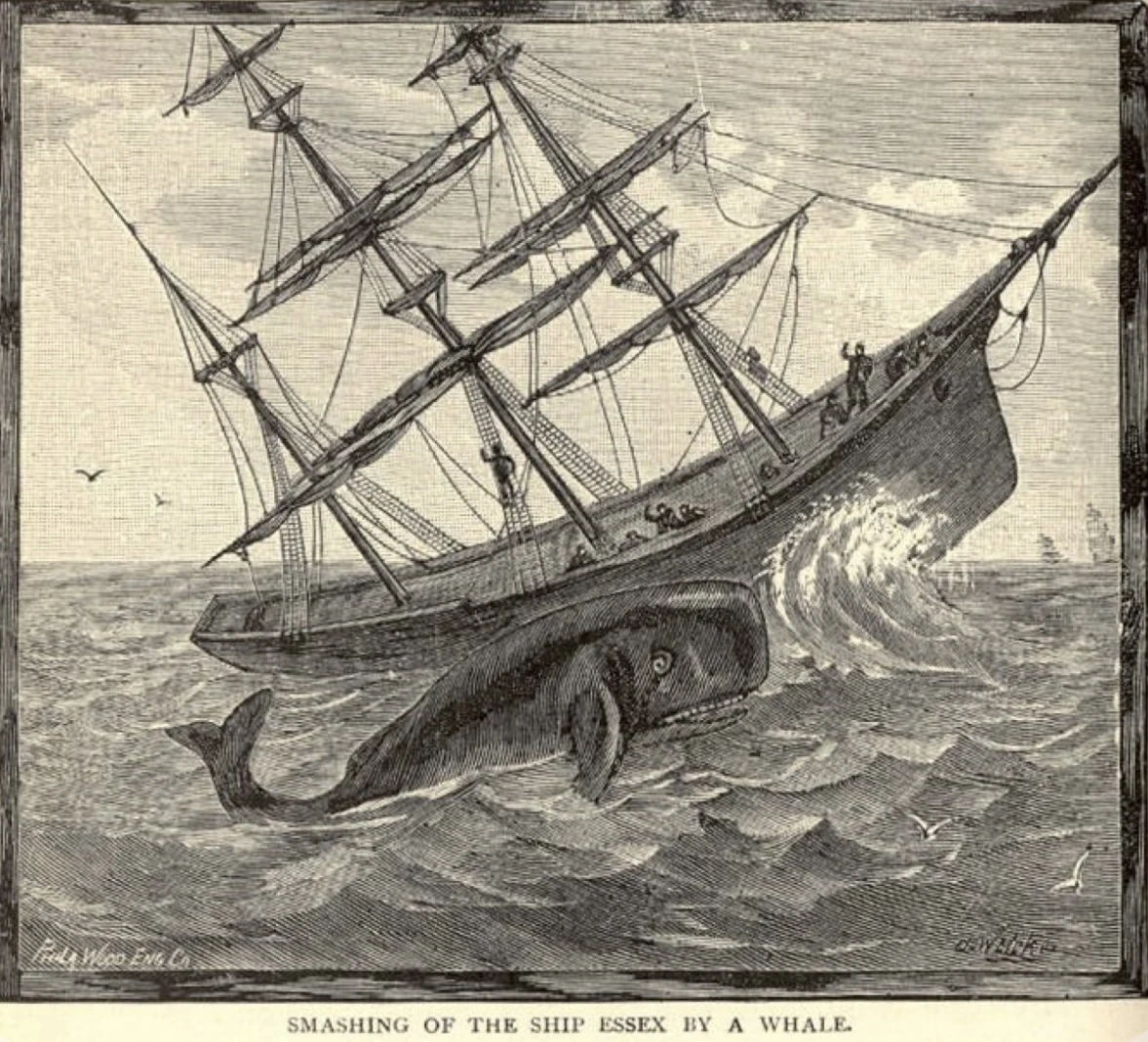
A painting inspired by the news of the Essex's sinking. 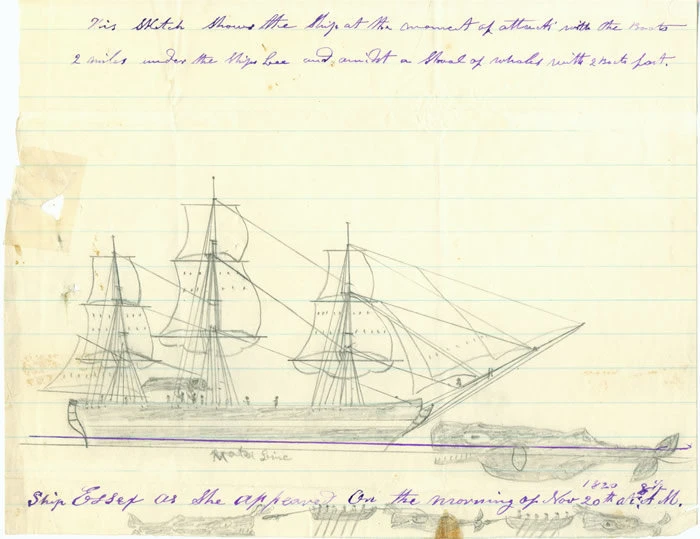
This much simpler, more schematic drawing has no artistic merit, but it is far more accurate: a sperm whale attacked the ship right in the bow. It was also drawn by Thomas Nickerson, a cabin boy who served on the Essex.
But this wasn't the only incident. In 1840, a sperm whale attacked the brig Desmond, resulting in the deaths of two sailors. A year later, an enraged and wounded whale smashed the John Dy into pieces and prowled around the wreckage, searching for people. And each attack followed the same pattern: a quick charge and a powerful headbutt, piercing the wooden ship's hull as easily as if it were made of paper. 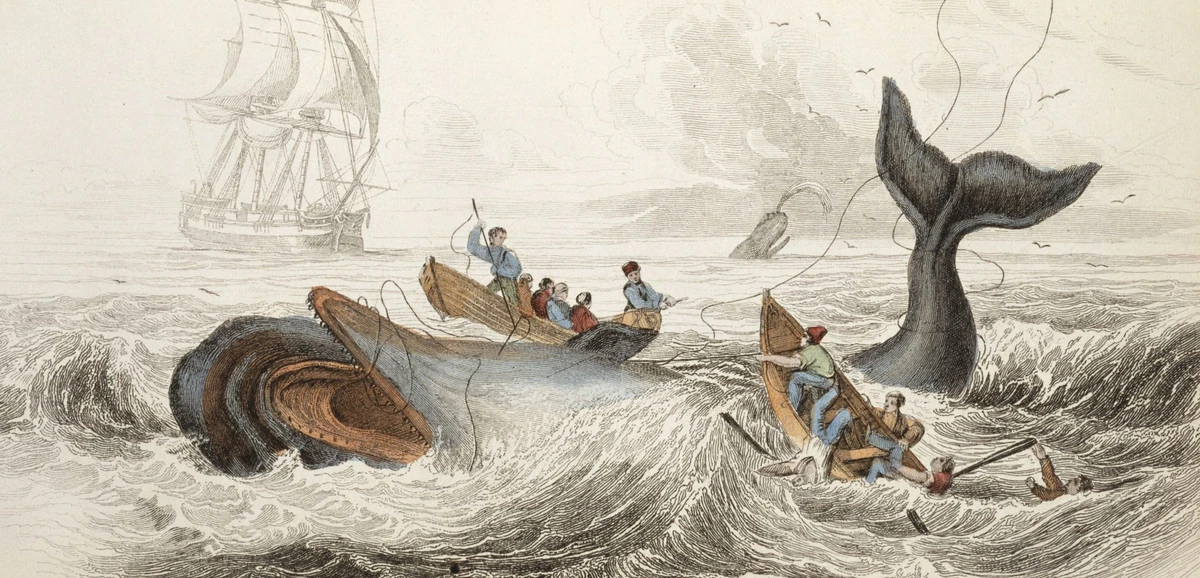
Whaling in those days was an incredibly dangerous business.
For a long time, scientists believed this behavior was an act of desperation, an attempt to escape whalers in a suicidal attack. But in 2016, an international team of researchers discovered something interesting: it turns out that the enormous fatty lens on the whale's forehead not only amplifies its voice and echolocation abilities, but also acts as a shock absorber for its violent head, which is what destroys ships. These several cubic meters of fat can absorb up to 45% of the impact energy, and the rest is not enough to cause even a slight concussion. Therefore, these enormous mammals easily rammed ships without sustaining any injuries. 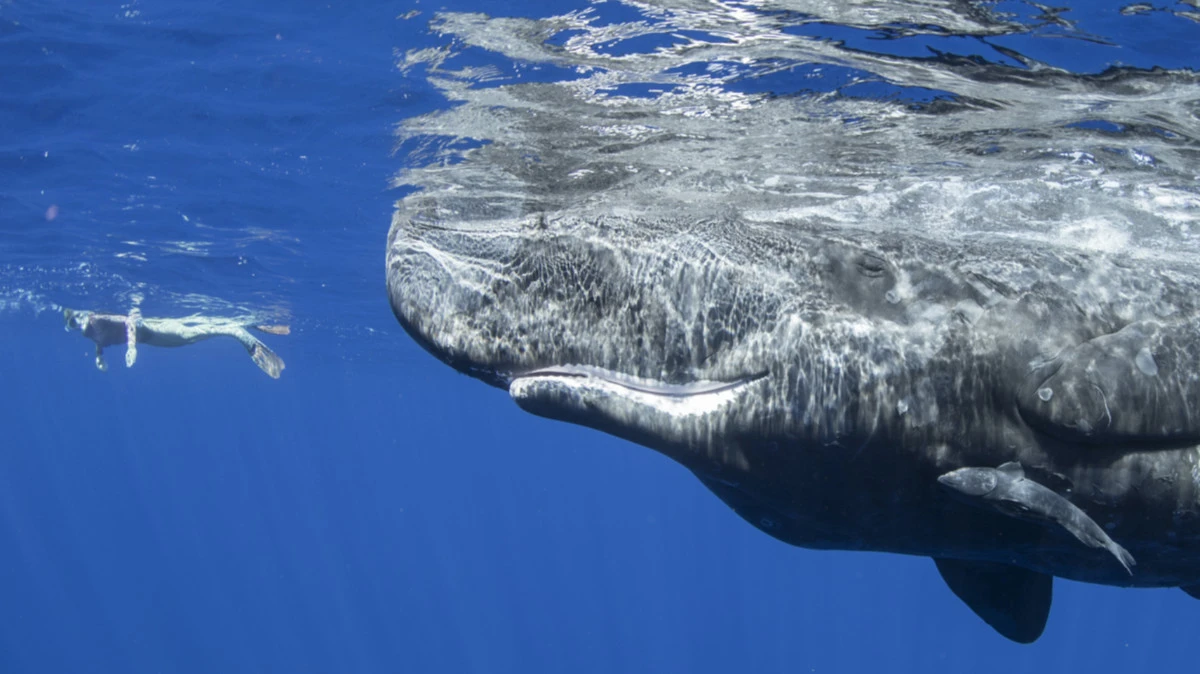
It's behind me, right? 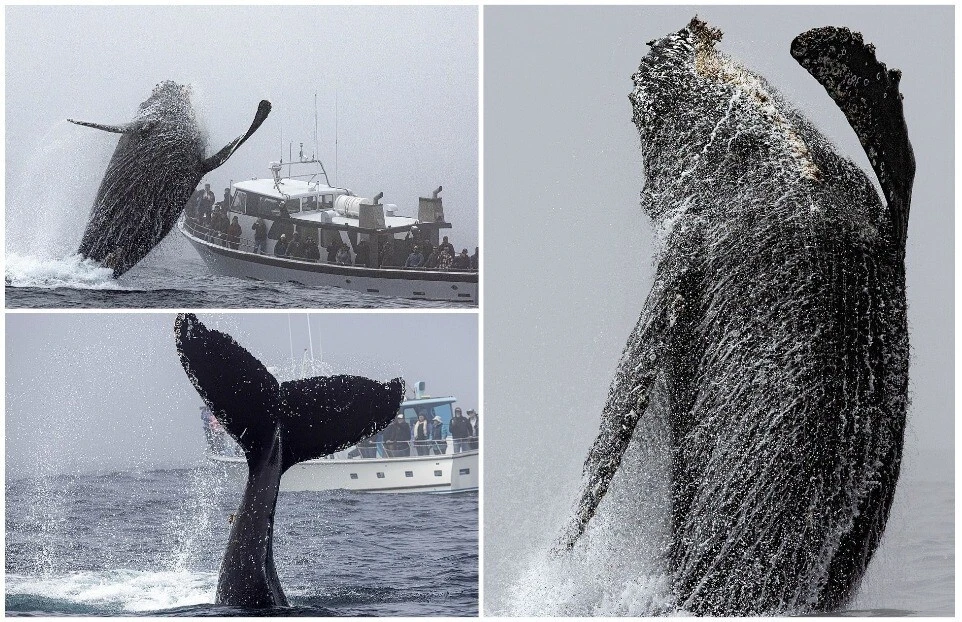
A baleen whale, however, can't ram a ship due to the lack of that fat pad. However, it can leap out and destroy the ship with its body or the impact wave.
But destroying those annoying human shells is just a pleasant side effect; in reality, the ability to ram huge targets is essential for... reproduction! Sperm whales are harem animals, with one successful male receiving 10-15 females at once. Of course, competition for this spot is fierce. So fierce that sperm whales are literally forced to fight for the right to reproduce, and in such a case, a ram on their heads is essential. 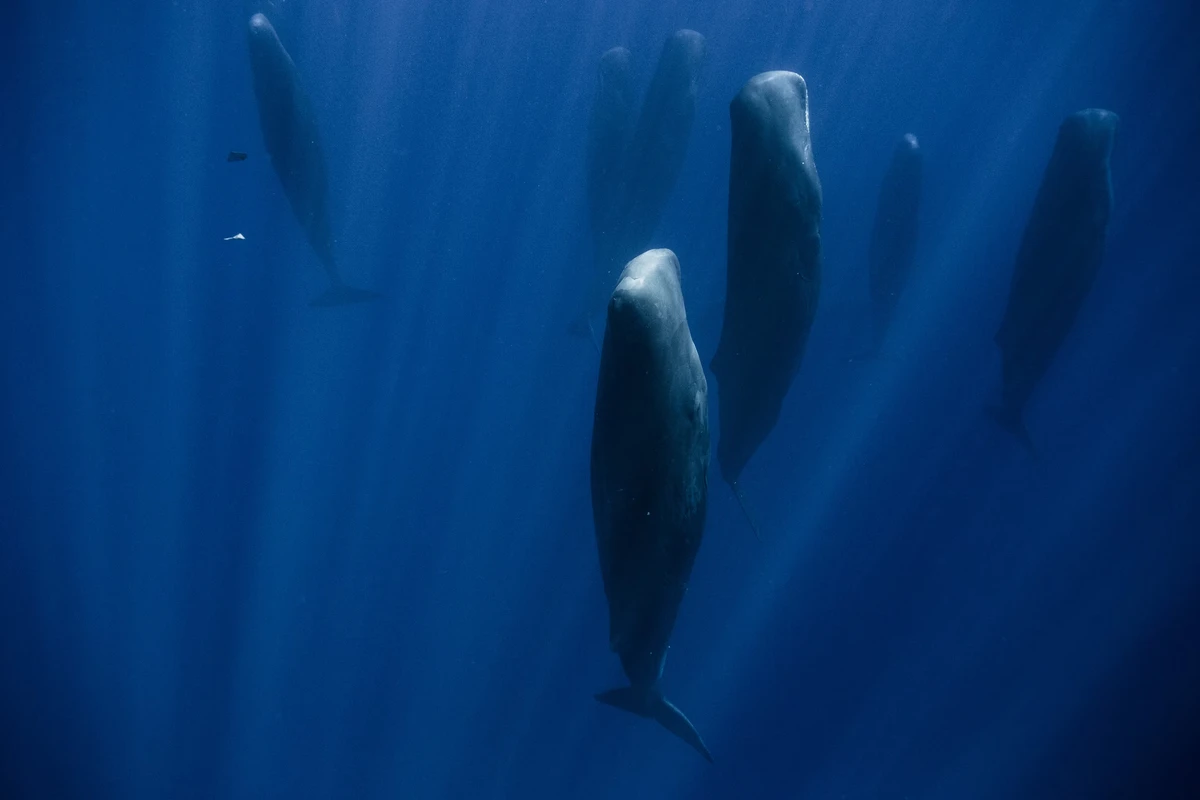
Now we'll get some sleep and then sail on to sink ships! An interesting feature of sperm whales is that they sleep vertically.
We only recently learned about these majestic animals fighting. In 2022, scientists accidentally captured a fight while observing one of them. Apparently, they usually fight in the deep, but this time was an exception. Fortunately, those terrible times are long gone. Ships are now larger, and it's much harder to penetrate metal hulls, so one danger in the ocean has been reduced. But I can't shake the thought: how many ships have gone missing due to whale strikes over the past millennia? 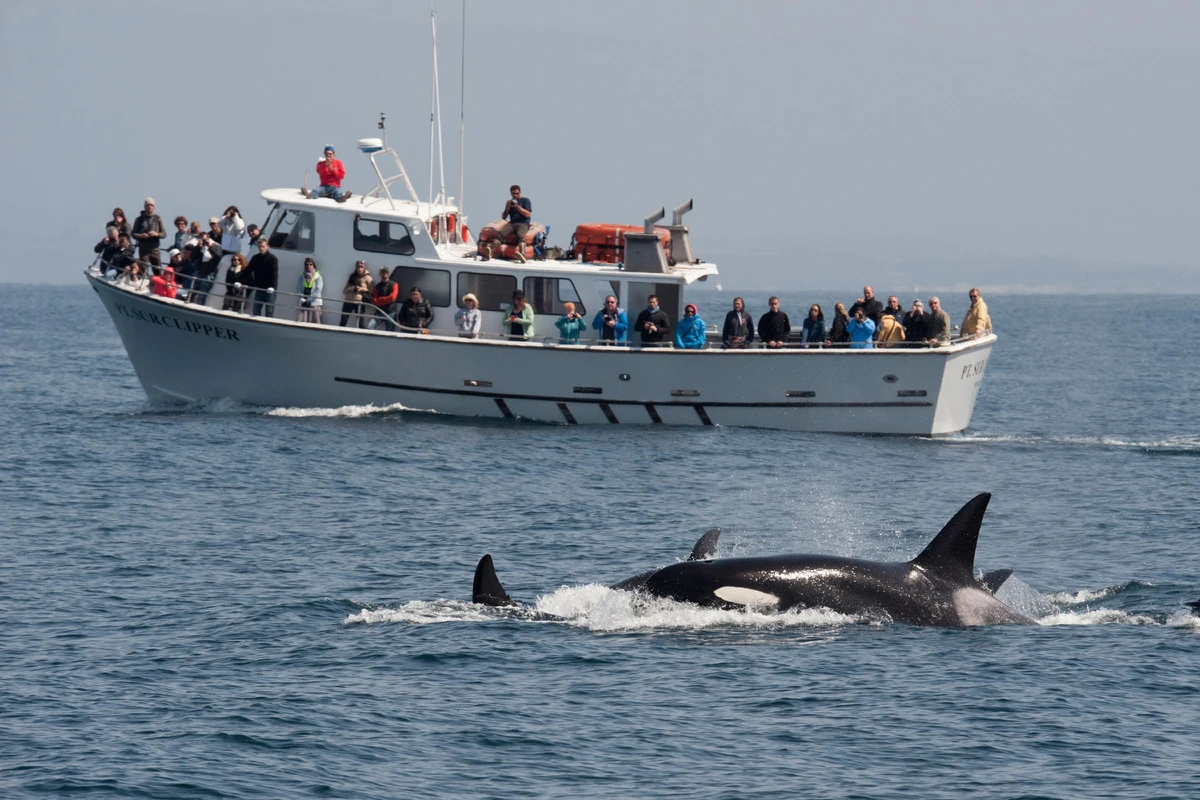
However, the sperm whales have found worthy successors. Starting in 2020, killer whale populations off the coast of Spain began attacking boats and yachts. The number of attacks has already exceeded 500, and several dozen have resulted in the sinking of vessels. Fortunately, no one has been harmed so far.