For over a century, humanity has been trying to understand whether we are alone in the Universe. And to this day, we have no evidence of the existence of not only alien civilizations, but of any life beyond Earth. 
However, in recent decades, we have become adept at finding planets around other stars, calling them exoplanets. As of April 6, 2026, 6,153 exoplanets have been confirmed.
And here a perfectly reasonable question arises: if we ever discover convincing evidence of the existence of "brothers in mind" living a relatively short distance from us, is it worth contacting them?
Not everyone thinks this is a good idea.
Stephen Hawking (January 8, 1942 – March 14, 2018) articulated a cautious stance on this issue in 2015 while co-founding the Breakthrough Listen project, which aimed to search for intelligent extraterrestrial life in the Universe:
"We know nothing about aliens, but we know humans well. History shows that encounters between more advanced and less advanced civilizations often end badly for the latter. If another [extraterrestrial] civilization is significantly older than us, it may be much more powerful and not consider us any more valuable than we consider bacteria. And if aliens ever visit us, the outcome could be much the same as when Christopher Columbus landed in America – it ended badly for the native peoples."
Hawking's opinion echoes the "Dark Forest" hypothesis, described by Chinese science fiction writer Liu Cixin in his book "Dark Forest": if you don't know a stranger's intentions, it's best not to engage them. In other words, in conditions of uncertainty, communication with an alien civilization is seen as a potential risk with far-reaching consequences, and secrecy is the key to safety.
But there's another side to the coin.
First, humanity has been "shine" into the cosmic radio airwaves for over a century. Communications, television, and radar have long since left a noticeable trace, so achieving absolute secrecy is no longer possible. In other words, it's too late to drink Borjomi. 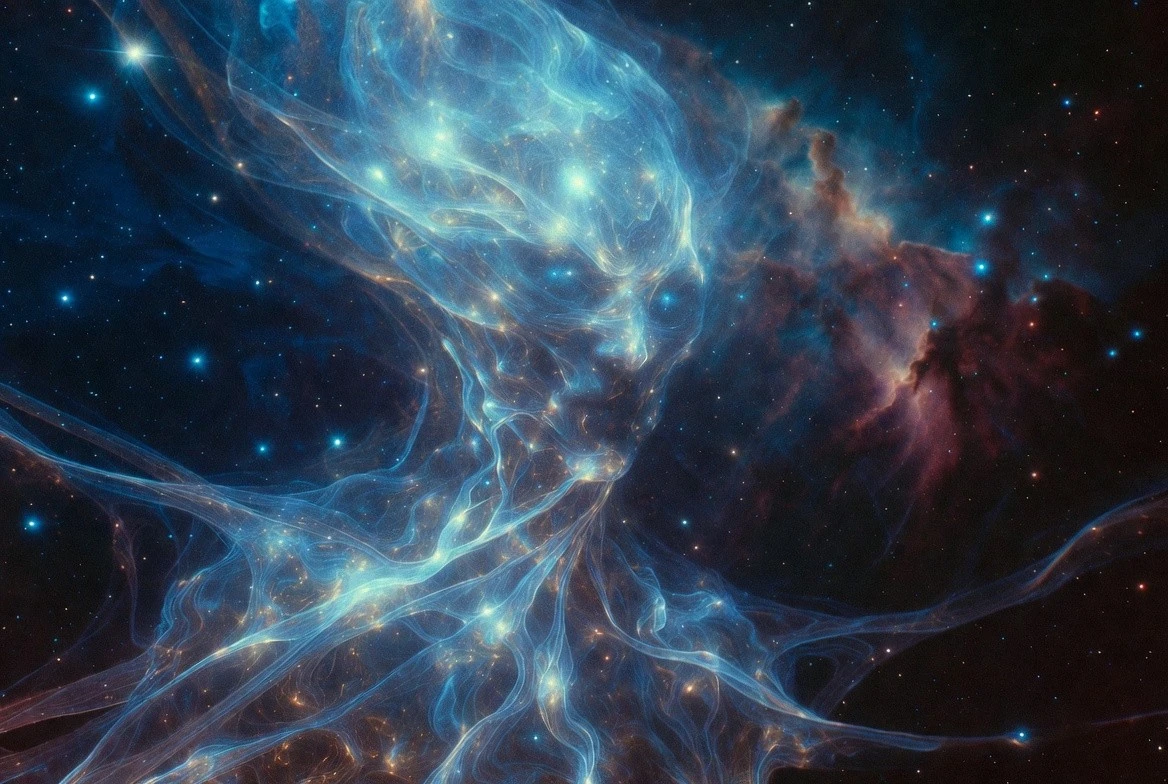
Secondly, there is no consensus among experts on the true danger of deliberate attempts to communicate with someone, given the enormous distances between star systems. Furthermore, the practical side of the issue is also controversial: even if signals are successfully exchanged, the delay can be tens, hundreds, and sometimes thousands of years. The value of such communication is questionable.
A Rational View
Despite the debate, the prevailing position in the scientific community is to search and verify (listen, compare, double-check), but to hold off on transmissions until international regulations assessing the potential risks are formulated.
But there's no doubt that even if we ever find intelligent beings in the Universe, the dialogue will begin not with an exchange of greetings, but with a dreary phase: one strange signal, hundreds of tests, dozens of alternative explanations, thousands of measurements, years of work with new instruments, and debate. And that's normal. In such stories, sensation takes a back seat.
Add your comment
You might be interested in:















20 Personal Photos of Celebrities That Ooze Vintage

Protective film Removing it with a power screwdriver

Global Sex Symbol: Rare Photos of Monica Bellucci (26

Animal Paws and Claws: 50 Photos That Will Surprise Even

Precision carpentry

America's Cheese Caves: How and Why the US Government

Fascinating Facts to Blow Your Mind (10 Photos)

Straight Out of the '80s: Band Posters No One Would Ever

It’s Not a Renovation, Just a Deep Clean! 30 Incredible
