Brinicles—Icy "Fingers of Death"
Beneath Antarctic sea ice, ice stalactites grow, deadly to bottom dwellers. When seawater freezes, the salt is forced out, forming a super-salty and super-cold brine. Heavier than normal seawater, it sinks to the bottom, where the brine's temperature is so low that it freezes the surrounding liquid on contact. 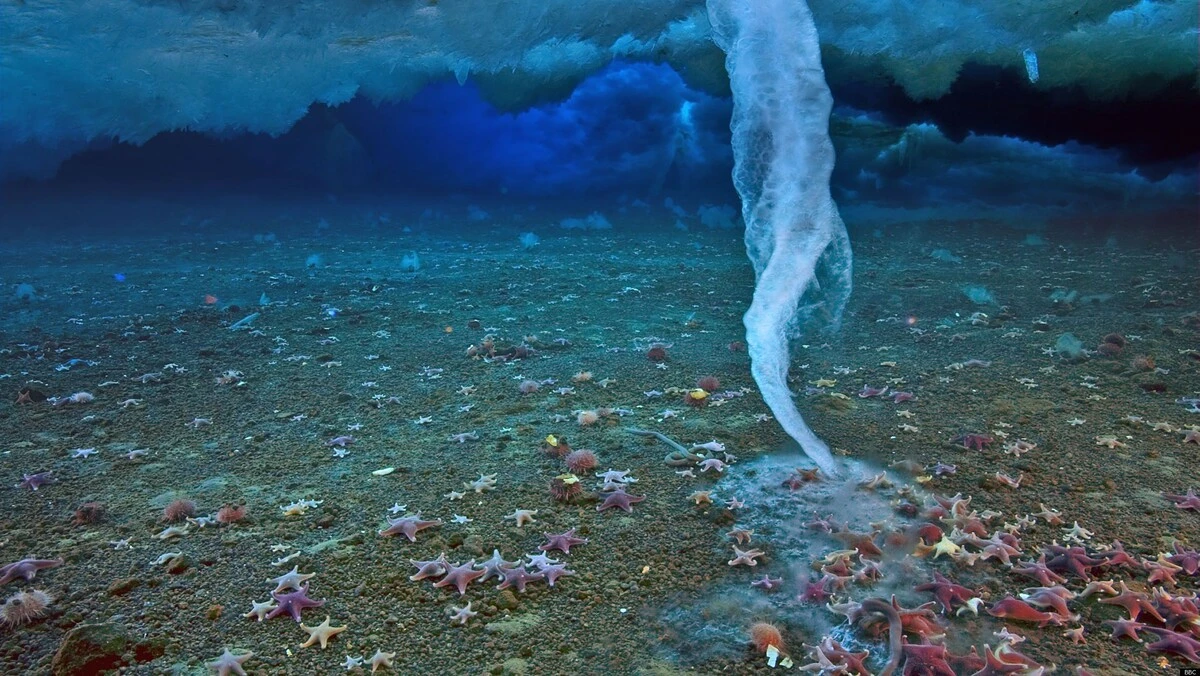
The result is a hollow ice tube that grows at a rate of several meters per day. Upon reaching the bottom, brinicle forms "anchor ice," which traps sea urchins and starfish in ice. 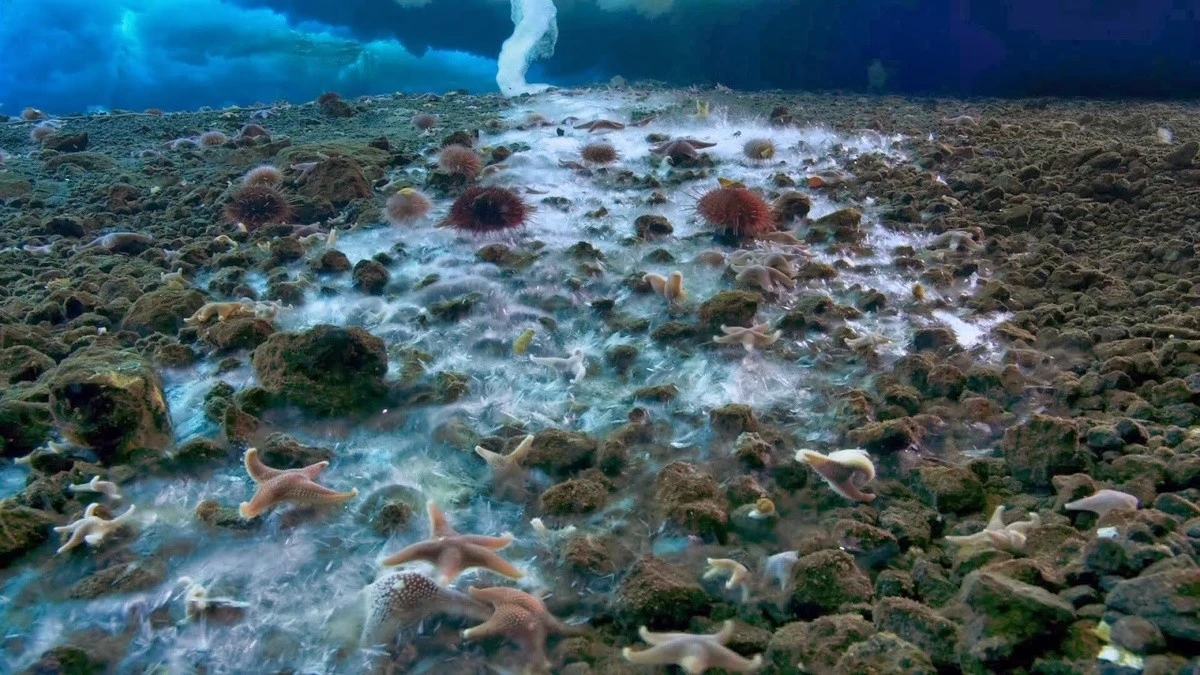
Remarkably, this phenomenon has been known since the 1960s, but it was first captured only in 2011.
Milky Seas
Sailors have reported glowing milky-white waters for centuries, but scientists (being scientists, after all) remained skeptical until 2006, when compelling evidence emerged in the form of satellite images.
An anomalous glow covering thousands of square kilometers was recorded from Earth orbit. The cause is bioluminescent bacteria, which gather in enormous numbers. 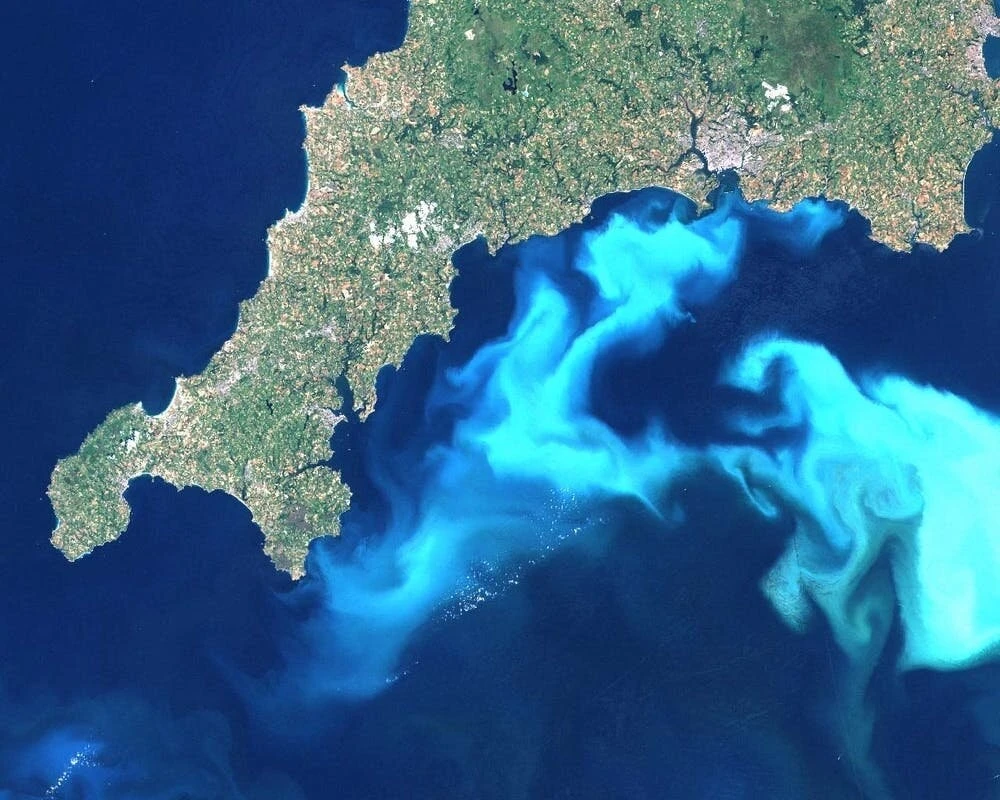
Unlike typical bioluminescent flashes of plankton, the "milky seas" glow continuously for hours.
It is believed that this is how the bacteria attract fish to be eaten and then live in their intestines.
Underwater Salt Lakes
On the ocean floor, there are "lakes" that are accumulations of hypersaline water (4-5 times saltier than surrounding seawater) containing methane and hydrogen sulfide. The high density of these formations prevents them from mixing with the surrounding water, which forms a distinct boundary. 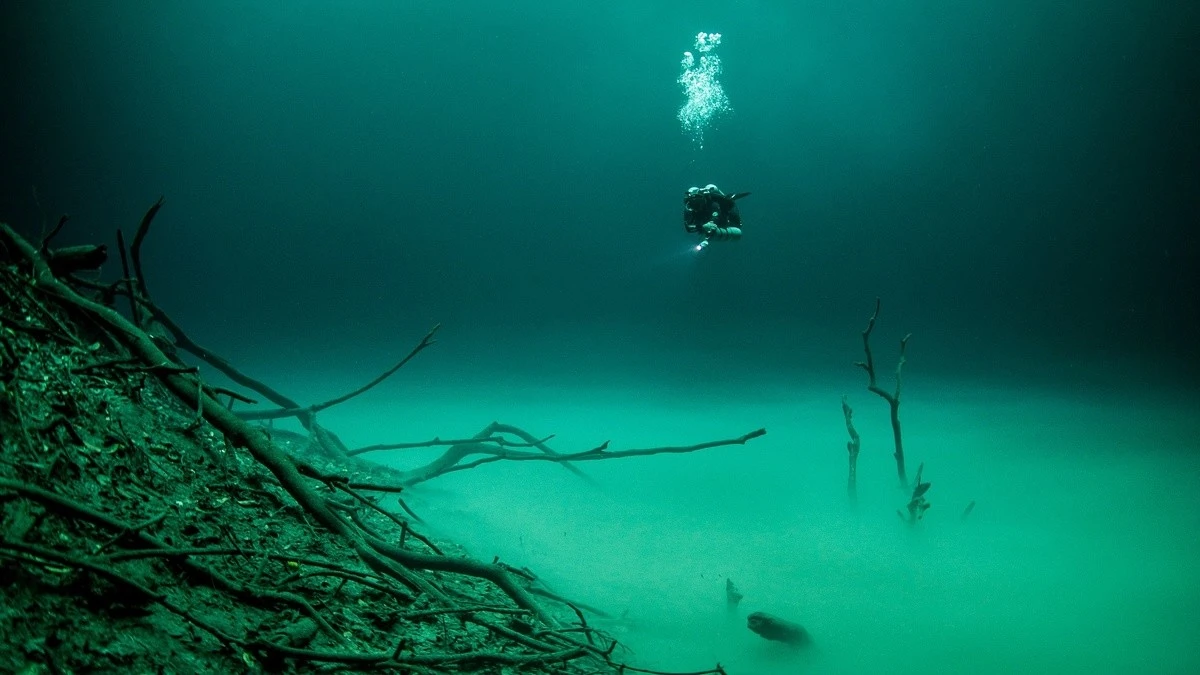
Most living organisms that accidentally swim into such a lake die instantly. However, evolutionarily adapted tube worms and protozoa settle along the edges and thrive.
Divers who have visited such lakes describe the experience as "visiting another planet."
Pororoca – a wave going against the current
A striking phenomenon can be observed at the mouth of the Amazon River: an extremely powerful ocean tide temporarily reverses the river's flow. This creates a tidal wave up to four meters high, which travels up to 800 kilometers inland. 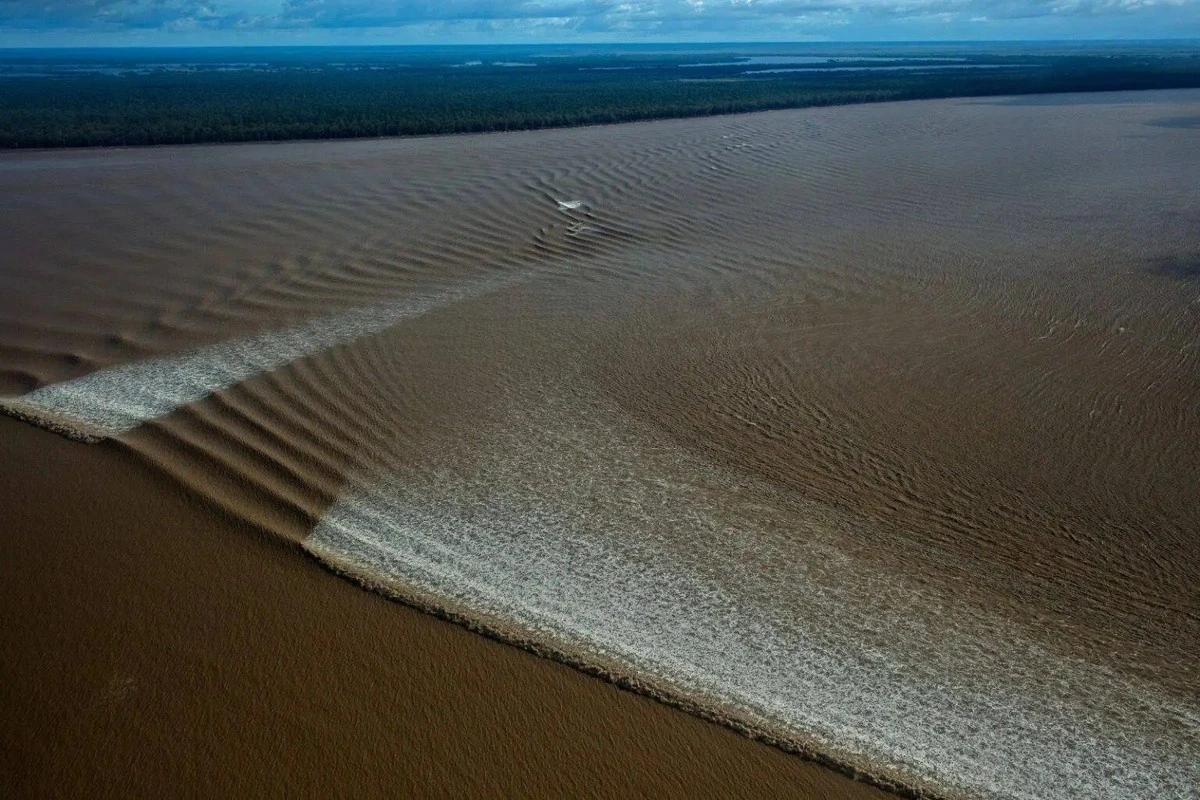
The name "pororoca" means "great roar" in the Tupinambá language – the wave's sound, reminiscent of a predatory roar, appears approximately 30 minutes before its arrival. The phenomenon occurs twice a month during the full moon and new moon. 
Pororoca is a natural gift for surfers, who ride this wave for up to 40 minutes non-stop, covering tens of kilometers.
Underwater Circles of Pufferfish
In 1995, divers discovered perfect geometric circles up to two meters in diameter off the coast of Japan. Their nature was only explained in 2011 with the advancement of oceanography. 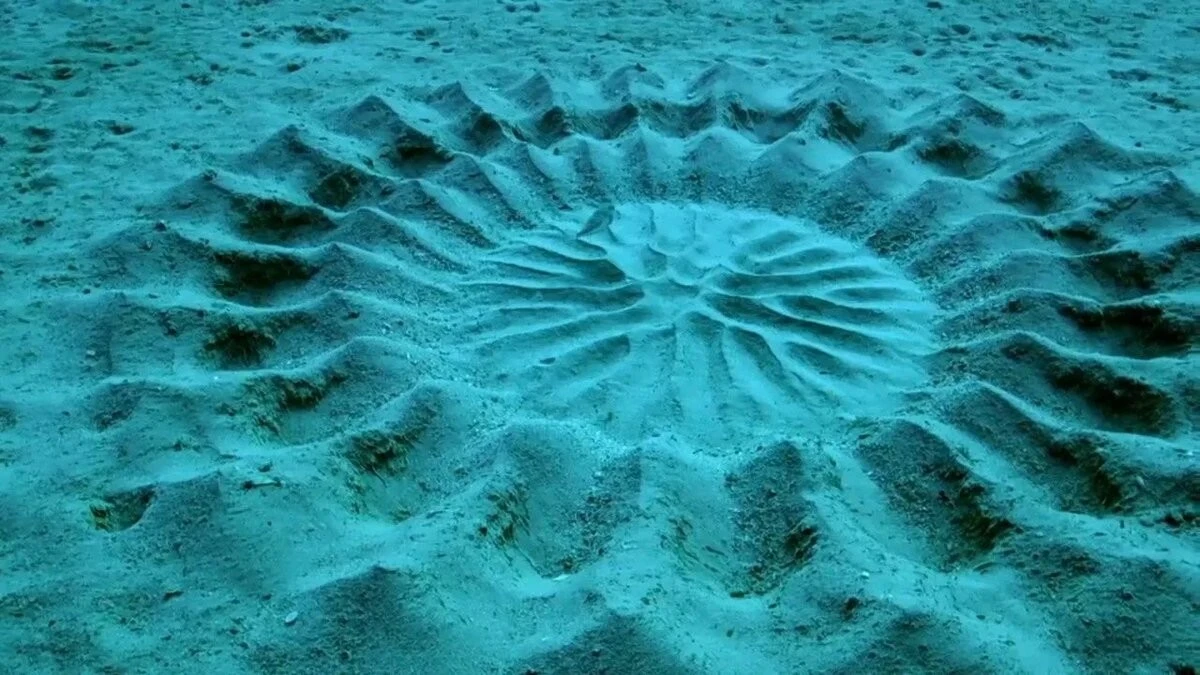
It turns out that the circles are the work of male pufferfish, whose bodies reach only 12 centimeters in length. The fish spend several days creating radial ridges, decorating them with stones and shells. Why? To attract a female. 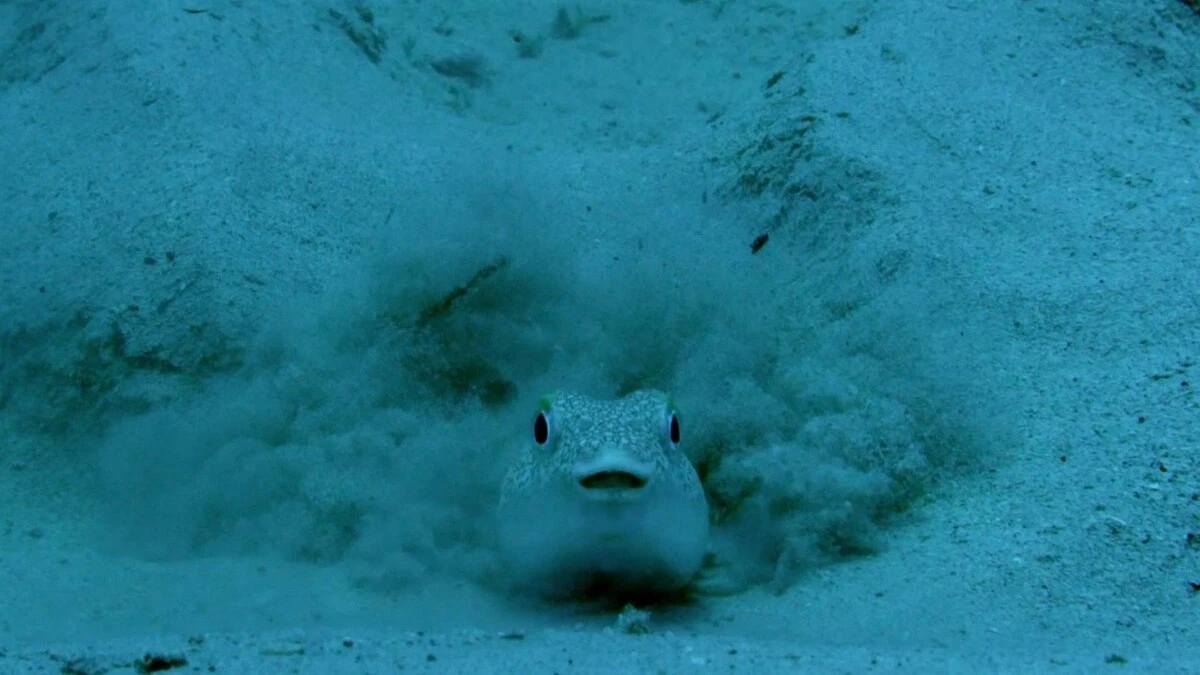
The fact is that a weak, sick, or parasitized male lacks the energy to create such a structure. Therefore, females select only strong and healthy males capable of producing the most viable offspring. Bottom circles are a reliable clue in choosing a mate.
Add your comment
You might be interested in:













Liquid Death - leather diapers for real rockers (2 photos +

A Time Capsule in the Form of a 53-Year-Old Beetle Found in

Super Mario now in augmented reality

Pierre Cardin (71 photos)

Private Super Sub submarine, reaching speeds of up to 18.5

Super burrito

Chinese BYD presented a battery-powered roadster (13 photos)

The guy built his cat an obstacle course in the style of

A rare Daimler Super V8 luxury sedan was found abandoned in

Protective film Removing it with a power screwdriver

Precision carpentry

Looks like it's time to buy WinRAR

When a child plays hide-and-seek at a professional level

Athlete in Bavarian dress flies over a lake on a hydrofoil

How to hang wallpaper neatly

Man sets up bedroom camera and discovers the reason for his

Super dads who swoop in to save the day

The Terminator's tears: Figure decides to scrap its old
