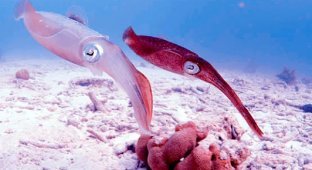
Meet the vampire squid—a unique inhabitant of dark waters (4 photos)
Among the amazing creatures that inhabit the dark depths of the world's oceans, the vampire squid (Latin: Vampyroteuthis infernalis) occupies a special place. Its name, literally translated as "vampire from the underworld," accurately conveys the mysterious appearance and unusual lifestyle of this creature. 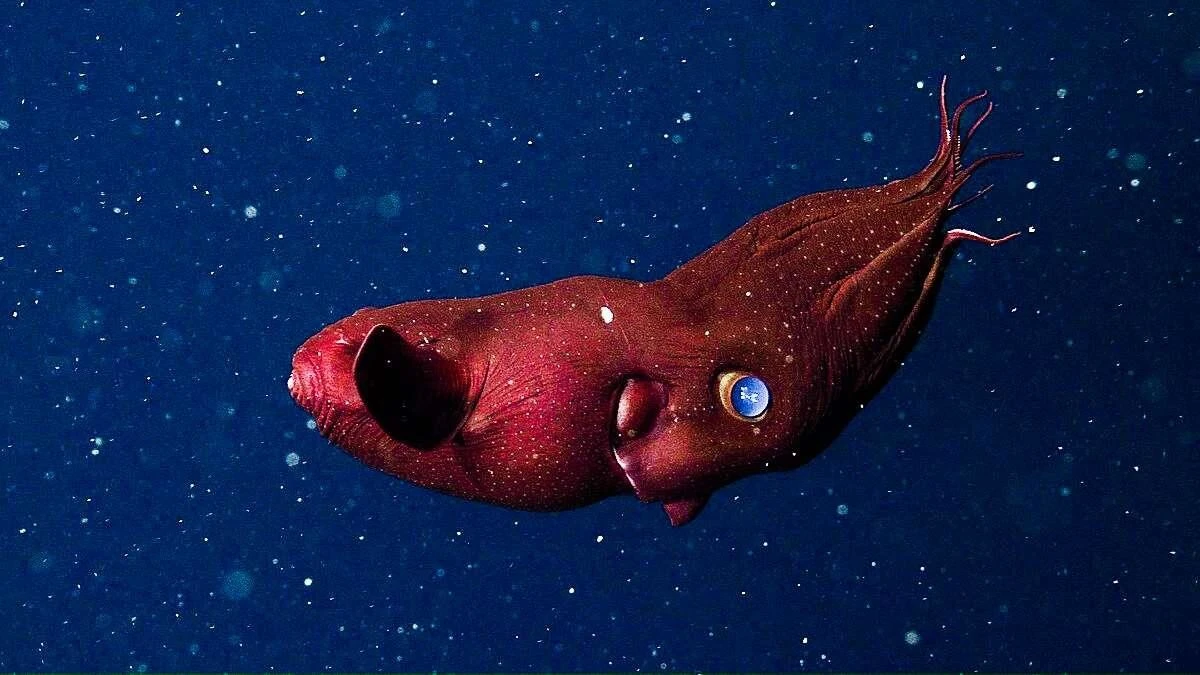
This 30-centimeter-long cephalopod is neither a true squid nor an octopus. Scientists have classified it as a separate order—Vampyromorphida—which has existed for over 300 million years. Remarkably, the vampire squid is the only modern representative of this ancient group of cephalopods.
This creature inhabits temperate and tropical waters of the World Ocean, preferring the oxygen minimum zone—a layer at depths of 400 meters to one kilometer, where dissolved oxygen concentrations are extremely low. In these conditions, lethal to most marine life, the vampire squid thrives quite comfortably.
Its unique adaptation to extreme conditions extends beyond its ability to survive in critically low oxygen levels—less than 5% of surface water levels. The vampire squid has the slowest metabolism of all cephalopods: its heart beats only a few times per minute, allowing it to conserve precious energy in the harsh depths. 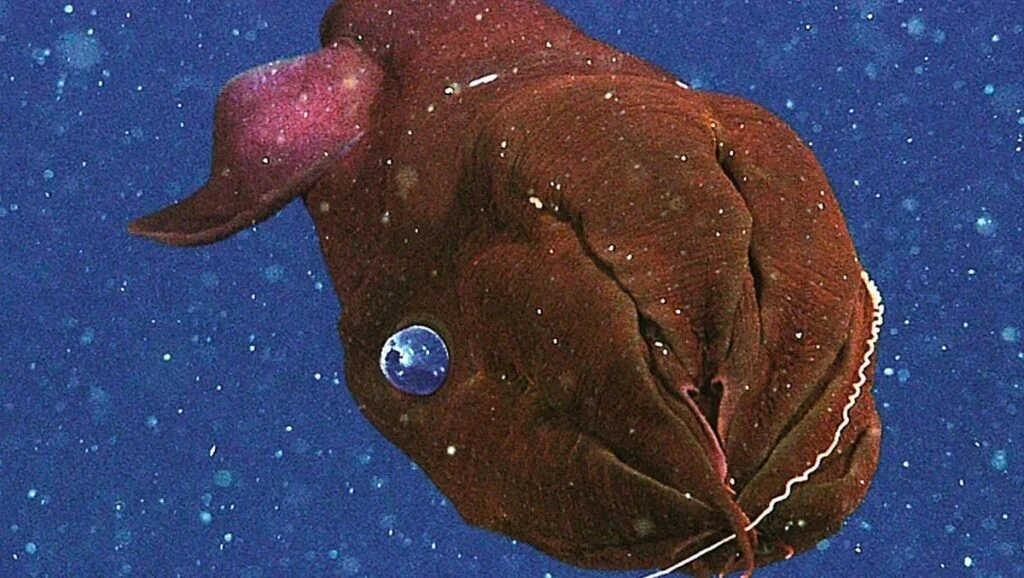
Unlike its active relatives—squid and octopuses—which hunt live prey, the vampire squid has adapted to a very specific diet. It feeds on so-called "marine snow"—a mixture of organic mucus, fecal pellets from upper-water inhabitants, and fragments of dead animals that slowly sink from the sunlit ocean layers. This diet perfectly suits its sedentary lifestyle.
This creature's defense mechanisms are particularly interesting. When threatened, the vampire squid can literally turn its body, covered by a membrane, inside out, transforming into a hedgehog-like structure with spiky appendages. And instead of the ink cloud its relatives use to escape, it releases a cloud of bioluminescent mucus that can glow for up to 10 minutes, disorienting and confusing predators. 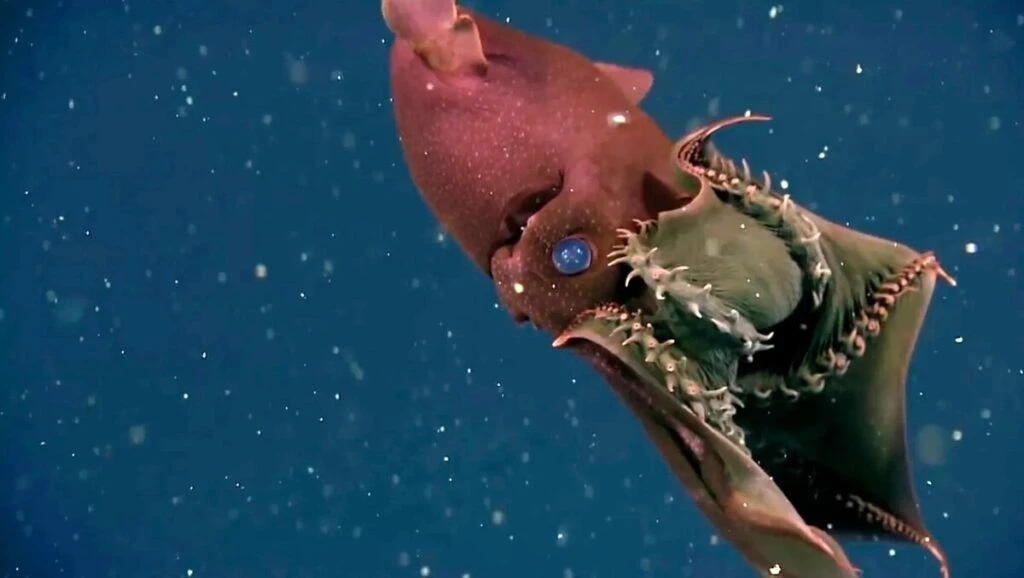
The vampire squid's eyes are the largest relative to their body size of any animal, averaging 2.5 centimeters in diameter. They are capable of detecting individual photons of light, even in the near-total darkness of the ocean depths. If a human's eyes were proportionally as large as a vampire squid's eyes relative to its body, then at a height of 170 centimeters, each eyeball would have a diameter of over 14 centimeters! 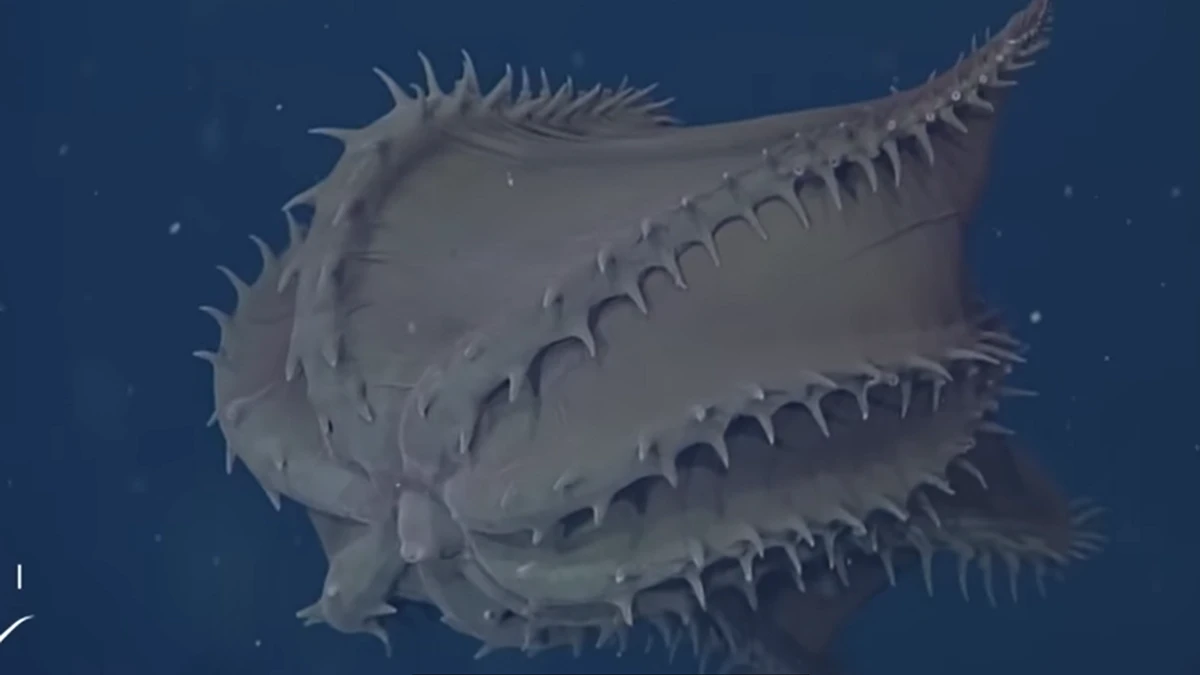
The vampire squid's eight tentacles are connected by membranes, which, when extended, form a distinctive "cloak"—another feature that gives the mollusk its "vampire" name.
The vampire squid looks as if it came to Earth from another planet. This is truly one of the most unusual inhabitants of our planet, a reminder that only 3-5% of the World Ocean has been explored.