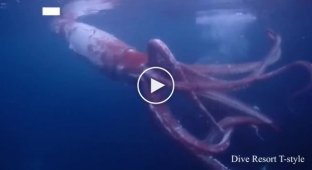
Scientists captured a giant ghostly jellyfish on video (10 photos + 1 Video)
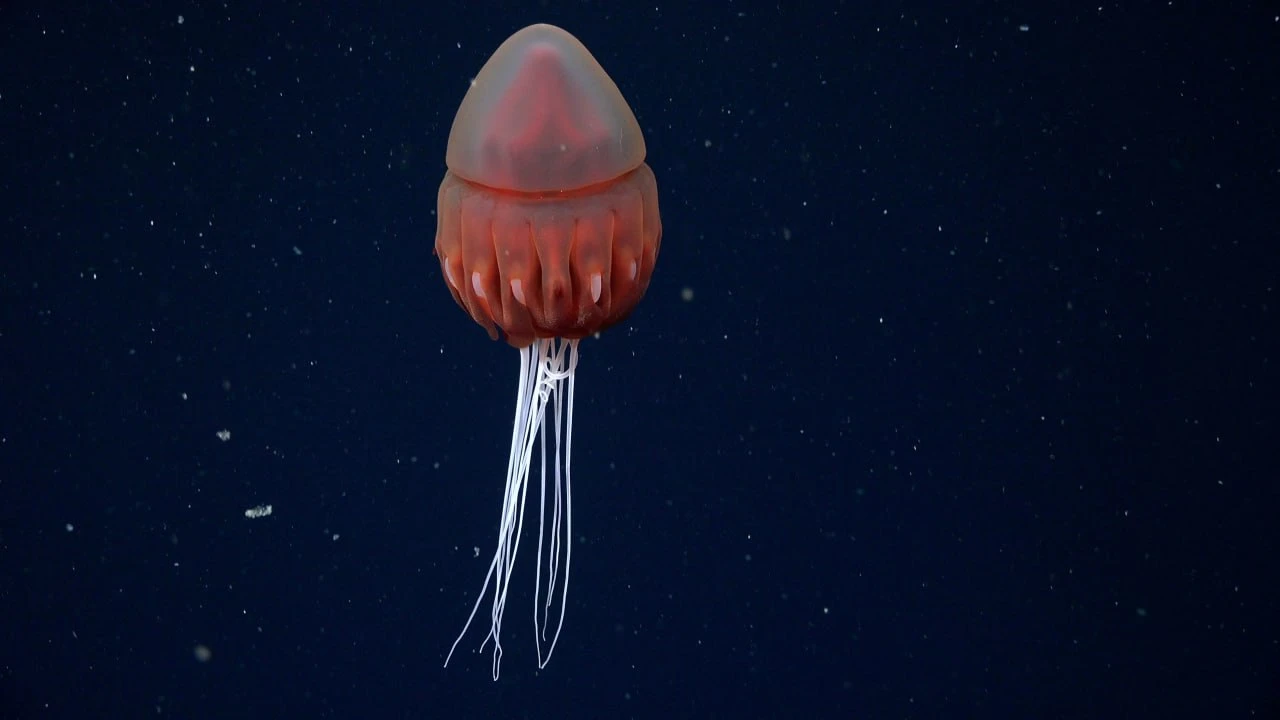
Scientists from the Schmidt Oceanographic Institute captured an 11-meter-long ghost jellyfish off the coast of Argentina. Its tentacles can reach 10 meters, and its body diameter is over a meter. These jellyfish do not sting, but use their tentacles to catch plankton and small fish. 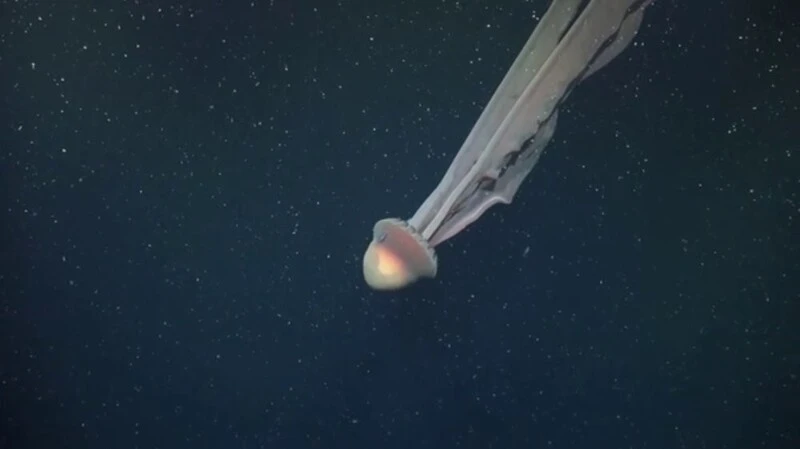
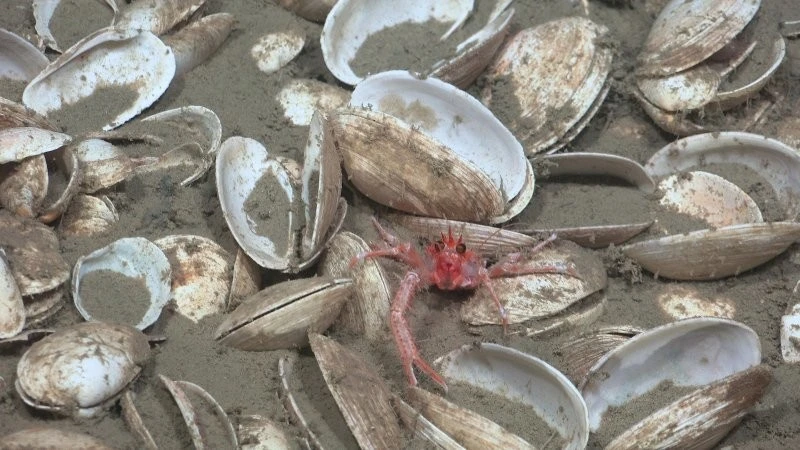
At a depth of almost 4 kilometers off the coast of Argentina lies the skeleton of a whale. It likely spent decades on the seabed—and an entire ecosystem has grown around it. Worms, crabs, and octopuses fed on the remains, and when the organic matter ran out, the bones became a substrate for other organisms. Scientists call this "whale fall"—and it's the first documented case in the Argentine depths.
It was discovered by an expedition from the Schmidt Institute. Dr. María Emilia Bravo's team from the University of Buenos Aires traveled along the entire coast—from the capital to Tierra del Fuego. 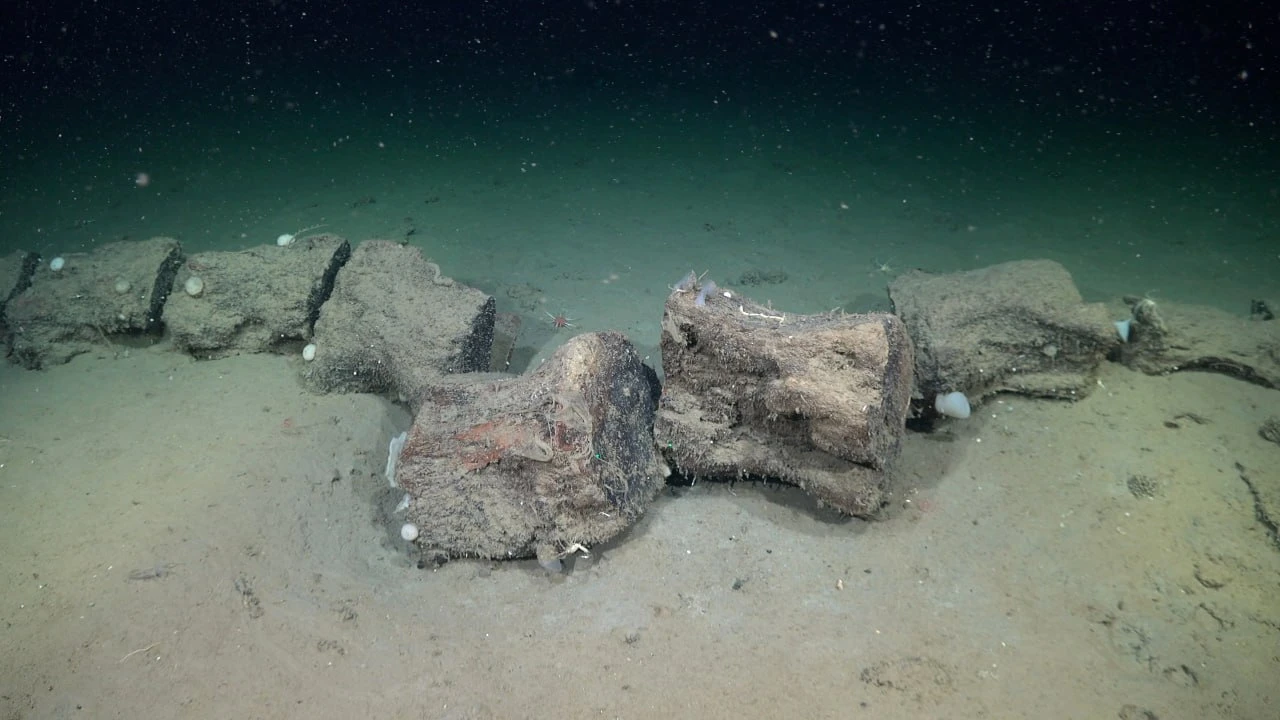
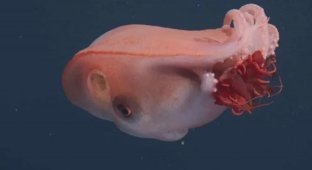
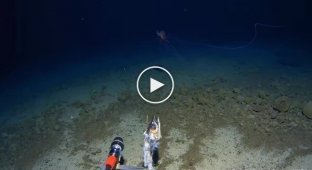
At a depth of 250 meters, cameras captured a giant ghost jellyfish, Stygiomedusa gigantea. Its dome is up to a meter in diameter, with four "arms" extending 10 meters. It lacks stinging tentacles; it catches prey by capturing plankton and small fish. This is only the 130th observation of this species in a century.
Scientists also discovered an active cold seep covering a square kilometer—a place where methane seeps from the bottom, feeding microorganisms, which in turn feed mollusks and worms.
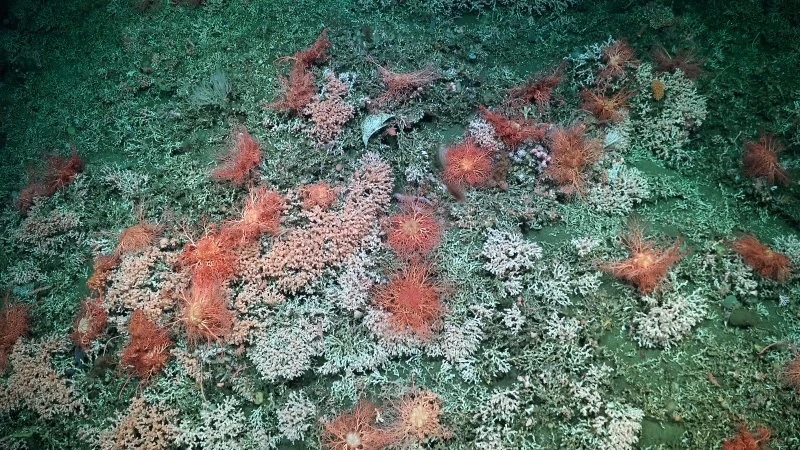
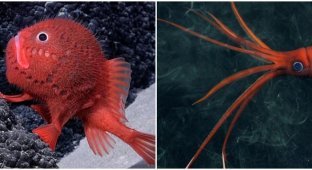
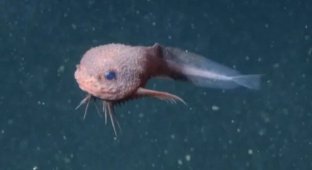
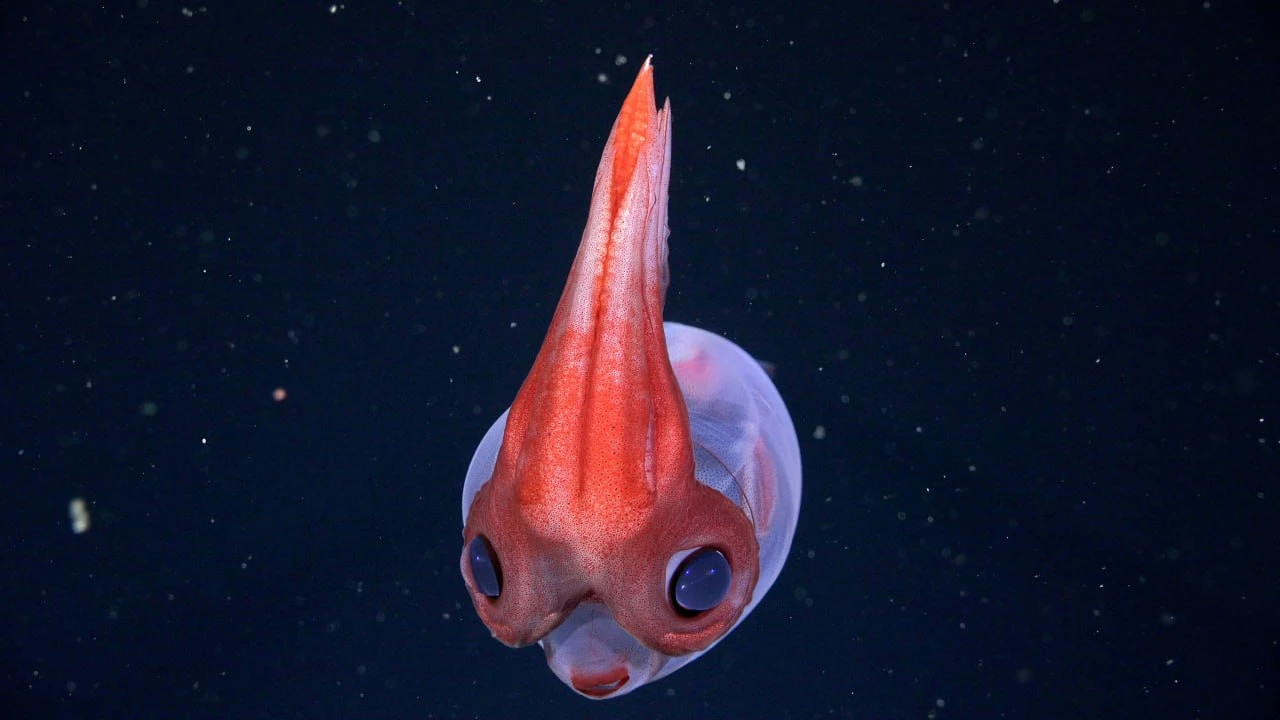
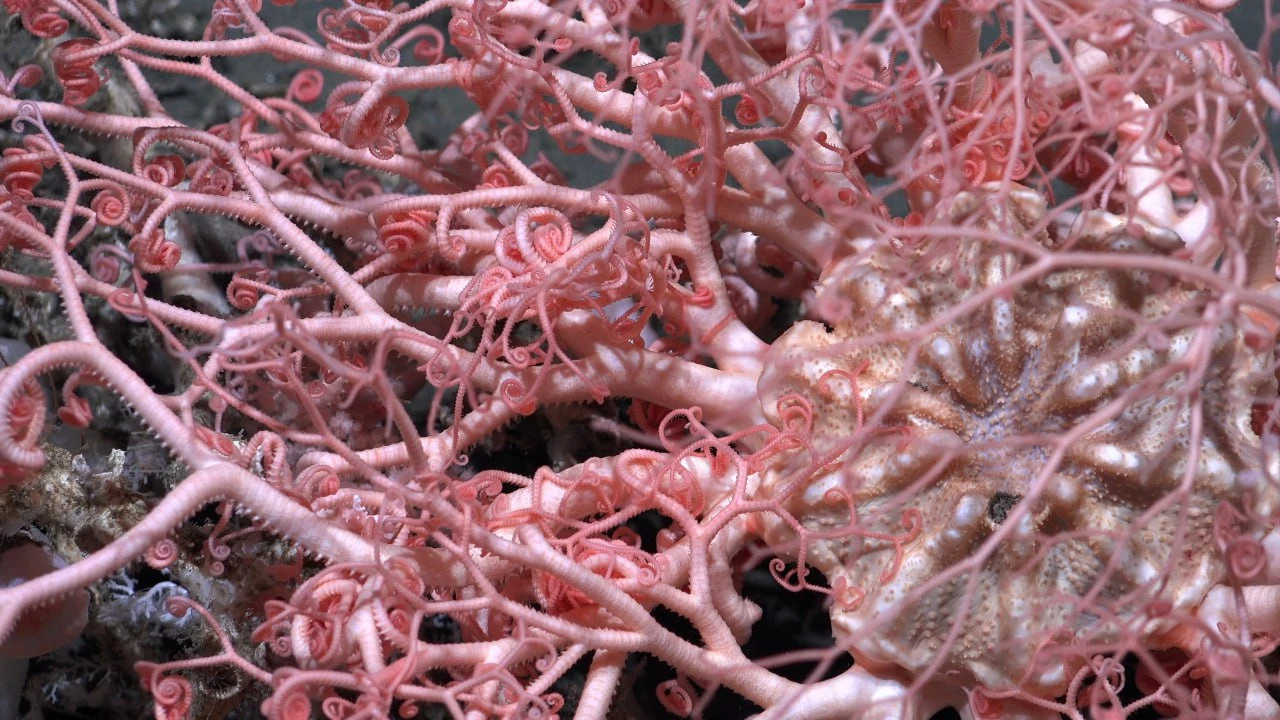
In total, the expedition counted 28 presumably new species.
Besides life, trash was also found at the bottom: nets, bags, and a VHS tape with a Korean sticker in perfect condition. How it got there is a mystery.