By the end of the 19th century, interest in Mars had skyrocketed. Telescopes were improving, journalists were hunting for sensations, and science fiction was going hand in hand with science. And then the question was increasingly being asked: is there intelligent life on the Red Planet and is it possible to contact it? 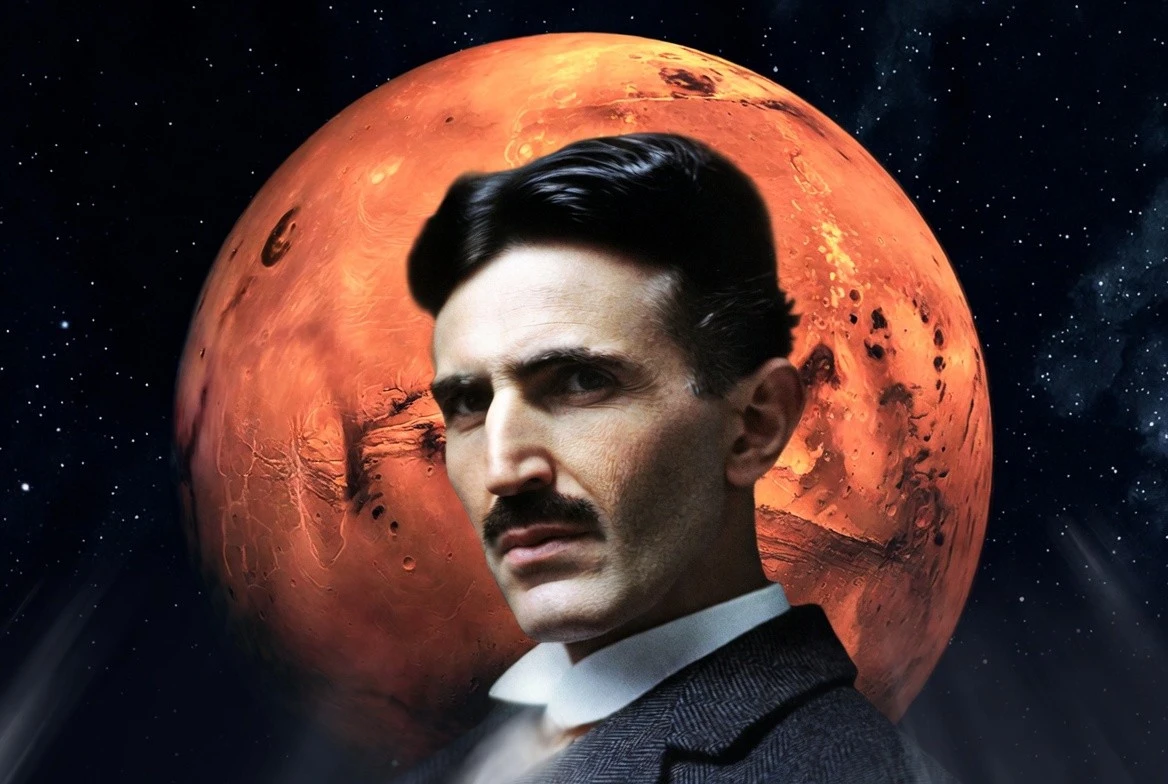
The Birth of Mars Mania
In 1877, the Italian astronomer Giovanni Schiaparelli, observing Mars during opposition, sketched fine lines on the surface and called them "canali"—"channels" or "straits."
The English-language press immediately interpreted this as a hint of artificial structures. This inspired the American astronomer Percival Lowell so much that he built his own observatory and spent years observing the Red Planet, mapping the "canals." He convinced the public that the "canals" were irrefutable proof that the neighboring planet was inhabited by intelligent beings trying to survive on a drying world with the help of a gigantic irrigation system.
Today, it is clear that this was the result of a mixture of technological limitations and human psychology: the negligible (by modern standards) resolution of telescopes, the "tremors" of the Earth's atmosphere, observer expectations, and the brain's "imagining" of familiar images (pareidolia). Only in the second half of the 20th century did we learn that Mars is a completely different world. And although it does indeed contain grandiose structures, they are all of natural origin. 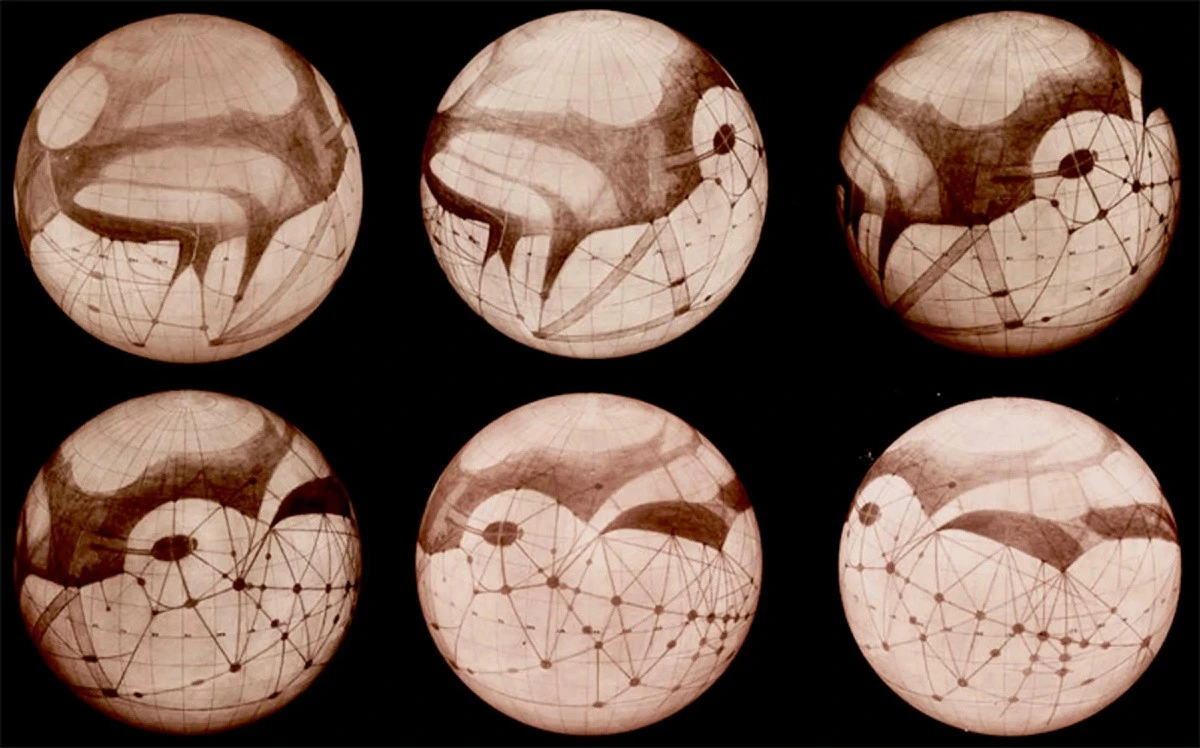
Percival Lowell's Martian "Canals"
But back then, the idea of a habitable Mars was too beautiful to let go. After the "canals," imagination went wild: articles were published seriously discussing what melodies Martians might play to greet Earth and what Earthly masterpieces would be worth sending back. At the same time, an even bolder hypothesis was gaining ground: perhaps other stars also have planets, and intelligent beings might live on them. Today we call such worlds exoplanets, but back then, it was almost pure philosophy.
Radio as a "Communication with Space"
At the turn of the century, wireless communication ceased to be a laboratory trick and began to develop into a scalable technology. And with radiotelegraphy came a simple and, essentially, inevitable idea: if we can so easily "catch" signals across the ocean, why not try to catch them across outer space? Thus began the first amateur and semi-professional attempts to "hear aliens"—sometimes out of scientific curiosity, sometimes for fame.
The most famous participant in this story was Nikola Tesla.
In 1899, Tesla built an experimental station in Colorado Springs (USA). Formally, he was working on earthly problems: high-voltage experiments, resonance, wireless communication, and long-distance energy transmission. But his equipment was so sensitive that it sometimes picked up signals that science couldn't explain.
In his notes and later stories, Tesla described detecting strange, repeating signals—rhythmic "pulses" that didn't resemble chaotic atmospheric interference. He considered various possibilities and, at one point, even began to seriously consider that the source might lie far beyond Earth. In the era of "channels," the best candidate for the sender of these "messages" was, of course, Mars.
At the end of 1900, the American Red Cross asked prominent individuals to briefly predict what humanity's greatest achievement in the new century might be (and, in general, "what lies ahead"). Tesla was also on this list, sending a letter with a response containing a science fiction-esque phrase:
"Brothers! We have a message from another world, unknown and distant. It reads: one... two... three..."
The press seized on this as a sensation, and the story "Tesla communicates with Martians" began to spread around the world. 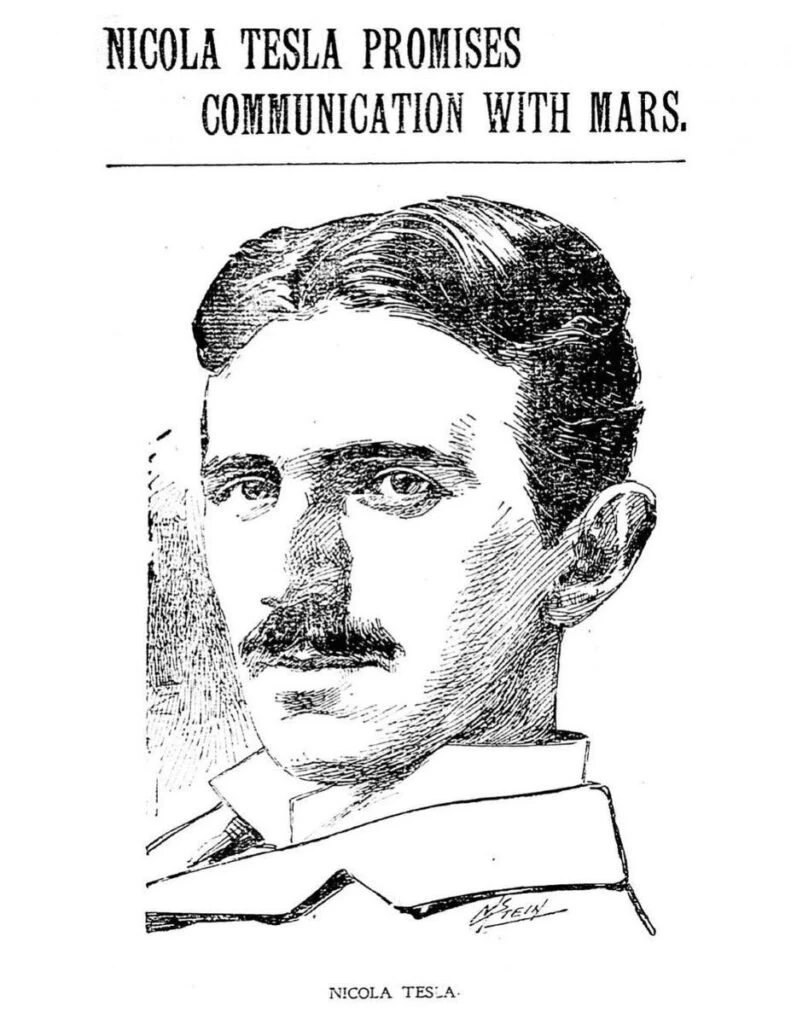
Headline: "Nikola Tesla Promises Communication with Mars." Well, at least it wasn't a million-person settlement and flights for the price of three apples.
It's important to understand that even if Tesla did receive unusual, repeating signals, this doesn't prove they came from Mars and/or were artificial. It only suggests that the radiosphere around Earth is more complex than it seemed in 1900. Back then, radio physics hadn't yet been developed; science didn't know about all sorts of interference, natural radio sources, or how much the atmosphere and thunderstorm activity clog the airwaves.
So what was it really?
Later, hypotheses arose that Tesla may have detected natural radio emissions from the giant planets, primarily Jupiter. Jupiter has a powerful magnetosphere, and its volcanic moon Io, passing through it, literally "interferes" with the radio noise. Thus, the Jupiter-Io system is capable of creating regular radio signatures, which could have been detected by equipment from the late 19th century.
Can this be proven today that this is what Tesla heard? No. His instruments, reception conditions, and interpretations are too far removed from modern standards, and the description "one... two... three..." provides no valuable information.
However, natural radio emissions, which have been reliably and systematically detected since the 20th century, are a far more rational explanation than a radio tower on Mars. 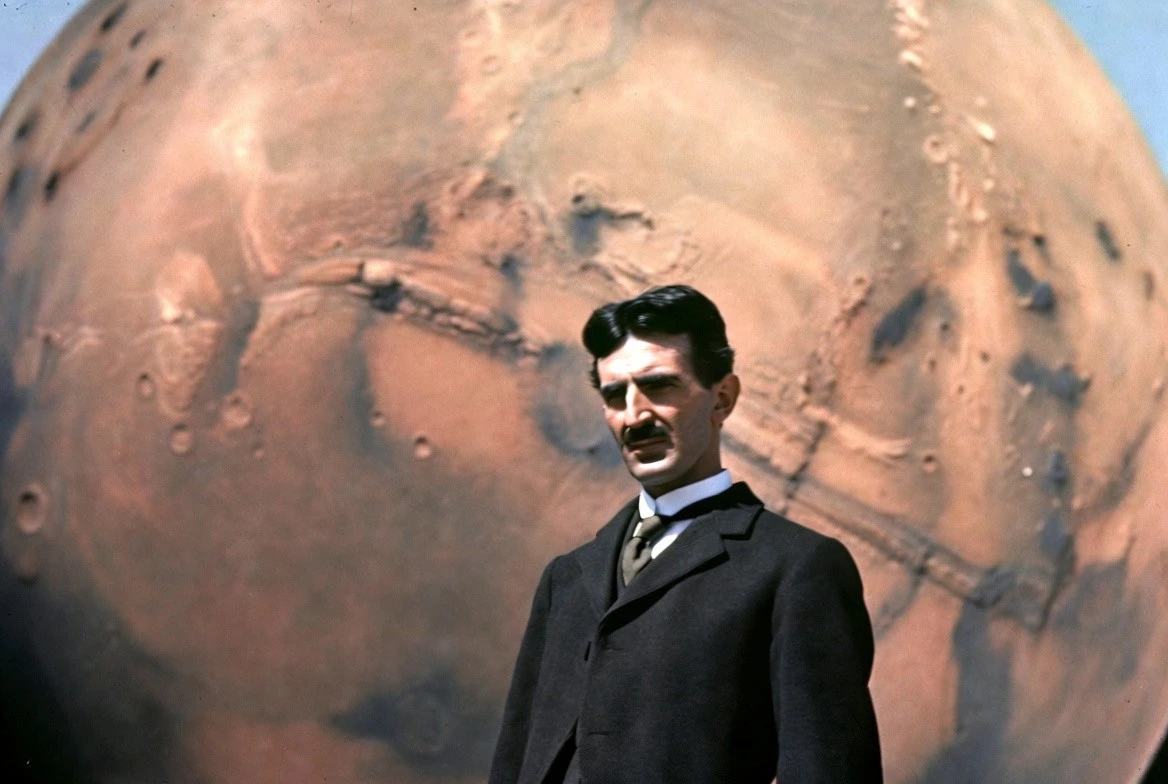
Why this story is still cool
Tesla was neither a phony nor a contactee. He was a man on the cusp of an era, attempting to study the world with the tools at his disposal. And the data he obtained during his experiments lacked a rigorous scientific interpretation.
His mistake was typical of the time – explaining the incomprehensible with the most romantic hypothesis. But the very fact that he even seriously broached the subject of extraterrestrial communications transformed radio from a purely terrestrial technology into a symbol of the future: communication with spacecraft roving the vastness of the solar system.
Add your comment
You might be interested in:












Protective film Removing it with a power screwdriver

Precision carpentry

Looks like it's time to buy WinRAR

When a child plays hide-and-seek at a professional level

Athlete in Bavarian dress flies over a lake on a hydrofoil
How to hang wallpaper neatly

Man sets up bedroom camera and discovers the reason for his

Super dads who swoop in to save the day
The Terminator's tears: Figure decides to scrap its old
