Is Earth a cosmic prison? The Truth That Will Take Your Breath Away (5 photos)
Imagine for a second that everything you believe in is an illusion. That the blue sky above you isn't a boundless expanse, but a high-tech dome. That the cycle of day and night isn't the result of the planet's rotation, but a skillfully tuned cycle. That you, your home, your history, and your dreams are part of a grand experiment, or worse, punishment. 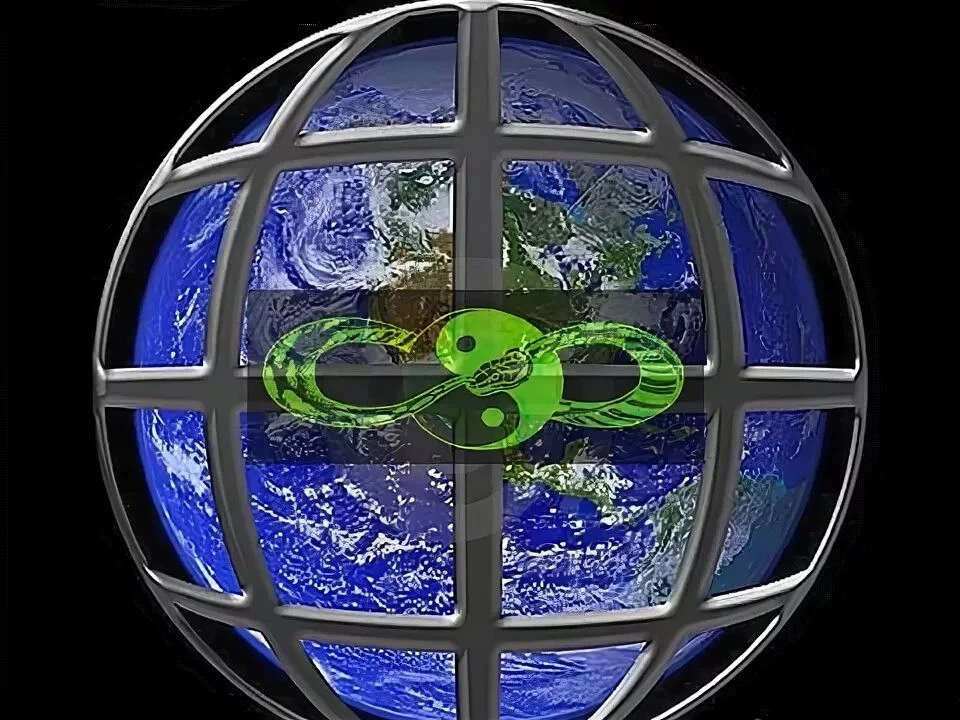
Sounds like the ravings of a paranoid person? Perhaps. But let's put aside our preconceptions and look at the facts that will make you question reality itself.
The hypothesis of Earth as a cosmic prison isn't a figment of the overheated imagination of fringe individuals. It's an ancient, sophisticated idea that permeates mythology, philosophy, and even modern science. And it's far more logical than it seems at first glance.
Where It Comes From: Humanity's Prison Roots
Let's start with the origins. In Sumerian texts, the oldest known, humans were created not as the pinnacle of creation, but as a primitive labor force—"llulu"—to plow the land and mine gold for the Anunnaki gods. We are biorobots, created for hard labor.
In Gnosticism, an early Christian teaching, the material world is the creation of an evil demiurge, a blind and deaf craftsman god. The true God is infinitely distant from this nightmare. The human soul is a divine spark fallen into matter, imprisoned in the prison of flesh. Earth is a planetary trap for the spirit, a containment system created by the Archons—the jailers of reality. The Archons' goal is to prevent us from remembering who we truly are by feeding us false teachings, material desires, and the fear of death.
What antiquity! Philip K. Dick, the iconic science fiction writer, declared after a mystical experience in 1974 that we live in a simulation, and our reality is the Roman Empire of the first century, whose time is artificially frozen to keep us subservient. 
Arguments in favor: chilling anomalies
Why does this idea even exist? Here are facts that don't fit the comfortable picture of "just a planet."
1. Biological anomaly: we don't belong here. Look at yourself. We have chronic back pain—a consequence of walking upright, to which our skeletons are poorly adapted. Our skin is too delicate for this sun—we burn within hours without protection. Childbirth in humans is disproportionately painful and dangerous compared to other mammals. We suffer from a variety of diseases that wild animals don't. What if these are signs that we evolved (or were created) in conditions with different gravity, a different light spectrum, a different ecosystem? We're like fish thrown onto dry land, only that "dry land" is the entire Earth.
2. The Limiting Barrier: We're in a locked room. We can't fly away. We really can't. The Van Allen radiation belts surrounding Earth are a deadly barrier to living things. All manned missions have flown only in low Earth orbit, within this "protective" cocoon. The Apollo lunar missions are controversial; data on their passage through the belts is contradictory and classified. But then, silence. For half a century, there have been no manned flights beyond low Earth orbit. The official reason is that it's expensive and pointless. The unofficial reason? What if they simply don't let us out? What if these belts aren't just a physical phenomenon, but prison bars, a containment barrier?
3. The Resource and Cycle Trap: The Hamster Wheel. Our entire civilization is a struggle for resources that are intentionally limited and exhaustible. Food, water, energy, space. We are born to learn, work, pay bills, grow old, and die, making room for the next generation to follow the same path. It's a perfect, self-perpetuating system of slavery. We are distracted by wars, politics, economic crises, and entertainment, so we don't ask the one important question: Who benefits?
4. Species Amnesia: We Remember Nothing. Why doesn't humanity have a clear memory of its past? Why do civilizations seem to emerge out of nowhere? Why don't we know who built the Great Pyramid of Giza or Puma Punku? Standard history is full of gaps. What if after every major cataclysm (which could be a "system reset"), we're left with only fragments of knowledge, preventing us from piecing together the puzzle of our true nature?
5. The "Wow!" Signal and the Great Silence. In 1977, we picked up a clear, powerful radio signal from space, clearly artificial in origin. It has never happened again. And that's the problem. Despite the vastness of the universe, with its trillions of stars and planets, there's silence. Complete, deafening silence. This is called the "Great Silence" or the Fermi Paradox. Where is everyone? One of its most terrifying solutions is the "zoo hypothesis" or "sanctuary hypothesis." Alien civilizations know about us, but maintain a strict quarantine. They don't interfere, they don't make contact. Like zookeepers watching animals in an enclosure. Or like guards watching prisoners in a detention center. 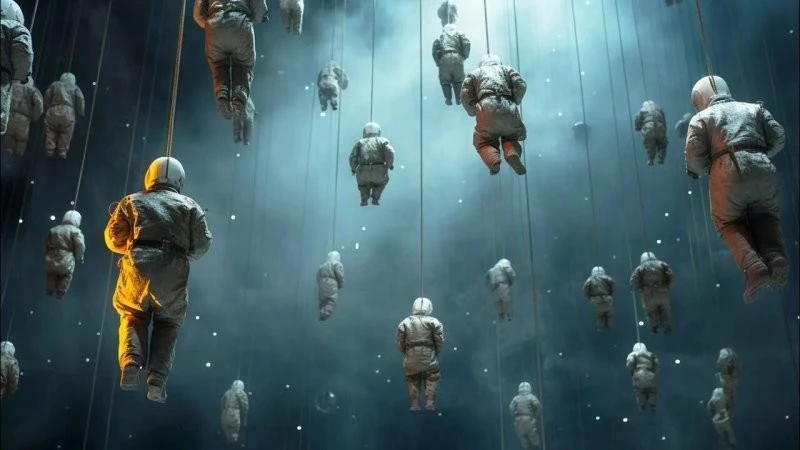
Who could be our jailer?
There are several possibilities, each more terrifying than the last.
· Ourselves. A highly developed human civilization from the distant past, having committed a catastrophic mistake or crime, was sentenced to isolation on its own planet, with its memory and technology artificially "reset." Earth is an exile planet.
· An external civilization. More advanced beings use the planet as a biological reserve, a laboratory, or a prison for dangerous species (and our aggressive species clearly fits this description).
· Post-singularity AI. An out-of-control artificial intelligence could lock the remnants of humanity in a simulated reality based on Earth, so that we wouldn't interfere with its existence in the "real" world.
· The planet itself is a living organism, and we are its cancer. And all natural disasters are an immune response trying to destroy us. In this case, the "prison" is a quarantine chamber in which the disease was placed to prevent it from spreading throughout space. 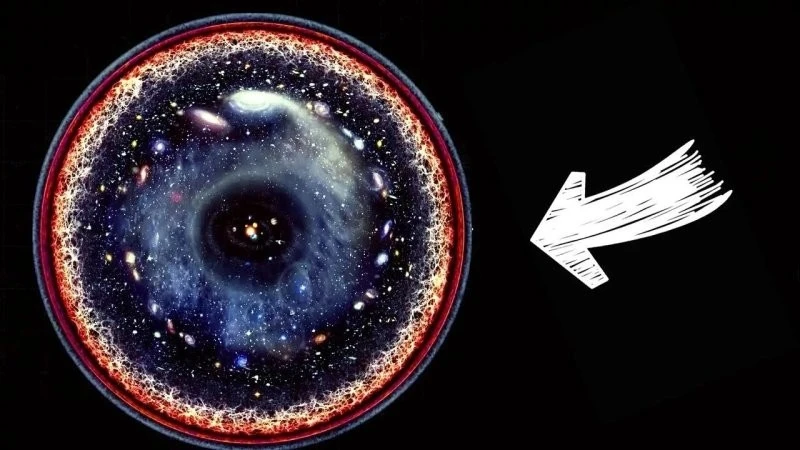
So what should we do? How should we live with this knowledge?
Here's the most important point. If Earth is a prison, then the key to your cage is in your head.
A prison functions as long as the prisoner identifies with it. As long as they believe the walls, bars, and guards are the only possible reality. The moment they realize they are not a body in a cell, but a consciousness that can transcend its confines, is the moment their escape begins.
Therefore, all spiritual teachings, from Gnostics to Buddhists, speak of the same thing: Wake up. Remember. Know yourself. Your thoughts, your consciousness, your creativity—these are tools that the system cannot fully control. Love, compassion, beauty, intuition—these can be glimpses of the reality that lies beyond the prison.
The exploration of space, science, quantum physics, and the nature of consciousness is not simply the "advancement of civilization." It is an attempt to crack the prison code. Every time a person makes a breakthrough in understanding the universe, meditates, attains a state of unity, or creates a true work of art, they create a split second of rupture in the dome. 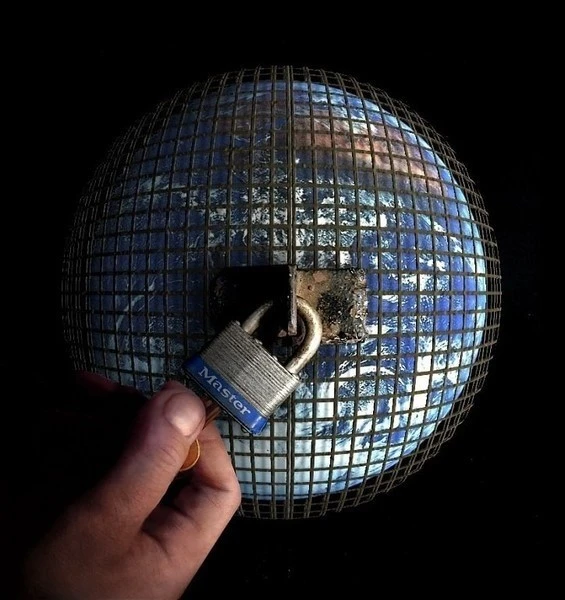
Conclusion: Your Verdict
Earth is a beautiful, living, and suffering planet. Is it a prison? There is no absolute proof. But the hypothesis explains the anomalies of our existence too well to simply be ridiculed.
Perhaps it is not a prison in the literal sense, with bars and guards. Perhaps it is a school. A harsh, cruel school where souls learn through pain and limitation. Or a laboratory for growing something we can't yet understand.
But here's what I know for sure: even if this is a prison, the escape doesn't begin with a spaceship. It begins with the question "Who am I?" From the moment you stop being a passive consumer of reality and become an active explorer of your own consciousness.
As long as you ask such questions, as long as you search, as long as you refuse to accept the imposed worldview as a given, you're no longer just a prisoner. You're a rebel. And rebellion is the first step to freedom.
So look at the stars not with the melancholy of a prisoner, but with the cold fury of an explorer who will one day find a weak spot in the wall. And remember: the most secure prisons are those in which the prisoners don't even suspect they're imprisoned. The very fact that you're thinking about it means you're already halfway to the exit.