As strange (and disgusting) as these appendages may look, their presence is completely normal. 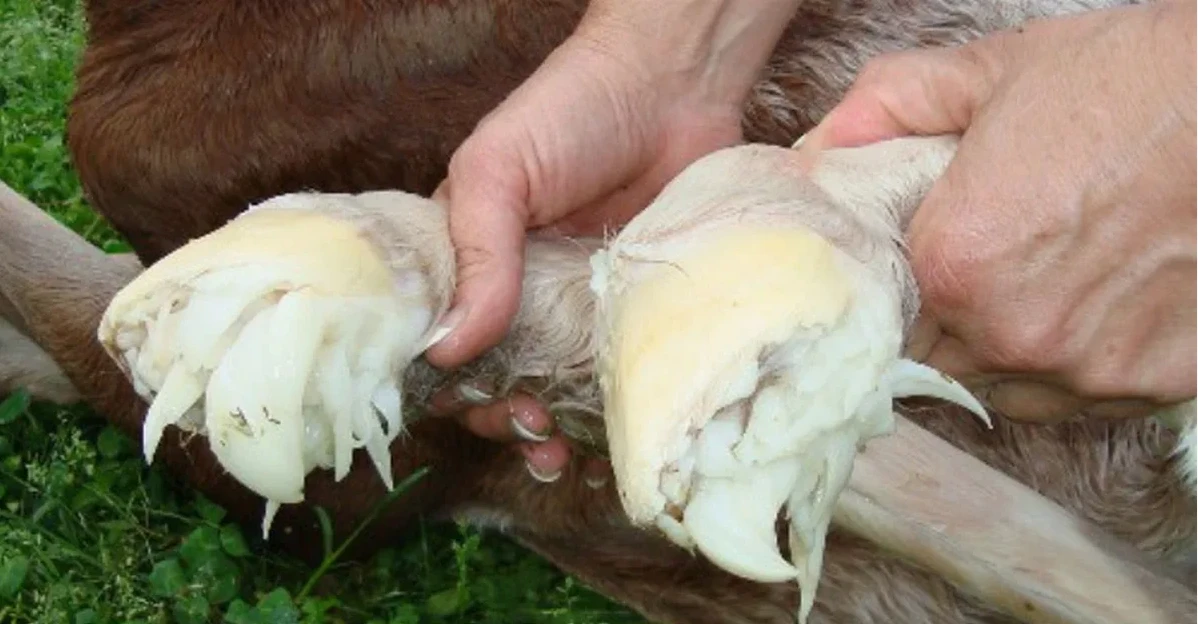
Question of the Day: Does This Foal Worship Cthulhu?
So, imagine for a moment that you are a horse embryo, and like any normal embryo, you are scheduled to be born at the appointed time. There's just one problem. Since the world is an extremely dangerous place, you need to learn to walk within the first hour of birth, and you can't do that without strong, durable hooves. But if you begin your journey through the birth canal in keratin slippers, it will likely end tragically for both you and your mother. Internal organs are extremely delicate and vulnerable, so one awkward movement and your life's journey will be cut short before it even begins. And you don't want that, do you? 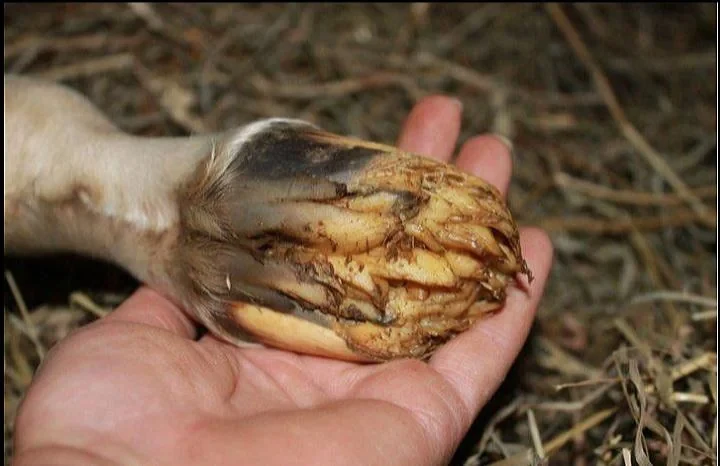
From the heart and kidneys, from the birth canal, a flower!
And here, shoe covers, scientifically known as hoof capsules or eponychiums, come to your aid. Essentially, these are just skin growths, a shapeless mass of epithelial cells. It formed last, and only in the second half of pregnancy did normal structured epithelium begin to develop within it. However, the eponychium itself remains until birth. 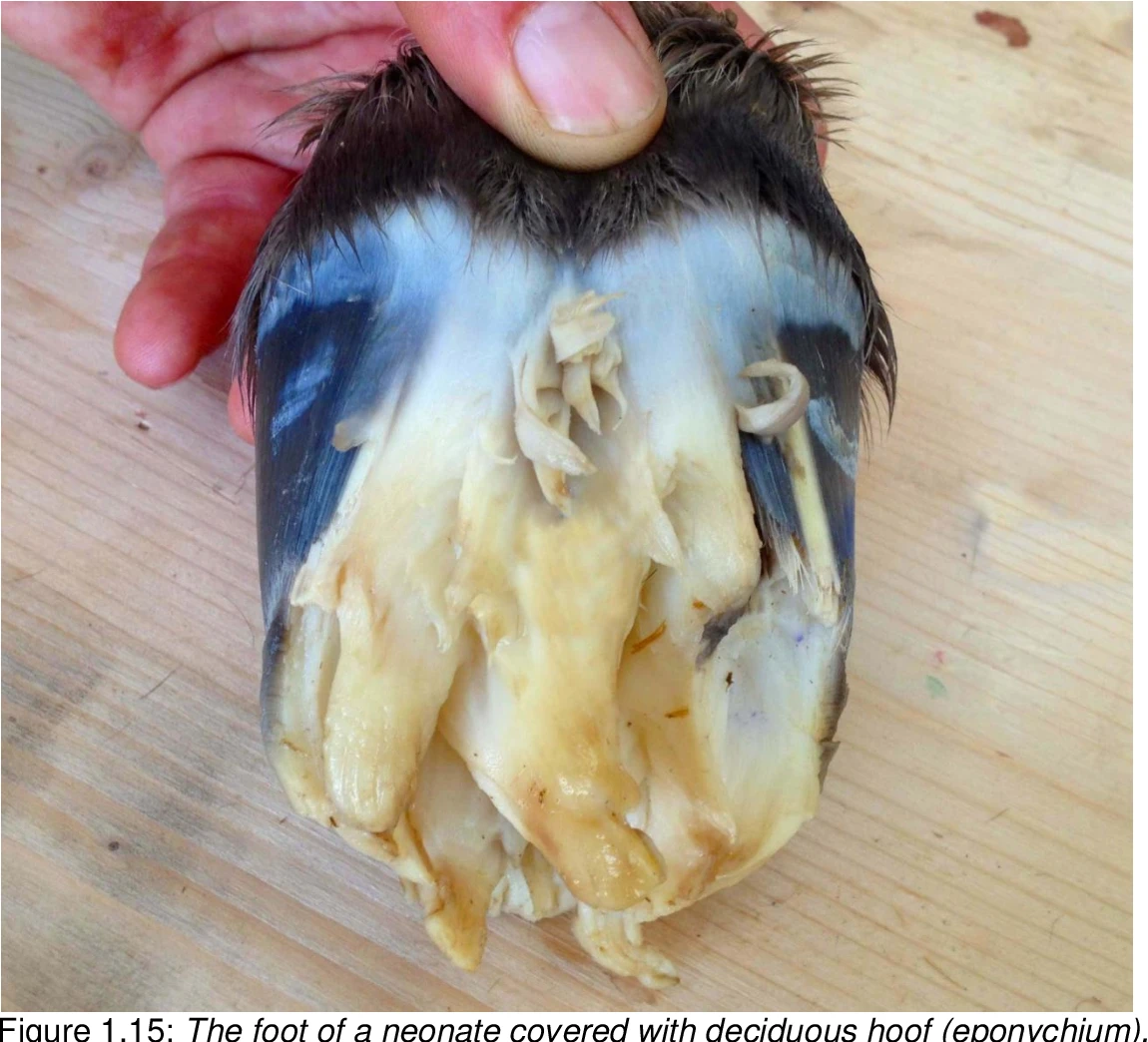
And at the hospital, they give out completely different shoe covers...
And then it peels off and wears off within the first few minutes of walking, revealing the hidden hooves. After all, this is ordinary skin, soft and vulnerable. Meanwhile, the babies themselves feel only a slight itch. After all, the hoof capsule has virtually no blood vessels or nerve endings. 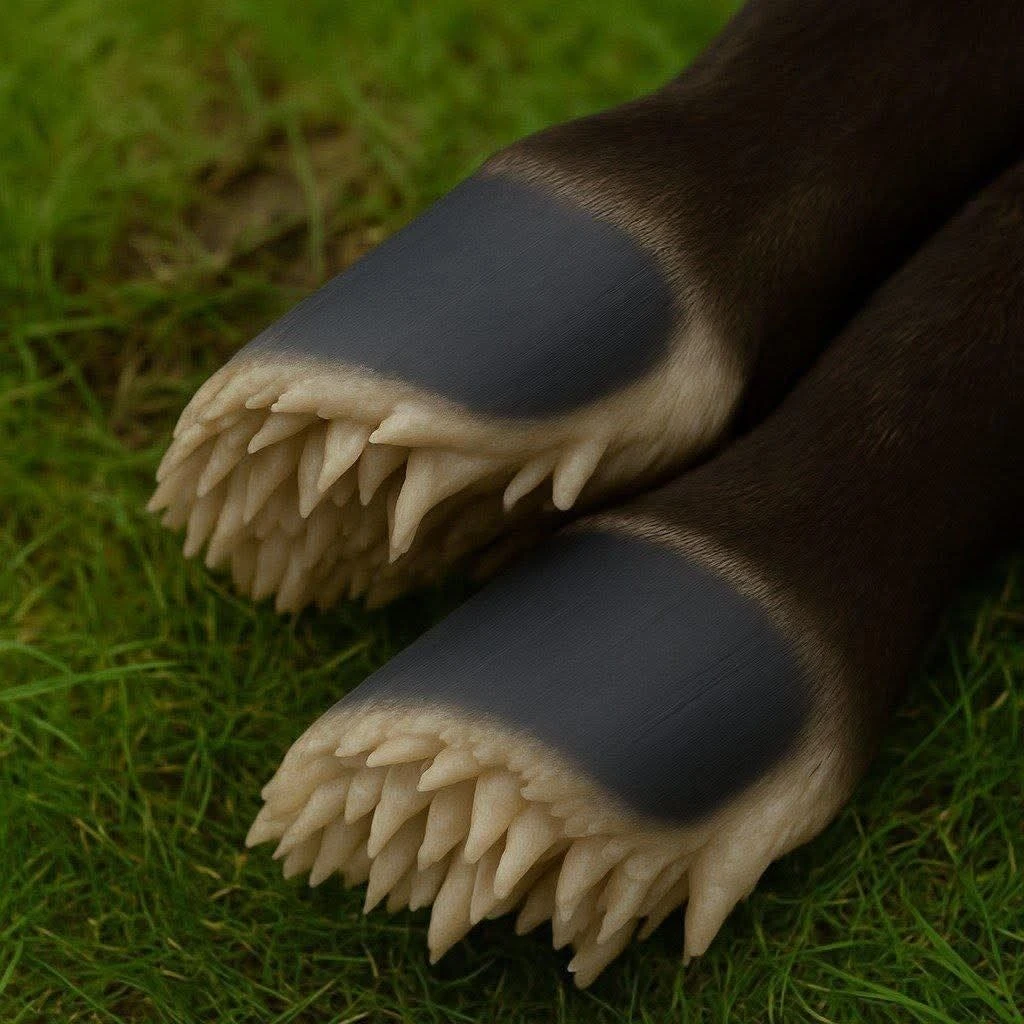
This photo was taken by AI, but it gets the point across. However, most photos of eponychiums are quite unpleasant, and we've only shown the most acceptable ones in this article.
In this elegant way, nature solved two problems at once: it protected the mother and enabled the baby to quickly get back on its feet. Moreover, this method is far from new; absolutely all ungulates have eponychiums, except whales (yes, whales are cetaceans!), which don't need them! 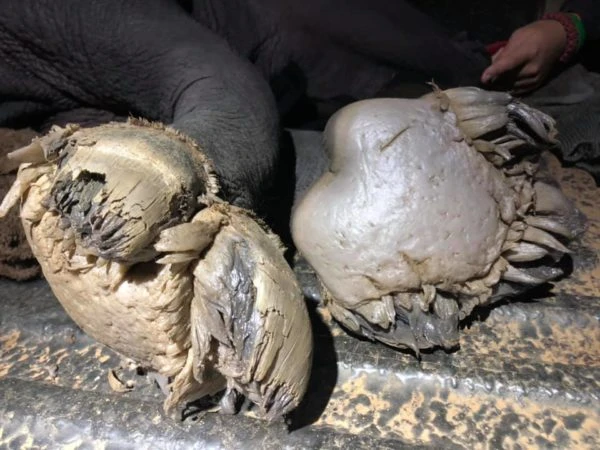
Even a rhinoceros has an eponychium, despite the absence of normal hooves in its lineage. It looks like a child walked in mud and it stuck.
Add your comment
You might be interested in:










Emotional foal leads rescuers to help horse in distress
The beginning of life: from conception to birth (24 photos)
Test tube rhinoceroses: scientists have figured out how to

How the Stone Forest appeared in Bulgaria (4 photos)
Sometimes horns grow directly on the hooves: is this an

Mom panda sees her baby for the first time

How to start a 102-liter engine

Protective film Removing it with a power screwdriver

When a child plays hide-and-seek at a professional level

Man sets up bedroom camera and discovers the reason for his

Super dads who swoop in to save the day

Precision carpentry

Looks like it's time to buy WinRAR

How to hang wallpaper neatly

How metal buckets are made in Pakistan
