17 artifacts from bygone times that aren't found in history books (18 photos)
Do a clay fox, a net woven from hair, and a Chinese box in a Scythian tomb have anything in common? 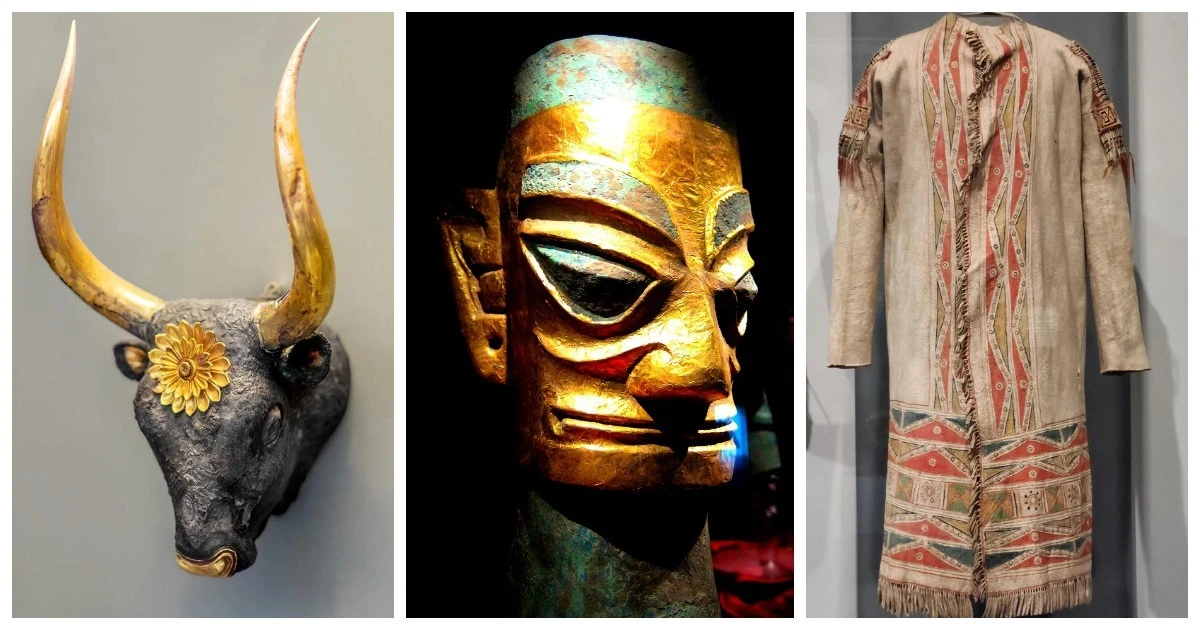
Of course, because each of these objects represents a piece of a puzzle that challenges conventional historical boundaries. This is not just a collection of objects from the past, but a fascinating journey through bygone eras, where artifacts serve as stops and keys to understanding complex, sometimes detective-like, stories of the past.
1. Spanish archaeologist Manuel Esteve poses with a Corinthian helmet he found in 1938 near the mouth of the Guadalete River. 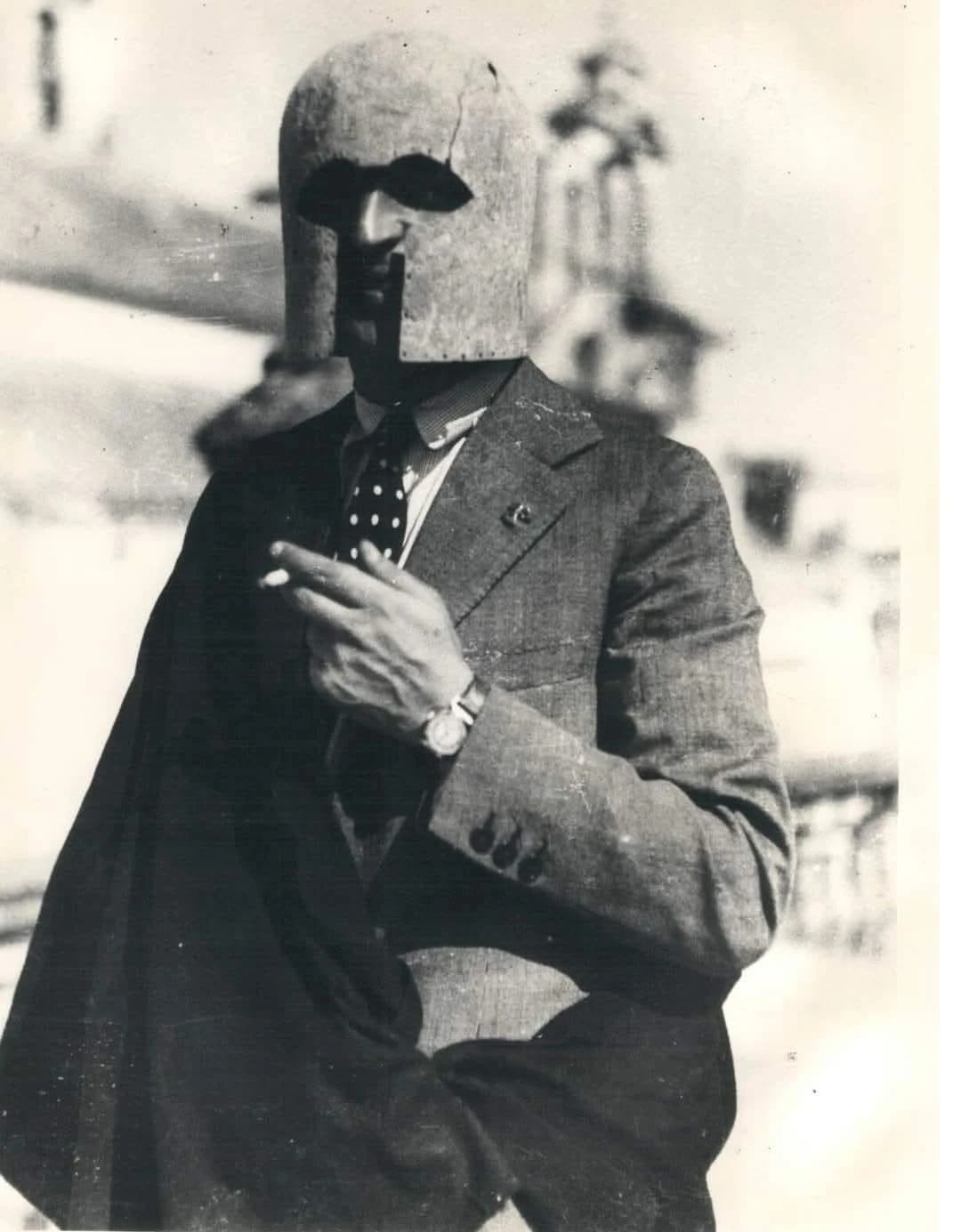
2. A pre-Columbian arrowhead made of petrified wood, discovered in Petrified Forest National Park in Arizona 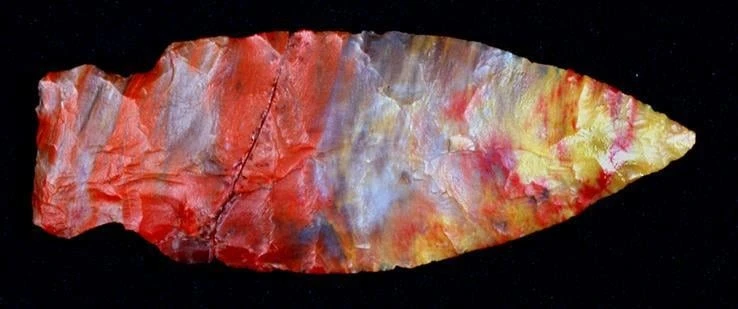
3. Ancient Greek terracotta figurine of a fox scratching its head. Late Classical/Early Hellenistic, ca. 350-300 BC. 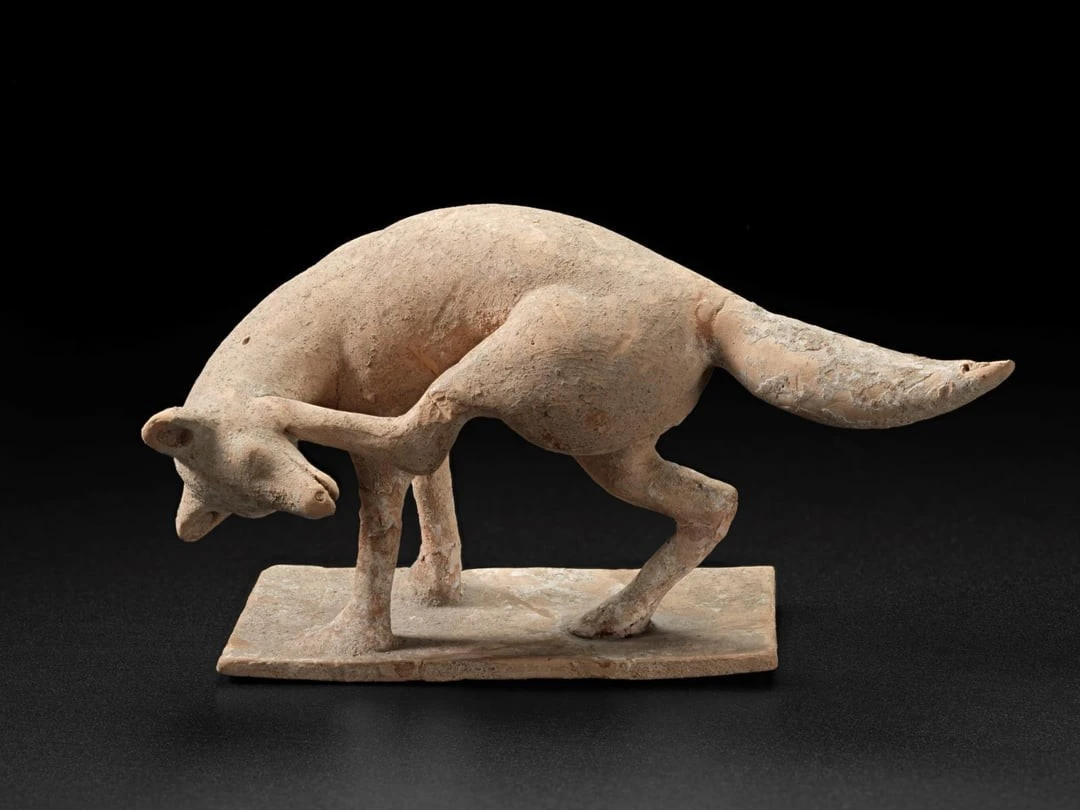
4. The 900-year-old Nankowip Granaries, built by the Ancestral Pueblo people, are located approximately 200 meters above the banks of the Colorado River in Arizona. 
These granaries served as grain storage facilities and were designed as sealed structures to protect food supplies from seasonal flooding, rodents, and insects.
5. Two-thousand-year-old Chinese lacquer boxes from the Han Dynasty, found in the Scythian Ust-Alma necropolis in Crimea 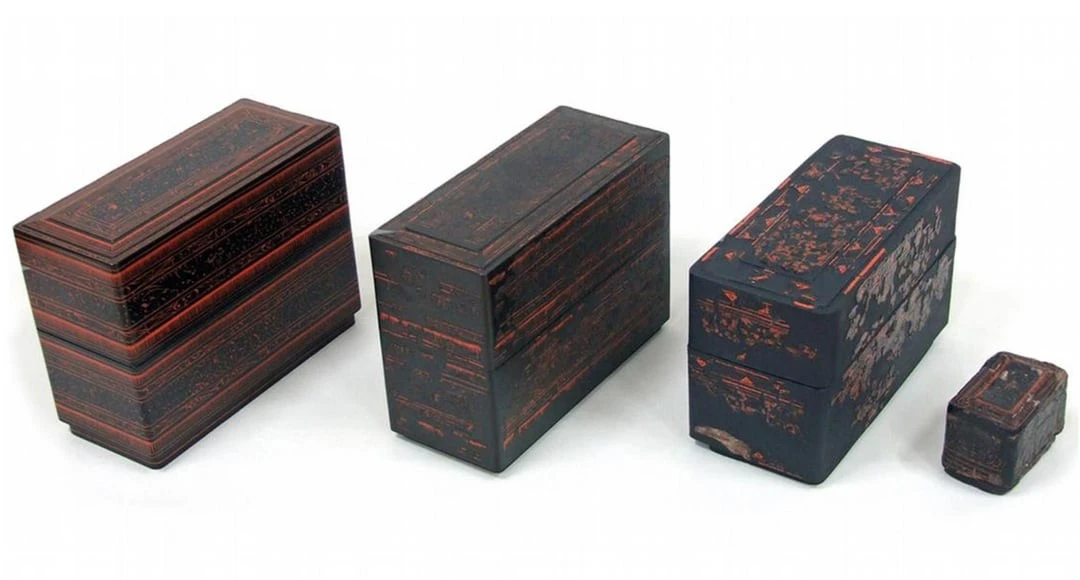
6. Removal of a statue of Nero being crowned by his mother Agrippina from the Sebastion in Aphrodisias, Turkey, 1979 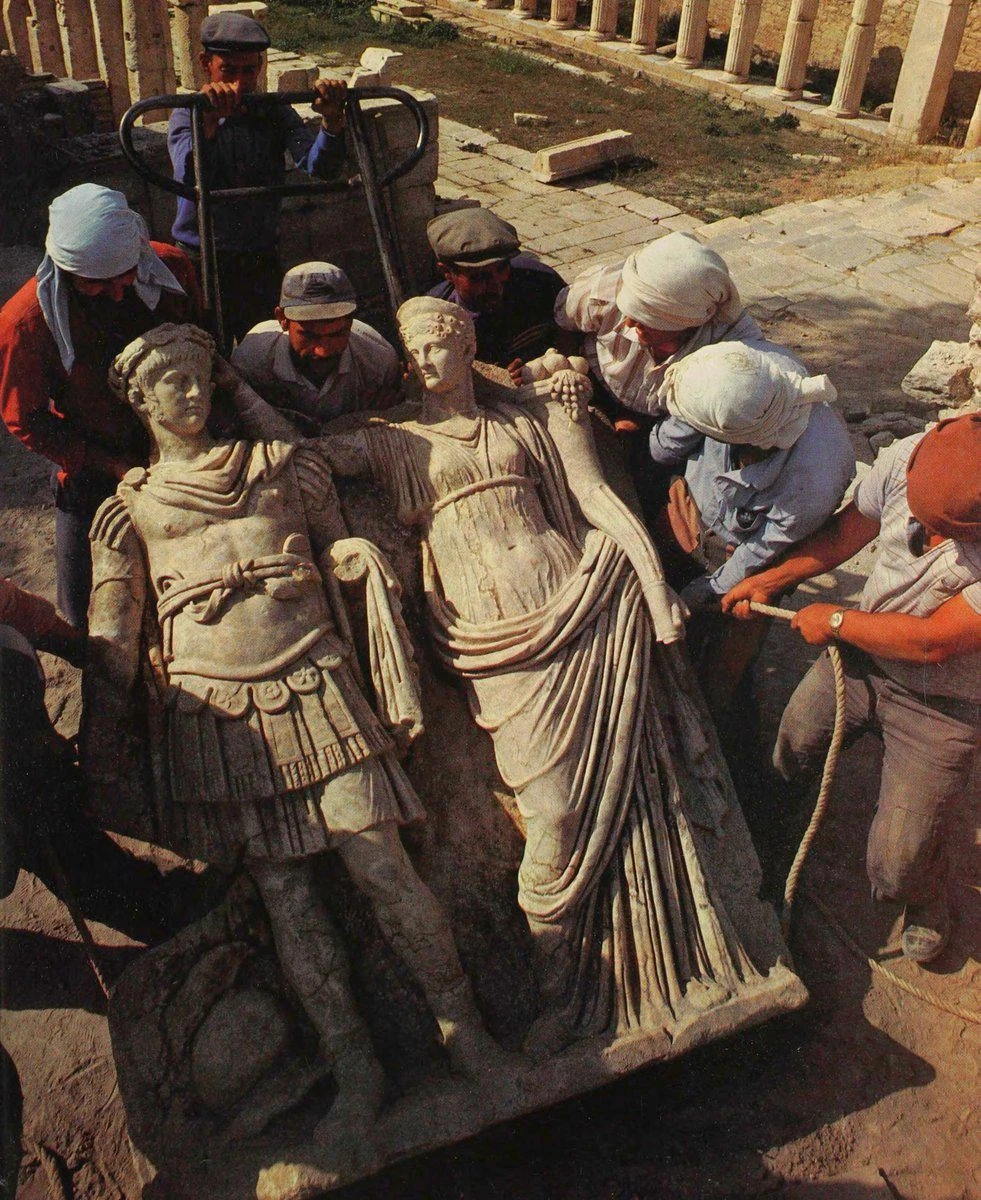
This is one of the most famous and telling finds from the ancient city Aphrodisias in Caria (present-day Turkey). Discovered in 1979, it has become key to understanding the political propaganda and family dynamics of Nero's early reign.
7. The Sacro Catino is a hexagonal plaque of bright green transparent glass, housed in the Museum of the Treasures of the Cathedral of San Lorenzo in Genoa. 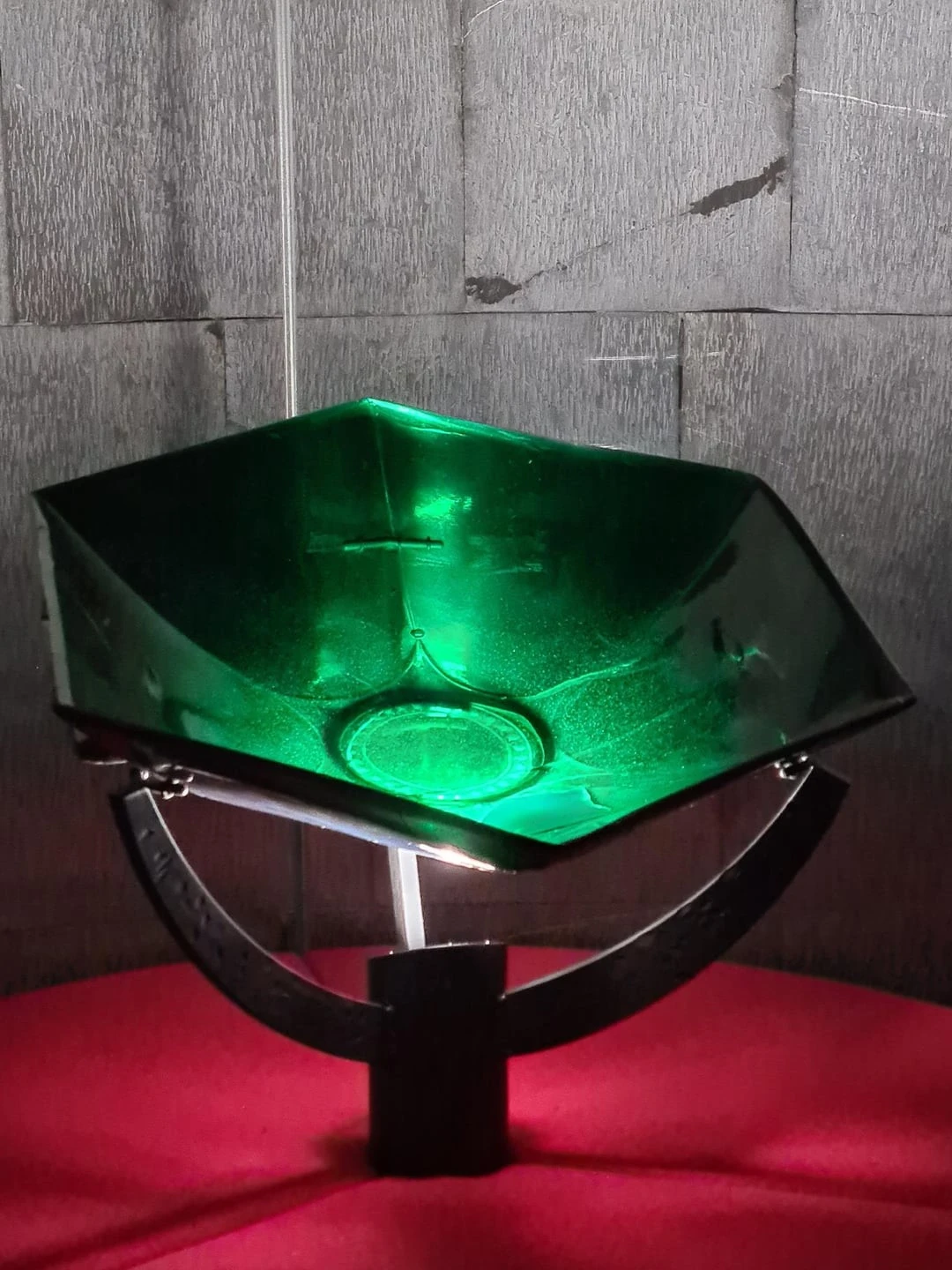
Long considered the Holy Grail, modern research has shown it to be an Islamic artifact created in the 9th–10th centuries CE.
8. This net, made primarily of human hair interwoven with yucca fibers, was used by the Hohokam community to corral and hunt rabbits. 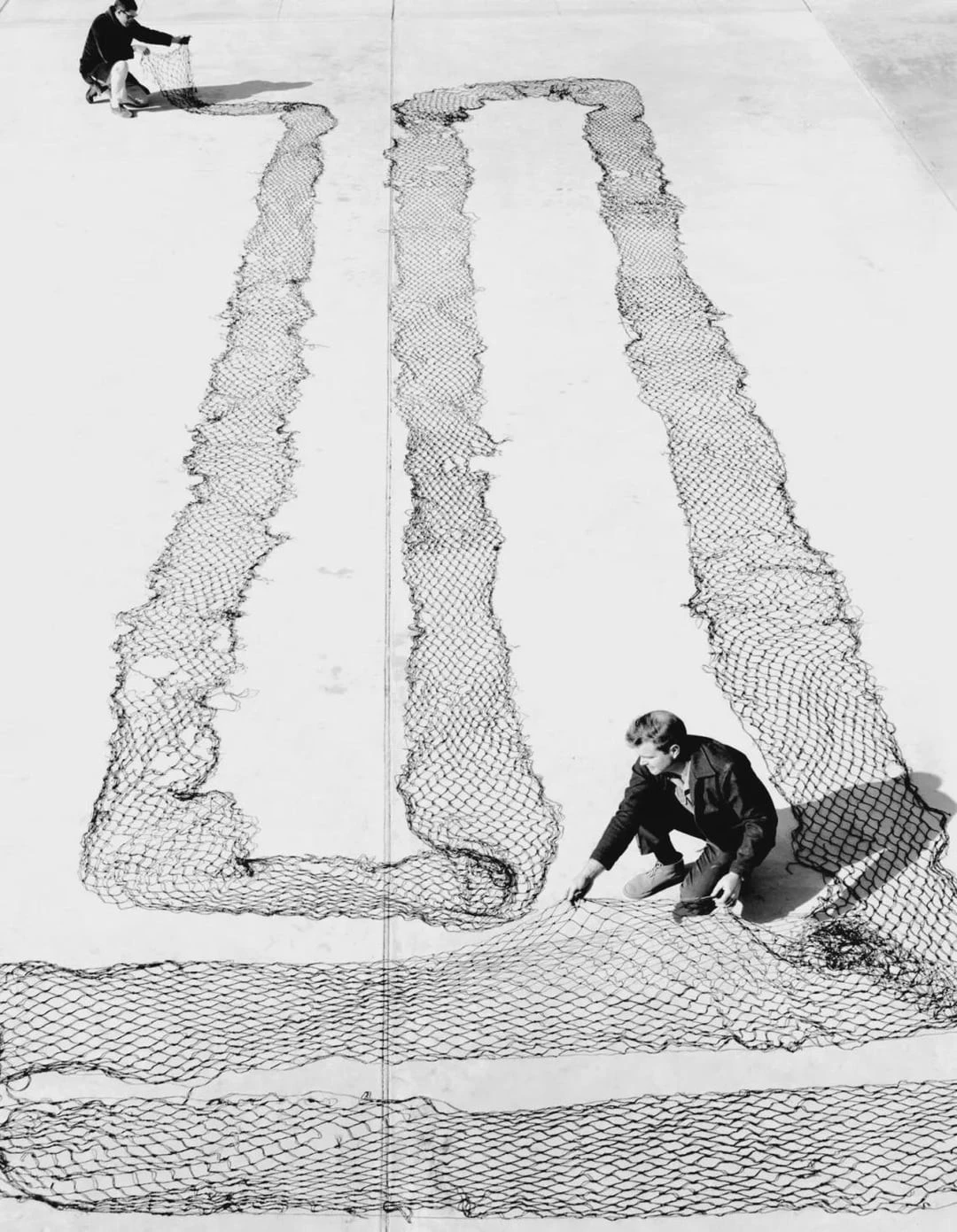
Discovered in 1962 in a cave in Altar Valley, southwest of Tucson, it dates back to 1250–1450 CE. Currently housed at the Arizona State Museum, this artifact is a wonderful example of the ingenuity and intimate knowledge of the local environment displayed by ancient communities who effectively utilized all available resources for survival.
9. "The Hunter's Daughter" is a wall painting depicting a girl with birds and lotuses, inside the Tomb of Menna. Thebes, Egypt, 18th Dynasty, 1422-1411 BCE. 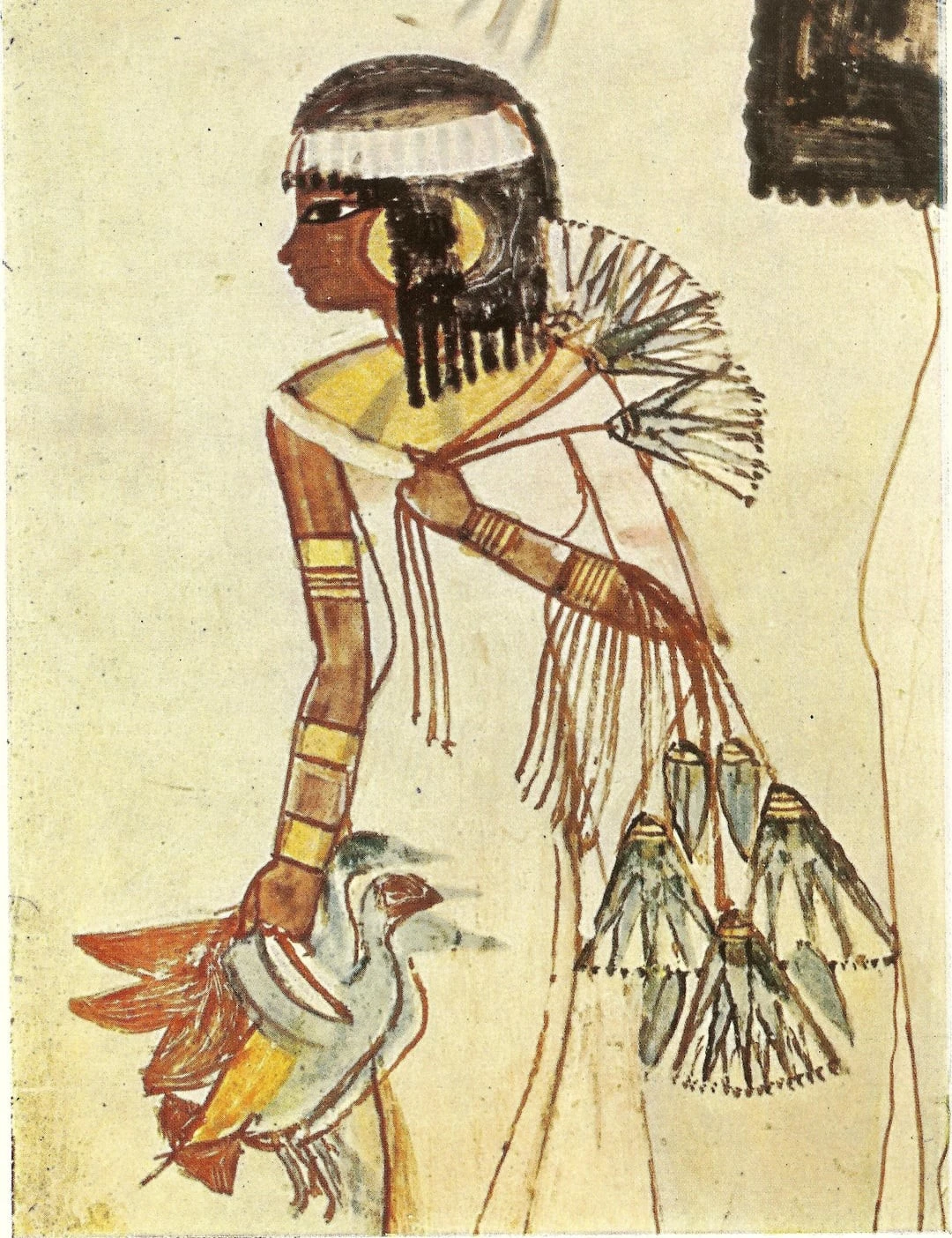
This is one of the most poetic and lively scenes in the famous tomb of the official Menna (TT69) on the west bank of Thebes (modern-day Luxor). The painting is a masterpiece of Egyptian art from the New Kingdom.
10. A linen orbicule from Egypt, decorated with the story of Joseph. On the left is depicted his being thrown into a well, and his brother carrying off his multicolored robe. On the right, the Ishmaelites carry Joseph away on a camel to sell him to Pharaoh. 650–699 CE. 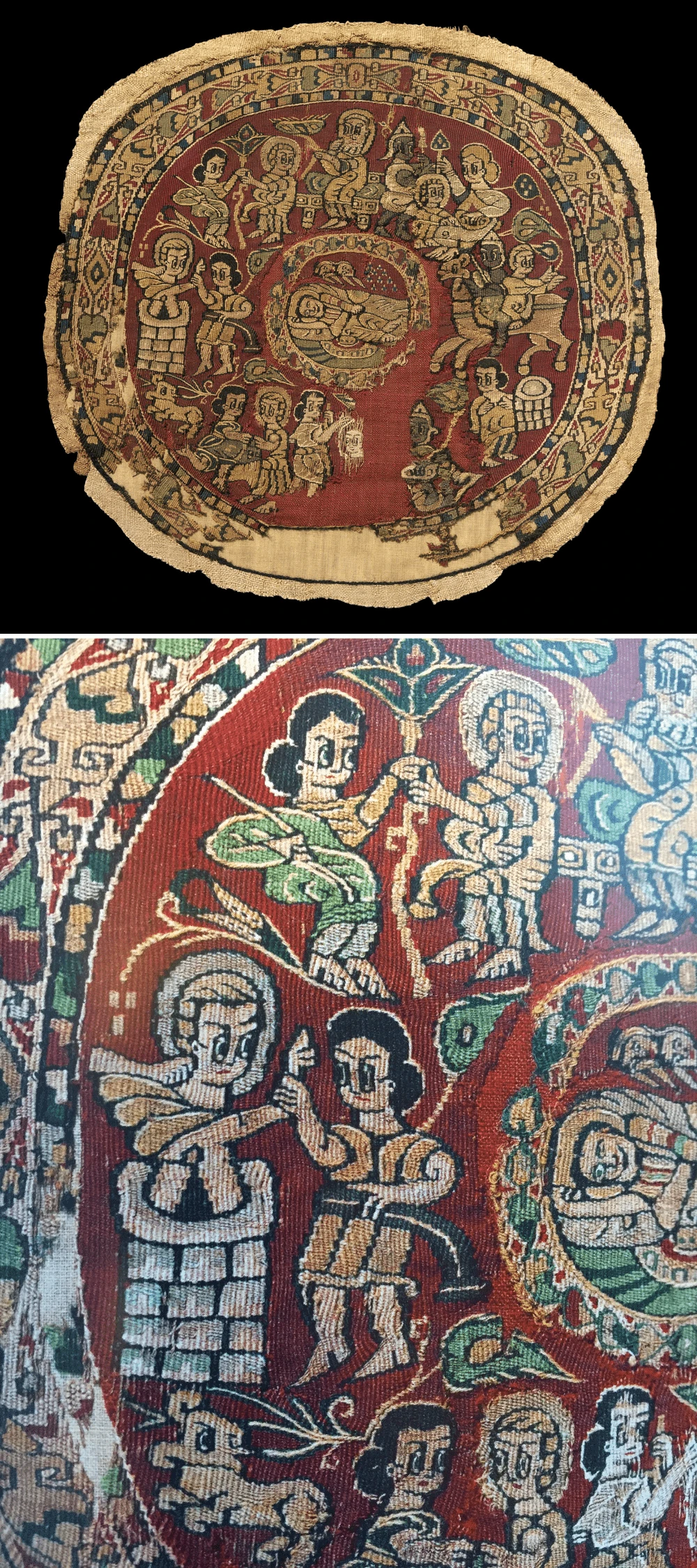
An orbiculus (Latin: orbiculus) is a round or oval decorative medallion woven separately and then sewn onto clothing (most often a tunic). It served as decoration and could carry religious or status symbols. This textile fragment is an excellent example of early Christian or early Byzantine Egyptian art.
11. Sanxingdui head in a gold foil mask 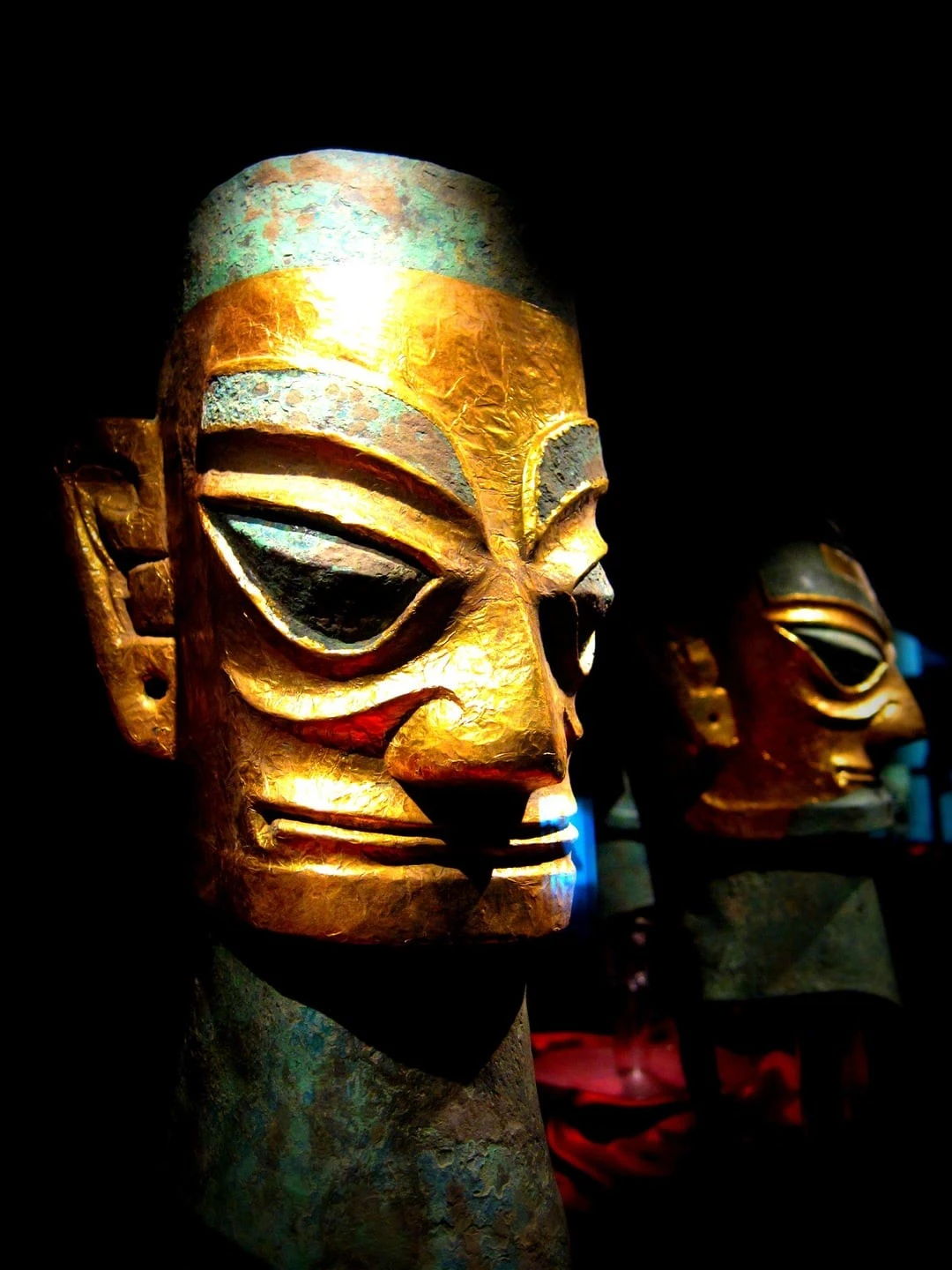
This civilization existed in China contemporaneously with the Shang dynasty, but was culturally (and probably linguistically) distinct. It is known for its very distinctive and "un-Chinese" artistic style.
12. Roman gold ring from Hadrian's Wall with an openwork inscription in Greek: "Love Gift of Polymios" (or "Token of Love from Polymios") 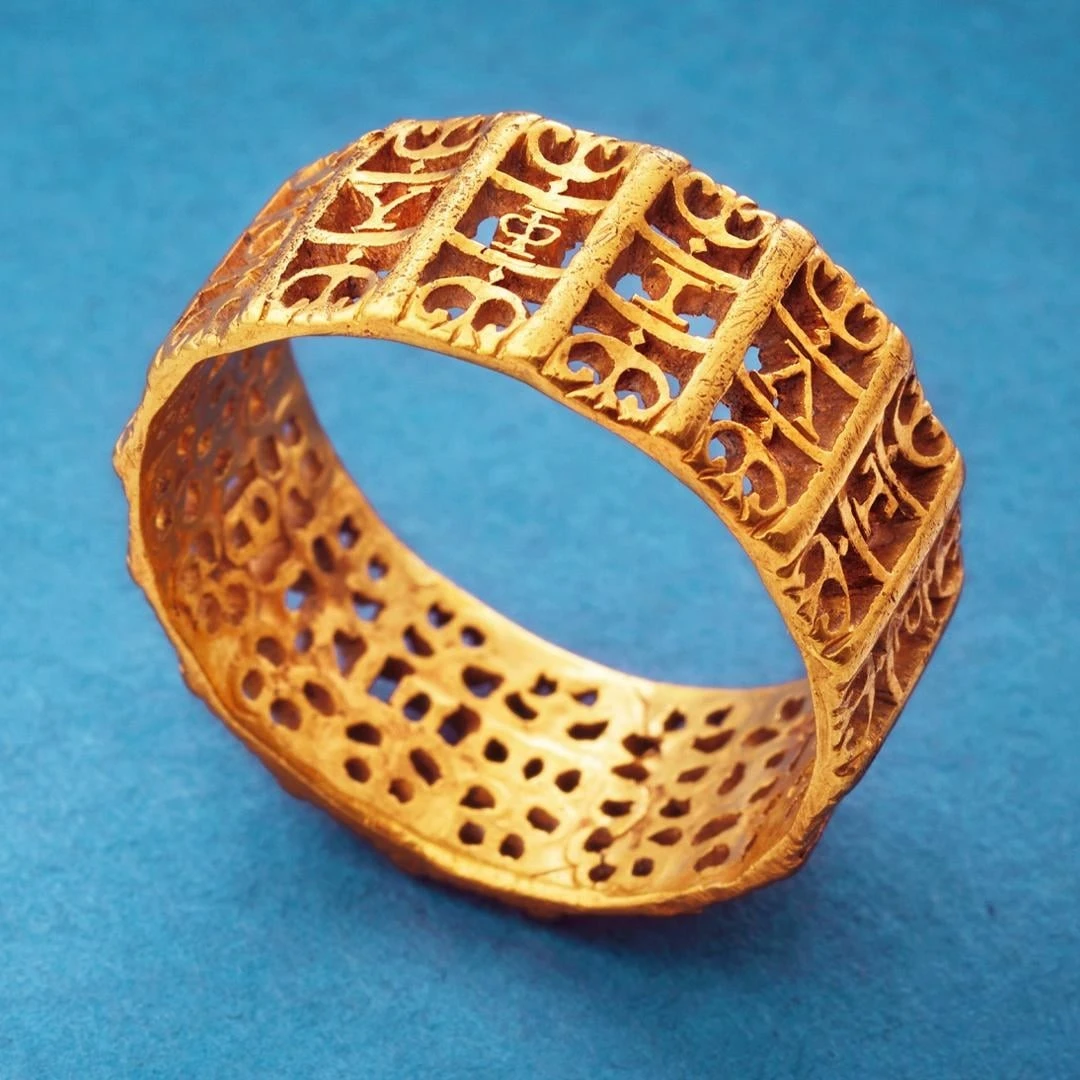
13. Golden diadem of the Scythian princess Meda, found in the tomb of Philip II of Macedon. Aegae (Vergina), Macedonia, Greece. 4th century BC. 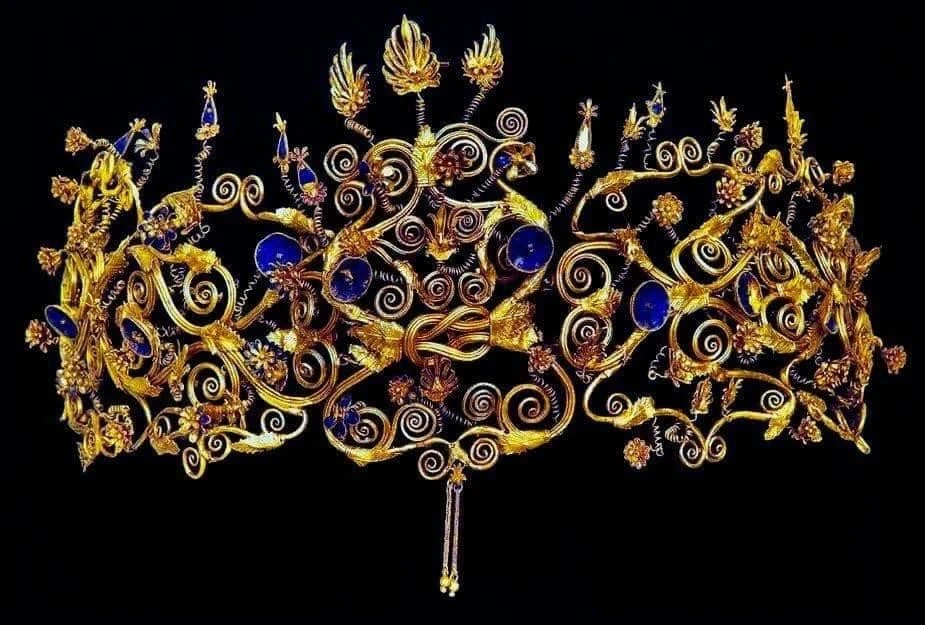
This is one of the most famous and intriguing personal items discovered in the royal tombs at Vergina (ancient Aegae). It belonged to one of the seven wives of Philip II, father of Alexander the Great.
14. Bracelet depicting the "Lover's Eye" - circa 1860, Britain, watercolor on ivory, set in gold 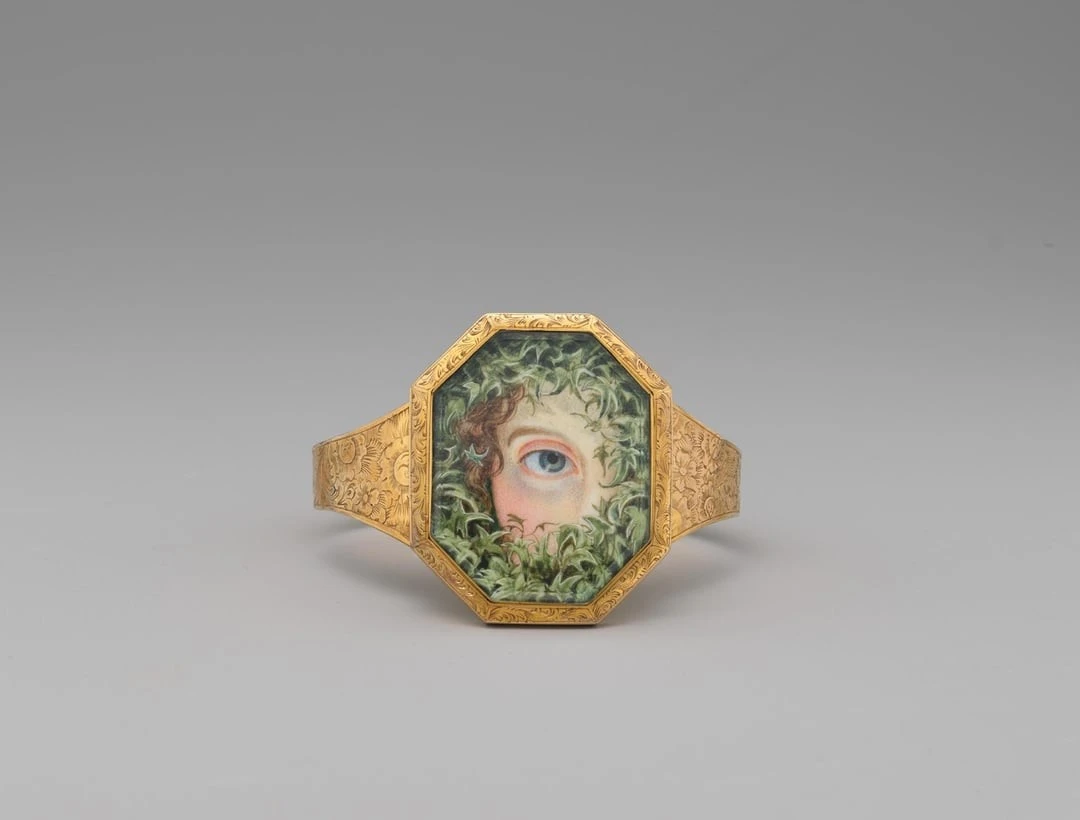
This exquisite piece of jewelry is a typical example of the highly personal and emotional fashion of the Victorian era. Miniature portraits depicted only the eye (sometimes with part of the eyebrow and hair) of a specific person. The idea was that such a portrait was both intimate and anonymous, recognizable only to the recipient.
15. Imperial offering vessel at the Altar of Heaven, glazed in "sacrificial blue." China, Qing Dynasty, 18th century 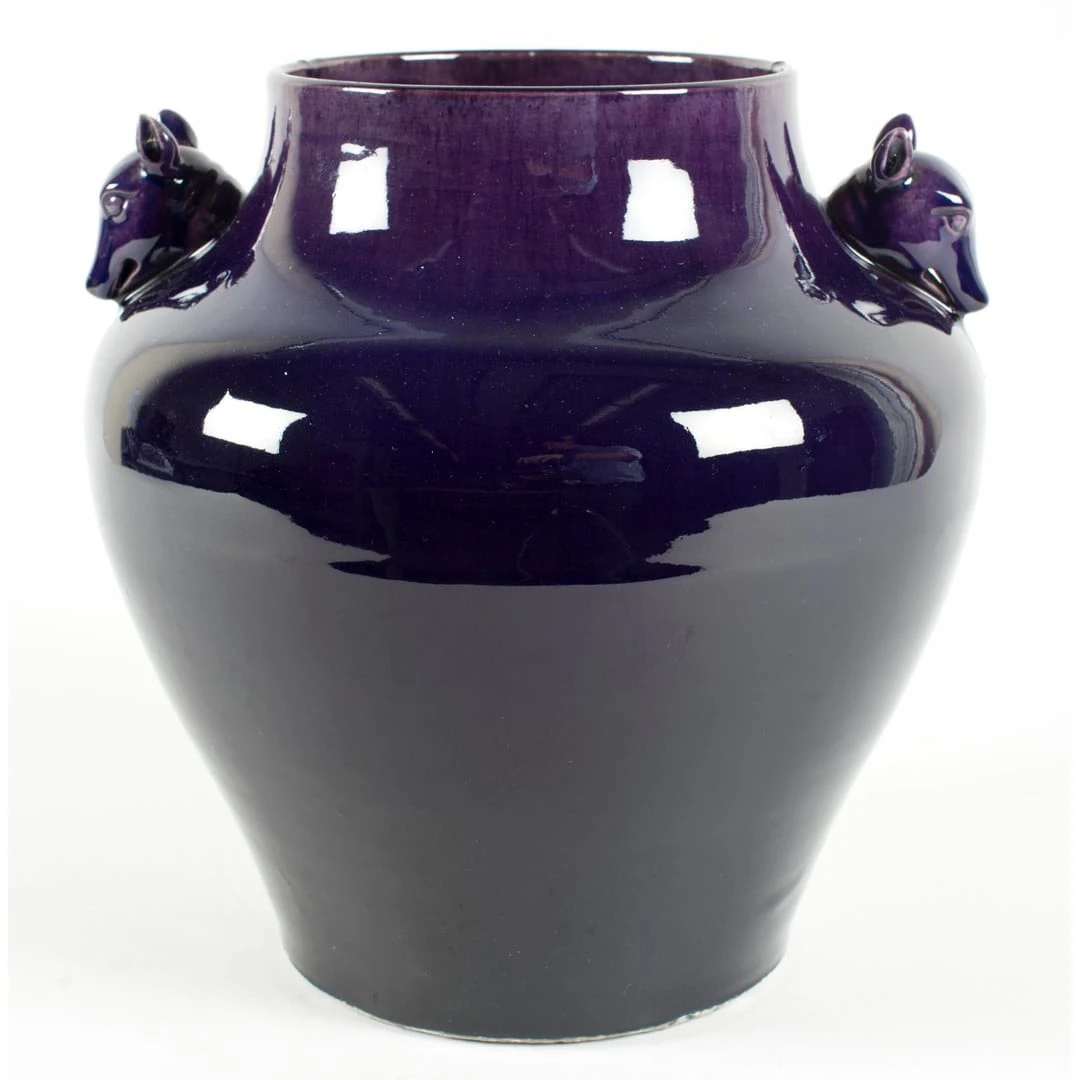
A fine example of ritual utensils of the highest caliber, created for one of the most important state ceremonies in imperial China. Blue (or cyan) was the color associated with Heaven (tian), the east, and spring in Chinese tradition. This glaze, like "imperial yellow," was forbidden to be used by anyone but the imperial court.
16. Mycenaean rhyton (ritual vessel) in the shape of a bull's head. Combining a silver base with gold embellishments, it demonstrates the highest level of craftsmanship. 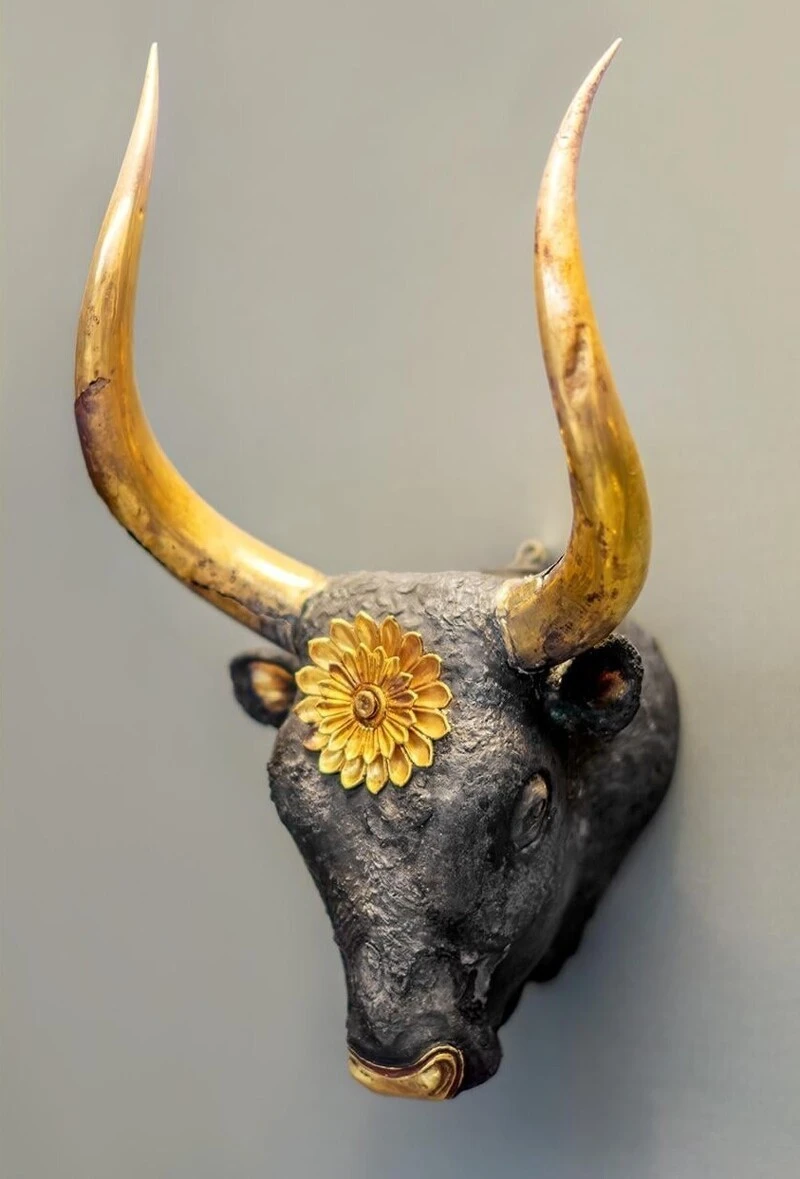
Dated approximately 1525 BC, it was found in Shaft Tomb IV within Grave Circle A at Mycenae, the royal necropolis of the most powerful Bronze Age civilization in Greece.
17. Men's clothing, Plains Cree people, Alberta, Canada, circa 1780–1820. 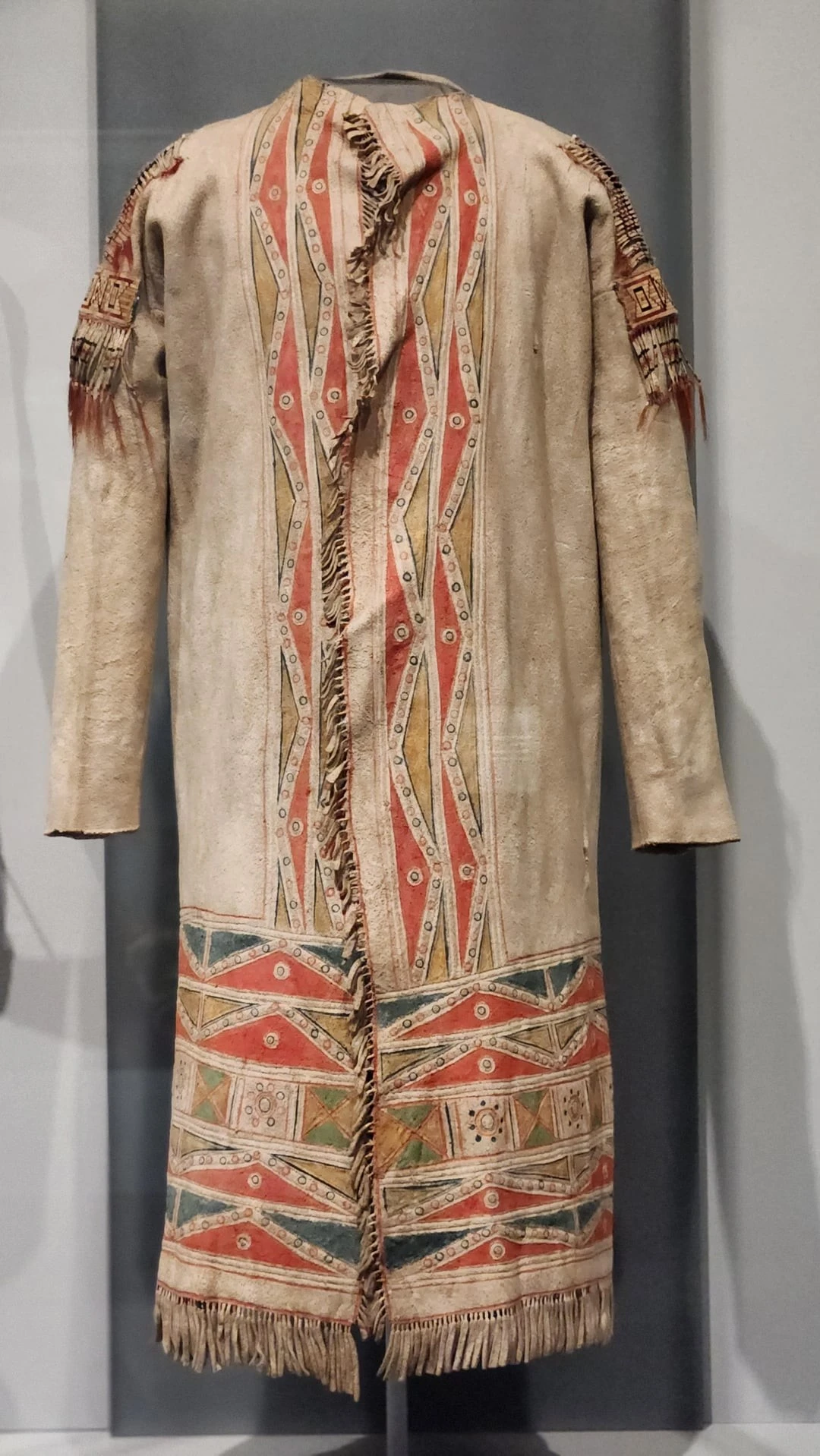
Moose skin, porcupine quills, animal hair, paint, dyes.