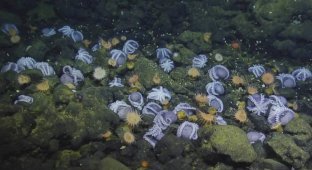
Cephalopod Ink — One of Nature's Most Elegant Inventions (3 photos)
Cephalopods—octopuses, cuttlefish, and squid—have an amazing survival tool they use in critical moments. This ink, which has proven to be a much more complex and effective defense mechanism than previously thought, has been demonstrated. 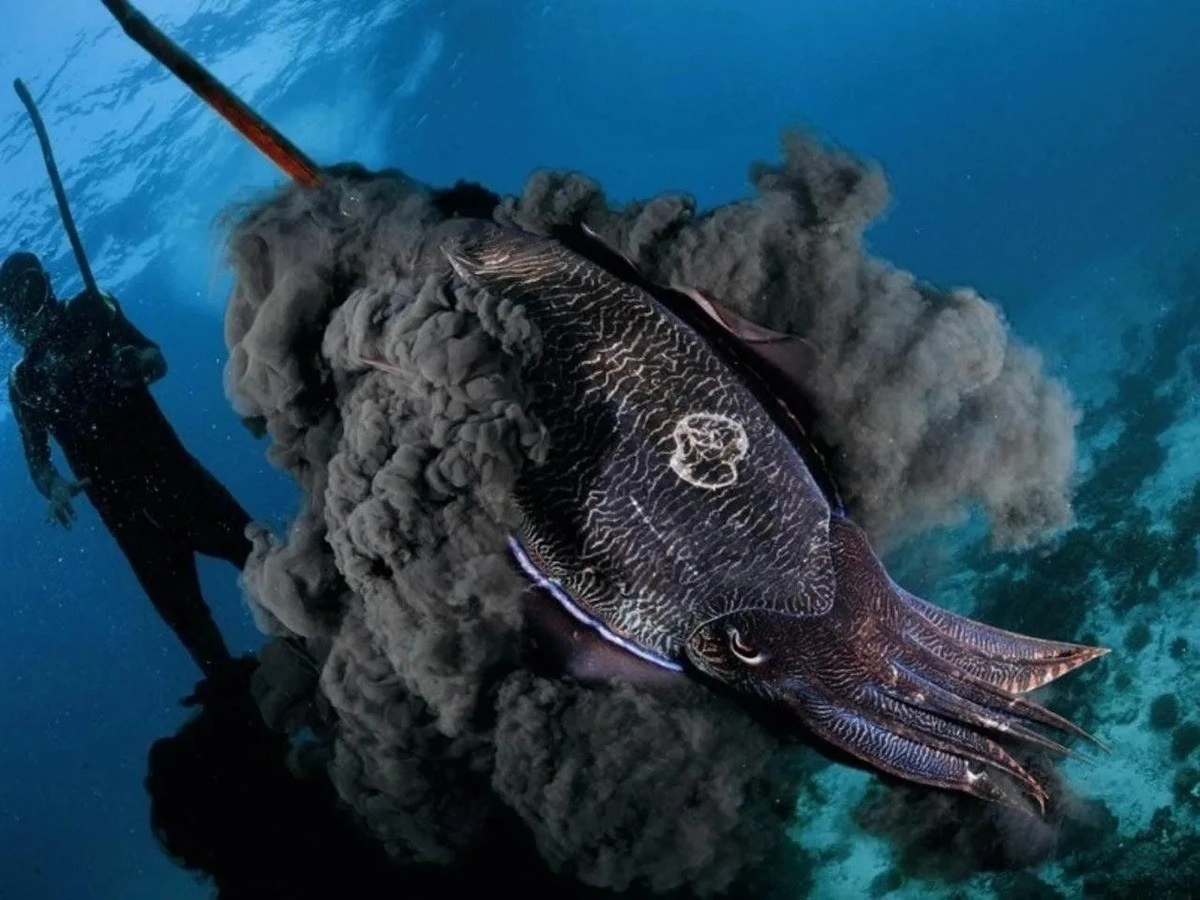
Not all ocean dwellers want to be research subjects.
When confronted with potential prey, cephalopods instantly eject ink. This deters and disorients predators, giving the mollusks precious time to escape and find shelter. The ink is ejected from a special sac inside the body—a modified extension of the rectum. Its composition is strikingly simple: melanin (the same pigment that gives color to our hair, eyes, and skin) and organic mucus.
Modern research shows that cephalopod ink is more than just a "smokescreen." The enzyme tyrosinase, which plays a key role in melanin production, can cause severe eye irritation in predators. The ink cloud also temporarily disrupts the attacker's sense of smell and taste, completely—albeit temporarily—disorienting them in the aquatic environment.
Remarkably, the ink cloud also serves as an early warning system for other ocean inhabitants. Seeing a dark spot in the water, marine animals understand that a predator is nearby and it's time to hide. Thus, one cephalopod can save the lives of many of its neighbors. 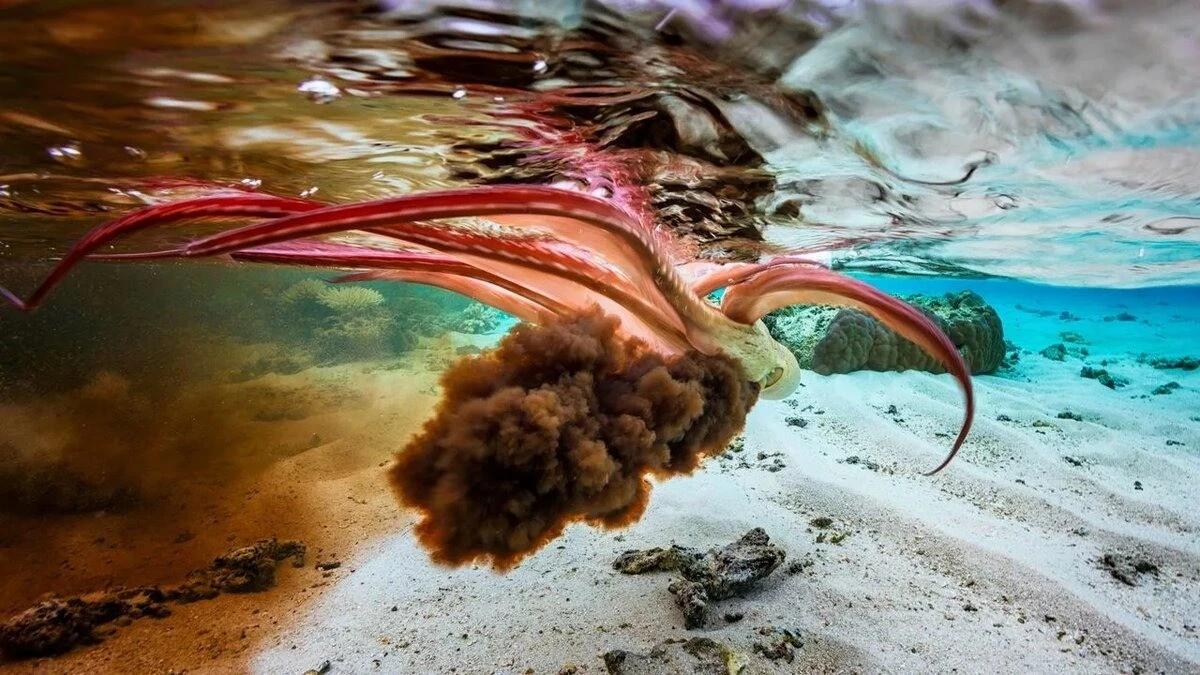
Contrary to popular belief, cephalopod ink is not poisonous. While these mollusks do have venom glands (especially the blue-ringed octopus), they are unrelated to the ink sac—they are entirely different defense mechanisms.
Not all cephalopods possess this extremely useful defense mechanism. The ink sac is absent in the ancient nautiluses and a group of deep-sea octopuses, including the charming dumbo octopus. However, this isn't a significant issue for them: nautiluses rely on strong shells, and deep-sea species live in areas where predators are virtually nonexistent. 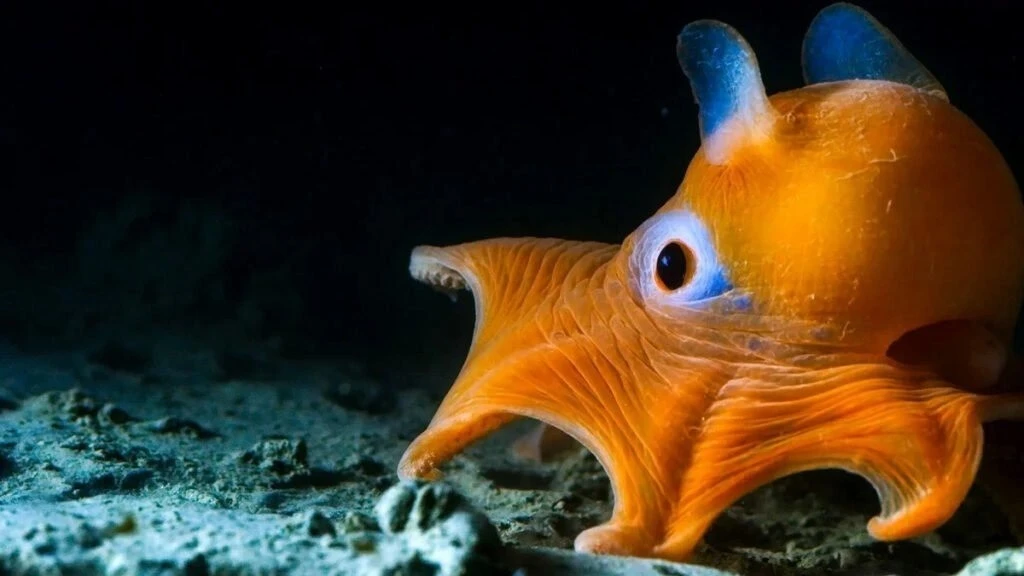
The adorable dumbo octopus has decided to settle in the deep, where the chances of becoming prey are much lower.
Most cephalopods don't boast a hard shell, sharp spines, or high speed. However, nature has endowed them with a much more interesting ability: instantaneous invisibility and complete disorientation of the enemy. This ink defense is the result of millions of years of evolution, which has given rise to one of the most elegant survival systems in the world's oceans.