Riftia: a worm living in the harshest ocean conditions (8 photos)
Riftia worms have no mouth, no stomach, or anything resembling a digestive system. Bacteria do all the work for them. 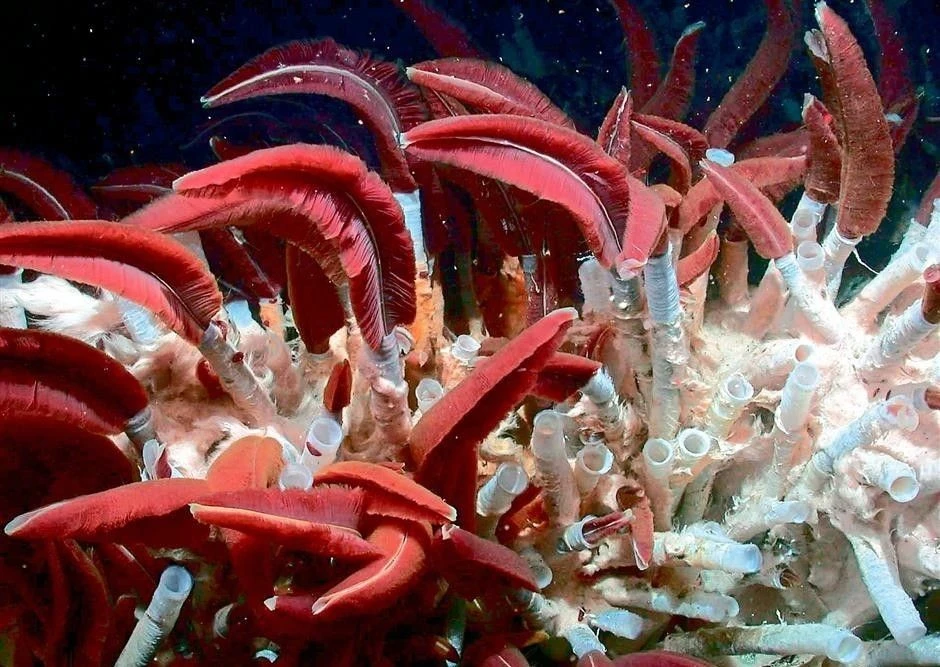
There are animals without eyes and ears. There are animals without limbs. There are animals without a brain. And then there's the Riftia worm—an animal without anything. It has no intestines, no sense organs, and not even a mouth! 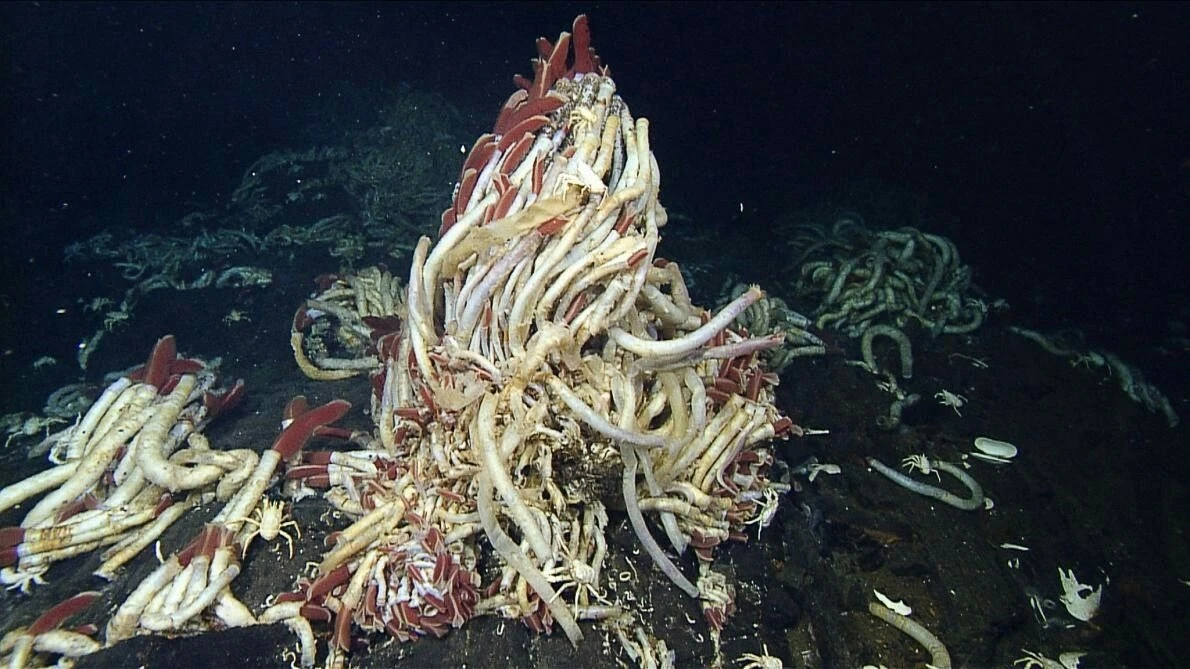
The fact is that the riftia lives in a place where life would be problematic. The worm's home is the seafloor several kilometers below the surface. It lives where deep-sea smokers smoke. In the pitch darkness, a toxic cocktail of hydrogen sulfide, heated to 350°C, spits out from the depths of the turbulent earth. For a long time, deep-sea smokers were considered uninhabitable. Scientists couldn't believe that organisms capable of establishing themselves in such conditions existed. But the riftia managed it. Moreover, they have become the fastest-growing organisms in the local ecosystem! In just two years, the worm grows 1.5 meters! 
This is what a hookah lover's paradise looks like: smoke and pipes everywhere!
That's because the riftia's structure isn't particularly complex. A soft body up to 3 meters long is hidden within a strong chitinous tube. Bright red gills protrude from it. That's pretty much its entire anatomy. Despite its simple internal world, the worm looks impressive. It forms colonies of thousands of individuals! Biologists poetically call them rosaries. Hundreds of scarlet tentacles disappear and reappear in the blackness of the smoker's eruptions. 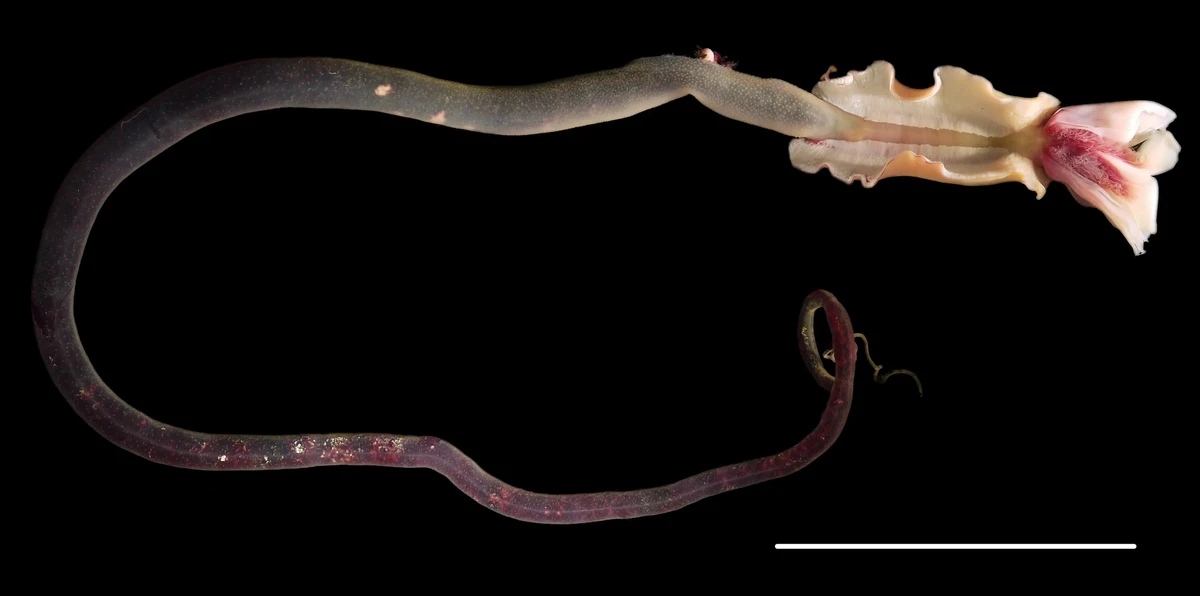
What does that cellophane-wrapped rose from an ex feel like?
Why stick anything out when there's nothing but smog, sulfur, and boiling water all around? For food, naturally! Riftia have no mouth as such, no esophagus, no intestines—nothing at all that could be considered a digestive system. It turns out that Riftia have a rather unique way of finding food. The worm itself doesn't eat at all. It's fed! 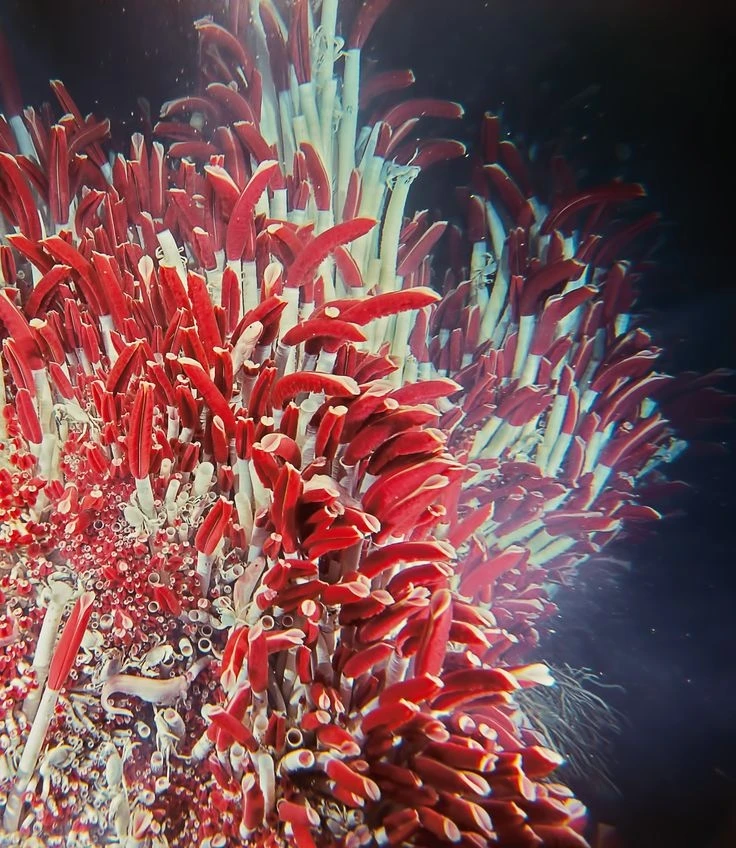
The gills' bright red color comes from hemoglobin, a protein that carries oxygen through the blood.
Half the worm's weight is made up of chemotrophic bacteria. They live right inside the riftium's body, close to the large capillaries. For them, toxic substances are food. Sulfur, sulfides, carbon dioxide—all the nasty stuff the riftium catches with its gills—enters the bloodstream and becomes food for the chemotrophic microorganisms! The bacteria receive the resources to oxidize the sulfides, and the worm receives enough energy to survive. A fair, mutually beneficial deal, which in science is called mutualism (a type of symbiosis). 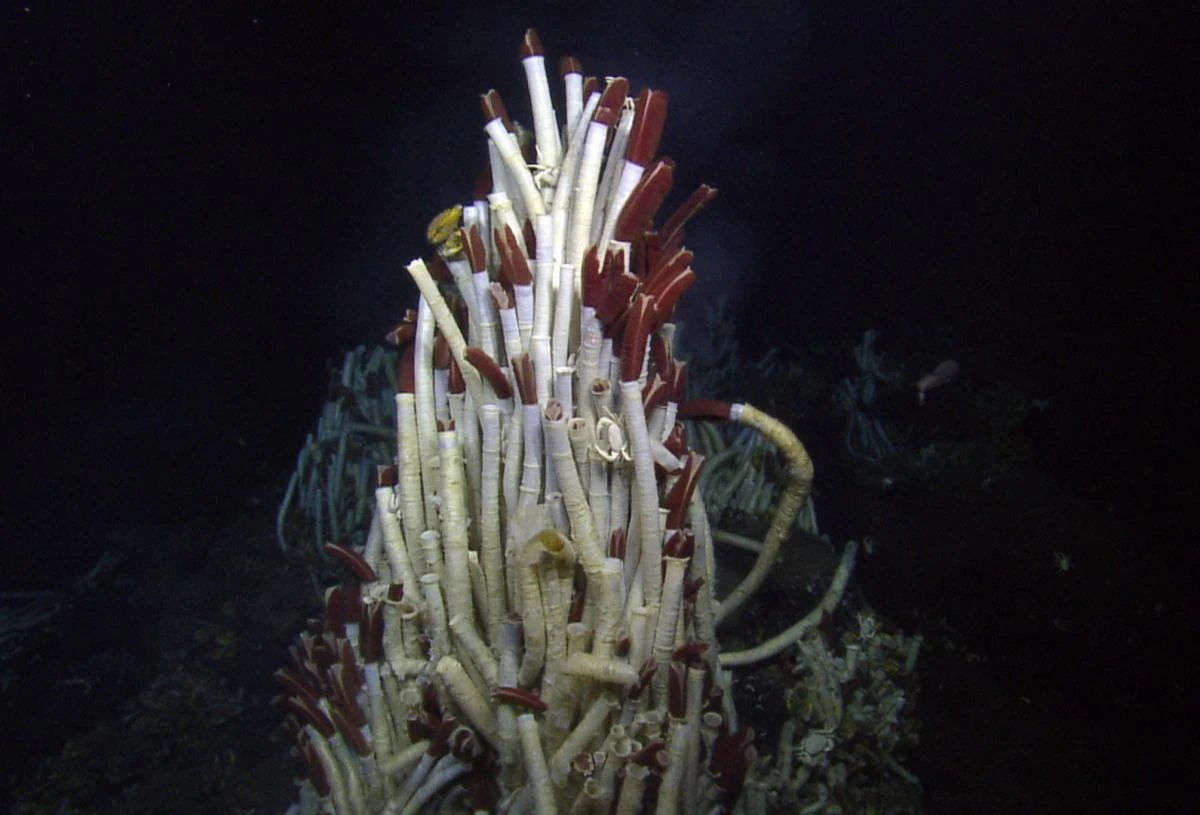
To protect its vulnerable body from harsh external conditions, the riftiya quickly constructs a chitinous cocoon around itself. Over the course of a year, the tube grows from 10 to 85 cm in length!
Once the food issue is resolved, it's time to think about the offspring. Riftiyas also have an unusual offspring—external-internal. During external reproduction, females and males create a fireworks display of reproductive cells. Riftias have a mixed breeding pattern: males release sperm into the water, but females keep the eggs to themselves. The larvae develop inside the adult's tube until they are ready to swim freely. 
Because Riftias form colonies, finding a partner for reproduction is easy.
Riftia offspring look nothing like their parents. They are bursting with life! By worm standards, of course. The babies actively ply the murky deep waters and are even capable of producing a full diet—they have a digestive system. But the joy of possessing an intestine isn't destined to last forever. Suddenly, the larva contracts an infection from those very sulfur-feeding bacteria. Like a good horror movie, events unfold gradually. First, the bacteria penetrate the skin, then they sneak up on the juvenile worm's tasty morsels between the intestine and the dorsal blood vessel. At this point, the rifthia realizes: its digestive system is dying. The only way to survive is to pump blood and chemicals through its body! 
Yes, this thing that looks like a piece of meat is the worm's most developed stage in its entire life.
Thus begins a toxic friendship that drags Riftia to the bottom. The worm settles in areas with the most virulent emissions. On the one hand, the main problem of the deep sea is solved—there's no need to worry about hunger. Now the worm is fed with pure energy by bacteria. On the other hand, Riftia is forever unable to move. It encases itself in a chitinous cocoon and spends the rest of its life in the darkness and stench of deep-sea smokers.