Our furry brothers have always been an integral part of human life. Even a hundred years ago, they brought joy: frolicking with children, entertaining their owners with their pranks, and able to lift spirits with just a glance. 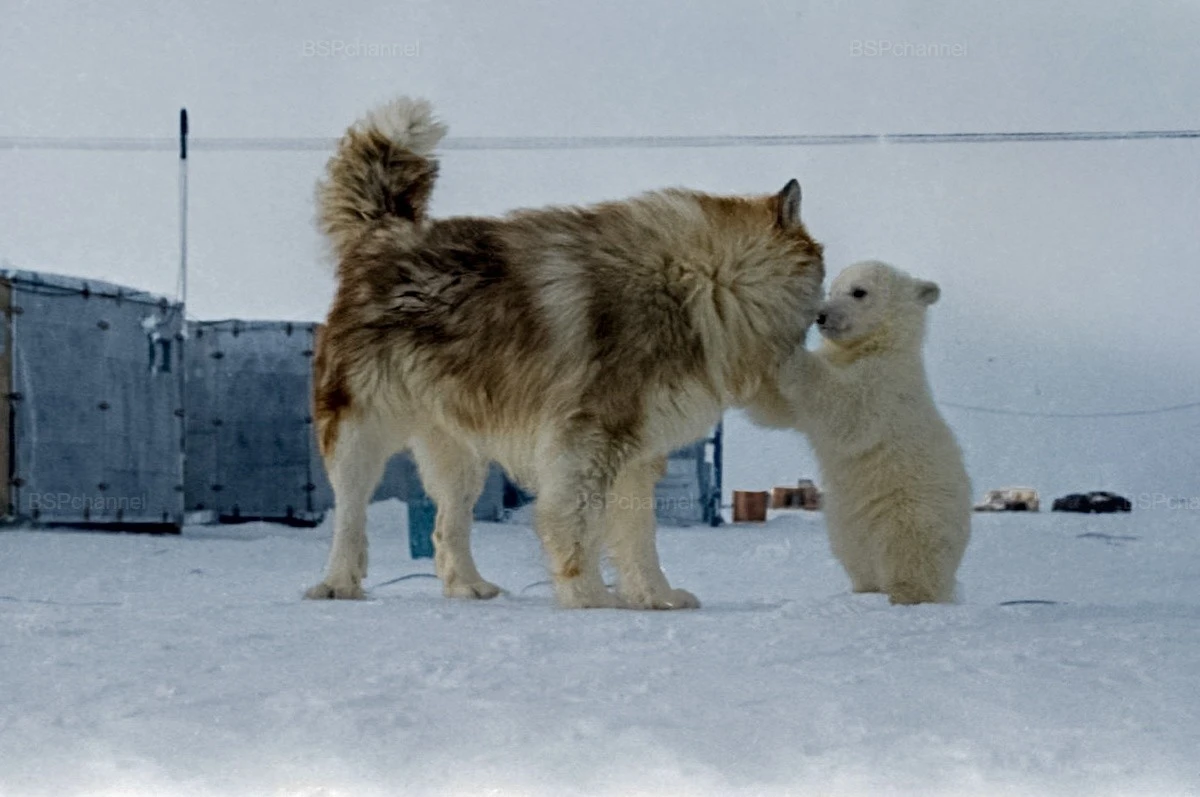
Melbourne, Australia, 1950s. 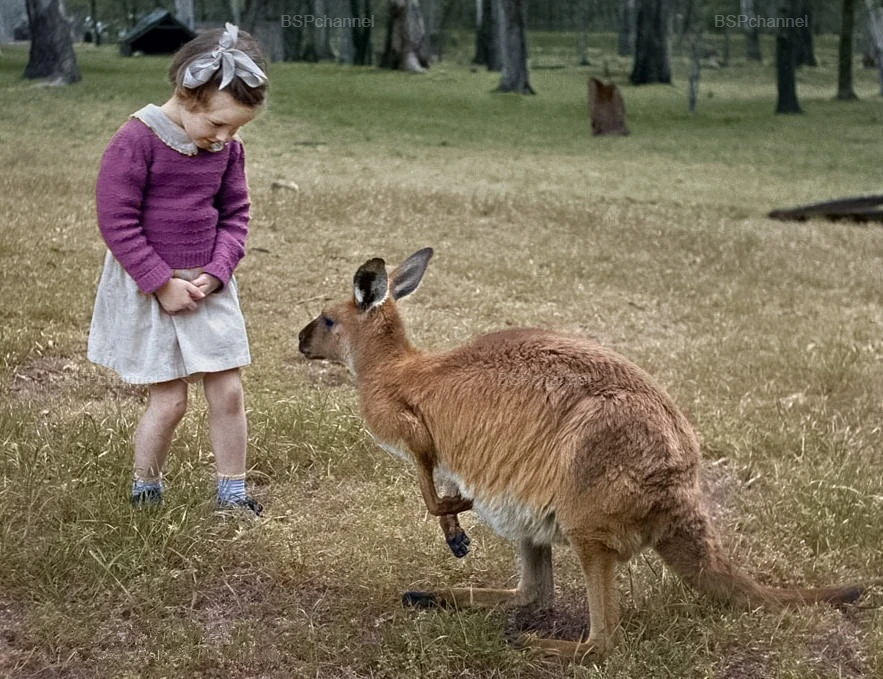
The kangaroo is not just an animal, but a national symbol of Australia, depicted on the country's coat of arms, coins, and emblems. These marsupials are so ingrained in the continent's identity that it's impossible to imagine the Australian landscape without them.
A bear cub born in the Sayan taiga. Krasnoyarsk Krai, 1967. 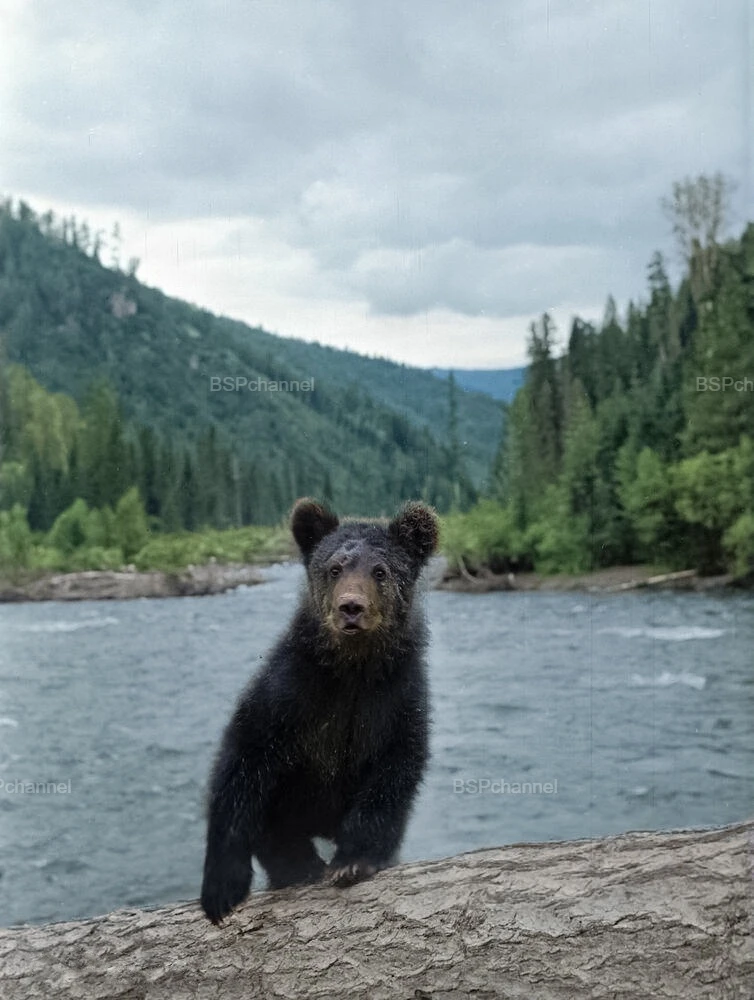
Photographer: Vasily Shaposhnikov
London Zoo keeper Alan Kent feeds panda Chi-Chi bamboo clenched between his teeth, 1959. 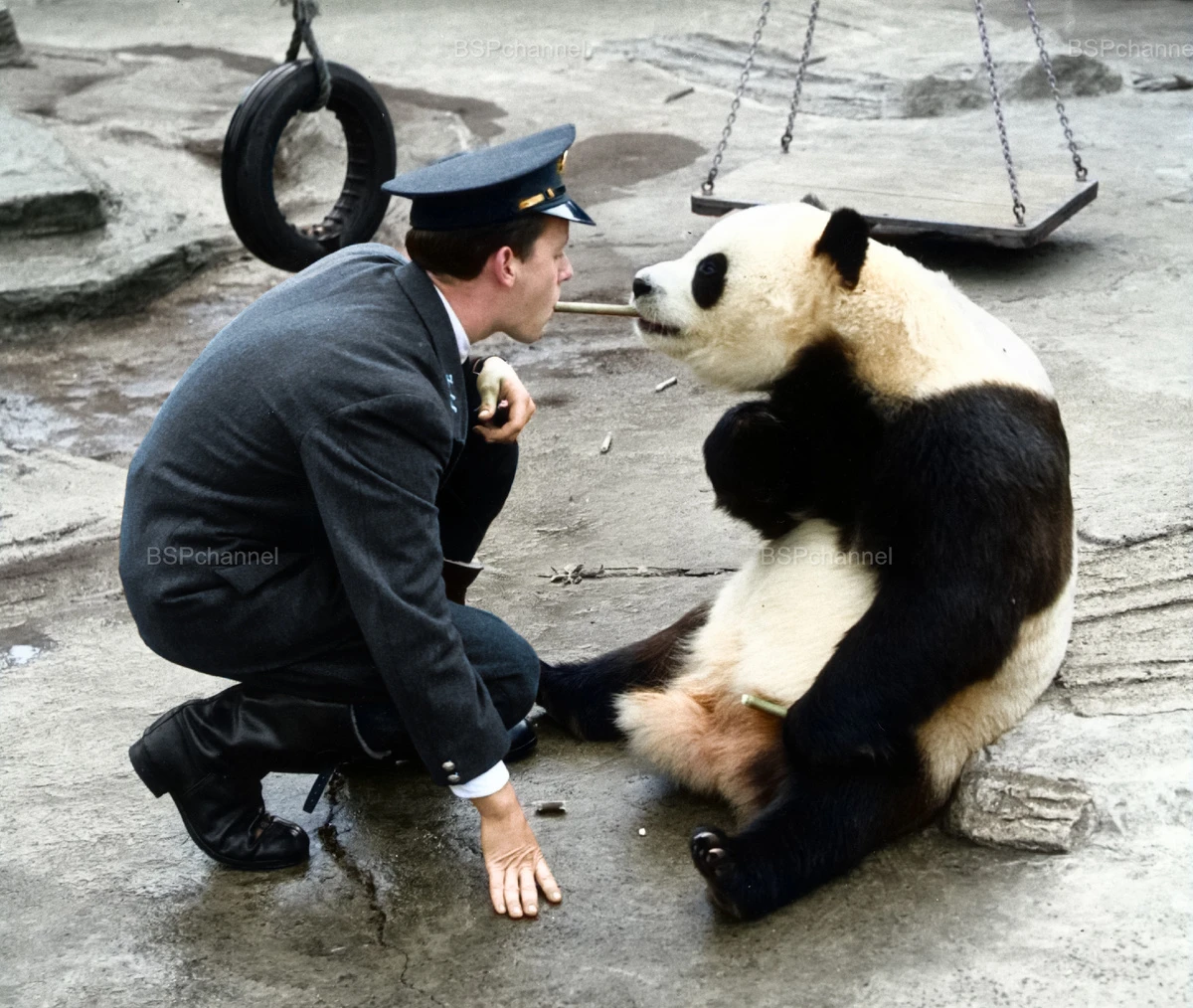
Photographer: William Wanderson
A husky dog and a polar bear cub at a polar explorers' camp, 1972. 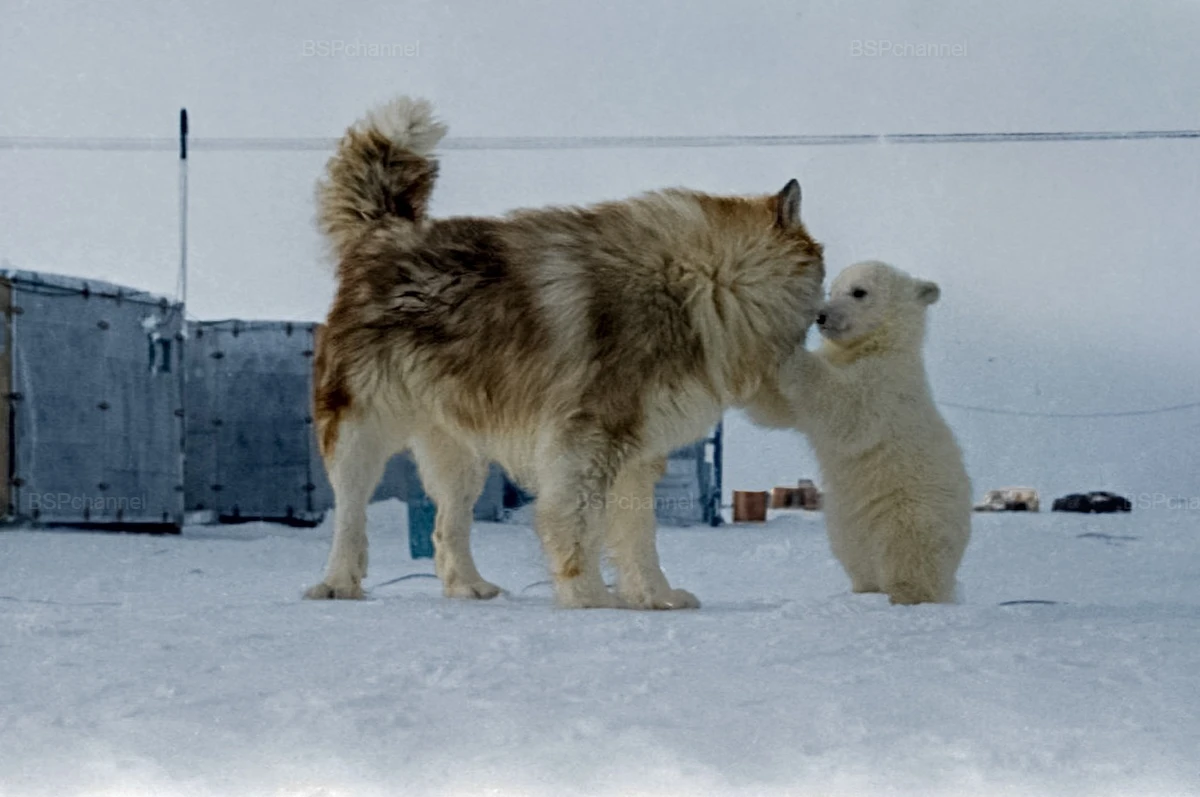
Photographer: Roman Denisov
The North Pole-19 drifting research station in the Arctic Ocean.
Feeding time. London, 1933. 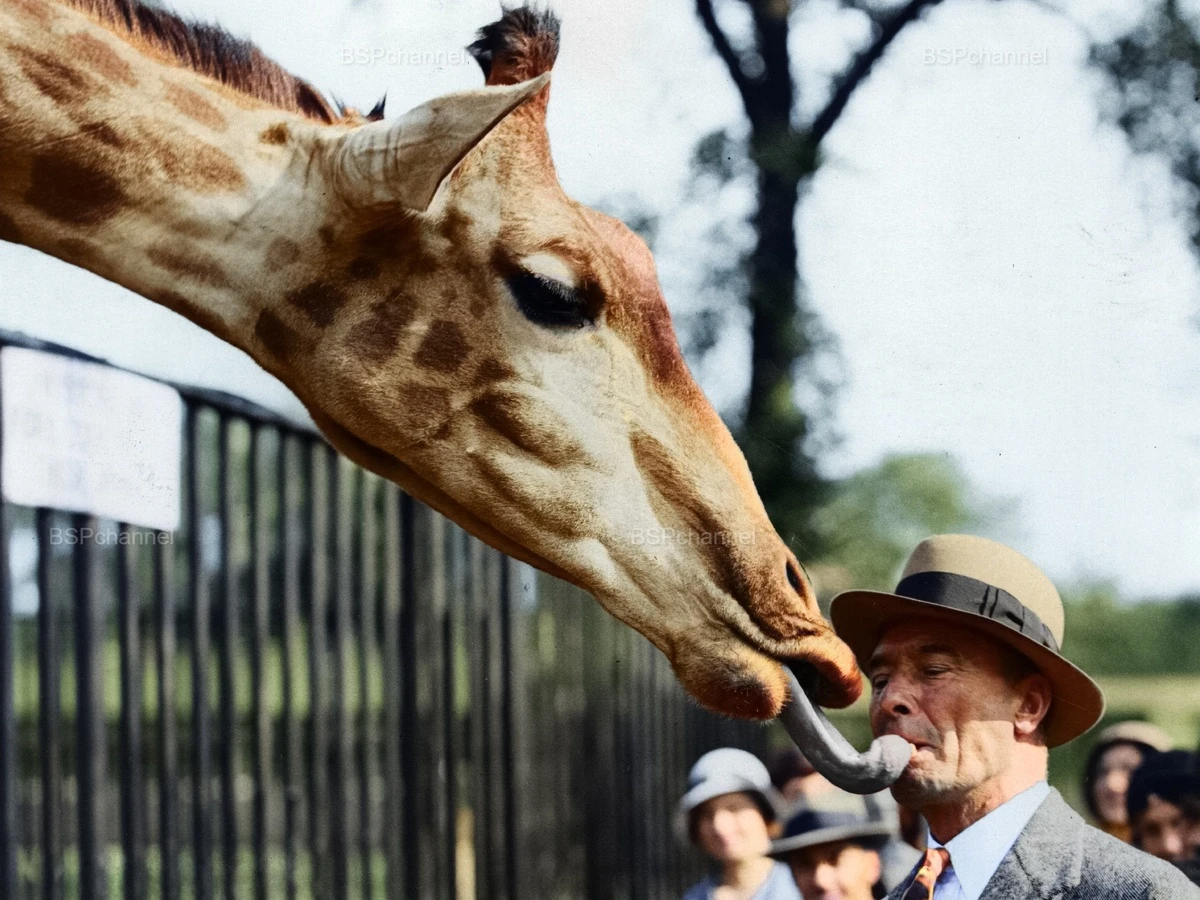
Photo by Reg Speller
Captain Pfeiffer regularly visited London Zoo for many years and even managed to train a giraffe to gently take a biscuit straight from his lips. Giraffes have black tongues—a natural defense against sunburn. Giraffes spend a lot of time plucking leaves from tall trees, their favorite food. Their tongues are constantly exposed to the sun, especially in the hot savannas of Africa. The dark pigmentation of the tongue is due to increased melanin content, the same substance that protects the skin from ultraviolet radiation.
Calves from the Lenin Collective Farm in the Bolshemurashkinsky District of the Gorky Region, 1975. 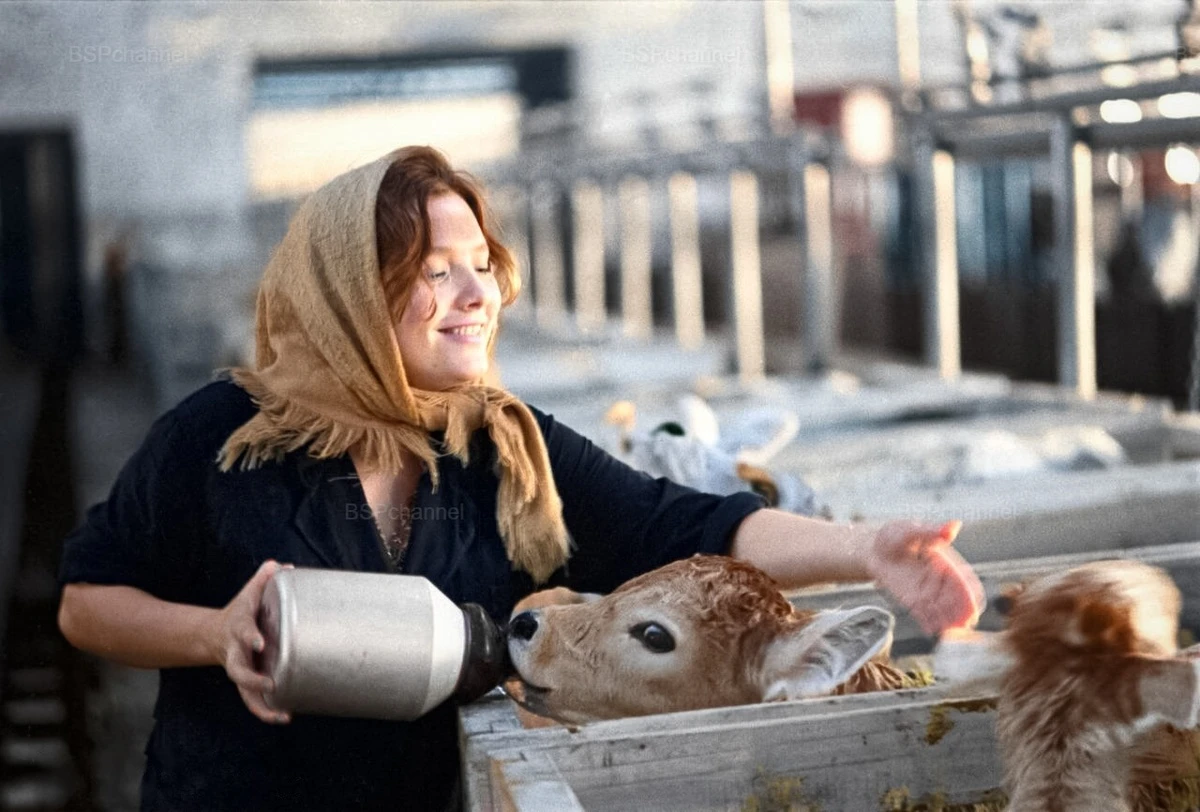
Photographer: Viktor Chernov
A pig examines a police horse in New York, 1956. 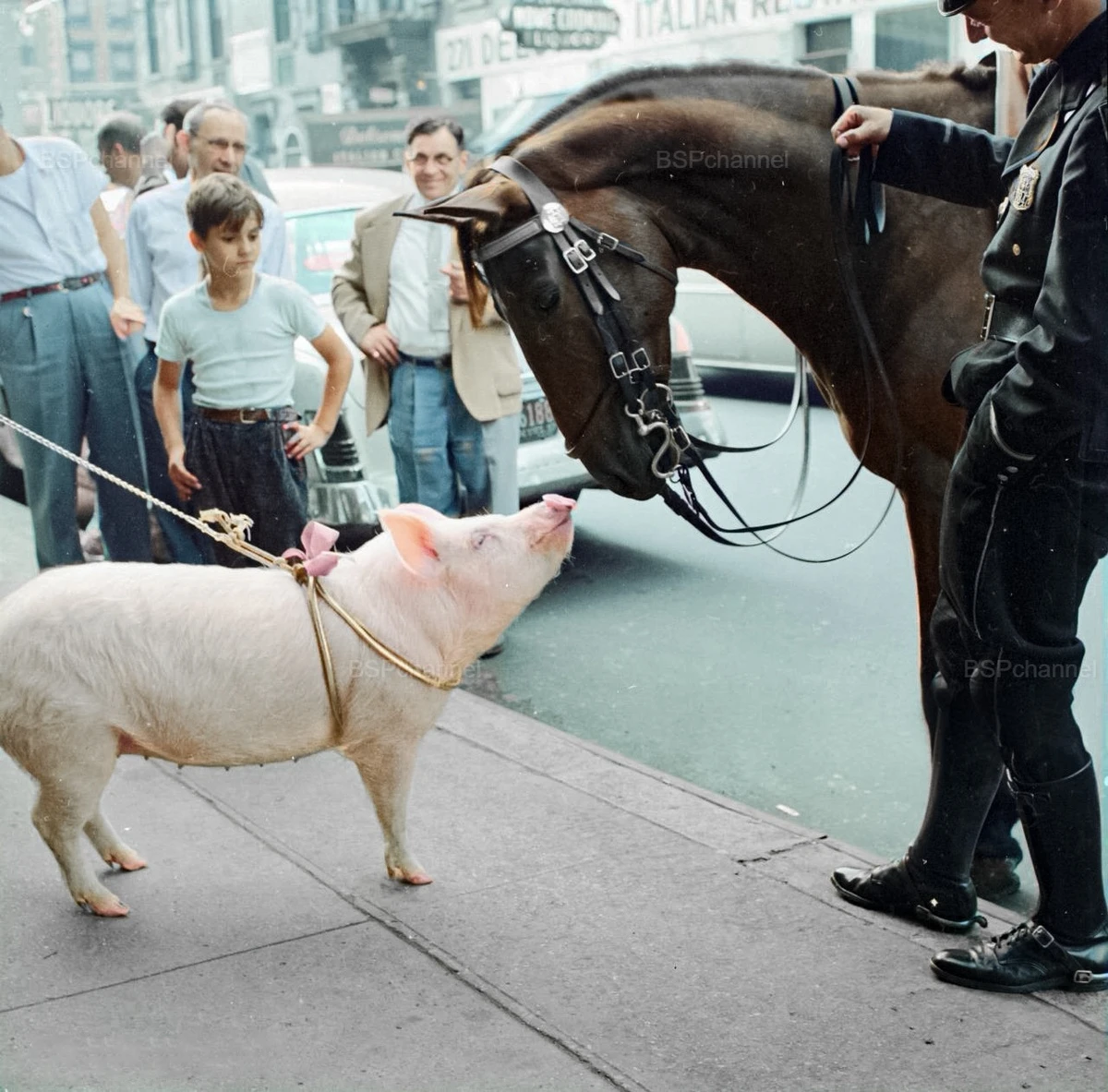
A bear driving a car, 1960-1962. 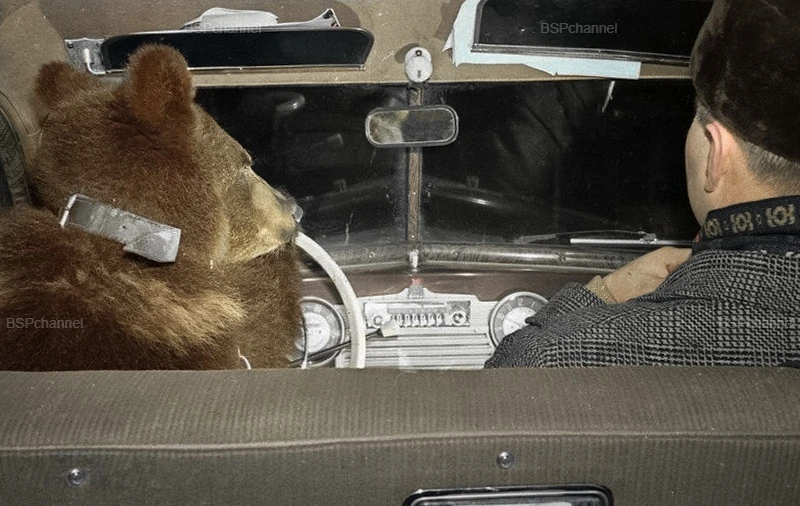
Photographer: Semyon Mishin-Morgenstern
Foxes on Hokkaido Island, 1974. 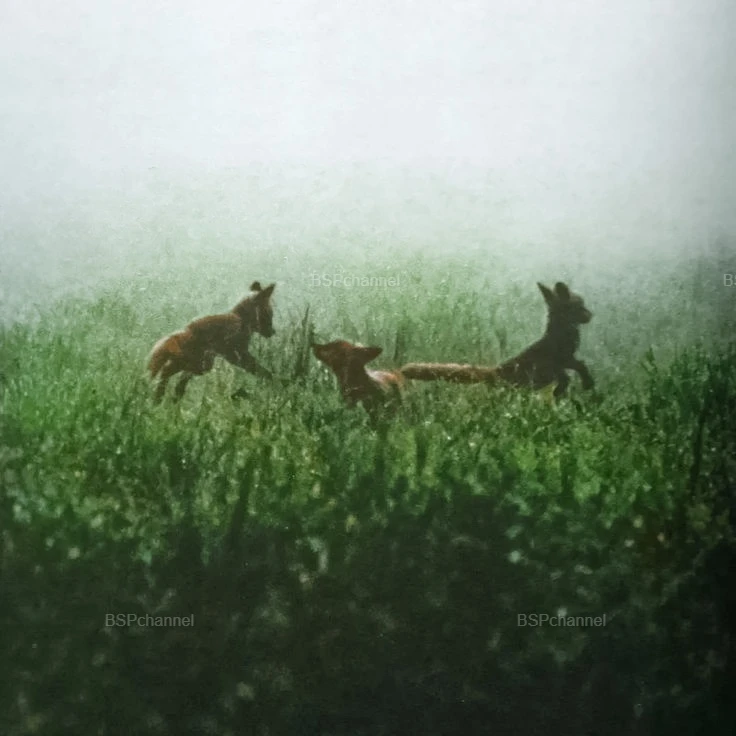
Photographer: Minoru Taketazu
Baby squirrels, 1974. 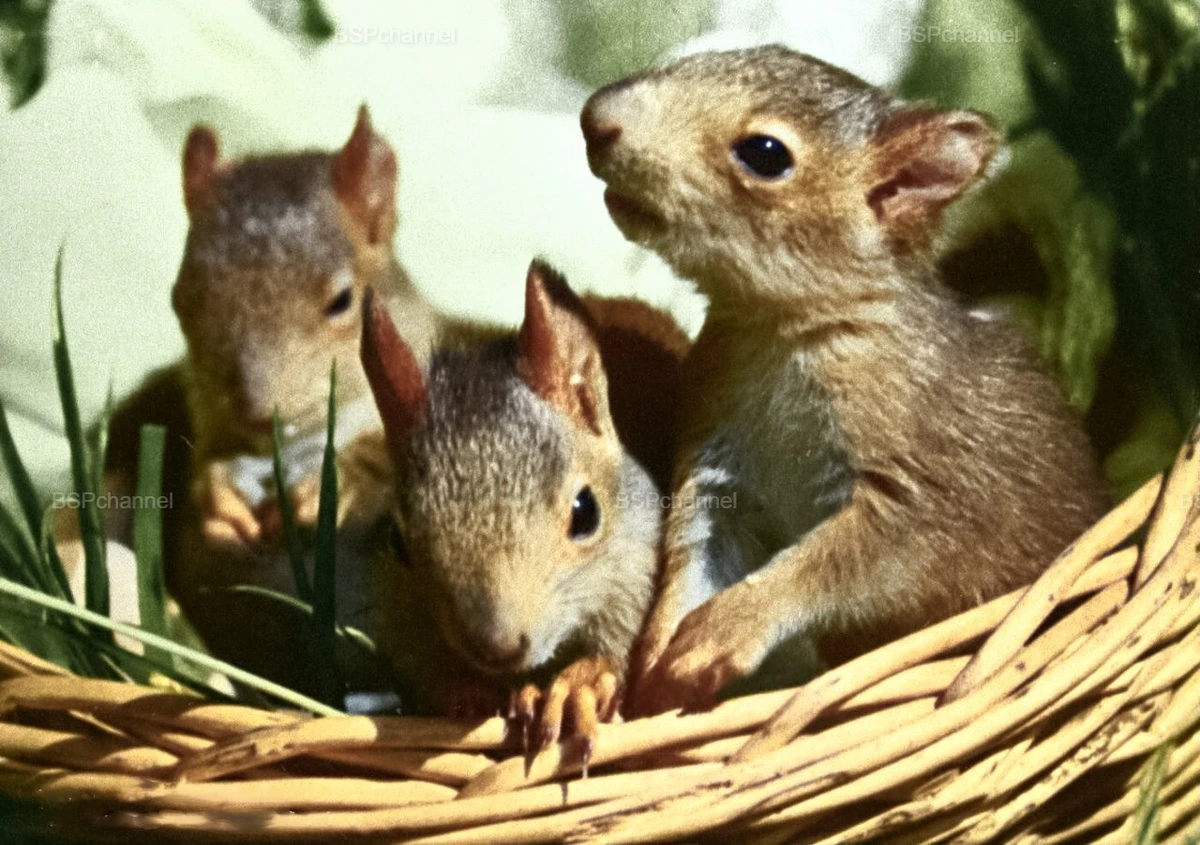
Photo by 14-year-old L. Gavrilova, who received a First Place Diploma at the Young Amateur Photographers' Exhibition at the Moscow City Palace of Pioneers and Schoolchildren.
Motorcyclist Triss Sharp and his mascot, a lion cub, at the Crystal Palace in London, 1930. 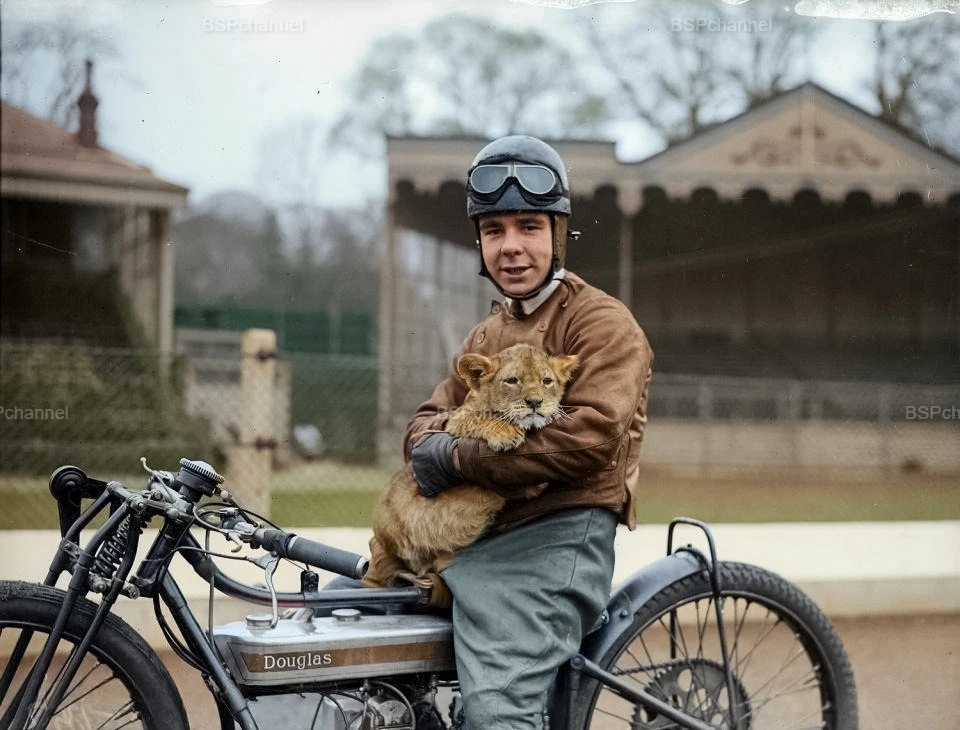
A family of moose near Moscow, 1971. 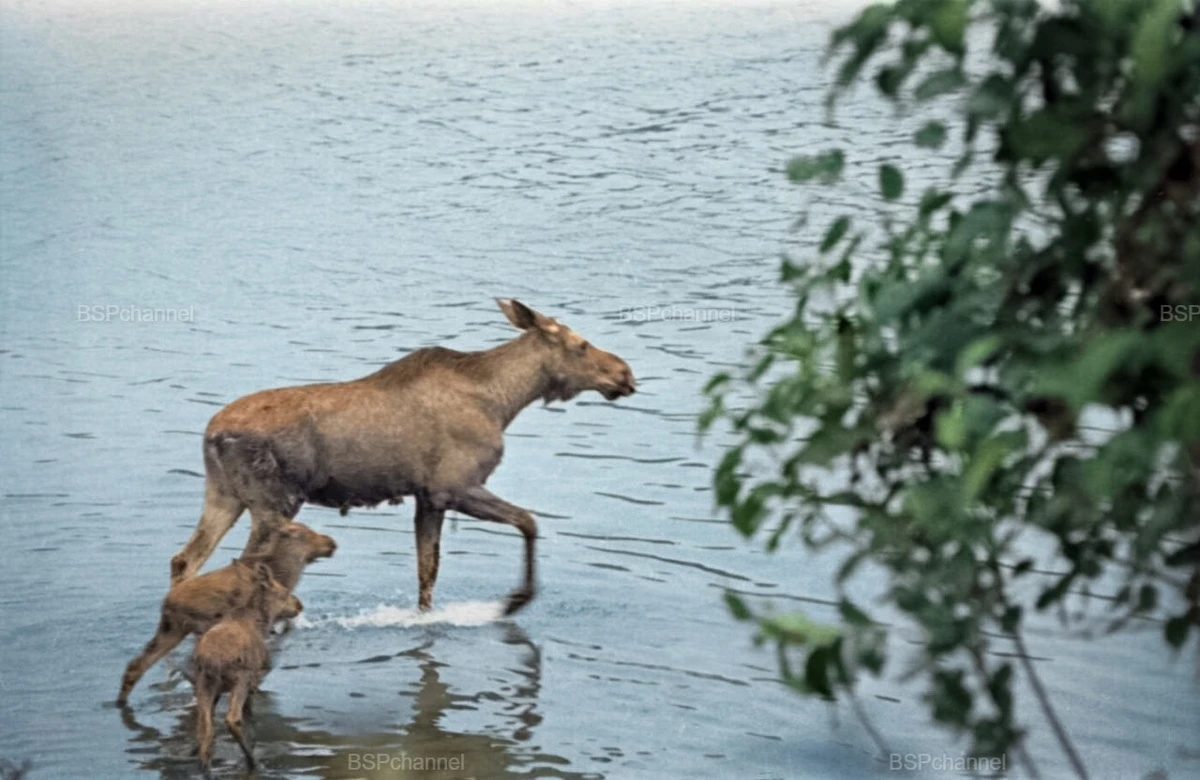
Photographer: V. Sozinov
The zoo director tries to convince a chimpanzee named Sami to return home after escaping. Belgrade, 1988. 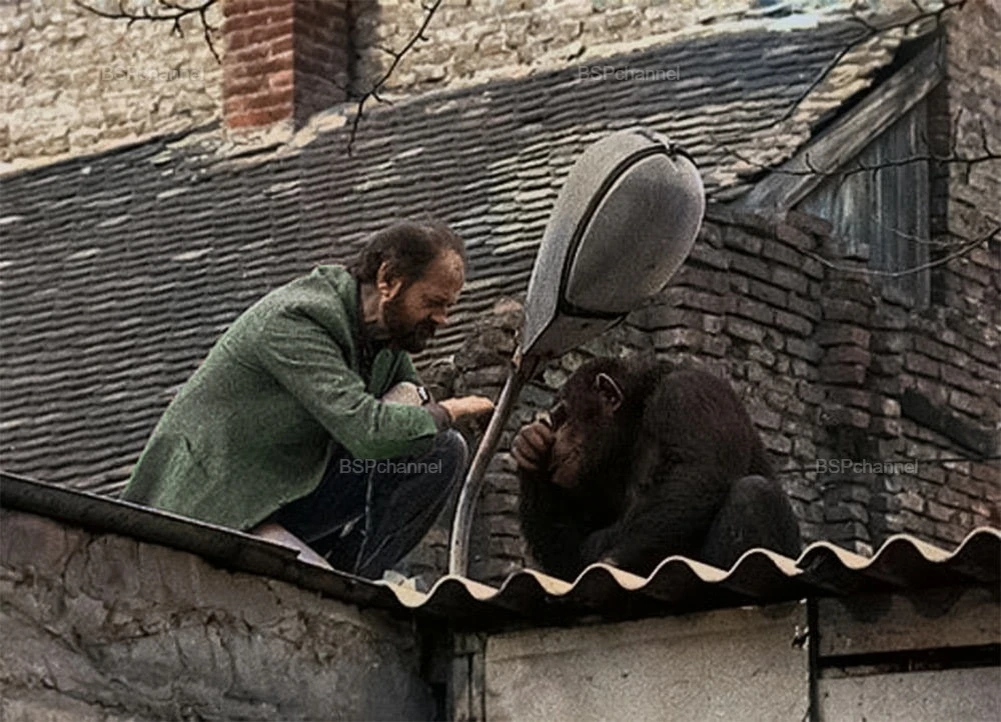
During his first escape attempt, a chimpanzee named Sami headed into central Belgrade—first to a movie theater and then to the famous Kalemegdan Park. The search was quickly over: Belgrade Zoo Director Vuk Bojović personally found Sami, took him by the hand, and carefully drove him back to the zoo in his own car. But just two days later, Sami made a second attempt—this time, it caused quite a stir in the city. Over 4,000 Belgrade residents gathered outside the courtyard where the chimpanzee was cornered, watching anxiously. Many held signs reading, "Sami, don't give up!" — for them, he became more than just an animal, but a symbol of freedom and resistance. Sami was eventually tranquilized and returned to the zoo. He lived out the rest of his life in peace and died of natural causes in 1992. By decision of the administration, he was buried on the lawn near the zoo's main entrance as a sign of respect and love. Four years later, in 1996, a bronze statue of Sami was erected there—a monument to the chimpanzee who, for several days, became a hero to the entire city.
Wrangel Island. Eleonora and Evgeny Plechevykh, employees of the sanctuary (since 1976, the Wrangel Island State Nature Reserve), took in a lost bear cub, 1973. 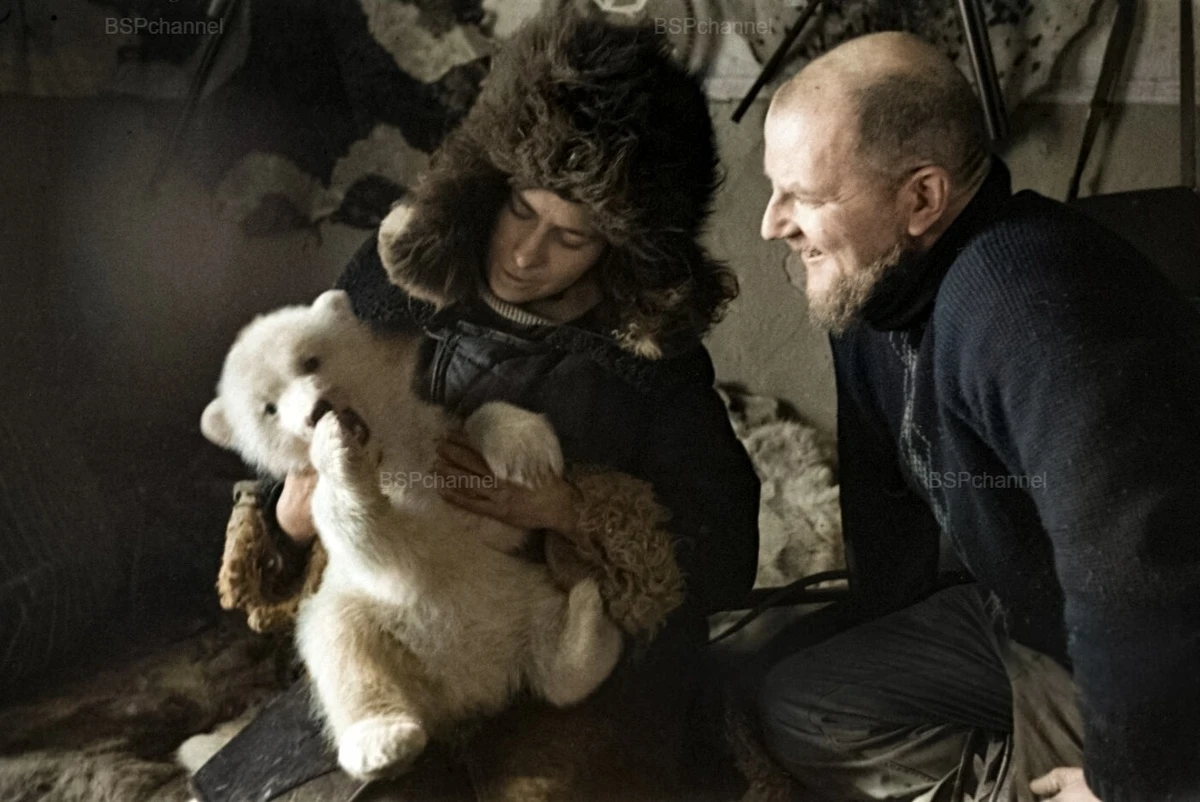
Author: G. Nadezhdin
If a bear cub loses its mother, its chances of survival are sharply reduced, especially if it is under 1.5 to 2 years old. In the wild, young bears are completely dependent on their mother. A cub under one year old will almost certainly die; it cannot forage for food or defend itself. A cub over one year old may attempt to survive on its own, but often dies from hunger, cold, or attacks by other animals. In rare cases, another mother bear may adopt a cub—but this is a stroke of luck. Sometimes, people (zoos, rehabilitation centers) find orphaned bear cubs and take them into their care. But releasing a bear into the wild is a complex and not always successful process. Mother bears typically remain with their cubs for two to two and a half years—one of the longest maternal bonds among mammals. Nature has designed this "survival course" for a reason: without it, a bear cub is like a child without a teacher in the jungle.
A female elephant named Mae West accepts an apple from a passing tram driver during her morning jog along Gray's Inn Road in London, 1956. 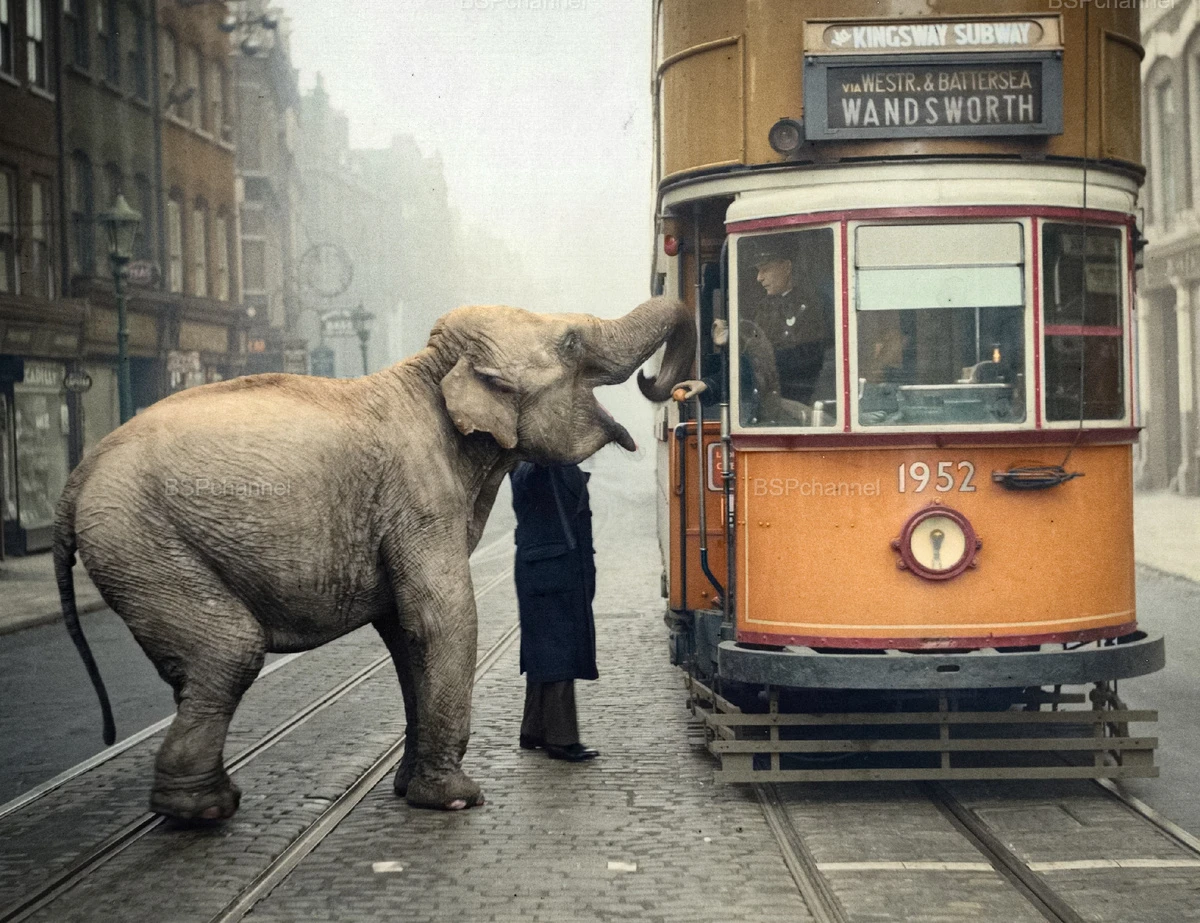
The elephant performed in a circus in Holborn Shopping Centre.
Moscow Zoo. The juvenile area, 1944. 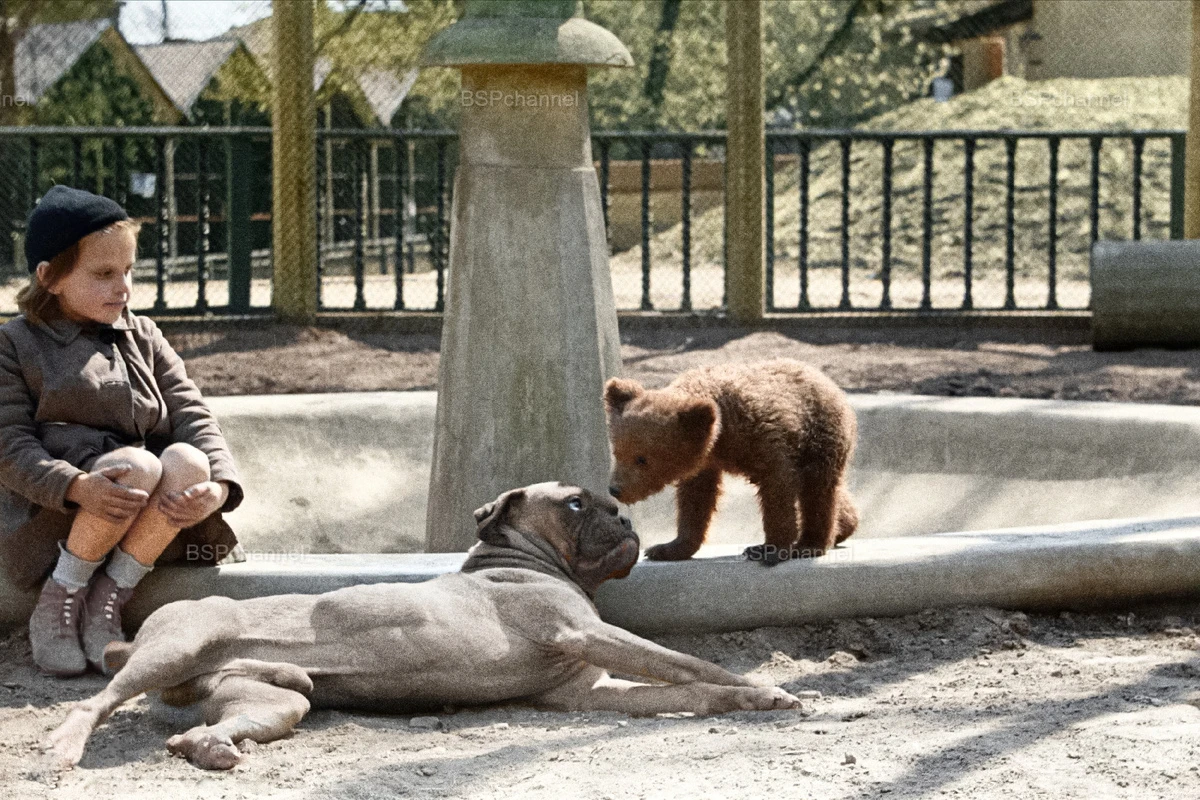
Photographer: Anatoly Garanin
In July 1941, the Moscow Zoo experienced its first bombing. Due to the threat of destruction, some of the animals were urgently evacuated to the Sverdlovsk Zoo. However, those who remained—the staff, led by Director T.E. Burdelev—demonstrated true courage: they remained at their posts even during the most difficult war years. Thanks to their dedication, most of the zoo's inhabitants were saved and the Old Zoo continued to operate without interruption—despite hunger, cold, and constant danger.
Film actress Fay Webb with her pet goose, which wears attractive glasses, 1925. 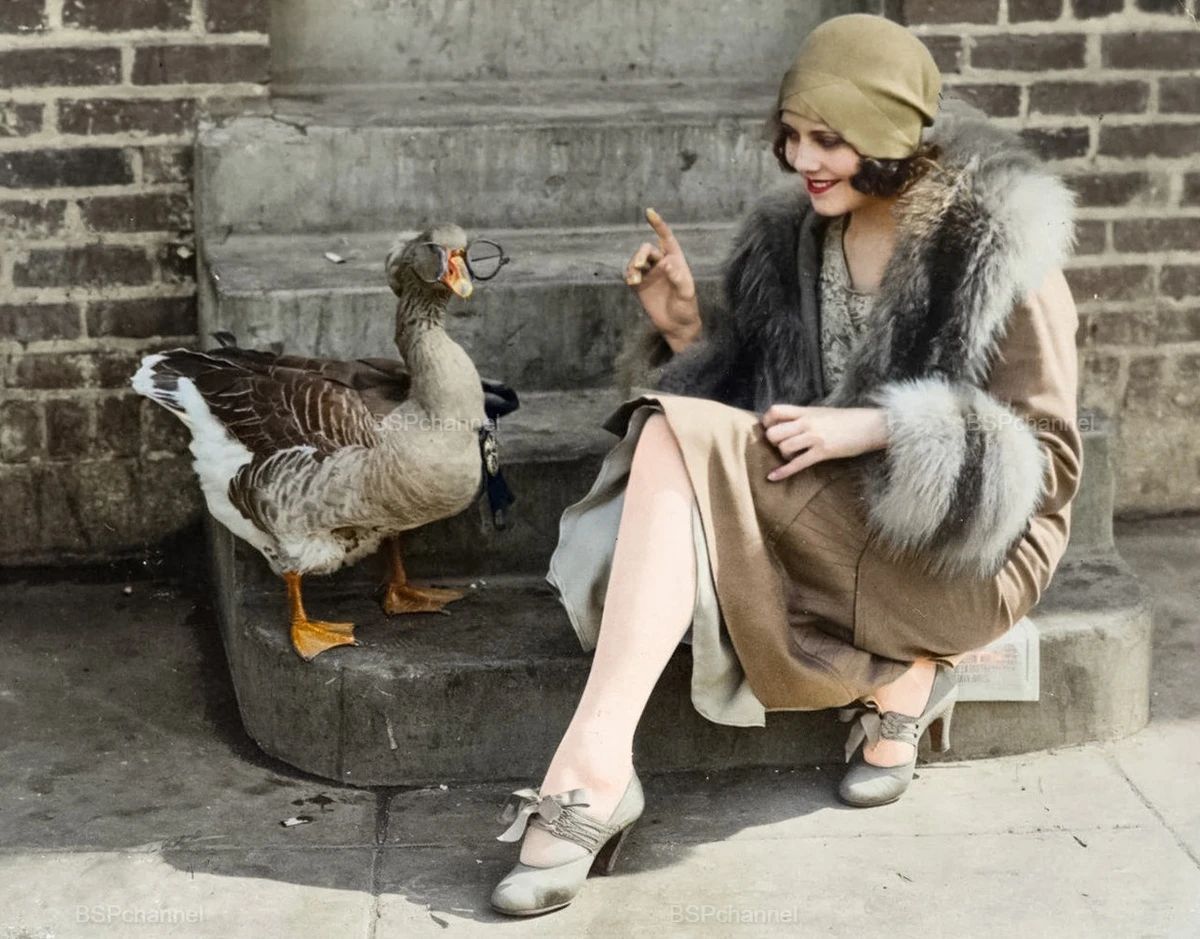
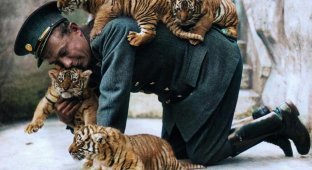
Soviet animal trainer, circus performer, and film actress Margarita Nazarova with tiger cubs, 1958. 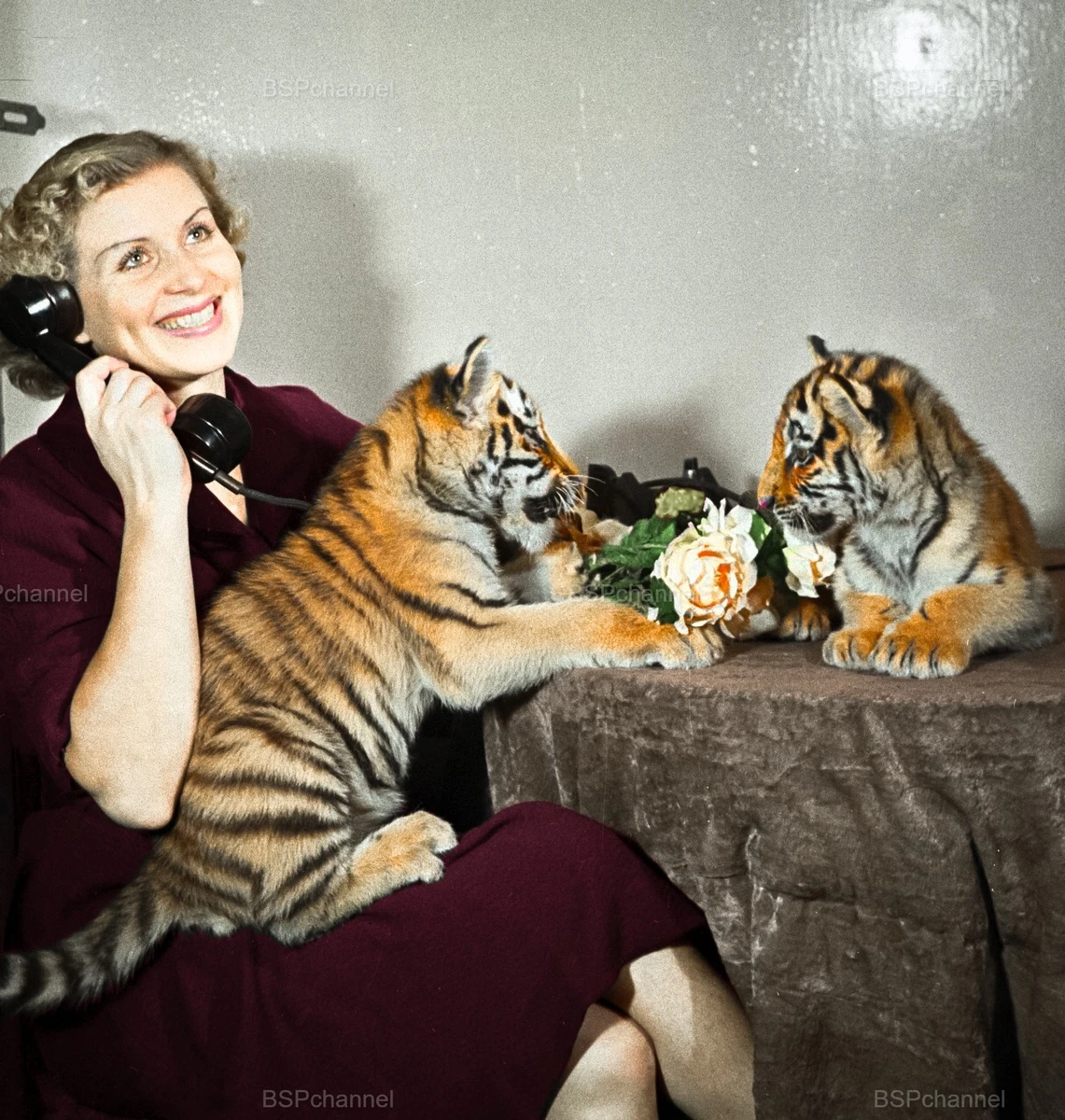
Photographer: Lev Velikzhanin
Blue Cross Veterinary Hospital. Visitors with their pets await their appointment. Moscow, 1956. 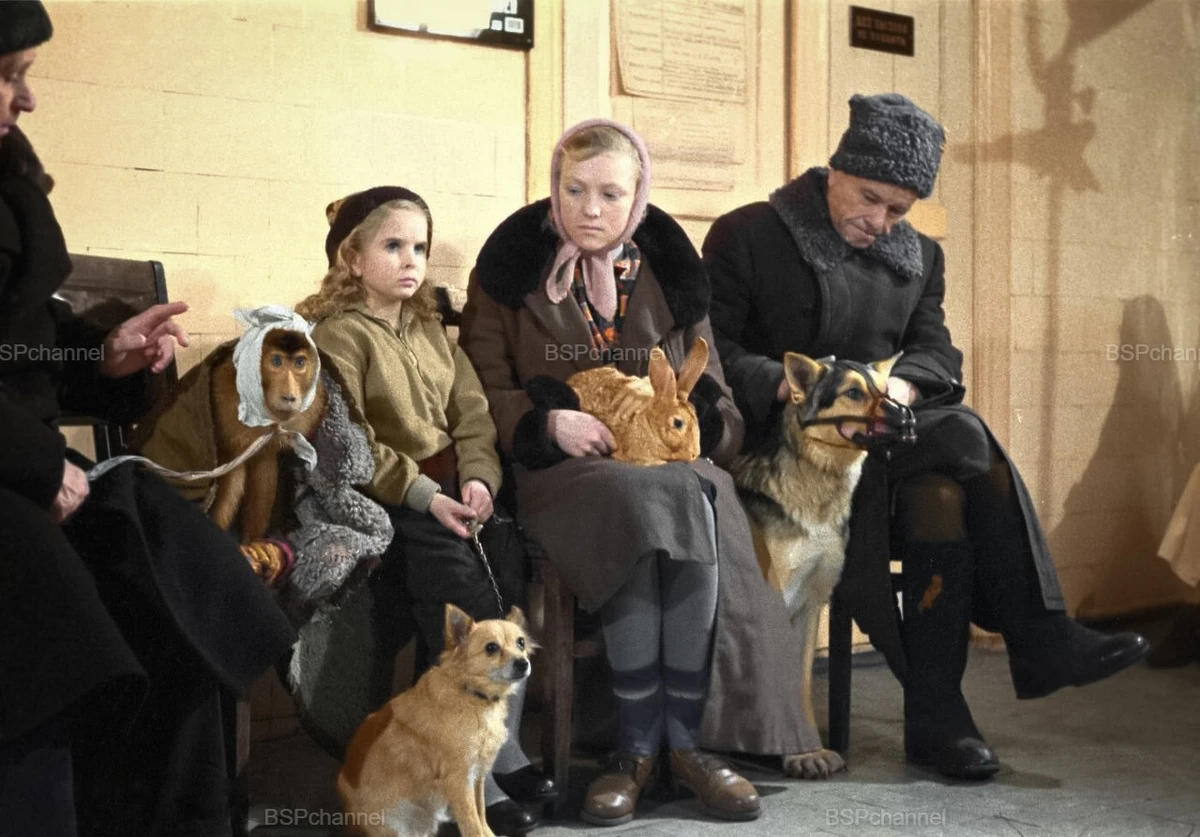
Photographer: V. Surnin
Journalist Vasily Peskov photographs penguins in Antarctica, 1975. 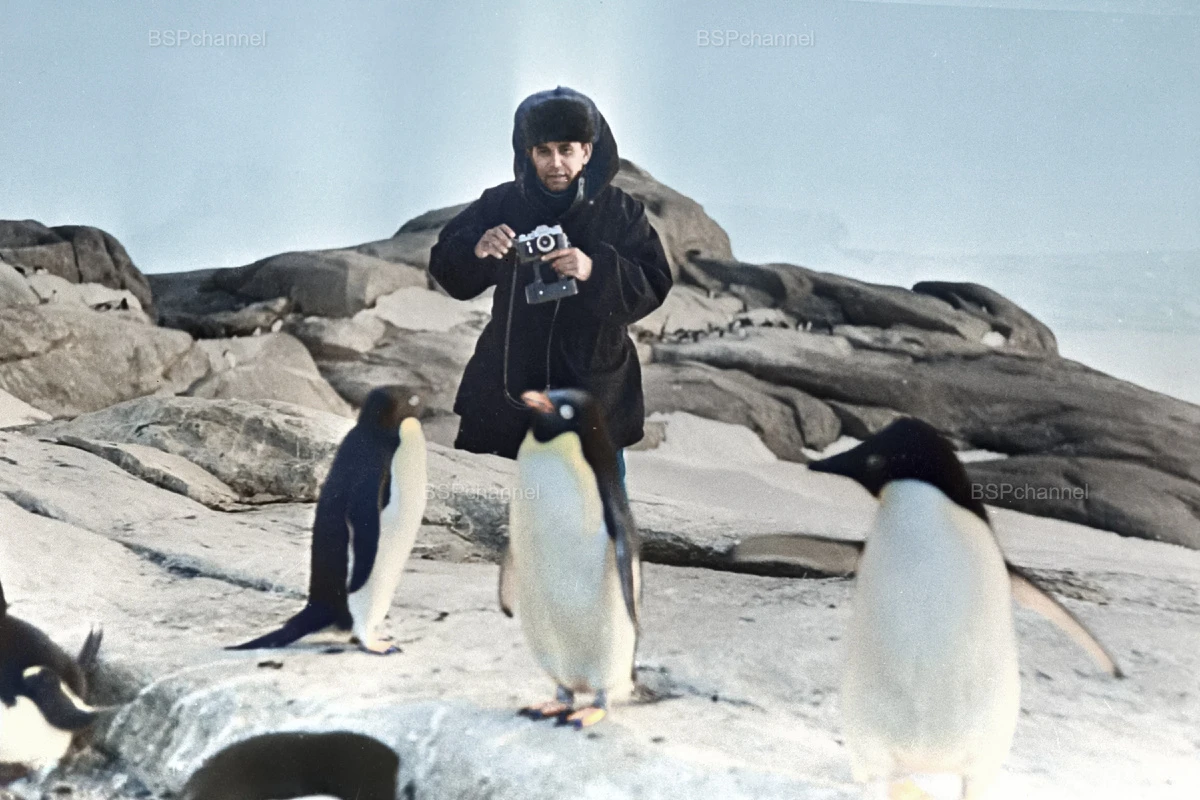
Vasily Peskov was a journalist, photojournalist, host of the television program "In the World of Animals" from 1975 to 1990, and a columnist for Komsomolskaya Pravda.
Add your comment
You might be interested in:






How to start a 102-liter engine

Protective film Removing it with a power screwdriver

When a child plays hide-and-seek at a professional level

Man sets up bedroom camera and discovers the reason for his

Super dads who swoop in to save the day

Precision carpentry

Looks like it's time to buy WinRAR
How to hang wallpaper neatly
How metal buckets are made in Pakistan
