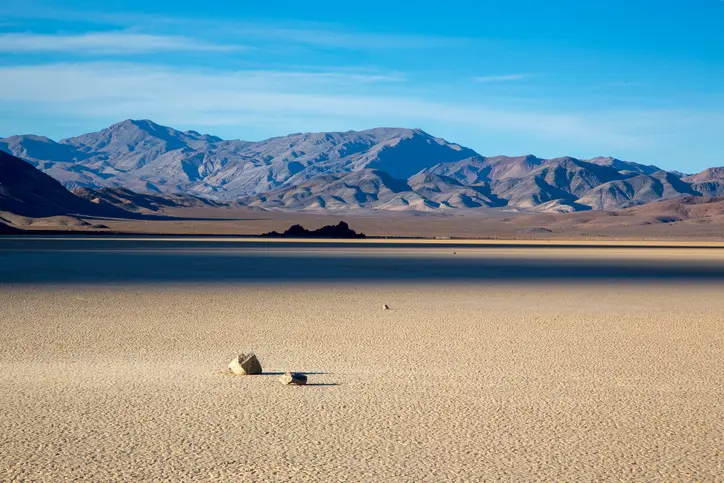
Something mysterious and almost magical is happening at the dry lakebed of Racetrack Playa in California's Death Valley. 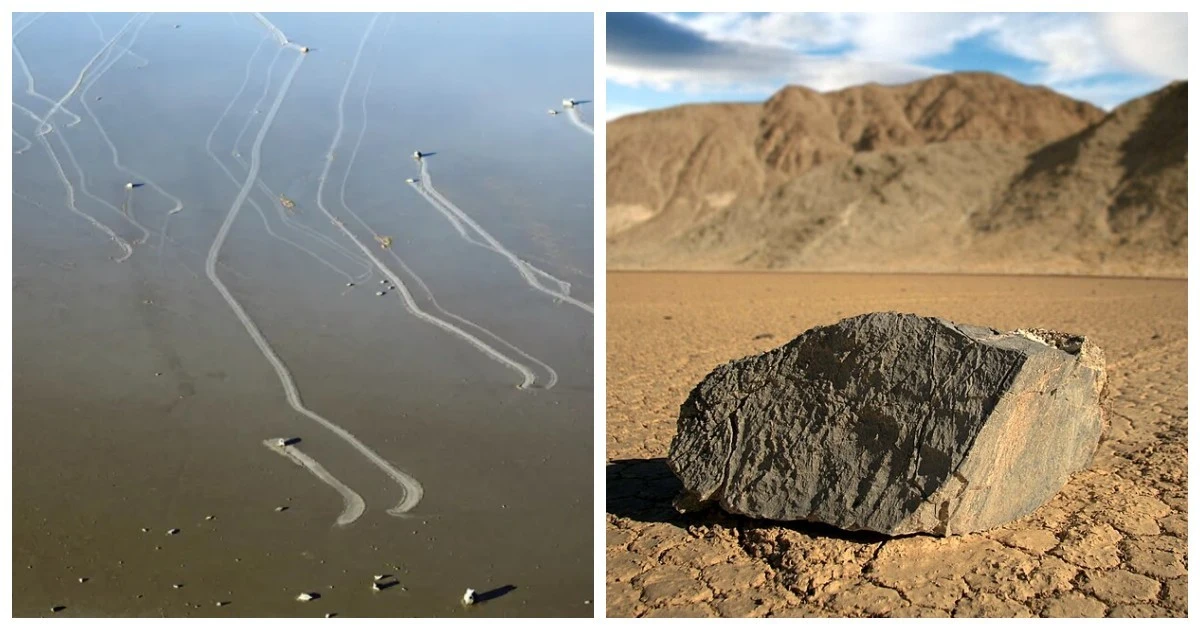
Large rocks are scattered across its clay surface, leaving long, clear tracks. These grooves indicate that the boulders somehow traveled across the desert, not in a straight line, but zigzagging and turning, sometimes covering distances of hundreds of meters. 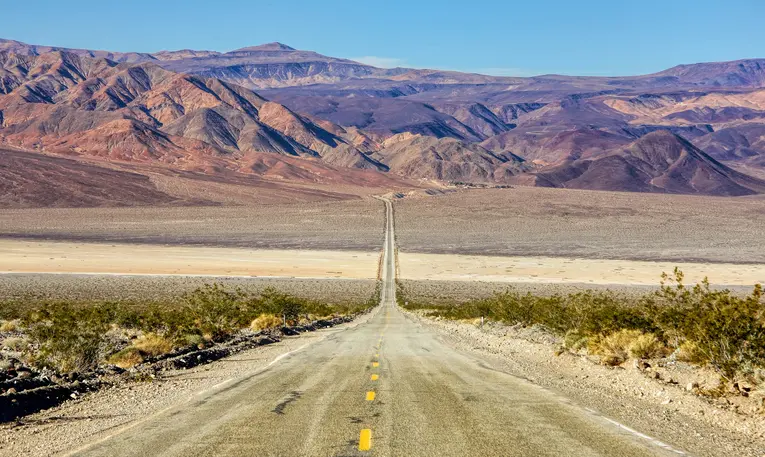
Death Valley Territory
Traces remain for years, but it's virtually impossible to see or predict the exact moment the stones move, which has given rise to many fantastic theories. 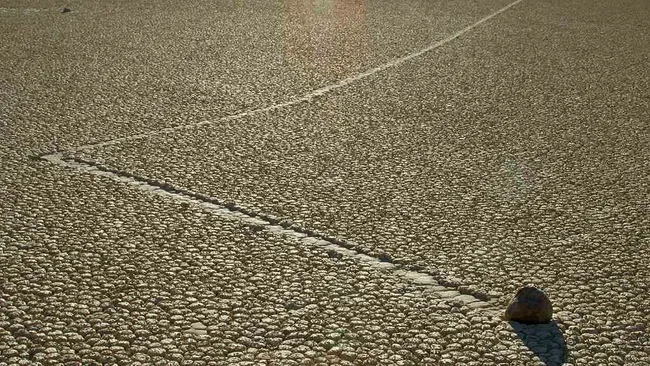
One of the moving rocks that passed along Racetrack Playa, leaving behind a sharply curved track.
Scientists have puzzled over this anomaly since the early twentieth century, putting forward various theories, from strong winds to magnetic fields. A solution was found in the 2010s, thanks to researchers who conducted a large-scale, multi-year experiment. They installed GPS trackers on the rocks and regularly recorded their positions.
The story of one of the boulders, nicknamed Karen, weighing over three hundred kilograms, was particularly revealing. It remained stationary for several years, but when scientists returned in 2016, they discovered it was missing. It was later found more than eight hundred meters from its original location. 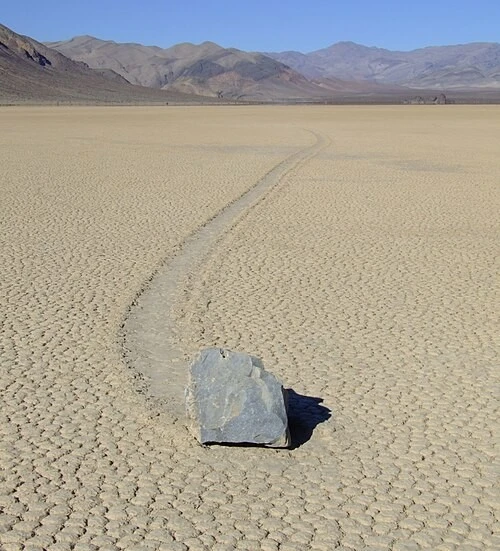
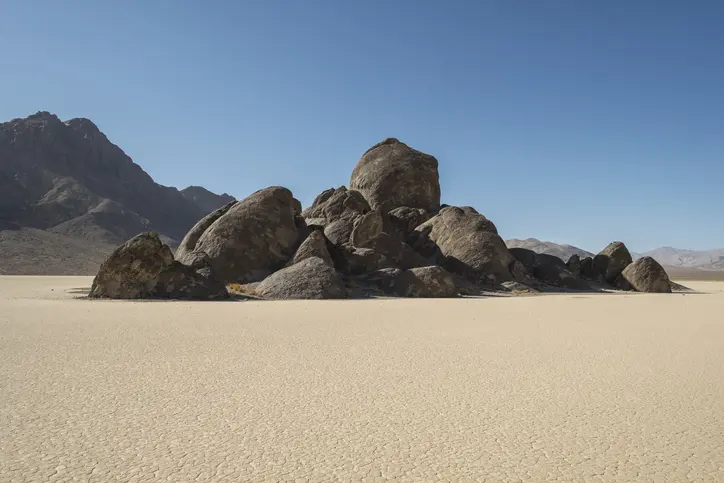
A Rock Resembling a Sailboat
Finally, careful observations revealed the secret. It all stems from a unique combination of winter conditions. After rare rains, a shallow lake forms on the plateau. At night, during freezing temperatures, it is covered with a thin but extensive layer of ice. During the day, the ice melts and breaks into large floating panels. Driven by the wind, these ice sheets, like sails, begin to glide slowly across the slippery mud-covered surface, propelling and pushing heavy rocks ahead.
Movement requires a perfect balance: enough water to form ice, but not too much, so the rocks don't sink into the mud, and a wind of just the right strength. 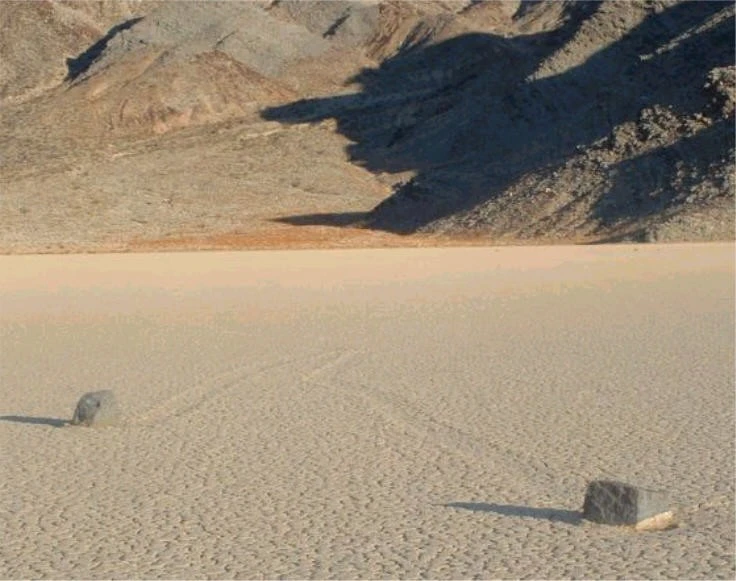
Thus, not all rocks "travel," only those composed of fairly dense rocks like dolomite and syenite. Their movement isn't a rapid glide, but a slow, almost imperceptible drift, the result of nature's painstaking work, which combines ice, water, and wind in a unique way. 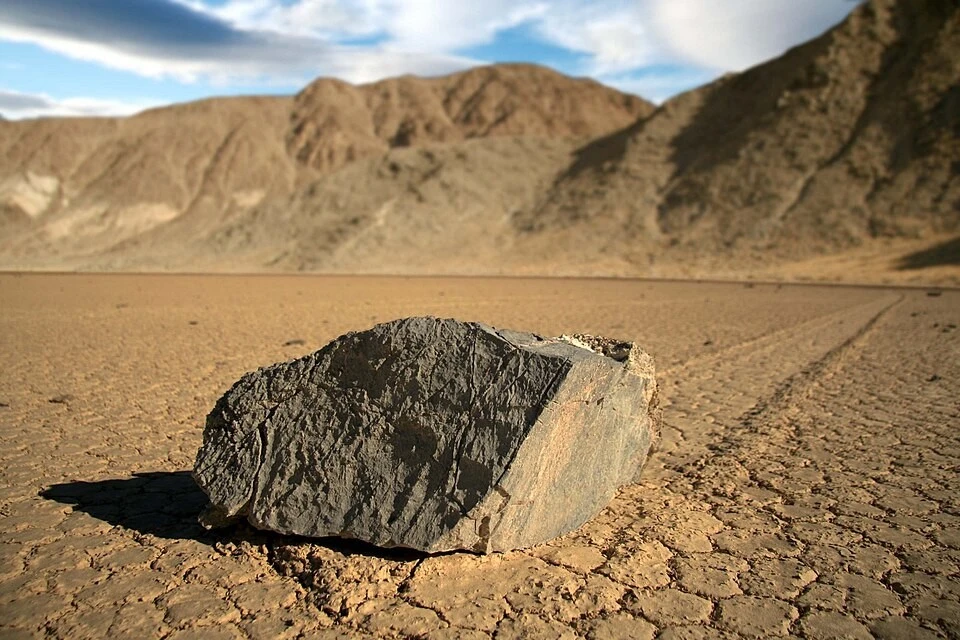
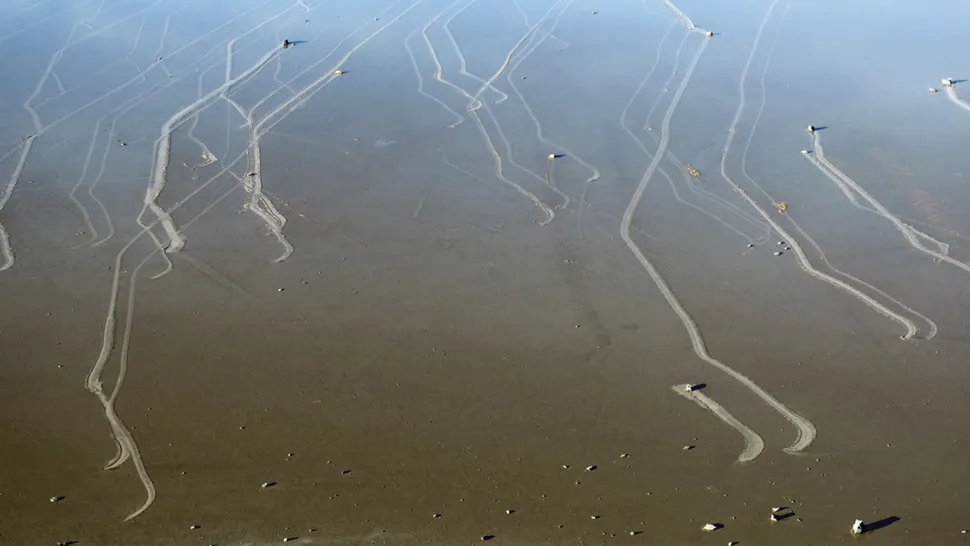
The trajectory of many stones matches 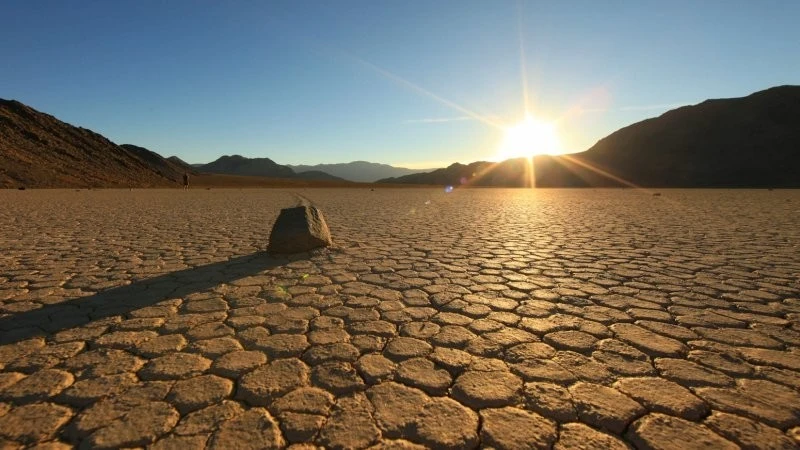
[thumb]https://cn22.nevsedoma.com.ua/p/29/2925/142_files/ec07694ecc929e 37c44c7ec4336628e5.webp[/thumb] 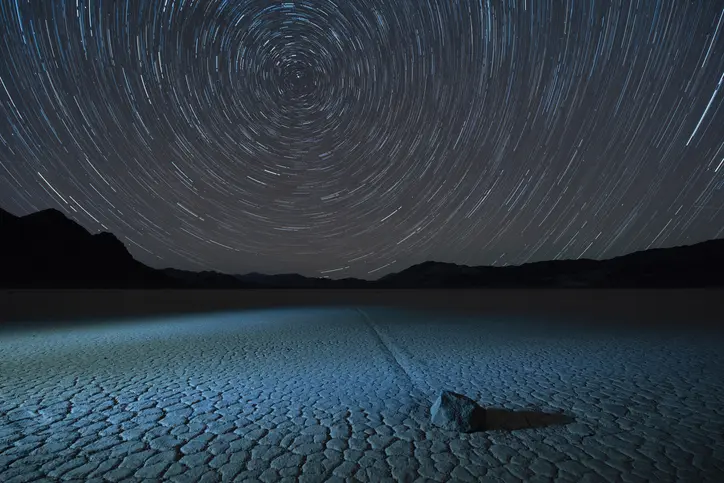
Some stones weighed more than 300 kg 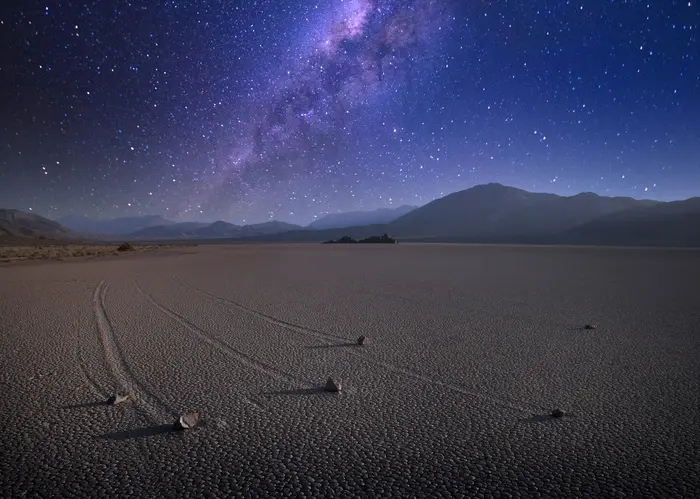
Add your comment
You might be interested in:












Persistence in achieving a goal

A biker prevented a hit-and-run driver from escaping

Not everyone is having fun on the amusement ride

Absolute perfection

17 Photos That Will Stop You in Your Tracks (18 Photos)

Young women, Dancing and George Michael: nothing superfluous

The cutest lunch delivery ever

What Would Happen to a Human on Every Planet in the Solar

Toyota Celica ST165 on a rally track
