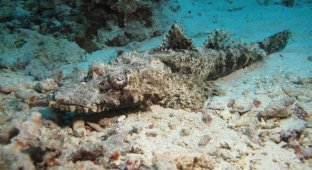
The European devil: a predatory carpet on the ocean floor (9 photos)
Among the murky underwater wastelands, kelp forests, and sand dunes, terrifying predators lurk, real devils even! They lie in wait for naive fools who fall for easy prey, and devour them with one lightning-fast pounce. Their name is the European anglerfish, or sea devils... and we eat them for breakfast! Literally. 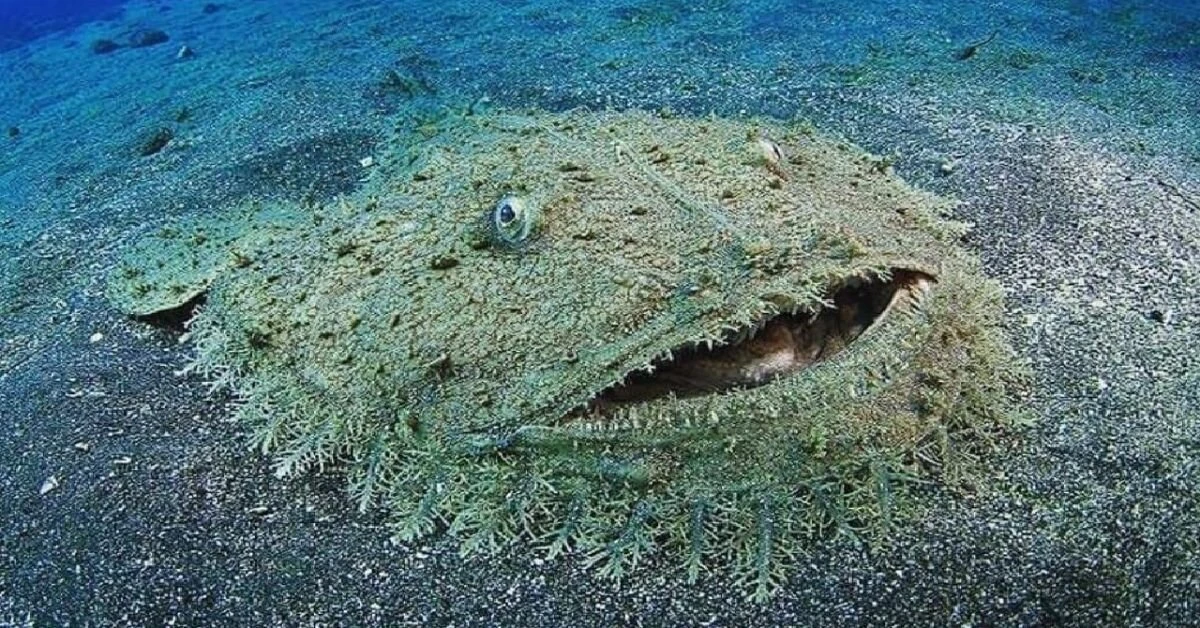
Hey, who threw out the carpet? Stop polluting the ocean!
The anglerfish's 40-60 cm is mostly made up of its head. The head consists mainly of a mouth. The wide mouth can accommodate prey as large as the fish itself, and several rows of sharp teeth stare down the bottom-dwelling predator's throat, leaving no hope of escape. Three neat "strands" of dorsal spines complete the look, the very first of which resembles a natural fishing rod. 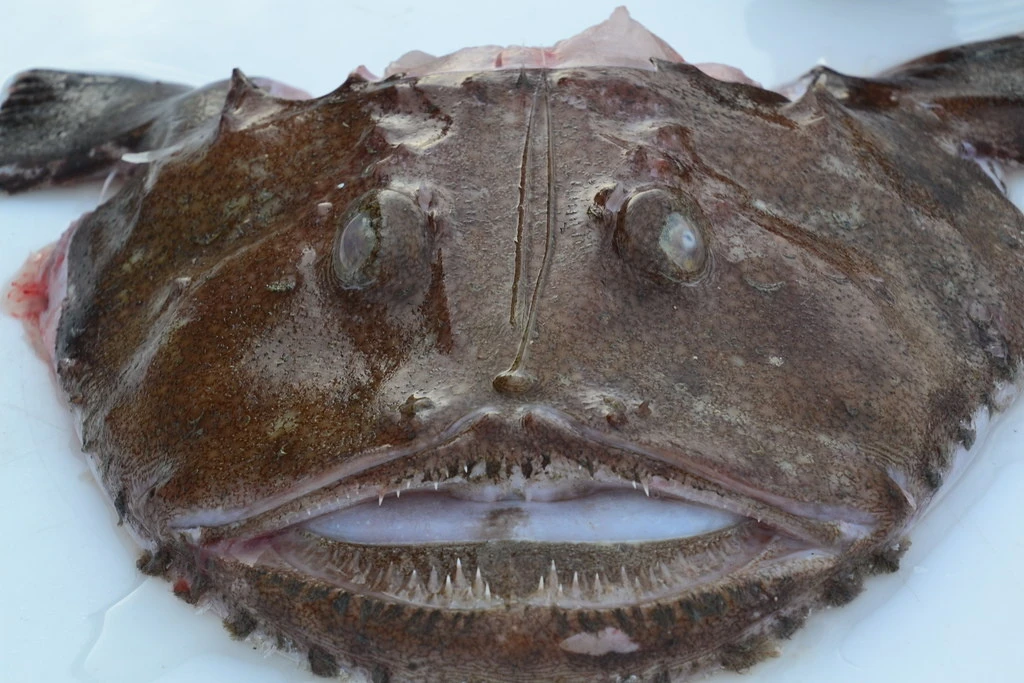
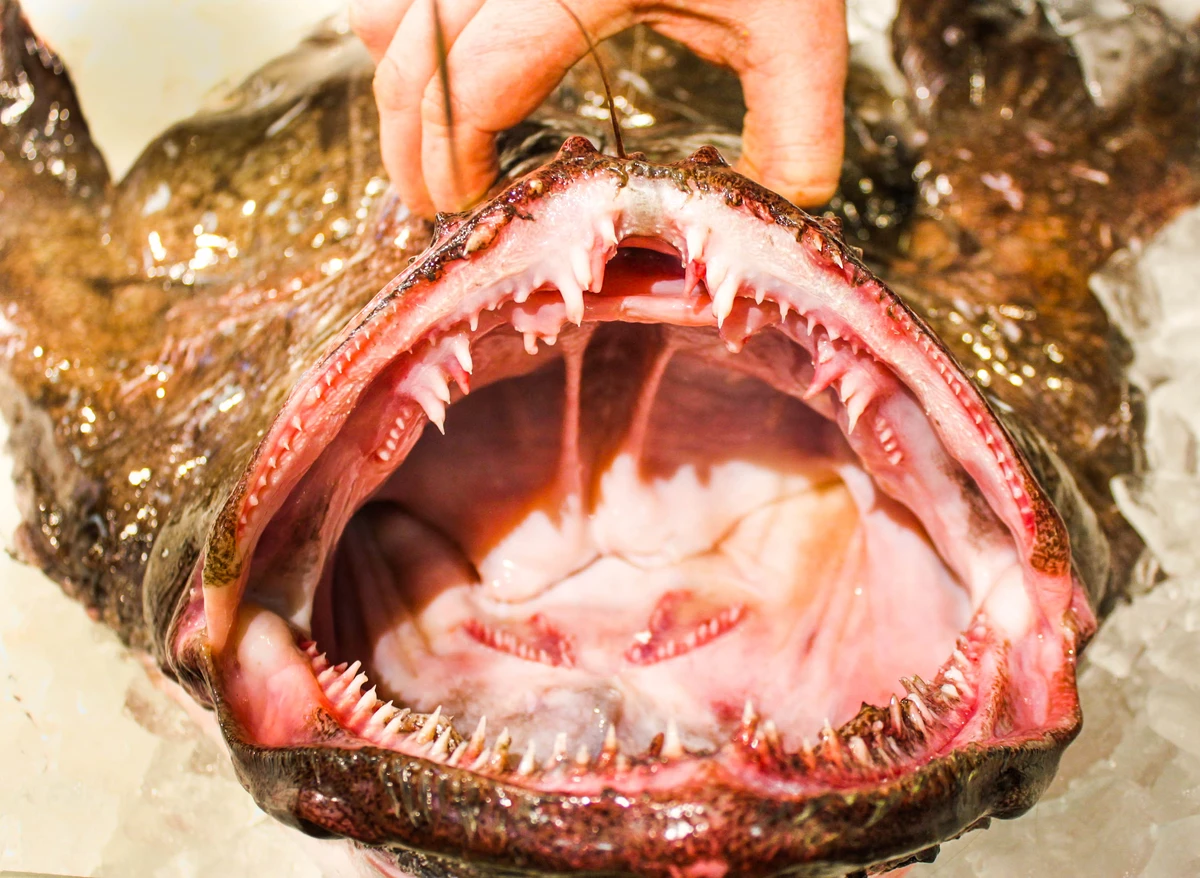
Numerous teeth throughout the mouth are directed inward, preventing prey from escaping after capture.
Aside from the muscular fins, the rest of the body appears like an inconspicuous appendage. But that's the point! The devil is in no hurry to appear from the snuffbox. With a mottled coloration that matches the local seabed and fringed appendages all over their bodies, this camouflage allows these fish to remain incognito among rocky ledges and seaweed beds at depths of up to a kilometer. 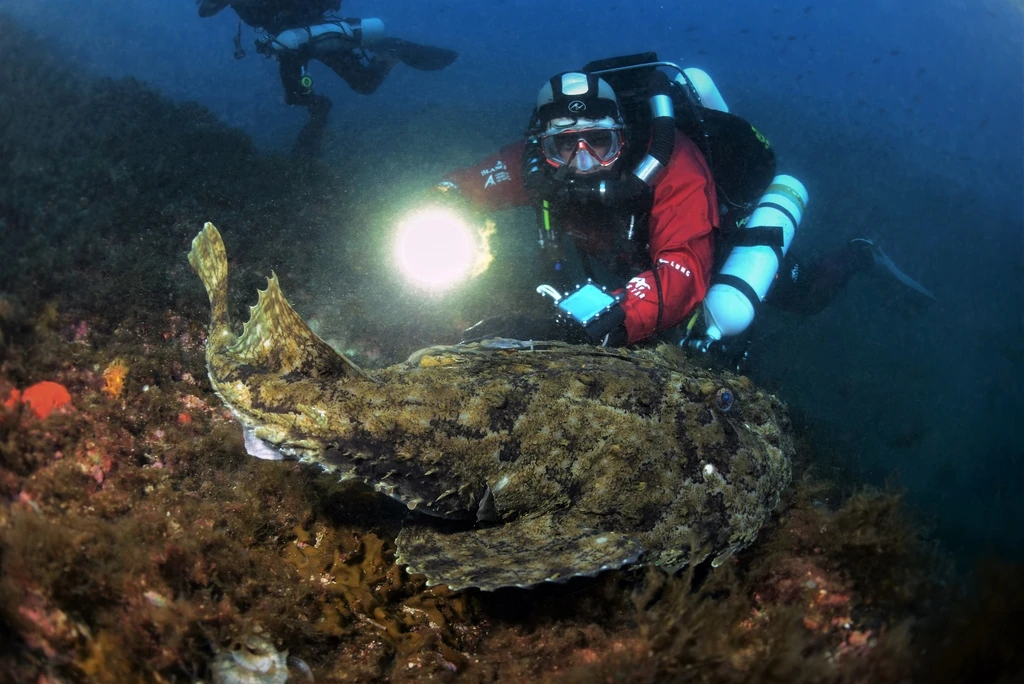
If you're seeing devils before the New Year, rather than after, you're in too much of a hurry!
Anglerfish have plenty of good fishing spots. They are found throughout the eastern Atlantic, from the cold Barents Sea to the equatorial shores of Africa. There, on the bottom, they disappear into invisibility, blending into their surroundings and preparing to deceive unwary marine inhabitants with a simple trick. The anglerfish remains completely still, only the bright tip of the "fishing rod" twitching restlessly, like a tiny fish or shrimp struggling in its death throes. 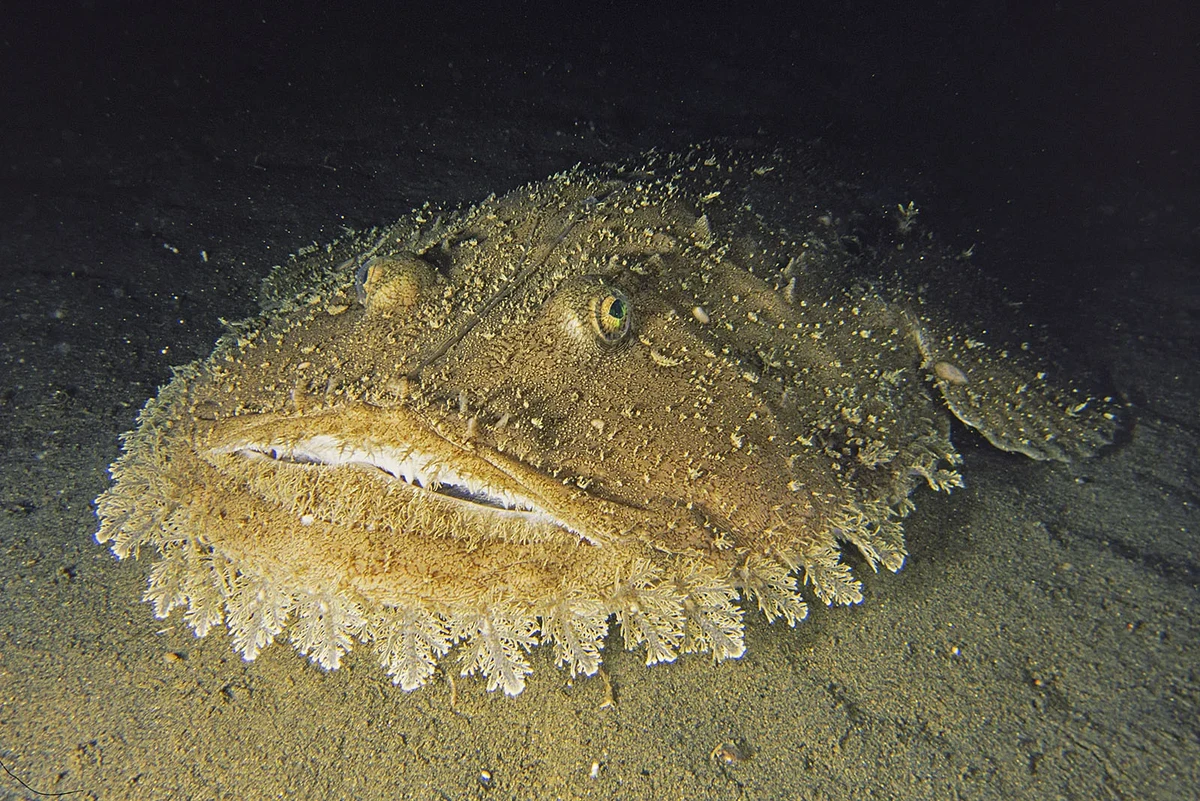
Where are you shining your light? There's nothing here.
Of course, this doesn't escape the attention of the other fish, who rush to devour the helpless snack. As soon as they get close enough... CRACK! The anglerfish sucks the fish in like a living vacuum cleaner and immediately begins digesting it, skipping the chewing stage. This tactic is so effective that even the most intelligent octopuses and nimble squid fall into the trap, not to mention less intelligent and slower prey. 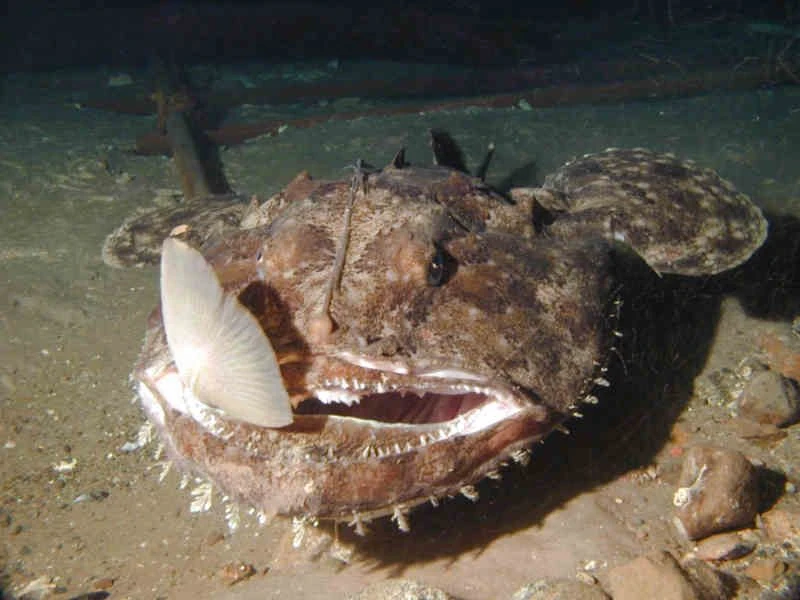
This fish doesn't bite. It swallows whole.
If adult anglerfish are a real threat to the seabed, then their young pay the price. The fact is, anglerfish have decided not to pay alimony and generally avoid interacting with the younger generation of their own production. Hundreds of thousands of eggs fly through the water, bound together by a single, multi-meter-long blanket of mucus, where all the living beads are arranged in a single, continuous layer. In less than a couple of hours, the survival lottery begins. Males will only be able to ascend to their predatory pedestal at four years of age, females only at six. 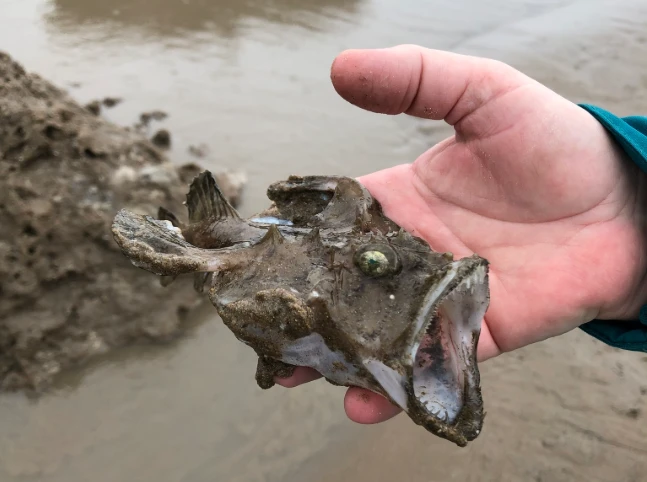
Teenager. 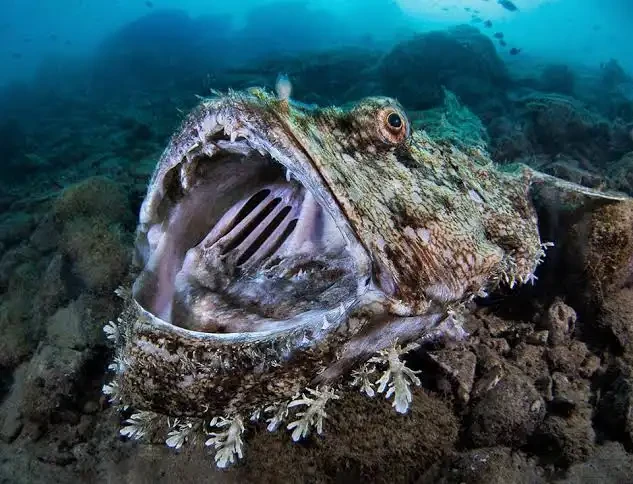
Adult.
Even growing up doesn't protect you from one two-legged predator, though. As soon as humans mastered bottom fishing, anglerfish began to appear in their nets. Of course, this eventually led to someone trying this monster of the deep and discovering that the anglerfish is, incidentally, a very tasty fish with high-quality, boneless white meat. The meat of this bottom-dwelling monster is especially popular in France and Italy. 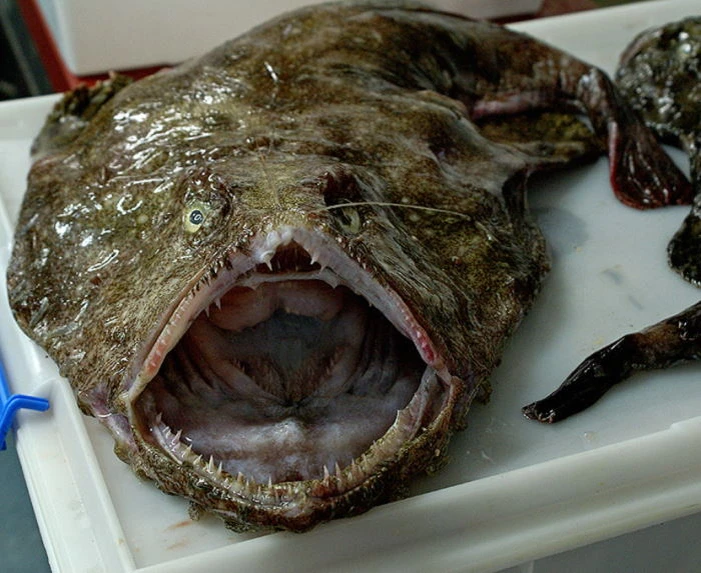
What do you mean, you can eat me too?!
This could be a sad story about how human appetites brought anglerfish to the brink of extinction, but not today! The European devilfish may be delicious, but catching it is a real pain. The fish ends up in nets as bycatch. Only 20,000-30,000 tons are caught annually. By comparison, 600,000 tons of herring are caught annually! So the devilfish population remains stable, and the cliffs still hide skilled hunters!