Let's imagine a hypothetical scene: we're at an ancient Roman meal. Not a sumptuous one, but a simple one, in the home of a simple peasant. On the table, most likely, there's a bowl of beans dressed with olive oil, vegetables and fruit (fresh if in season, dried in winter), light wine, olives, vinegar, maybe fish. And bread! Lots of bread, because it was an essential part of the menu. But as we know, "lots" is a relative concept.
So how much is that in numbers? 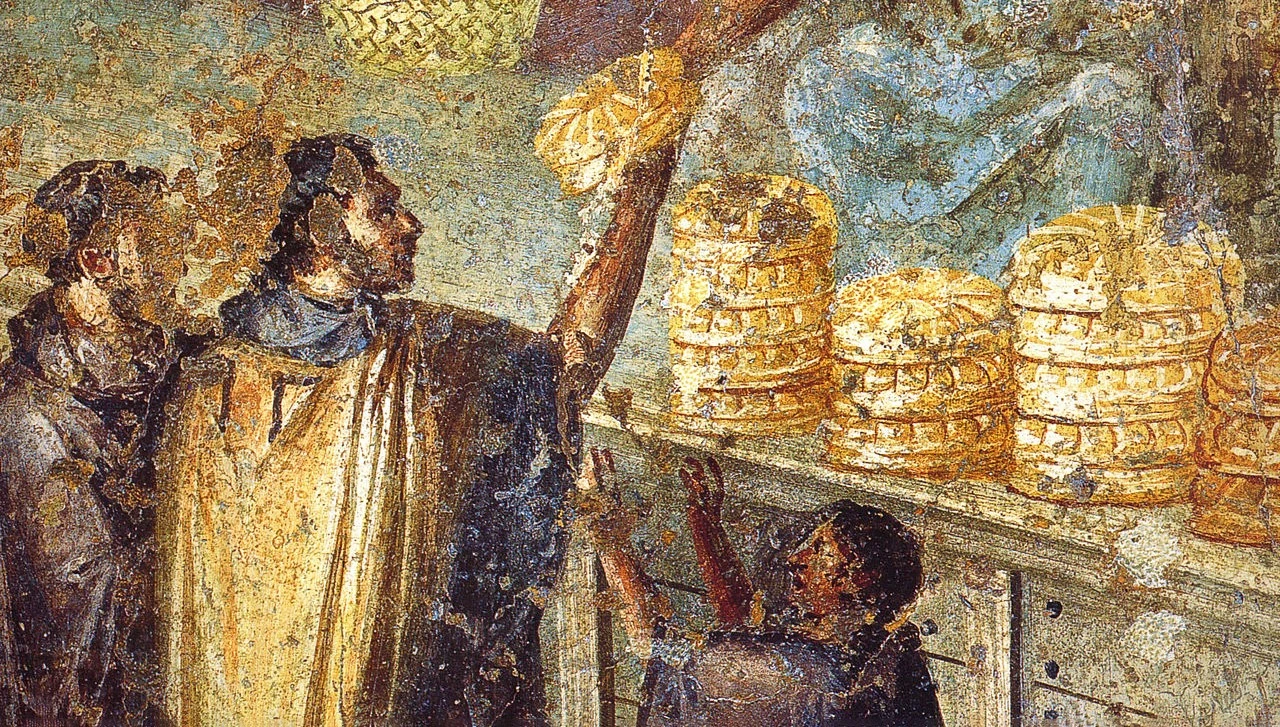
A fresco from Pompeii, often published under the title "Bread Seller." It is now believed that the fresco depicts an aedile in a toga, distributing bread to the city's poor, sitting on a high stool behind the counter.
As Cato wrote in his treatise "Agriculture," the master allocated 4-4.5 modii of grain to his slaves per month, while the quota for legionaries was 3.5 modii. A modius is an ancient unit of volume; one modius is equal to 8.754 liters. The same unit was used to count grain: one modius was equal to approximately 6.7 kg. 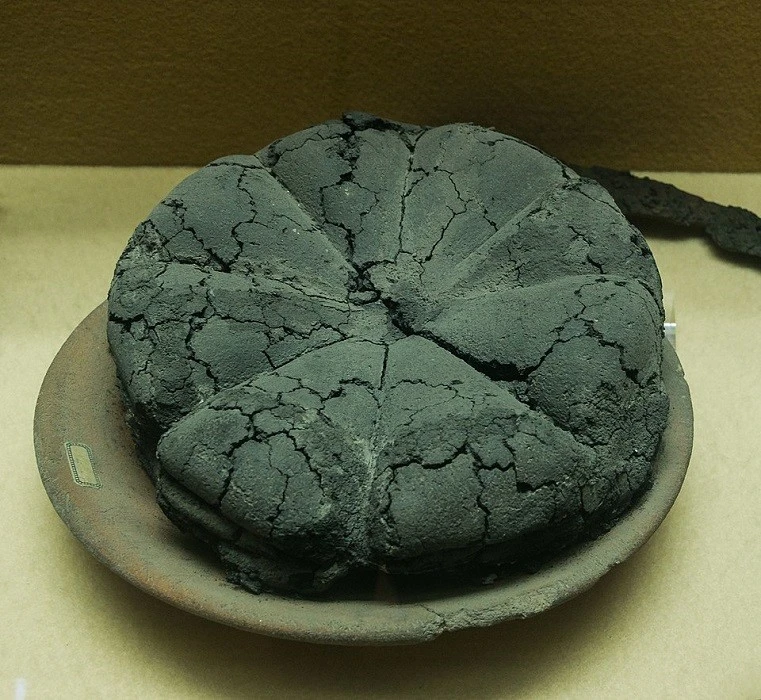
Ancient Roman bread, preserved in the ash after the eruption of Vesuvius. Round bread with slits to make it easier to break.
This means that almost 27 kilograms of wheat could be harvested per month. More than 30 kilograms of bread could be obtained from it! The flour was either unsifted or not sifted very thoroughly, so the bread was baked with bran, and very little was wasted. So, an adult working man could eat about a kilogram of bread per day. If there was one thing that reduced Roman flour consumption, it was figs. When they ripened, masters reduced the amount of grain given to slaves.
Wealthy people had more meat and dairy products on their tables, but bread was still present. Of course, the flour was better, whiter and purer, and in addition to the usual loaves, they baked pies and cookies, but overall, it's clear that grain was practically the main culinary currency in Rome. 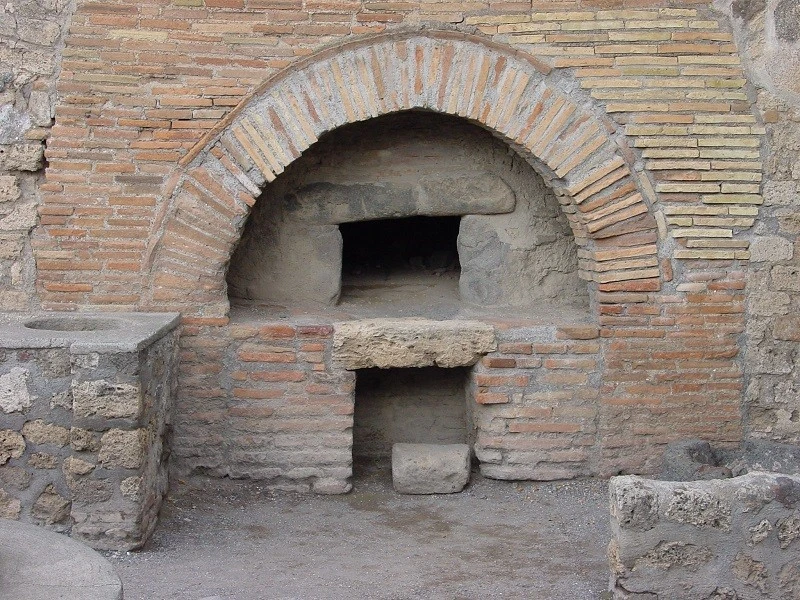
Oven in a public bakery in Pompeii
Historians estimate that between 750,000 and a million people lived in Rome in the first and second centuries CE, and at least 500,000 at the turn of the millennium. No peasant farms in the surrounding area could supply such a metropolis with grain; it had to be imported.
The main suppliers of grain were Sicily, Sardinia, and Egypt, the latter of which shipped about 20 million modii of grain to Rome annually, which accounted for about a third of its needs. Supplies from Egypt traveled along two routes: the eastern one, along the coast of Asia Minor, and the western one, via Carthage. Navigation was limited to six months, and the journey itself could take two or three months due to unfavorable winds. All this led to grain prices rising, and not every Roman could afford it. This caused discontent and even food riots.
As early as 123 BCE, the tribune Gaius Gracchus proposed the adoption of a "grain law." This was the origin of the Cura Annonae (grain supply policy). Named after the goddess Annona, who blessed a good harvest, it consisted of distributing up to a third of all grain imported to Rome to the poor (5 modii per month, only for men and Roman citizens)—at first at a price well below the market price, and later for free. Stability in the Republic, and later in the Empire, required concessions. It's no surprise that it was the Roman poet Juvenal, who lived in the first and second centuries, who coined the phrase "bread and circuses." 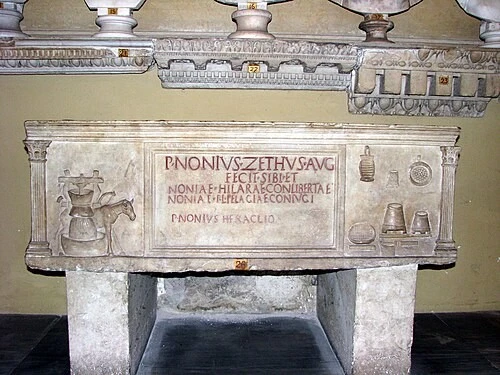
Marble sarcophagus of the baker Nonius Zephus from Ostia. The reliefs depict a donkey turning a mill and the baker's tools—a modium, a sieve, and bread baskets. Chiaramonti Museum
Grain Diplomacy
It turns out that Sicily, Sardinia, Egypt, and other African countries ensured social peace in Rome. Any fluctuations in grain prices or shortages were immediately felt and caused unrest. In such a situation, food supplies could have become an ideal tool for manipulation.
They could have, but in reality, they probably didn't. At least not in Cleopatra's hands, although many modern authors ascribe such intentions to her: in the 1999 TV series "Cleopatra," in the film of the same name starring Elizabeth Taylor, and in the cult classic "Rome," Antony and Cleopatra do nothing but try to starve Rome to death.
In reality, grain supplies were indeed interrupted, but for a different reason. Sextus Pompey, a politician and military leader, controlled Sicily, Sardinia, and Corsica from 42 to 36 BC and intercepted food shipments, eventually allowing grain from his territories to be shipped to markets other than Rome. Cleopatra and Antony, however, did not resort to such ploys in their struggle against Octavian. This would have inevitably led to an invasion of Egypt by Roman legions, and the "grain diplomacy" would have failed. 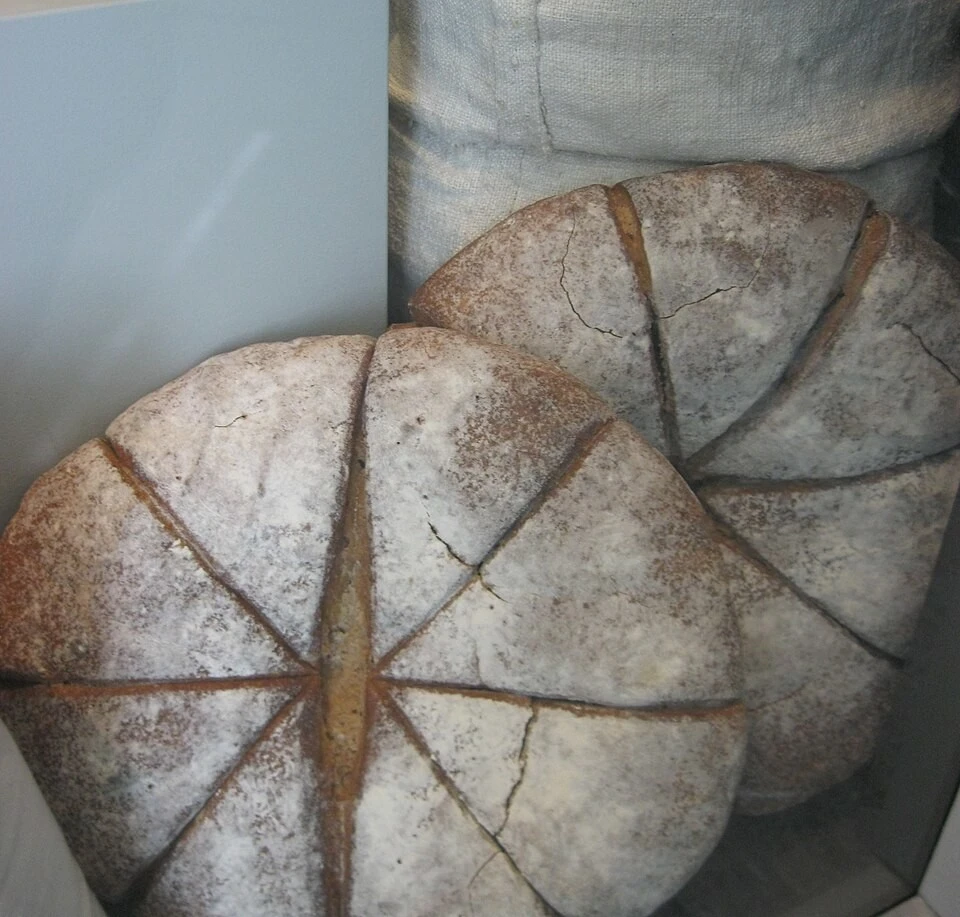
An example of Roman bread in the Karlsruhe Museum
Add your comment
You might be interested in:
















Persistence in achieving a goal

A biker prevented a hit-and-run driver from escaping

Not everyone is having fun on the amusement ride

Absolute perfection

17 Photos That Will Stop You in Your Tracks (18 Photos)

The cutest lunch delivery ever

What Would Happen to a Human on Every Planet in the Solar

Toyota Celica ST165 on a rally track

Young women, Dancing and George Michael: nothing superfluous
