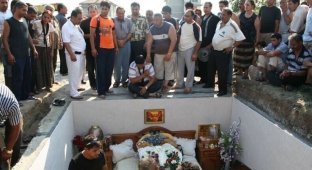
Why don't the Roma have their own state? (4 photos)
If a Romani state were created, it would be a country with a population of 20-40 million, comparable in size to Saudi Arabia, Ukraine, and Canada. It would speak 5-10 major world languages and several dozen smaller ones. And the locals would practice several separate religions and have a wide variety of traditions. 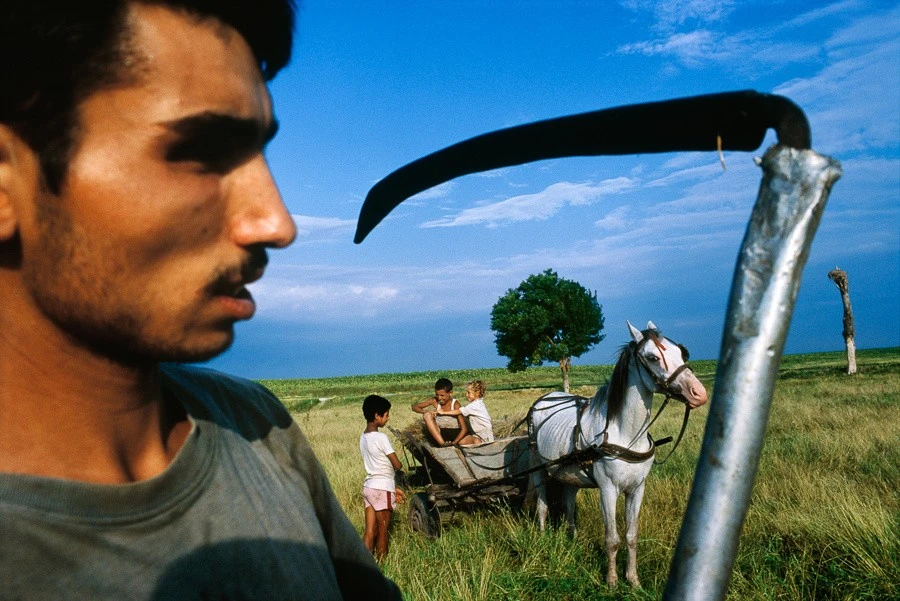
This, in fact, is the main reason why it will never be created. Although the idea of uniting all representatives of this people under one roof still exists. Back in 1971, the first World Roma Congress was held in London. In 1990, the meeting resolved to seek compensation for German repression. In 2012, the creation of a Roma state was raised, and a currency and model for a global Roma passport were adopted. But then the organization split, like the Third International, and now there are simply no active advocates for unity.
But Roma political history has seen better days. It began in northwest India, when members of the nomadic Dom, Banjara, Gujar, Sansi, Chauhan, and Sikligar castes, for some reason, fled to Iran a thousand years ago. Wars associated with the expansion of the Turkic Ghaznavid Empire may have been to blame.
They were traveling performers, fortune tellers, healers, and part-time ironworkers. Most Roma around the world have retained these professions to this day. The author even remembers an elderly Roma man selling horseshoes and other horse accessories at a market in one of the North Caucasus republics in the late 1990s. 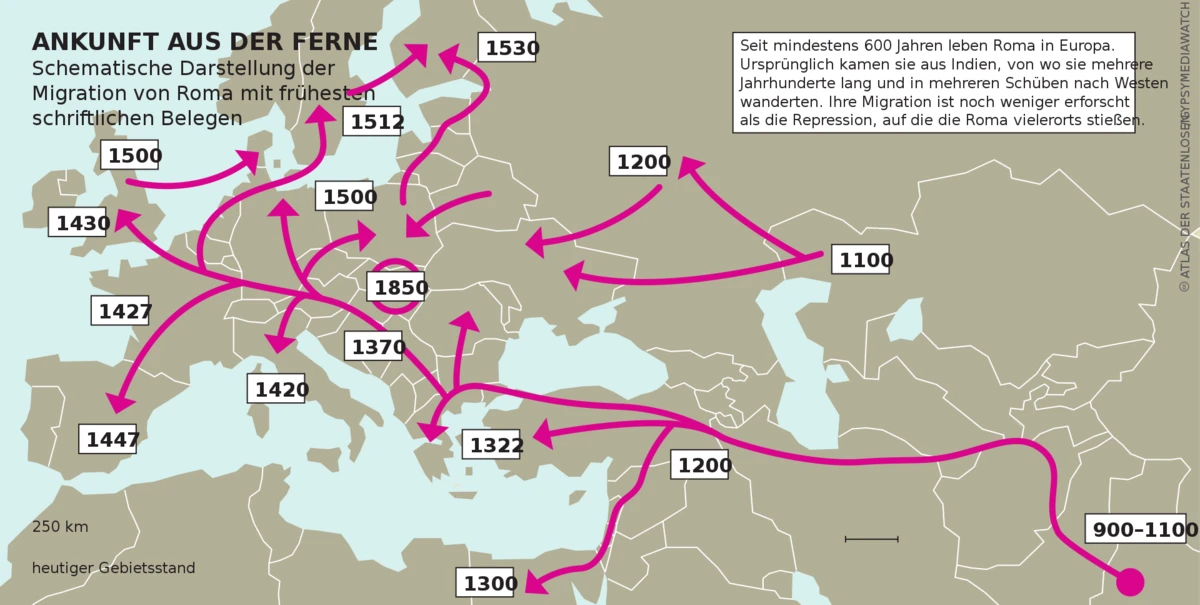
They spent about two hundred years in Asia, then some migrated to Europe and dispersed throughout it over time. Today, virtually every Christian and Muslim country has its own Roma community, regardless of their faith or name.
With the exception of the Ottoman Empire, where there were already numerous nomadic communities and the state was accustomed to this way of life, Roma faced discrimination almost everywhere. Each of their groups was independent, lacking a central leadership, making it difficult to settle in one place and establish some kind of state prototype. 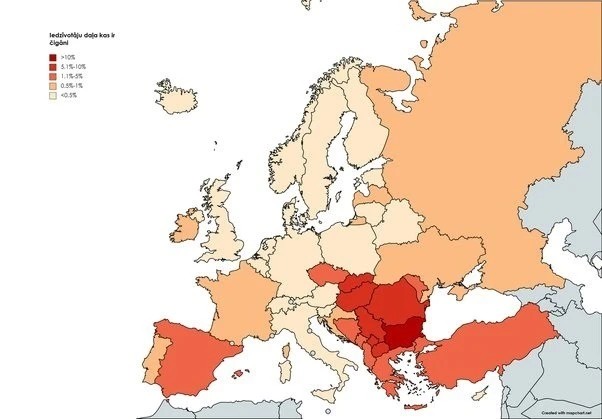
By country. Bulgaria – to the Roma!
In fact, in the Middle Ages and modern times, Roma were more of a profession than a nationality. Or, let's say, they were a group with a specific economic niche. Fortune-telling, healing, and the horse and harness trade were all important to them, no matter how you look at it. Even the first was in demand, although it was prohibited almost everywhere.
This is why the Roma have always been widely scattered geographically, and why they maintained a nomadic lifestyle for so long. However, they sometimes occupied and, to a certain extent, controlled certain territories, albeit briefly.
As an example, we can recall the small town of Methoni (originally Messinia – THAT'S SPARTA!!!), located in Greece in the southwestern Peloponnese and the surrounding region. There were many Roma there during the Venetian rule, but after the peninsula was captured by the Ottoman Empire, they dispersed forever. The same thing happened on the Venetian island of Corfu, and continued for a longer time due to its isolation. From the late 14th to the early 19th century, the Feudum Acinganorum, Latin for "Gypsy domain," existed here. 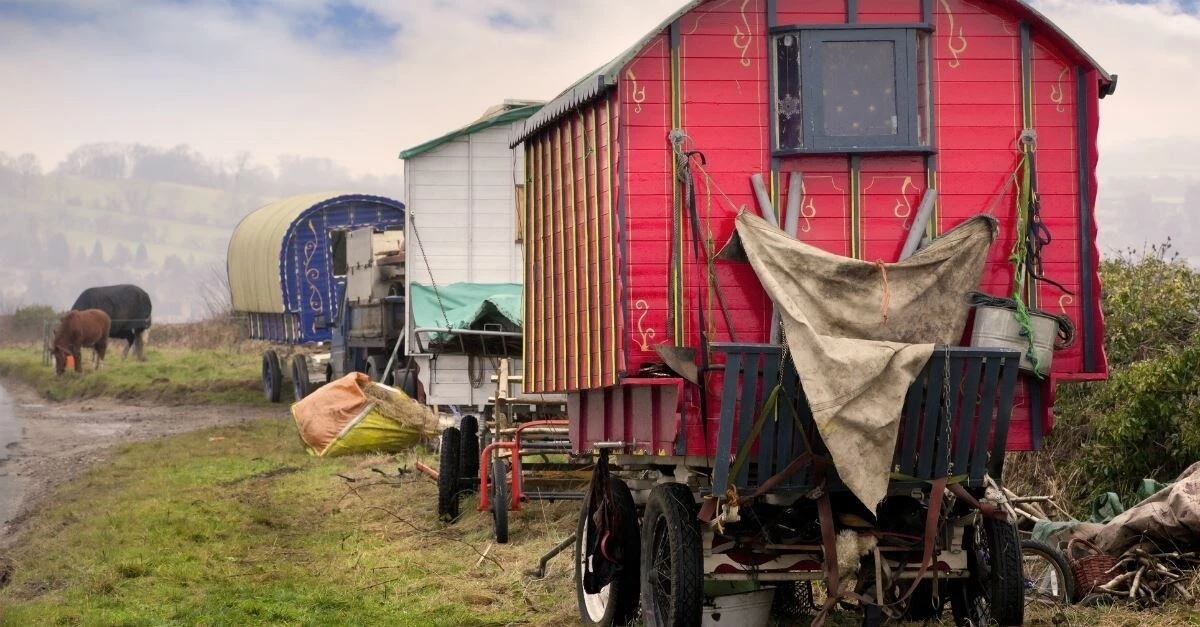
Here, the Gypsies lived under the rule of their barons, held their own courts, practiced blacksmithing and various crafts, and enjoyed complete internal self-government—isn't this the prototype of a state? But then Corfu began to change hands, and the Feudum Acinganorum disappeared.
In other places, the Gypsies simply lacked the political organization and authority to assert sovereignty over a given territory. They were simply too scattered geographically and too culturally diverse to be reunited anywhere. Moreover, most Roma are pacifists by nature, and they always have to fight for their homeland.