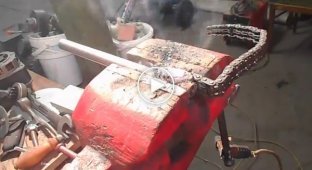
Kusari-doi - Japanese rain chains.
Traditional materials include copper and copper alloys, which gradually develop a patina and become part of the building's natural palette. These chains direct rainwater into drains or collection tanks, reducing splashing and protecting the soil at the house's foundation. Unlike pipes, these chains rarely clog with leaves and require no regular cleaning.
In colder regions, their advantage is particularly noticeable: downpipes can freeze and burst, while an exposed metal chain does not accumulate ice and even promotes faster snow melting. Their visual and acoustic effect makes them particularly valuable: the open flow of water allows one to observe the process itself, and the streams running through the links create a calm, meditative sound that harmonizes with Japanese architectural ideals of contemplation and connection with nature.
Historically, kusari-doi emerged in the sukiya style of architecture during the Azuchi-Momoyama period, when simplicity and naturalness were prized; The first versions were made from braided ropes, later replaced by durable metal structures.