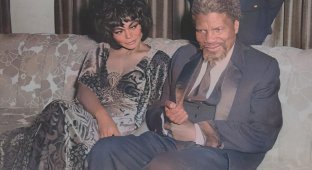
A Sinful Life and an Absurd Death: The Story of King Farouk I, Egypt's Last Monarch (8 photos)
King Farouk I of Egypt and the Sudan was, without exaggeration, the most extravagant monarch of the 20th century. He amassed vast collections of red cars, erotic postcards, razor blade wrappers, and diamonds, chased every skirt in sight, and completely ignored affairs of state. Under his rule, Egypt lost a war to tiny Israel and gained a reputation as the world's most corrupt monarchy. But Farouk's defining trait was his insatiable passion for food—a pathological obsession that haunted his brief life and ultimately sent him to an early grave. 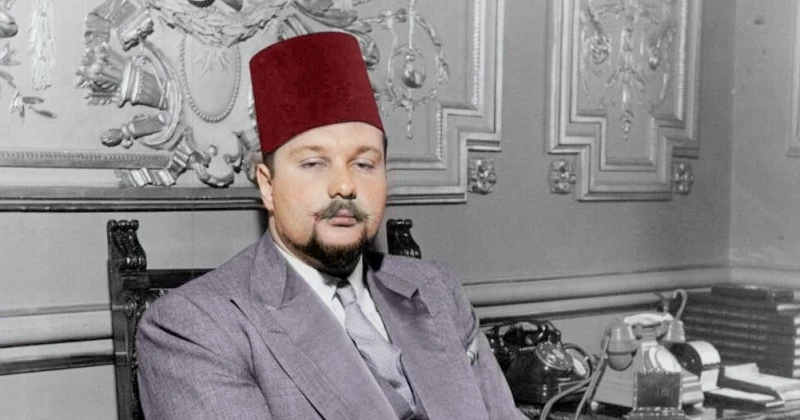
Young Prince Farouk grew up indulged in every imaginable way except one: food was kept strictly out of his reach. His father, King Fuad, ordered nannies and servants to destroy any cakes or pastries they found in the palace. Sweet sodas—which made the young royal tremble with excitement—were similarly banned. 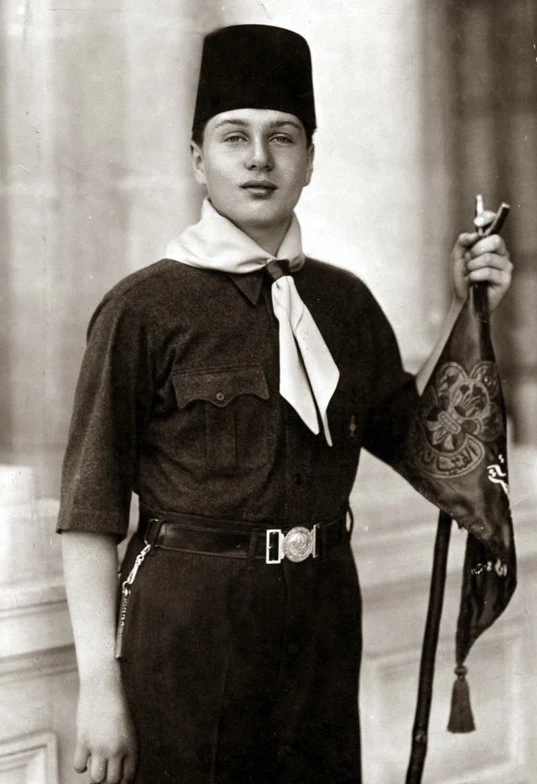
Prince Farouk in a Boy Scout uniform
The King had good reason for such strict measures; gluttony ran in the family's male line. Fuad himself struggled with overeating his entire life, while his father—Farouk's grandfather—died in old age after attempting to chug two bottles of champagne at once. But the prince was determined to resist his forced diet.
On one occasion, he was caught eating the cat's food. On another, servants caught the court electrician's son, Antonio Pulli, smuggling sweets to the prince under his clothes. Despite the bust, Farouk never forgot the favor. Once crowned king, he appointed the young Italian as his personal valet and companion in Gargantuan feasts. For years, Pulli was also tasked with procuring women for the king, whose lust proved just as boundless as his appetite.
Long Live the King Who Doesn't Eat Red Caviar!
Following his father’s death, the 16-year-old Farouk ascended the throne. The young monarch immediately set out to make up for lost time, gorging on sweets and chasing women. Marriage briefly reined him in, raising hopes that family life might settle the playboy king. But marital bliss was short-lived—within just a couple of years, he lost all interest in Queen Farida. 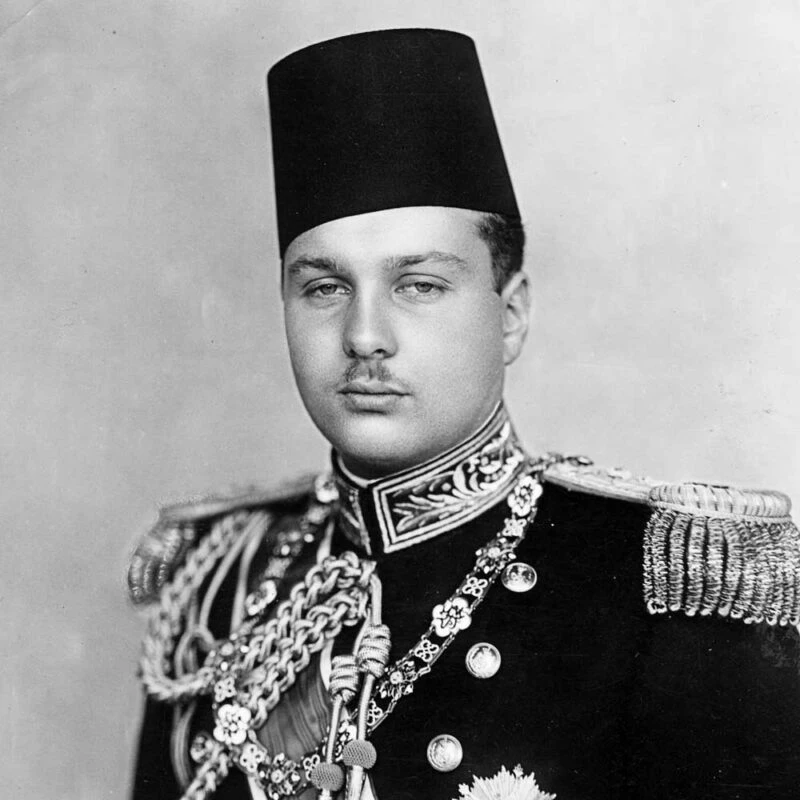
The queen gave birth to two daughters in quick succession, Farial and Fadia, but Farouk was desperate for a male heir. Blaming his wife for his dashed hopes, the aggrieved monarch once again sought solace in eclairs, wine, and women. His extreme overeating took a swift toll: the ruler of Egypt ballooned, rapidly turning into a human sphere.
In 1943, the king crashed his red Cadillac, fracturing his pelvis. Transporting the monarch to the hospital proved disastrous—the stretcher broke under his immense weight, forcing staff to call for a reinforced replacement. Rumors swirled across Egypt that Farouk ate a dozen eggs, several quail, and two jars of red caviar just for breakfast. Insisting these claims were outrageous, the king invited members of the press into his residence for the first and only time to set the record straight.
The reporters spent nearly the entire day enjoying Farouk’s hospitality and confirmed there was indeed no red caviar on the menu. For breakfast, the king partook of sorbet and fruit. Lunch, however, featured lobsters, roast chicken, chicken fricassee, lamb chops, sole, mashed potatoes, rice, beans, and artichokes.
The King Marries Again
In the early 1940s, while still a young man, Farouk noticed his stamina in the bedroom was waning. For a monarch who prided himself on being a high-profile playboy, erectile dysfunction was a devastating blow. Panic-stricken, the king turned first to top medical experts and then to faith healers. He was treated with concoctions of hashish, honey, and crushed rhinoceros horn, all to no avail. 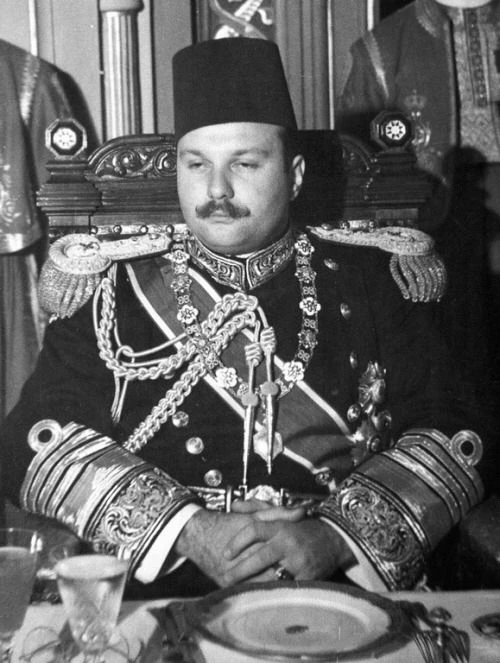
Naturally, Farouk coped with his frustration by gorging on lobsters and pastries, only aggravating his health problems. In 1948, he divorced his wife, whom he had long since grown distant from. For two years, the Egyptian ruler lived a wild bachelor life, until 1950, when he got hooked once more.
Unexpectedly, Farouk I fell head over heels, not for a noblewoman, but for a commoner. His target of affection was 16-year-old Narriman Sadek, a far cry from his statuesque first wife. The king’s new flame was short, chubby, and possessed the loud demeanor of a market vendor. The Egyptian public was outraged to hear their monarch planned to marry a commoner, but as absolute ruler, Farouk did as he pleased.
Narriman was whisked off to Europe for a crash course in etiquette and a strict slimming regimen. Farouk also prepared for the wedding by jumping on a trendy seafood diet. Every week, 600 fresh oysters were flown into Cairo from Denmark, which the king dutifully devoured. 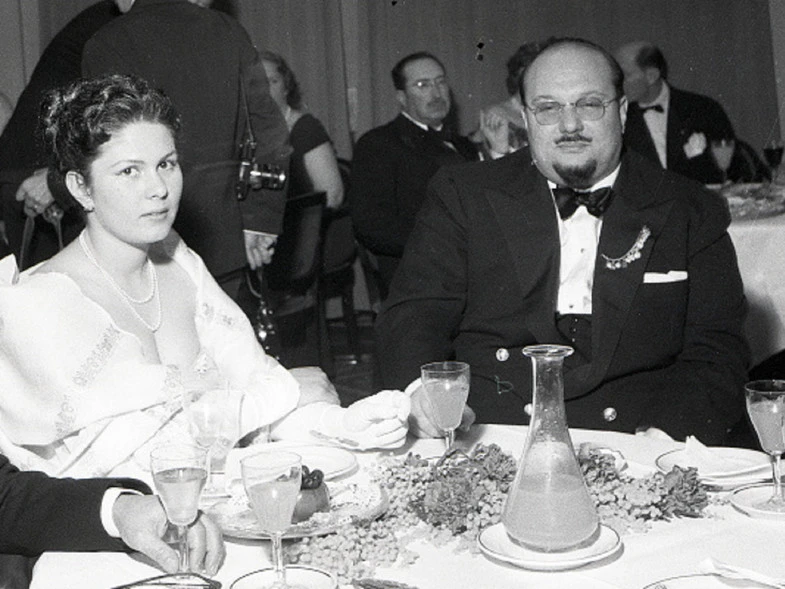
But the glutton’s discipline didn't last long, and Farouk soon relapsed. Booking a 21-room suite incognito at the French resort of Deauville, he threw himself back into his favorite pastime: unadulterated gluttony. A surviving receipt from a French restaurant clinically lists the courses from just one of Farouk I's lunches: veal in cream sauce, mushrooms in cream sauce, sole in cream sauce, and a dessert of strawberry puree topped with whipped cream and chocolate.
By the time of the wedding on May 6, 1951, the groom had not lost any weight; he had gained even more. The newlyweds set off on a honeymoon cruise around Europe aboard the royal yacht, stopping at various international ports. In every city, lavish banquets groaning with local delicacies awaited the royal couple. In January 1952, Narriman finally presented the 32-year-old Farouk with his long-awaited male heir.
"Fat Fucker" in Exile
Farouk I was not a tyrannical monarch who oppressed his subjects; he was simply completely incompetent. Contemporaries recalled that the king was never seen reading or writing, and he conducted all key state meetings at the dinner table with a glass in hand. Affairs of state were dead last on his list of priorities, sparking first bewilderment and then bitter resentment among his people. 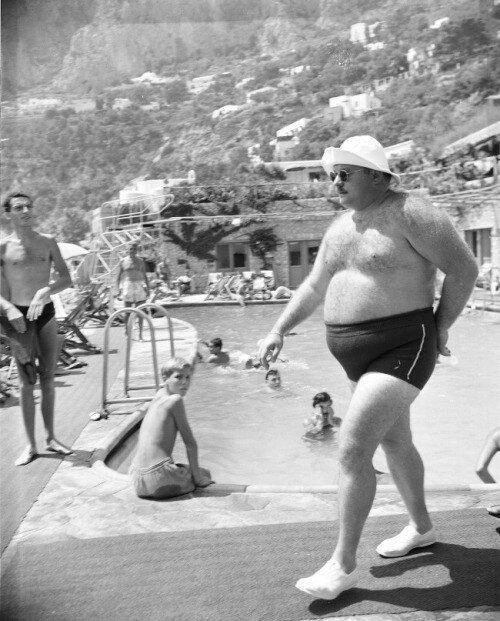
King Farouk I on the beach at Capri
While murmurs of discontent were subdued within Egypt, foreign media held nothing back. European and American newspapers openly labeled Farouk "swinish" and published scathing caricatures. Recognizing Egypt's strategic importance in the Middle East and North Africa, the U.S. government attempted to pressure the king into reforms. CIA officers were dispatched to handle the situation, unofficially dubbing their mission Operation "Fat Fucker."
All efforts to straighten Farouk out failed miserably. The king kept squandering state funds on women, gambling, and gourmet food, utterly unconcerned with his people or national interests. Finally, in 1952, a coup ousted the monarch—with more than a little help from the CIA.
During the revolution, the glutton king fled the country, and General Muhammad Naguib seized power. Formally, Farouk’s infant son, Fuad II, reigned for another year, but the monarchy was soon abolished entirely, officially making Egypt a republic. 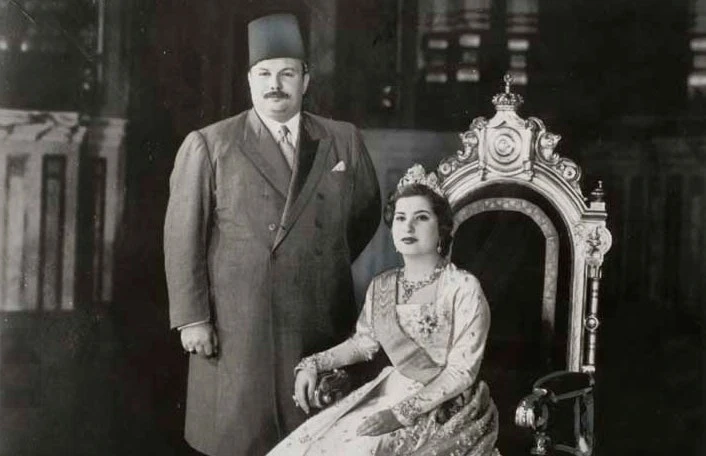
Farouk I and Queen Narriman
Unharmed during the coup, Farouk boarded the royal yacht
Mahroussa
with his wife and a massive stash of "food supplies" bound for Italy. In reality, the crates labeled lemonade and chocolate were crammed with gold bullion and precious jewels, while actual provisions amounted to little more than bread and cheese. Soldiers inspecting the vessel before departure merely laughed at the absurd mountain of food crates and let them pass unexamined.
Soon after, a hungry but immensely wealthy Farouk arrived in Capri, where he gorged on chocolate ice cream and cakes until he nearly passed out. The exiled monarch then moved his wife and children to Rome, settling into a lavish villa in an exclusive suburb. His life in Rome quickly settled back into its usual groove: casinos, high-end restaurants, luxury brothels, and horse races.
Unable to stomach his lifestyle, Narriman filed for divorce. Once freed, the former queen returned to Egypt, while Farouk spent the next 12 years eating and gambling away his vast fortune at the card tables. 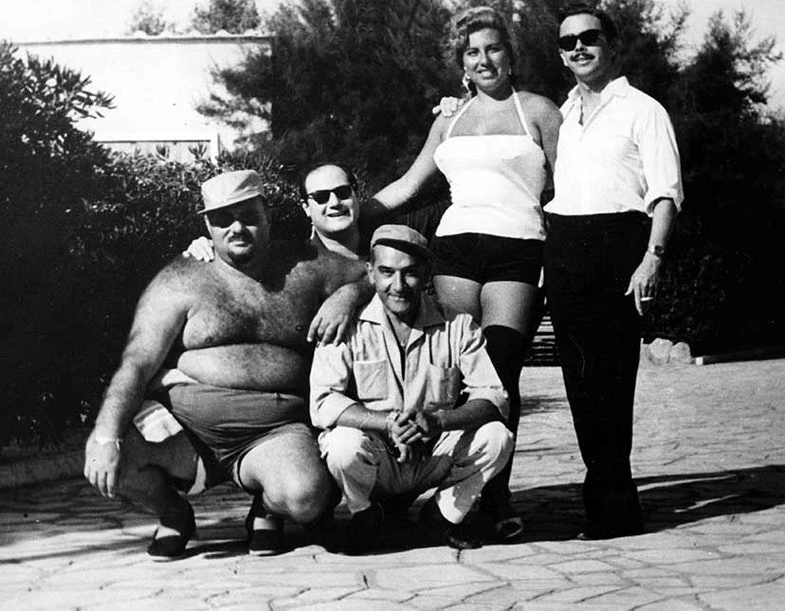
Spotting the king among his Italian friends isn't hard at all
Farouk’s life came to a sudden, if entirely predictable, end. On March 18, 1965, he died right at his table at the
Île de France
restaurant at the age of 45. The 330-pound diner had just polished off seven chickens, oysters with hot sauce, several baked potatoes, half a dozen eclairs, an entire Sachertorte, washed down with several cups of cappuccino and two bottles of wine. Rumor had it that this was not even his first dinner of the evening.
Having stuffed himself with this staggering feast, the former king lit a cigar, only to be struck down by a fatal heart attack moments later. Farouk I’s body was returned to Cairo and laid to rest in the Al-Rifa'i Mosque, alongside Egypt's other rulers and the Persian Shahs of the Pahlavi dynasty.