Why Jewish Communities String Miles of Fishing Line Above Cities Around the World (8 photos)
Jewish culture is well known for its resourcefulness and ingenuity—traits clearly on display in how believers navigate complex religious laws without breaking sacred canons. A prime example is the eruv, a nearly invisible boundary made of thin fishing line found in almost every city with a sizable Orthodox Jewish population. 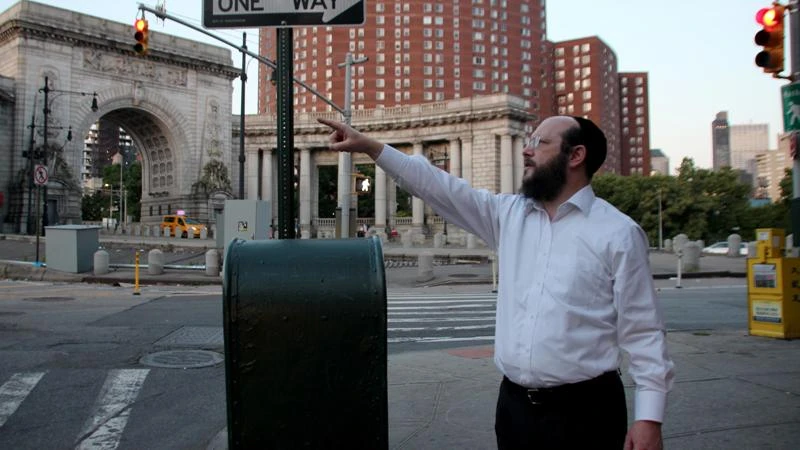
You could live your entire life without realizing that a durable, translucent nylon string stretches just a few feet above your head. Hundreds of cities around the world are laced with these lines, yet most residents have no idea they exist. Strung between lampposts, rooftops, and utility poles, the thin threads cross high above busy streets and sidewalks. 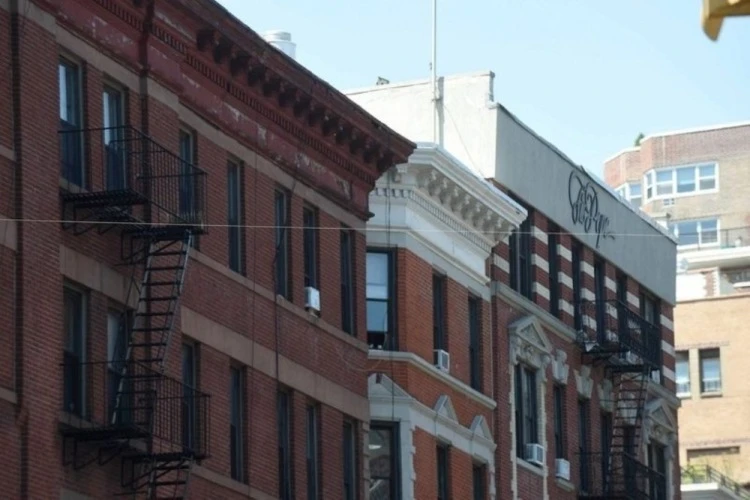
While these strings go completely unnoticed by most city dwellers, they are vital for Hasidic and other Orthodox Jews. The line marks a symbolic religious boundary that enables observers to follow traditional Sabbath laws while moving freely through public spaces. 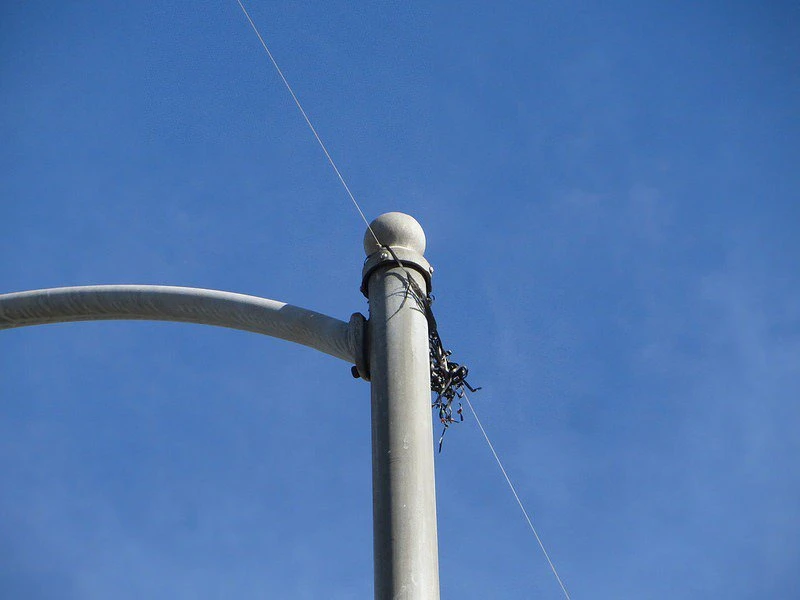
How It Works
This symbolic enclosure is called an eruv. It plays a crucial role on Shabbat, as well as on religious holidays and spiritual observances. On the Sabbath, Jewish tradition calls for abstaining from work to devote the day to prayer and worship. In Orthodox Judaism, however, the definition of "work" is interpreted quite strictly. 
On Shabbat, carrying anything in public—from pushing a stroller or holding a bag to using crutches, a cane, or even keeping a house key in your pocket—can be considered work. Carrying any item not worn as part of your clothing is strictly forbidden outside the home. 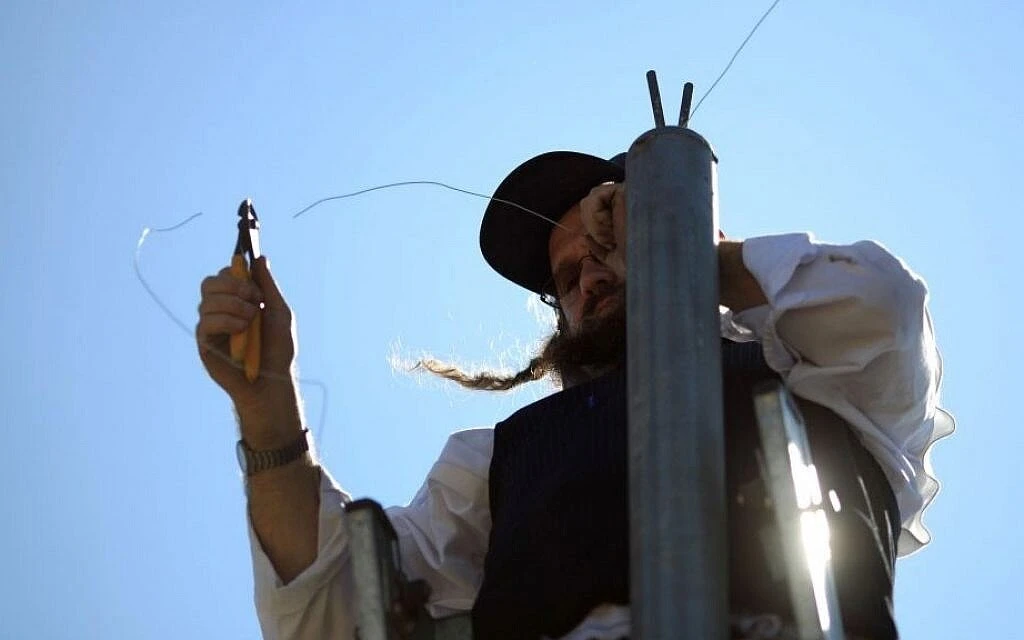
That is where the eruv comes in. The high-strung line expands the religious boundaries of the household. Within the area bounded by the line, believers can feel "at home" and carry essential everyday items. In ancient times, eruvs were physical enclosures—large courtyards surrounded by walls or fences containing homes, water wells, and synagogues. In some cases, a city wall served as an eruv, allowing residents to move about freely on Shabbat as long as they stayed inside the gates. 
A High-Maintenance Operation
Building physical walls across modern cities is obviously impossible, which is why modern communities use thin line suspended overhead instead. Eruvs can be found worldwide—in Melbourne, Tel Aviv, Toronto, Madrid, and Mexico City. In New York City alone, Manhattan features over 20 miles of line! Since even strong synthetic line can break, keeping an eruv intact requires constant maintenance. 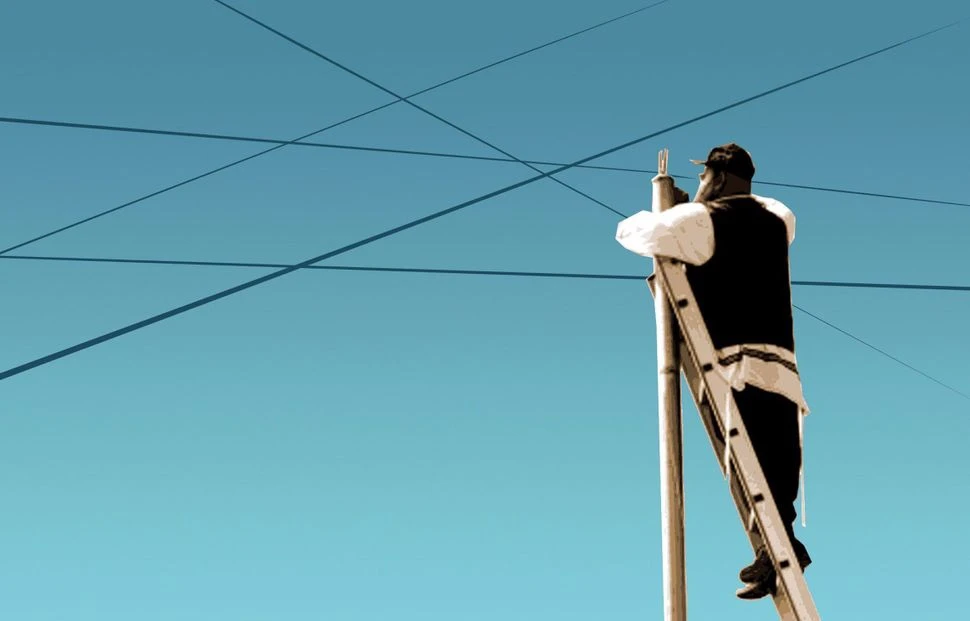
Sabbath begins on Friday evening and ends Saturday evening. Every Thursday, designated inspectors inspect their designated areas to ensure the line is intact. If repairs are needed, a crew with a bucket truck or ladders is immediately dispatched to re-string the break. Dedicated hotlines and online status trackers also allow residents to report damage to the eruv. 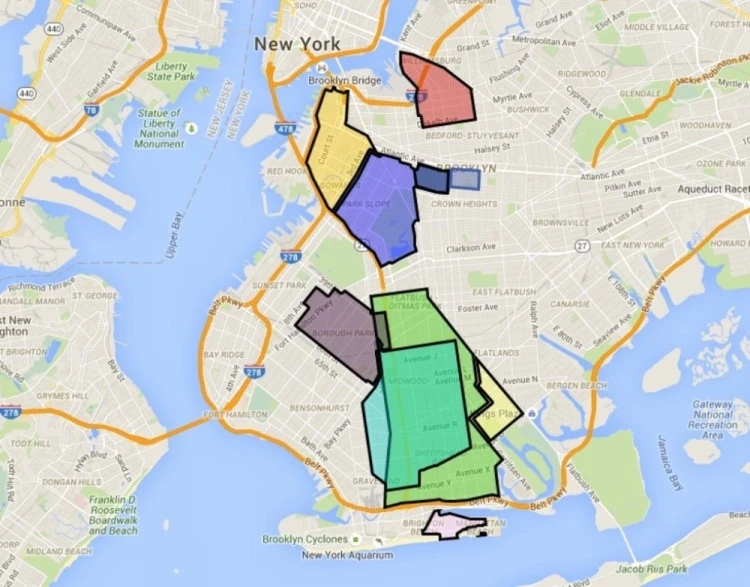
A map of eruv boundaries in Brooklyn, New York
Maintaining these networks is far from cheap, costing Hasidic communities millions of dollars in cities like New York. Securing permissions for these overhead borders is no easy task either, requiring approval from local municipalities and utility companies whose infrastructure the lines run near. The process is further complicated by city officials who often struggle to understand just how essential this invisible border is to the Jewish community.