How Water Jets Cut Through Steel—And What's Mixed Inside (12 Photos)
The old saying "water drops wear away stone" sounds like a lesson in patience. But on modern factory floors, water is accelerated to such extreme speeds that, when mixed with abrasive sand, it slices straight through heavy steel plates. 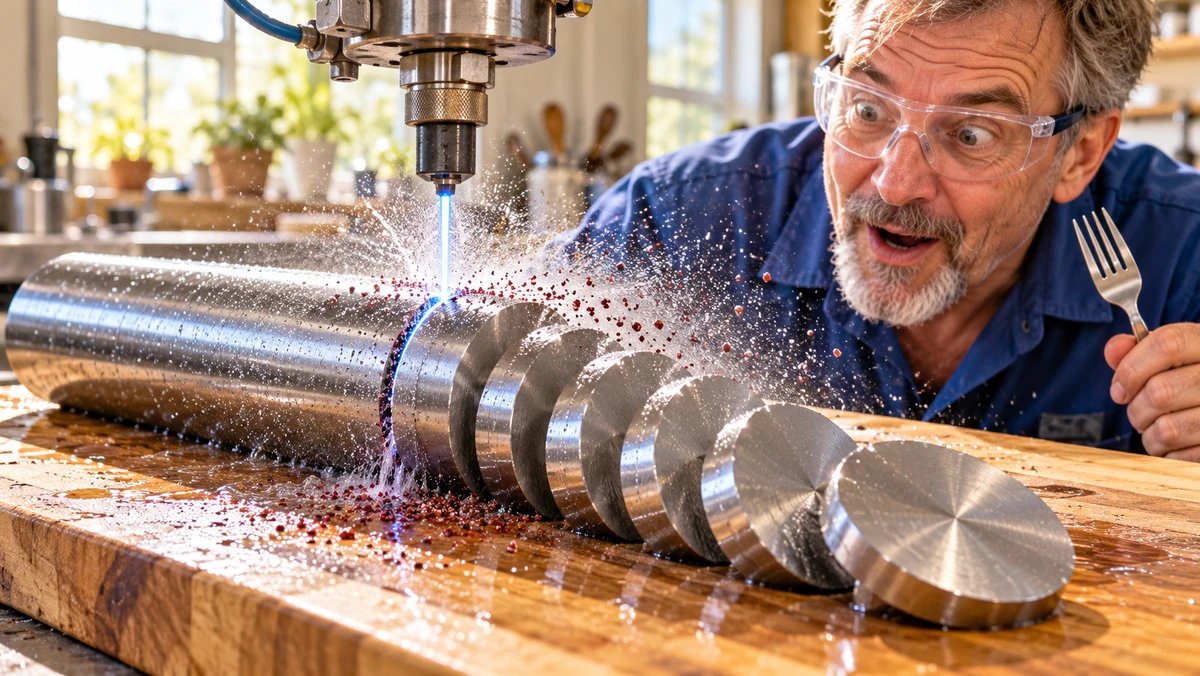
A paper-thin stream of water pierces a thick steel plate, carving out a part along a precise contour—without melting the metal. The water itself is ordinary, highly purified tap water; the real workhorse is abrasive grit mixed into the stream inside the cutting head.
This is abrasive waterjet cutting in action: high-speed water accelerates hard mineral grains that micro-erode the metal away. Surprisingly, the breakthrough that helped refine the process came from an ashtray by an elevator.
Faster Than the Speed of Sound
An ultra-high-pressure pump forces water out at several thousand bar. At 4,000 bar (roughly 58,000 psi), simplified physics calculations yield a jet velocity of around 900 meters per second—nearly two and a half times the speed of sound in air. Friction and turbulence reduce the actual speed, and adding abrasive sand slows the stream further as the water transfers kinetic energy to the particles. 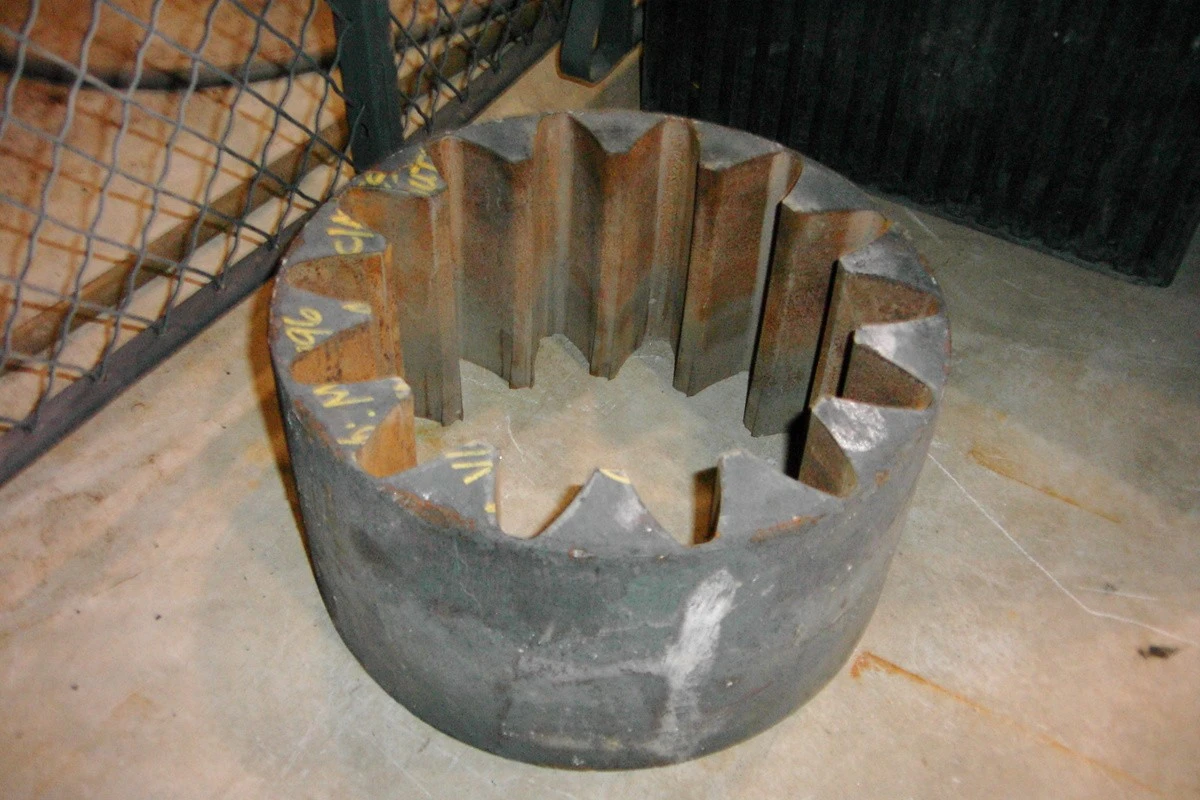
This metal workpiece was carved out using an abrasive waterjet. Greater thickness increases processing time and makes achieving a clean, square edge more challenging.
The jet is formed through a tiny orifice cut into a gemstone—typically sapphire, ruby, or diamond—measuring just tenths of a millimeter across. These ultra-hard materials resist wear, maintaining pristine edges that keep the water stream tightly focused. 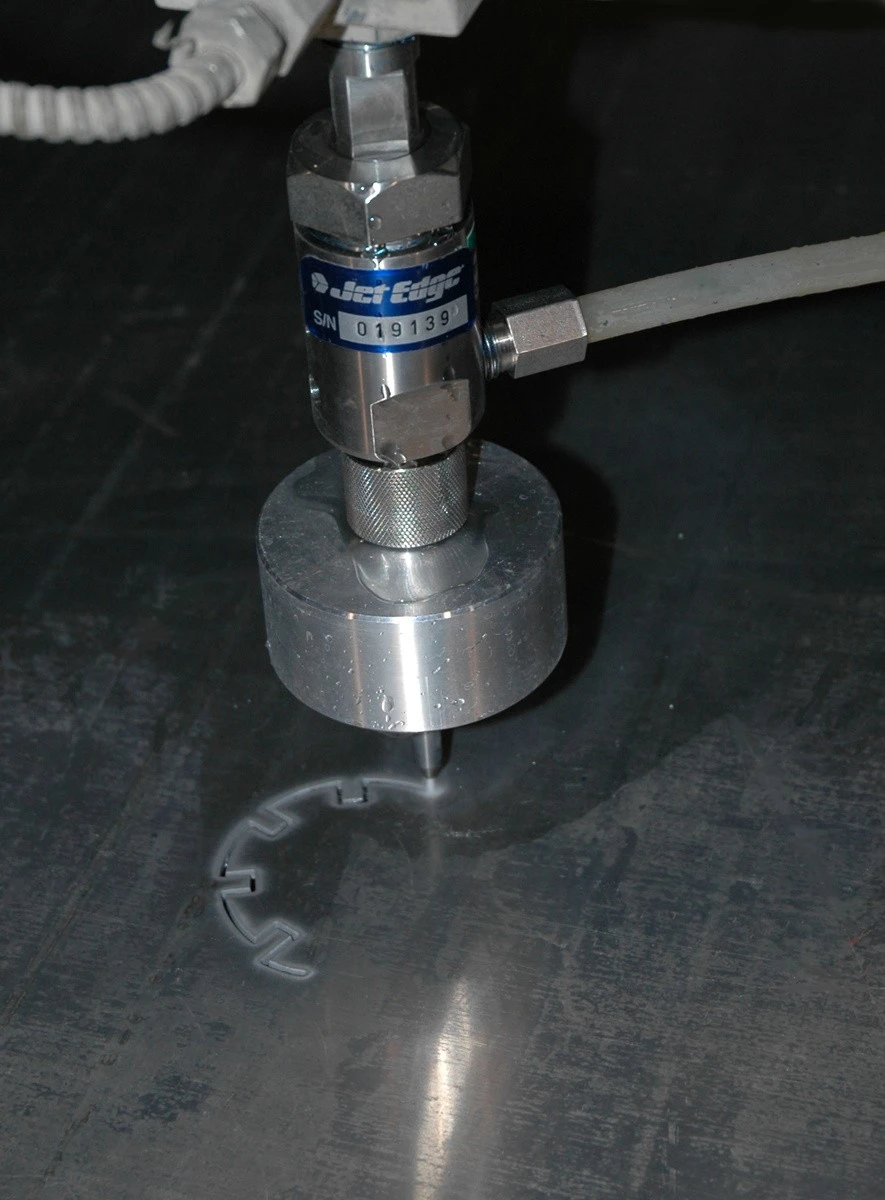
A waterjet cuts through aluminum. Steel is processed using the exact same principle: high-velocity water accelerates sand grains that erode the metal away.
Pure water alone can easily slice through foam, rubber, and cardboard. In the food industry, pure waterjets portion baked goods and meats without any abrasive additives. But to cut dense metals like steel efficiently, the stream requires abrasive particles to grind away the material.
An Ashtray Epiphany 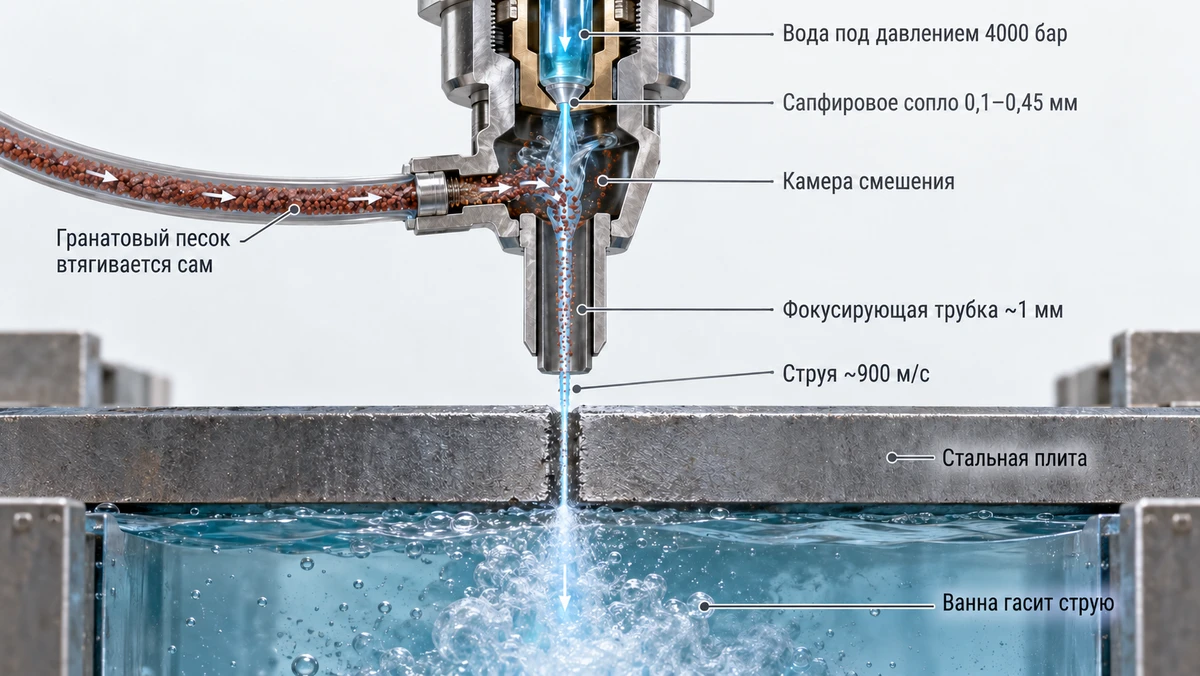
In the 1970s, Dr. Mohamed Hashish was conducting doctoral research on waterjet technology. One evening while waiting for an elevator, he noticed sparkling sand grains filling a nearby standing ashtray. In his hand was an almost-empty foam coffee cup.
As Hashish later recalled, he finished his coffee, scooped up a handful of sand into the cup, and headed down to the basement lab instead of heading home. He first blasted a piece of wood with pure water. Then he repeated the test, holding the cup of sand between the nozzle and the target. The stream sliced through the wood much faster—even if it created quite a mess. 
Later, while working at Flow Industries, Hashish proposed adding abrasive grit to cut steel and concrete. His supervisor, Dr. Mike Pao, was skeptical. Hashish asked for three months to prove the concept, betting a dinner on the outcome.
Hashish won the bet, presenting his boss with a steel plate precisely cut with Pao's name in Chinese characters at the dinner. Turning the lab prototype into a reliable industrial tool took years of engineering; the first commercial abrasive waterjet systems launched in 1984.
What Actually Cuts the Metal
The most widely used abrasive is garnet sand—composed of minerals from the exact same family as gemstone garnets. 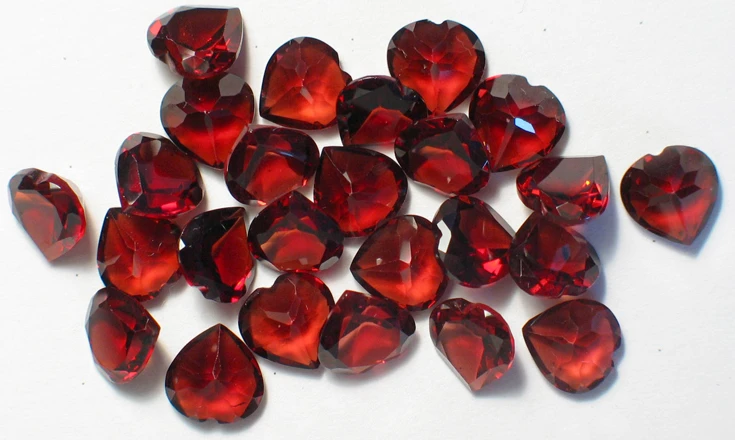
Gem-quality garnets
Garnet sand consists of tiny grains of hard garnet mineral. While finer specimens end up in jewelry, industrial-grade grains serve as the abrasive medium that grinds away metal inside the machine.
Unlike jewelers, waterjet operators require fine industrial-grade grit, typically around 0.2 millimeters (80 mesh) in size.
Garnet is uniquely suited for the job: it is hard, dense, and tough. Volume for volume, a grain of almandine—a common industrial garnet—is roughly 1.5 times heavier than silica quartz. Grain geometry and toughness are critical; overly brittle particles shatter upon impact before doing any real cutting. 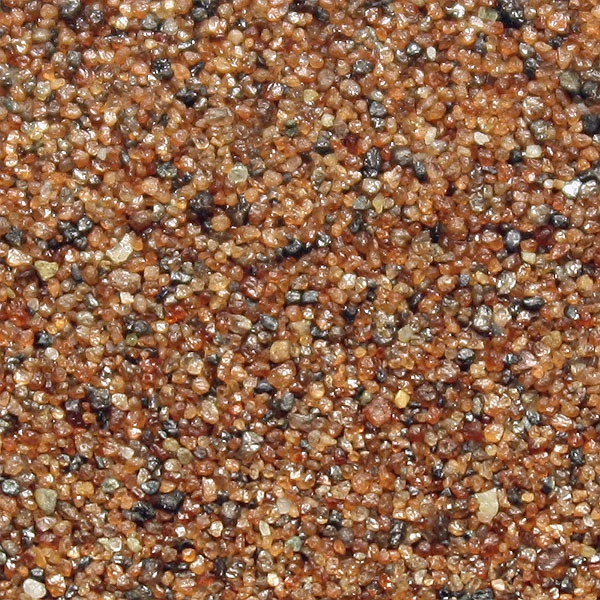
Natural sand consisting mostly of garnet. For industrial waterjets, the mineral is thoroughly washed, crushed, and mesh-sieved for consistency.
The abrasive sand is introduced downstream from the primary water orifice. The high-speed water jet creates a vacuum inside a mixing chamber, drawing sand through a supply tube via the Venturi effect. The slurry then streams through a mixing tube (nozzle) with a bore typically around 1 millimeter in diameter.
As water accelerates the sand grains, their impact creates microscopic gouges that chip away tiny particles of metal. As the cutting head moves along the path, fresh grains continuously strike the material, producing a smooth, full-depth cut.
Raw construction sand cannot be used without processing. Waterjet abrasives must be thoroughly cleaned and screened for grain size: oversized particles clog the narrow mixing tube, while inconsistent sizing degrades cut quality.
Why the Jet Eats Its Own Machine
On their way to the workpiece, high-velocity abrasive particles gradually wear down the mixing tube itself. Although these tubes are made from ultra-hard tungsten carbide composites, the inner bore slowly widens over time, spreading the jet and lowering cutting precision. 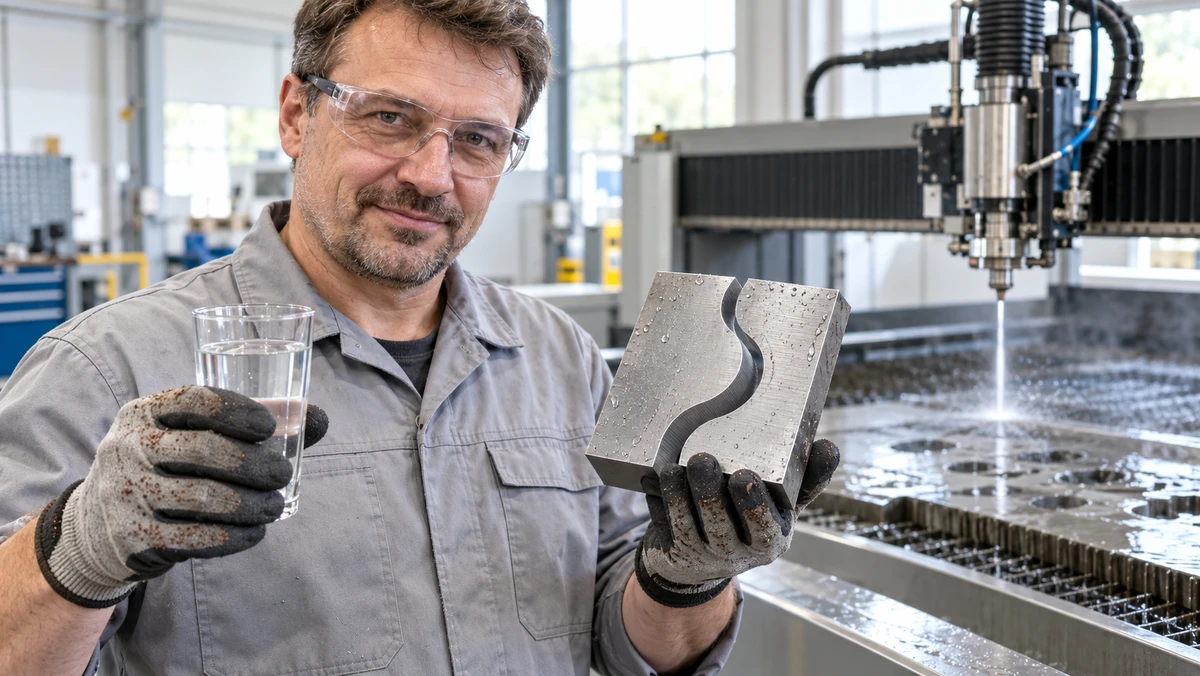
To counteract this, manufacturer OMAX recommends rotating the nozzle by 90 degrees every eight operating hours to ensure even wear across the inner diameter. The tube is replaced once part dimensions drift out of tolerance, as operational lifespan varies depending on cutting parameters. 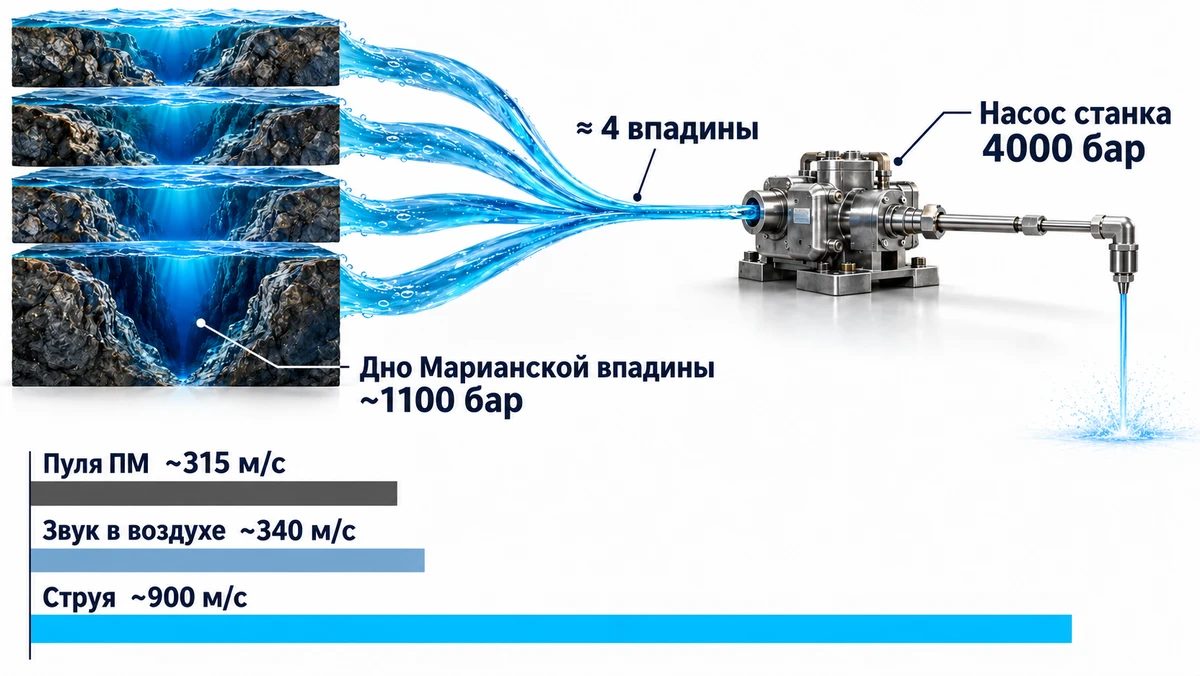
Abrasive consumption is also significant. For instance, testing on stone cutting in Russia's Ural region utilized 300 grams of garnet per minute—equal to 18 kilograms (about 40 lbs) per hour. While some spent abrasive can be recycled, it must first be separated from sludge, dried, and resieved. Because grains shatter during cutting, only a fraction of used garnet can be reused.
Where Does the Jet Go After the Cut?
Beneath the cutting table lies a large catcher tank filled with water. Once the jet pierces through the metal, the deep water bath dissipates its kinetic energy. Spent garnet and eroded metal particles settle to the bottom as sludge, which must periodically be cleaned out. 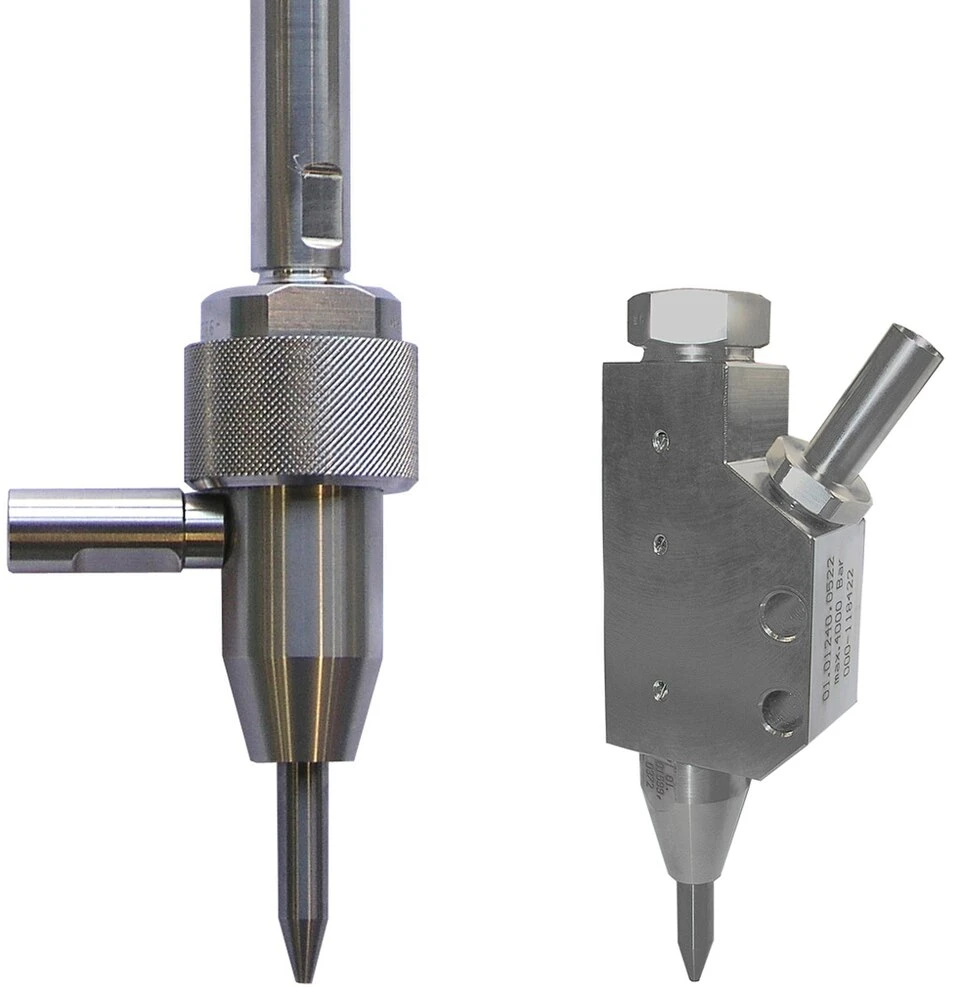
Abrasive feed enters the cutting head separately from the high-pressure water stream, mixing just below the water orifice.
Waterjet cutting is classified as a cold cutting process. Although localized friction generates heat, the continuous flow of water immediately carries it away. Unlike laser or plasma cutting, it leaves no heat-affected zone (HAZ) or thermal distortion, making it ideal for heat-sensitive metals like titanium and aerospace alloys.
High-powered industrial waterjets can slice through solid steel plates up to 30 centimeters (12 inches) thick. However, extreme thickness comes at a price: feed rates slow dramatically, and maintaining tight dimensional tolerances becomes significantly harder.
As the jet penetrates deep into material, it naturally deflects. If the cutting head moves too quickly, the bottom of the jet trails behind the top, creating striations and taper along the cut edge. Modern 5-axis cutting heads can tilt dynamically to offset taper, but traverse speeds must still be carefully calibrated to achieve the desired edge finish. 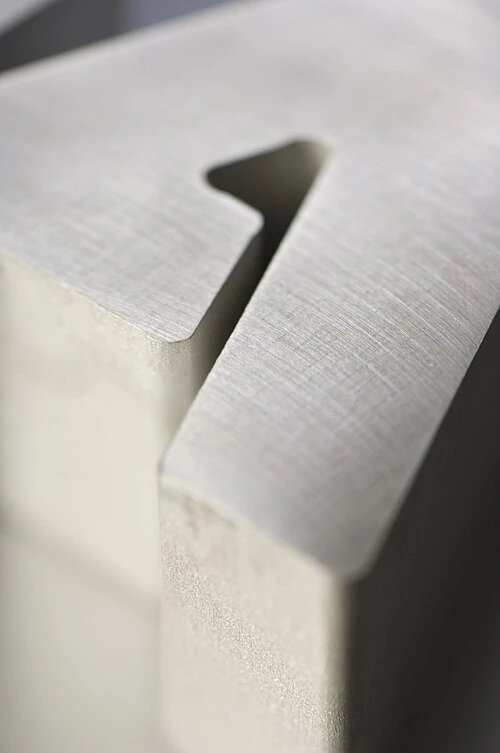
Abrasive waterjets can carve complex geometric patterns in steel. Cutting speed is tailored to material thickness and specified edge quality.
The process does have a surprising limitation: while waterjets cut standard glass effortlessly, tempered glass shatters instantly upon contact. Piercing interrupts the internal stress balance established during tempering. Thus, a thick steel slab can be processed with ease, whereas a piece of tempered glass will shatter into tiny fragments.
Can You Cut Without Garnet? 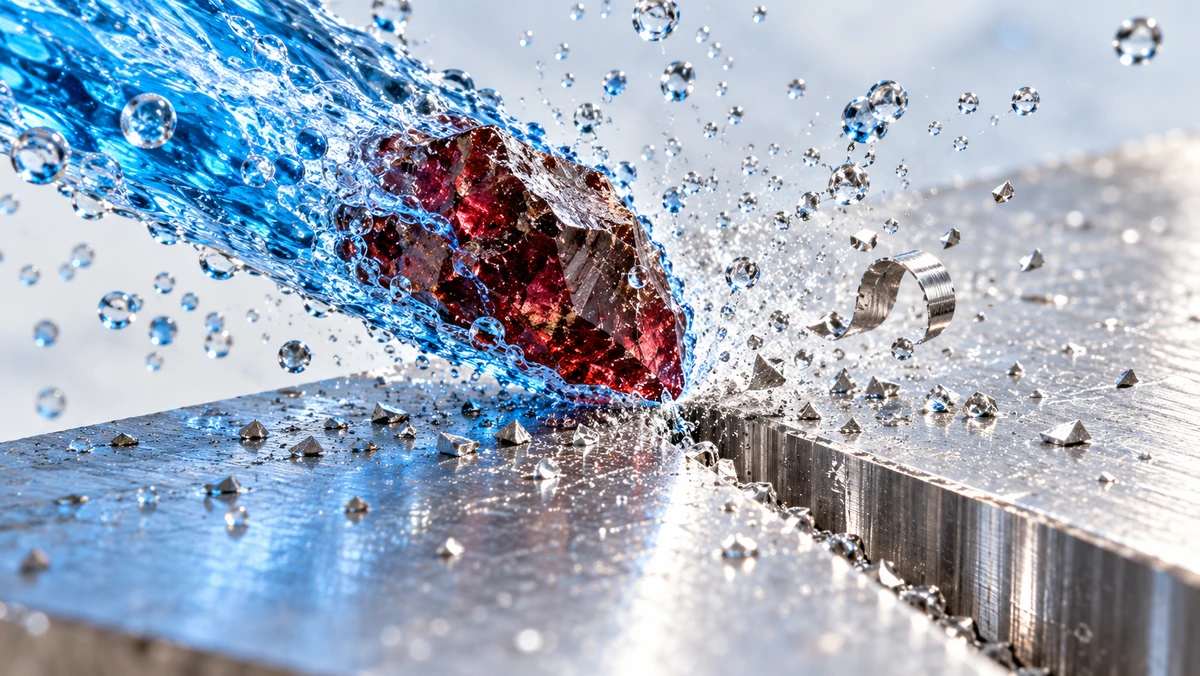
Researchers have explored alternative abrasives, such as silica quartz from local deposits like Gora Khrustalnaya in Russia. However, quartz lacks garnet's structural integrity, causing grains to break down rapidly inside the high-pressure stream.
Sand from the Kichigin deposit performed noticeably better. Under specific parameters for cutting aluminum alloys, it produced surface finishes comparable to garnet. However, these results cannot be directly applied to hard steels, and researchers noted that the overall economics of substituting garnet remain unproven.
Ultimately, the cost of waterjet cutting involves far more than running a high-pressure pump. It requires refined abrasive grit, durable tungsten carbide consumables, and machine time—because achieving a flawless edge means moving the jet slowly and deliberately.