To Survive, Hares Break Bones—Their Own and Others' (14 Photos)
An adult meeting a wild hare in an open field would hardly imagine that this creature could break their bones with a single kick. 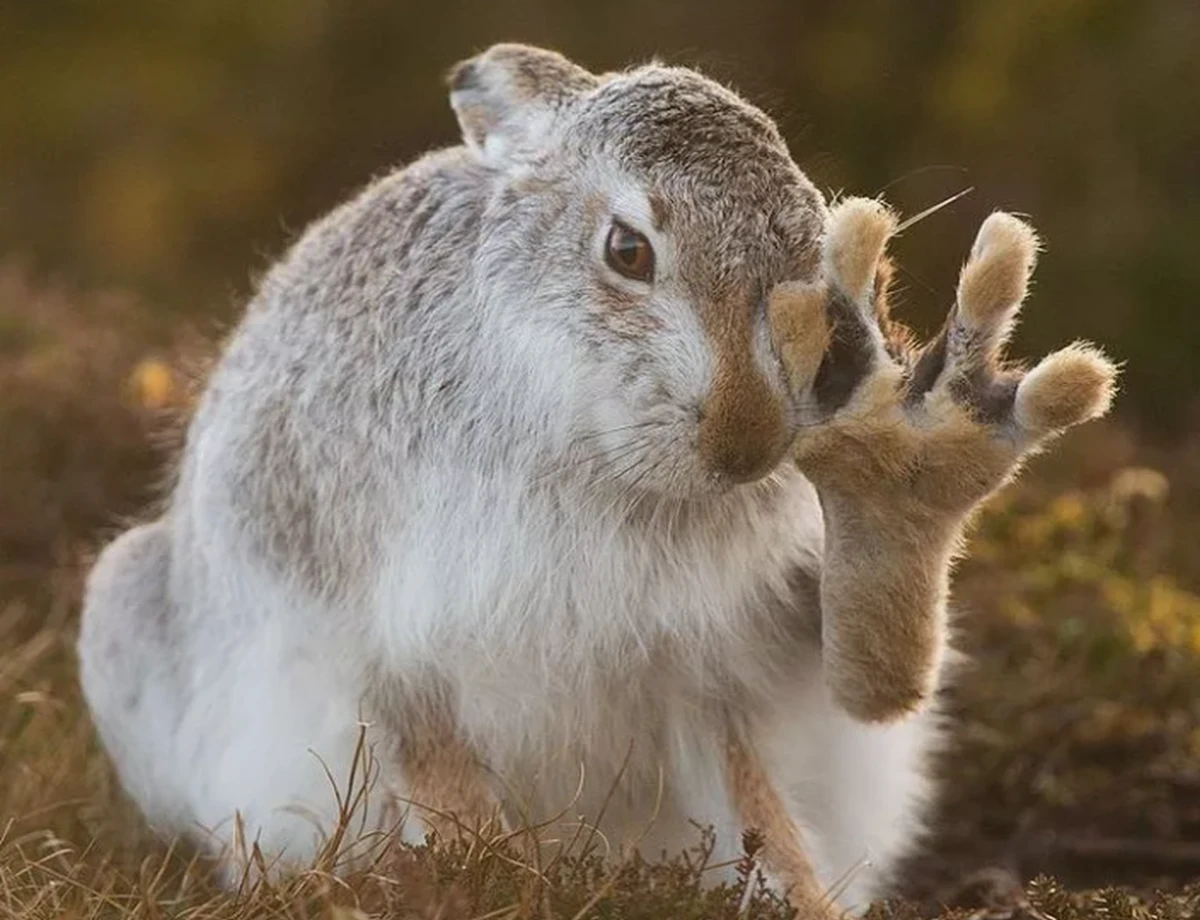
And they would be wrong. Deep down, a hare is three to four pounds of pure hind-leg muscle equipped with sharp claws, built on a skeleton engineered by evolution for extraordinary power. Hunters, vets, and owners of large rabbits know that a lagomorph’s kick is no laughing matter. The claws on their back legs are long and sturdy, and hares kick downward with short, astonishing speed and brutal force for their size. Such a strike can slice a human hand down to the flesh, or disembowel an overeager hunting dog approaching at the wrong angle. Hunting literature records cases where wounded hares, picked up alive, ripped open a hunter's forearm or snapped their own backbones while struggling—such is the immense power of those legs relative to their body. 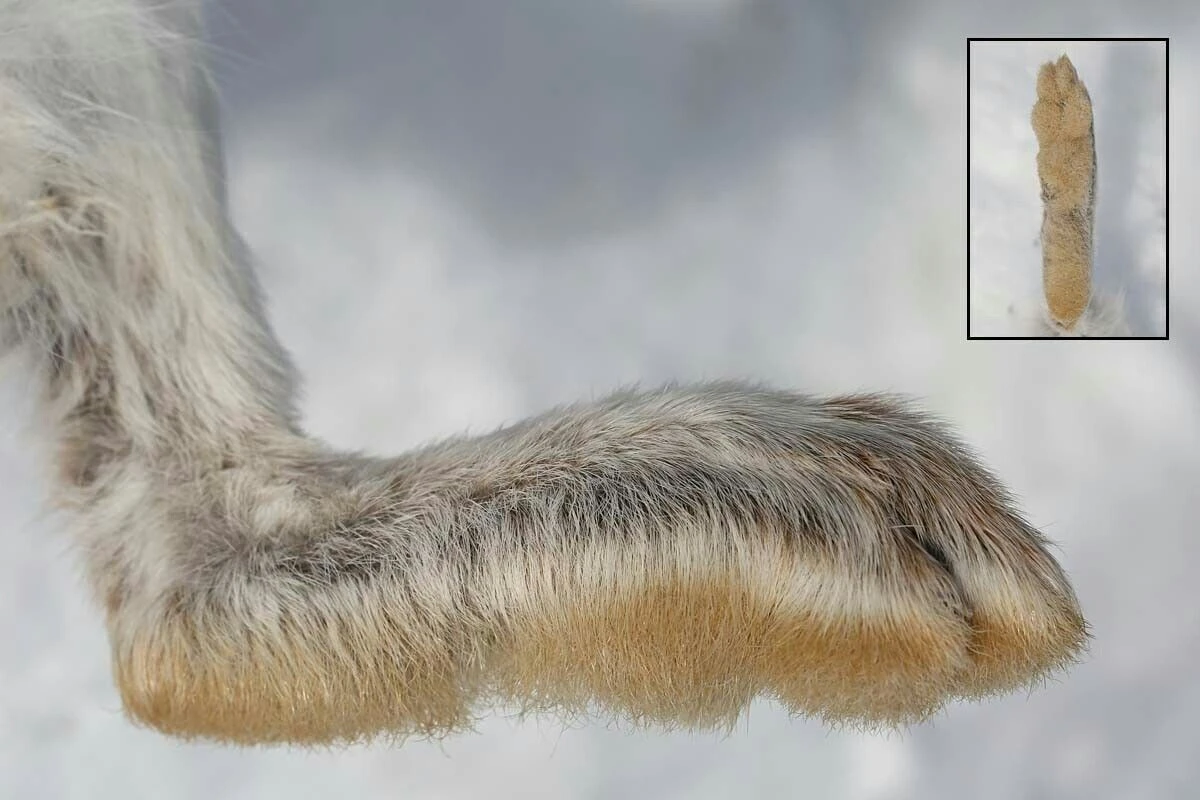
A hind leg in a folded position.
So why do we call the hare a coward? In human terms, a "coward" is someone who could fight back, but chooses not to. A hare never had that option. It sits near the very bottom of the temperate food chain, hunted by foxes, wolves, lynxes, stray dogs, goshawks, eagle owls, and martens—and those are just the primary predators. In this position, bravery isn't just useless; it's fatal. Evolution invested heavily in the hare's mobility. A European hare can reach speeds of nearly forty miles per hour on a straightaway, maintaining that pace over long distances rather than in brief bursts. Relative to its body size, its heart is huge, and its blood carries far more oxygen than that of most mammals its size. But speed isn't even the main factor. The real key is that the hare is a creature with no home. 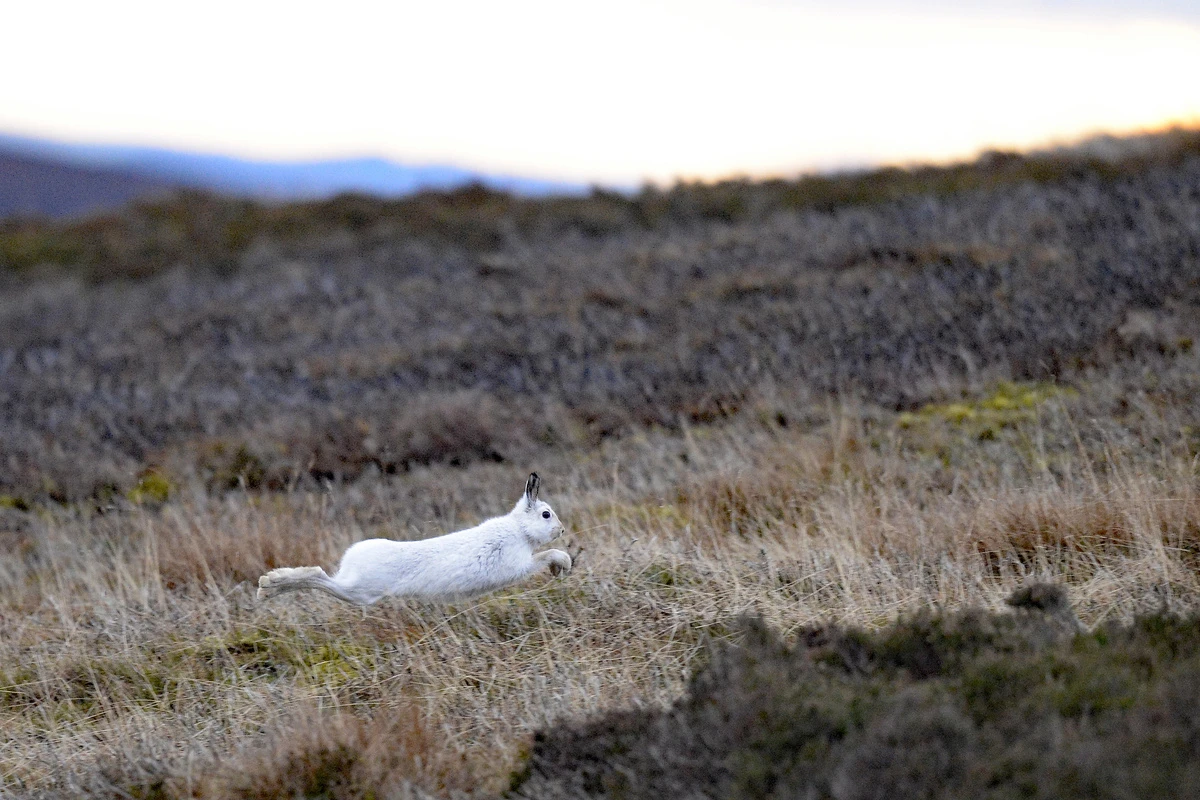
Home is wherever the wind blows!
Here is a fact that shatters a common childhood myth: hares do not live in burrows. Neither the brown hare nor the mountain hare digs burrows, nor do they usually use those left by other animals. Year-round, through summer rain and freezing sub-zero winters, the hare lives entirely out in the open. Its home is called a form—a shallow depression in the snow, grass, or under a bush, pressed flat by its own body. It crouches down, flattens its ears against its back, tucks in its paws, and effectively turns into a clump of earth. That is all it has. No burrow to pull its babies into, no stored food, and no shelter from a blizzard. 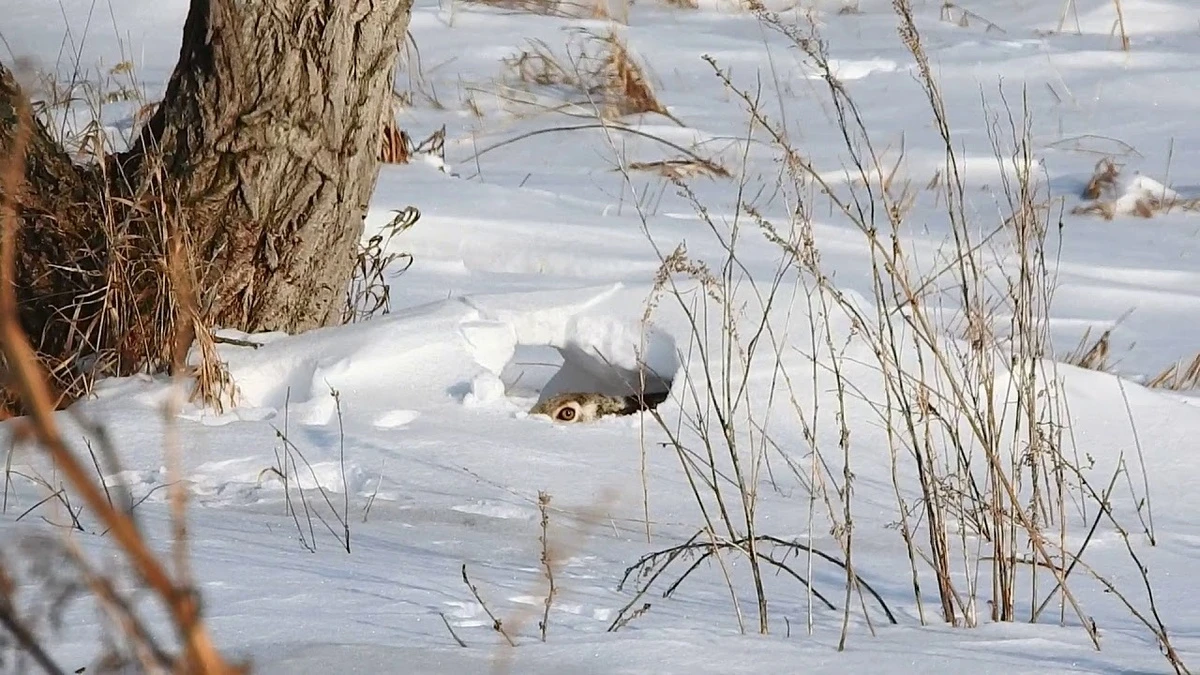
To be honest, it looks pretty cozy :)
This reality dictates its entire biology. With no walls to hide behind, its only defense is invisibility and the ability to vanish. Before bedding down, a hare performs trick maneuvers hunters call "doubling back" and "leaping": it backtracks along its own trail and then leaps far to the side, breaking the scent line. A tracking fox follows the trail until it abruptly stops, utterly confused. Did the hare just teleport? In short, hares don't run out of blind panic; they operate as master strategists, skillfully playing the scent, wind, and terrain. 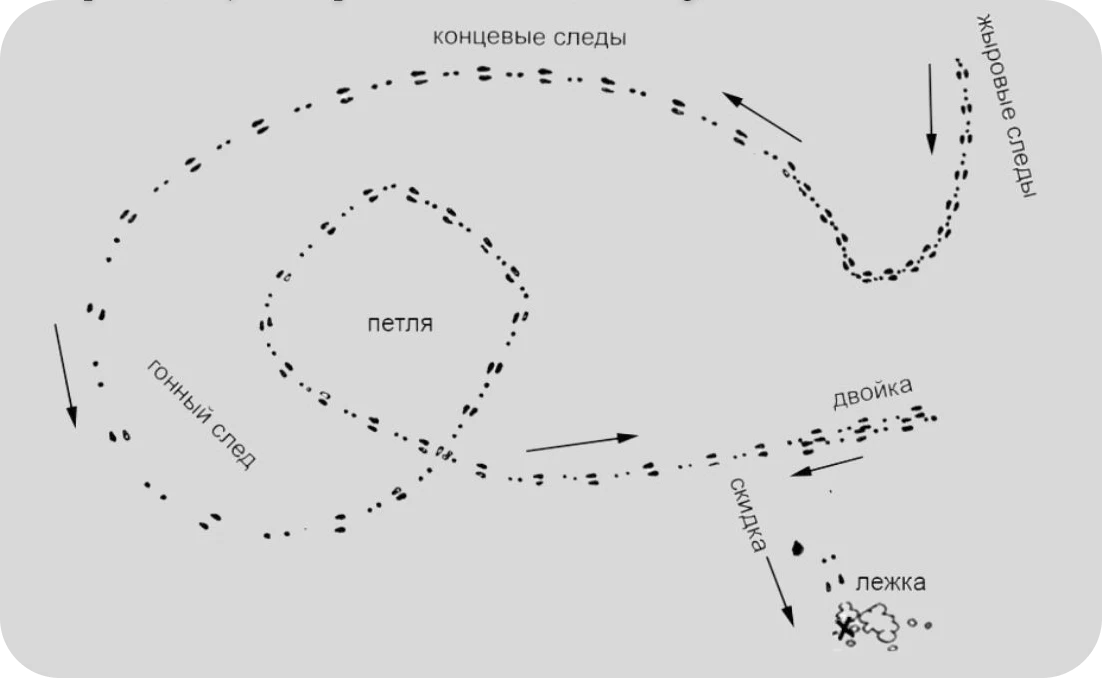
A fox's worst nightmare.
A hare’s eyes are positioned high on the sides of its head, giving it a near-360-degree field of view: it can see what is happening behind it without turning its head. The tradeoff is a blind spot right in front of its nose. It cannot see what is directly under its face, relying instead on its whiskers and sense of smell. This explains a curious quirk: a hare might fail to notice a motionless human standing just two paces ahead and run right into them. Its ears serve as both radar and radiators. In summer, they dump excess body heat; in winter, the hare presses them tight against its back to prevent heat loss. As a result, the further north the species lives, the shorter its ears: the mountain hare's ears are noticeably smaller than those of the brown hare. 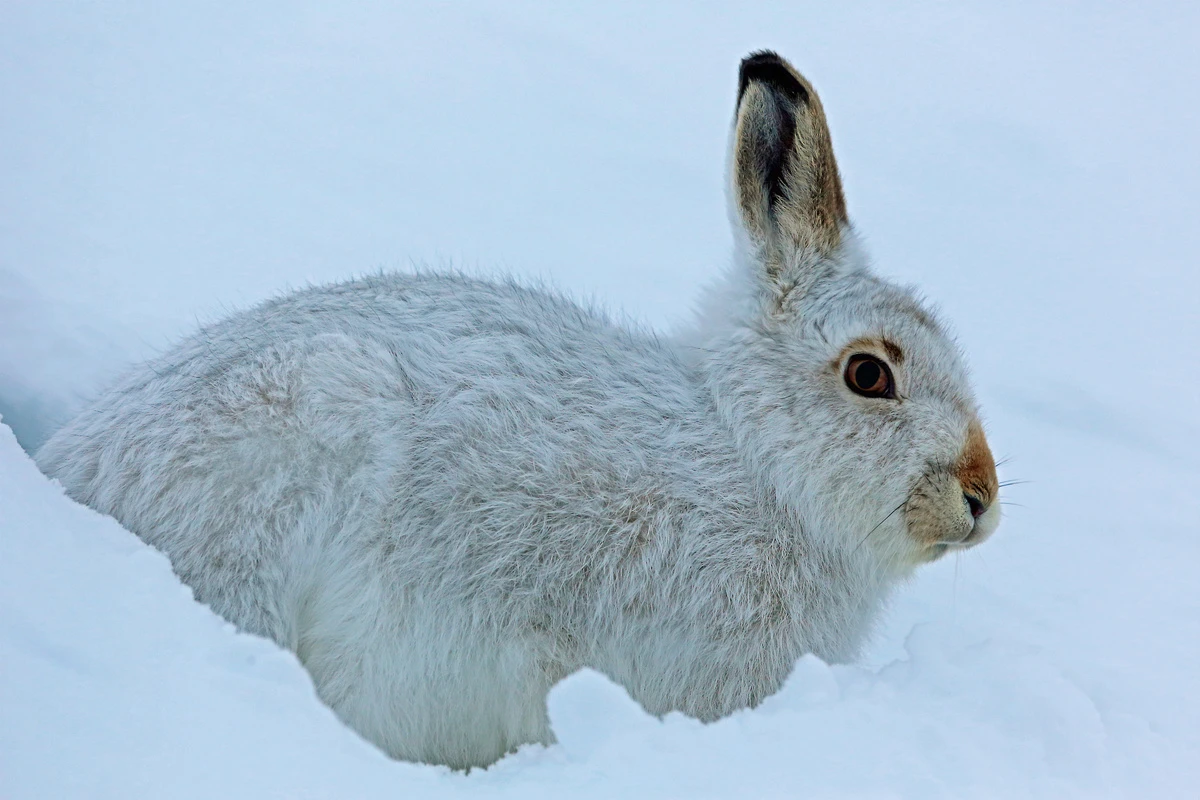
Mountain hare. 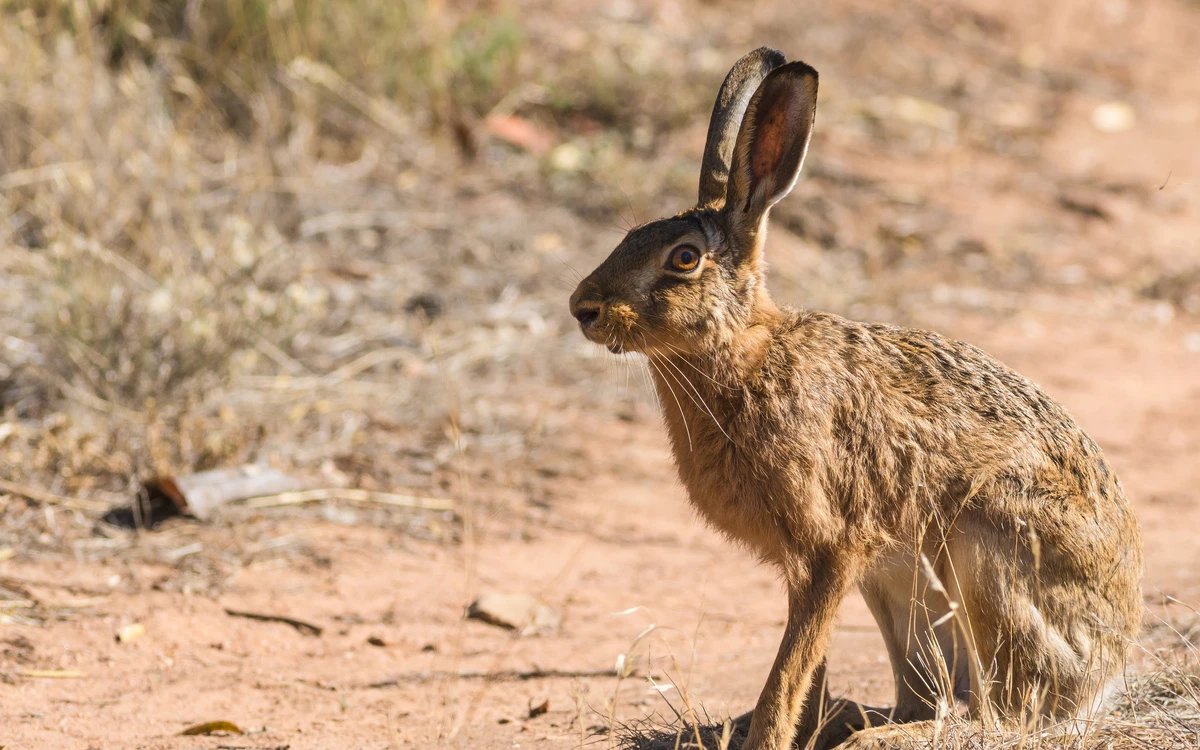
European brown hare.
Leverets (baby hares) are born like almost no other small mammals: fully furred, eyes open, and capable of running within minutes. This is a direct consequence of having no den—with nowhere to hide naked, blind infants, the babies must be able to hide themselves. The mother doesn't stay with her litter. She scatters her leverets in different spots so a predator finding one won't get them all, returning to nurse them only once a day or even less. Feeding lasts just a few minutes. For the rest of the time, the leveret lies motionless, nearly odorless, and waits. 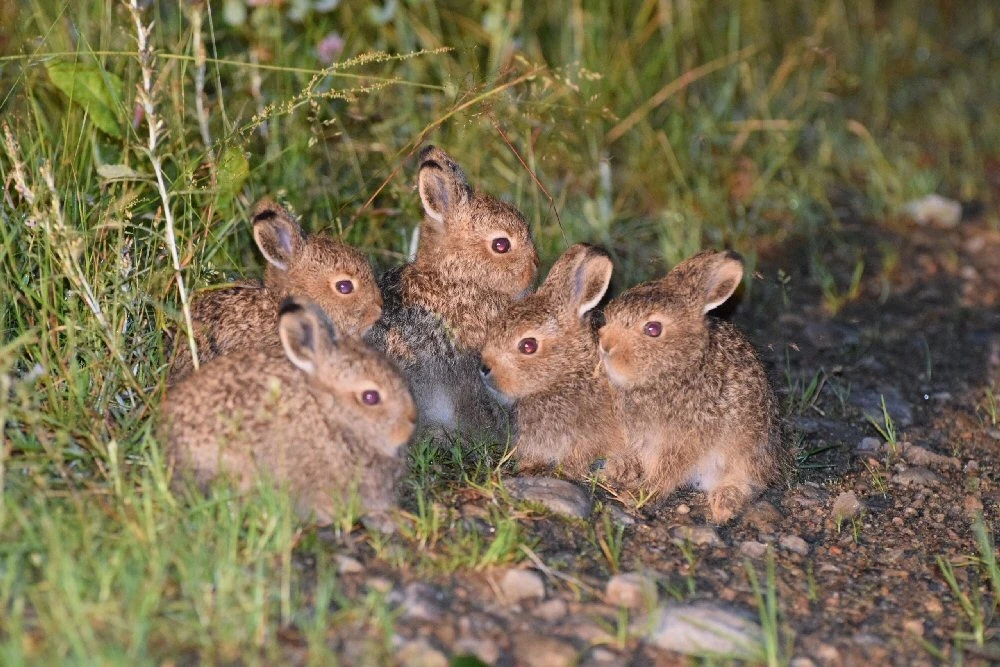
Mountain hare leverets, terrified of the world they're about to face...
This strategy works because hare milk is among the richest of any land mammal—thick as heavy cream. A single quick feeding delivers as much energy as a puppy gets from nursing all night. This leads to a widespread myth: a lone leveret found in the grass is almost never abandoned. It is right where its mother left it, and she will return after dark. Picking it up is effectively a death sentence. 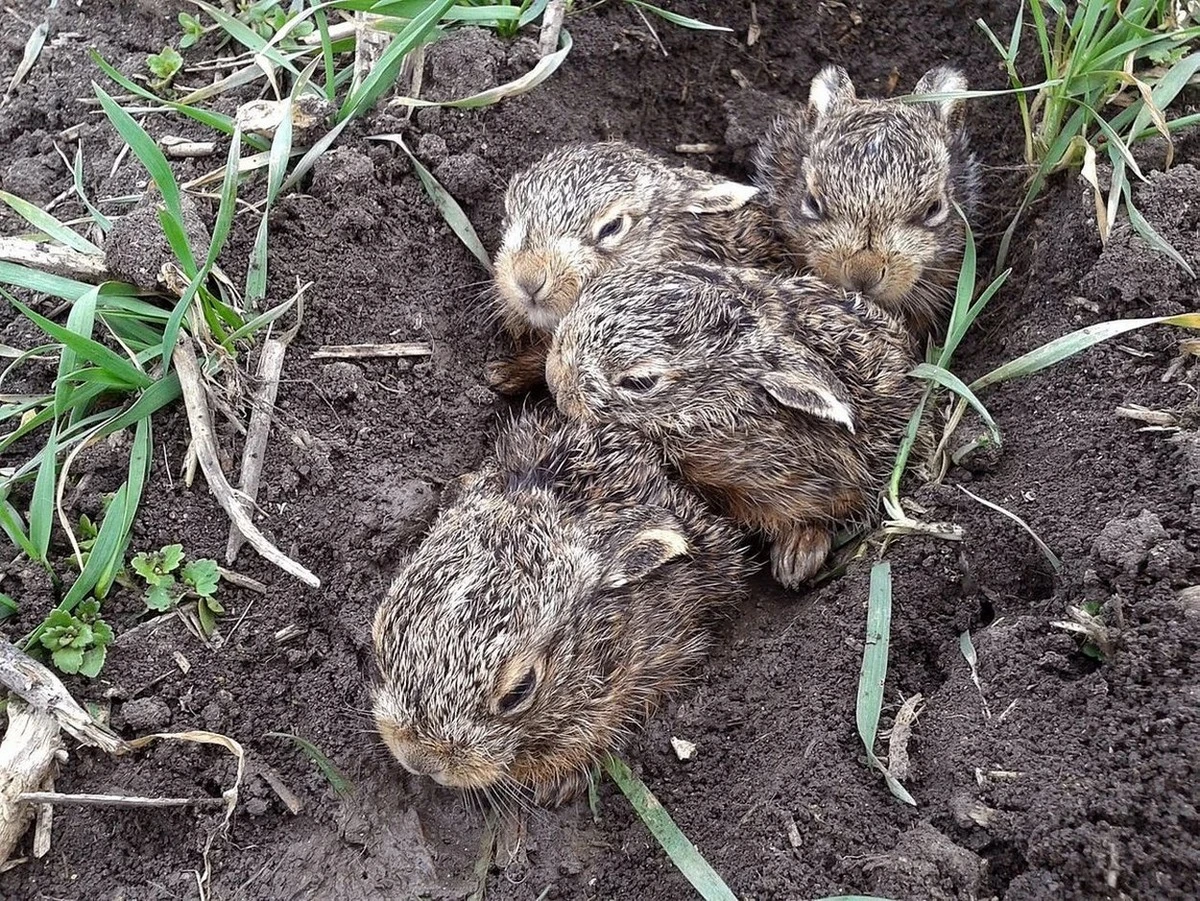
Brown hare leverets huddled in their trench.
In March, field edges around villages turn into arenas. Brown hares gather in groups, chasing each other in circles, leaping, and thumping the ground with their feet to signal across long distances. Finally, they stand tall on their hind legs and punch each other with their forepaws like legitimate boxers. 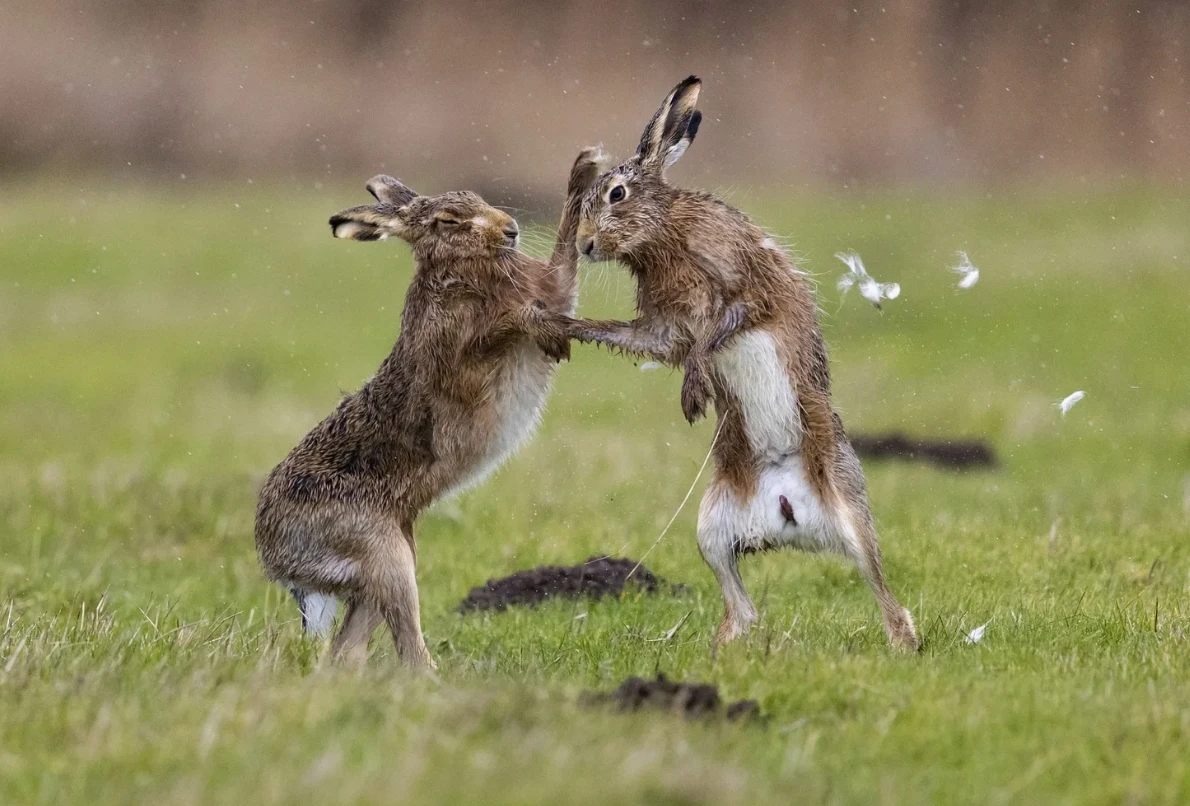
Mind your manners, gentlemen!
For a long time, people assumed these were males fighting over females. Closer observation revealed something much more interesting: often, it's the female boxing to fend off an overpersistent suitor. She tests him and shuts him down; if he doesn't take the hint, she lands a serious jab to his face. Furthermore, a female hare can become pregnant while already pregnant! Superfetation allows a new conception to occur before she even gives birth to her current litter. 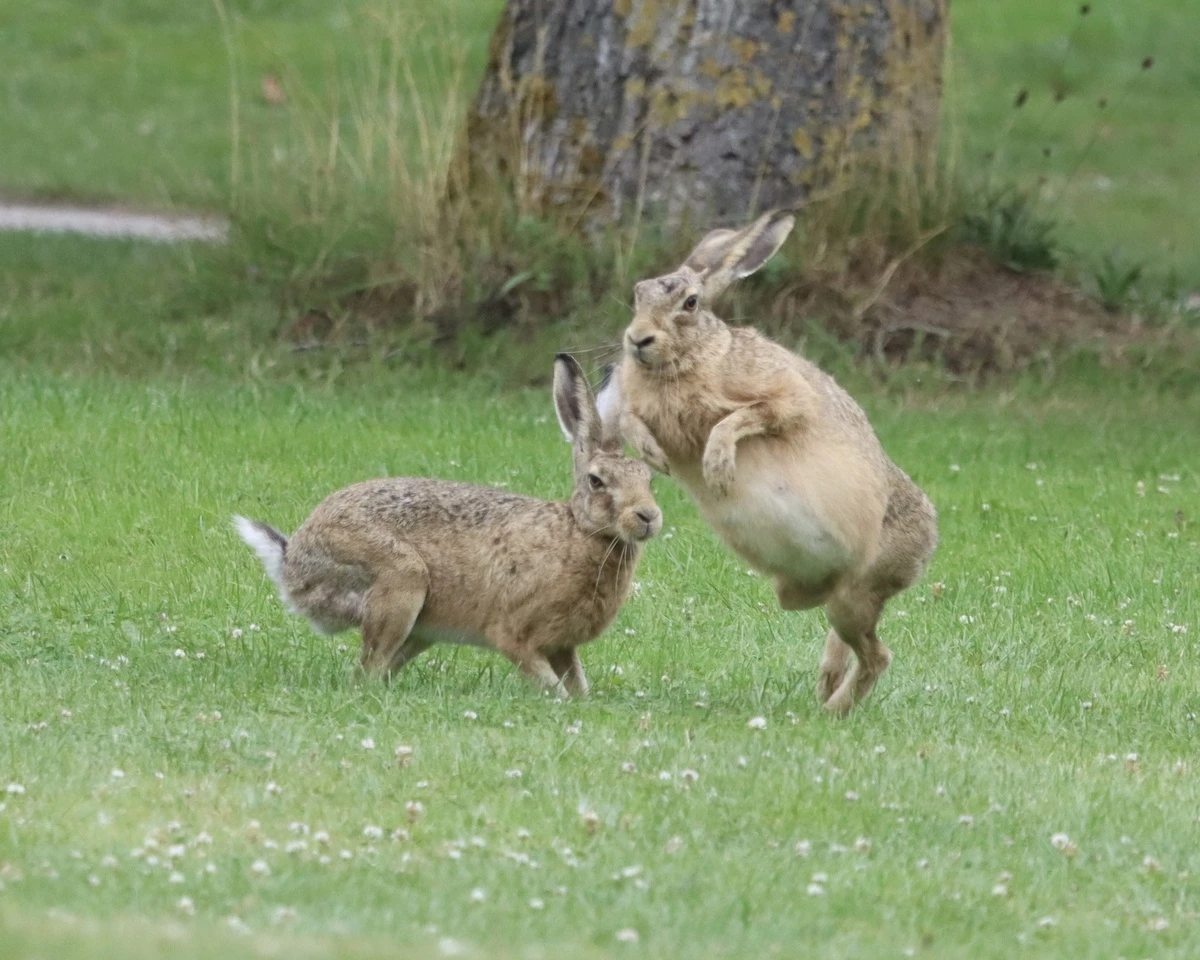
In this photo, an expectant mother tries to fend off another persistent suitor.
Brown hares and mountain hares may share territory, but their lifestyles differ. The mountain hare prefers forests; in winter, it turns entirely white except for its black ear tips, and its wide, furred paws act like snowshoes, letting it glide over soft snow where a fox would sink. The brown hare frequents fields, lightening only slightly in winter while keeping a brownish coat, sticking to open ground, roadsides, village edges, and gardens. For both species, molting is triggered by daylight hours, not temperature. That is why during snowless Decembers—which are becoming more common—a mountain hare can be stuck standing bright white against bare brown earth, visible from a mile away. 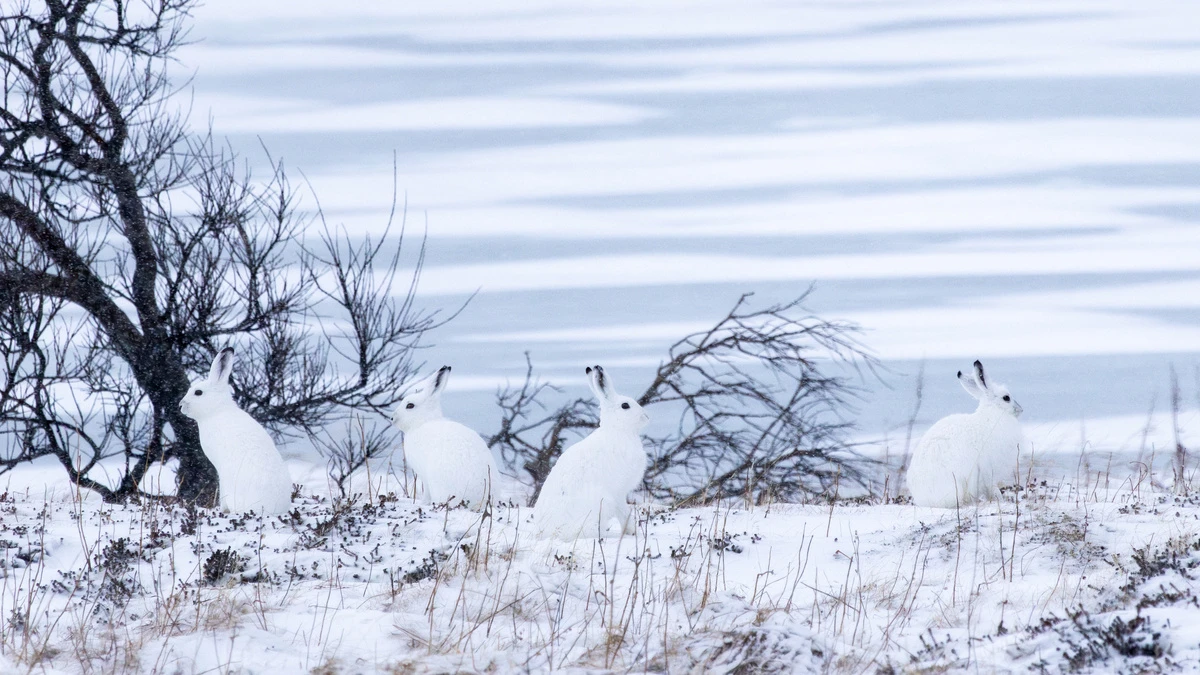
Test your eyesight: count the mountain hares.
In winter, hares survive on bark, twigs, and shoots—tough, low-nutrition food. To extract every bit of nourishment, they consume a portion of their own droppings. By passing it through their digestive tract a second time, they absorb vital vitamins and protein. Without this process, known as cecotrophy, they wouldn't survive the winter. Another key detail: hares are not rodents. They belong to a distinct order called lagomorphs. The main difference lies in their mouth—behind their top front incisors sits a second pair of smaller peg teeth, something no rodent possesses. 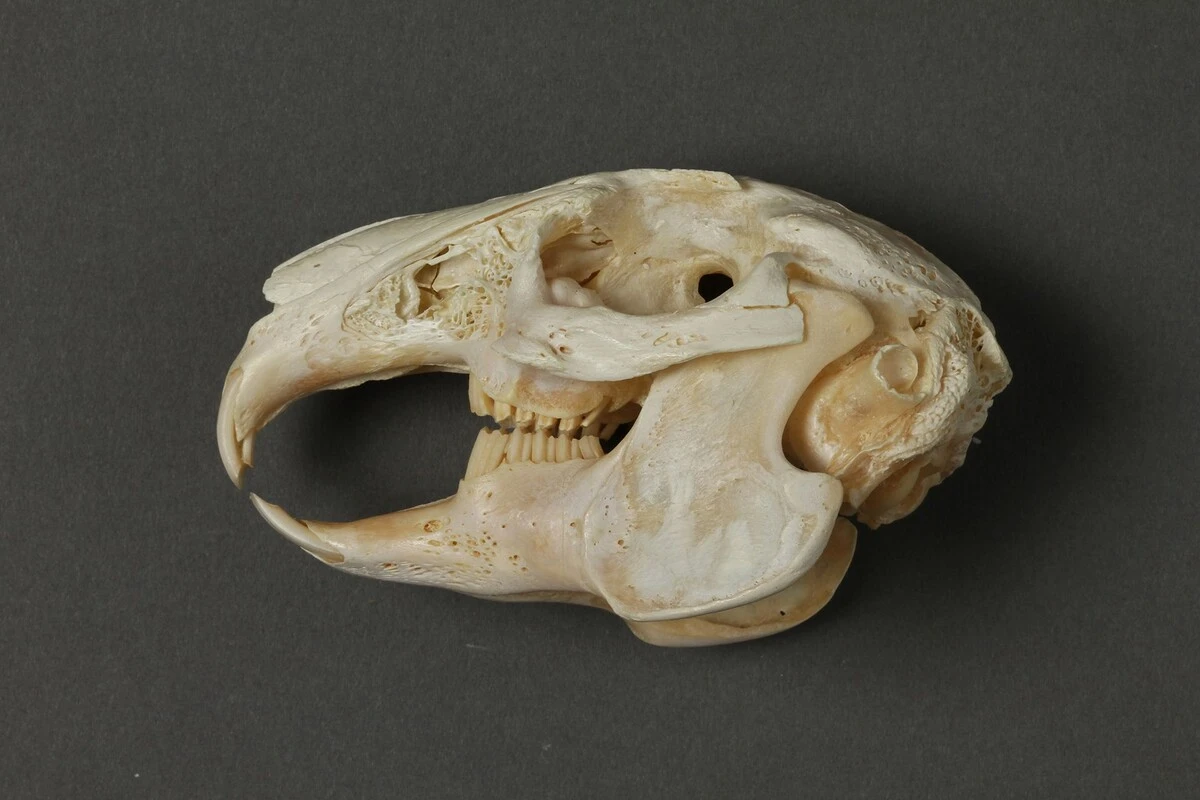
Well, it's practically a dinosaur... Here you can clearly see the second pair of teeth on the upper jaw.
There is one hare trait you'll want to be prepared for, because hearing it is unforgettable. Normally, hares are silent. But if caught or severely injured, a hare screams—a high-pitched, piercing cry so remarkably like a human child’s weeping that it sends chills down your spine. It is likely a desperate last line of defense: a startling shriek that might shock a predator into loosening its grip for a fraction of a second. 
GIVE ME BACK MY DISCOUNT CARROTS!!!
All in all, the hare is a formidable beast. It could have evolved down to the size of a mouse and tucked itself away in safe underground burrows, but it didn't. It chose a life out in the open, fraught with danger and non-stop peril. So how can anyone still call it a coward?