Stunning Views of the Martian Horizon from 400 Kilometers Up (4 Photos)
Astronauts aboard the International Space Station (ISS) often speak of the awe they feel looking down at the curvature of the Earth. Scientists studying the Red Planet get to experience something similar, thanks to NASA’s long-serving Mars Odyssey orbiter. 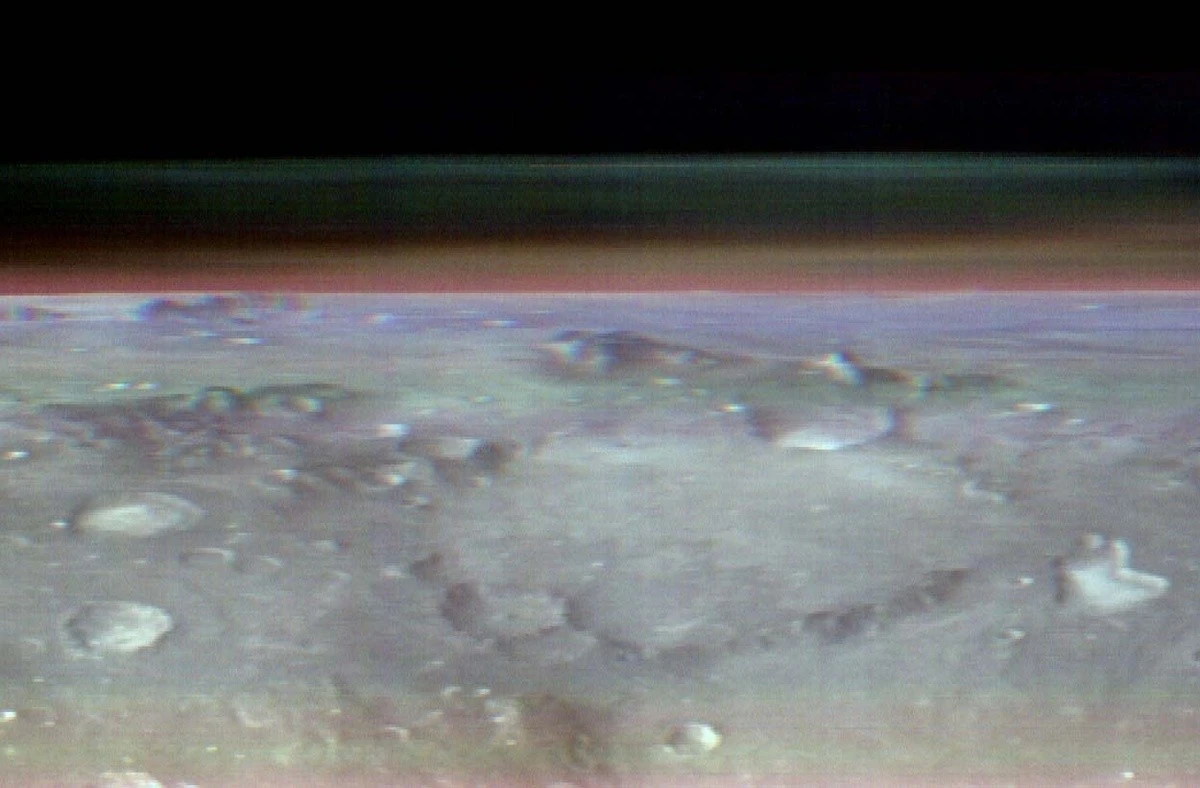
All the images featured here were taken in late November 2023 from an altitude of roughly 400 kilometers—about the same orbital height at which the ISS operates today. The resulting photos are genuinely atmospheric, in every sense of the word.
When ten separate shots were stitched together into a single panorama, researchers were greeted with an unprecedented view of Mars: a mountain-streaked, cratered surface blanketed by drifting layers of atmospheric cloud and dust. 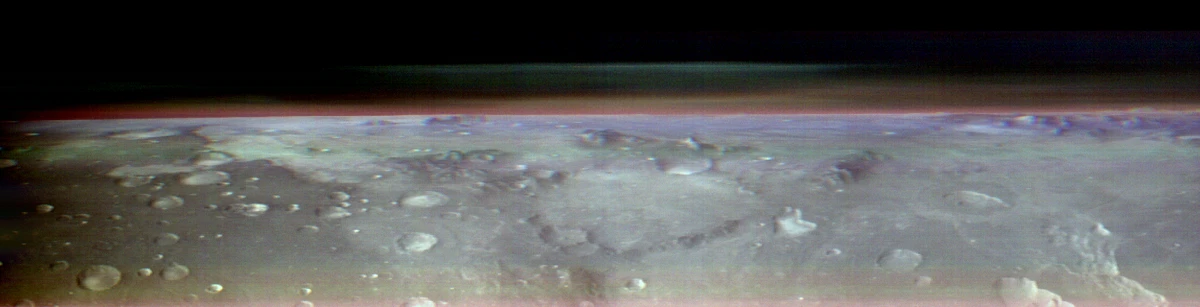
For scientists, this observation was more than just a visual treat—it offered a rare edge-on view of the Martian atmosphere, rather than the standard top-down perspective.
The THEMIS camera aboard Mars Odyssey typically points straight down. Its infrared sensors map surface minerals, identify ice, sand, and dust, and track daily and seasonal temperature swings. 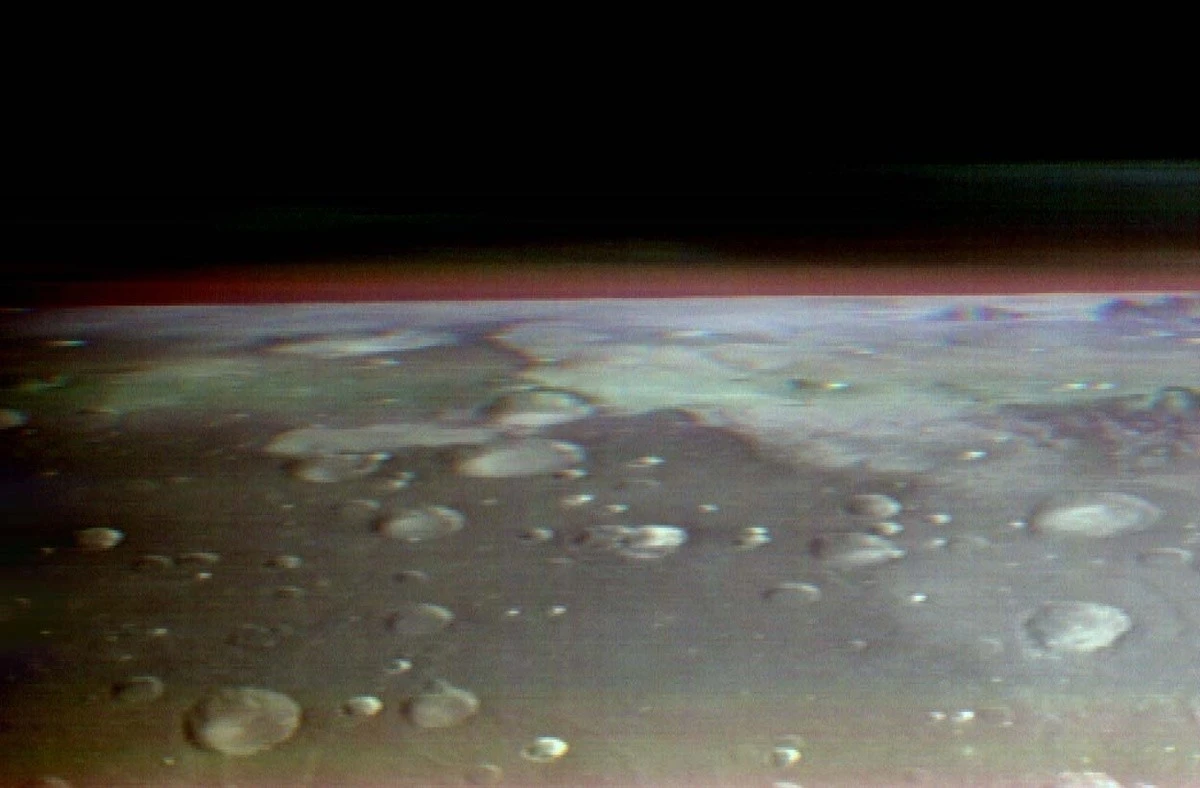
The instrument can also study the atmosphere—measuring water-ice cloud levels and dust concentrations, for instance. However, in its standard orientation, it only captures data from a relatively narrow atmospheric column directly below.
Researchers wanted to see the bigger picture. To do so, they needed to angle THEMIS toward the horizon rather than pointing it straight down. Preparing for the observation session took three months. Why so long? NASA and Lockheed Martin engineers had to meticulously calculate how to pivot the spacecraft to capture the desired view without altering its orbit or, worse yet, sending it plunging into the planet. Even a minor error could have doomed a mission that has been advancing science for nearly a quarter of a century (it entered orbit on October 24, 2001). 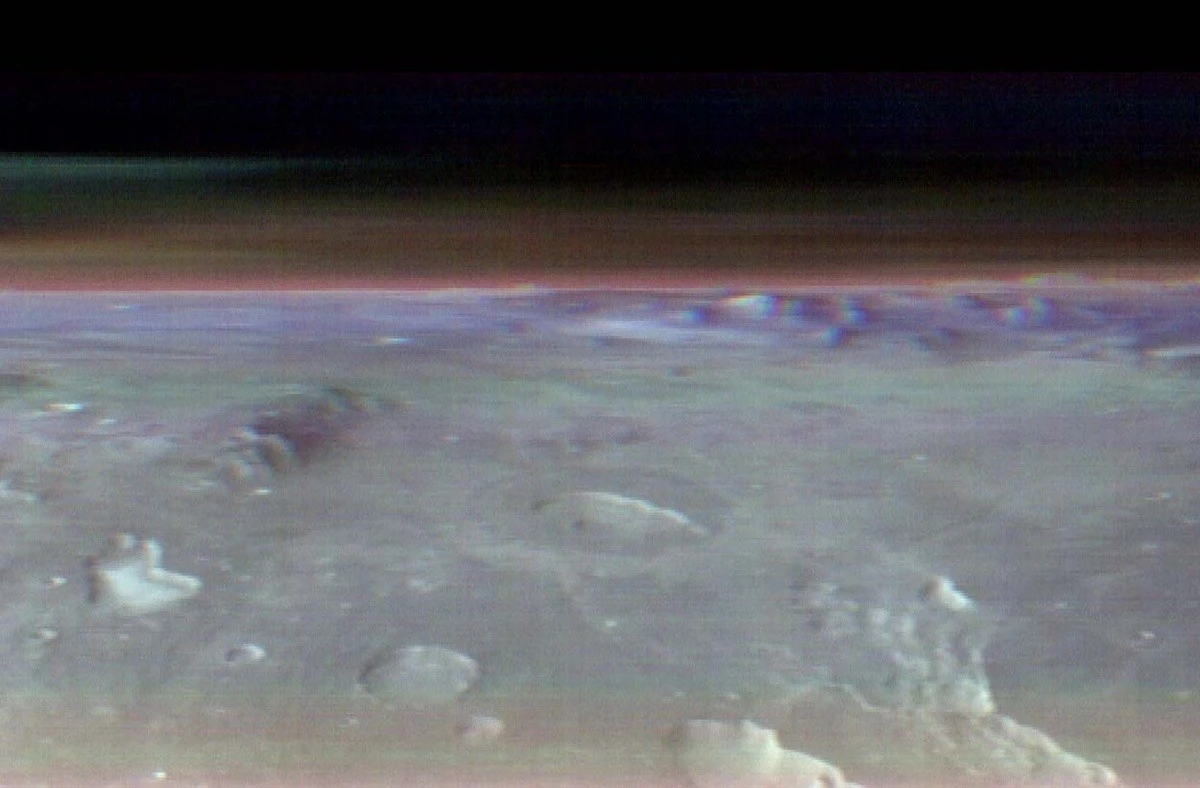
In the end, Mars Odyssey captured not just the Martian surface, but a true cross-section of its atmosphere. The photos clearly reveal the arrangement of cloud and dust layers relative to one another. The observations confirmed that Mars's extremely thin atmosphere is actually a multi-layered structure, where cloud layers intermingle with dust bands of varying density.
Jonathon Hill of Arizona State University, operations lead for the THEMIS camera, noted that no spacecraft at Mars had ever captured a view like this before.
This new data provides invaluable insights into the climate history of the Red Planet, which, in the ancient past, was a far more hospitable world potentially capable of harboring primitive life.