The Marabou Stork: How a Monstrous Bird Replaces Pigeons and Rats (8 Photos)
In folklore, storks are celebrated as harbingers of life, closely tied to motherhood and the comforts of home. But that reputation certainly doesn't extend to the entire family. Its largest and most grotesque member, the marabou stork, inspires anything but warm feelings. Standing 1.5 meters tall, weighing 8 to 9 kilograms, and boasting a wingspan of up to 2.5 meters, this giant inhabits Africa and India. It is essentially a nightmarish equivalent of our urban pigeons and rats, scarfing down anything it can grasp with its massive bill. 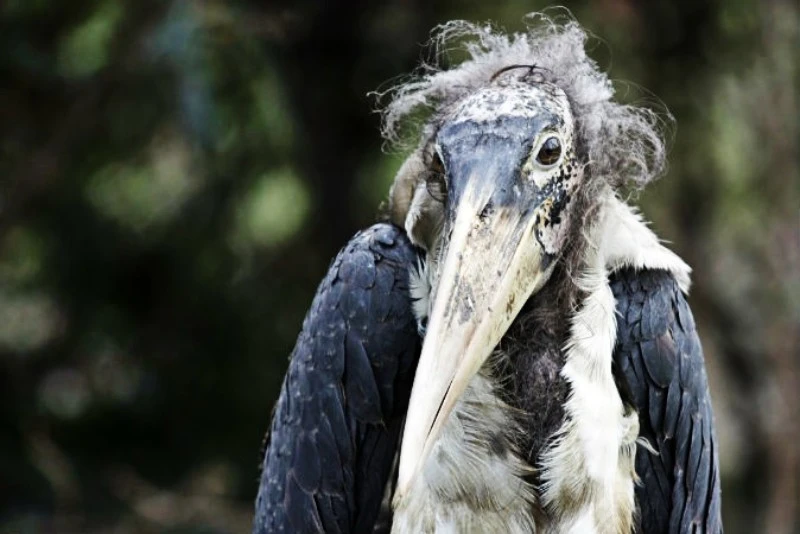
Across Africa and India, the marabou stork doesn't deliver new life—it snuffs it out. Its diet includes just about anything, from flamingo chicks and kittens to rotting buffalo carcasses. These birds frequently team up with hyenas, waiting patiently for apex predators to finish gorging before stepping in to pick the bones clean. 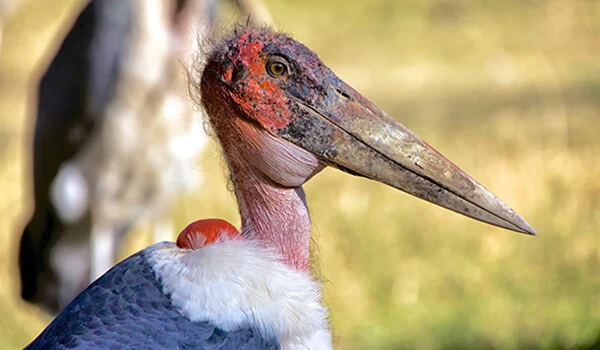
Nature has equipped the marabou brilliantly for its grim lifestyle. The bird possesses a disproportionately large, dagger-like bill capable of piercing thick hide and crushing bone. Its head and neck are entirely featherless, allowing it—much like a vulture—to probe deep inside carcasses without turning its plumage into a breeding ground for dangerous bacteria. 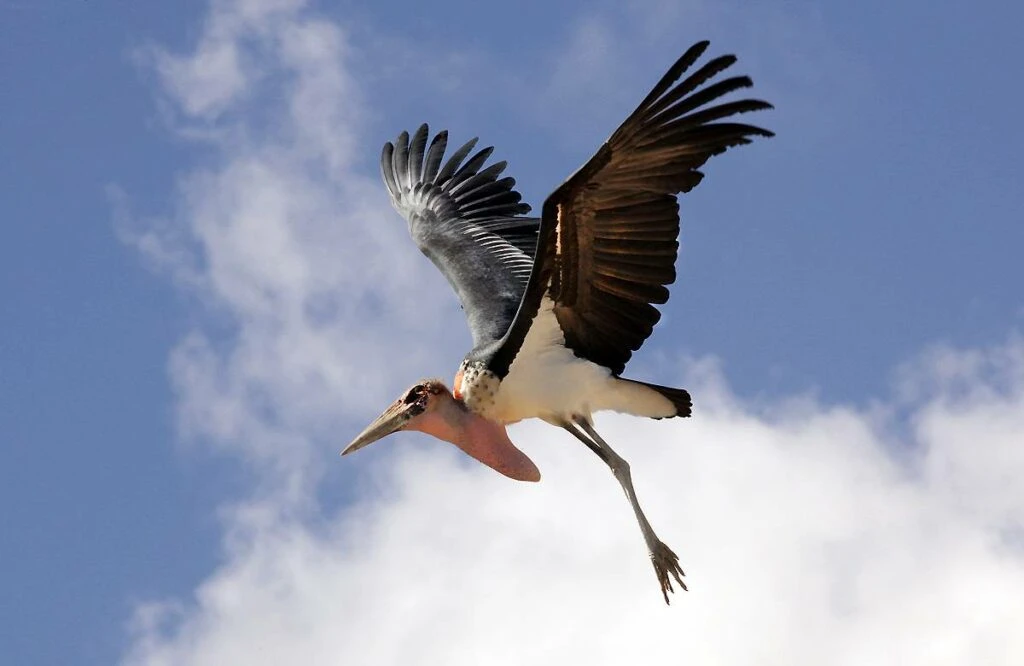
Dangling from the marabou's bare neck is an unsightly throat pouch. For years, scientists believed it played a key role in digestion or food storage. Recent studies, however, revealed that it functions more like a pillow: the marabou simply rests its heavy head on the fleshy appendage while sleeping or taking a break. 
The Marabou's Family Life
Like typical storks, marabous construct large, untidy nests of sticks high above the ground. But unlike their solitary northern relatives, these birds seek strength in numbers. A single large tree can host 20 to 30 nests side by side. Living in colonies makes defending against predators far easier. While a single marabou can easily hold its own against a fox or a caracal, banded together they are virtually invincible. 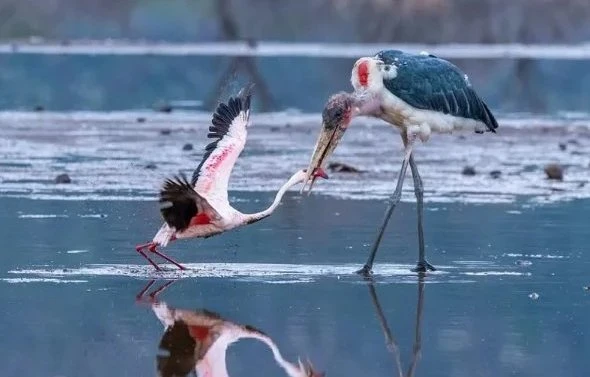
Surprisingly, this grim scavenger takes family life very seriously. During courtship, it is the females that pursue the males, not the other way around. Once paired up, the partners work together to build a new nest or claim an old one, faithfully sharing egg incubation duties. Marabou chicks require extensive care, taking around 135 days to become fully independent. 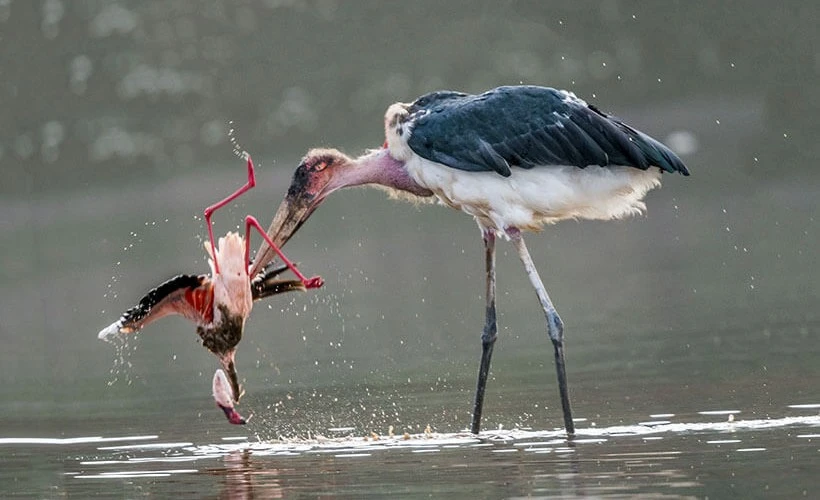
Marabou nests are built to last. Ornithologists have documented active nests that were over 50 years old! The birds truly set up house for the long haul, living up to 40 years in the wild and even longer in captivity. Marabou chicks hatch at what seems like the least hospitable time—the dry season. Yet while the rest of the savanna grinds to a halt under the sweltering heat, life in a marabou colony is buzzing. 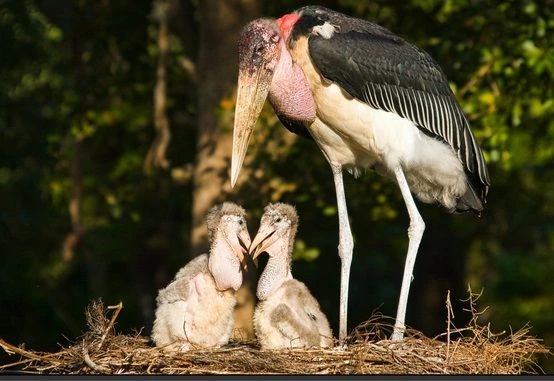
For the first four months, devoted parents bring small prey to the two or three nestlings in their care. Once fledged, the young accompany their parents on scavenging runs, learning to eat whatever nature—or civilization—provides. Families of marabous can be spotted picking through predator kills or scouring open landfills. They have adapted remarkably well to human presence, thriving on the scraps and refuse of urban life. 
An Oriental scene with a marabou stork. Watercolor by Wacław Pawliszak, 1890s.
Human perceptions of the marabou vary from region to region. In India and the Arab world, the bird is valued as a vital sanitation worker that clears away decaying waste; in some places, its solemn posture has even earned it a reputation as a symbol of wisdom. Many African tribes, on the other hand, despise the bird and rarely pass up an opportunity to raid its nest or kill it. In some parts of the continent, folklore even warns that a marabou might snatch a young child. While a bird of this size and strength could theoretically manage it, there are no documented cases to support the myth.