The Wild West’s “Bandit Queen”: The Dime-Novel Legend Hollywood Refused to Let Go (12 Photos)
Myra Maybelle Shirley played the piano, read Latin, and received a classical education at an academy in provincial Missouri. Yet history remembers her as Belle Starr, the “Bandit Queen” of the Wild West. Between these two identities lay the Civil War, two outlaw husbands, nine months in federal prison, and an ambush murder that remains officially unsolved to this day. And behind it all was a penny dreadful publisher that rewrote the rest. 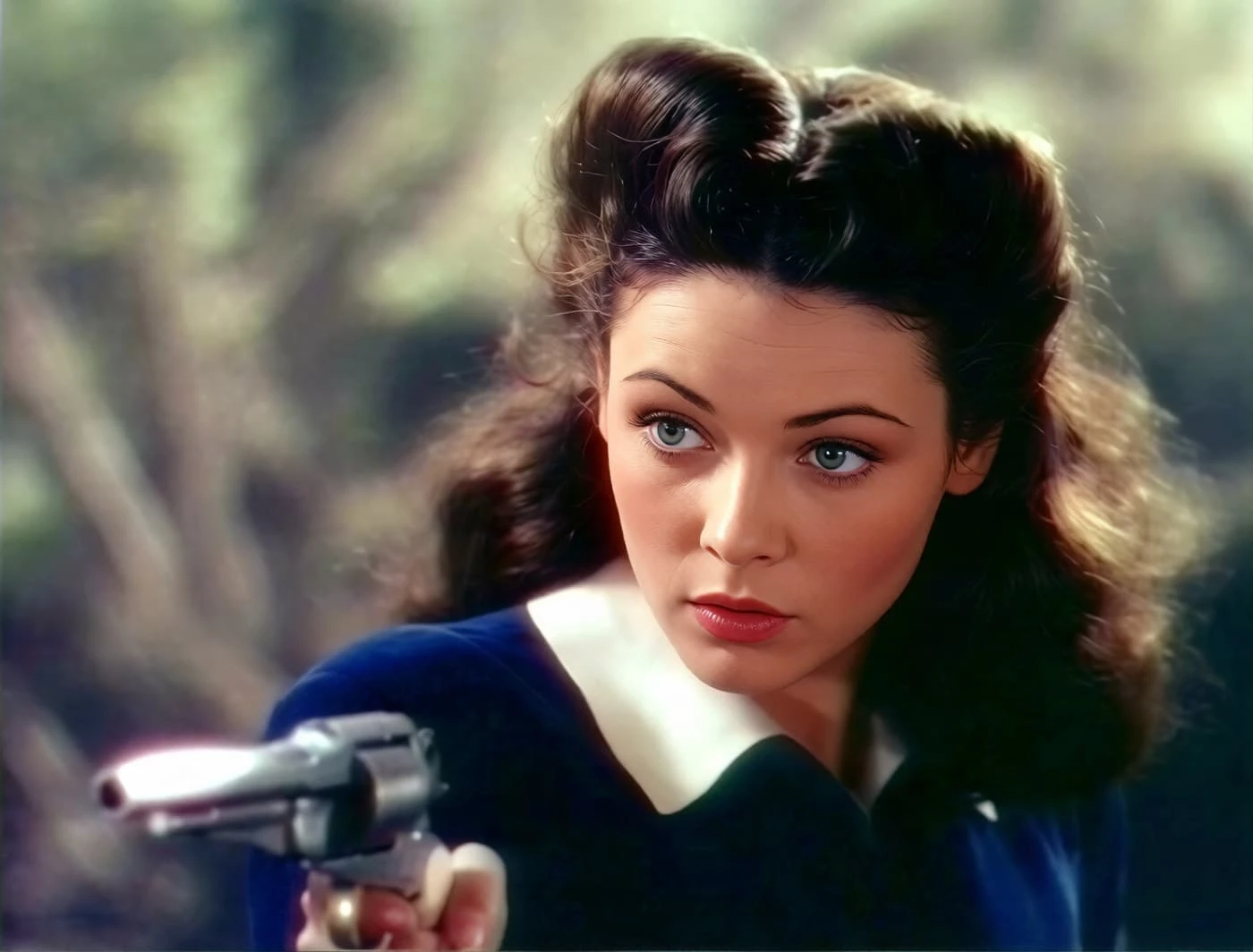
Before She Became “Belle”
Myra Maybelle Shirley was born on February 5, 1848, on a farm near Carthage, Missouri. Her family simply called her May. Her father, John Shirley, came from a well-to-do Virginian family; he ran an inn and livery stable in Carthage, helped establish the local female academy, and enrolled his daughter there. 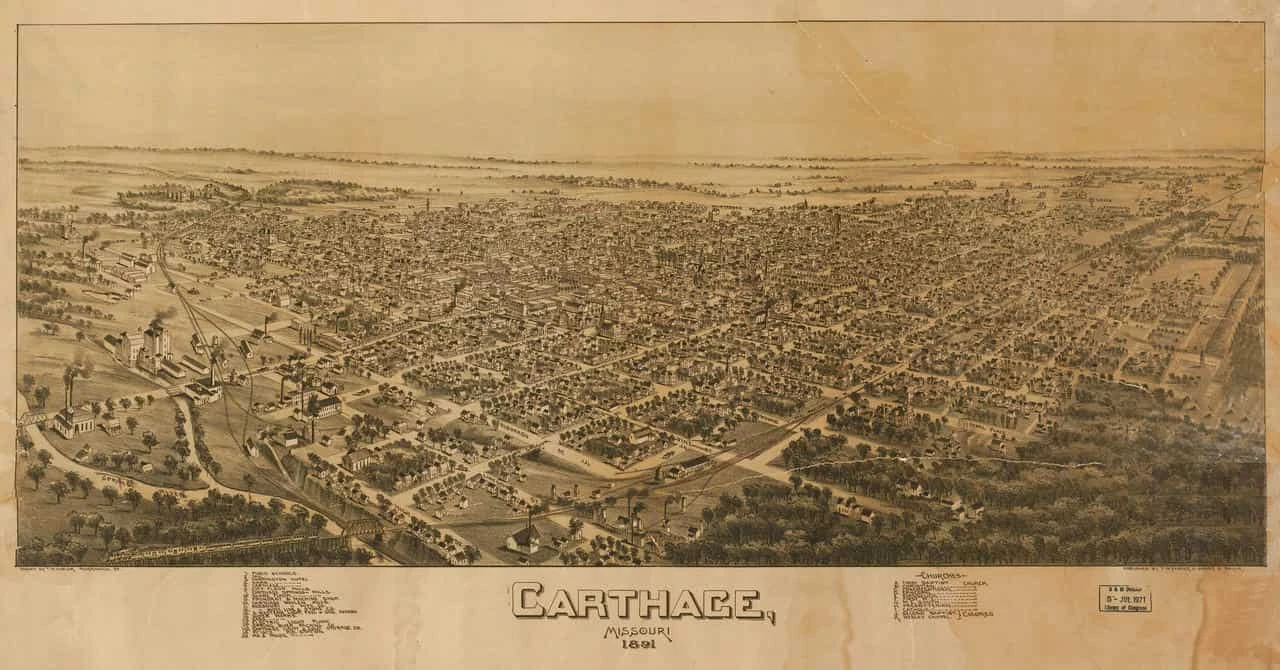
Carthage, Missouri—a quiet frontier town where Maybelle Shirley received a classical education
May studied classical languages, music, and social deportment. She played piano, read Latin, and knew how to carry herself in polite society. Her older brother, Bud, was also an accomplished student. The family flourished until war upended their lives. 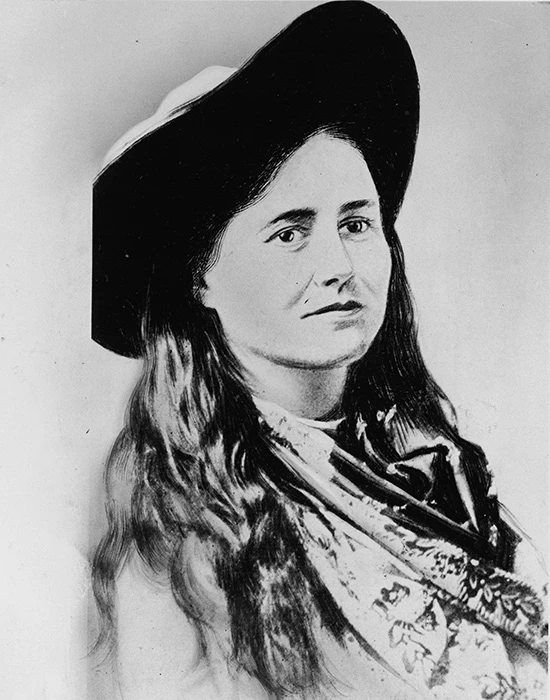
Belle Starr was born into a prosperous Missouri family
Nothing in her upbringing hinted at the moniker “Bandit Queen.” Rural Missouri, a respectable family, a private academy. The persona later concocted by the yellow press bore almost no resemblance to this young girl.
War Changes Everything
The Civil War arrived in Missouri with full force by 1863. Belle’s brother Bud fought as a Confederate guerrilla. In June 1864, he was killed by Union troops. Soon after, Carthage itself was burned to the ground—along with the Shirley family home.
Her father sold what little remained and led the family to Texas. Maybelle, then just 16 years old, drove one of the wagons herself along the trail. 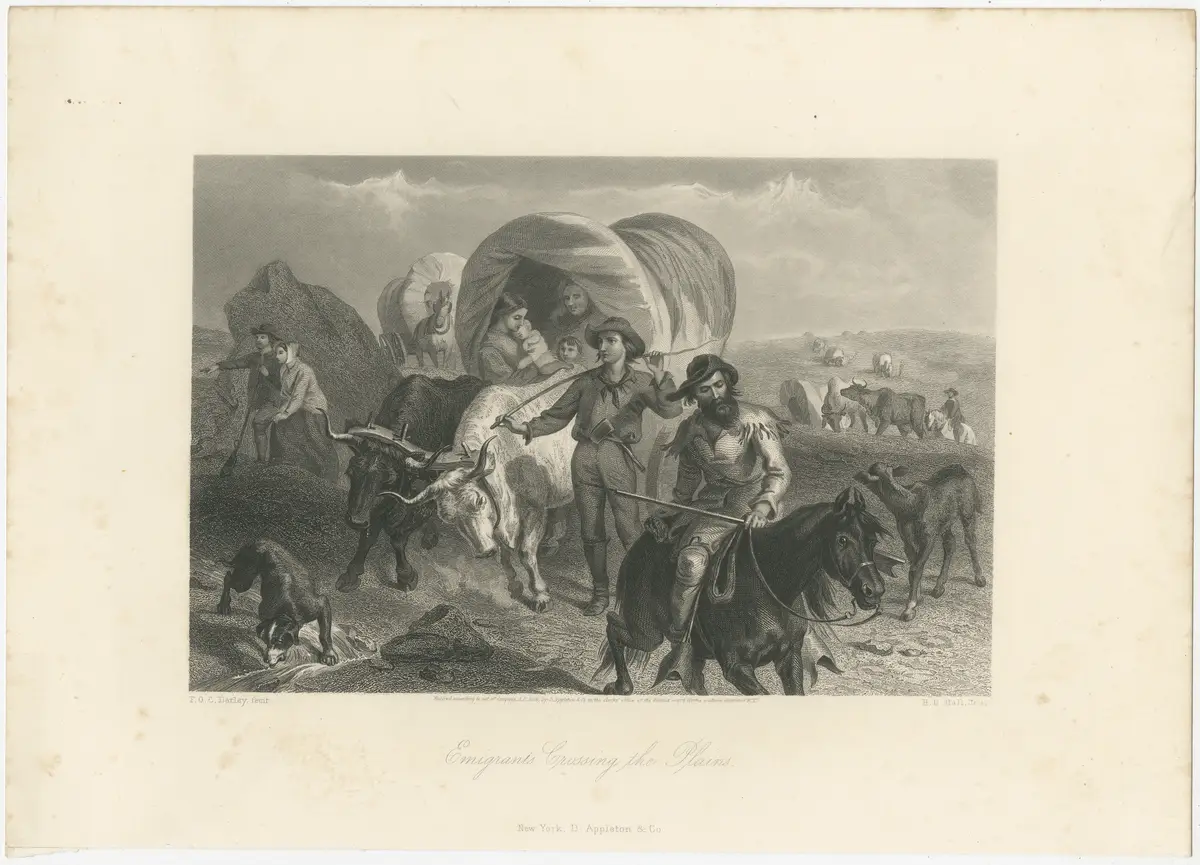
Settlers on the trail to Texas in the 1860s. A journey mirroring that of the Shirley family after losing their home in Missouri
In Texas, the Shirleys started over from scratch. But Missouri and the war had already transformed the girl at the piano. She had grown up in a world where everything she knew could vanish overnight, learning early that the rules do not always protect those who abide by them.
First Husband, First Brush with Trouble
In Texas, she met Jim Reed, a former Confederate soldier who quickly turned to a life of crime. On November 1, 1866, they married in Collin County. The couple had two children: a daughter, Pearl, around 1868, and a son, Eddie, in 1871.
Reed took part in armed robberies and cattle rustling. Belle knew what he did and gave him shelter. Harboring a fugitive was a crime in itself, and it marked her first official brush with the law. 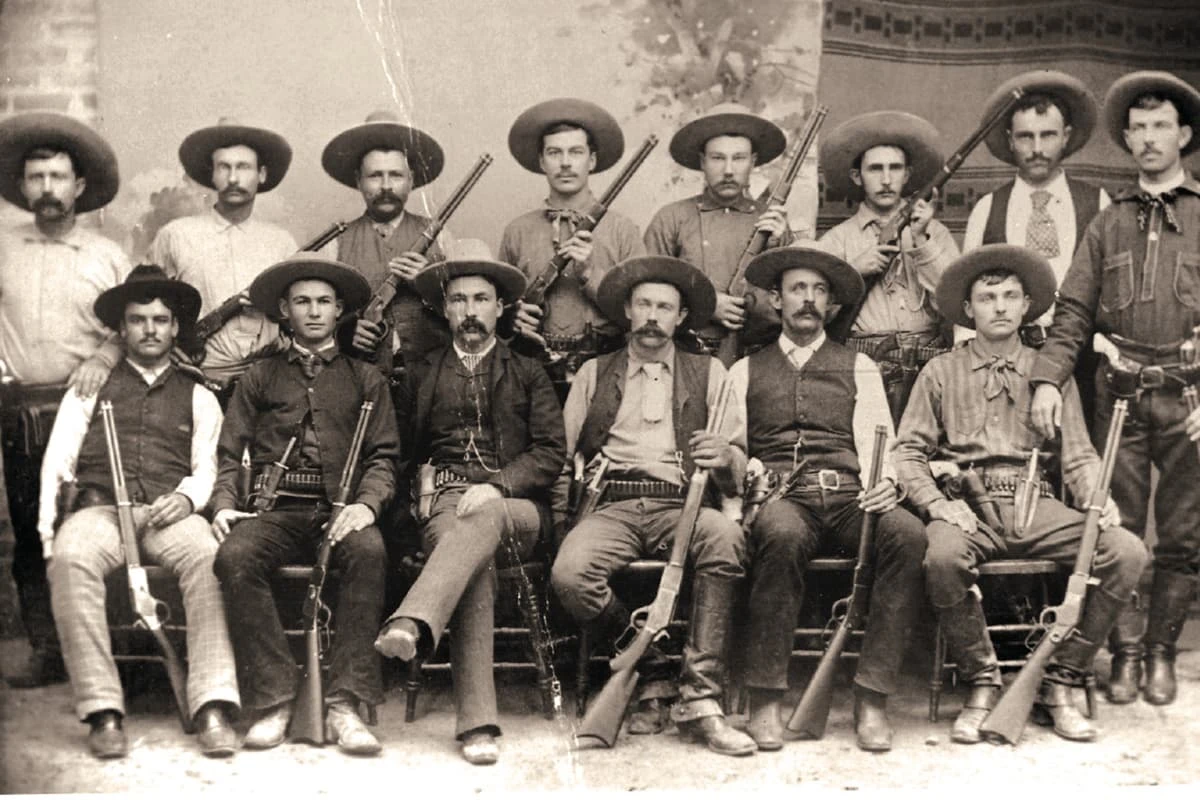
Texas Rangers in the 1870s. These lawmen pursued Jim Reed—and kept a watchful eye on his wife
In August 1874, Reed was shot and killed by a member of his own gang. Belle refused to identify the body. Legend has it she did so deliberately: claiming the corpse would allow the killer to collect the bounty, and she refused to let him profit.
Sam Starr and Indian Territory
In 1880, Belle married Sam Starr, a Cherokee and the son of Tom Starr, a notorious local outlaw. The couple settled in Indian Territory in present-day Oklahoma, claiming 62 acres on the north bank of the Canadian River. Belle named the homestead Younger’s Bend, honoring the legendary Younger brothers. 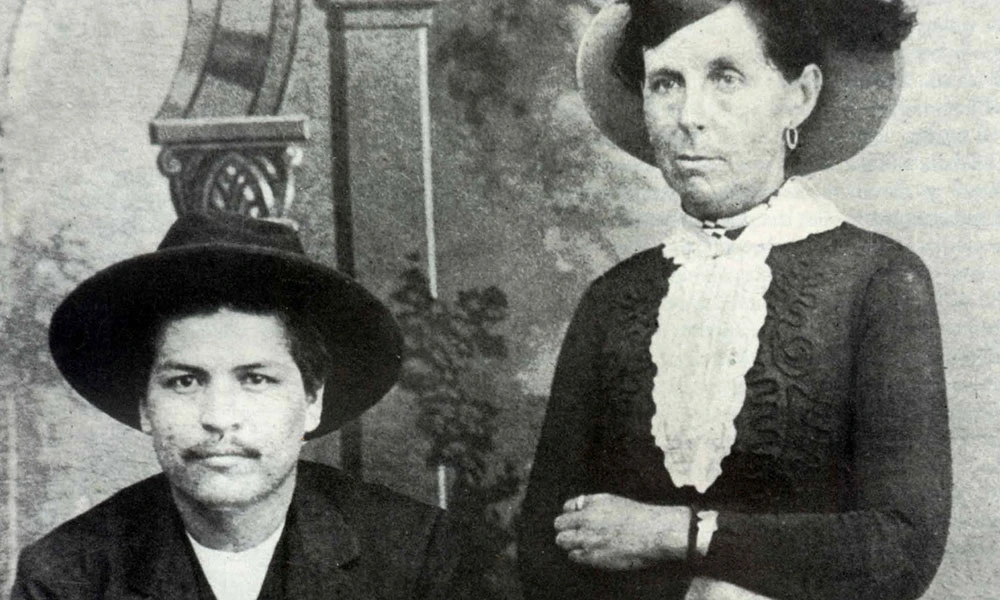
Belle Starr and Blue Duck—photographed in Fort Smith, 1886. One of the few verified surviving portraits taken during her lifetime
Younger’s Bend quickly became a notorious haven for outlaws on the run, rumored to have sheltered Jesse James himself. In 1882, Belle and Sam were arrested for horse theft. In March 1883, the famed “Hanging Judge” Isaac Parker found them both guilty: Sam was sentenced to 12 months, and Belle served two consecutive six-month terms at the House of Correction in Detroit. It would be the only criminal conviction of her life. 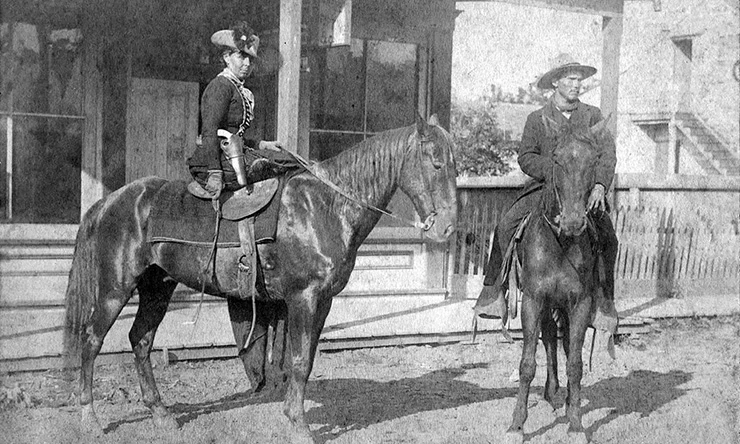
Belle Starr on horseback—one of the few authentic photographs from her lifetime. Pictured wearing a hat with a revolver near her saddle, alongside an unidentified companion
On December 17, 1886, Sam was killed in a shootout with a deputy marshal at a Christmas party. Following his death, Belle married Jim July Starr—Sam’s adopted brother, of Creek and Cherokee descent, who was 15 years her junior. The union was one of necessity: under Cherokee law, a widow lost her land rights without a Cherokee husband.
The Myth vs. Reality
During her lifetime, Belle remained a strictly local figure. Texas and Oklahoma newspapers wrote about her only occasionally, framing her as just another resident harboring fugitives in Indian Territory. Her true fame came only after she was dead.
Richard K. Fox published his sensational biography the very year she died. The subtitle promised “the startling history of the most desperate woman that ever lived on the border”—in reality, it was pure pulp fiction disguised as journalism. No fact-checking, no archival research. 
Illustration from Richard K. Fox’s 1889 sensational biography, which turned Maybelle Shirley into the “Bandit Queen”
Historians who later combed through the surviving court records reached an undeniable verdict: Belle never committed the vast majority of crimes attributed to her. Her real role was harboring and supplying those who did. A significant legal distinction—yet an entirely irrelevant one for dime-novel sensationalism.
A Murder Without a Culprit
On February 3, 1889, two days shy of her 41st birthday, Belle Starr was assassinated. She was ambushed and shot in the back while riding home. Buckshot tore into her back, neck, shoulder, and face. She tumbled from her horse, and the gunman finished her off with a second blast. 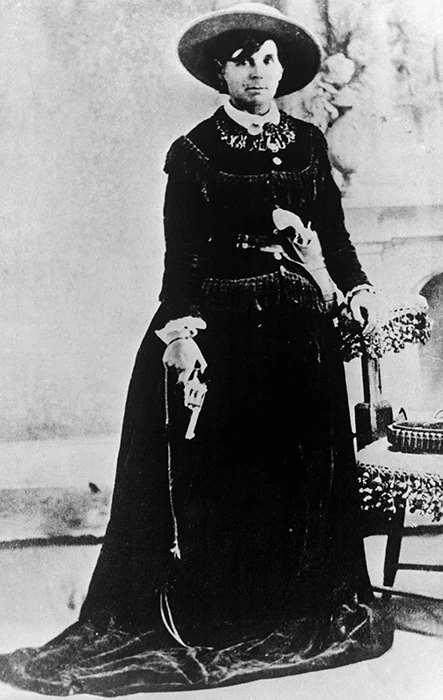
Studio portrait of Belle Starr, Fort Smith, early 1880s
The murder remains officially unsolved. Authorities had four prime suspects. Edgar Watson, a tenant farmer: bootprints led toward his cabin, his shotgun smelled of fresh powder, and he feared Belle would expose him as a fugitive murderer from Florida. Her husband, Jim July: a witness claimed to have heard him vow to “kill the old witch.” 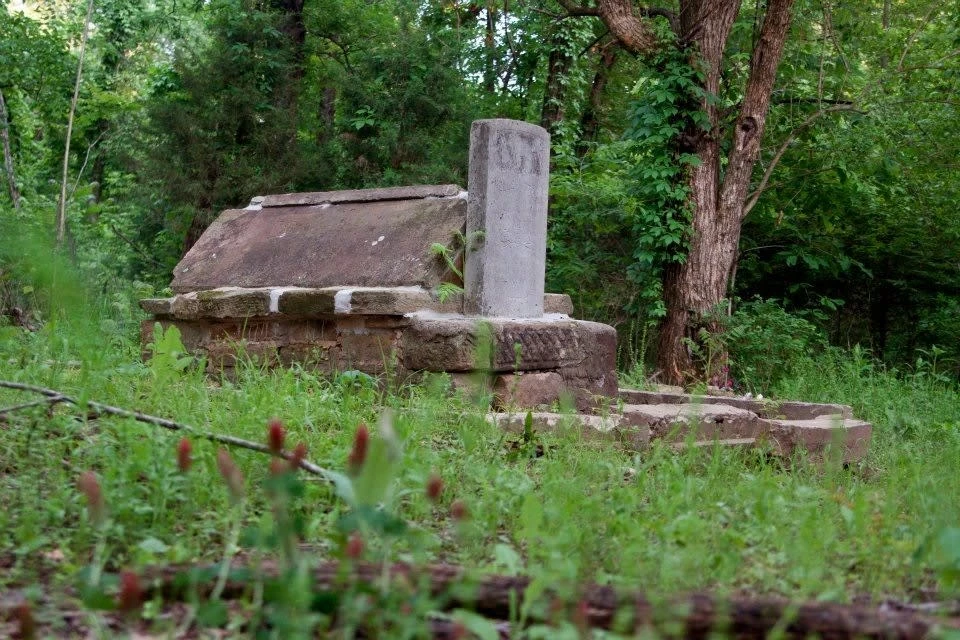
Belle Starr’s headstone in Hoyt, Oklahoma, on the grounds of the former Younger’s Bend
Her son, Eddie, harbored deep resentment after she gave him a severe whipping shortly before her death for mistreating her horse. Her daughter, Pearl, was home alone when the murder occurred, having quarreled bitterly with Belle the day before. Watson stood trial and was acquitted; he was later killed in an unrelated shootout in Louisiana in 1910. No one else was ever charged.
The Legend Endures
In 1941, Hollywood released
Belle Starr
starring Gene Tierney. More screen adaptations followed, featuring the likes of Isabel Jewell and Jane Russell. The archetype of a “female Jesse James” was simply too seductive for the box office to pass up. 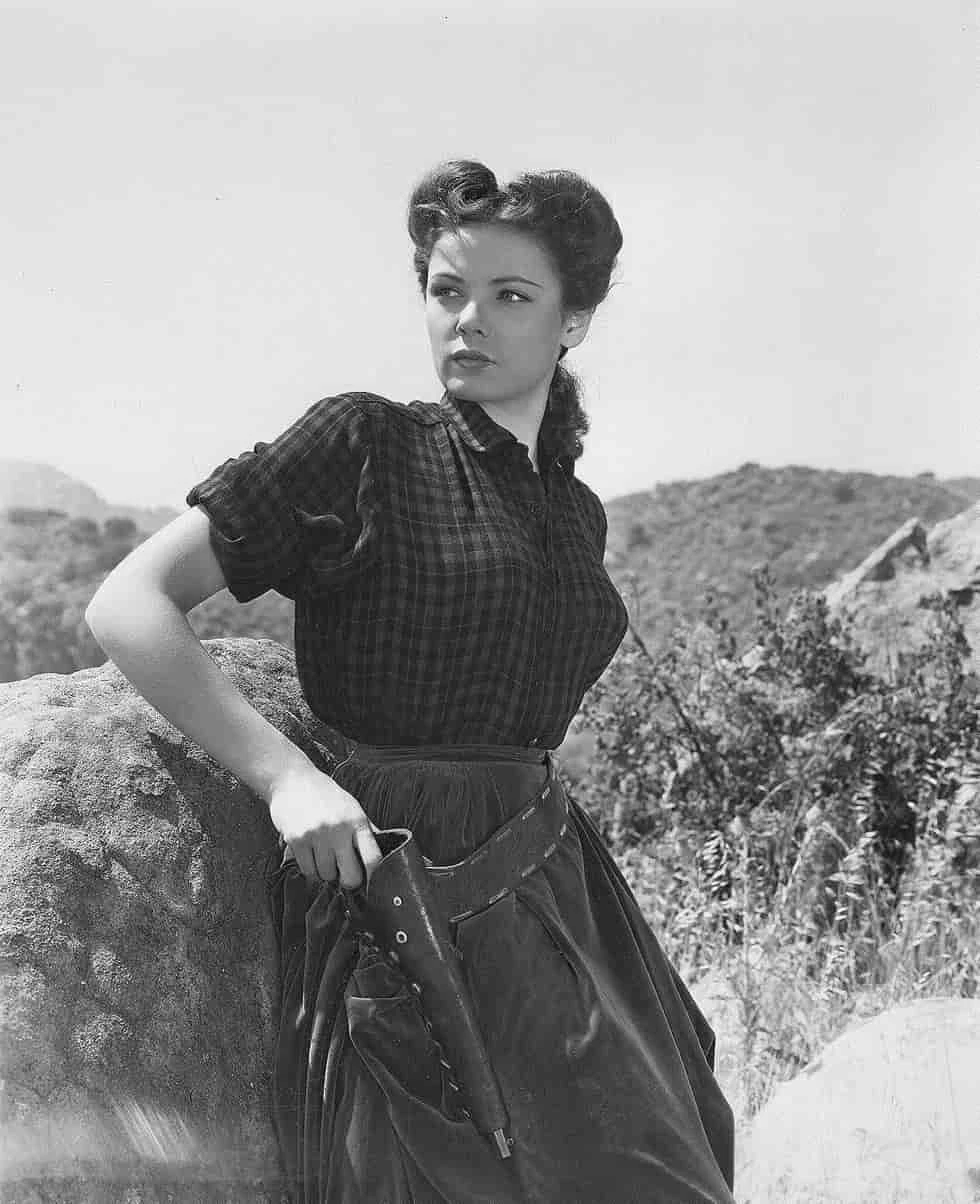
Gene Tierney as Belle Starr, 1941. Hollywood eagerly embraced the myth minted by the dime novels
The real Myra Maybelle Shirley—with her piano training, Latin reading, and a single conviction for horse theft—never made it to the screen. The truth was far too mundane for the legends cinema wanted to sell. 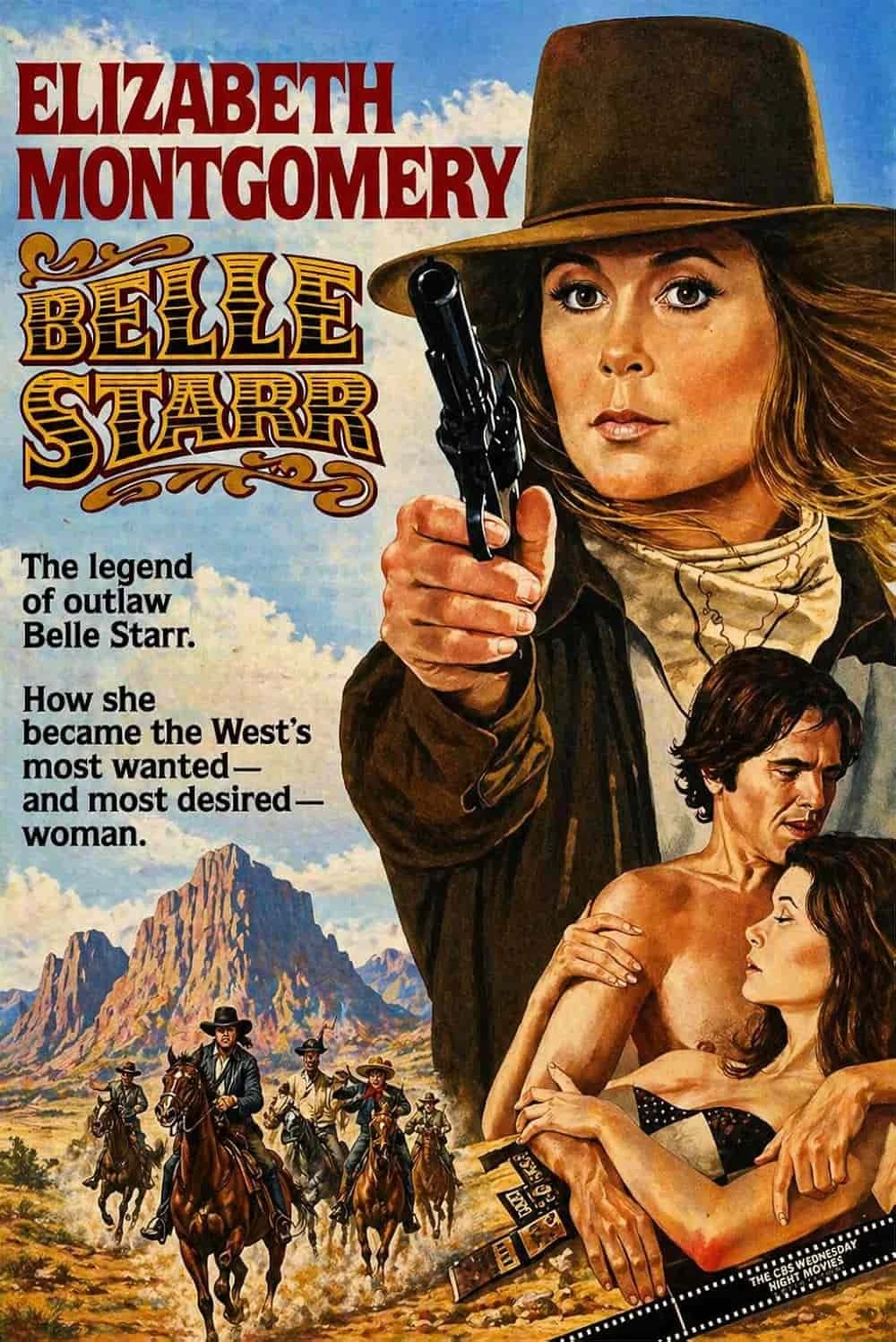
Hollywood revisited Belle Starr’s story time and again—consistently choosing the myth over the woman herself
That is the enduring power of folklore: it rarely invents out of whole cloth. Belle did associate with outlaws, did harbor fugitives, and did serve time behind bars. But a vast chasm separates an accessory from a gun-toting “Bandit Queen.” Richard Fox bridged that divide in 1889—and nobody has cared to look back since.
Why do you think outlaw legends refuse to die, even when the facts prove otherwise? Share your thoughts in the comments below.